Followers

Saturday, July 31, 2021

The Surgeon Spy

Perhaps the most intriguing case in the world of Revolutionary War espionage is that of Doctor Benjamin Church. An enigma wrapped in American history, Church embodies all the traits of an ideal patriot – and the ultimate traitor.


Doctor Benjamin Church


Yankee Pedigree

Church was a blue-blooded descendant of Yankee ancestors and the envy of the Colonial Dames. Born on August 24, 1734, in Newport, Rhode Island, he was the son of Benjamin Church, a Boston merchant and deacon of the Hollis Street Church. Church hailed from a family of New England military, civil, and religious leaders that traces back to the Mayflower through his great-great-grandmother Elizabeth Warren Church, daughter of Richard Warren, who arrived on the Mayflower.


Benjamin Church was born in Rhode Island


Raised for Prominence

Young Benjamin studied at the Boston Latin School, the typical springboard to Harvard College, from which he graduated in 1754. He then studied medicine under Dr. Joseph Pynchon. Afterward, like many American surgeons, he completed his studies in London, where he married Hannah Hill. Upon returning home, he quickly built a reputation as one of the city’s best young physicians and surgeons, even treating the eye problems of the lawyer and future founder John Adams.


Future  president John Adams was Church's patient


Political Turmoil

In the decade leading up to the break with Britain, Massachusetts, especially Boston, was at the center of increasing discontent and unrest. Benjamin Church appeared to be actively involved in these events. After the Boston Massacre on March 5, 1770, he was the one who examined Crispus Attucks’s body and treated some of the wounded. This involvement positioned him as a staunch Whig, and in 1773, he was chosen to deliver the annual “Massacre Day” oration, a yearly event designed to ignite anti-British feelings. He demonstrated a talent for oratory. 


The Boston Massacre


Dr. Church became a leader of Boston’s Sons of Liberty, working with key figures like Joseph Warren, Sam Adams, John Adams, and Paul Revere. By 1774, the well-known surgeon was a delegate to the Massachusetts Provincial Congress and later joined its Committee of Safety, the colonial group responsible for preparing for armed defense.

Our Surgeon Goes to War

April 1775 marked the official start of hostilities between the American colonists, especially those in New England, and the Royal authorities. Although independence was not yet a declared goal, the fight for American rights resembled a war. Our favorite surgeon found himself caught in the middle of it. In May 1775, Church traveled to Philadelphia, where he discussed the military situation in Massachusetts with Congress. As head of the Committee of Safety, he signed the order for the construction of defenses at Breed's Hill and Prospect Hill. 


Breed's Hill defenses

In July 1775, he was appointed Director General and Chief Physician of the newly established Medical Department of the Army, making him head of both the hospital department at the first army hospital and the first headquarters of regimental surgeons. This prestigious appointment placed him at the peak of his career. 

Doctor Gloom?

Interestingly, Church proved to be an indifferent medical administrator and faced a barrage of complaints from the army’s regimental surgeons about his management of the medical system. He pushed back, claiming jealousy was the real motivation behind his critics, and soon asked to be relieved of his duties. Why would a renowned and highly trained surgeon (18th-century term for a physician) show any sign of failure in what should be a core skill? Perhaps our doctor had other priorities occupying his mind.


As chief army surgeon, Church was 
responsible for medical supplies

Other Things

Other clouds swirled around the standing Whig leader. In the world of espionage, these were labeled anomalies and indicators. Although they were present, it would take an overt event to start bringing things together. There were suspicions about his allegiance to the cause, particularly the cause of independence. 

At that time, there still might have been prominent Whigs who were unsure about breaking completely with Britain. But was he one of them? Yes, Church had an English wife, and his brother-in-law was a well-known Tory printer, John Fleming. However, many had connections to Britain and the Tories, so he couldn’t be seen as entirely unusual. As rebellion approached, Church gained a reputation as a notable patriot writer and poet. Still, it turns out that he sometimes responded to his own patriotic open letters in the press with “op-ed” pieces that took the Tory side! 


Advertisement for John Fleming's Printshop


As it would later be revealed, he also had at least one meeting with General Thomas Gage, which was reported, probably by the Mechanics, a spy network run by Paul Revere (see the Yankee Doodle Spies post on them). Church dismissed it—like many suspected spies do too easily. What was then unknown was that Church was in debt, some of which was caused by keeping a mistress. And she was not his first, as it turned out.
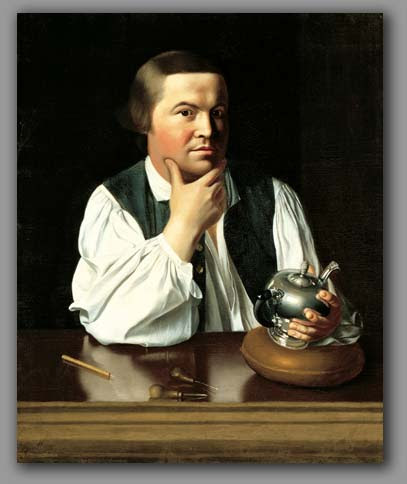

Did Paul Revere's Mechanics have 
the doctor in their sights?

A House of Cards

In July 1775, Doctor Benjamin Church’s scheme unraveled when a secret letter was intercepted and decoded. A cipher message was sent to a British officer in Boston named Major Cane through a former mistress. But Eros intervenes in strange ways—the letter was intercepted by another of the woman's ex-lovers and sent to the new Continental Army commander-in-chief, General Washington, in September. 

It took some effort to decode, but they were rewarded because it contained information about the American forces gathered around Boston. Although little of the information was critical, the message clearly showed Church’s loyalty to the King and sought instructions for further secret correspondence. A bombshell striking Washington’s headquarters couldn’t have been more explosive than this news!


King George III

A General Court Martial

During the court-martial in Cambridge that immediately followed, Church admitted to writing the letter (a typical ploy) but insisted he aimed to display the Continental Army’s strength to deter an attack while it was still low on ammunition. He believed it might also help bring about an end to hostilities. While impressing the British probably benefited Washington’s position, this belief showed Church’s ambivalence. Because there was no “espionage statute” and America wasn’t yet an independent nation and therefore could not be “betrayed,” the court, presided over by Washington, concluded that Church engaged in a “criminal correspondence with the British.”  


General Washington penned a report 
following Church's court-martial

Report to Congress

On October 5, 1775, General George Washington wrote to John Jay, the President of the Continental Congress, to notify him that a letter from Dr. Benjamin Church, the surgeon general of the Continental Army, to Lt. Gen. Thomas Gage, the British commander in chief for North America, had been intercepted. His case was then forwarded to the Continental Congress for punishment, along with this report from Washington to the President of Congress:

I have now a painful though necessary duty to perform, respecting Doctor Church, the Director of the Hospital. About a week ago, Mr. Secretary Ward, of Providence, sent up one Wainwood, an inhabitant of Newport, to me with a letter directed to Major Cane in Boston, in occult letters, which he said had been left with Wainwood some time ago by a woman who was kept by Doctor Church. She had before pressed Wainwood to take her to Captain Wallace, Mr. Dudley, the Collector, or George Rowe, which he declined. She gave him the letter with strict injunctions to deliver it to either of these gentlemen. He, suspecting some improper correspondence, kept the letter and after some time opened it, but not being able to read it, laid it up, where it remained until he received an obscure letter from the woman, expressing an anxiety as to the original letter. He then communicated the whole matter to Mr. Ward, who sent him up with the papers to me. I immediately secured the woman, but for a long time she was proof against every threat and persuasion to discover the author. However she was at length brought to a confession and named Doctor Church. I then immediately secured him and all his papers. Upon the first examination he readily acknowledged the letter and said that it was designed for his brother, etc. The army and country are exceedingly irritated.

Crime and Punishment

Because there were no actual laws or a death sentence, Church was sentenced to an indefinite prison term and kept in solitary confinement in Norwich, Connecticut. When he became ill in January 1776, he was released from jail and allowed to move around under guard. In May of that year, he was sent back to Massachusetts on bail and remained in prison until 1778, when the Massachusetts Banishment Act ordered him to be exiled to Martinique in the West Indies. Soon after, he set sail, but the schooner carrying him was never heard from again. It was believed to have gone down in a storm on the open sea.


Church would spend most of his life in prison before exile


A Spy Exposed

Doctor Benjamin Church’s case was one of the mysteries of the American Revolution. Many believed he was wrongly judged, and he certainly thought so himself. After all, his credentials, services, and pedigree were spotless. Although he admitted to certain acts, he insisted strongly that he was just keeping channels open and trying to feed the British bogus information. Torn between two sides, he may have genuinely believed his own story.

Yet he was in debt, had mistresses, and clearly had the ego to take bold action. Was his visit to British-held Boston to meet the Royal Governor and Commander in Chief, General Gage, an act of perfidy or misguided statesmanship?


Did a mistress or mistresses do him in?


Years later, the truth was revealed when scholars gained access to General Gage's files. In the early 20th century, these papers became available to historians. They contained letters with information about the rebel army—correspondence carried by Church that could only have come from him. The good doctor was definitely providing the British army with intelligence from at least early 1775, possibly even earlier. 


General Thomas Gage's files finally outed the spy

A Spy’s Motive

Why did the esteemed Dr. Benjamin Church engage in espionage? Was it because of overwhelming debt? Disputes and grudges against rivals in American leadership? Was there ambivalence about truly breaking ties with Britain? Family connections? Loyalty to the crown? Or perhaps it was for the most frustrating reason of all – simply because he could.


Tuesday, June 29, 2021

The Sculptress Spy


Viewers of the hit TV series TURN, also known as Washington’s Spies, recognize a seductive femme fatale artist who was a spy for the American cause in London and was ultimately executed in a brutal manner. However, the real Patience Wright was more of an enigma, and perhaps even more controversial than her TV counterpart.


Kate MacCluggage as Patience Wright 
in TURN


Quaker Girl

Who would have guessed that a vegetarian and Quaker girl from the seaside hamlet of Oyster Bay, New York, would move in circles that included Ben Franklin and the king of England? In 1729, when Patience Lovell was four, her family relocated from Long Island (coincidentally not far from the area of the Culper spy ring) to New Jersey. Patience Lovell grew up in Bordentown, near Philadelphia, the largest city in the colonies and home to the biggest Quaker community. 

At sixteen, the lively Patience left her family and the quiet farming town of Bordentown for the bustling streets of Philadelphia, where, in 1748, she married a barrel maker named Joseph Wright. They had four children together before he died in 1769.


Wax Artist

Faced with poverty, the new widow Patience turned her hobby of molding wax figures into a small business with her sister, Rachel Wells, who was also a widow. Their waxworks became very popular— the figures were said to be very lifelike, similar to Madame Tussaud's work in later years. Her craft gained a lot of admiration, and she eventually opened a shop in New York. It is unclear when and where Patience developed her talent for making wax figures, but she was known to have molded them into various shapes and figures to entertain her children. Despite the unknown details, her talent was quickly recognized.

Disaster

In 1771, her New York waxwork was destroyed by a fire, and Wright decided to reestablish herself in London, a much larger stage than provincial New York and Philadelphia. Settling in the city’s West End, she soon featured popular waxworks displays with historical tableaux and celebrities. Before long, her waxwork was favored by London's elite society.

The Promethean Modeler

Wright’s work was in high demand, and soon the upper class would sit for hours as she worked the wax and molded it into busts and figurines. Her personality was eccentric for her time and the social circles she engaged with. She often greeted men and women alike with kisses, clopped along in wooden shoes, and chattered away like a fishmonger. In an age of high decorum, she literally broke the mold. 


Patience in later years


Her boisterousness earned her the nickname "The Promethean Modeler." Despite this, or perhaps because of it, she became quite a celebrity in 18th-century London. However, not everyone found her antics amusing. Abigail Adams was shocked by her overfamiliarity and lack of modesty, calling her “the queen of sluts” in a letter.


Abigail Adams


She is said to have softened the wax by rubbing it against the warmth of her body under her apron. Patience often did this suggestively, both amusing and irritating her subjects. But her work was excellent, and more importantly, very popular. She was commissioned to model King George III, and eventually other members of British royalty and nobility. Even the royals were treated to her style of casual banter, and it was reported she called them by their first names while they sat for her.  


British newspaper cartoon 


Patriot Patience

Despite relying on the generosity and support of British society, Patience Wright remained an American and a patriot. She was quite vocal in advocating for the patriots, often upsetting her customers. Patience also took action; American prisoners of war held in Britain endured inhumane conditions. She raised funds to support them. She met with pro-American politicians like the activist Lord George Gordon and Benjamin West, who would visit her workshop to discuss the rebel cause. 


Lord George Gordon


Sculptress Spy

But did this make her a spy? Maybe yes, maybe no, but she had active correspondence with prominent Americans and most likely provided them “nuggets” gleaned from her wealthy and high-placed connections during the early years of the American Revolution. She corresponded with Benjamin Franklin and John Jay, both key figures in the diplomatic side of the war. Patience also wrote letters to Pennsylvania politician John Dickinson describing the British Army's preparations in England. Tales abound of her sending sculpted wax figures embedded with secret notes to her sister in Philadelphia. But this is not substantiated. 


John Dickinson

A Rapid Fall

Wright eventually lost royal favor because of her open support for the colonial cause, especially when she reportedly scolded the king and queen after the battles of Lexington and Concord. Ultimately, opposition to her patriot views forced her to move to Paris. During her two years there, she crafted a wax model of Benjamin Franklin but couldn't establish a waxwork. In 1782, Patience sailed back across the English Channel. 


Patience Wright's Bust of Franklin


Back in London, Patience moved into her daughter Phoebe's home at St. James’s Square, where Phoebe was married to painter John Hoppner. In 1783, Wright made firm plans to return to America and sculpt wax busts of General George Washington and the other Founders. 


John Jay


As she wrote to founder and diplomat John Jay, “I wish for nothing more than to finish the portraits in wax busts of all you worthy heros that have done honour to themselves and their Company.

The sculptor-patriot planned to sail by 1786 at the latest. Sadly, she had a severe fall and died from complications on March 23 of that year. Patience was buried in London, but unfortunately, her exact gravesite remains unknown.

America’s First Sculptress

Few of Patience Wright’s works survive today, mainly because of the fragile nature of the wax medium. Wax figures were often seen as “low art” compared to bronze or plaster sculptures. However, a full-length statue of William Pitt, Lord Chatham, is displayed in Westminster Abbey. Some also attribute a profile of Admiral Richard Howe in the Newark Museum to her.


Patience Wright's William Pitt statue


Her subjects included Benjamin Franklin, female soldier Deborah Sampson, and, of course, the King and Queen of England. However, she is also known to have created sculptures of Lord Lyttelton, Thomas Penn, and Charles James Fox. Overall, she is credited with molding about fifty-five major works, but her only confirmed piece is the William Pitt, Lord Chatham figure.


King George III sat for Patience


Legacy

Patience Lovell Wright was a remarkable figure in an era of extraordinary individuals. Wife, mother, businesswoman, artist, political activist, and spy. I’m willing to take a risk, but her stubborn and determined personality, combined with her patriotism, makes her well-suited for the daring work of espionage. Who would suspect she was secretly sending reports to Paris and Philadelphia while hiding in plain sight? Her folksy boldness and subtle sexuality likely kept others off guard, helping her carry out more serious covert work unnoticed. Still, her artistic skills were genuine and impressive. And I firmly believe that if she had returned home, her artistic achievements would have reached even greater heights and continue to be celebrated today.


Bordentown Home


Sunday, May 30, 2021

Nothing Could Be Finer


Tar Heel Travelers

As Yankee Doodle Spies/RevWarTales matures, I plan to include more "news you can use." In my various forays across the world wide web during this past year of lockdowns, I stumbled across a website that I found both interesting, and useful - The American Revolution Tour of North Carolina, which can be found at https://amrevnc.com/

Throw away that Michelin guide, gas station map, and even your favorite GPS app (okay – keep that one), The American Revolution Tour of North Carolina can help you find, explore and visit the state's heritage sites.  From the up-country Regulators to the low-country planters, this site helps guide you across the ground where the first patriots and their loyal opposition once gathered, marched, and clashed. 


(Courtesy of AmRevNC, LLC)


Rethinking History

Growing up in New York, my early exposure to the American Revolution focused on the northeast and mid-Atlantic. And for lots of good reasons. For one, that is where the conflict erupted in full and where General George Washington and many other illustrious and not so illustrious generals in the pantheon of Rev War leaders fought. 

Stalemate in the North

But by 1779, the war in the north had reached a form of stasis. General Washington was relegated to a war of watch and wait. Watch the British garrisoned around New York City. Wait for the French to marshal enough men and ships to help retake the grand prize he lost in 1776. By this time, the British had replaced Lord Howe with Sir Henry Clinton as commander-in-chief. 


Sir Henry Clinton


But they found occupying the American capital in Philadelphia no longer practical. One of Sir Henry’s first actions was to abandon the city and retrograde back to New York. With total naval supremacy, the New York area would be easy enough to hold. But the north was in an overall state of quiet, except for raids and probing actions.


Lord Germain


The British saw an opportunity in this, but only if they could move quickly before the French, and others, had fully engaged. Knowing the West Indies would become the more critical area of operations as the French tried to retake lost islands, Lord George Germain, Secretary of State for the Colonies, shifted the center of gravity (my words) south. The so-called “Southern Strategy” was born.

Southern Strategy

The Loyalists in the south convinced the British high command that there was widespread support for the crown in the Carolinas. By shifting forces there and leveraging that support, the British could divide the Americans and perhaps keep the southern colonies in the empire. This had the added benefit of the south’s proximity to the more valuable (in contemporary British minds) West Indies. 

It was a good strategy. Except that the support for the crown was not overwhelming and a series of British missteps and American propaganda soon turned the south into a prairie fire of combat. Scores of battles, large and small, mostly small, raged from the end of 1779 through the closing months of the war. 

This became a civil war with the British caught in the middle. And the fighting was bitter and personal. Friend against friend. Family against family. In the end, the patriots outfought the Loyalists. That made the costly victories of the British futile in pursuit of their goal of subduing the Carolinas. You might not say the Americans won the war in the south. But you can say the British lost it there.

A Valuable Tool

Although this website is focused on North Carlina, it also includes information of a broader sort. For example, the excellent war timeline includes activities, not in North Carolina. But of course, the Tar Heel events are hyperlinked to even more information. A click brings you deeper into the subject area. Fabulous visuals, maps, travel information, the back-story, tips on key events. It is all there for the traveler to use. And for those who want to know more, each section provides a very comprehensive bibliography of books, periodicals, and websites that provide deeper dives into the subject.


AmRevNC Timeline (Courtesy of AmRevNC, LLC)


Geography is Everything

Although this is a history website, history is merely a set of yarns without geography. Everything has to happen someplace. 

The site offers you the choice of: 

Finding all locations on a map. Finding them by county. Or browsing for them by region of the state. These are all collected into driving tours. They have day trips and multi-day trips scoped out for you.  Here is the regional breakdown:


Geography is everything: Tours by geographic region (Courtesy of AmRevNC, LLC)


Having lived in North Carolina, I can tell you the historic traveler can see amazing natural beauty while exploring battlefields, cemeteries, plantations, farms, and monuments. Climb the rugged mountains in the west, cruise over the rolling piedmont hills, and feel the sultry woods, fields, and wetlands along the Atlantic coast. 


Enjoy some of the nation's finest natural 
beauty while exploring the Am Rev


This site makes it easy.


Geography is everything: Driving tours map (Courtesy of AmRevNC, LLC)


Case Study: Shallow Ford

In one case, I clicked into the Wachovia regional tour and selected Shallow Ford. The Yankee Doodle Spies Blog featured a post on this battle some years back. It was a skirmish between North Carolina and Virginia militia and a larger force of Loyalists. I wish I had this resource when I was researching my blog post.  I was very pleasantly surprised with the visualization, the story told, and the ease of doing a virtual “staff ride” even before one spends gas money for the actual visit. A great online experience. There are nice photos of key locations in the battle.


View from the Tory position in the second 
phase of Shallow Ford Skirmish (Courtesy of AmRevNC, LLC)


The site included excellent map graphics of the battle. They portray your tour stops juxtaposed on the arrows of advance and retreat.


Shallow Ford Battle Map (Courtesy of AmRevNC, LLC)

The Gift Shop

A nice touch to the site is the online gift shop. It includes a variety of “swag” for NC Am Rev aficionados. That currently includes such basics as tee shirts, mugs, and tote bags. One suspects the list of items will grow over time, perhaps including books and prints.


Some AmRevNC Swag (Courtesy of AmRevNC, LLC)


The Idea

I reached out to the webmaster and site developer, Jim Morgan, and asked him how he came up with the idea. Curiously, he said it was based on a lie! Or in any event, faulty information in a book on a skirmish called Pyle’s Defeat. After traveling out to the venue, he discovered the book had it wrong! Jim, who holds a Master's in Journalism and was once a professional writer, decided to fill a void and went to work doing research, writing, and initial web design. It was time well spent. Jim also put the site together with the help of an excellent support staff who do site investigation, research, editing, and web design. A complete list of his excellent team is included in the site credits. 


AmRevNC.com Pyle's Defeat image: Sunken
 remains of the Hillsborough-Salisbury Road 
not open to the public


Jim launched the site on 5 March after a year of 70-hour weeks and logging some 8,100 miles. Although well beyond the beta phase, Jim advises the site is continually updated as new information is discovered and old information is clarified. They actively seek site users to comment and point out things for correction or improvement - sort of an NC Rev version of Wikipedia. Would that each of the 13 colonies/states had someone like Jim Morgan help bring the American Revolution to them. Or should I say, bring them to the American Revolution? With this site, you can do both.

Hit the Road, Jack

With people tearing off their masks and itching to get on the road this summer, I cannot think of a better way to enjoy it than to visit the many American Revolutionary War sites at the national, state, and local park level. This website is the perfect tool for anyone wishing to focus on the struggle in the Tar Heel State. 

Your journey in time and space begins with just one click: https://amrevnc.com/about-this-site/


So what are you waiting for? This website is a must for historic travelers. It provides a great tool for planning, getting to, and visiting some of the most well-known, and more importantly, not-so-well-known venues in America’s eight-year struggle for independence. Nothing could be finer than to be in Am Rev North Carolina. Any time.


Sunday, April 25, 2021

First to Fall Part 2: First Hero

Autumn Winds

Brigadier General Richard Montgomery tugged at his leather glove as the line of poorly fed and poorly armed men marched northward. The winds were strengthening, and the skies looked like slate. His eyes shifted to the dense forests to the north – Canada. We must strike quickly, or these lads will leave their bones here. 


Brigadier General Richard Montgomery


Isle of Hope

On September 4th, Schuyler joined Montgomery with an additional 800 men. Now, he had 2,000 poorly trained and poorly equipped soldiers. Schuyler was also ill. Despite this, the aging New Yorker ordered the army to move toward a small island on the Richelieu River called ÃŽle aux Noix. With little time left, on September 6th, Montgomery led a force north to their first goal, Fort St. John's, which protected the route to Montreal. Paddles and oars brushed the dark waters, each stroke bringing the army and Montgomery closer to their destiny. They carried more than just bullets in their pouches. Schuyler, who was in poor health and unable to lead the expedition, had drafted a proclamation calling the Canadians "Friends and Countrymen" and pleading for their support in driving the British out of the territory. They would be disappointed in this hope. Montgomery’s probing attack failed. Although he managed to repel an ambush of about 100 Indians under Captain Matthew Mead, Schuyler feared the fort couldn't be taken by storm and ordered Montgomery to return to the island, which the Americans then fortified.


Area of Operations around Montreal


Fort St. Johns 

Montgomery decided to make another attempt at Fort St. Johns, but this attack was no more successful. In a series of errors, the two pincers of the American assault collided in the dark, muddy woods. Each thought they had encountered the British, and both forces fled. A furious Montgomery was able to stop the retreat and redirect them toward the fort.


His men advanced under withering British grapeshot fire, and the assault on the British breastworks was driven back. Montgomery planned another attack on the fort. However, half the New England troops fled. Montgomery, believing his force could no longer take the fort, retreated to ÃŽle aux Noix. When Schuyler’s illness forced him to return to Fort Ticonderoga, command of the late-start and ill-equipped operation was now his.

On September 16, Montgomery launched another expedition against the British fort. This time, he had 1,400 men along with a naval component consisting of two small ships and ten bateaux carrying 350 troops. The bateaux would counter the HMS Royal Savage. Montgomery arrived with the main force the following day. A month-long siege began, with the defenders outmanned and the attackers outgunned. The British garrison of 725 men was commanded by Major Charles Preston, who had been Montgomery's superior officer in the British Army just three years earlier. After initial skirmishing, Montgomery proceeded to besiege the fort. Progress was slow. Montgomery was everywhere at once, encouraging the building of siege lines and often coming under fire himself. 


                                                                        Fort St. John


On September 22, the fiery general was inspecting the breastworks when a cannon shot from the fort flew by, tearing his coattails and causing him to tumble down. By luck and skill, Montgomery managed to land on his feet. His men watched and were all impressed by his Sang Froid. Their commander was a man of steel nerves. However, by early October, they still had not closed the ring on the fort, despite bringing in more guns. One battery did sink HMS Royal Savage, but Montgomery’s forces remained outgunned in most areas. 


In mid-October, James Livingston, a relative of Janet Montgomery, recommended that Montgomery attempt to attack nearby Fort Chambly, which was a weaker post than St. John. He agreed and launched a night assault ten miles down the river. In two days, the fort surrendered 83 men and a large amount of valuable powder. However, the most significant prize was the colors of the 7th Royal Fusiliers, which he sent to the bedridden Schuyler – marking the first time a British battle flag fell into American hands.


The King's Colors of the 7th Royal Fusiliers


This boosted morale, and Montgomery was able to get his men to reinforce the defenses around Fort St. John. They also managed to repel a relief force sent from Montreal by General Guy Carleton, the British commander in Canada. By November 1st, the new batteries positioned north of the fort completed the encirclement. They launched a bombardment that shattered walls and buildings, causing little damage but significantly lowering the defenders' morale. As night fell on the battlefield, Montgomery ordered a cease-fire and sent a flag of truce. During the night, the Americans intercepted a dispatch from Carleton instructing Major Preston to continue his defense. The following day, the fort surrendered with full military honors, and its garrison marched off to imprisonment. One can't help but wonder what might have happened if the message had gone through. 

Montreal

Montgomery’s first major victory was now within his reach. But the weather and the terrain proved to be tough allies for the British. His men trudged across rugged ground covered with ice and snow. An early winter storm made progress even harder. He encouraged his men forward, knowing Carleton and his army were nearly cornered. When he learned of a British attempt to escape, he sent a detachment to Sorrel. After brief fighting, the British withdrew. Smoke rising from Montreal's chimneys welcomed Montgomery’s troops as they approached the city. A surrender demand failed, however, and as negotiations dragged on, Carleton managed to slip down the St. Lawrence River to the safety of Quebec. On November 13, Montgomery’s exhausted men entered a city without defenders - a Pyrrhic victory. 


Guy Carleton

 Back in Montreal, Montgomery insisted that the captured British prisoners be treated kindly. After all, many of them were not long before his comrades in arms. However, some of his own officers were unhappy with this. Montgomery was disappointed by another act of indiscipline, and only protests from the commander-in-chief prevented him from resigning.

Quebec

Determined to finish the campaign, Montgomery sailed to Quebec City on November 28 with 300 of his best men. Four days later, he joined forces with Benedict Arnold's remaining men at Pointe aux Trembles, just upriver from Quebec. Montgomery took command of both groups, and his first action was to deliver much-needed clothing and supplies to the exhausted “rabble in arms” marching through the Maine wilderness. But winter was tightening its grip on Canada, forcing him to act swiftly. The next day, his combined force moved downstream and encircled Quebec. On December 7, he sent a letter with an ultimatum, but it was burned by Carleton. Montgomery then tried to win the Canadians over to the cause, but his envoy was arrested. Desperate to reach Les Habitants (the locals), he had his proclamation shot over the city wall with bows and arrows. However, they stayed loyal to their new rulers.


Quebec City was the Key to Canada


Now Montgomery had to do the tough work of a siege. Several mortars began shelling the city, but their shells caused little damage. Undeterred, Montgomery moved another battery onto the Plains of Abraham, the site of the battle that decided the city's fate in the French and Indian War. The guns were closer to the walls but also more exposed. Still, by December 15, Montgomery had his batteries in position. Anxious for a resolution, he once again asked for Carleton’s surrender. When Carleton refused, Montgomery’s batteries opened fire. The guns failed to make an impact and were immediately threatened by effective British counter-battery fire. He was forced to order them back. 


Quebec City and Environs


With supplies running low, morale weakening, and winter approaching, Montgomery had no choice but to storm the city. He decided to attack the Lower Town district (Saint-Roch) on the bank of the Saint Lawrence while Arnold would assault the powerful Cape Diamond Bastion. He planned the attack during a stormy night, hoping the weather would conceal their movement from the British. An attack scheduled for December 27 was canceled when the weather cleared. He was forced to revise his plans after someone defected to the British and revealed his strategies.


Montgomery's situation required 
careful planning and flexibility


Montgomery prepared his plan. He aimed for a two-prong attack on the Lower Town, coming from the south, while Arnold would attack from the north. To mislead the British, Montgomery used a deception tactic. He ordered the 1st Canadian Regiment (local fighters who had joined the American cause) to fire at one of the gates, while a separate group engaged the defenders at Cape Diamond Bastion. The signal for the assault was rocket fire. Montgomery’s unimpressive artillery would bombard the city during the feint attacks. This was a bold and risky move. One Montgomery was reluctant to make, but he had no alternative. As George Washington would face a year later, expiring enlistments were draining the army, and many would be gone by January 1. 

A Night to Remember, and Forget

Montgomery experienced his second snowstorm on the night of December 30. He quickly issued the order. Shivering but now energized, the Americans gathered in the wind and snow. The night was cold, dark, and intense, with wind howling and snow swirling. Where was the signal? At 4 am, an orange burst lit up the sky. Boot steps muffled by the wind and snow as his men made their way to the lower town. However, the British were warned by the rockets, and the walls were well-manned. 


Night attack in a snowstorm


With their general at the front, the Americans edged down the steep and slippery cliffs and arrived just below the city walls. As if they didn't have enough obstacles, a palisade at the edge of the Lower Town now blocked their way! Axemen ran to the front and began chopping through. Then Montgomery personally led his column through the opening. Unknown to Montgomery, he was now a major general, promoted by Congress on December 9 for his victories at St. Johns and Montreal. Seeing a two-story blockhouse blocking their path, he had no time to waste or hesitate. He drew his sword and led the troops toward it, shouting, "Come on, my good soldiers, your general calls upon you to come on."


Quebec's defenders proved formidable


The desperate men gripped their muskets tightly and moved forward. About fifty yards away, an equally determined group of Canadian militia and British sailors in the blockhouse unleashed a barrage of musket balls and grapeshot. Montgomery was hit in the head and both thighs by grapeshot and died instantly. The deadly fire brought down two of his captains.


Death of Montgomery


The attack fell apart after Montgomery’s death. The Americans retreated chaotically. A staff officer named Aaron Burr tried to carry Montgomery’s body back but failed. Meanwhile, Benedict Arnold's attack, which had started well, also broke down when Arnold was wounded in the leg by a ball. Many of his men, including Daniel Morgan, were forced to surrender to the British bayonets. With the guns suddenly silent, the howling wind and snow marked the end of the effort to connect Canada to the American cause. 

Benedict Arnold


Honors in Death

Montgomery was highly respected by the British for his previous service and his humane treatment of prisoners at Montreal. Carleton had him buried modestly but with honor on January 4. Some of his men, now prisoners, watched their beloved and heroic general during the solemn funeral. Meanwhile, Arnold, with a bandaged leg, took command of the battered army. His efforts to save the lost cause would be heroic and extraordinary but ultimately futile.

First Hero – First Monument

News of Richard Montgomery’s death was a heavy blow to the Northern Department. Schuler wrote, "My amiable friend, the gallant Montgomery, is no more; the brave Arnold is wounded; and we have met a severe setback in an unsuccessful attempt on Quebec. May Heaven be graciously pleased that the misfortune may end here." For a time, news of his death was kept quiet to delay the morale decline that would follow.


Phillip Schuyler


Washington was dismayed at the loss. So struck by Montgomery’s valiant death, Congress commissioned a monument to him and held a memorial service. He was celebrated as a hero throughout the colonies – perhaps the nation’s first national hero. 


The Montgomery Monument


Significantly, Montgomery's death was mourned in Britain, and his former Whig allies used his death as an opportunity to criticize British policy. British Prime Minister Lord North acknowledged his qualities as a man but condemned him as a rebel. However, many of the London papers actually paid tribute to Montgomery. 


Lord North


Montgomery’s widow, Janet, dedicated her life to protecting his legacy. She moved to the house near Rhinebeck, which she had initially hoped to keep before the war. She also rejected a marriage proposal from former Continental general and British officer Horatio Gates. This was noteworthy in a society where widows usually remarried. 


Final Farewell

In 1818, Governor Stephen van Rensselaer of New York had Montgomery's body moved to New York. About 5,000 mourners participated in his funeral procession, and on July 8, he was laid to rest for the last time next to the Montgomery monument at St. Paul’s Church. The ceremony provided some closure for Janet Montgomery, who was pleased with the honors given to the soldier she loved.

In closing, Montgomery, Alabama, named after America's first hero, unveiled a statue of its namesake in 2019 as part of its bicentennial celebration. It is somehow touching that a man who died in the cold of the North would be honored by citizens in the deep South. 


Montgomery statue in Alabama