Followers

Showing posts with label Augustine Washington. Show all posts

Sunday, May 10, 2015

Mother of Her Country?

Mary Ball

Happy Mother's Day


I was not going to write a blog for Mother's Day, but I thought at the last minute a small piece on George Washington's mother would be in order. The lady, born Mary Ball in 1708 or 1709 in Lancaster County, Virginia, is a fitting subject. She was the only child of Joseph Ball and his second wife, Mary Johnson.  Joseph Ball was a leader in the militia and a ranking justice on the Lancaster County court, making him a member of the gentry class.  He was also elected to the House of Burgesses in 1695 and served until 1702.  Mary Johnson was a young widow who caught the eye of Joseph Ball.  At the time of their meeting, she was most likely a housekeeper for the Ball family.


Mary's Early Life


Mary had good prospects of being born into Virginia-landed folk. For the first few years of Mary’s life, she was raised at her father’s plantation, “Epping Forest.”  But life would turn on her at an early age. Her father died when she was three years old and left Mary three slaves, fifteen cattle, a good feather bed, and 400 acres of land up the Rappahannock River. Mary's mother remarried Captain Richard Hues, and they moved to Cherry Point on the Potomac River.  When Hues died, he left all of his assets to his wife and her children. But Mary Hues herself died when Mary Ball was twelve. Mary was then placed under the guardianship of Colonel George Eskridge, a lawyer, under the terms of her mother's will. Although under
Colonel George ESkridge
Eskridge's guidance, Mary continued to live at Cherry Point with her sister Elizabeth Bonum, not with her guardian.  Mary had three horses and numerous acres of land by age eighteen. As part of the landed gentry, she learned social graces and to ride, handle a boat, and shoot. Clearly, her streak of independence was forged during this period. When John, her half-brother, died in 1721, Mary also received 600 acres in his will.  At age 14, Mary had acquired over 1000 acres to her name. She was a prime marriage prospect for any up-and-coming man.


Marriage: Better Late than Never?


Mary married Augustine Washington, of Pope's Creek, Westmoreland County, on March 6, 1731. Augustine was a widower with three children. He was also a leader in the area of iron mining enterprises. In fact, he mined the land adjacent to Mary's. Eskridge's sister in law, Jane Butler, was Augustine's first wife. When she died suddenly, Eskridge recommended that Mary be Augustine’s second wife, due to her immense wealth and assets. Augustine and Mary were married in 1731 at Yeocomico Church in Westmoreland County.  Augustine and his company gained Mary’s land and mined the 600 acres in Stafford County.


Augustine Washington
Mary Ball Washington


Mary and Augustine moved to his family home called Pope’s Creek Plantation, also located in Westmorland County.  Mary was twenty-two when she married Augustine.   Twenty-two was considered somewhat old for a woman (unless a widow) to marry during this time period.  Because there is a nine-year period of Mary’s life for which historians have little or no information, it is unclear why Mary wed at an older age.   In 1732, Mary gave birth to her first child, George, named after George Eskridge, at Pope’s Creek Plantation. Although the circumstances of her life were somewhat typical in that age of early deaths and many remarriages, Mary Ball Washington's would stand out from all others in Virginia: she gave birth to " the man of his age."


A Complex Woman and Mother


Virginia has several places
Dedicated to Mary Washington

I shall save a recounting of Washington's upbringing by his mother, and his very unusual relationship with her. For now, it can be said that Mary was a strong-willed person. Stubborn to the point of ornery. She loved her son to a fault. But she did not coddle him. As she aged, her personality grew more flinty, and although Washington loved her dearly, he stayed clear of her, especially during his time of ascent and the struggles of the times. I may save the second part of this tale for... Sigmund Freud's birthday...


Mother of Her Country?


Still, in the spirit of Mother's Day, we will close with a quote from Mary Ball Washington about the Revolution's success, and her son George, in 1784. Since Washington was the man of his age, his mother was, despite her traits, the mother of her age. And since a mother's greatest joy is to dote on their children, her understated compliment is telling: "I am not surprised at what George has done, for he was always a good boy."
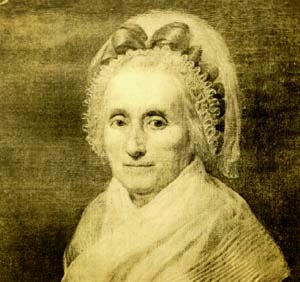
The Mother of Her Country?

Sunday, February 9, 2014

Birthplace of an Icon

The Man from  Pope?


Okay - I made a really bad pun linking His Excellency to His Elvisness.  George Washington was actually born on a small tobacco plantation near Pope's Creek, Virginia. Not exactly Hope, AK. Since this is his birth month I thought I'd do a few short blogs to fill some of the blanks on his early days.


The reconstructed house today
Washington's great-grandfather settled the plantation in 1657 at the original site on Bridges Creek but the family later acquired more land on nearby Pope's Creek.  That is where the first section of the house in which George Washington was born was built. The house was erected before 1718 but his father later enlarged it. This was a familiar pattern for home dwellers in 18th century America. The home was again enlarged and by the mid -1770s had grown into a ten-room house, known as "Wakefield". The original house was destroyed by fire and flood on Christmas Day, 1779, and never rebuilt. But some thirty-two graves of Washington family members contained in a cemetery plot. These include Washington's half-brother,his father, grandfather, and great-grandfather.


Life on the Farm


Tobacco plantations required hard
labor by slaves to prosper
Was NOT kinda laid back. To keep a plantation from the debtors' hard work by all was the norm. All meaning the slaves, of course.  Washington's father cultivated tobacco on his several plantations, which was labor-intensive, involving the work of enslaved Africans and African Americans. By the time George Washington was born, the population of the Virginia colony was 50 percent black, most of whom were enslaved. An estimated "20 or so" slaves worked on the small tobacco farm at Popes Creek, during the time that Washington lived there.


How did they get there?


Well, by boat silly. In 1657, an English merchant ship sailed up the Potomac River, anchored in Mattox Creek, and took on a cargo of tobacco. With her new load, the ship ran aground on a shoal and sank. During the delay, a young officer, John Washington, His Excellency's great-grandfather became friends with a local planter, Colonel Nathaniel Pope. He became smitten with Pope's daughter Anne.  So instead of leaving when the ship was ready to set sail John Washington stayed behind and married Anne. This marks the beginning of the Washington family in America.  Colonel Pope gave the newlywed Washingtons a sweet wedding gift - 700 acres on Mattox Creek four miles to the east.  John Washington eventually expanded his land holdings to 10,000 acres.  In 1664, he moved his family to a property on Bridges Creek.  John's son Lawrence was born in 1659. He inherited most of his father’s estate.  Lawrence had a son named Augustine in 1694. Augustine inherited some property from his father but acquired more on his own. His holdings eventually included a sprawling plantation on Pope’s Creek.  Somewhere along the way, he acquired an iron furnace near Fredericksburg.


Moving on Up


The Potomac, that is. The Popes Creek property had a small house that Augustine expanded into a middle-sized manor house.  It was here that George Washington, the first son of his second marriage, was born on February 22, 1732.
Young George lived there until 1735 when his father moved the family further north to a plantation called Little Hunting Creek. Later, Little Hunting Creek would be given a new name: Mount Vernon.