Followers

Thursday, June 29, 2023

Yankee Doodle Spycraft


The past few posts discussed spycraft—general methods of intelligence operations. While often used interchangeably with tradecraft, it encompasses a wider range of activities. Merriam-Webster defines tradecraft as “the techniques and procedures of espionage.” We will focus on specific techniques for this discussion. None are exclusive to the time of the Yankee Doodle Spies. 


Washington as Spymaster

World’s Oldest Profession?

Spying has existed since ancient times. By the mid-19th century, nearly all nations used tradecraft in their intelligence efforts. Formal intelligence agencies were active in European capitals, especially in major cities like Paris, London, and Madrid. However, on American battlefields, most intelligence activities were spontaneous and typically overseen by the local commander. 


The perfect venue for European espionage

General Washington famously took a special interest in such matters, but nearly all commanders on both sides did as well – sending out scouts, reconnaissance patrols, and spies. Some appointed officers to oversee spy networks made up of one or more agents, sometimes called assets. Benjamin Tallmadge, a major of the Second Continental Dragoons, was one such handler who led the Culper Ring in New York City and Long Island. During the Philadelphia campaign in late 1777, Washington’s agent handler was another Continental Army officer, Major John Clark.


Benjamin Tallmadge

Cover

The complexity of today’s high-tech and interconnected world makes cover activities extremely challenging. In the 18th century, when records were poorly kept or even non-existent, a simple “legend” might have been enough to protect a spy. A legend refers to a person using a fake identity or credible story to infiltrate a target organization instead of recruiting an agent in place (behind enemy lines). Nathan Hale went behind British lines in New York in 1776, using a traveling schoolmaster as his cover. Both sides used very light cover, primarily by adopting pseudonyms. Records were crudely maintained and identified, apart from letters of introduction. 


Nathan Hale using schoolmaster cover


In 1778, American Captain Allan McLane volunteered to spy on the British garrison at Stony Point, a fort on the Hudson south of West Point. McLane dressed as a “country bumpkin,” claiming he was escorting a lady to visit her son at the fort. He returned safely with valuable intelligence for General Washington.
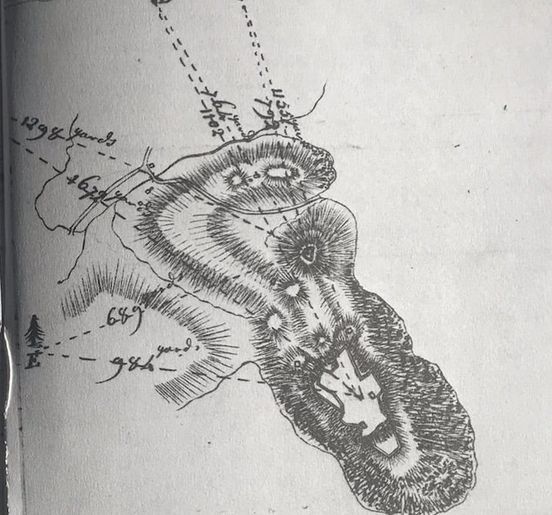

Defense plans for Stony Point

Real or Concealed?

Fans of James Bond and other modern spy thrillers recognize concealment devices used to hide espionage items, messages, plans, or maps. These include gadgets like hollowed-out coins, books, or other objects. During the Revolutionary War, devices could be simple, as exemplified by British Major John Andre hiding plans for West Point’s defenses in his shoe. 


Major Andre - shoeless spy

A more complex plot by General Henry Clinton failed in 1777 when he sent an officer named Daniel Taylor up the North (Hudson) River to inform General John Burgoyne of his plans. The message, written on silk, was hidden inside a silver ball made to look like a musket ball. The unlucky Taylor was captured, and he swallowed the ball during questioning. His interrogators caught him in the act, and the use of emetics quickly revealed the device.


Messages could be secreted in silver balls 

Broadcasting 

In the 20th century, spies might have used a one-way voice link, a radio-based communication system to talk with agents in the field, often (but not only) using shortwave radio frequencies. Newspapers offered a similar method in the 18th century. Classified ads were a useful way to communicate. Newspapers like New York City’s Rivington’s Gazette served this role for the British and Americans.


Rivington's Royal Gazette

Cryptography

The use of special techniques for secure communication dates back to ancient times. By the era of the Yankee Doodle Spies, various codes and ciphers were in use. Letters of the alphabet replaced other letters to hide the message's content. The sender and receiver must share the same key, which can be reused, or, for the highest security, a one-time pad, which changes the key with each message. Sometimes, a network might have its own template, like a book, to serve as the cipher’s key.


Code of the Culper Ring

General Washington used a code system with numbers and letters, made famous by the Culper Ring working in New York and Long Island. For example, 38 meant attack, 192 meant fort, and New York was 727. Sometimes, harmless words were added to the message to hide the true meaning. Another secret method involved using a published book or dictionary, where a specific word on a certain page and line was used to decode the message. A familiar book or dictionary essentially hides in plain sight and isn't threatening if it gets into the wrong hands. 

Steganography 

The art or practice of hiding a message, image, or file within another message, image, or file is a modern high-tech activity today. However, 18th-century intelligence often used hidden messages. Usually, a real message was embedded in a book, newspaper, letter, or other cover text. 


Hidden in a book

The British used a technique to hide secret messages within text by applying a paper template called a “mask.” When the mask was overlaid, the hidden message could be read. The information was arranged in an hourglass shape. 


Masked Letter

Invisible ink grew in popularity. Lemon juice was used initially, but later, a special liquid called stain enabled secret writing to be visible only to the person with the stain. Sir James Jay, the brother of Revolutionary leader John Jay and head of New York’s Committee for the Detection of Spies, invented it in London. Luckily for the Americans, Sir James secretly sent a bottle of stain to his brother, who was involved in counterintelligence activities. Washington took advantage of this new high-tech ink, often writing in the blank space between the lines of a letter or a book.


John Jay

Cutouts

Espionage services used cutouts—typically someone not suspected—to pass information between agents. These cutouts had limited knowledge of the final destination or the spy’s identity, providing extra security if they came under suspicion. Colonial taverns and coffee houses served as ideal venues for this. Other places, like American spy Hercules Mulligan’s tailor shop in New York, might have played such a role.


Tailor Shop or Spy Central?

Dead Drop

The dead drop exchange remains a espionage tradecraft method used to pass items between two people using a secret location. Dead drops enable the exchange of information while avoiding personal meetings. These are typically secret locations at remote sites (sometimes in plain sight) where notes or items are left for later retrieval. The Culper Ring used a box buried on Abraham Woodhull’s farm, where Austin Roe would deliver intelligence gained at his New York tavern.


Returning from a dead drop on Long Island

The flip side is the “live drop,” where two agents meet to exchange items or information. The same ring used Long Island’s north shore coves as dead drops, where Caleb Brewster’s whaleboat could slip in, and he would retrieve the messages. 

Eavesdropping

Today, this includes electronic surveillance, wiretaps, and cyber collection. During the Revolutionary War, eavesdropping meant secretly listening to others' conversations without their permission, often just out of sight or behind closed doors. Lydia Darragh learned of a British plan for a surprise attack on General Washington’s army, which involved observing the British garrison in Philadelphia. General Howe was using her home as his headquarters, and her proximity gave her the access needed to uncover this.


Lydia Darragh in action

Surveillance

Monitoring behavior, activities, or anomalies is an easy yet effective technique. Surveillance was probably the most common method of gathering intelligence during the American Revolution. Pro-British Loyalists and American patriots were often mixed together and kept watch on each other, looking for suspicious or threatening actions. Scouts and patrols also observed enemy forces from afar. In 1775, Paul Revere’s spy network, known as the Mechanics, had watchers throughout Boston and the surrounding areas to report on British activities.


The Mechanics reported on 
the British Boston garrison

Front Organizations

These entities are created and controlled by another organization, such as intelligence agencies. Their goal is to avoid attribution to the organizing entity—providing plausible denial. They can take the form of a business, a foundation, or another type of organization. The most well-known of these during the Revolutionary War was Rodrigue & Hortalez et. cie, a front company established by Pierre Augustine de Beamarchais, a clockmaker and playwright who had access to the King and France’s Foreign Minister, comte de Vergennes. This trading company shipped surplus French military goods and other vital supplies to the colonies in exchange for American products like tobacco. The American fight likely would have collapsed without this covert help.


Beamarchais - playwright and 
covert action mastermind

Ask Me Anything

Both sides relied heavily on military interrogation. An interrogation is a questioning technique used by police, military, and intelligence agencies to obtain valuable information from uncooperative suspects. Interrogation involved various methods, from building rapport with the subject to asking repeated questions, sleep deprivation, or, in some countries, torture. Both sides also dealt with deserters who willingly provided military secrets during the Revolutionary War. The most brutal interrogations occurred during the internal conflict between patriots and Loyalists. This civil war within the American War of Independence was characterized by aggressive and merciless questioning of prisoners.


Interrogations could be brutal

Black Chamber Operations

Intercepting diplomatic correspondence from Europe in the early 18th century often involved hijacking postal services. During the American Revolution, both sides used similar secret methods by intercepting mail carried along regular postal routes, express riders, or couriers. These actions were usually kept secret, with letters carefully resealed and stamped. Washington and the British in New York City widely used this tactic, hijacking couriers and messengers. Since patriots and Loyalists lived among each other, there was no shortage of people willing to take part in such risky activities. 


Courier with a message - is it true or false?

During the start of the Yorkton campaign in 1781, General Washington used intercepted messages from British General Henry Clinton’s New York garrison by planting false information that was allowed to fall into enemy hands. The report helped create a false story – an upcoming invasion of New York. This operation enabled the French and Americans to gain an advantage over Clinton as they moved south to Yorktown and claimed victory.


Surveilling Yorktown

Monday, May 29, 2023

The Indispensable Spymaster


 "There is nothing more necessary than good Intelligence to frustrate a designing Enemy, and nothing requires greater pains to obtain." George Washington


As commander in chief of the Continental Army, George Washington was much more than a general. He was the de facto leader of the United States with concerns beyond the usual mission of commanding generals, such as arming, equipping, and training troops. He was a figurehead but also influenced the Continental Congress and state policies through persuasion. His responsibilities included every aspect of those mandates, making him the Army's chief logistician, personnel director, organizer, and trainer in many ways. Additionally, he served as the chief strategist and operational planner for all the Continental Army's operations departments.


The Indispensable Spymaster


It must be remembered that military staffs were not the well-organized teams of skilled planners and officers that developed in the French and Prussian armies of the following century—just a few aides de camp and orderlies reviewed and prepared correspondence on a daily basis. For major decisions, Washington consulted with Congress and senior military leaders. However, the daily management, often through "Orders of the Day" and "General Orders," was handled by Washington and a small circle of men around him.

Planning operations 


So it is no surprise that Washington added to his burden by serving as the Continental Army's spymaster. It was a role he took very seriously. And why not? He was a trained and skilled surveyor, a profession that requires an understanding of terrain—knowing the land, waters, fields, forests, and mountains. He traveled deep into the American frontier and understood the importance of time and space when planning ventures. Most importantly, his career was started by a spy mission.

Surveying - the handmaiden of intelligence


In 1753, Virginia's Governor Robert Dinwiddie sent a young Major Washington to spy on the French outposts deep in the upper Ohio River valley. Washington honed his recruiting skills by engaging the services of experienced guides and interpreters, one of whom was an explorer named Christopher Gist. In the densely forested mountains near the French Fort Duquesne (today's Pittsburgh), he met a Seneca chief named Half-King, who guided Washington to a meeting with the French.

Robert Dinwiddie


Washington gathered a wealth of data such as fort locations, numbers of canoes and bateaux, etc. But the key piece of information was Dinwiddie's purpose for the expedition: uncovering French intentions. They aimed to control the entire Ohio Valley and surrounding territory to maintain a monopoly with the tribes in the interior. After eighty days of trudging through snow-covered mountains and paddling along icy rivers with Gist, the young spy arrived in Williamsburg and handed the governor a detailed written report.


Lieutenant Colonel Washington


Ironically, his professional work caused Dinwiddie to send him back the following year at the head of a military force to support Virginia's claim to the territory. Lieutenant Colonel Washington's second expedition was a failure that sparked the French and Indian War in America and the Seven Years' War in Europe. In fact, the French and Indian War gave Washington the opportunity to lead the Continental Army in 1775.


Washington's map of the Ohio Valley, 1754

By the time Washington took command at Cambridge, Massachusetts, he had the skills and experience to plan and carry out intelligence activities. He spent the later years of the war leading the Virginia Militia Regiment, which was tasked with protecting the Shenandoah Valley from French-backed Indian attacks.


Washington's Army's weakness throughout most of the war forced him to use a strategy known as Fabian tactics, which depended on accurate intelligence, military security, and tactical deception to level the odds against the British. The Boston campaign offers a good example of this.


The Continental Army outside Boston was initially weak


Upon taking command, he discovered that the Continental Army was critically short on gunpowder. Washington enforced strict security measures to keep the army's most crucial secret safe. He went to great lengths to hide this situation from the British until he secured enough supplies. He also sought intelligence on British activities in Boston, but his main concern was their awareness of the gunpowder shortage.


Low supplies of gunpowder threatened the Army


During that period, a spy was uncovered at the highest levels – Doctor Benjamin Church, Chief Surgeon of the American Army. Secret correspondence with the British commander, General Gage, exposed Church's double role. Church claimed he was actually trying to convince the British of the Americans' large stockpiles of gunpowder. If true, this could have been an effective deception operation. But a military court convicted him. Was that also a ruse? Church disappeared at sea after his conviction, but many years later, historians uncovered secret British files that proved his espionage. Yet, was it true espionage or just a clever double agent operation? This affair may have fueled his obsession with enemy spies within his own camp, a fixation that persisted throughout the eight-year war.


Doctor Benjamin Church


During the rest of the war, George Washington kept a tight grip on the spies and spy networks surrounding the Continental Army: Nathan Hale's difficult mission, the tactical collection efforts of Knowlton's Rangers, and later the 2nd Continental Dragoons. Others include Hercules Mulligan reporting from occupied New York, Lydia Darragh doing the same from Philadelphia, and of course, the Culper Ring in New York City and on Long Island. There were also many other spies and networks that remain undiscovered.


Counterespionage was another area of Washington's personal focus. He was highly annoyed by Loyalists spying for the British, such as New Jersey's James Moody. The Sergeant Hickey Affair led to the dismantling of a spy ring and a potential assassination plan. The most infamous espionage challenge was posed by British Major John Andre, who recruited what many considered America's greatest war hero—Major General Benedict Arnold. Washington was present when Arnold was caught and personally oversaw the response, which included a plan to exchange Andre for Arnold, sending a Virginia Sergeant named John Champe to kidnap the treasonous general, and initiating a court-martial for Andre with his death sentence approved.


The capture of Major Andre


Washington used deception and military security throughout the war. He had to mislead the British about his Army's strength and intentions. There were many successes and failures as both sides engaged in deception and counter-deception. The stakes were high – the war's outcome could depend on their successful efforts.


Military patrol in winter


The most notable of these activities was Washington's use of his well-known and long-standing desire (some might say obsession) to capture New York City. In the summer of 1783, Washington finally agreed to French General Rochambeau's plan to join a French fleet heading toward the Chesapeake Bay and attack General Charles Cornwallis's Army on Virginia's Yorktown peninsula. 


General Jean-Baptiste Donatien de Vimeur, 
comte de Rochambeau 

For it to succeed, the British needed to be convinced not to send aid to Yorktown. He carried out a series of intelligence operations to create the illusion of an imminent Franco-American attack on the New York garrison. Fake troop movements, intentionally lost messages, and the whispers of spies persuaded British General Henry Clinton long enough to delay sending reinforcements to the besieged Cornwallis at Yorktown.


Spy at work


Even as the French and Americans moved south, their route was planned to look like an encirclement of the city until the very last minute. When Clinton realized he had been tricked, it was too late to help Cornwallis. By the end of October, the British had surrendered at Yorktown. Clinton's military options were running out, and the British government collapsed, installing a new administration more open to negotiations.


Washington's deception steals a march on Yorktown


The great spymaster succeeded in utilizing an early form of gray zone warfare. Most of these activities remained secret long after the war, and very few official records were kept— for obvious reasons. In a nation with divided loyalties, the lives of spies are always at risk. The 18th-century mindset that valued "honor" viewed spies with great disdain. However, Washington occasionally reflected on those who risked their lives and reputations for little reward or recognition. They couldn’t receive pensions or fame. The case of Nathan Hale is a possible exception, and that was for propaganda purposes.


Execution of Nathan Hale


The shadow war fought during the American Revolution was vital to its success. George Washington understood that. It is said he visited ordinary citizens for quiet talks during his post-war travels across the country while serving as President. In the end, all he could give them was his personal thanks. For the shadow warriors risking their lives and honor, a tip of the hat from the most remarkable man of the century was enough.


The Indispensable Man met many of his spies


Sunday, April 30, 2023

Spycraft and the Road to Rebellion

 This blog post might be better titled "Back to the Future." Not because it is about the iconic 1980s time travel film and its franchise, but because we are returning to the original focus of this blog and the Yankee Doodle Spies book series: espionage.


The American Revolution was, for many years, a hidden conflict. From shortly after the 1763 Treaty of Paris ended the French and Indian War, a slow-burning fuse of resentment, misunderstandings, and poorly thought-out policies widened the gap between the North American English settlers and their counterparts back home. Disputes over taxation, governance, Indian relations, western expansion, and trade began to simmer.


French and Indian War

The governance issue, in some ways, reflected a mirror image of the Whig–Tory divide in Britain, but it was mostly a distinctly American challenge. What should be the relationship between a home country and its colonized overseas territories as those territories grow and become prosperous polities in their own right?


Parliament

By 1775, Great Britain's population was estimated at around 8,000,000 people. But the American colonies had grown from a handful of settlements along the Atlantic coast in the early 17th century to a land of 2.500,000 people, with some frontier settlements over 100 miles westward.


The colonies stretched  as far as the Appalachians 
by mid mid-18th century

The standard of living in the colonies matched that of any European country. Agriculture was dominant, but tradesmen and merchants thrived as maritime trade expanded between the colonies, the West Indies, and some European nations.


American colonies were prosperous due to 
farming and trading 

The cities of Newport, New York, Boston, Philadelphia, and Charleston were growing in size, wealth, and culture. Philadelphia was the third largest city in the British colonies after London and Edinburgh. The great distances between these centers made uniting around shared ideas and actions difficult.


Philadelphia was the third city in the British Empire

A series of British policies starting in the 1760s began to irritate many people. Initially, political unrest grew among the educated and business classes, but with each attempt to suppress it, the unrest started spreading to the rest of the population. As political turmoil increased, political organizations also emerged.


                                       Resistance was secretly organized but openly practiced

Political leaders across the colonies secretly formed committees to avoid action by the royal authorities and their Loyalist supporters. These groups, which operated at local, county, and colony levels, conveyed political ideas and coordinated activities within and among the colonies.   

Committees met secretly

By 1775, most colonies had Committees of Correspondence (focused on communication and propaganda), Committees of Safety (for local defense and militia), and other committees for different purposes. Many future leaders of the American Revolution gained experience by participating in these committees, which laid the groundwork for American governance.


America's future leaders learned their business while 
organizing resistance

As the Royal Governors increased enforcement of British policies on the colonies, the committees learned to operate covertly and sometimes secretly. Groups like the Sons of Liberty or The Green Mountain Boys formed. But those with unwavering loyalty to the king, the loyalists, also countered these groups, often reporting on their activities and sometimes taking action.


Sons of Liberty taking action

The advocates for colonial rights waged a political war, often secretly and sometimes openly. The committees created protocols to conceal their actions and intentions and to identify those supporting the Crown. Political agitation evolved into armed rebellion, especially in Massachusetts, with the outbreak of fighting at Lexington and Concord and the siege of British-occupied Boston.


Insurrection became open rebellion when the British 
raided Lexington & Concord

The stakes were extremely high between the loyalists and the rebels, whose mutual disdain far exceeded the disdain between the patriots and the British. By that point, both sides were employing informants against each other. They developed methods for spotting potential spies and for conducting espionage. 


Spying in a tavern

The secret and stealthy measures developed over a decade of underground meetings, passing information quietly, and discreetly building political networks and organizations, would now be used in an open rebellion and then a war for independence that stretched from the backcountry of the Appalachian Mountains to the capitals of Europe.


Secret couriers pass information critical to orchestrating
 resistance and rebellion

Next, we'll examine some of the tradecraft, which I call spycraft, used during the time of the Yankee Doodle Spies.