Followers

Showing posts with label counterintelligence. Show all posts

Monday, May 29, 2023

The Indispensable Spymaster


 "There is nothing more necessary than good Intelligence to frustrate a designing Enemy, and nothing requires greater pains to obtain." George Washington


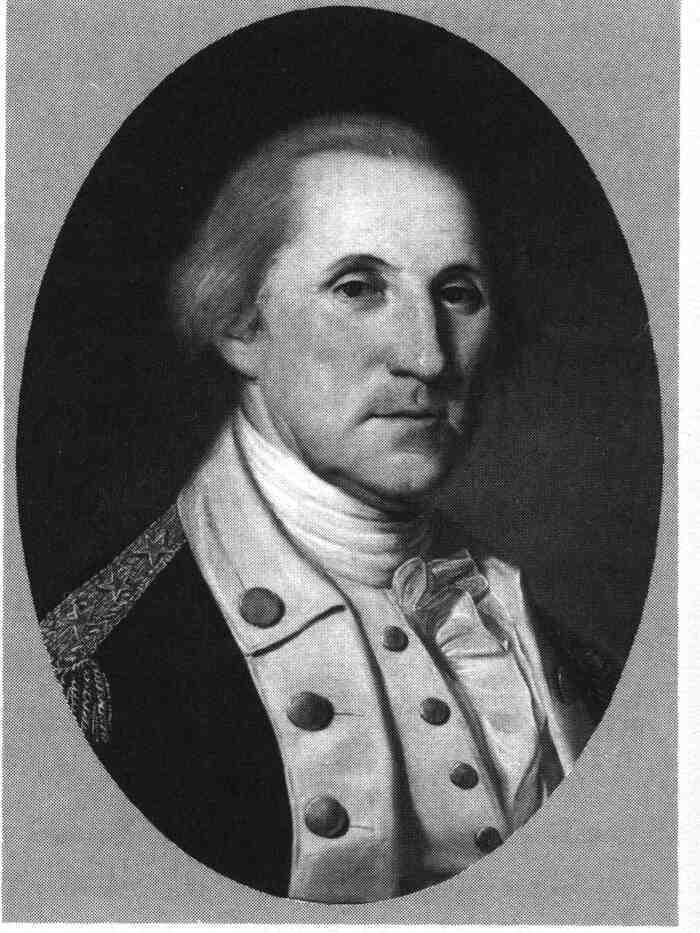
As commander in chief of the Continental Army, George Washington was much more than a general. He was the de facto leader of the United States with concerns beyond the usual mission of commanding generals, such as arming, equipping, and training troops. He was a figurehead but also influenced the Continental Congress and state policies through persuasion. His responsibilities included every aspect of those mandates, making him the Army's chief logistician, personnel director, organizer, and trainer in many ways. Additionally, he served as the chief strategist and operational planner for all the Continental Army's operations departments.


The Indispensable Spymaster


It must be remembered that military staffs were not the well-organized teams of skilled planners and officers that developed in the French and Prussian armies of the following century—just a few aides de camp and orderlies reviewed and prepared correspondence on a daily basis. For major decisions, Washington consulted with Congress and senior military leaders. However, the daily management, often through "Orders of the Day" and "General Orders," was handled by Washington and a small circle of men around him.

Planning operations 


So it is no surprise that Washington added to his burden by serving as the Continental Army's spymaster. It was a role he took very seriously. And why not? He was a trained and skilled surveyor, a profession that requires an understanding of terrain—knowing the land, waters, fields, forests, and mountains. He traveled deep into the American frontier and understood the importance of time and space when planning ventures. Most importantly, his career was started by a spy mission.

Surveying - the handmaiden of intelligence


In 1753, Virginia's Governor Robert Dinwiddie sent a young Major Washington to spy on the French outposts deep in the upper Ohio River valley. Washington honed his recruiting skills by engaging the services of experienced guides and interpreters, one of whom was an explorer named Christopher Gist. In the densely forested mountains near the French Fort Duquesne (today's Pittsburgh), he met a Seneca chief named Half-King, who guided Washington to a meeting with the French.

Robert Dinwiddie


Washington gathered a wealth of data such as fort locations, numbers of canoes and bateaux, etc. But the key piece of information was Dinwiddie's purpose for the expedition: uncovering French intentions. They aimed to control the entire Ohio Valley and surrounding territory to maintain a monopoly with the tribes in the interior. After eighty days of trudging through snow-covered mountains and paddling along icy rivers with Gist, the young spy arrived in Williamsburg and handed the governor a detailed written report.


Lieutenant Colonel Washington


Ironically, his professional work caused Dinwiddie to send him back the following year at the head of a military force to support Virginia's claim to the territory. Lieutenant Colonel Washington's second expedition was a failure that sparked the French and Indian War in America and the Seven Years' War in Europe. In fact, the French and Indian War gave Washington the opportunity to lead the Continental Army in 1775.


Washington's map of the Ohio Valley, 1754

By the time Washington took command at Cambridge, Massachusetts, he had the skills and experience to plan and carry out intelligence activities. He spent the later years of the war leading the Virginia Militia Regiment, which was tasked with protecting the Shenandoah Valley from French-backed Indian attacks.


Washington's Army's weakness throughout most of the war forced him to use a strategy known as Fabian tactics, which depended on accurate intelligence, military security, and tactical deception to level the odds against the British. The Boston campaign offers a good example of this.


The Continental Army outside Boston was initially weak


Upon taking command, he discovered that the Continental Army was critically short on gunpowder. Washington enforced strict security measures to keep the army's most crucial secret safe. He went to great lengths to hide this situation from the British until he secured enough supplies. He also sought intelligence on British activities in Boston, but his main concern was their awareness of the gunpowder shortage.


Low supplies of gunpowder threatened the Army


During that period, a spy was uncovered at the highest levels – Doctor Benjamin Church, Chief Surgeon of the American Army. Secret correspondence with the British commander, General Gage, exposed Church's double role. Church claimed he was actually trying to convince the British of the Americans' large stockpiles of gunpowder. If true, this could have been an effective deception operation. But a military court convicted him. Was that also a ruse? Church disappeared at sea after his conviction, but many years later, historians uncovered secret British files that proved his espionage. Yet, was it true espionage or just a clever double agent operation? This affair may have fueled his obsession with enemy spies within his own camp, a fixation that persisted throughout the eight-year war.


Doctor Benjamin Church


During the rest of the war, George Washington kept a tight grip on the spies and spy networks surrounding the Continental Army: Nathan Hale's difficult mission, the tactical collection efforts of Knowlton's Rangers, and later the 2nd Continental Dragoons. Others include Hercules Mulligan reporting from occupied New York, Lydia Darragh doing the same from Philadelphia, and of course, the Culper Ring in New York City and on Long Island. There were also many other spies and networks that remain undiscovered.


Counterespionage was another area of Washington's personal focus. He was highly annoyed by Loyalists spying for the British, such as New Jersey's James Moody. The Sergeant Hickey Affair led to the dismantling of a spy ring and a potential assassination plan. The most infamous espionage challenge was posed by British Major John Andre, who recruited what many considered America's greatest war hero—Major General Benedict Arnold. Washington was present when Arnold was caught and personally oversaw the response, which included a plan to exchange Andre for Arnold, sending a Virginia Sergeant named John Champe to kidnap the treasonous general, and initiating a court-martial for Andre with his death sentence approved.


The capture of Major Andre


Washington used deception and military security throughout the war. He had to mislead the British about his Army's strength and intentions. There were many successes and failures as both sides engaged in deception and counter-deception. The stakes were high – the war's outcome could depend on their successful efforts.


Military patrol in winter


The most notable of these activities was Washington's use of his well-known and long-standing desire (some might say obsession) to capture New York City. In the summer of 1783, Washington finally agreed to French General Rochambeau's plan to join a French fleet heading toward the Chesapeake Bay and attack General Charles Cornwallis's Army on Virginia's Yorktown peninsula. 


General Jean-Baptiste Donatien de Vimeur, 
comte de Rochambeau 

For it to succeed, the British needed to be convinced not to send aid to Yorktown. He carried out a series of intelligence operations to create the illusion of an imminent Franco-American attack on the New York garrison. Fake troop movements, intentionally lost messages, and the whispers of spies persuaded British General Henry Clinton long enough to delay sending reinforcements to the besieged Cornwallis at Yorktown.


Spy at work


Even as the French and Americans moved south, their route was planned to look like an encirclement of the city until the very last minute. When Clinton realized he had been tricked, it was too late to help Cornwallis. By the end of October, the British had surrendered at Yorktown. Clinton's military options were running out, and the British government collapsed, installing a new administration more open to negotiations.


Washington's deception steals a march on Yorktown


The great spymaster succeeded in utilizing an early form of gray zone warfare. Most of these activities remained secret long after the war, and very few official records were kept— for obvious reasons. In a nation with divided loyalties, the lives of spies are always at risk. The 18th-century mindset that valued "honor" viewed spies with great disdain. However, Washington occasionally reflected on those who risked their lives and reputations for little reward or recognition. They couldn’t receive pensions or fame. The case of Nathan Hale is a possible exception, and that was for propaganda purposes.


Execution of Nathan Hale


The shadow war fought during the American Revolution was vital to its success. George Washington understood that. It is said he visited ordinary citizens for quiet talks during his post-war travels across the country while serving as President. In the end, all he could give them was his personal thanks. For the shadow warriors risking their lives and honor, a tip of the hat from the most remarkable man of the century was enough.


The Indispensable Man met many of his spies


Sunday, May 20, 2018

Why Spy?


During my years in US Army intelligence, I had the bright idea of writing a spy novel. Half the people I worked with thought of the same idea. Some even tried to write drafts. But very few finished, and to my knowledge, even fewer got published. As a long-time student of history, I wanted to create a historical portrait, not just craft a spy story. 

Until recently, few Americans knew that, besides being the top soldier during the Glorious Cause, George Washington was also the country's leading spymaster. However, we in Army Intelligence were aware of his secret role. So, when I decided to start writing my spy novel(s), I chose to blend spy themes with fictional versions of James Bond set against the American Revolution. 

The Yankee Doodle Spies series celebrates—tales of men and women who fought the secret war—gathering intelligence to give Washington an edge over the mighty British land and sea forces.


George Washington was the great case officer
of his day


Origins of the Term, Spy


Words have meaning. So let’s examine the word, Spy – the key term in this series. Where does it originate from, and what does it mean? According to one source, the word comes from Old French and other European languages.


Benjamin Tallmadge coordinated
Washington's spies

A Noun


The word 'Spy,' as a noun, dates back to the mid-13th century and originally meant "one who spies on another." This comes from the Old French word 'Espie,' meaning a "spy, look-out, or scout." In Middle English, 'spy' derived from the shortening of the Old French word 'Espie,' which included 'espying,' 'espier,' and 'espy.' The Old French term itself has Germanic roots, originating from an Indo-European root shared by the Latin word 'specere,' which means to behold or look.


Old French was connected to Latin


A Verb


To spy, the verb has the same mid-13th century origin and meant to watch secretly. This originated from the Old French verb espier, which meant "observe, watch closely, spy on, or find out," likely from the Frankish spehon or another Germanic source. The term spehon appears in Proto-Germanic and Old High German, where it also meant "to look out for or scout." Old English had the verb spyrian, meaning "to make a track, go, pursue; ask about, investigate." The related noun was spyrigend, meaning "investigator, inquirer."


Old High German was connected to Frankish and Old French


The Italian verb, spiare, and Spanish espiar also derive from the Germanic root from around 1300 and similarly mean "to catch sight of.” The term evolved into the modern German verb, spähen, meaning "to spy." The word further developed in Middle Dutch to become Spien.


One of many iterations of the Army
Special Agent's Badge 


Interestingly, as I worked with German counterintelligence during the Cold War, I noted that their modern term for a spy is 'Spion,' and espionage is 'Spionage.' The root of the words and their basic sounds remain unchanged. However, pay attention to some other action descriptors in the etymology, such as observe, watch closely, find out, look out, ask about, and so on.

A Curious 18th Century Use


We can see that the term, “to spy,” means learning through observation and, of course, reporting. Now, done clandestinely during wartime, it aligns more closely with the modern definition. However, the term spy once had another use - related to observing and gathering information to report on it. So, it’s not a big leap to connect this terminology to another meaning for the word, “Spy."


"Spy" used a journal


In the 18th century, the term “Spy” was used as the name for major periodicals in colonial and post-colonial America. These publications played a significant role in shaping colonial thought during the struggle for independence before the actual war. We will discuss this in more detail in an upcoming post.


Saturday, June 28, 2014

BOOK REVIEW: Spies, Patriots and Traitors by Kenneth Daigler


To paraphrase the most interesting man in the world... I don't usually do book reviews on the Yankee Doodle Spies blog. Still, when I do, it's about a great book that highlights the importance of the American Revolution from a military intelligence perspective. This new book definitely made the list.


Kenneth Daigler spent his career as a CIA officer, where he learned the craft of espionage firsthand. In his latest book, Spies, Patriots, and Traitors, he reveals some of the nation's darkest espionage secrets. But they are secrets that have puzzled historians for over 200 years: secrets of the American Revolution. There have been a few books on this subject in recent decades, but none have the breadth and scope of this one. And none are as well documented and well written. Daigler covers a wide range of espionage activities and presents the big picture while diving deep into areas that are sure to fascinate the reader. He starts at the beginning—showing that even the political unrest that led to armed rebellion had an intelligence component. In a sense, he depicts a nation born of secrecy and covert activities.


A Case Officer's Perspective on the Two Big Cases


One of the many things that sets this work apart from others of its kind is the author's personal experience in the espionage trade. He draws on that to analyze numerous cases and explains the timeless aspects of espionage: planning, security, and communications. He shows that the absence of these three elements led to two failures—one for us and one for the British. 

Interestingly, these are the most famous espionage cases of the war: Nathan Hale and Benedict Arnold. In the case of Hale, the entire operational cycle was as ineffective as it could be. The author notes that Hale was inherently unqualified for the mission, which was poorly defined. Unsurprisingly, it failed on all fronts and ended in disaster. 

Daigler also points out that, despite some operational shortcomings, Arnold's case could have succeeded. However, Arnold's personal traits—ego, greed, arrogance—caused him to pressure his former handler, the inexperienced Major John Andre, into making a series of mistakes that eventually cost the British the operation and Andre his life.

Benedict Arnold


Lesser-Known Spies


 Daigler explores lesser-known cases with just as much enthusiasm: the establishment (or lack thereof) of counterintelligence under John Jay; Nathaniel Greene's skilled use of intelligence to secure victory in the southern campaign; the "secret war" in Europe; and Washington's efforts to employ intelligence, counterintelligence, and deception to surprise the British at Yorktown. The author also offers a perspective on the Culper Ring that differs from other accounts, highlighting that it was just one of many agencies Washington relied on—albeit a crucial one. 

Daigler details the activities of Benjamin Tallmadge—not only with his Culper Ring but also in other roles he served for Washington. The book recounts the daring exploits of the little-known John Honeyman, who spied on the Hessians during the darkest days just before the surprise attack on Trenton. Another noteworthy part of the book is his discussion of the plot against Washington and the British effort to destabilize the American economy through counterfeiting Continental dollars.


Benjamin Tallmadge


Other Pluses


James Armistead
The book is full of engaging illustrations of both well-known and lesser-known figures in the intelligence world. The author has also created a timeline of espionage during the American Revolution and, most helpfully for the layperson, a Glossary of Tradecraft Terms. He offers a powerful look at the struggles of African Americans, many of whom were slaves used by both sides. 

Ultimately, neither side treated them very well for their service, although there are some notable exceptions. The story of the African slaves is best exemplified by James Armistead, owned by a Virginia planter, who infiltrated British lines during the Yorktown campaign. 

His bravery and resourcefulness provided critical intelligence while under the noses of the British. He also discusses the role of counterintelligence, the British approach to espionage, and, of course, George Washington’s role as the Case Officer in Chief (my words).


Did intelligence win the war for American independence?


The author concludes with a discussion of that topic. One must conclude that intelligence played a crucial role in America's survival during the early years of the war and its ultimate victory. This does not mean that British intelligence was lacking. They had excellent worldwide coverage of American interests, and their Loyalist allies provided ready-made pools of agents, some already organized into cells. However, their leadership failed to capitalize on the opportunity. In contrast, George Washington clearly developed, over the course of an eight-year war, the ability to use intelligence and counterintelligence more effectively than the British high command. And that made all the difference.


George Washington, the Spymaster


I wish I had this book when I first started writing the Yankee Doodle Spies novels several years ago. Now that it’s available, it serves as an excellent non-fiction companion for those reading the series. You'll find many of the events and characters depicted through the fictional persons and actions in the Yankee Doodle Spies series, along with numerous historical figures and events as well.


I give this very excellent work, Four Tricorne Hats!


Wednesday, July 3, 2013

Espionage: Born on the 4th of July


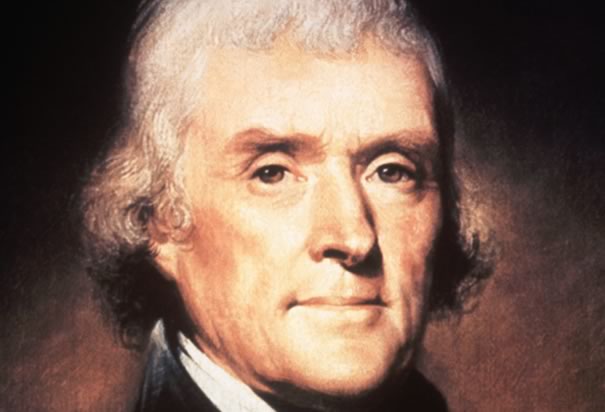
Thomas Jefferson
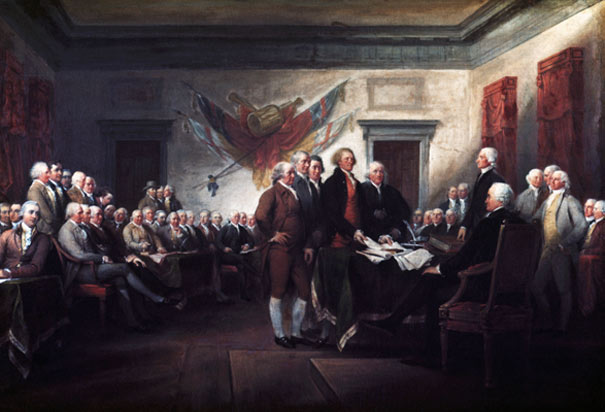
The birth of our nation is rightly celebrated on the 4th of July, although the actual signing was not on the fourth and Thomas Jefferson drafted what is perhaps the most famous document in the world between the 21st and 28th of June, 1776.  But, as of the 4th of July, the British colonies in North America were no longer fighting for their rights as Englishmen, but for their independence as a sovereign nation.


What has this to do with espionage and the Yankee Doodle Spies?  Well, everything. The Yankee Doodle Spies are stories of action and espionage during the American Revolution. Counterintelligence plays no small role in the stories and its prime purpose is to root out spies to be prosecuted for treason.  Espionage is a legal term for treason acted out by passing a nation's secrets to a foreign power.  So, you have to have a nation to have treason, and by extension, you have to have a nation to have espionage.


Intelligence gathering was a little known but widespread activity by both sides throughout the eight year war that was the American Revolution. One famous (or infamous) spy during the war was Doctor Benjamin Church.  In the environs of Boston, this chief medical officer for the rebel army passed secrets to the British high command through his mistress in Boston.  His mistress betrayed him. Exposed and convicted at court martial - he could not be found guilty of treason (espionage) because as British subjects, the rebels came under British law and treason (espionage) could only be committed against the King.  The irony was rich!


Church was nonetheless kept under arrest for some years and finally exchanged in 1778.  He died when the ship he was returning to England in was lost in a storm at sea.


Had Church been identified after July 4th 1776, however, he would have been traitor to a nation and thus guilty of treason (espionage).  The states had committees for detecting spies, but these were informal and poorly coordinated efforts that often confused misplaced loyalty with treason.  As Americans celebrate the birth of our nation with the usual parades, fireworks and barbecues, we should keep in mind that the Declaration of Independence, which birthed the world's first modern republic and set the precedent that ideas can challenge dynasties...created the political and military conditions for a counterintelligence service that could ultimately bring charges of espionage against traitors to the Glorious Cause.

Signing the Declaration of Independence