Followers

Showing posts with label Ninety-Six. Show all posts

Saturday, September 16, 2017

Blackstock

A Savage War of Posts


Gen Thomas Sumter
The William Blackstock farm became the site of one of those "small" but violent clashes that shaped the complex mosaic of the American Revolution in the South. The farm, which includes several tobacco barns, sits just off the Tyger River on the western edge of Union County, South Carolina. This remote farm provided the setting for one of American General Thomas Sumter's most significant battles. 

In November 1780, Georgia militia under Elijah Clark and John Twiggs reinforced Sumter, whose forces threatened Loyalist outposts north of the famed bastion at Ninety-Six. Sensing that a threat to Ninety-Six could make it impossible to hold, the British commander in the South, Lord Cornwallis, ordered famed cavalry leader Banastre Tarleton to break off contact with Francis (Swamp Fox) Marion's militia along the Pee Dee River. 

Tarleton hurried to his new mission, hoping to trap Sumter's forces between himself and the British at Ninety-Six. Luckily, a British deserter warned Sumter, who quickly retreated to avoid the trap. Not to be outdone, the aggressive Tarleton chased after the rebel force, determined to catch them before they could escape. To do this, he led his cavalry, leaving infantry and artillery to follow behind.


A Defense Well Prepared


Elijah Clarke
Sumter's force reached the Tyger River at dusk on November 20th. The clever Sumter realized he had "good ground" and decided to establish defensive positions to frustrate his pursuers with a strong defense of the farm. The famous "Gamecock" deployed his 1,000 men in defensive positions. 

They didn't have to wait long before Tarleton's Legion—190 dragoons and 80 mounted infantry of the British 63rd Regiment—was spotted moving toward them. Recognizing that the rest of Tarleton's force was far behind, Sumter chose to surprise the leading troops with an attack. He left his center to defend the high ground, taking cover behind five log cabins and a rail fence. 

Elijah Clark was sent with his 80 Georgians around Tarleton's right flank to block the advancing British forces. Meanwhile, Sumter led the main charge with 400 militia against 80 dismounted 63rd Regiment soldiers who had positioned themselves to the right of the British advance.


Sketch of the battlefield


A Back and Forth Struggle


Sumter's plans disintegrated when the British 63rd repelled his militia, who retreated back through the houses anchoring the center. Not to be discouraged, Sumter sent a force of mounted infantry under Colonel Lacey with orders to strike the British dragoons on the left. Lacey's men surprised the dragoons, who were admiring the work of the 63rd. Lacey's first volley caused 20 casualties among the troopers. However, they quickly recovered and drove off Lacey's men. 

Eager to defeat the rebels, the 80 men of the 63rd attacked the center. A bayonet charge led by Major John Money attempted to push back the rebels, but the 63rd advanced too close to the farm buildings and came under fire from Colonel Henry Hampton's men within, who, as usual, aimed "at the epaulets and stripes." Money and two of his lieutenants were killed, and, according to an officer of Fraser's Highlanders, a third of the privates as well. 

Meanwhile, other partisans maneuvered around their right flank to attack Tarleton's dragoons, who were in their saddles but only watching the action. Now that Hampton's South Carolina riflemen and some of the Georgia sharpshooters held the line to check the British, Sumter's men began to rally around them. The British infantry was trapped under the muskets and rifles of an enraged patriot force. 


Banastre Tarleton


Seeing their plight, Tarleton led a desperate charge at the American center. The reckless uphill cavalry charge against riflemen firing from cover was not successful. One report described so many dragoons being knocked from their horses that the road to the ford was blocked by their bodies, fallen chargers, the wounded, still targets, struggling to get back over their stricken comrades and kicking, screaming horses. Despite this chaos, the British forces retreated in good order.


Tarleton's cavalry attack was repulsed by intense American fire


Change of Command


John Twiggs
Not without his own bravado, Sumter rode to the center of his line as the British dragoons were driven back. As they retreated, members of the 63rd fired a volley at him and his officers. Sumter was severely wounded, hit in the arm and the back, and had to give up command to John Twiggs. 

Knowing he wouldn’t have any more success that day, Tarleton pulled back and waited for reinforcements, hoping to launch another attack the next day. Fearing that troops from Ninety-Six might join with Tarleton to overpower them, the Americans retreated. To fool the British scouts, Twiggs left campfires burning and withdrew under cover of night. 

Tarleton claimed victory on the battlefield the next day. But he probably felt the frustration as he had to bury the dead from both sides. The cost was uneven: British casualties included 92 killed and between 75-100 wounded. American casualties were 3 killed, 4 wounded, and 50 captured.


View of American defenses


After the Battle


The engagement at Blackstock Farm is little known and nearly forgotten for many years. Tarleton boasted of his victory and the dispatching of the hated Sumter. Yet his regulars failed to drive the rebel militia from the field and suffered an unacceptable loss ratio. Moreover, Sumter would return to action in a few months. Meanwhile, his wound opened the door for General George Washington to appoint the New England fighting Quaker Nathanael Greene as the overall commander of the Southern Department.


Nathanael Greene


The Battlefield Today


The Blackstock Plantation, formerly a series of tobacco barns, lies in a hilly, wooded area. In the eighteenth century, much of the land of the battlefield was cleared but has since become overgrown with small pines and brush. No above-ground evidence remains of Blackstock’s barn or house, which were located near the area marked by the historical marker designating the battle site. There are also no modern buildings in the battlefield area. The site covers 54 acres and features walking trails just south of the Tyger River.


Sunday, November 2, 2014

They Called Him Wizard Owl


As I studied the American War for Independence while writing the Yankee Doodle Spies novels, the name of Andrew Pickens seemed to appear at crucial moments in the Southern Campaign. Who was this man? When thinking of the American Revolution in South Carolina, the names Francis Marion, William Moultrie, and Thomas Sumter immediately come to mind. I decided it was time to give Pickens his proper recognition.


Frontiersman vs Cherokee Btave


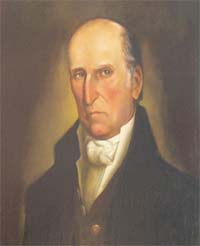
Frontiersman: This little-known First Patriot was one of the leading South Carolinians and Americans. He was a prominent frontiersman, successful farmer, and accomplished soldier who later served as a South Carolina representative in Congress. Andrew Pickens was born in Pennsylvania in 1739. The son of Scots-Irish immigrants, at thirteen, Pickens moved with his family to find land further south. They traveled the route many Scots-Irish took at the time: down the Shenandoah Valley, where they settled for a while in Augusta County, Virginia. Eventually, they moved on to South Carolina, settling first near Waxhaws on the North-South Carolina border and finally in Abbeville County, near the Georgia line. The family settled in an area called the Long Canes. Here, Andrew Pickens married. He farmed and raised cattle like many other settlers. The young Pickens became familiar with his Indian neighbors and traded with them.


General Andrew Pickens


Patriot: As the American Revolution neared, political sentiments were strong in the South—both for and against. From the beginning, its inhabitants divided into Patriots and Loyalists (or Whigs and Tories). Pickens was an enthusiastic Patriot and quickly became a military leader, initially leading expeditions as a militia captain against the Cherokee, who had allied with the Loyalists in hopes of keeping their lands. In 1779, the British sent soldiers to South Carolina and North Georgia to boost Loyalist support. Now Colonel, Pickens led his three-hundred-man militia in efforts to support the Patriot cause. He defeated a much larger Loyalist force of over 700 men under Colonel Boyd at Kettle Creek in North Georgia, just south of the Long Canes.


Battle of Kettle Creek


Warrior: The victory at Kettle Creek slowed the recruitment of Loyalists on the frontier. But by 1780, the British had taken Charleston, captured the southern Continental Army, and marched inland from the Carolina coast. The situation was dire. When Charleston fell in May 1780, Pickens and other militia leaders surrendered to the British and, under oath, agreed to sit out the war under British protection. However, the Loyalists destroyed his farm and frightened his family, giving Pickens the reason to break his parole and take the field again. He gathered his militia and started waging guerrilla war in retaliation. The war in the South was fierce. Pickens borrowed heavily from Cherokee tactics and employed those skills in partisan warfare. He was brave and clever in leading partisans.


Battle of the Cowpens


In January 1781, British Colonel Banastre Tarlton attempted to destroy an American force led by famed rifleman Daniel Morgan. Pickens was a militia leader in the engagement and played a key role in defeating British Colonel Tarleton. American commander Daniel Morgan decided to use the reputation of the militia as a rabble that wouldn't stand against a disciplined British attack to lure the British in. As they waited for the enemy, Morgan asked them for "just two volleys and then retreat." Easier said than done in most cases. But with Pickens commanding the militia, they did exactly as Morgan asked. 


Dan Morgan issues orders at Cowpens


When the British saw the militia retreat, they thought they had won and advanced straight into Morgan's trap. Pickens's men rallied behind the Continentals and participated in the victory, which was crucial for the Patriots in the South. Until then, they had been repeatedly forced to retreat before British forces. For his "spirited conduct" at Cowpens, the Continental Congress awarded Pickens a sword, and the State of South Carolina promoted him to Brigadier-General in the state militia. 


Pickens appeared at all the key engagements in the South. Besides Cowpens, Charleston, and Savannah, he was at Augusta, Georgia, when it fell. Pickens was at Ninety-Six for more than one of its many engagements. In numerous skirmishes, he used his knowledge of the Cherokee way of war to flush out the many Tories in their midst.

Fort at Ninety-Six


Citizen: After the Revolution, Pickens acquired land in frontier South Carolina on the banks of the Keowee River, across from the old Cherokee town of Seneca. There, he built a house named "Hopewell" and became a backcountry gentleman. He served as a political middleman between the Cherokees and the new American nation. Although Pickens had begun his military career fighting the Cherokee in the Anglo-Cherokee War, he was well-respected by tribal leaders. They called him "Skyagunsta"—or Wizard Owl. In his later years, he sympathized with Indian causes. Among the whites, he was sometimes known as "The Fighting Elder" because of his Presbyterian beliefs. 


Pickens later served in Congress


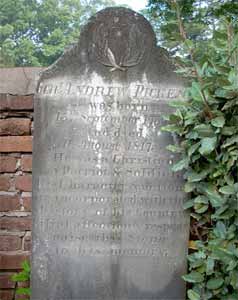
Like many frontier settlers, Pickens was a family man. He married Rebecca Floride Calhoun in 1765. They had 12 children. Pickens served as a U.S. Congressman. His son, Andrew Pickens Jr., was governor of South Carolina from 1817 to 1819, and Ezekiel Pickens became lieutenant governor of South Carolina from 1802 to 1804. A grandson, Francis Wilkinson Pickens, also served as governor of South Carolina from 1860 to 1862. Andrew Pickens died near Tamassee, South Carolina, in Oconee County, on August 11, 1817. He is buried at Old Stone Church Cemetery in Clemson, South Carolina. 


General Andrew Pickens' Grave at Clemson


On a final note, it is said that Pickens's war experiences helped provide the basis for the Mel Gibson film "The Patriot." And there are some overlaps indicating they drew somewhat from it. Clearly, if the writers had stayed truer to Pickens's remarkable life, the film would have been all the better for it. Certainly, our nation is all the better for it.


Pickens later served in Congress