Followers

Showing posts with label War for Independence. Show all posts

Friday, January 30, 2026

Commander in the Crucible

The first edition of the Yankee Doodle Spies Blog continues to highlight historical characters featured in the series. In this case, we begin looking at the characters in my upcoming novel, The South Spy, book six in the series. We'll start with the man who was there at the start, but was given overall command of British forces in North America midstream.

New World Origin

Henry Clinton, born April 16, 1730, in Newfoundland, was the son of Admiral George Clinton, a Royal Navy officer and colonial governor of New York (1741–1751). This early exposure to America shaped his career, though he chose the army over the navy. 

Admiral George Clinton

Gone to Soldier

At age 15, he joined the New York militia as a lieutenant in 1745, gaining initial experience before returning to England in 1749. In 1751, he was commissioned in the Coldstream Guards, advancing through merit and patronage to become aide-de-camp to Sir John Ligonier in 1756. 

During the Seven Years' War (1756–1763), he rose to lieutenant colonel in the 1st Foot Guards by 1758. He served in Germany from 1760, fighting at Villinghausen (1761), Wilhelmsthal (1762), and Nauheim (1762), where a severe wound as an aide-de-camp to Prince Ferdinand ended his active campaigning. These experiences sharpened his tactical skills and forged ties with future Revolutionary figures such as Charles Lee, Lord Stirling, and Charles Cornwallis. 

Battle of Villinghausen

Marital Interlude Disrupted

After the war, Clinton married Harriet Carter in 1767; they had five children, but her death in 1772 from childbirth complications plunged him into prolonged grief. Promoted to major general in 1772, he entered Parliament (Boroughbridge 1772–1774, Newark-on-Trent 1774 onward) through the Duke of Newcastle's influence and briefly toured Russian forces in 1774 during the Russo-Turkish War. The American crisis called him back to service. 

Joining the Dream Team

In February 1775, Clinton sailed to Boston as third-in-command under Thomas Gage (along with William Howe and John Burgoyne, a sort of DreamTeam of military leaders), arriving on May 25. As second-in-command under Howe after Gage's recall, he urged aggressive action. At Bunker Hill (June 17, 1775), he rallied reserves amid heavy losses and later deemed it a "dear-bought victory." 

Bunker Hill

The Boston siege ended with an evacuation to Halifax in March 1776. In 1776, Clinton led a southern expedition to the Carolinas but failed at Sullivan's Island (June 28) against strong defenses. Rejoining Howe, he supported a flanking plan that secured victory at Long Island (August 27), though Howe's caution prevented annihilation. Clinton conducted landings on Manhattan and in Westchester, but growing friction with Howe over tactics soured their relationship. He occupied Rhode Island in December 1776 with ease. 

Frustration and Knighthood

Frustrated, Clinton sought resignation in early 1777 and returned to England briefly. Knighted (Knight of the Bath, April 1777) to retain him, he resumed as Howe's deputy in New York that July. Denied the northern command (which was given to Burgoyne), he criticized isolating Burgoyne and warned of disaster. In October, his diversionary Hudson River attack captured Forts Clinton and Montgomery but came too late to relieve Burgoyne at Saratoga. 

Sir Henry Clinton


Commander in Chief

Appointed Commander-in-Chief in America (February 1778, assumed in May after General William Howe's resignation), Clinton faced France's alliance with America, prompting troop transfers to the Caribbean and a defensive posture in the north. He withdrew from Philadelphia to New York (June 1778), clashing indecisively at Monmouth. Repelling a French threat at Newport (August), he shifted to a Southern Strategy to exploit Loyalist support, disrupt rebel economies, and rally sympathizers in Georgia and the Carolinas. 

Monmouth: First Battle as Commander in Chief


By spring 1778, the American War for Independence had entered its final phase—a global war that would make the Caribbean and its valuable spice islands a major theater. This was precipitated by France’s formal entry into the war and its open alliance with America in 1778, and was further complicated by Spain’s declaration of war against Britain in June 1779.  

Southern Strategy

Lord George Germain and the British commander-in-chief, Sir Henry Clinton, devised the so-called Southern Strategy amid mounting frustration. Stymied by inconclusive northern campaigns and the transfer of several crack British regiments to the islands after the French alliance in 1778, Clinton advocated shifting the focus to Georgia and the Carolinas to rejuvenate British fortunes and form a secure flank for the valuable British possessions in the West Indies.

George Germain


Clinton hoped to capitalize on perceived Loyalist sympathy, seize coastal strongholds to rally supporters, disrupt rebel economies, and threaten the Continental Army. A sound strategy, but one fraught with logistical nightmares, including overextended supply lines and unreliable intelligence on Loyalist numbers.

Savannah Success

In late 1778, Clinton dispatched Archibald Campbell with 3,000 troops; Savannah fell swiftly (December 29) with minimal losses, restoring royal control in Georgia. A Franco-American siege of Savannah (September–October 1779) under d'Estaing and Benjamin Lincoln failed disastrously on October 9, with allied losses exceeding 800, while the British suffered fewer than 150. Clinton hailed it as the war's greatest event, though subordinates such as Augustine Prévost acted semi-independently. 

Success at Savannah


Clinton in Charge

Clinton personally led the decisive Charleston campaign, departing New York in December 1779 with 8,500 troops and Admiral Marriot Arbuthnot's fleet. Storms delayed the arrival until February 1780; Clinton suffered from seasickness and fretted over losses. Landing south of Charleston, he methodically encircled the city, crossing the Ashley River by late March and digging siege lines against Lincoln's 5,000 defenders. 

Charleston


Cavalry raids, including Banastre Tarleton's at Monck's Corner (April 14), seized supplies. Arbuthnot's delays in blockading the harbor intensified Clinton's impatience. Artillery bombardment, including heated shot, devastated Charleston. Clinton rejected Lincoln's "honors of war" plea and demanded unconditional surrender on May 8. 

Charleston Victory

On May 12, Lincoln capitulated, surrendering over 5,000 prisoners—the war's largest American surrender—and vast munitions. This triumph vindicated Clinton's southern pivot. After occupying South Carolina, Clinton initially paroled militia members who pledged neutrality to win support. But in June 1780, he revoked the paroles, requiring active loyalty or imprisonment—a decision driven by fears of resurgence that alienated civilians and ignited guerrilla resistance. 

The Fall of Charleston


War on Remote

Leaving 8,000 troops under Cornwallis, Clinton sailed north in June, intending to oversee operations from New York. Cornwallis advanced inland, winning at Camden (August 1780), but defeats at King's Mountain (October) and Cowpens (January 1781) eroded those gains. Clinton's micromanagement, via delayed dispatches, rigid policies toward the Carolinians, poor relations with Admiral Arbuthnot and the theater commander, Lord Cornwallis, and underestimating partisan tenacity undermined the strategy. 

Lord Cornwallis


Legacy of Failure

This confusion led to Cornwallis’s surrender at Yorktown, effectively ending major combat and prompting serious negotiations. Clinton was replaced as commander-in-chief in early 1782, and General Guy Carleton (Governor General of Canada) took his place in May. Clinton returned to England, serving in Parliament and rising to the rank of full general. His post-war years were marked by ongoing controversy over his conduct of the war rather than by further major commands.


Sunday, July 31, 2022

The Old Patroon


The Dutch settlers of New York and East Jersey were among the hardest-working Europeans to settle in North America. Thrifty, ambitious, and organized, they expanded their foothold on Manhattan into a collection of settlements that far surpassed the small homeland they left behind. They named the colony New Netherlands. It was governed by a network of extremely wealthy landowners, called patroons, who had been granted large plots of land to cultivate and oversee. 

The Dutch Way

Originally, these patroons had the right to establish courts and levy taxes. Changes occurred when the British arrived in the late 17th century, and by 1775, the patroonships were abolished and renamed estates. By then, a sizable middle class had grown from Long Island and Manhattan, along the Hudson and Mohawk Rivers. Many had crossed the Hudson and settled along the Hackensack River in East Jersey. The cultural and economic influence of the Dutch still affected the renamed colony of New York, and they played an important role in the War for Independence.


Roots Deep and Wide

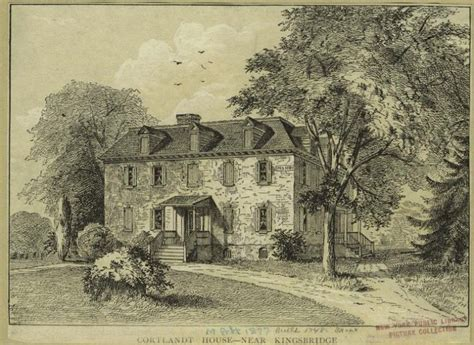
Philip Schuyler was born into a wealthy Dutch patroon family on November 20, 1733, in Albany, New York. His parents, Cornelia Van Cortlandt and Johannes Schuyler Jr., had extensive connections to the most prosperous patroon families. His maternal grandfather was Stephanus Van Cortlandt, the 17th Mayor of New York City. Educated by tutors at the Van Cortlandt family estate in New Rochelle, he mastered Mathematics and French, in addition to his native fluency in Dutch and English. Young Schuyler actively traded with the Indians and built strong bonds with the leaders of the nearby Iroquois of the Mohawk nation. He became fluent in their language.


First Fight

Like many of his generation, he gained military experience during the French and Indian War, where Schuyler served as a captain in the New York militia. His cousin, Lieutenant Governor James Delancey, had appointed him. His connections were extensive. The wealthy young Schuyler raised a local company. He participated in some of the key battles in upper New York, including Lake George, Oswego River, Carillon, and Fort Frontenac. At Oswego, he served as a quartermaster until the fort fell to the French.


Prosperous Patroon

Post-war, he built on his wealth as a patroon until he became one of the wealthiest and most prominent men in New York. In 1768, he parlayed his wealth and influence into a political career and secured a seat in the New York legislature. Although not a radical Son of Liberty, Schuyler spoke out against British policy. He managed to get himself on a commission to settle a boundary dispute with New Hampshire. This would earn him enemies among the New Hampshire and Massachusetts elites—enemies who would pursue him in years to come.


Philip Schuyler


Continental Congress

At the start of hostilities with Britain in April 1775, Schuyler served as a delegate to the Second Continental Congress in Philadelphia. His experience in the French and Indian War helped him on a committee that developed rules and regulations for the new United Colonies Army. This led to a friendship with General George Washington, who later asked Congress to appoint him as one of the Army's major generals. 


Continental Congress


All In

Despite his wartime experience, his appointment was more about securing New York's support for the Cause than leveraging his military skills. This kind of regional quid pro quo was common and used to ensure that the different colonies were "all in." Virginia's Colonel George Washington had edged out Massachusetts' John Hancock as commander-in-chief of the Army for the same reason.


John Hancock


First  Command

Schuyler's background and experience with upper New York made him a natural choice to command the Northern Department, headquartered in Albany, his old stomping grounds. However, the mission was daunting – assemble an army and invade Quebec (Canada), where it was expected that the local "Habitants" (French settlers) would rally to the Cause. His first move, however, was political. Schuyler managed to secure the neutrality of the powerful Iroquois Confederation – or at least delay their involvement.


Schuyler leveraged strong Iroquois connections


Quebec Disaster

While thus engaged, Brigadier General Richard Montgomery gathered the forces and began his advance without awaiting Schuyler's approval. Faced with a fait accompli and debilitated by a gout attack, Schuyler approved Montgomery's plans and set to work on the logistics support the fiery Irishman would need. The campaign started late in the season, so although initially successful, it collapsed in the depths of December when Montgomery and Benedict Arnold were cut down while storming Quebec City. Montgomery died, but Arnold recovered. Schuyler's New England foes quickly cast blame on the old Dutchman.

Night Assault of Quebec


Defending the North

The British, properly reinforced, launched an offensive in the spring. While Schuyler once again managed political interference, gathered men and supplies, and coordinated the overall effort, General John Sullivan, who fought a desperate retreat from Canada, attempted to garrison the mighty Fort Ticonderoga – The Gibraltar of the North.


John Sullivan


A British fleet gathered at the mouth of the Richelieu River, so Schuyler instructed Benedict Arnold (who had recovered from his wounds at Quebec) to take command of the forward defenses on Lake Champlain. The next phase of America's struggle would be fought on that long, icy body of water. Schuyler instructed Arnold to assemble a fleet to stop the armada of men and boats coming from the north under General Guy Carleton, Governor-General of Canada.


Lake Champlain Basin


Arnold performed a "rock soup" miracle, gathering a small flotilla of gunboats and, using his unique and aggressive cunning, surprised the fleet at Valcour Island. He fought the larger British ships bravely, but the Americans were torn apart by the heavier guns and ships. Still, the stubborn resistance slowed Carleton's advance, and since it was now October, he withdrew to winter quarters, planning to finish the campaign in spring 1777. The Americans had bought some time.


American defeat at Valcour Island 


Winter of Discontent

Schuyler was distracted from his preparations by a winter of bitter political infighting as his New England detractors blamed him for the northern failures. General Horatio Gates replaced him in March 1777, but the New York delegation in Congress raised a ruckus, and Schuyler was reinstated shortly afterward. However, the bitter infighting continued even as Schuyler worked to bolster Ticonderoga and begged his New England foes for more regiments to face the British onslaught forming in Canada.


Gibraltar of the North


By Land and Sea

Despite Schuyler's efforts to prevent another British advance, General John Burgoyne's 8,000-strong force sailed down Lake Champlain and moved uncontested into Fort Ticonderoga. Its commander, General Arthur St. Clair, realizing his forces were too weak to fight and would only be captured by the British, evacuated hours before the British arrived – a crucial decision. Schuyler approved St. Clair's withdrawal and ordered a "Fabian Defense." The garrison vanished into the thick woods, cutting down trees and constructing abatis and other obstacles in an effort to slow Burgoyne's troops, who were hot on their heels. The British were drawn deeper into the wilderness and away from the waterways that supplied their route south and their supplies.


Arthur St. Clair


Rallying the Militia

The Americans distracted the British, causing Burgoyne's advance to slow down and giving time for the militias to finally respond to Schuyler's call for men. British efforts toward New England and reports of Iroquois raids helped fuel this. From his headquarters in Albany, Schuyler made urgent pleas for powder, lead, guns, and supplies. But mainly, he needed men. His plans included establishing another line of defense about 30 miles north of Albany. 


Major General Schuyler


But the blame for Ticonderoga fell on Schuyler, and General Horatio Gates was once again put in charge. Gates halted the British in two decisive battles near Saratoga, where he accepted their surrender in October 1777.


Horatio Gates


Court Martial and Politics

Schuyler demanded and received a court-martial in 1778, which cleared him of wrongdoing, but he resigned his commission and returned to Congress in 1779. Philip Schuyler's legacy was that he was the only major general in the Continental Army never to fight a pitched battle. He continued to offer advice to his friend, General Washington, as his understanding of strategy and logistics was well recognized. His knowledge of Indian affairs also benefited Washington, who sought his counsel during the 1779 campaign against the Iroquois.


General Washington valued Schuyler's counsel


Enemy of the British?

Despite rumors in New England labeling him a Tory, Schuyler was targeted by the British. He faced the threat of personal attack. In October 1777, General John Burgoyne's retreating forces burned down Schuyler's country home. He later rebuilt it, and now it is open to the public. 


Schuyler's Estate Home rebuilt 


In another incident in 1780, British agents attacked Schuyler's Albany mansion under cover of darkness. The attempt, whether kidnapping or murder, was thwarted. Following the incident, Schuyler was under the protection of a bodyguard of Continental Army soldiers. However, he remained a target. On 7 August 1781, Schuyler foiled a kidnapping plot led by John Walden Meyers. It failed when Schuyler managed to escape from his Albany mansion. The Albany mansion served variously as his home, Northern Army headquarters, political center, and business office.


Schuyler Mansion in Albany


Post-War and Politics

The old patroon had powerful New York connections, and after the war, he focused on local politics by serving in the New York State Senate. He also served as a delegate to the state Constitutional Convention in 1789 and worked hard to support the new American Constitution. Schuyler was both a businessman and a soldier plus a politician. He expanded his estate near Saratoga after the war, growing to tens of thousands of acres, with a dozen slaves and tenant farmers, as well as a store and mills for flour, flax, and lumber. To get his goods down the Hudson River to market, he built schooners, naming the first Saratoga.


Schuyler had his own fleet

Federalist

Unsurprisingly, Schuyler was among the first two U.S. Senators appointed to represent the state in the new Congress. Naturally, the longtime ally of George Washington now supported his president as a steadfast Federalist. He especially backed the solid economic policies proposed by Secretary of Treasury Alexander Hamilton, who had married Schuyler's daughter, Elizabeth (more about her below). The whirlwind of New York politics caused him to lose his seat in 1792 but regain it in 1797. At the time, state legislatures, not the voters, elected senators — connections often determined who stayed or went. Schuyler was the first New Yorker to join the controversial Society of Cincinnati, a fraternity of Revolutionary War officers seen by some as a rising aristocracy. Yet most senior officers, including George Washington, had joined the organization.


President George Washington


Domestic Life

Schuyler married into the highly wealthy and influential Van Rensselaer family when he took Catherine Van Rensselaer's hand on September 7, 1755, in Albany. They had a large family of 15 children, eight of whom survived to adulthood. His second child, Elizabeth, later married young Continental Army officer Alexander Hamilton. She gained modern fame through the musical Hamilton. During her life, she used his legacy and family connections to participate in philanthropic efforts, including establishing the first orphanage in New York City.


The Hamiltons

Old Patroon

Schuyler's poor health led him to resign from political life in 1798. He died at his home in Albany in 1804, leaving a complex legacy of both success and failure. His critics saw him as too cautious or reserved to fight. Some accused him of treason—especially his enemies in New England—who were constantly suspicious of his aristocratic Dutch background. Regional conflicts also influenced perceptions. They believed Schuyler supported his own New York land claims over those of Vermont. Ironically, Schuyler later backed the Vermonters, which angered influential New York Governor George Clinton. Fame, wealth, and power drew powerful enemies to the Old Patroon.


Schuyler Grave and Memorial
Albany Rural Cemetery


Saturday, July 31, 2021

The Surgeon Spy

Perhaps the most intriguing case in the world of Revolutionary War espionage is that of Doctor Benjamin Church. An enigma wrapped in American history, Church embodies all the traits of an ideal patriot – and the ultimate traitor.


Doctor Benjamin Church


Yankee Pedigree

Church was a blue-blooded descendant of Yankee ancestors and the envy of the Colonial Dames. Born on August 24, 1734, in Newport, Rhode Island, he was the son of Benjamin Church, a Boston merchant and deacon of the Hollis Street Church. Church hailed from a family of New England military, civil, and religious leaders that traces back to the Mayflower through his great-great-grandmother Elizabeth Warren Church, daughter of Richard Warren, who arrived on the Mayflower.


Benjamin Church was born in Rhode Island


Raised for Prominence

Young Benjamin studied at the Boston Latin School, the typical springboard to Harvard College, from which he graduated in 1754. He then studied medicine under Dr. Joseph Pynchon. Afterward, like many American surgeons, he completed his studies in London, where he married Hannah Hill. Upon returning home, he quickly built a reputation as one of the city’s best young physicians and surgeons, even treating the eye problems of the lawyer and future founder John Adams.


Future  president John Adams was Church's patient


Political Turmoil

In the decade leading up to the break with Britain, Massachusetts, especially Boston, was at the center of increasing discontent and unrest. Benjamin Church appeared to be actively involved in these events. After the Boston Massacre on March 5, 1770, he was the one who examined Crispus Attucks’s body and treated some of the wounded. This involvement positioned him as a staunch Whig, and in 1773, he was chosen to deliver the annual “Massacre Day” oration, a yearly event designed to ignite anti-British feelings. He demonstrated a talent for oratory. 


The Boston Massacre


Dr. Church became a leader of Boston’s Sons of Liberty, working with key figures like Joseph Warren, Sam Adams, John Adams, and Paul Revere. By 1774, the well-known surgeon was a delegate to the Massachusetts Provincial Congress and later joined its Committee of Safety, the colonial group responsible for preparing for armed defense.

Our Surgeon Goes to War

April 1775 marked the official start of hostilities between the American colonists, especially those in New England, and the Royal authorities. Although independence was not yet a declared goal, the fight for American rights resembled a war. Our favorite surgeon found himself caught in the middle of it. In May 1775, Church traveled to Philadelphia, where he discussed the military situation in Massachusetts with Congress. As head of the Committee of Safety, he signed the order for the construction of defenses at Breed's Hill and Prospect Hill. 


Breed's Hill defenses

In July 1775, he was appointed Director General and Chief Physician of the newly established Medical Department of the Army, making him head of both the hospital department at the first army hospital and the first headquarters of regimental surgeons. This prestigious appointment placed him at the peak of his career. 

Doctor Gloom?

Interestingly, Church proved to be an indifferent medical administrator and faced a barrage of complaints from the army’s regimental surgeons about his management of the medical system. He pushed back, claiming jealousy was the real motivation behind his critics, and soon asked to be relieved of his duties. Why would a renowned and highly trained surgeon (18th-century term for a physician) show any sign of failure in what should be a core skill? Perhaps our doctor had other priorities occupying his mind.


As chief army surgeon, Church was 
responsible for medical supplies

Other Things

Other clouds swirled around the standing Whig leader. In the world of espionage, these were labeled anomalies and indicators. Although they were present, it would take an overt event to start bringing things together. There were suspicions about his allegiance to the cause, particularly the cause of independence. 

At that time, there still might have been prominent Whigs who were unsure about breaking completely with Britain. But was he one of them? Yes, Church had an English wife, and his brother-in-law was a well-known Tory printer, John Fleming. However, many had connections to Britain and the Tories, so he couldn’t be seen as entirely unusual. As rebellion approached, Church gained a reputation as a notable patriot writer and poet. Still, it turns out that he sometimes responded to his own patriotic open letters in the press with “op-ed” pieces that took the Tory side! 


Advertisement for John Fleming's Printshop


As it would later be revealed, he also had at least one meeting with General Thomas Gage, which was reported, probably by the Mechanics, a spy network run by Paul Revere (see the Yankee Doodle Spies post on them). Church dismissed it—like many suspected spies do too easily. What was then unknown was that Church was in debt, some of which was caused by keeping a mistress. And she was not his first, as it turned out.


Did Paul Revere's Mechanics have 
the doctor in their sights?

A House of Cards

In July 1775, Doctor Benjamin Church’s scheme unraveled when a secret letter was intercepted and decoded. A cipher message was sent to a British officer in Boston named Major Cane through a former mistress. But Eros intervenes in strange ways—the letter was intercepted by another of the woman's ex-lovers and sent to the new Continental Army commander-in-chief, General Washington, in September. 

It took some effort to decode, but they were rewarded because it contained information about the American forces gathered around Boston. Although little of the information was critical, the message clearly showed Church’s loyalty to the King and sought instructions for further secret correspondence. A bombshell striking Washington’s headquarters couldn’t have been more explosive than this news!


King George III

A General Court Martial

During the court-martial in Cambridge that immediately followed, Church admitted to writing the letter (a typical ploy) but insisted he aimed to display the Continental Army’s strength to deter an attack while it was still low on ammunition. He believed it might also help bring about an end to hostilities. While impressing the British probably benefited Washington’s position, this belief showed Church’s ambivalence. Because there was no “espionage statute” and America wasn’t yet an independent nation and therefore could not be “betrayed,” the court, presided over by Washington, concluded that Church engaged in a “criminal correspondence with the British.”  


General Washington penned a report 
following Church's court-martial

Report to Congress

On October 5, 1775, General George Washington wrote to John Jay, the President of the Continental Congress, to notify him that a letter from Dr. Benjamin Church, the surgeon general of the Continental Army, to Lt. Gen. Thomas Gage, the British commander in chief for North America, had been intercepted. His case was then forwarded to the Continental Congress for punishment, along with this report from Washington to the President of Congress:

I have now a painful though necessary duty to perform, respecting Doctor Church, the Director of the Hospital. About a week ago, Mr. Secretary Ward, of Providence, sent up one Wainwood, an inhabitant of Newport, to me with a letter directed to Major Cane in Boston, in occult letters, which he said had been left with Wainwood some time ago by a woman who was kept by Doctor Church. She had before pressed Wainwood to take her to Captain Wallace, Mr. Dudley, the Collector, or George Rowe, which he declined. She gave him the letter with strict injunctions to deliver it to either of these gentlemen. He, suspecting some improper correspondence, kept the letter and after some time opened it, but not being able to read it, laid it up, where it remained until he received an obscure letter from the woman, expressing an anxiety as to the original letter. He then communicated the whole matter to Mr. Ward, who sent him up with the papers to me. I immediately secured the woman, but for a long time she was proof against every threat and persuasion to discover the author. However she was at length brought to a confession and named Doctor Church. I then immediately secured him and all his papers. Upon the first examination he readily acknowledged the letter and said that it was designed for his brother, etc. The army and country are exceedingly irritated.

Crime and Punishment

Because there were no actual laws or a death sentence, Church was sentenced to an indefinite prison term and kept in solitary confinement in Norwich, Connecticut. When he became ill in January 1776, he was released from jail and allowed to move around under guard. In May of that year, he was sent back to Massachusetts on bail and remained in prison until 1778, when the Massachusetts Banishment Act ordered him to be exiled to Martinique in the West Indies. Soon after, he set sail, but the schooner carrying him was never heard from again. It was believed to have gone down in a storm on the open sea.


Church would spend most of his life in prison before exile


A Spy Exposed

Doctor Benjamin Church’s case was one of the mysteries of the American Revolution. Many believed he was wrongly judged, and he certainly thought so himself. After all, his credentials, services, and pedigree were spotless. Although he admitted to certain acts, he insisted strongly that he was just keeping channels open and trying to feed the British bogus information. Torn between two sides, he may have genuinely believed his own story.

Yet he was in debt, had mistresses, and clearly had the ego to take bold action. Was his visit to British-held Boston to meet the Royal Governor and Commander in Chief, General Gage, an act of perfidy or misguided statesmanship?


Did a mistress or mistresses do him in?


Years later, the truth was revealed when scholars gained access to General Gage's files. In the early 20th century, these papers became available to historians. They contained letters with information about the rebel army—correspondence carried by Church that could only have come from him. The good doctor was definitely providing the British army with intelligence from at least early 1775, possibly even earlier. 


General Thomas Gage's files finally outed the spy

A Spy’s Motive

Why did the esteemed Dr. Benjamin Church engage in espionage? Was it because of overwhelming debt? Disputes and grudges against rivals in American leadership? Was there ambivalence about truly breaking ties with Britain? Family connections? Loyalty to the crown? Or perhaps it was for the most frustrating reason of all – simply because he could.


Sunday, November 29, 2020

The Queen’s Ranger


A Bad Rap

This profile is genuinely one of THE badasses of the American Revolution, a struggle that had more than its fair share of tough characters. But John Graves Simcoe wasn't your typical badass, driven by testosterone and a thirst for blood – even though the (very excellent) TV series TURN might make you think he was that and more – a psychopath comes to mind.    

                                                Simcoe, as played by actor Samuel Roukin


But the real John Graves Simcoe was quite different. He was, in fact, a well-educated professional officer, liked by his troops and superiors, and respected, and sometimes feared, by his enemies. Born in Cotterstock, England, on February 25, 1752, he was the son of a Royal Navy officer who received a classical education at Eton and Oxford. However, in 1771, Simcoe left school at 19 and bought an ensign’s commission with the 35th Regiment. His education gave him an advantage over most of his peers, as he had a thorough knowledge of classical Greek and Roman military writings. He soon had the chance to apply his knowledge in the dark woods and green fields of America.

                                                          Simcoe took a commission at 19

Off to America

Simcoe was delayed in sailing to America and arrived after his 35th Regiment had been decimated at Breed’s Hill. During the subsequent American siege, he purchased a captaincy in the grenadier company of the 40th Regiment, where he fought in several battles in New York and New Jersey. Ambitious, he had sought command of the Queen's Rangers as early as the summer of 1776, when the army was on Staten Island. However, it was not offered to him.

                                                                            Brandywine


Simcoe fought valiantly at the Battle of Brandywine in September 1777, suffering serious wounds during the British victory. While recovering, events unfolded that would change the course of his career, pulling him from a typical line officer’s path. Simcoe was a vocal critic of military tactics and had told his superiors that the British needed a light infantry force to counter the American skirmishing tactics.                               


New Kind of Unit

He must have impressed his commander-in-chief, Lieutenant General William Howe, who promoted him to major in October and gave him command of the Queen’s Rangers. The Rangers were once a legendary unit formed by the even more legendary hero of the French and Indian War, Major Robert Rogers. The unit’s reputation had faded along with Rogers, who had left the army. Simcoe quickly began training it in the unorthodox tactics needed for the American war. Clad in green uniforms and rigorously drilled to fight as skirmishers in deep woods, patrol dense forests, and carry out raids and ambushes, they would eventually instill fear in all they encountered. He eventually expanded the unit to about 11 companies, each with roughly 30 men. One was a “hussar” (light cavalry) company. He also added a light infantry and a grenadier company. 

                                   Queens Rangers were trained for strength and skirmishing

New Kind of Action

With the arrival of the spring campaign in March 1778, Simcoe’s new unit saw its first action. The Queen’s Rangers engaged two American militia detachments at Quinton’s and Hancock’s bridges in New Jersey. The Americans were defeated by the aggressive tactics of Simcoe and his men. A few months later, the rangers handed a heavy defeat to General John Lacey’s forces at Crooked Billet, Pennsylvania, on May 1. An attempt to trap a reconnaissance detachment led by the Marquis de Lafayette at the end of May was less successful. But things were changing in the middle Atlantic. The new commander in chief, Sir Henry Clinton, was ordered to abandon the American capital, Philadelphia, and march his army to the safety of New York City. With the replenished and newly trained Continental Army nearby in Pennsylvania, Clinton knew the move carried risks. Therefore, he asked Simcoe to help cover the force.


                                                    Rare photo of Queens Rangers screening

The Queen's Rangers were in their element and performed well at their task, covering the withdrawal through the hot, humid fields and woods of New Jersey. In June 1778, Simcoe received word of his promotion to Lieutenant Colonel, a rapid rise for a British officer and a sign of more to come. The year 1779 saw Simcoe, the Queen’s Rangers, and the kind of warfare they were made for, come to the forefront. A series of small actions and skirmishes occurred throughout the New York region, mainly along the North (Hudson) River. On August 31, 1778, he led a massacre of forty members of the Stockbridge Militia, Indians allied with the Continental Army, in what is now the Bronx. His men were known to burn houses, barns, and stores—actions not unfamiliar to American units in a war that had become one of fire and smoke.

                                                  Simcoe employed his rangers aggressively


In June 1779, his rangers successfully led the capture of Stony Point and Verplank’s Point on the North River. Simcoe’s men soon joined Lieutenant Colonel Banastre Tarleton’s British Legion in a successful raid against rebels at Pound Ridge, New Jersey. With two of the top three British leaders in command, it was difficult for the defenders. A series of small actions followed, including raids, ambushes, skirmishes, and patrols. During one raid on October 17, 1779, Simcoe was ambushed and captured by the New Jersey militia. He was briefly imprisoned and eventually exchanged on December 31. The Queen’s Ranger returned just as General Clinton’s amphibious expedition against South Carolina was beginning.

Rangers go South

In the spring of 1780, Simcoe sailed south to support the British siege of Charleston. After a brief siege, the city surrendered in May. In what may have been a costly mistake, Simcoe was sent back north with Clinton and was soon dispatched to assist Hessian General von Knyphausen in conducting large-scale operations in the Jerseys. His skills and his rangers would likely have been more effective in helping to subdue the South, as would Clinton’s presence. Instead, after a promising start, the southern strategy began to fall apart in the kind of warfare that required Simcoe and his men.


                                                                Siege of Charleston


Traitor’s Partner

In an odd twist (sic), in December 1780, Simcoe was assigned to support traitor-in-chief British General Benedict Arnold’s heavily destructive raid through Virginia. He was partly placed at Arnold’s side to keep a close watch on him. However, the two skilled leaders and co-badasses actually got along well. Brigaded with Hessian Jaegers under Major Johann Ewald, Simcoe’s command defeated the unfortunate Virginia militia in several bold attacks around Richmond. At a place called Point of Forks, Simcoe tricked former General Wilhelm von Steuben and seized a stash of valuable supplies.


                                                    Benedict Arnold  as a British general


Climax in the Old Dominion

As luck would have it, Simcoe was in the right place but at the wrong time. Britain’s eight-year effort to hold onto the 13 colonies would, for all practical purposes, end in the Old Dominion. Frustrated at every turn in the Carolinas, British General Charles Cornwallis marched his worn-out and exhausted army north into Virginia. There, Simcoe and his Queen’s Rangers joined him as part of the vanguard. Although battle-hardened, the rangers, like many other British units, found the rebels closing the gap. Things were clearly “going south.” One example is the engagement at Spencer’s Ordinary on June 26, 1781. In an unlikely turn of events, the Queen's Rangers were fiercely engaged by Pennsylvania riflemen under Colonel Richard Butler — the very enemies they were created to defeat. The rangers abandoned the field and their wounded, then hurriedly marched to Yorktown and the main army. 

          
Colonel Richard Butler


When they arrived at Yorktown, Cornwallis sent them across the York River to secure Gloucester Point. During the summer, the rangers were on a quiet front. This worked well for Simcoe, who had suffered several bouts of illness during the war, worsened by his wounds. His health was deteriorating. 


                                                                Yorktown under Siege

While ill with a fever, the French blockaded the York River. A week later, the French Admiral Comte de Grasse defeated Simcoe's godfather, Admiral Thomas Graves, and the British fleet in the Chesapeake. Cornwallis's army was trapped. In September, the American-French army arrived at Yorktown. Not long after, about 1,000 French troops cut off Gloucester Point. The siege was underway.


                                                     Chesapeake: French fleet drives off 
                                                    British fleet under Simcoe's godfather

But Simcoe was too ill to be of service, and his rangers fell under Tarleton’s command. Simcoe was not expected to survive. Still, in mid-October, he asked for permission to escape with his men on boats to Maryland and fight his way through to New York. He worried that many of his men, being deserters, would be hanged if captured. But Cornwallis insisted that the entire army share its fate. Lieutenant Colonel John Graves Simcoe did not die but suffered the shame of surrender at Yorktown on 17 October 1781. He was soon paroled and sailed to New York with his unit. The Queen’s Rangers eventually went to New Brunswick, Canada, and disbanded in October 1783. 


                                                                Surrender at Yorktown

Convalescent and Cupid

In 1782, the still ailing Simcoe returned home to Devon, England, to convalesce. There, he met and married Elizabeth Posthuma Gwillim, a wealthy heiress. Her adopted mother, Margaret, had married Admiral Samuel Graves, Simcoe's godfather. So it was a family affair. They had four daughters and a son. By all accounts, he was a devoted family man. Venus, it turns out, was better to him than Mars.


                                                                       Elizabeth Simcoe

Author, Author

It is beyond this blog’s scope to detail Simcoe’s post-war life in England. He briefly entered Parliament and offered to raise a ranger unit to fight the French. Simcoe wrote a book about his experiences with the Rangers, titled "A Journal of the Operations of the Queen's Rangers," covering the period from late 1777 to the end of the American War. He self-published it in 1787 for his friends.


     Simcoe added Author to his 
other accomplishments

Lieutenant Governor

Simcoe returned to North America after resigning from Parliament in 1792 to accept the position of Lieutenant Governor of Upper Canada (today’s Ontario) under Governor-General Guy Carleton. His resilient personality, well-suited for conflict, often put him at odds with London. However, Simcoe proved to be a highly effective and visionary leader. His ideas were considered progressive for his time. While he valued and supported British institutions, he also advocated for American-style economics and self-reliance. He supported agriculture, property rights, and settlement of what was then the Canadian frontier. He also built roads.


                                                        As Lieut. Gov. Simcoe was a builder

He was fair with the Indians, supported the loyalists, and promoted education and culture. He was anti-slavery even when slavery was still widespread in the British Empire. Fearing a war with America, he moved the capital from Newark to York on the north shore of Lake Ontario—today's Toronto. To help defend Upper Canada from possible American attacks or invasion, Simcoe created a Canadian version of the Queen's Rangers, with himself as its colonel. However, illness struck again. In 1796, neuralgia and gout forced him to take a leave of absence to England. Simcoe resigned from his position in 1798 and never returned to Canada.


                                          Simcoe as colonel of the Queen's Rangers in Canada

War with France

By 1797, war with France resumed, and Simcoe was appointed governor of Santo Domingo. He faced a slave revolt supported by French Republicans and Spaniards. Simcoe was also promoted to Lieutenant General, the highest rank in the army at that time. Illness again shortened his tenure. He returned to England to prepare Plymouth’s defenses against a possible French invasion. Although Simcoe accepted command of the Western District, he did not receive another active field command from the Pitt government. When Britain assembled a coalition against Napoleon in 1806, General Simcoe traveled to Portugal as part of a military mission. However, his old illnesses struck again, forcing him to return home, where he learned of his appointment as commander in chief of British forces in India. 


                                                            Governor of Santo Domingo
                                             

Lost Opportunity

India was arguably the most prestigious and challenging overseas appointment for any British military officer or administrator. And Simcoe excelled at both. There is no telling how the future of the subcontinent might have turned out with him in charge. But it was not to be. He succumbed to his illness on October 26, 1806, in Devonshire. Lieutenant General John Graves Simcoe was only 54. Simcoe was not the crazy character often shown on television. Quite the opposite, Simcoe proved himself to be a learned and scholarly warrior and a forceful leader of partisan forces, among the best serving in the Revolutionary War. He was also a sincere man of peace who helped make Canada one of the best-governed provinces, and nations, on earth. And he might have done the same for India.


                                                            Simcoe monument in Toronto