Followers

Showing posts with label Paul Revere. Show all posts

Tuesday, April 30, 2024

Fallen Founder

Surgeon Spymaster

For hours, Doctor Joseph Warren had been piecing together reports and rumors from sources close and not so close to Boston’s British occupiers. One of the last of the Committee of Safety left in the city, he served as organizer of spies and reporter of rumor, innuendo, and sometimes—intelligence. He glanced at the Almanack on his desk. It read April 18th,1775.


Joseph Warren remained in occupied Boston


The soft rap at the door stirred him from his writing.

“What brings ye here at this early hour?” he asked. The visitor was one of his better sources.

“A column is definitely leaving in the morning. Hoping to seize the rebel leaders, Hancock and Adams. They’ll be traveling over water.”

Warren scratched out the rest of his source’s information. “Thank ye, sir.”


Warren ran sources across Boston


When the informant left, he summoned two of his ablest men. For weeks, his dwindling network had sent him bits and pieces about British activity, but this was a strong warning, and he needed to act. When William Dawes and Paul Revere arrived, he gave them instructions, saying finally, “The good work of patriots have provided enough warning to steal a march on the British, but we must get the word we must take advantage of it. Go now, and Godspeed!”


Nightriders spreading the word


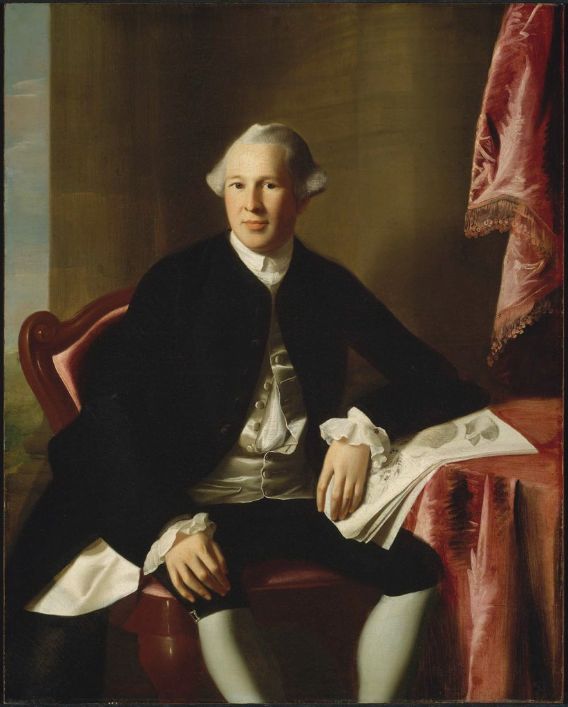
The spymaster, whose tireless intelligence work helped launch thousands of farmers and townsfolk against the cream of the British Army, was well-known to the authorities. A farmer, Harvard scholar, schoolmaster, surgeon, and family man, he was a political activist who pushed back against Crown policies.


Doctor Joseph Warren

From Surgeon to Patriot

Born in Roxbury, Massachusetts, in 1741, young Joseph Warren rose from being a yeoman farmer to becoming part of the colony's landed gentry. After attending Harvard, he studied medicine under Doctor James Lloyd. Warren became a prominent surgeon and was celebrated for adopting the new technique of immunization against smallpox during a devastating outbreak in the community. One of his patients, a lawyer named John Adams, recruited Warren into his circle of political confidants.


Pioneer in smallpox treatment


From Whig to Radical

The Stamp Act of 1765 transformed Warren from a moderate Whig into a leading radical in Boston politics, aligning him with Sam Adams, John Hancock, and James Otis. Political gatherings over coffee and raucous protests soon began to compete with his practice, farm, and family. However, the brilliant thinker, organizer, and man of action found time for everything. What truly set him apart was his leadership by example.


Equally fervent politico Sam Adams
 

Passionate Speaker

Warren had a talent for retail politics, writing broadsheets, organizing events, and delivering speeches that energized crowds. He opposed the flood of regulations from London and the Royal Governor. The Stamp Act, in particular, infuriated him. On the second anniversary of the Boston Massacre, Warren delivered a powerful and impassioned oration as he defiantly stared down the British in the audience.   


Defying the Stamp Act


From Radical to Rebel

His passionate speech brought him notoriety across Massachusetts and beyond. Warren gained celebrity throughout the colony for his scorching speech memorializing the second anniversary of the Boston Massacre. Two years later, he was an original member of Boston’s Committee of Correspondence. 


Committees of Correspondence drove 
the Revolutionary agenda


In 1773, Warren was among the leaders protesting forcefully against the Tea Act imposed by London, and he likely had a hand in planning the Sons of Liberty’s famous raid that December on the merchant ships—the Boston Tea Party.


Boston Tea Party Organizer?

Not content with being the spymaster behind the scenes, Warren saddled up the day after dispatching the night riders and rode out to the Concord battlefield, put on his surgeon’s hat, and began treating the wounded militiamen. For the next few months, he was a whirlwind of political leadership and military action. 


Riding to the battlefield - rare photo


Political Leader

As president of the Third Massachusetts Provincial Congress, he acted swiftly to spread the word and garner support across the colonies for transitioning from rebellion and insurgency to war. His account of the actions at Lexington and Concord reached readers in England a fortnight before General Thomas Gage’s official dispatch.


Warren's London dispatch scooped General Gage

Military Leader

While doing all this, he helped General Artemus Ward assemble and shape the militia regiments of the New England Army forming around Boston—soon locking the redcoats in a cauldron from which they would never escape. Warren’s talent and decisive actions gained him an appointment as a major general of the militia on 14 June 1775. Fate and his innate modesty would deny him the assumption of those duties.


First Commander - Artemus Ward


Besieging Boston

The rattling of drums meant the British were stirring, and spies reported plans to assault the Americans digging in on Breed’s Hill in Charleston—a town across the water north of Boston. Warren arrived with a musket, pistol, and saber but refused to pull rank and assume command from the commander in loco, French and Indian War veteran General Israel Putnam. Instead, Warren volunteered to fight in the line, serving under Colonel William Prescott.


Israel Putnam

Breed's Hill

On 17 June 1775, the regulars ferried to the neck, and rows of redcoats assembled at the base of the long sloping hill where the rebels waited. The New Englanders were ready in all respects: will, determination, and courage, plus the high ground, prepared breastwork with ample fields of fire. However, they lacked a crucial element of 18th-century warfare—gunpowder. The volunteer Warren fought bravely with his comrades and fellow patriots— who shot two determined British attacks to pieces in volleys that filled the air with lead and smoke. 


The Crimson Wave


Warren’s commander, Colonel Richard Prescott’s steely eyes, watched the wave of crimson rumble up the hill one last time—barely enough powder for a volley—not enough to stop them. At the last possible moment, he ordered them to fire. The woosh and boom of the volley attested to its weakness. The redcoats dropped, but not in the numbers previously. Now, they were coming with their own grim determination.

William Prescott scans the battlefield


Overwhelmed and Cut Down

The patriots’ lack of powder allowed the third British charge to breach the breastworks and push into the trenches. A ferocious melee erupted, leading to chaotic hand-to-hand combat. Warren aided in covering the retreat of his comrades but was quickly gunned down. Later, the redcoats, enraged by their heavy losses at Breed’s that day, pierced his body with bayonet thrusts. Days later, Warren’s body suffered further mutilation and decapitation at the hands of a naval officer, Lieutenant James Drew. Following these atrocities, the body of arguably one of the most prominent and promising men in America was discarded into an unmarked grave.


Desecration of a Hero


Fallen Founder

Joseph Warren’s ravaged remains lay in a shallow grave—discovered some ten months later when the British had, at last, evacuated Boston. His brother and Paul Revere identified the remains through dental forensics. Revere, the tinsmith, had fashioned teeth for the doctor. Doctor Joseph Warren was officially buried at Forrest Hills Cemetery in 1855. One of the first lamented martyrs of the Revolutionary War is commemorated by a statue in the Bunker Hill Monument.


Joseph Warren Statue  at Bunker Hill Monument


Had he not fallen, it is not clear to what heights Joseph Warren could have climbed in service to his country. Some opine that he might have led the Cause instead of George Washington. Because Virginia was critical to the Cause, it is not likely that Warren would have been chosen. Even less likely, he would have accepted the command. However, his political canny, organizational energy, and leadership might have made the Continental Congress much more effective, especially in terms of support for the beleaguered Continental Army. 


Sunday, November 3, 2019

The Mechanics

Genesis of Clandestine Warfare


The American War for Independence marked the end of over ten years of political unrest and dissatisfaction with British policies and the treatment (both real and perceived) of the colonists. Though led by some of the smartest minds of the time, the movement was also a grassroots effort that gradually developed into a political cause — with ideas being discussed in taverns, coffee houses, homes, and farmsteads.


By the early 1770s, the movement ignited what became an insurgency of sorts. Insurgencies are typically secretive, requiring the development of covert activities and tradecraft—such as spies and secret writing—for success. As the political side of the patriot movement grew, organizations like “The Sons of Liberty” also appeared, serving as its action arm.


Boston Ablaze


By the time rebellion erupted in 1775, the Americans had already set up the necessary covert organizations for the war, as these efforts were well underway. The British had their own countermeasures, but these often lagged behind and were gradually overshadowed by the Americans’ ability to control the ground, except in the few areas still held by the British Army and Royal Navy.


Boston's Faneuil Hall was the site of much
political agitation & intrigue


One of the earliest secret networks formed was, of course, in Boston. This was only natural since Boston was the hub of so much political and subversive talk during the pre-Revolutionary War era. Figures like Sam Adams, Paul Revere, and John Hancock were already legends. “Agitprop” proved to be a very effective tool, as crowds were stirred up for all sorts of causes. In a way, the British mistakes in trying to suppress this activity in Boston fueled the flames that eventually led to a full-blown conflict, scorching the eastern seaboard after April 1775.

Enter the Mechanics


The first patriot intelligence network was a secret group in Boston called the Mechanics. The Mechanics originated in Boston from “The Sons of Liberty,” who were known for their opposition to the Stamp Act and other oppressive measures. However, the Mechanics operated somewhat differently. They coordinated covert resistance activities against British authority and gathered intelligence, which was crucial for the resistance. It began as a group of about thirty “mechanics,” men working in hands-on trades in and around the city.


Observing counter-demonstrators helped
build situational awareness of British sympathizers


Paul Revere was among the first. According to his own words, they, “…formed ourselves into a Committee for the purpose of watching British soldiers and gaining every intelligence on the movements of the Tories.”


Paul Revere was one of the craftsmen-spies
who became known as the Mechanics


The key element is the latter. They understood that the key to success was neutralizing British sympathizers early on. Revere further explained, “We frequently took turns, two and two, to watch the soldiers by patrolling the streets at night.” Operating under cover of darkness became a crucial part of future clandestine activities that continue to this day. In addition to observing British soldiers and Tories, Revere and the mechanics acted as couriers, serving as the vital link in any secret network. Since communication is the Achilles' heel of covert operations, the couriers played a critical role. The Mechanics were essential in countering efforts to suppress the colonial insurgency.


Mechanic Paul Revere alerted General Sullivan of the British intention to seize
Fort William and Mary


One of Revere’s first missions as a courier took place in December 1774. He rode to the Oyster River in New Hampshire with a report that General Thomas Gage, the British commander and governor, planned to capture Fort William and Mary. Alerted by the intelligence delivered by the Mechanics, Major John Sullivan led a colonial militia force of four hundred men in a preemptive raid on the fort. They seized one hundred barrels of gunpowder, which were later used by the patriots at Bunker Hill.

Clandestine Communications


Things really heated up around Boston in early 1775. Both sides grew more aggressive, and the stakes got higher each month. Using several intelligence sources, the Mechanics uncovered the cover recently established by General Gage for their quick strike on Lexington and Concord. The British relied on secrecy for success. Thanks to the intelligence and warning from the Mechanics, they failed.


The Mechanics' espionage activities
were a bane to British General Thomas Gage


Revere received orders from Dr. Joseph Warren, then head of the local Committee of Safety, to warn key patriot leaders in the area, John Hancock and Samuel Adams, about the British plan to secretly raid Lexington and capture them. Revere arranged for the signal lanterns at the Old North Church. Working with William Dawes, the two rebel leaders were alerted. Riders were dispatched to warn the militia, and then Revere, Dawes, and Dr. Samuel Prescott went on to notify the militias at Concord about the second phase of the operation – seizing the weapons there.


In addition to Revere, Dawes, and Prescott, other secret riders
warned the villages of the approaching British


British capture Revere


A British patrol at Lincoln nearly stopped everything before it began. During the chase, Dawes was thrown from his horse while running away. But Prescott and Revere were captured. Prescott quickly escaped British custody and reached Concord, but Revere remained a prisoner. However, the brave silversmith resisted interrogation and was soon released, heading to Lexington, where he and John Lowell were sent to recover a trunk full of incriminating patriot papers from a local tavern.


A Dearth of Knowledge


In a sense, the absence of recorded knowledge about the Mechanics is actually beneficial, not for historians but for the nation. Any records that were kept were likely very local and meant to be temporary—that is, destroyed once the operation was complete. Operational security was natural for those fighting in a secret war to survive. However, mistakes can happen and be costly. The trunk Revere was sent to retrieve could have given the British valuable intelligence that might have ended the rebellion in New England, possibly stopping the conflict altogether.


Mechanic reporting intelligence
on British activities


A curious example of bureaucratic mix-up unintentionally preventing failure also involves our renowned Mechanic, Revere. The mechanics apparently received written orders and some sort of payment for their expenses. These orders might have been used to pass militia patrols. For whatever reason, Revere only received his orders from Dr. Warren, leader of the local Committee of Correspondence, two weeks after his secret ride. Had he had them with him, his role would have been exposed to the British when they searched him. History might have taken a very different turn again.


As the leader of the Boston Committee of Correspondence
Dr. Joseph Warren leveraged the mechanics to
collect and report intelligence on the British


And for those readers who worked in government offices or the military, his pay was cut from five shillings a day to four.

Saturday, October 3, 2015

Fort William and Mary

The scenic town of New Castle, New Hampshire, is home to the ruins of Fort William and Mary. Similar to the college in Virginia, the fort was named in honor of the somewhat iconic British rulers associated with the Glorious Revolution. It's ironic that each played a role in establishing the British monarchy in America under the guise of a revolution. However, some argue that the first armed resistance to royal authority started here long before Lexington and Concord.


The Agitation


Royal Governor Wentworth
In May 1774, the closing of Boston's port greatly angered most New Englanders. British authorities insisted that the "salt-water tea" be paid for and forced Bostonians to accept this. In New Hampshire, the Committee of Correspondence vowed to make Boston's fight their own. Royal Governor John Wentworth recognized a radical shift in public opinion and saw a possible threat to Royal authority. He attempted to establish a garrison at his only military post, Fort William and Mary in New Castle. However, the Assembly, now hostile to the British, approved only 200 pounds for the effort. Wentworth appointed an officer and three men to run the fort, showing the King's authority. But the army was too small to prevent a revolution.


The Politics

The Assembly was not deterred by Wentworth's measures. Later that month, they voted to create a second Committee of Correspondence. Wentworth and the Rockingham County sheriff tried to intimidate and shut down the Assembly, dismissing them from the chamber for holding an unlawful meeting. Unfazed, they went to a local tavern, and in that friendly setting, they made plans for a Provincial Congress to be held in Exeter in July. Over the next few months, the situation around Boston escalated from simmering to boiling, and the impact spread across New England like wildfire.


The Action

On December 13th, 1774, Paul Revere rode south to Portsmouth to report the British ban on importing military supplies and that rumors about expected British troops were the worst kind: true rumors. John Sullivan, a Patriot leader and firebrand, just returned from the First Continental Congress, decided to take action. Along with local Patriot merchant John Langdon, he vowed to seize the symbol of Royal authority sitting right under their noses at New Castle. On the 14th, Langdon made his way through Portsmouth with a drummer leading the charge. Once he had gathered a crowd, he addressed them. 

About 400 people joined him, forming a mob that set out to take the powder from the fort. A single volley fired from the fort was answered by some shots from the crowd, but no one was injured. They surged into the fort quickly. Breaking into the magazine, they took about 100 barrels of gunpowder. Overwhelmed, the fort's commandant, Captain John Cochran, quickly surrendered his four-man garrison. This marks Fort William and Mary as one of the first locations of overt action in the American struggle for independence. Some compared it to Lexington and Concord, but because there was no bloodshed, it is less well-known. Still, it was the first organized resistance to the King.


Fort William and Mary 1704


The Take

The following day, John Sullivan led more rebel forces now pouring in from across the colony. They first surrounded the governor's residence, but violence was avoided there, as Wentworth complied with their demands. That evening, December 15th, they returned to the fort and seized all the arms and supplies, including some cannons. This action resulted in the Americans capturing some loot, a tangible gain. This included about sixty muskets, sixteen cannons, and one hundred barrels of valuable powder. The gunpowder was quickly transported inland and distributed among various armed groups in New Hampshire. Some of it may have reached the Patriots around Boston. In a land starved for ammunition, this was a small treasure desperately needed.


Gunpowder from the fort moved inland over ice


The Place

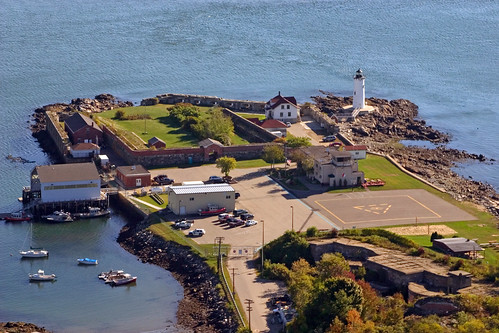
History revolves around a sense of time, people, and place. On a scenic promontory overlooking the ocean, a colonial community driven by perceived injustice left their mark. New Castle is a charming town with about 900 residents. It is also the smallest and easternmost town in the state. Its narrow streets are lined with colonial-style houses. The fort was built in the early 18th century on the site of an earlier fort designed to deter pirates. Its main landmark is the Fort Point Lighthouse, built in 1877 on the site of an earlier lighthouse from 1771. Before the latter was built, the only navigational aid for the rocky harbor was a lantern hung high on Fort William and Mary.


Site of Fort William and Mary today