Followers

Showing posts with label Lexington. Show all posts

Wednesday, October 30, 2024

The 2nd Duke

Wealthy Scion

It has been a while since we last profiled a British Army officer, so I chose one whose modest yet significant contribution to the Crown is notable—a man with a very typical, straight-out-of-central-casting name: Hugh Percy. Born into a prominent family (his father was the First Earl of Northumberland), young Percy overcame a series of childhood illnesses to pursue a military career, which he himself essentially ended just as he was reaching the height of success.


Hugh Percy


A Call to Arms

Percy joined the 24th Regiment of Foot in 1759 as an ensign. Like many from prominent and well-connected families, young Hugh managed to secure a lieutenant colonelcy and position as aide de camp to Ferdinand of Brunswick. Additionally, like many of his peers, The Seven Years' War offered the chance to earn laurels in combat at the battles of Bergen and Linden.


Battle of Minden

Politician

By 1762, he was a lieutenant colonel in the Grenadier Guards, arguably the most elite unit in the Royal Army and a protector of the monarch. He surprised many by refusing to serve as aide de camp to King George III. Instead, he ran for Parliament, securing a seat in the House of Commons as a Whig. His political beliefs often put him at odds with the Crown, especially regarding colonial policy. Ironically, Percy still maintained a close connection to the King. He married the daughter of George III's tutor and mentor, Lord Bute.


Percy as Politico


A Gentler Colonel

In 1768, Percy was commissioned as a colonel in the Northumberland Fusiliers. He proved to be a very progressive and forward-thinking leader. He adopted a different approach to leadership, treating his men with kindness and rejecting the traditional harsh discipline of the Army. He banned flogging and other severe disciplinary measures. Percy also took care of their financial needs and those of their families, often providing funds to those in need. Instead of ruling through orders, he led by example. His actions quickly earned the affection and trust of his soldiers. His approach resulted in a highly effective unit of men fiercely loyal to their commanding officer.


Northumberland Fusilier

Boston Bound

The political situation in North America kept worsening over the next few years. Despite, or maybe because of, his sympathies for the Americans, Colonel Hugh Percy received orders in 1774 to sail to America, where his regiment joined General Thomas Gage's garrison in Boston. Gage made him a brevet brigadier general and commandant of the British camp. Tensions kept rising in and around Boston, and the next year, Gage started a series of pre-emptive strikes—punitive actions to weaken the militia's power and threat.


Boston and Environs


The Shot Heard Round the World

Things reached a crisis point in April 1775 when Gage dispatched Lieutenant Colonel Francis Smith with about 800 regulars to seize militia gunpowder and arms believed to be at Concord. On April 19, one of Smith's units, led by Major John Pitcairn, faced a militia force on Lexington Green. The brief clash, known as the "Shot Heard Round the World," was followed by a larger gunfight around Cambridge.


The Column Reaches Concord

Column in Chaos

Things went badly for the British, who began a retreat to Boston as thousands of locals grabbed their muskets and started to harass the column, shooting at officers with aimed fire. Near Lexington, Smith's troops were reinforced by a brigade of around 1,400 men led by Hugh Percy. Percy used cannons and volley fire to keep the militia (now, we can call them rebels) at bay and helped bring Smith's demoralized men back into some kind of order.


Percy guides the column home


Unlikely Savior

Throughout the long march back, under relentless and punishing fire from the rebel militia, Percy kept the British column together, maintaining discipline to prevent a disaster. When they reached Menotomy, Percy made a decision that likely saved the army. Instead of pushing toward Cambridge, he changed their route of return and marched to Charlestown. This route had fewer rebels. The column arrived back in Boston. In July, Gage promoted Percy to Major General for his calm actions under pressure. No small irony that an officer sympathetic to the rebels thwarted their best efforts to wipe out the column.


General Thomas Gage


Halifax Hiatus

Percy missed the Battle of Bunker Hill due to illness. To his frustration, his Northumberland Fusiliers were decimated under the heavy-handed command of General William Howe. True to his approach to leadership, Percy funded the return voyage for all the widows and arranged a small stipend for those in need. The British evacuated Boston in March 1776 and regrouped in Halifax, Nova Scotia. Gage had been recalled, and William Howe was now the commander in chief.


Battles for New York

In July, the reinforced British Army landed on Staten Island in New York Harbor. Weeks later, a swift campaign was launched on Long Island. On August 27, Percy distinguished himself by helping lead a night march that cut off a third of the Continental Army. In November, Percy led a British force that drew fire from the defenders at Fort Washington, allowing Hessian General von Knyphausen's men to overrun the garrison and force its surrender.


Percy led regulars in action on Long Island  


Newport Nexus

The following month, Percy and General Henry Clinton led a British expedition that captured Newport, Rhode Island. When Henry Clinton returned to Britain, Percy was appointed commander of the Newport garrison. However, things were not all smooth sailing. Percy was critical of Howe's strategy and how he handled the war. He also struggled with poor health. This combination led him to request relief from his command and a return to Britain. General Howe quickly approved, and Hugh Percy left America for good in May 1777.


Sir Henry Clinton

The 2nd Duke

In 1779, Percy divorced his wife on the grounds of adultery but soon remarried and had nine children with his second wife. After his father’s death in 1784, Percy became the 2nd Duke of Northumberland. He spent the next several decades serving in various military roles in Britain, re-engaging in politics, and managing his estates. He was a kind landlord who took care of the farm workers on his lands. He was a rare noble who earned the respect of his people. Hugh Percy died on his estate in July 1817. His years of poor health finally caught up with him.


2nd Duke of Northumberland

Liberal Legacy

One has to wonder how the course of the war in America would have played out for the British if Percy had remained, possibly even rising to the level of supreme command. His gentle manner might have rallied more Americans to the Crown, and his ability to motivate troops and stay calm under fire could have made a difference in the subsequent campaigns. An interesting fact—Percy had an illegitimate half-brother, James Smithson. The same James Smithson who bequeathed the funds used to establish what became known as The Smithsonian Institution—the world's largest museum and research complex.


The Smithsonian

Tuesday, April 30, 2024

Fallen Founder

Surgeon Spymaster

For hours, Doctor Joseph Warren had been piecing together reports and rumors from sources close and not so close to Boston’s British occupiers. One of the last of the Committee of Safety left in the city, he served as organizer of spies and reporter of rumor, innuendo, and sometimes—intelligence. He glanced at the Almanack on his desk. It read April 18th,1775.


Joseph Warren remained in occupied Boston


The soft rap at the door stirred him from his writing.

“What brings ye here at this early hour?” he asked. The visitor was one of his better sources.

“A column is definitely leaving in the morning. Hoping to seize the rebel leaders, Hancock and Adams. They’ll be traveling over water.”

Warren scratched out the rest of his source’s information. “Thank ye, sir.”


Warren ran sources across Boston


When the informant left, he summoned two of his ablest men. For weeks, his dwindling network had sent him bits and pieces about British activity, but this was a strong warning, and he needed to act. When William Dawes and Paul Revere arrived, he gave them instructions, saying finally, “The good work of patriots have provided enough warning to steal a march on the British, but we must get the word we must take advantage of it. Go now, and Godspeed!”


Nightriders spreading the word


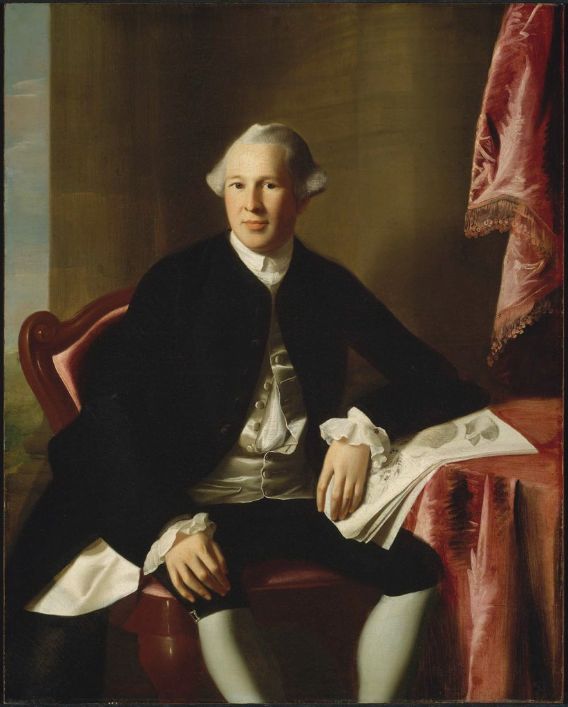
The spymaster, whose tireless intelligence work helped launch thousands of farmers and townsfolk against the cream of the British Army, was well-known to the authorities. A farmer, Harvard scholar, schoolmaster, surgeon, and family man, he was a political activist who pushed back against Crown policies.


Doctor Joseph Warren

From Surgeon to Patriot

Born in Roxbury, Massachusetts, in 1741, young Joseph Warren rose from being a yeoman farmer to becoming part of the colony's landed gentry. After attending Harvard, he studied medicine under Doctor James Lloyd. Warren became a prominent surgeon and was celebrated for adopting the new technique of immunization against smallpox during a devastating outbreak in the community. One of his patients, a lawyer named John Adams, recruited Warren into his circle of political confidants.


Pioneer in smallpox treatment


From Whig to Radical

The Stamp Act of 1765 transformed Warren from a moderate Whig into a leading radical in Boston politics, aligning him with Sam Adams, John Hancock, and James Otis. Political gatherings over coffee and raucous protests soon began to compete with his practice, farm, and family. However, the brilliant thinker, organizer, and man of action found time for everything. What truly set him apart was his leadership by example.


Equally fervent politico Sam Adams
 

Passionate Speaker

Warren had a talent for retail politics, writing broadsheets, organizing events, and delivering speeches that energized crowds. He opposed the flood of regulations from London and the Royal Governor. The Stamp Act, in particular, infuriated him. On the second anniversary of the Boston Massacre, Warren delivered a powerful and impassioned oration as he defiantly stared down the British in the audience.   


Defying the Stamp Act


From Radical to Rebel

His passionate speech brought him notoriety across Massachusetts and beyond. Warren gained celebrity throughout the colony for his scorching speech memorializing the second anniversary of the Boston Massacre. Two years later, he was an original member of Boston’s Committee of Correspondence. 


Committees of Correspondence drove 
the Revolutionary agenda


In 1773, Warren was among the leaders protesting forcefully against the Tea Act imposed by London, and he likely had a hand in planning the Sons of Liberty’s famous raid that December on the merchant ships—the Boston Tea Party.


Boston Tea Party Organizer?

Not content with being the spymaster behind the scenes, Warren saddled up the day after dispatching the night riders and rode out to the Concord battlefield, put on his surgeon’s hat, and began treating the wounded militiamen. For the next few months, he was a whirlwind of political leadership and military action. 


Riding to the battlefield - rare photo


Political Leader

As president of the Third Massachusetts Provincial Congress, he acted swiftly to spread the word and garner support across the colonies for transitioning from rebellion and insurgency to war. His account of the actions at Lexington and Concord reached readers in England a fortnight before General Thomas Gage’s official dispatch.


Warren's London dispatch scooped General Gage

Military Leader

While doing all this, he helped General Artemus Ward assemble and shape the militia regiments of the New England Army forming around Boston—soon locking the redcoats in a cauldron from which they would never escape. Warren’s talent and decisive actions gained him an appointment as a major general of the militia on 14 June 1775. Fate and his innate modesty would deny him the assumption of those duties.


First Commander - Artemus Ward


Besieging Boston

The rattling of drums meant the British were stirring, and spies reported plans to assault the Americans digging in on Breed’s Hill in Charleston—a town across the water north of Boston. Warren arrived with a musket, pistol, and saber but refused to pull rank and assume command from the commander in loco, French and Indian War veteran General Israel Putnam. Instead, Warren volunteered to fight in the line, serving under Colonel William Prescott.


Israel Putnam

Breed's Hill

On 17 June 1775, the regulars ferried to the neck, and rows of redcoats assembled at the base of the long sloping hill where the rebels waited. The New Englanders were ready in all respects: will, determination, and courage, plus the high ground, prepared breastwork with ample fields of fire. However, they lacked a crucial element of 18th-century warfare—gunpowder. The volunteer Warren fought bravely with his comrades and fellow patriots— who shot two determined British attacks to pieces in volleys that filled the air with lead and smoke. 


The Crimson Wave


Warren’s commander, Colonel Richard Prescott’s steely eyes, watched the wave of crimson rumble up the hill one last time—barely enough powder for a volley—not enough to stop them. At the last possible moment, he ordered them to fire. The woosh and boom of the volley attested to its weakness. The redcoats dropped, but not in the numbers previously. Now, they were coming with their own grim determination.

William Prescott scans the battlefield


Overwhelmed and Cut Down

The patriots’ lack of powder allowed the third British charge to breach the breastworks and push into the trenches. A ferocious melee erupted, leading to chaotic hand-to-hand combat. Warren aided in covering the retreat of his comrades but was quickly gunned down. Later, the redcoats, enraged by their heavy losses at Breed’s that day, pierced his body with bayonet thrusts. Days later, Warren’s body suffered further mutilation and decapitation at the hands of a naval officer, Lieutenant James Drew. Following these atrocities, the body of arguably one of the most prominent and promising men in America was discarded into an unmarked grave.


Desecration of a Hero


Fallen Founder

Joseph Warren’s ravaged remains lay in a shallow grave—discovered some ten months later when the British had, at last, evacuated Boston. His brother and Paul Revere identified the remains through dental forensics. Revere, the tinsmith, had fashioned teeth for the doctor. Doctor Joseph Warren was officially buried at Forrest Hills Cemetery in 1855. One of the first lamented martyrs of the Revolutionary War is commemorated by a statue in the Bunker Hill Monument.


Joseph Warren Statue  at Bunker Hill Monument


Had he not fallen, it is not clear to what heights Joseph Warren could have climbed in service to his country. Some opine that he might have led the Cause instead of George Washington. Because Virginia was critical to the Cause, it is not likely that Warren would have been chosen. Even less likely, he would have accepted the command. However, his political canny, organizational energy, and leadership might have made the Continental Congress much more effective, especially in terms of support for the beleaguered Continental Army. 


Sunday, November 3, 2019

The Mechanics

Genesis of Clandestine Warfare


The American War for Independence marked the end of over ten years of political unrest and dissatisfaction with British policies and the treatment (both real and perceived) of the colonists. Though led by some of the smartest minds of the time, the movement was also a grassroots effort that gradually developed into a political cause — with ideas being discussed in taverns, coffee houses, homes, and farmsteads.


By the early 1770s, the movement ignited what became an insurgency of sorts. Insurgencies are typically secretive, requiring the development of covert activities and tradecraft—such as spies and secret writing—for success. As the political side of the patriot movement grew, organizations like “The Sons of Liberty” also appeared, serving as its action arm.


Boston Ablaze


By the time rebellion erupted in 1775, the Americans had already set up the necessary covert organizations for the war, as these efforts were well underway. The British had their own countermeasures, but these often lagged behind and were gradually overshadowed by the Americans’ ability to control the ground, except in the few areas still held by the British Army and Royal Navy.


Boston's Faneuil Hall was the site of much
political agitation & intrigue


One of the earliest secret networks formed was, of course, in Boston. This was only natural since Boston was the hub of so much political and subversive talk during the pre-Revolutionary War era. Figures like Sam Adams, Paul Revere, and John Hancock were already legends. “Agitprop” proved to be a very effective tool, as crowds were stirred up for all sorts of causes. In a way, the British mistakes in trying to suppress this activity in Boston fueled the flames that eventually led to a full-blown conflict, scorching the eastern seaboard after April 1775.

Enter the Mechanics


The first patriot intelligence network was a secret group in Boston called the Mechanics. The Mechanics originated in Boston from “The Sons of Liberty,” who were known for their opposition to the Stamp Act and other oppressive measures. However, the Mechanics operated somewhat differently. They coordinated covert resistance activities against British authority and gathered intelligence, which was crucial for the resistance. It began as a group of about thirty “mechanics,” men working in hands-on trades in and around the city.


Observing counter-demonstrators helped
build situational awareness of British sympathizers


Paul Revere was among the first. According to his own words, they, “…formed ourselves into a Committee for the purpose of watching British soldiers and gaining every intelligence on the movements of the Tories.”


Paul Revere was one of the craftsmen-spies
who became known as the Mechanics


The key element is the latter. They understood that the key to success was neutralizing British sympathizers early on. Revere further explained, “We frequently took turns, two and two, to watch the soldiers by patrolling the streets at night.” Operating under cover of darkness became a crucial part of future clandestine activities that continue to this day. In addition to observing British soldiers and Tories, Revere and the mechanics acted as couriers, serving as the vital link in any secret network. Since communication is the Achilles' heel of covert operations, the couriers played a critical role. The Mechanics were essential in countering efforts to suppress the colonial insurgency.


Mechanic Paul Revere alerted General Sullivan of the British intention to seize
Fort William and Mary


One of Revere’s first missions as a courier took place in December 1774. He rode to the Oyster River in New Hampshire with a report that General Thomas Gage, the British commander and governor, planned to capture Fort William and Mary. Alerted by the intelligence delivered by the Mechanics, Major John Sullivan led a colonial militia force of four hundred men in a preemptive raid on the fort. They seized one hundred barrels of gunpowder, which were later used by the patriots at Bunker Hill.

Clandestine Communications


Things really heated up around Boston in early 1775. Both sides grew more aggressive, and the stakes got higher each month. Using several intelligence sources, the Mechanics uncovered the cover recently established by General Gage for their quick strike on Lexington and Concord. The British relied on secrecy for success. Thanks to the intelligence and warning from the Mechanics, they failed.


The Mechanics' espionage activities
were a bane to British General Thomas Gage


Revere received orders from Dr. Joseph Warren, then head of the local Committee of Safety, to warn key patriot leaders in the area, John Hancock and Samuel Adams, about the British plan to secretly raid Lexington and capture them. Revere arranged for the signal lanterns at the Old North Church. Working with William Dawes, the two rebel leaders were alerted. Riders were dispatched to warn the militia, and then Revere, Dawes, and Dr. Samuel Prescott went on to notify the militias at Concord about the second phase of the operation – seizing the weapons there.


In addition to Revere, Dawes, and Prescott, other secret riders
warned the villages of the approaching British


British capture Revere


A British patrol at Lincoln nearly stopped everything before it began. During the chase, Dawes was thrown from his horse while running away. But Prescott and Revere were captured. Prescott quickly escaped British custody and reached Concord, but Revere remained a prisoner. However, the brave silversmith resisted interrogation and was soon released, heading to Lexington, where he and John Lowell were sent to recover a trunk full of incriminating patriot papers from a local tavern.


A Dearth of Knowledge


In a sense, the absence of recorded knowledge about the Mechanics is actually beneficial, not for historians but for the nation. Any records that were kept were likely very local and meant to be temporary—that is, destroyed once the operation was complete. Operational security was natural for those fighting in a secret war to survive. However, mistakes can happen and be costly. The trunk Revere was sent to retrieve could have given the British valuable intelligence that might have ended the rebellion in New England, possibly stopping the conflict altogether.


Mechanic reporting intelligence
on British activities


A curious example of bureaucratic mix-up unintentionally preventing failure also involves our renowned Mechanic, Revere. The mechanics apparently received written orders and some sort of payment for their expenses. These orders might have been used to pass militia patrols. For whatever reason, Revere only received his orders from Dr. Warren, leader of the local Committee of Correspondence, two weeks after his secret ride. Had he had them with him, his role would have been exposed to the British when they searched him. History might have taken a very different turn again.


As the leader of the Boston Committee of Correspondence
Dr. Joseph Warren leveraged the mechanics to
collect and report intelligence on the British


And for those readers who worked in government offices or the military, his pay was cut from five shillings a day to four.

Sunday, April 15, 2018

The Shot Heard Round the World

This is the anniversary week of the battles of Lexington and Concord – the famous “shot heard round the world” did not occur in a vacuum. Over a decade of political strife and miscalculation led to Englishmen firing upon Englishmen, a concept that would have been considered absurd just months before the event. So I am going to provide a short overview of those events that took a political crisis to insurgency and finally open rebellion.

Colonial Crisis


Almost after the last whiff of gunpowder dispersed into the blue skies over North America at the end of the French & Indian war in 1763, a crack began to develop in Britain’s newly won empire. The problems involved the management of the new empire and the governance of the English settled colonies, native Indians, and the French-speaking Quebec and the economics of the empire.  These cracks were subtle at first but over time, they seemed to split of their own weight. The war had plunged the British government deep into debt, and the British Parliament sought to exploit the colonies for quick funds. They enacted a series of coercive measures to pull revenue from the colonies.

The French and Indian War sowed the seeds of later conflict
between Britain and her colonies


The Stamp Act


The Stamp Act of 1765 was one of the first initial measures forced upon the American colonists, instated to help pay for troops stationed in North America after the British victory. A tax on paper – it was not well received and more and more American colonists became politically active.


The Townshend Acts


Charles Townshend


Then in 1767, Parliament passed a series of acts called the Townshend Acts, named after Charles
Townshend, the Chancellor of the Exchequer who devised the program. These included: the Revenue Act of 1767, the Indemnity Act, the Commissioners of Customs Act, the Vice-Admiralty Court Act, and the New York Restraining Act. This stirred up more agitation across the colonies but especially in New England where the acts met immediate resistance.


The King Street Incident


The political unrest caused by the Townshend Acts would lead to the event known to the British as the King Street incident. But you know it as The Boston Massacre. Colonial agitators accosted British soldiers and threatened them with violence. Their reaction led to the shooting of that name. By now the colonists in opposition to the Crown began organizing. The British met the colonial reaction with one more action. The Tea Act was one of the final coercive measures passed by Parliament and became the last straw, making it the final unifying factor that brought the colonies from political agitation to an insurgent-like movement that would lead to open rebellion. The Parliament's insistence on the right to tax the colonies, in the end, became too much. The Tea Act was a lame attempt to convince the Americans to buy British tea and recognize Britain's right of taxation.


Boston Massacre provided rebels propaganda 


The Party


The colonies refused to accept this policy, and instead, the Sons of Liberty, one of many local insurgent groups, staged what became known as the Boston Tea Party. The Loyalist governor, Thomas Hutchinson, refused to let ships leave without the colonists paying the duty. The radicals were stirred to action. The Sons of Liberty and their supporters disguised themselves as Mohawk warriors and clambered aboard the remaining British vessels in port tied at Griffin’s Wharf. They sent 342 chests of British tea to the bottom of the harbor.


Boston Tea Party


The Reaction

The British responded to the party by instating the Intolerable Acts, which the colonies refused to submit to. The British government now tightened its grip on Massachusetts. The new royally appointed governor, General Thomas Gage, was given expanded powers, and several thousand more troops to garrison Boston and cow the colonists with a show of force. Along with these acts, Parliament closed the Boston harbor, and sent 4,000 British troops to Boston, to patrol the "rebellious areas." Parliament believed that these acts were perfectly legitimate, that the colonies needed to pay for the maintenance of the British Empire. The colonies thought differently. And a drumbeat of actions began a small but growing political rift that would lead to an insurgency of sorts.


Boston Port Bill closed the harbor
impacting New England's economy


Birth of Rebellion


Lieut Col Francis Smith
led the ill-fated column
But the colonists reacted with more action, and by 1775 political crisis morphed to open insurgency careening towards rebellion. The Massachusetts colonial assembly directed the townships to ready their militias, which had already been preparing for what many foresaw as the coming conflict. The British had many sympathetic Loyalists who kept them apprised of the growing resistance. In April 1775, Gage received orders to disarm the rebels. Gage ordered Lieutenant Colonel Francis Smith to gather 700 British Army soldiers and march to Concord, where the rebels were reportedly storing mass quantities of arms and ammunition. Their orders were to find the stash and destroy it. He also had orders to arrest certain rebel leaders such as Sam Adams and John Hancock. Smith’s column was drawn from 11 of Gage's 13 occupying infantry regiments. Major John Pitcairn commanded ten elite light infantry companies, and Lieutenant Colonel Benjamin Bernard commanded 11 grenadier companies. Quite a shock force by any measure.


General Thomas Gage faced a difficult situation


An Intelligence War


But the patriots, as the rebels deemed themselves, had an intelligence network. Some believe Gage’s American wife, Margaret Kemble Gage, was a rebel spy. See my blog post, “The Lady was a Spy?” Regardless of the source, the rebels had received word of the British orders. On 8 April, Paul Revere rode to Concord and notified local militias in the area to be on the alert for the British army forces. On 18 April, Revere received word of British “regulars” making their way to Lexington and Concord. Having already warned the militia in Concord, which had secured the weapons supply, Revere and William Dawes rode quickly to Lexington to warn the townspeople of the expected British onslaught.


Margaret Kemble Gage: Spy?

Shot Heard Round the World


This began a frantic race to Lexington during the night: The British pressing to maintain surprise, the patriots to gather enough forces to challenge them.  The celebrated first clash took place at Lexington Green, the town square, dawn on the morning of 19 April. Militia Captain John Parker, a veteran of the Seven Years' War, led some 80 Lexington militiamen, known as minutemen. The British had 700. Years later, one of the participants recalled Parker’s alleged words before the skirmish: “Stand your ground; don’t fire unless fired upon, but if they mean to have a war, let it begin here.”


Race to Concord


A British officer demanded that the militia disarm and disperse, and in the ensuing confusion, muskets were fired. To this day, there exists considerable uncertainty over whether the militiamen or the British soldiers fired first. Regardless, the British soldiers rushed forward with their bayonets. A skirmish ensued, during which eight militiamen were killed and only one British soldier wounded. Resistance melted away at Lexington, and the British moved on to Concord, where militia from Concord and nearby Lincoln awaited anxiously. The British found and destroyed some rebel weapons caches, but most of the colonists’ military supplies were hidden or destroyed.


The shot heard round the world on Lexington Green


At the approach of the huge British column, the Concord militia retreated to a ridge overlooking the town and militia colonel James Barrett withdrew from the town of Concord and led the men across the North Bridge to a hill about a mile north of town, where they could continue to watch the troop movements of the British and the activities in the center of town. The militia faced off against the regulars at the North Bridge.

Minutemen take on British at North Bridge


When a British covering party of around 100 regulars moved to secure the North Bridge, they were attacked by some 400 American patriots.  The regulars were both outnumbered and outmaneuvered. Confused orders from their commander and the superior numbers of the rebels broke their morale. In a confused retreat, they abandoned their wounded in search of the safety of the approaching grenadier companies coming from Concord. Despite the setback at the North Bridge, the regulars continued to search for and destroy colonial military supplies in the town while the rebels watched anxiously. They paused for lunch, assembled for a march, and left Concord in the afternoon.


Militias swarmed the returning British column inflicting maximum casualties


But the deliberate actions of the British, aimed at displaying British superiority, had an unintended consequence. It gave the colonial militiamen from outlying towns and villages additional time to reach the road back to Boston. The call went out and more and more companies of militias swarmed along the British column as they marched back to Boston. It was all the officers could do to avoid panic with revenge-minded rebels continually firing on them from behind roadside houses, barns, trees, and stone walls. Some estimates give the rebel strength at 2,000 by the time the British column returned to Boston. The bill for the day’s actions: British 273, Americans 95.

Aftermath


When the British returned to garrison, the militiamen began to lay siege to Boston.  The call went out to the other colonies and soon they were joined by militias from Connecticut, New Hampshire, and Rhode Island. These colonial forces would be constituted as the Continental Army by the Second Continental Congress. The Battles of Lexington and Concord turned the decade-long crack between the colonists and the mother country into a chasm Britain could never breach. It also widened the split between the patriots and Loyalist colonists, who soon would wage their own savage war within a war. But the immediate result was impressive: it roused 16,000 New Englanders to the join forces around Boston.  Less than a year later, the British army of occupation would withdraw to Canada to prepare for a long war.


The British occupation of Boston


The American Revolutionary War had begun. But it would take another year for that to morph into a war for independence.