Followers

Showing posts with label Fort William and Mary. Show all posts

Sunday, November 3, 2019

The Mechanics

Genesis of Clandestine Warfare


The American War for Independence marked the end of over ten years of political unrest and dissatisfaction with British policies and the treatment (both real and perceived) of the colonists. Though led by some of the smartest minds of the time, the movement was also a grassroots effort that gradually developed into a political cause — with ideas being discussed in taverns, coffee houses, homes, and farmsteads.


By the early 1770s, the movement ignited what became an insurgency of sorts. Insurgencies are typically secretive, requiring the development of covert activities and tradecraft—such as spies and secret writing—for success. As the political side of the patriot movement grew, organizations like “The Sons of Liberty” also appeared, serving as its action arm.


Boston Ablaze


By the time rebellion erupted in 1775, the Americans had already set up the necessary covert organizations for the war, as these efforts were well underway. The British had their own countermeasures, but these often lagged behind and were gradually overshadowed by the Americans’ ability to control the ground, except in the few areas still held by the British Army and Royal Navy.


Boston's Faneuil Hall was the site of much
political agitation & intrigue


One of the earliest secret networks formed was, of course, in Boston. This was only natural since Boston was the hub of so much political and subversive talk during the pre-Revolutionary War era. Figures like Sam Adams, Paul Revere, and John Hancock were already legends. “Agitprop” proved to be a very effective tool, as crowds were stirred up for all sorts of causes. In a way, the British mistakes in trying to suppress this activity in Boston fueled the flames that eventually led to a full-blown conflict, scorching the eastern seaboard after April 1775.

Enter the Mechanics


The first patriot intelligence network was a secret group in Boston called the Mechanics. The Mechanics originated in Boston from “The Sons of Liberty,” who were known for their opposition to the Stamp Act and other oppressive measures. However, the Mechanics operated somewhat differently. They coordinated covert resistance activities against British authority and gathered intelligence, which was crucial for the resistance. It began as a group of about thirty “mechanics,” men working in hands-on trades in and around the city.


Observing counter-demonstrators helped
build situational awareness of British sympathizers


Paul Revere was among the first. According to his own words, they, “…formed ourselves into a Committee for the purpose of watching British soldiers and gaining every intelligence on the movements of the Tories.”


Paul Revere was one of the craftsmen-spies
who became known as the Mechanics


The key element is the latter. They understood that the key to success was neutralizing British sympathizers early on. Revere further explained, “We frequently took turns, two and two, to watch the soldiers by patrolling the streets at night.” Operating under cover of darkness became a crucial part of future clandestine activities that continue to this day. In addition to observing British soldiers and Tories, Revere and the mechanics acted as couriers, serving as the vital link in any secret network. Since communication is the Achilles' heel of covert operations, the couriers played a critical role. The Mechanics were essential in countering efforts to suppress the colonial insurgency.


Mechanic Paul Revere alerted General Sullivan of the British intention to seize
Fort William and Mary


One of Revere’s first missions as a courier took place in December 1774. He rode to the Oyster River in New Hampshire with a report that General Thomas Gage, the British commander and governor, planned to capture Fort William and Mary. Alerted by the intelligence delivered by the Mechanics, Major John Sullivan led a colonial militia force of four hundred men in a preemptive raid on the fort. They seized one hundred barrels of gunpowder, which were later used by the patriots at Bunker Hill.

Clandestine Communications


Things really heated up around Boston in early 1775. Both sides grew more aggressive, and the stakes got higher each month. Using several intelligence sources, the Mechanics uncovered the cover recently established by General Gage for their quick strike on Lexington and Concord. The British relied on secrecy for success. Thanks to the intelligence and warning from the Mechanics, they failed.


The Mechanics' espionage activities
were a bane to British General Thomas Gage


Revere received orders from Dr. Joseph Warren, then head of the local Committee of Safety, to warn key patriot leaders in the area, John Hancock and Samuel Adams, about the British plan to secretly raid Lexington and capture them. Revere arranged for the signal lanterns at the Old North Church. Working with William Dawes, the two rebel leaders were alerted. Riders were dispatched to warn the militia, and then Revere, Dawes, and Dr. Samuel Prescott went on to notify the militias at Concord about the second phase of the operation – seizing the weapons there.


In addition to Revere, Dawes, and Prescott, other secret riders
warned the villages of the approaching British


British capture Revere


A British patrol at Lincoln nearly stopped everything before it began. During the chase, Dawes was thrown from his horse while running away. But Prescott and Revere were captured. Prescott quickly escaped British custody and reached Concord, but Revere remained a prisoner. However, the brave silversmith resisted interrogation and was soon released, heading to Lexington, where he and John Lowell were sent to recover a trunk full of incriminating patriot papers from a local tavern.


A Dearth of Knowledge


In a sense, the absence of recorded knowledge about the Mechanics is actually beneficial, not for historians but for the nation. Any records that were kept were likely very local and meant to be temporary—that is, destroyed once the operation was complete. Operational security was natural for those fighting in a secret war to survive. However, mistakes can happen and be costly. The trunk Revere was sent to retrieve could have given the British valuable intelligence that might have ended the rebellion in New England, possibly stopping the conflict altogether.


Mechanic reporting intelligence
on British activities


A curious example of bureaucratic mix-up unintentionally preventing failure also involves our renowned Mechanic, Revere. The mechanics apparently received written orders and some sort of payment for their expenses. These orders might have been used to pass militia patrols. For whatever reason, Revere only received his orders from Dr. Warren, leader of the local Committee of Correspondence, two weeks after his secret ride. Had he had them with him, his role would have been exposed to the British when they searched him. History might have taken a very different turn again.
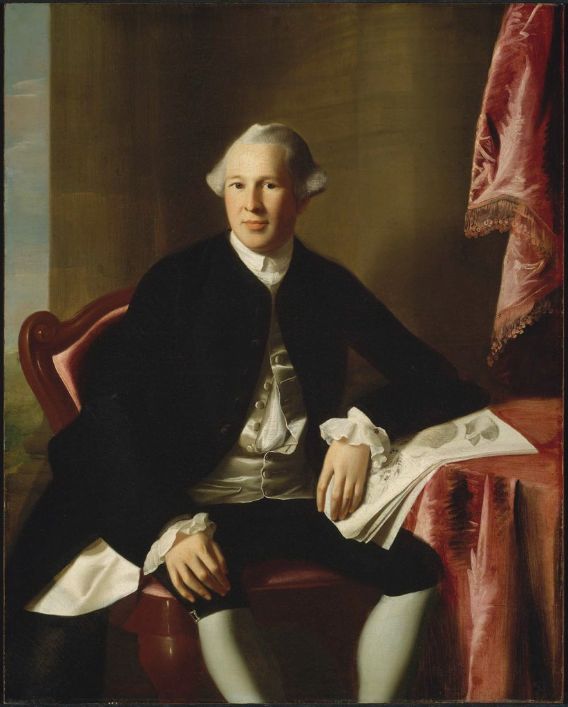

As the leader of the Boston Committee of Correspondence
Dr. Joseph Warren leveraged the mechanics to
collect and report intelligence on the British


And for those readers who worked in government offices or the military, his pay was cut from five shillings a day to four.

Saturday, October 3, 2015

Fort William and Mary

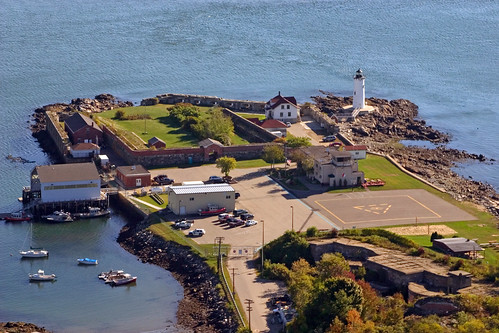
The scenic town of New Castle, New Hampshire, is home to the ruins of Fort William and Mary. Similar to the college in Virginia, the fort was named in honor of the somewhat iconic British rulers associated with the Glorious Revolution. It's ironic that each played a role in establishing the British monarchy in America under the guise of a revolution. However, some argue that the first armed resistance to royal authority started here long before Lexington and Concord.


The Agitation


Royal Governor Wentworth
In May 1774, the closing of Boston's port greatly angered most New Englanders. British authorities insisted that the "salt-water tea" be paid for and forced Bostonians to accept this. In New Hampshire, the Committee of Correspondence vowed to make Boston's fight their own. Royal Governor John Wentworth recognized a radical shift in public opinion and saw a possible threat to Royal authority. He attempted to establish a garrison at his only military post, Fort William and Mary in New Castle. However, the Assembly, now hostile to the British, approved only 200 pounds for the effort. Wentworth appointed an officer and three men to run the fort, showing the King's authority. But the army was too small to prevent a revolution.


The Politics

The Assembly was not deterred by Wentworth's measures. Later that month, they voted to create a second Committee of Correspondence. Wentworth and the Rockingham County sheriff tried to intimidate and shut down the Assembly, dismissing them from the chamber for holding an unlawful meeting. Unfazed, they went to a local tavern, and in that friendly setting, they made plans for a Provincial Congress to be held in Exeter in July. Over the next few months, the situation around Boston escalated from simmering to boiling, and the impact spread across New England like wildfire.


The Action

On December 13th, 1774, Paul Revere rode south to Portsmouth to report the British ban on importing military supplies and that rumors about expected British troops were the worst kind: true rumors. John Sullivan, a Patriot leader and firebrand, just returned from the First Continental Congress, decided to take action. Along with local Patriot merchant John Langdon, he vowed to seize the symbol of Royal authority sitting right under their noses at New Castle. On the 14th, Langdon made his way through Portsmouth with a drummer leading the charge. Once he had gathered a crowd, he addressed them. 

About 400 people joined him, forming a mob that set out to take the powder from the fort. A single volley fired from the fort was answered by some shots from the crowd, but no one was injured. They surged into the fort quickly. Breaking into the magazine, they took about 100 barrels of gunpowder. Overwhelmed, the fort's commandant, Captain John Cochran, quickly surrendered his four-man garrison. This marks Fort William and Mary as one of the first locations of overt action in the American struggle for independence. Some compared it to Lexington and Concord, but because there was no bloodshed, it is less well-known. Still, it was the first organized resistance to the King.


Fort William and Mary 1704


The Take

The following day, John Sullivan led more rebel forces now pouring in from across the colony. They first surrounded the governor's residence, but violence was avoided there, as Wentworth complied with their demands. That evening, December 15th, they returned to the fort and seized all the arms and supplies, including some cannons. This action resulted in the Americans capturing some loot, a tangible gain. This included about sixty muskets, sixteen cannons, and one hundred barrels of valuable powder. The gunpowder was quickly transported inland and distributed among various armed groups in New Hampshire. Some of it may have reached the Patriots around Boston. In a land starved for ammunition, this was a small treasure desperately needed.


Gunpowder from the fort moved inland over ice


The Place

History revolves around a sense of time, people, and place. On a scenic promontory overlooking the ocean, a colonial community driven by perceived injustice left their mark. New Castle is a charming town with about 900 residents. It is also the smallest and easternmost town in the state. Its narrow streets are lined with colonial-style houses. The fort was built in the early 18th century on the site of an earlier fort designed to deter pirates. Its main landmark is the Fort Point Lighthouse, built in 1877 on the site of an earlier lighthouse from 1771. Before the latter was built, the only navigational aid for the rocky harbor was a lantern hung high on Fort William and Mary.


Site of Fort William and Mary today


Sunday, March 30, 2014

Second to None


This blog discusses one of the last senior officers to fall in the campaign that ended the war: Alexander Scammell. There are many First Patriots in what I call the "second tier" of fame (but not importance). The "first tier" includes those most Americans learn about in school and in popular history: Washington, Greene, Knox, Von Steuben, Lafayette, Marion, Hamilton, and others. Like in all wars, the American War for Independence had many lesser-known figures, many of whom played very important yet less celebrated roles crucial to the war's ultimate success.

Alexander Scammell


Accomplished in Peace


John Sullivan

Alexander Scammell was born in 1744 in Milford, Massachusetts. His father died when he was six, and he and his brother went to live with a minister until he attended Harvard. After graduating from Harvard in 1769, he taught school near Plymouth, Massachusetts. In 1772, he moved to Portsmouth, New Hampshire, where he engaged in surveying and exploring the lands of the Royal Navy Timber. He also taught school at Berwick and occasionally assisted in making surveys for his Topographical Map of New Hampshire. It’s likely that these activities gave Scammell an eye for the land, which would prove useful in the military. Despite these diverse interests, Scammell eventually decided to study law (go figure), and in 1774, he went to Durham to study under John Sullivan, a prominent attorney.


A Call to Arms


By that time, New England was caught up in war fever, and Sullivan, along with Scammell, became part of it. Scammell participated in a raid organized by Sullivan against the British outpost Fort William and Mary in December 1774. This likely prepared him for an active role in the upcoming conflict. He was appointed a major in the 2nd New Hampshire Regiment, part of Sullivan's Brigade, and served during the siege of Boston and later in the ill-fated invasion of Canada, where Sullivan played a controversial role. Sullivan's brigade returned to Fort Ticonderoga by mid-July 1776, and Scammell became the dedicated aide de camp to the fiery general. 

At the Siege of Boston


However, in September, he was sent to New York City and fought in the Battle of Long Island. As Washington's army regrouped after losing New York, Scammell was appointed Assistant Adjutant General for Charles Lee's division, which was often divisive. A month later, in November 1776, he was promoted to colonel and soon took command of the 3rd New Hampshire Regiment. Since the regiment was still forming, Scammell joined the 1st and 2nd regiments under Colonel John Stark, another Tier 2 First Patriot, as they moved south to join Washington's army on the west bank of the Delaware. He crossed the Delaware with Washington and fought in both the Battle of Trenton and the Battle of Princeton. At Princeton, he helped rally the troops and turn what was nearly a defeat into a victory.


Long Island 1776 Battle Pass


From  Line Officer to Staff Officer to Counter-Spy


In June 1777, he commanded the 3rd New Hampshire Regiment at Fort Ticonderoga under Major General Arthur St. Clair. But St. Clair abandoned the fortress to the advancing British forces under General Burgoyne. Nevertheless, the regiment's escape allowed it to fight at Saratoga, where Scammell distinguished himself at Freeman's Farm and Bemis Heights. Just two days after Burgoyne's surrender, the regiment marched south to winter quarters at Valley Forge. 

At Burgoyne Surrenders at Saratoga


There, Washington appointed Scammell as the Adjutant General of the Continental Army. Scammell clearly demonstrated unique military and organizational skills to earn such a key position when the army was at its lowest point. In an interesting twist of Yankee Doodle Spies, Scammell was appointed as the executioner for the British spy, Major John André, in October 1780. Scammell became so upset over this task that he requested and received another field command. Aside from the espionage connection, one of the themes in Yankee Doodle Spies is protagonist Jeremiah Creed's desire to leave espionage and return to a line command. The connection, however, is purely coincidental.


Fall of Duty


In early 1781, Scammell was appointed commander of the 1st New Hampshire Regiment. However, in the spring of that year, he was assigned to lead a light infantry detachment that became known as Scammell's Light Infantry. This elite unit fought at King's Bridge (The Bronx) and served as the vanguard for the Continental Army's historic march to Yorktown. Upon its arrival, it became part of The Light Infantry Division. 

As the decisive campaign of the war neared its end, Colonel Alexander Scammell seemed destined for fame. But on the morning of September 30th, Scammell was serving as Field Officer-of-the-Day. This role made him responsible for sentries, scouts, passage of lines, or anything requiring immediate action. The trapped General Cornwallis had decided to strengthen his defense lines by abandoning his outer works around Yorktown. 

Yorktown


At dawn that day, Scammell's pickets discovered an abandoned redoubt near the road to Williamsburg. Recognizing a potential opportunity to advance the siege, the former surveyor led a reconnaissance of the recently abandoned British fortifications. It cost him his life. As he advanced on the outpost, he became separated from his scouting party. Then he spotted a cavalry patrol. In the mists, he thought it was American, but it turned out to be Tarleton's dragoons. 

Tarleton's Dragoons


Banastre Tarleton was a notorious British officer whose men were known to give little quarter. The horsemen surrounded Scammell, and during or after his surrender, the brave New Englander was shot in the back. His men could only watch as their wounded officer was taken into captivity at Yorktown. The British surgeons treated Scammell as best they could. Due to the seriousness of his wound, Cornwallis soon paroled him. He was sent to Williamsburg (now in American hands) to recover but died on October 6th, just weeks before Yorktown fell to the Allies.


Legacy Denied


A little personal background to share about the noble patriot. Scammell was tall for his era, over six feet with pale eyes. He had a straightforward manner that endeared him to his troops, his peers, and most of all—George Washington. Scammell had a great sense of humor and famously entertained the commander in chief with his tales. 

Up until the end, Alexander Scammell served his country selflessly. He had given up property and a promising law career to join the glorious cause. A few years earlier, then in his mid-thirties, Scammell lamented in a letter about ever finding a wife because of the length and nature of his service. While others like Alexander Hamilton went in and out of service as it suited them, he remained in service throughout the eight-year conflict. 

Might Scammell Have Led the Assault?


Scammell had an almost Forrest Gump-like knack for being at pivotal moments of the war and serving with key figures. Had he lived, the gallant Colonel Alexander Scammell might have been the officer leading the Light Infantry against Redoubt Number 10 at Yorktown instead of Alexander Hamilton. And who knows what greatness his character and leadership might have brought to the new nation after the war? Many with fewer wartime accomplishments went on to important political and diplomatic posts. But something tells me Alexander Scammell would have been happy back in New England with his law books and a loving wife.