Followers

Showing posts with label 18th century warfare. Show all posts

Thursday, June 30, 2022

Forts of the North


Glacial Expanse

Although much of North America was heavily forested in the 18th century, the expansive region of mountain woodlands stretching from New England to the Great Lakes along the northern part of New York made travel slow, difficult, and often dangerous. For centuries, however, the native tribes of the area, including the Iroquois, Abenaki, and Huron, moved through it with relative ease. Passes of knowledge passed down through generations of the tribes turned even the smallest crack in the woods, footpath, or deer trail into their main routes.


However, modern (18th-century) travelers like explorers, hunters, trappers, and armies needed a better way to navigate the often overwhelming wilderness. To do this, they also looked to nature. In this case, the excellent network of waterways was created by glaciers that receded at the end of the last great ice age.


Waterways of War

The resulting waterway extended, with minimal interruption, from the Saint Lawrence River to Lower New York Harbor and the Atlantic Ocean. This narration will focus on the northernmost waters of Lake Champlain and Lake George. Several forts built to defend the waterways played a significant role in the many clashes between the French, Indians, and the British in the 18th century. 


Crown Point

This is the story of two forts as Britain and France clashed to control Lake Champlain, the largest body of water south of the Great Lakes and west of the Atlantic Ocean. Like an opposing left thumb, a small peninsula extending into the lake from Champlain's western shore dominates the approach from either side. As the first "battlespace" between Canada and the colonies, it played a crucial role in the many 18th-century conflicts over a North American Empire. 


Crown Point and Other Forts of the North


The French were the first to recognize the strategic importance of the location. In 1734, they started building a base called Fort St. Frederic, which they used to launch raids against British settlers in central New York and New England (the hated Bostonnais). During the French and Indian War, the British aimed to neutralize the base and eventually succeeded in capturing it in 1759. They quickly constructed new defensive structures on the site, which they named "His Majesty's Fort of Crown Point." The new fortifications at Crown Point covered more than seven acres, making it one of the largest in North America.


Between the French and Indian War and the start of the American Revolution, Crown Point (like all other spots along the waterway) became less important and was basically put on hold. However, in 1775, the Americans saw the value in capturing the unmanned cannons and weapons for the new Continental Army. It served as a base for American forces invading Canada in 1775 and defending New York in 1776. Crown Point returned to British control when General John Burgoyne launched his 1777 campaign to split up the colonies. It stayed under British control even after Burgoyne surrendered in October of that year.


Ruins of the fort at Crown Point


Fort Ticonderoga

Fort Ti is the big daddy of forts, the big kahuna, the Gibraltar of the North, and plays a major role in my novel, The North Spy. The name "Ticonderoga" comes from the Iroquois word tekontaró:ken, meaning "it is at the junction of two waterways." Situated between Lake Champlain and Lake George, the site controlled the transit route between Canada and the American colonies, making it one of the most strategic locations in North America. I visited once when I was very young and twice as an adult and have not even begun to explore its full historical and geographic significance. 


The Gibraltar of the North


French Carillon

Recognizing its strategic importance, the French first fortified the site in 1755 and named it Fort Carillon. It would play a key role in the upcoming campaigns of the French and Indian War. The strength of the location was demonstrated in 1758 when 4,000 French troops defeated 16,000 British soldiers in a fierce battle called The Battle of Carillon. However, all forts are meant to be taken, and in 1759, the British returned. This time, they drove out the small French garrison. 
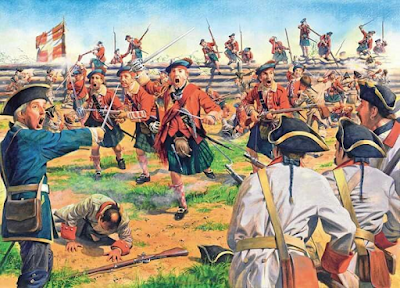

Fighting at Fort Carillon


Rebel Pickings

At the start of the Revolutionary War, local leaders recognized the importance of the fort and its weapons. In 1775, the American siege of Boston surrounded the British but lacked the necessary guns to carry out a proper siege and the gunpowder to risk a full-scale attack. 


Taking Ticonderoga by surprise


On May 10, 1775, Colonel Benedict Arnold and Ethan Allen led a surprise attack with a group of Green Mountain Boys and other local militia, catching the garrison off guard and capturing it. General George Washington, the new commander-in-chief of the Continental Army, sent Colonel Henry Knox to Ticonderoga to move the heavy cannons and powder back to Boston. When these captured guns were installed in the battery overlooking the city in March 1776, General William Howe ordered the evacuation of Boston.


Knox dragged Ticonderoga's guns to Boston


Red Deluge

During the summer campaign of 1777 led by British General John Burgoyne, Ticonderoga was a focal point. The large fort was crucial to Burgoyne's plans, serving as his logistics hub and starting point for his final push to Albany and a connection with General Henry Clinton's army in New York City.


General John Burgoyne


Without a Shot

The Americans acknowledged the threat and the importance of defending the fort, but the defenses had been neglected, and the garrison lacked enough troops, munitions, and supplies. Ironically, large fortresses use a lot of resources and are vulnerable if not fully staffed. This was the situation facing the new American commander of the garrison, General Arthur St. Clair. Ticonderoga was surrounded by mountains that, if taken, would put the fort and garrison in danger. St. Clair did not secure those hills, but the resourceful British did – dragging a gun battery to the top of Mount Defiance. Recognizing the danger, St. Clair ordered a night withdrawal, leaving the Gibraltar of the North without firing a shot.


St. Clair ordered the surrounded and undermanned fort abandoned


Fort Ann

Nestled in the rugged woods east of Lake George's southern tip, Fort Ann sits at the edge of the rough terrain and marks the start of the lowland routes to Fort Edward and the Upper Hudson Valley. 


Fort Ann protected the approach to the Hudson


French and Indian War

Recognizing its strategic position, the British built a small fort there in 1757. It was in 1758 that renowned French and Indian War leaders Israel Putnam and Robert Rogers led a force of 500 men to scout and screen the French at Fort Ticonderoga. On their return, they were ambushed, and Israel Putnam was wounded and captured.


Rogers's Rangers


Revolutionary War

Following the fall of Fort Ticonderoga in the summer of 1777, British General John Burgoyne forced the Continental troops to retreat. They pursued them through the dense, rugged woods east of the lakes. The Americans conducted a fighting withdrawal by felling trees and setting up ambush points, then regrouped in a defensive perimeter near the last stronghold before the pass leading to the lowlands – Fort Ann. The British advance guard was on the move, determined to capture the fort.


British Advance Guard


Impromptu Battlefield

The Battle of Fort Ann took place here on July 9, 1777. This was another delaying action, one of many large and small, that marked the middle phase of the Saratoga Campaign. 
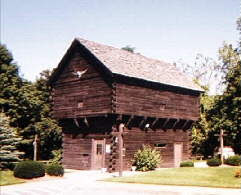

Fort Ann Block House


The British advance guard, consisting of around 200 men, was confronted at the gorge about a mile north of Fort Ann by Colonel Pierce Long's rear guard, which included 150 men reinforced by 400 New York militia under Colonel Henry van Rensselaer. Long and van Rensselaer launched an attack in two columns when the British paused to wait for reinforcements. One column swung east, threatening the British flank and rear, while the other pushed into the defile.

Gunpowder and War Whoops

The British withdrew to higher ground, and after two hours of intense fighting, the Americans broke contact due to a lack of ammunition and the sound of approaching British reinforcements. However, those reinforcements turned out to be a ruse—a single British officer imitating Iroquois war whoops. While a British victory, the action at Fort Ann delayed the progress of the British Saratoga Campaign. 


While the Patriots successfully outnumbered and surrounded the British, they ultimately retreated to Fort Ann and then to Fort Edward after being deceived into thinking that enemy reinforcements were about to encircle them. Nevertheless, the Patriots effectively delayed British movements toward Saratoga and secured an American victory there. 


Fort Edward

A series of forts was built at the "Great Carrying Place," a portage around the falls on the Hudson once used by local Indians before colonial times. Located on the "Great War Path," which was later used by the Iroquois and other tribes, both French and English colonists saw its importance and used it during many wars in the eighteenth century.


Fort Edward and Rogers Island


A French and Indian Fort

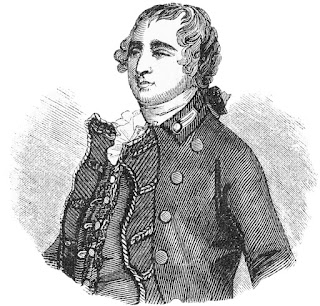
During the French and Indian War, General Phineas Lyman built Fort Lyman here in 1755. Sir William Johnson, the British Superintendent for Indian Affairs, renamed it Fort Edward in 1756 to honor Prince Edward, the younger brother of the future King George III. After Fort William Henry was captured by the French, the well-known Major Robert Rogers used it as a base for his Rangers' operations. In 1759, General Jeffrey Amherst's army gathered at Fort Edward for their attack on Fort Carillon and Fort St. Frederic. After the British took the forts, Fort Edward was greatly reduced as the war moved north.


Sir William Johnson


Revolutionary Days

Fort Edward was destroyed by the rebels shortly after the Revolutionary War started. Although it was never used as a defensive structure, its strategic location made it a base for many military officers passing through. The commander of the Continental Army's Northern Department, General Philip Schuyler, used it as his headquarters until the British forced him south on their way to Saratoga in the summer of 1777.


General Phillip Schuyler


Place of Infamy

The most infamous event of the 1777 Saratoga campaign, the case of Jane McCrae, happened near the fort. Jane, the fiancée (or lover) of a Loyalist officer, was captured by an Indian war party while visiting a house close to the fort. Her fiancée sent another Indian war party to negotiate for her release. When it became clear that the fiancée's envoy would not pay a ransom, her captor, a Huron named Wyandott Panther, became enraged. During the argument, he allegedly shot her. Jane's bloody scalp was brought to the British camp, where her fiancée identified it by its bright red hair. The rest of her remains were buried near the fort.


Jane McCrae's tragic death rallied the North


Patriotic Outrage

The Americans exploited the incident to stir up deep-rooted colonial fear and hatred of the Indians. Given the long history of conflict between the tribes, especially the Mohawks, this was fairly easy to do. Soon, hesitant farmers and settlers began to rally to the cause in large numbers. By the time General Burgoyne's Army was north of Albany, the angry rebels outnumbered him two to one.


McCrae's death and fear of the Indians rallied the complacent


Forts of Futility?
It is an axiom that forts are built to fall. A determined and sometimes lucky attacker will always succeed despite the earth, stone, wood, mortar, and sweat invested. The forts of the north were no exception. Despite their strategic positioning, excellent defensive terrain, and large land areas for an attacker to control, they all fell. But does that mean they were a failure? Like minefields, forts are not meant to stop an enemy but to influence his actions by channeling his forces, slowing his advance, and forcing a confrontation. And despite their flaws, the forts of the north, over decades of war and strife, served as formidable targets.

Guns of Ticonderoga


I suggest that anyone interested in the captivating history of the region visit these sites. They are set amidst some of the most stunning scenery in the United States. Today, the mountains and waterways host charming villages, scenic farms, and a variety of activities to enjoy while reflecting on the courage and sacrifice of early Americans, including both Native Americans and colonists.


Monday, February 28, 2022

The Governor-General

 Center Stage


Another profile of a historical character in my fourth Yankee Doodle Spies novel, The North Spy, features a British officer who played a unique role in shaping North America's destiny. Our character's political intrigue greatly influences the series of events that unfold in the action novel.


Yankee Doodle Spies


Another Irish Soldier

Guy Carleton was born on September 3, 1724, in Strabane, Ireland. He was the son of a Protestant landowner. However, he was at ease with the Roman Catholics in the local community and did not develop the same prejudices as most of his peers. Carleton received a commission in the British Army at age 18 as an ensign in the 25th Regiment of Foot. He was promoted to Lieutenant two years later and fought in the Jacobite Uprising in Scotland and the War of the Austrian Succession in Europe.


British Infantry mid 18th Century


The Guards and Patronage

In 1751, he joined the 1st Foot Guards, and in 1752, he was promoted to captain. Carleton used strong connections with notable figures like James Wolfe and the Duke of Richmond. In 1757, Carleton was promoted to lieutenant colonel and served in Germany. In 1758, he was named the lieutenant colonel of the newly formed 72nd Regiment of Foot. 


Guards Officer with Halberd


Fighting the French & Indians & Spanish

He saw extensive action during the French and Indian War. He led an elite battalion of 600 grenadiers under now Major General James Wolfe at the Battle of Quebec, which led to the conquest of New France. After recovering from a serious head wound at Quebec, he served at Belle Isle, France, and as a colonel in Havana, Cuba, where he was wounded again in battle. Interestingly, he fought alongside Richard Montgomery, a well-known British officer who would later become his enemy.


British infantry routing the French on the Plains of Abraham


Managing Quebec

By 1766, Carleton had returned to Quebec as its Lieutenant-Governor. Quebec was a French-speaking Catholic colony, and effectively governing it required all the skills and finesse that Carleton could bring. He won over the residents with initiatives aimed at ensuring religious and political freedoms. He cultivated relationships with the elites and soon gained their support for British rule.  


Lord Dunmore


However, conflicts with the Governor-General, John Murray, Earl of Dunmore, over the best ways to administer the new land, led to his return to London. This trip would prove to be very beneficial for him. Later, Lord Dunmore served as governor in North Carolina and then Virginia. The Scotsman's aggressive attitude helped push both colonies toward rebellion.


Promotion and Eros

On May 22, 1772, nearly 48 years old, Carleton married Lady Maria Howard, the daughter of Thomas Howard, 2nd Earl of Effingham. They had nine sons and two daughters. While he was in London, Parliament passed the Quebec Act of 1774, mainly based on his recommendations. This act defined how the province was governed, guaranteed religious freedom, and expanded Canada's colonial territory down the Mississippi River. Unfortunately, these measures put Britain on a collision course with the Protestant and expansionist thirteen colonies. 


The Quebec Act was a far-sighted policy


Governor-General

Major General Guy Carleton returned to Canada as Quebec's Governor-General in 1774 to find the 13 seaboard colonies embroiled in political unrest and rebellion.


General Guy Carleton


The outbreak of full rebellion by the New England colonies in 1775 had an immediate effect on Carleton's Quebec. The British commander-in-chief in North America, General Thomas Gage, took 800 British regulars from him to defend Boston. The local French did not rally in large numbers to support his militia forces, and he refused calls to enlist the native tribes.


Thomas Gage

Invasion and War

Thus weakened, he was unprepared for the winter assault launched by the American invasion in the fall of 1775. Two of America's best commanders, General Richard Montgomery and Colonel Benedict Arnold, led bold advances across two fronts.


General Montgomery marshals his troops to invade Canada


Fortunately, the Americans' poor timing, insufficient supplies, and worsening weather hindered what appeared to be an imminent and quick victory.

Stout Defender

Guy Carleton also showed true courage in his own right. He carried out a defensive action that slowed Montgomery's push on Montreal, trading space for time. The besieged governor managed to hold out for a while in Montreal but nearly fell into rebel hands during his evacuation—determined to continue his defense further down the Saint Lawrence River at Quebec City, where he would make a last-ditch stand. 


Quebec


With Arnold now in front of Quebec and Montgomery ready to join him, Carleton counted on three factors: the arrival of winter, the bravery of his small group of regulars and provincials, and reinforcements from Britain. Miraculously for him, all three came together, but not without significant effort and sacrifice. 


Benedict Arnold

The Americans' full-scale attack on Quebec failed due to severe weather, a resilient and steadfast defense, and effective tactical choices. General Montgomery was mortally wounded in the blinding snowstorm that swirled around the city. Colonel Arnold was hit in the leg by a musket ball, and the British captured several American leaders, including Dan Morgan and Ethan Allen. Carleton remained strong against a weak American army scattered throughout the city until General John Burgoyne arrived in March 1776. 


Failed assault on Quebec

Counter Stroke

With new troops reinforcing him, Carleton launched a counterattack. In June, his devastating strike against acting American commander General John Sullivan at Trois Rivieres caused the scattered and poorly supplied Americans to retreat back into New York.


Canadian Militia at Trois-Rivieres


Carleton then went on the offensive. Over the next few months, he built a fleet and launched it down Lake Champlain in October 1776. However, Colonel, now Brigadier-General Arnold, had recovered and stayed busy assembling a fleet of his own. The two clashed at Valcour Island on October 10. Arnold fought a clever battle and inflicted losses on the British fleet before Carleton decisively defeated him. The route to Albany and deep into the rebel heartland was now open.


Valcour Island


But the Governor-General had second thoughts about continuing a new campaign so late in the season. He withdrew north to strengthen his supply line and prepare for a final push the next season. It was a season that would not belong to him. Carleton's hesitancy in 1776 caused London to "go in a different direction."

A Different Direction

While the Americans used the winter break to regroup and strengthen their hold on Lake Champlain, General Burgoyne returned to Britain. He convinced Lord George Germain and King George to appoint him as commander of the new army and to lead the spring offensive into New York. Carleton responded by resigning as Governor-General and returning to Britain as the governor of Armagh, Ireland. 


John Burgoyne

Military Disaster

Meanwhile, Burgoyne's defeat and surrender to the Americans at Saratoga in October 1777 triggered a series of events that drew France and Spain into the fight against Britain. After Cornwallis surrendered at Yorktown in October 1781, the British realized they needed to deal with what appeared to be their defeat in America. 


Surrender at Yorktown

Managing Defeat

With the signing of the Treaty of Paris, London recalled General Henry Clinton and sent Carleton to replace him as commander-in-chief in North America. His role was to oversee the aftermath of defeat by enforcing the terms of the peace treaty. Carleton ensured an orderly process and advocated for the rights and interests of the remaining Loyalists and British supporters of former slaves in the colonies. He refused to evacuate the last British garrison in New York until all Loyalist refugees were safely settled in Québec and Nova Scotia. 


The British departed New York City in 1783

The Peer

In 1783, he was named the 1st Baron Dorchester when he returned to England. However, London once again needed his administrative skills in North America. In 1786, he went back for another term as Governor-in-Chief of North America – Canada and the various maritime provinces.

Governor-in-Chief

He focused on the economic growth of the colonies. To achieve this, he deliberately misinterpreted the British ban on American imports to promote trade with the American West. The ban would only affect seaports. 


1st Baron Dorchester


Carleton played a key role in splitting the colony into Upper Canada (Ontario) and Lower Canada (Quebec), each with its own assembly, and he outlined the plan for British control over all its North American territories.


Carlton's Canada

To England's Green Pastures

On July 9, 1796, Carleton sailed from Canada to Britain, never to return. He died suddenly on November 10, 1808, at Stubbings House in Burchett's Green near Maidenhead, England. Guy Carleton, Lord Dorchester, was buried in the parish church of St. Swithun's, Nately Scures.


Carleton in Winter

Lasting Legacy

Although he was a skilled combat leader, Carleton's legacy centers on his abilities as an administrator—someone capable of organizing and managing in times of peace, crisis, and war. His talents helped bring the eight-year American War for Independence to a respectful close and also contributed to building the future Dominion of Canada. Both achievements demonstrate his status as a great leader who left a significant impact on the future of North America.


Carleton Memorial


Sunday, April 25, 2021

First to Fall Part 2: First Hero

Autumn Winds

Brigadier General Richard Montgomery tugged at his leather glove as the line of poorly fed and poorly armed men marched northward. The winds were strengthening, and the skies looked like slate. His eyes shifted to the dense forests to the north – Canada. We must strike quickly, or these lads will leave their bones here. 


Brigadier General Richard Montgomery


Isle of Hope

On September 4th, Schuyler joined Montgomery with an additional 800 men. Now, he had 2,000 poorly trained and poorly equipped soldiers. Schuyler was also ill. Despite this, the aging New Yorker ordered the army to move toward a small island on the Richelieu River called Île aux Noix. With little time left, on September 6th, Montgomery led a force north to their first goal, Fort St. John's, which protected the route to Montreal. Paddles and oars brushed the dark waters, each stroke bringing the army and Montgomery closer to their destiny. They carried more than just bullets in their pouches. Schuyler, who was in poor health and unable to lead the expedition, had drafted a proclamation calling the Canadians "Friends and Countrymen" and pleading for their support in driving the British out of the territory. They would be disappointed in this hope. Montgomery’s probing attack failed. Although he managed to repel an ambush of about 100 Indians under Captain Matthew Mead, Schuyler feared the fort couldn't be taken by storm and ordered Montgomery to return to the island, which the Americans then fortified.


Area of Operations around Montreal


Fort St. Johns 

Montgomery decided to make another attempt at Fort St. Johns, but this attack was no more successful. In a series of errors, the two pincers of the American assault collided in the dark, muddy woods. Each thought they had encountered the British, and both forces fled. A furious Montgomery was able to stop the retreat and redirect them toward the fort.


His men advanced under withering British grapeshot fire, and the assault on the British breastworks was driven back. Montgomery planned another attack on the fort. However, half the New England troops fled. Montgomery, believing his force could no longer take the fort, retreated to Île aux Noix. When Schuyler’s illness forced him to return to Fort Ticonderoga, command of the late-start and ill-equipped operation was now his.

On September 16, Montgomery launched another expedition against the British fort. This time, he had 1,400 men along with a naval component consisting of two small ships and ten bateaux carrying 350 troops. The bateaux would counter the HMS Royal Savage. Montgomery arrived with the main force the following day. A month-long siege began, with the defenders outmanned and the attackers outgunned. The British garrison of 725 men was commanded by Major Charles Preston, who had been Montgomery's superior officer in the British Army just three years earlier. After initial skirmishing, Montgomery proceeded to besiege the fort. Progress was slow. Montgomery was everywhere at once, encouraging the building of siege lines and often coming under fire himself. 


                                                                        Fort St. John


On September 22, the fiery general was inspecting the breastworks when a cannon shot from the fort flew by, tearing his coattails and causing him to tumble down. By luck and skill, Montgomery managed to land on his feet. His men watched and were all impressed by his Sang Froid. Their commander was a man of steel nerves. However, by early October, they still had not closed the ring on the fort, despite bringing in more guns. One battery did sink HMS Royal Savage, but Montgomery’s forces remained outgunned in most areas. 


In mid-October, James Livingston, a relative of Janet Montgomery, recommended that Montgomery attempt to attack nearby Fort Chambly, which was a weaker post than St. John. He agreed and launched a night assault ten miles down the river. In two days, the fort surrendered 83 men and a large amount of valuable powder. However, the most significant prize was the colors of the 7th Royal Fusiliers, which he sent to the bedridden Schuyler – marking the first time a British battle flag fell into American hands.


The King's Colors of the 7th Royal Fusiliers


This boosted morale, and Montgomery was able to get his men to reinforce the defenses around Fort St. John. They also managed to repel a relief force sent from Montreal by General Guy Carleton, the British commander in Canada. By November 1st, the new batteries positioned north of the fort completed the encirclement. They launched a bombardment that shattered walls and buildings, causing little damage but significantly lowering the defenders' morale. As night fell on the battlefield, Montgomery ordered a cease-fire and sent a flag of truce. During the night, the Americans intercepted a dispatch from Carleton instructing Major Preston to continue his defense. The following day, the fort surrendered with full military honors, and its garrison marched off to imprisonment. One can't help but wonder what might have happened if the message had gone through. 

Montreal

Montgomery’s first major victory was now within his reach. But the weather and the terrain proved to be tough allies for the British. His men trudged across rugged ground covered with ice and snow. An early winter storm made progress even harder. He encouraged his men forward, knowing Carleton and his army were nearly cornered. When he learned of a British attempt to escape, he sent a detachment to Sorrel. After brief fighting, the British withdrew. Smoke rising from Montreal's chimneys welcomed Montgomery’s troops as they approached the city. A surrender demand failed, however, and as negotiations dragged on, Carleton managed to slip down the St. Lawrence River to the safety of Quebec. On November 13, Montgomery’s exhausted men entered a city without defenders - a Pyrrhic victory. 


Guy Carleton

 Back in Montreal, Montgomery insisted that the captured British prisoners be treated kindly. After all, many of them were not long before his comrades in arms. However, some of his own officers were unhappy with this. Montgomery was disappointed by another act of indiscipline, and only protests from the commander-in-chief prevented him from resigning.

Quebec

Determined to finish the campaign, Montgomery sailed to Quebec City on November 28 with 300 of his best men. Four days later, he joined forces with Benedict Arnold's remaining men at Pointe aux Trembles, just upriver from Quebec. Montgomery took command of both groups, and his first action was to deliver much-needed clothing and supplies to the exhausted “rabble in arms” marching through the Maine wilderness. But winter was tightening its grip on Canada, forcing him to act swiftly. The next day, his combined force moved downstream and encircled Quebec. On December 7, he sent a letter with an ultimatum, but it was burned by Carleton. Montgomery then tried to win the Canadians over to the cause, but his envoy was arrested. Desperate to reach Les Habitants (the locals), he had his proclamation shot over the city wall with bows and arrows. However, they stayed loyal to their new rulers.


Quebec City was the Key to Canada


Now Montgomery had to do the tough work of a siege. Several mortars began shelling the city, but their shells caused little damage. Undeterred, Montgomery moved another battery onto the Plains of Abraham, the site of the battle that decided the city's fate in the French and Indian War. The guns were closer to the walls but also more exposed. Still, by December 15, Montgomery had his batteries in position. Anxious for a resolution, he once again asked for Carleton’s surrender. When Carleton refused, Montgomery’s batteries opened fire. The guns failed to make an impact and were immediately threatened by effective British counter-battery fire. He was forced to order them back. 


Quebec City and Environs


With supplies running low, morale weakening, and winter approaching, Montgomery had no choice but to storm the city. He decided to attack the Lower Town district (Saint-Roch) on the bank of the Saint Lawrence while Arnold would assault the powerful Cape Diamond Bastion. He planned the attack during a stormy night, hoping the weather would conceal their movement from the British. An attack scheduled for December 27 was canceled when the weather cleared. He was forced to revise his plans after someone defected to the British and revealed his strategies.


Montgomery's situation required 
careful planning and flexibility


Montgomery prepared his plan. He aimed for a two-prong attack on the Lower Town, coming from the south, while Arnold would attack from the north. To mislead the British, Montgomery used a deception tactic. He ordered the 1st Canadian Regiment (local fighters who had joined the American cause) to fire at one of the gates, while a separate group engaged the defenders at Cape Diamond Bastion. The signal for the assault was rocket fire. Montgomery’s unimpressive artillery would bombard the city during the feint attacks. This was a bold and risky move. One Montgomery was reluctant to make, but he had no alternative. As George Washington would face a year later, expiring enlistments were draining the army, and many would be gone by January 1. 

A Night to Remember, and Forget

Montgomery experienced his second snowstorm on the night of December 30. He quickly issued the order. Shivering but now energized, the Americans gathered in the wind and snow. The night was cold, dark, and intense, with wind howling and snow swirling. Where was the signal? At 4 am, an orange burst lit up the sky. Boot steps muffled by the wind and snow as his men made their way to the lower town. However, the British were warned by the rockets, and the walls were well-manned. 


Night attack in a snowstorm


With their general at the front, the Americans edged down the steep and slippery cliffs and arrived just below the city walls. As if they didn't have enough obstacles, a palisade at the edge of the Lower Town now blocked their way! Axemen ran to the front and began chopping through. Then Montgomery personally led his column through the opening. Unknown to Montgomery, he was now a major general, promoted by Congress on December 9 for his victories at St. Johns and Montreal. Seeing a two-story blockhouse blocking their path, he had no time to waste or hesitate. He drew his sword and led the troops toward it, shouting, "Come on, my good soldiers, your general calls upon you to come on."


Quebec's defenders proved formidable


The desperate men gripped their muskets tightly and moved forward. About fifty yards away, an equally determined group of Canadian militia and British sailors in the blockhouse unleashed a barrage of musket balls and grapeshot. Montgomery was hit in the head and both thighs by grapeshot and died instantly. The deadly fire brought down two of his captains.


Death of Montgomery


The attack fell apart after Montgomery’s death. The Americans retreated chaotically. A staff officer named Aaron Burr tried to carry Montgomery’s body back but failed. Meanwhile, Benedict Arnold's attack, which had started well, also broke down when Arnold was wounded in the leg by a ball. Many of his men, including Daniel Morgan, were forced to surrender to the British bayonets. With the guns suddenly silent, the howling wind and snow marked the end of the effort to connect Canada to the American cause. 

Benedict Arnold


Honors in Death

Montgomery was highly respected by the British for his previous service and his humane treatment of prisoners at Montreal. Carleton had him buried modestly but with honor on January 4. Some of his men, now prisoners, watched their beloved and heroic general during the solemn funeral. Meanwhile, Arnold, with a bandaged leg, took command of the battered army. His efforts to save the lost cause would be heroic and extraordinary but ultimately futile.

First Hero – First Monument

News of Richard Montgomery’s death was a heavy blow to the Northern Department. Schuler wrote, "My amiable friend, the gallant Montgomery, is no more; the brave Arnold is wounded; and we have met a severe setback in an unsuccessful attempt on Quebec. May Heaven be graciously pleased that the misfortune may end here." For a time, news of his death was kept quiet to delay the morale decline that would follow.


Phillip Schuyler


Washington was dismayed at the loss. So struck by Montgomery’s valiant death, Congress commissioned a monument to him and held a memorial service. He was celebrated as a hero throughout the colonies – perhaps the nation’s first national hero. 


The Montgomery Monument


Significantly, Montgomery's death was mourned in Britain, and his former Whig allies used his death as an opportunity to criticize British policy. British Prime Minister Lord North acknowledged his qualities as a man but condemned him as a rebel. However, many of the London papers actually paid tribute to Montgomery. 


Lord North


Montgomery’s widow, Janet, dedicated her life to protecting his legacy. She moved to the house near Rhinebeck, which she had initially hoped to keep before the war. She also rejected a marriage proposal from former Continental general and British officer Horatio Gates. This was noteworthy in a society where widows usually remarried. 


Final Farewell

In 1818, Governor Stephen van Rensselaer of New York had Montgomery's body moved to New York. About 5,000 mourners participated in his funeral procession, and on July 8, he was laid to rest for the last time next to the Montgomery monument at St. Paul’s Church. The ceremony provided some closure for Janet Montgomery, who was pleased with the honors given to the soldier she loved.

In closing, Montgomery, Alabama, named after America's first hero, unveiled a statue of its namesake in 2019 as part of its bicentennial celebration. It is somehow touching that a man who died in the cold of the North would be honored by citizens in the deep South. 


Montgomery statue in Alabama