Followers

Showing posts with label Guy Carleton. Show all posts

Monday, February 28, 2022

The Governor-General

 Center Stage


Another profile of a historical character in my fourth Yankee Doodle Spies novel, The North Spy, features a British officer who played a unique role in shaping North America's destiny. Our character's political intrigue greatly influences the series of events that unfold in the action novel.


Yankee Doodle Spies


Another Irish Soldier

Guy Carleton was born on September 3, 1724, in Strabane, Ireland. He was the son of a Protestant landowner. However, he was at ease with the Roman Catholics in the local community and did not develop the same prejudices as most of his peers. Carleton received a commission in the British Army at age 18 as an ensign in the 25th Regiment of Foot. He was promoted to Lieutenant two years later and fought in the Jacobite Uprising in Scotland and the War of the Austrian Succession in Europe.


British Infantry mid 18th Century


The Guards and Patronage

In 1751, he joined the 1st Foot Guards, and in 1752, he was promoted to captain. Carleton used strong connections with notable figures like James Wolfe and the Duke of Richmond. In 1757, Carleton was promoted to lieutenant colonel and served in Germany. In 1758, he was named the lieutenant colonel of the newly formed 72nd Regiment of Foot. 


Guards Officer with Halberd


Fighting the French & Indians & Spanish

He saw extensive action during the French and Indian War. He led an elite battalion of 600 grenadiers under now Major General James Wolfe at the Battle of Quebec, which led to the conquest of New France. After recovering from a serious head wound at Quebec, he served at Belle Isle, France, and as a colonel in Havana, Cuba, where he was wounded again in battle. Interestingly, he fought alongside Richard Montgomery, a well-known British officer who would later become his enemy.


British infantry routing the French on the Plains of Abraham


Managing Quebec

By 1766, Carleton had returned to Quebec as its Lieutenant-Governor. Quebec was a French-speaking Catholic colony, and effectively governing it required all the skills and finesse that Carleton could bring. He won over the residents with initiatives aimed at ensuring religious and political freedoms. He cultivated relationships with the elites and soon gained their support for British rule.  


Lord Dunmore


However, conflicts with the Governor-General, John Murray, Earl of Dunmore, over the best ways to administer the new land, led to his return to London. This trip would prove to be very beneficial for him. Later, Lord Dunmore served as governor in North Carolina and then Virginia. The Scotsman's aggressive attitude helped push both colonies toward rebellion.


Promotion and Eros

On May 22, 1772, nearly 48 years old, Carleton married Lady Maria Howard, the daughter of Thomas Howard, 2nd Earl of Effingham. They had nine sons and two daughters. While he was in London, Parliament passed the Quebec Act of 1774, mainly based on his recommendations. This act defined how the province was governed, guaranteed religious freedom, and expanded Canada's colonial territory down the Mississippi River. Unfortunately, these measures put Britain on a collision course with the Protestant and expansionist thirteen colonies. 


The Quebec Act was a far-sighted policy


Governor-General

Major General Guy Carleton returned to Canada as Quebec's Governor-General in 1774 to find the 13 seaboard colonies embroiled in political unrest and rebellion.


General Guy Carleton


The outbreak of full rebellion by the New England colonies in 1775 had an immediate effect on Carleton's Quebec. The British commander-in-chief in North America, General Thomas Gage, took 800 British regulars from him to defend Boston. The local French did not rally in large numbers to support his militia forces, and he refused calls to enlist the native tribes.


Thomas Gage

Invasion and War

Thus weakened, he was unprepared for the winter assault launched by the American invasion in the fall of 1775. Two of America's best commanders, General Richard Montgomery and Colonel Benedict Arnold, led bold advances across two fronts.


General Montgomery marshals his troops to invade Canada


Fortunately, the Americans' poor timing, insufficient supplies, and worsening weather hindered what appeared to be an imminent and quick victory.

Stout Defender

Guy Carleton also showed true courage in his own right. He carried out a defensive action that slowed Montgomery's push on Montreal, trading space for time. The besieged governor managed to hold out for a while in Montreal but nearly fell into rebel hands during his evacuation—determined to continue his defense further down the Saint Lawrence River at Quebec City, where he would make a last-ditch stand. 


Quebec


With Arnold now in front of Quebec and Montgomery ready to join him, Carleton counted on three factors: the arrival of winter, the bravery of his small group of regulars and provincials, and reinforcements from Britain. Miraculously for him, all three came together, but not without significant effort and sacrifice. 


Benedict Arnold

The Americans' full-scale attack on Quebec failed due to severe weather, a resilient and steadfast defense, and effective tactical choices. General Montgomery was mortally wounded in the blinding snowstorm that swirled around the city. Colonel Arnold was hit in the leg by a musket ball, and the British captured several American leaders, including Dan Morgan and Ethan Allen. Carleton remained strong against a weak American army scattered throughout the city until General John Burgoyne arrived in March 1776. 


Failed assault on Quebec

Counter Stroke

With new troops reinforcing him, Carleton launched a counterattack. In June, his devastating strike against acting American commander General John Sullivan at Trois Rivieres caused the scattered and poorly supplied Americans to retreat back into New York.


Canadian Militia at Trois-Rivieres


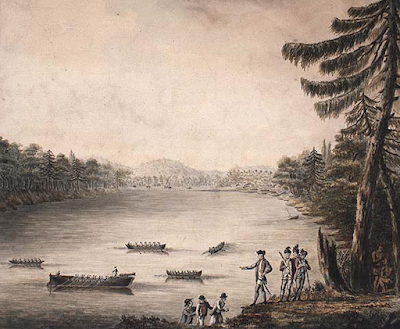
Carleton then went on the offensive. Over the next few months, he built a fleet and launched it down Lake Champlain in October 1776. However, Colonel, now Brigadier-General Arnold, had recovered and stayed busy assembling a fleet of his own. The two clashed at Valcour Island on October 10. Arnold fought a clever battle and inflicted losses on the British fleet before Carleton decisively defeated him. The route to Albany and deep into the rebel heartland was now open.


Valcour Island


But the Governor-General had second thoughts about continuing a new campaign so late in the season. He withdrew north to strengthen his supply line and prepare for a final push the next season. It was a season that would not belong to him. Carleton's hesitancy in 1776 caused London to "go in a different direction."

A Different Direction

While the Americans used the winter break to regroup and strengthen their hold on Lake Champlain, General Burgoyne returned to Britain. He convinced Lord George Germain and King George to appoint him as commander of the new army and to lead the spring offensive into New York. Carleton responded by resigning as Governor-General and returning to Britain as the governor of Armagh, Ireland. 


John Burgoyne

Military Disaster

Meanwhile, Burgoyne's defeat and surrender to the Americans at Saratoga in October 1777 triggered a series of events that drew France and Spain into the fight against Britain. After Cornwallis surrendered at Yorktown in October 1781, the British realized they needed to deal with what appeared to be their defeat in America. 


Surrender at Yorktown

Managing Defeat

With the signing of the Treaty of Paris, London recalled General Henry Clinton and sent Carleton to replace him as commander-in-chief in North America. His role was to oversee the aftermath of defeat by enforcing the terms of the peace treaty. Carleton ensured an orderly process and advocated for the rights and interests of the remaining Loyalists and British supporters of former slaves in the colonies. He refused to evacuate the last British garrison in New York until all Loyalist refugees were safely settled in Québec and Nova Scotia. 


The British departed New York City in 1783

The Peer

In 1783, he was named the 1st Baron Dorchester when he returned to England. However, London once again needed his administrative skills in North America. In 1786, he went back for another term as Governor-in-Chief of North America – Canada and the various maritime provinces.

Governor-in-Chief

He focused on the economic growth of the colonies. To achieve this, he deliberately misinterpreted the British ban on American imports to promote trade with the American West. The ban would only affect seaports. 
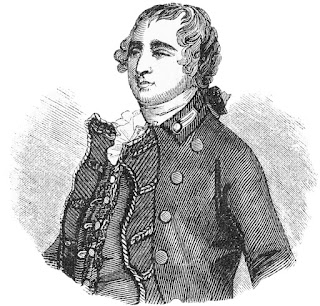


1st Baron Dorchester


Carleton played a key role in splitting the colony into Upper Canada (Ontario) and Lower Canada (Quebec), each with its own assembly, and he outlined the plan for British control over all its North American territories.


Carlton's Canada

To England's Green Pastures

On July 9, 1796, Carleton sailed from Canada to Britain, never to return. He died suddenly on November 10, 1808, at Stubbings House in Burchett's Green near Maidenhead, England. Guy Carleton, Lord Dorchester, was buried in the parish church of St. Swithun's, Nately Scures.


Carleton in Winter

Lasting Legacy

Although he was a skilled combat leader, Carleton's legacy centers on his abilities as an administrator—someone capable of organizing and managing in times of peace, crisis, and war. His talents helped bring the eight-year American War for Independence to a respectful close and also contributed to building the future Dominion of Canada. Both achievements demonstrate his status as a great leader who left a significant impact on the future of North America.


Carleton Memorial


Tuesday, November 30, 2021

Fighting Fraser

This is the third profile in a series highlighting a character from book four of the Yankee Doodle Spies series, The North Spy, which is set to be released next year. Since my previous profile featured a Scotsman who fought for America, it only makes sense to follow up with a Scotsman who fought for England. Not just any Scotsman, but a member of the famous Fraser clan of Highland warriors. 


Proud Lineage

Simon Fraser was born into a proud Scottish Highland lineage in Balnain, Scotland, on May 26, 1729. His family and clan were courageous warriors, and many of them fell at the pivotal Battle of Culloden in 1745. Those who survived lost their lands and heritage and were forced into exile.


Culloden smashed the Clans - but not the Highland spirit

Dutch Service

The Scots, like their cousins across the Irish Sea, often fight for the English even when they are not technically fighting against them. This is what young Fraser did, starting with a period in one of the Scottish Brigades hired by the Netherlands—the 4th Brigade, specifically. In the final years of the War of Austrian Succession, young Simon fought in the 1747 siege of Bergen-op-Zoom. The attacking French forces overwhelmed the defenses and flooded into the town, where fierce fighting took place. During the attack and counterattack, Fraser was wounded. 


Seige of Bergen-Op-Zoom

Royal American

With the end of the war, the Dutch Brigade was reduced to a single battalion, prompting Fraser to look for opportunities elsewhere. The start of the Seven Years' War provided a prime chance for an eager and now experienced young Highlander. In 1756, Fraser joined the British Army’s 62nd Royal American Regiment of Foot. Renumbered as the 60th the following year, it later became known as The King’s Royal Rifle Corps.


Back to the Clan

Fraser did not stay with the 60th for long. In January 1757, he accepted a commission in a newly formed regiment of highlanders, the 63rd Highlander Regiment of Foot. The regiment was led by Simon’s cousin, Lord Lovat, who was also named Simon Fraser. The unit was called Fraser’s Regiment, and its ranks mostly consisted of Frasers. This was probably the main reason for joining—the chance to fight alongside and for kin.


Fighting French & Indians

Fraser traveled to America to fight the French, taking part in the siege of Louisbourg, which, when captured, gave Britain control of the mouth of the Saint Lawrence River. He served under British General James Wolfe during the 1759 attack on Quebec, the decisive battle of the war in America. The 78th Regiment climbed the Heights of Abraham with Wolfe, and Lieutenant Fraser was wounded in the fierce fighting, while Wolfe was mortally wounded in this great victory. 


Scaling the Heights of Abraham

Fraser’s time with the 60th and his service in America with the 78th opened his eyes to a different style of fighting in the wooded wilderness—the need for disciplined troops who could fight outside of massed formations and rely on terrain and marksmanship to take down enemies like the Indian allies of the French. After Quebec, Fraser’s unit had garrison duty in the city and spent some time in New York, but the French and Indian war was nearing its end.


Fraser's Highlanders mingle with Iroquois Braves

Seven Year Itch

By 1760, Fraser was back in Europe—though the Seven Years' War had not yet ended. This led to another transfer—this time to the 24th Regiment of Foot, which was sent to Germany to serve in Lord Granby’s Corps. Over the next two years, the 24th fought in more than half a dozen sieges and major battles against the French. He was recognized for heroism at the Battle of Wezen in November 1761. Fraser led a hand-picked company of fifty men in an attack that drove off about 400 French troops. He was promoted to major during this time, learning a lesson about what specially trained men could accomplish against greater odds.


British infantry in the Seven Years' War

Post-Treaty of Paris

After the Treaty of Paris was signed in 1763, Fraser continued his military service in Germany, Ireland, and Gibraltar. From 1763 to 1769, Simon Fraser and the 24th Regiment were stationed in Gibraltar. He performed well and was promoted to Lieutenant Colonel of the 24th in 1768. Fraser trained the regiment in specialized light infantry tactics, making it one of the first British regiments to focus on this approach.


Gibraltar

It was also in Gibraltar that he met Margarita Hendrika Beck Grant, the widow of Major Alexander Grant, a fellow Scot. After exchanging letters for some time, they married. Soon afterward, they moved to Ireland when the 24th was transferred there. The couple had no children.


Brigadier General Simon Fraser

War Clouds in America

Fraser had watched as the North American colonies went into rebellion and war. The rebels expelled a British Army from Boston in 1775 and invaded Canada. More troops were needed to put down the rebellion. More importantly, Britain needed experienced officers. So, as commander of a brigade of five battalions, Fraser set sail from Ireland and returned to North America in April 1776. He was sent to support the beleaguered Governor-General Guy Carleton, who was surrounded in Quebec by American rebels. Carleton had held off the invading army against all odds during a brutal winter campaign. Fraser’s arrival helped him go on the offensive.


Governor-General Guy Carleton

In the Vanguard

Fraser wasted no time; he defeated American General William Thompson’s division at Trois Rivieres in June. Named brevet Brigadier General by Carleton, Fraser took command of the Advance Guard of the British counterattack into New York’s Champlain Valley. Although Carleton’s campaign was successful, the stubborn American defense, led by Brigadier General Benedict Arnold, disrupted his schedule by engaging him at Valcour Island. The battle was won, but winter was approaching.


Valcour Island

An Unsavory Pause

Rather than risk a final descent into Albany as winter approached, Carleton retreated to the northernmost part of Lake Champlain, planning to move again the following year. Fraser, like many other officers, was unhappy with this cautious strategy, but they had to wait for a new season—and a new commander. During the winter quarters, Fraser trained his troops in light infantry tactics and prepared them for operations in the rugged American wilderness.


The upper end of Lake Champlain

New Boss, New Plan

In the spring of 1777, Major General John Burgoyne returned from London with 8,000 British and German troops and a new invasion plan. This plan involved three separate pushes from the west, north, and south, all aimed to meet at Albany. It also specified that Burgoyne, not Carleton, would command the main attack from Canada.


General John Burgoyne

Advance Guard Again

Brigadier General Fraser took command of Burgoyne’s advance guard, consisting of about 1,200 troops now trained as light infantry. The army launched from the mouth of the Richelieu River into Lake Champlain in an array of bateaux and canoes. Moving swiftly, Fraser’s forces protected the advance toward Fort Ticonderoga and captured it during a surprise attack as the American defenders retreated into the night. Fraser himself led the troops and raised a British flag.


Ticonderoga

A Hot Pursuit

Fraser then sent his advance guard in hot pursuit as the Americans chose to retreat through the dense forests to the south and east instead of taking the waterways that led south. The British vanguard continued on their trail and eventually cornered the American rear guard under Colonel Seth Warner, also an experienced fighter in the woods, near Hubbardton. In a back-and-forth struggle, the larger American force actually started to gain the upper hand, but a column of Germans under General von Riedesel helped turn the tide of battle.


The American militia acquitted itself well against
 the professionals at Hubbardton

Supply Chain Blues

The rest of Burgoyne’s army was now moving south again, with Fraser’s brigade leading the way. Albany was within reach with just one final push. However, Burgoyne faced a supply chain problem because he was far from his base, and shortages began to occur. Additionally, Fraser’s scouts, including some Canadians and Iroquois, reported a large concentration of Americans just north of Albany, under the command of a former British officer, General Horatio Gates.


Horatio Gates


Burgoyne began to lose his nerve. The other two attacks failed, and he was on his own. Instead of launching a full-scale assault, he ordered a reconnaissance in force with Fraser leading the right wing through thick woods and rugged terrain. 


Freeman's Farm

Clash of Titans

There, Fraser’s elite force clashed head-on with their American counterparts, the Virginia and Pennsylvania riflemen led by Colonel Daniel Morgan. Morgan’s riflemen wielded long rifles with grooved barrels that allowed for accurate fire over distances of more than one hundred yards. Fraser's brigade consisted of the best marksmen in the British Army. The lead flew as the top soldiers from each side exchanged fire, and ultimately, Morgan’s force was pushed back, creating an opportunity to exploit the situation and maneuver around the American flank.


Dan Morgan


 A Pause and a Probe

But Burgoyne did not approve and instead withdrew his army back to camp to assess the supply situation. That situation only worsened, and as autumn advanced, Burgoyne found himself in a desperate predicament. This time, he launched a probing attack. The idea was to gauge the enemy and exploit any weaknesses. He initiated his probe on October 7 in what would become the Battle of Bemis Heights.


Bemis Heights

Frenzied Fighting

Once again, Fraser found himself in the thick of things with his brigade. However, the Americans showed no signs of backing down and launched fierce counterattacks all along the front, led by General Benedict Arnold. The British forces held their ground and, under the relentless pressure of American volleys and bayonet charges, withdrew. Time and again, Fraser rallied units and formed the line. Mounted, and despite the sheets of lead whistling all around, he waved his saber. 


Fraser struck on the third shot

In the Crosshairs

From somewhere far off, an American rifleman cocked his hammer and gazed down the long barrel of his rifle, leveling it on a red-coated figure on horseback. Legend has it that the sniper was Private Tim Murphy, who allegedly said, “That is a gallant officer, but he must die.” He squeezed the trigger; the hammer cracked down, igniting the firing pan and launching a ball that just missed Fraser. A second shot struck his saddle, but Fraser ignored the fire. Ignoring pleas from his aides, he continued until a third shot hit home with a ball into his belly – a mortal wound.


American Riflemen moving into firing positions

A Blow to an Army

The fall of Fraser shocked the entire British Army—especially Burgoyne, who quickly ordered his battered forces back to their camp north near Saratoga.


Baroness Fredericka von Riedesel


Desperate hands dragged the dying general to the rear, where von Riedesel's wife, Baroness Fredericka, who had traveled with her husband on the wilderness campaign, cared for him.


Fraser mourned on the battlefield


The brave highlander died the next day and was buried at the Great Redoubt in a solemn ceremony held under the guns and muskets of the surrounding rebel army. A stray round from the American artillery nearly disrupted the event. Upon learning of it, Horatio Gates ordered a gun salute instead. Burgoyne would soon surrender his army, ending the campaign and influencing the indecisive King of France to favor the Americans.


The fighting Scot's exact resting place 
at the Great Redoubt is unknown

Death's Legacy

Fraser’s life of action and service ended in a way any warrior would have chosen. But Britain lost more than a warrior; it lost one of its best generals, a man who truly understood the kind of fighting and the kind of fighting man required to win the war. Had he not fallen on that October day, he might have risen as the leader capable of subduing the colonies for the Crown, just as he once subdued his own Highland clans. Yet, ironically, the gallant Scot who fought for England, Holland, and German allies never fought for Scotland and is most remembered in America.