Followers

Showing posts with label Fort Ticonderoga. Show all posts

Sunday, February 26, 2023

Best in Battle

 This month, I am making another effort to highlight a historical character in my Yankee Doodle Spies novel, The North Spy. The character in question was one of a well, questionable character – Benedict Arnold. 

Major General Benedict Arnold


A Tale of Two Men

The name Benedict Arnold is now synonymous with treachery and outright betrayal, and he remains the most tragic figure of the American War for Independence. However, the story of Benedict Arnold is really about two men. His brilliance, strong will, bravery, and creative energy for action, combined with an oversized ego, greed, a quick temper, and a tendency to take offense, led to problems. But this post will focus on his life, ending with the battles at Saratoga in 1777, the conclusion of The North Spy, the turning point of the American War for Independence, and the peak of Benedict Arnold’s career.

Benedict Arnold's Loyalty Oath


Promise and Poverty

Norwich, Connecticut, begins this story. Benedict Arnold was born there on January 14, 1754. His early life was challenging. Arnold’s father, Benedict Arnold III, was a successful businessman and a descendant of one of Rhode Island’s first governors. Arnold received an excellent early education and was on track to attend Yale and join his father’s mercantile business. However, his father became an alcoholic, leading to family troubles, with siblings passing away (he was the second of six children) and his father falling ill. Despite this, his mother, Hannah (née Waterman King), arranged for him to apprentice in her cousin’s apothecary and mercantile business.


Brief Service to the King

The French and Indian War gave the sixteen-year-old a chance to escape his usual routine. He joined a Connecticut regiment and marched to New York to help defend against the French. He was at Albany but then moved north to Lake George. However, after the French took Fort William Henry, the regiment went back south, and Arnold left the unit and the war.


Fort William Henry

Peace and Prosperity

Things turned around for him in civilian life. By 1762, he had his own pharmacy and bookshop. He proved shrewd and diligent in his business dealings and quickly prospered. Arnold made enough money to buy back the family property his father had lost. Then he resold it for a profit, using his cash to buy an interest in a trading company with three New England schooners operating in the West Indies. He had his sister Hannah move to Norwich to manage his shop so he could devote full time to the trade, sailing to Canada and the West Indies as a ship’s master. Arnold’s personal life improved during this period. He married Margaret Mansfield, daughter of the local sheriff, and they had three sons before she died in 1775.

Schooner at Sea


Politics and Action

Although not a political polemicist, the Stamp and Sugar acts of the mid-1760s led him to join the Sons of Liberty and turn to smuggling to evade the unjust taxes. When the war broke out in April 1775, he raised his own militia company and marched to join the New England Army assembling outside Boston. He soon convinced the Committee of Safety to promote him to colonel so he could go to Fort Ticonderoga in New York to seize the critical fortress from the British. On the way, he learned that Ethan Allen and his Green Mountain Boys were aiming for the same objective. The two strong personalities formed an uneasy alliance, and they quickly captured Ticonderoga and its sister fort at Crown Point.


Arnold takes Ticonderoga


Naval Raider

After Ticonderoga fell, Arnold’s shipmaster instincts took over. He commandeered a boat and headed north along Lake Champlain, where he raided the town of Saint Johns, Quebec. Believing the defenses in Canada were weak, Arnold proposed a Quebec expedition to General Washington. The commander-in-chief approved Arnold’s plan to lead a division north through the Maine wilderness to attack Quebec from the south. 


Rabble in Arms

Only a leader with Arnold’s iron will and ruthless energy could conceive of, much less lead, 1,100 men through the vast and desolate wilderness enshrouded in the cold of late winter. Many did not make it. Read Kenneth Roberts’s 1933 novel, Rabble in Arms, for a detailed look at the journey. On November 7, 1775, about 700 half-starved and ragged survivors reached the Plains of Abraham outside the fortified city. Lacking artillery, Colonel Arnold’s men prepared for a siege. Luckily, another expedition through New York and Montreal, led by General Richard Montgomery, joined Arnold a month later.


Arnold's Expedition through Maine


Desperate Assault

With enlistments expiring the following month, Montgomery and Arnold quickly launched an attack. On December 31, they stormed the city in two columns amid blizzard conditions. Montgomery was hit by a blast of grapeshot from the defenders’ guns and later died. Arnold sustained a leg wound. This injury later caused him to walk with a limp. The wounded Arnold assumed overall command and continued the siege, now as a Brigadier General, a rank conferred by Congress before the failed assault.


Storming Quebec in a Storm


Managing Failure

With spring, British reinforcements arrived, and British Governor General Guy Carleton began a series of attacks on the dwindling and undersupplied Americans. Arnold led a gallant retreat south, regrouping forces on the southern shores of Lake Champlain. When he learned Carleton was transshipping warships from the Saint Lawrence to the lake, he began a desperate effort to scrounge and assemble boats of all kinds to meet the naval threat that he knew was coming.


Governor General Guy Carleton


Admiral of the Lake

In a display of leadership and resourcefulness, Arnold assembled a small, diverse group of gunboats ready for Carleton’s October attack, which was the first step in a planned move to Albany aimed at splitting the colonies. The powerful British forces and desperate Americans clashed at Valcour Island from October 11-13. Carleton’s ships overwhelmed the Americans. Although he was close to capturing New York and achieving a complete victory, Arnold’s actions delayed Carleton’s schedule. Rather than risking supply problems late in the campaign season, he withdrew to the northern shores of the lake until spring, when he intended to finish the mission. He never got that chance. Benedict Arnold had saved the Cause.


Battle of Valcour Island


British Counterstroke

By the following spring, General John Burgoyne had reached Quebec with reinforcements and orders, putting him in command of the 1777 campaign to finish Carleton’s unfinished work. After moving south and taking Crown Point, Fort Ticonderoga, and several other northern forts, Burgoyne’s forces—8,000 British and Germans, along with a few hundred Canadian and Indian allies—faced off against an American army gathering around Albany. 


Saratoga Campaign would Decide the War


A New Command

With the fall of the northern forts in the summer, Major General Philip Schuyler was replaced by Major General Horatio Gates, a former British officer. Although the British had momentum, they were at the end of their supply line. More importantly, British and Indian actions along the way had inflamed both New Yorkers and New Englanders. Thousands of men left their farms and shops to face the threat. Gates’ army began constructing a series of entrenchments and breastworks about thirty miles north of Albany, waiting for the British attack. Gates had some highly experienced commanders leading the brigades: Enoch Poor, Ebenezer Learned, John Glover, John Nixon, John Patterson, and Daniel Morgan (who fought with Arnold at Quebec). Brigadier General Arnold commanded the “Left Wing” and was second in command.


Major General Phillip Schuyler


Rhode Island Interlude

Earlier that year, Arnold commanded forces in Rhode Island, where he spent time visiting family and socializing in Boston. He was heading to Philadelphia to complain about being passed over for the rank of major general but had to detour to stop a British raid into his native Connecticut. Arnold was wounded a second time in the leg during the action. Congress later promoted him, but not with the original date of rank. Offended by the slight (more junior officers promoted ahead of him), Arnold resigned from the army once again. 


Major General Horatio Gates


Answering Washington’s Summons

But the British sweep down Lake Champlain, and the fall of Ticonderoga causes General Washington to reject his letter and send him to the Northern Department. Major General Arnold arrives just in time to lead a relief column along the Mohawk River to break up the British siege of Fort Stanwix (today’s Rome, NY). Although the British and Indian allies destroyed an earlier relief column at Oriskany, Arnold’s reputation, along with a clever ruse that makes his division appear larger, forces Lieutenant Colonel Barry St. Leger’s forces to retreat back to Oswego.


Oriskany

Saratoga Battles

With the threat from the west eliminated, the Americans could turn their attention to the juggernaut moving south toward Albany. Two major actions took place north of Albany, sometimes referred to as “The Battle of Saratoga.” 

Freeman’s Farm

With Shuyler relieved, Arnold found himself under a general he neither liked nor respected—Horatio Gates. Arnold did not try to hide his feelings, and soon they became mutual. Discord among top leaders is never a good situation in command but is quite common. The first action took place on September 19, 1777, at Freeman’s Farm. Whether because of or despite his discord, Arnold’s instincts kicked in, and he sprang into action without orders from Gates. Arnold gathered whatever forces he could to meet the threat to the army’s left wing. Morgan’s Rifles, along with American light infantry and militia regiments, stopped British General Simon Fraser’s elite corps.


Freeman's Farm


Bemis Heights

But Gates was not impressed. After Freeman’s Farm, he and Arnold exchanged harsh words, and Gates relieved him of duties for exceeding his authority and insubordination. Arnold was confined to quarters when Burgoyne launched his second assault on the Americans on October 7. Informed of the attack, Arnold broke his confinement and rapidly took action. Once again, men eagerly rallied around him. He quickly led motivated regiments against the British in a brilliant counterattack that halted their advance and captured a key redoubt manned by elite German infantry. During the intense fighting, Arnold’s horse was shot out from under him. He sustained another leg injury. But his daring action set the stage for the first surrender of a British field army in decades.


Bemis Heights


Best on the Battlefield

Horatio Gates claimed the victory, but Arnold’s bravery under fire and leadership secured the win. General Washington regarded him as one of his top battlefield commanders and believed he had greater command responsibilities once he recovered from his wounds. However, Arnold’s gallantry at Saratoga was soon followed by more grievances, both perceived and real, leading to a series of events that would see him go from the nation’s greatest war hero to a figure filled with hated ignominy. A story we will explore in a future post. 

Arnold Monument at Saratoga


Sunday, July 31, 2022

The Old Patroon


The Dutch settlers of New York and East Jersey were among the hardest-working Europeans to settle in North America. Thrifty, ambitious, and organized, they expanded their foothold on Manhattan into a collection of settlements that far surpassed the small homeland they left behind. They named the colony New Netherlands. It was governed by a network of extremely wealthy landowners, called patroons, who had been granted large plots of land to cultivate and oversee. 

The Dutch Way

Originally, these patroons had the right to establish courts and levy taxes. Changes occurred when the British arrived in the late 17th century, and by 1775, the patroonships were abolished and renamed estates. By then, a sizable middle class had grown from Long Island and Manhattan, along the Hudson and Mohawk Rivers. Many had crossed the Hudson and settled along the Hackensack River in East Jersey. The cultural and economic influence of the Dutch still affected the renamed colony of New York, and they played an important role in the War for Independence.


Roots Deep and Wide

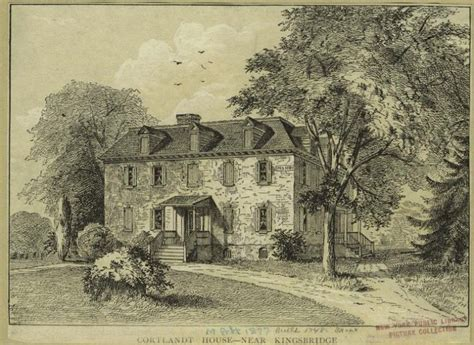
Philip Schuyler was born into a wealthy Dutch patroon family on November 20, 1733, in Albany, New York. His parents, Cornelia Van Cortlandt and Johannes Schuyler Jr., had extensive connections to the most prosperous patroon families. His maternal grandfather was Stephanus Van Cortlandt, the 17th Mayor of New York City. Educated by tutors at the Van Cortlandt family estate in New Rochelle, he mastered Mathematics and French, in addition to his native fluency in Dutch and English. Young Schuyler actively traded with the Indians and built strong bonds with the leaders of the nearby Iroquois of the Mohawk nation. He became fluent in their language.


First Fight

Like many of his generation, he gained military experience during the French and Indian War, where Schuyler served as a captain in the New York militia. His cousin, Lieutenant Governor James Delancey, had appointed him. His connections were extensive. The wealthy young Schuyler raised a local company. He participated in some of the key battles in upper New York, including Lake George, Oswego River, Carillon, and Fort Frontenac. At Oswego, he served as a quartermaster until the fort fell to the French.


Prosperous Patroon

Post-war, he built on his wealth as a patroon until he became one of the wealthiest and most prominent men in New York. In 1768, he parlayed his wealth and influence into a political career and secured a seat in the New York legislature. Although not a radical Son of Liberty, Schuyler spoke out against British policy. He managed to get himself on a commission to settle a boundary dispute with New Hampshire. This would earn him enemies among the New Hampshire and Massachusetts elites—enemies who would pursue him in years to come.


Philip Schuyler


Continental Congress

At the start of hostilities with Britain in April 1775, Schuyler served as a delegate to the Second Continental Congress in Philadelphia. His experience in the French and Indian War helped him on a committee that developed rules and regulations for the new United Colonies Army. This led to a friendship with General George Washington, who later asked Congress to appoint him as one of the Army's major generals. 


Continental Congress


All In

Despite his wartime experience, his appointment was more about securing New York's support for the Cause than leveraging his military skills. This kind of regional quid pro quo was common and used to ensure that the different colonies were "all in." Virginia's Colonel George Washington had edged out Massachusetts' John Hancock as commander-in-chief of the Army for the same reason.


John Hancock


First  Command

Schuyler's background and experience with upper New York made him a natural choice to command the Northern Department, headquartered in Albany, his old stomping grounds. However, the mission was daunting – assemble an army and invade Quebec (Canada), where it was expected that the local "Habitants" (French settlers) would rally to the Cause. His first move, however, was political. Schuyler managed to secure the neutrality of the powerful Iroquois Confederation – or at least delay their involvement.


Schuyler leveraged strong Iroquois connections


Quebec Disaster

While thus engaged, Brigadier General Richard Montgomery gathered the forces and began his advance without awaiting Schuyler's approval. Faced with a fait accompli and debilitated by a gout attack, Schuyler approved Montgomery's plans and set to work on the logistics support the fiery Irishman would need. The campaign started late in the season, so although initially successful, it collapsed in the depths of December when Montgomery and Benedict Arnold were cut down while storming Quebec City. Montgomery died, but Arnold recovered. Schuyler's New England foes quickly cast blame on the old Dutchman.

Night Assault of Quebec


Defending the North

The British, properly reinforced, launched an offensive in the spring. While Schuyler once again managed political interference, gathered men and supplies, and coordinated the overall effort, General John Sullivan, who fought a desperate retreat from Canada, attempted to garrison the mighty Fort Ticonderoga – The Gibraltar of the North.


John Sullivan


A British fleet gathered at the mouth of the Richelieu River, so Schuyler instructed Benedict Arnold (who had recovered from his wounds at Quebec) to take command of the forward defenses on Lake Champlain. The next phase of America's struggle would be fought on that long, icy body of water. Schuyler instructed Arnold to assemble a fleet to stop the armada of men and boats coming from the north under General Guy Carleton, Governor-General of Canada.


Lake Champlain Basin


Arnold performed a "rock soup" miracle, gathering a small flotilla of gunboats and, using his unique and aggressive cunning, surprised the fleet at Valcour Island. He fought the larger British ships bravely, but the Americans were torn apart by the heavier guns and ships. Still, the stubborn resistance slowed Carleton's advance, and since it was now October, he withdrew to winter quarters, planning to finish the campaign in spring 1777. The Americans had bought some time.


American defeat at Valcour Island 


Winter of Discontent

Schuyler was distracted from his preparations by a winter of bitter political infighting as his New England detractors blamed him for the northern failures. General Horatio Gates replaced him in March 1777, but the New York delegation in Congress raised a ruckus, and Schuyler was reinstated shortly afterward. However, the bitter infighting continued even as Schuyler worked to bolster Ticonderoga and begged his New England foes for more regiments to face the British onslaught forming in Canada.


Gibraltar of the North


By Land and Sea

Despite Schuyler's efforts to prevent another British advance, General John Burgoyne's 8,000-strong force sailed down Lake Champlain and moved uncontested into Fort Ticonderoga. Its commander, General Arthur St. Clair, realizing his forces were too weak to fight and would only be captured by the British, evacuated hours before the British arrived – a crucial decision. Schuyler approved St. Clair's withdrawal and ordered a "Fabian Defense." The garrison vanished into the thick woods, cutting down trees and constructing abatis and other obstacles in an effort to slow Burgoyne's troops, who were hot on their heels. The British were drawn deeper into the wilderness and away from the waterways that supplied their route south and their supplies.


Arthur St. Clair


Rallying the Militia

The Americans distracted the British, causing Burgoyne's advance to slow down and giving time for the militias to finally respond to Schuyler's call for men. British efforts toward New England and reports of Iroquois raids helped fuel this. From his headquarters in Albany, Schuyler made urgent pleas for powder, lead, guns, and supplies. But mainly, he needed men. His plans included establishing another line of defense about 30 miles north of Albany. 


Major General Schuyler


But the blame for Ticonderoga fell on Schuyler, and General Horatio Gates was once again put in charge. Gates halted the British in two decisive battles near Saratoga, where he accepted their surrender in October 1777.


Horatio Gates


Court Martial and Politics

Schuyler demanded and received a court-martial in 1778, which cleared him of wrongdoing, but he resigned his commission and returned to Congress in 1779. Philip Schuyler's legacy was that he was the only major general in the Continental Army never to fight a pitched battle. He continued to offer advice to his friend, General Washington, as his understanding of strategy and logistics was well recognized. His knowledge of Indian affairs also benefited Washington, who sought his counsel during the 1779 campaign against the Iroquois.


General Washington valued Schuyler's counsel


Enemy of the British?

Despite rumors in New England labeling him a Tory, Schuyler was targeted by the British. He faced the threat of personal attack. In October 1777, General John Burgoyne's retreating forces burned down Schuyler's country home. He later rebuilt it, and now it is open to the public. 


Schuyler's Estate Home rebuilt 


In another incident in 1780, British agents attacked Schuyler's Albany mansion under cover of darkness. The attempt, whether kidnapping or murder, was thwarted. Following the incident, Schuyler was under the protection of a bodyguard of Continental Army soldiers. However, he remained a target. On 7 August 1781, Schuyler foiled a kidnapping plot led by John Walden Meyers. It failed when Schuyler managed to escape from his Albany mansion. The Albany mansion served variously as his home, Northern Army headquarters, political center, and business office.


Schuyler Mansion in Albany


Post-War and Politics

The old patroon had powerful New York connections, and after the war, he focused on local politics by serving in the New York State Senate. He also served as a delegate to the state Constitutional Convention in 1789 and worked hard to support the new American Constitution. Schuyler was both a businessman and a soldier plus a politician. He expanded his estate near Saratoga after the war, growing to tens of thousands of acres, with a dozen slaves and tenant farmers, as well as a store and mills for flour, flax, and lumber. To get his goods down the Hudson River to market, he built schooners, naming the first Saratoga.


Schuyler had his own fleet

Federalist

Unsurprisingly, Schuyler was among the first two U.S. Senators appointed to represent the state in the new Congress. Naturally, the longtime ally of George Washington now supported his president as a steadfast Federalist. He especially backed the solid economic policies proposed by Secretary of Treasury Alexander Hamilton, who had married Schuyler's daughter, Elizabeth (more about her below). The whirlwind of New York politics caused him to lose his seat in 1792 but regain it in 1797. At the time, state legislatures, not the voters, elected senators — connections often determined who stayed or went. Schuyler was the first New Yorker to join the controversial Society of Cincinnati, a fraternity of Revolutionary War officers seen by some as a rising aristocracy. Yet most senior officers, including George Washington, had joined the organization.

President George Washington


Domestic Life

Schuyler married into the highly wealthy and influential Van Rensselaer family when he took Catherine Van Rensselaer's hand on September 7, 1755, in Albany. They had a large family of 15 children, eight of whom survived to adulthood. His second child, Elizabeth, later married young Continental Army officer Alexander Hamilton. She gained modern fame through the musical Hamilton. During her life, she used his legacy and family connections to participate in philanthropic efforts, including establishing the first orphanage in New York City.


The Hamiltons

Old Patroon

Schuyler's poor health led him to resign from political life in 1798. He died at his home in Albany in 1804, leaving a complex legacy of both success and failure. His critics saw him as too cautious or reserved to fight. Some accused him of treason—especially his enemies in New England—who were constantly suspicious of his aristocratic Dutch background. Regional conflicts also influenced perceptions. They believed Schuyler supported his own New York land claims over those of Vermont. Ironically, Schuyler later backed the Vermonters, which angered influential New York Governor George Clinton. Fame, wealth, and power drew powerful enemies to the Old Patroon.


Schuyler Grave and Memorial
Albany Rural Cemetery


Thursday, June 30, 2022

Forts of the North


Glacial Expanse

Although much of North America was heavily forested in the 18th century, the expansive region of mountain woodlands stretching from New England to the Great Lakes along the northern part of New York made travel slow, difficult, and often dangerous. For centuries, however, the native tribes of the area, including the Iroquois, Abenaki, and Huron, moved through it with relative ease. Passes of knowledge passed down through generations of the tribes turned even the smallest crack in the woods, footpath, or deer trail into their main routes.


However, modern (18th-century) travelers like explorers, hunters, trappers, and armies needed a better way to navigate the often overwhelming wilderness. To do this, they also looked to nature. In this case, the excellent network of waterways was created by glaciers that receded at the end of the last great ice age.


Waterways of War

The resulting waterway extended, with minimal interruption, from the Saint Lawrence River to Lower New York Harbor and the Atlantic Ocean. This narration will focus on the northernmost waters of Lake Champlain and Lake George. Several forts built to defend the waterways played a significant role in the many clashes between the French, Indians, and the British in the 18th century. 


Crown Point

This is the story of two forts as Britain and France clashed to control Lake Champlain, the largest body of water south of the Great Lakes and west of the Atlantic Ocean. Like an opposing left thumb, a small peninsula extending into the lake from Champlain's western shore dominates the approach from either side. As the first "battlespace" between Canada and the colonies, it played a crucial role in the many 18th-century conflicts over a North American Empire. 


Crown Point and Other Forts of the North


The French were the first to recognize the strategic importance of the location. In 1734, they started building a base called Fort St. Frederic, which they used to launch raids against British settlers in central New York and New England (the hated Bostonnais). During the French and Indian War, the British aimed to neutralize the base and eventually succeeded in capturing it in 1759. They quickly constructed new defensive structures on the site, which they named "His Majesty's Fort of Crown Point." The new fortifications at Crown Point covered more than seven acres, making it one of the largest in North America.


Between the French and Indian War and the start of the American Revolution, Crown Point (like all other spots along the waterway) became less important and was basically put on hold. However, in 1775, the Americans saw the value in capturing the unmanned cannons and weapons for the new Continental Army. It served as a base for American forces invading Canada in 1775 and defending New York in 1776. Crown Point returned to British control when General John Burgoyne launched his 1777 campaign to split up the colonies. It stayed under British control even after Burgoyne surrendered in October of that year.


Ruins of the fort at Crown Point


Fort Ticonderoga

Fort Ti is the big daddy of forts, the big kahuna, the Gibraltar of the North, and plays a major role in my novel, The North Spy. The name "Ticonderoga" comes from the Iroquois word tekontaró:ken, meaning "it is at the junction of two waterways." Situated between Lake Champlain and Lake George, the site controlled the transit route between Canada and the American colonies, making it one of the most strategic locations in North America. I visited once when I was very young and twice as an adult and have not even begun to explore its full historical and geographic significance. 


The Gibraltar of the North


French Carillon

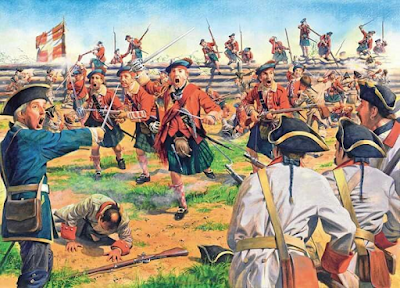
Recognizing its strategic importance, the French first fortified the site in 1755 and named it Fort Carillon. It would play a key role in the upcoming campaigns of the French and Indian War. The strength of the location was demonstrated in 1758 when 4,000 French troops defeated 16,000 British soldiers in a fierce battle called The Battle of Carillon. However, all forts are meant to be taken, and in 1759, the British returned. This time, they drove out the small French garrison. 


Fighting at Fort Carillon


Rebel Pickings

At the start of the Revolutionary War, local leaders recognized the importance of the fort and its weapons. In 1775, the American siege of Boston surrounded the British but lacked the necessary guns to carry out a proper siege and the gunpowder to risk a full-scale attack. 


Taking Ticonderoga by surprise


On May 10, 1775, Colonel Benedict Arnold and Ethan Allen led a surprise attack with a group of Green Mountain Boys and other local militia, catching the garrison off guard and capturing it. General George Washington, the new commander-in-chief of the Continental Army, sent Colonel Henry Knox to Ticonderoga to move the heavy cannons and powder back to Boston. When these captured guns were installed in the battery overlooking the city in March 1776, General William Howe ordered the evacuation of Boston.


Knox dragged Ticonderoga's guns to Boston


Red Deluge

During the summer campaign of 1777 led by British General John Burgoyne, Ticonderoga was a focal point. The large fort was crucial to Burgoyne's plans, serving as his logistics hub and starting point for his final push to Albany and a connection with General Henry Clinton's army in New York City.


General John Burgoyne


Without a Shot

The Americans acknowledged the threat and the importance of defending the fort, but the defenses had been neglected, and the garrison lacked enough troops, munitions, and supplies. Ironically, large fortresses use a lot of resources and are vulnerable if not fully staffed. This was the situation facing the new American commander of the garrison, General Arthur St. Clair. Ticonderoga was surrounded by mountains that, if taken, would put the fort and garrison in danger. St. Clair did not secure those hills, but the resourceful British did – dragging a gun battery to the top of Mount Defiance. Recognizing the danger, St. Clair ordered a night withdrawal, leaving the Gibraltar of the North without firing a shot.


St. Clair ordered the surrounded and undermanned fort abandoned


Fort Ann

Nestled in the rugged woods east of Lake George's southern tip, Fort Ann sits at the edge of the rough terrain and marks the start of the lowland routes to Fort Edward and the Upper Hudson Valley. 


Fort Ann protected the approach to the Hudson


French and Indian War

Recognizing its strategic position, the British built a small fort there in 1757. It was in 1758 that renowned French and Indian War leaders Israel Putnam and Robert Rogers led a force of 500 men to scout and screen the French at Fort Ticonderoga. On their return, they were ambushed, and Israel Putnam was wounded and captured.


Rogers's Rangers


Revolutionary War

Following the fall of Fort Ticonderoga in the summer of 1777, British General John Burgoyne forced the Continental troops to retreat. They pursued them through the dense, rugged woods east of the lakes. The Americans conducted a fighting withdrawal by felling trees and setting up ambush points, then regrouped in a defensive perimeter near the last stronghold before the pass leading to the lowlands – Fort Ann. The British advance guard was on the move, determined to capture the fort.


British Advance Guard


Impromptu Battlefield

The Battle of Fort Ann took place here on July 9, 1777. This was another delaying action, one of many large and small, that marked the middle phase of the Saratoga Campaign. 


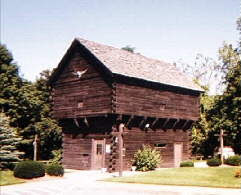
Fort Ann Block House


The British advance guard, consisting of around 200 men, was confronted at the gorge about a mile north of Fort Ann by Colonel Pierce Long's rear guard, which included 150 men reinforced by 400 New York militia under Colonel Henry van Rensselaer. Long and van Rensselaer launched an attack in two columns when the British paused to wait for reinforcements. One column swung east, threatening the British flank and rear, while the other pushed into the defile.

Gunpowder and War Whoops

The British withdrew to higher ground, and after two hours of intense fighting, the Americans broke contact due to a lack of ammunition and the sound of approaching British reinforcements. However, those reinforcements turned out to be a ruse—a single British officer imitating Iroquois war whoops. While a British victory, the action at Fort Ann delayed the progress of the British Saratoga Campaign. 


While the Patriots successfully outnumbered and surrounded the British, they ultimately retreated to Fort Ann and then to Fort Edward after being deceived into thinking that enemy reinforcements were about to encircle them. Nevertheless, the Patriots effectively delayed British movements toward Saratoga and secured an American victory there. 


Fort Edward

A series of forts was built at the "Great Carrying Place," a portage around the falls on the Hudson once used by local Indians before colonial times. Located on the "Great War Path," which was later used by the Iroquois and other tribes, both French and English colonists saw its importance and used it during many wars in the eighteenth century.


Fort Edward and Rogers Island


A French and Indian Fort

During the French and Indian War, General Phineas Lyman built Fort Lyman here in 1755. Sir William Johnson, the British Superintendent for Indian Affairs, renamed it Fort Edward in 1756 to honor Prince Edward, the younger brother of the future King George III. After Fort William Henry was captured by the French, the well-known Major Robert Rogers used it as a base for his Rangers' operations. In 1759, General Jeffrey Amherst's army gathered at Fort Edward for their attack on Fort Carillon and Fort St. Frederic. After the British took the forts, Fort Edward was greatly reduced as the war moved north.


Sir William Johnson


Revolutionary Days

Fort Edward was destroyed by the rebels shortly after the Revolutionary War started. Although it was never used as a defensive structure, its strategic location made it a base for many military officers passing through. The commander of the Continental Army's Northern Department, General Philip Schuyler, used it as his headquarters until the British forced him south on their way to Saratoga in the summer of 1777.


General Phillip Schuyler


Place of Infamy

The most infamous event of the 1777 Saratoga campaign, the case of Jane McCrae, happened near the fort. Jane, the fiancée (or lover) of a Loyalist officer, was captured by an Indian war party while visiting a house close to the fort. Her fiancée sent another Indian war party to negotiate for her release. When it became clear that the fiancée's envoy would not pay a ransom, her captor, a Huron named Wyandott Panther, became enraged. During the argument, he allegedly shot her. Jane's bloody scalp was brought to the British camp, where her fiancée identified it by its bright red hair. The rest of her remains were buried near the fort.


Jane McCrae's tragic death rallied the North


Patriotic Outrage

The Americans exploited the incident to stir up deep-rooted colonial fear and hatred of the Indians. Given the long history of conflict between the tribes, especially the Mohawks, this was fairly easy to do. Soon, hesitant farmers and settlers began to rally to the cause in large numbers. By the time General Burgoyne's Army was north of Albany, the angry rebels outnumbered him two to one.


McCrae's death and fear of the Indians rallied the complacent


Forts of Futility?

It is an axiom that forts are built to fall. A determined and sometimes lucky attacker will always succeed despite the earth, stone, wood, mortar, and sweat invested. The forts of the north were no exception. Despite their strategic positioning, excellent defensive terrain, and large land areas for an attacker to control, they all fell. But does that mean they were a failure? Like minefields, forts are not meant to stop an enemy but to influence his actions by channeling his forces, slowing his advance, and forcing a confrontation. And despite their flaws, the forts of the north, over decades of war and strife, served as formidable targets.

Guns of Ticonderoga


I suggest that anyone interested in the captivating history of the region visit these sites. They are set amidst some of the most stunning scenery in the United States. Today, the mountains and waterways host charming villages, scenic farms, and a variety of activities to enjoy while reflecting on the courage and sacrifice of early Americans, including both Native Americans and colonists.