Followers

Sunday, March 27, 2022

Patriot Sniper

The American War for Independence features many iconic warrior types such as the Minute Men and the Continental Line. However, the most distinctive warriors of the war were those who mastered the Pennsylvania long rifle—the one weapon that instilled fear in the hearts of British, Hessians, and their native allies. This edition offers another profile of a character from my upcoming novel, The North Spy. Our American rifleman is famed sniper Timothy Murphy. Though Timothy Murphy receives only a brief mention in the book, his role is crucial.


Frontier Youth

Born in 1751 in the Delaware Water Gap region near Minisink, New Jersey, Timothy Murphy was the son of Irish immigrants—most likely from Donegal. His parents moved with eight-year-old Tim to Shamokin Flats, now Sunbury, Pennsylvania, in 1759. The young Murphy apprenticed under a Mr. Van Campen and moved with him to the Wyoming Valley, Pennsylvania. The valley was a rugged wilderness filled with hard-scrabble backwoods farmers, hunters, trappers, and native tribes. Living among them, the short, dark-haired, but tough Murphy quickly became an expert woodsman and marksman. 


Young Rifleman

Some time after the start of the Revolutionary War, Murphy joined the Pennsylvania Battalion of Riflemen with his brother John and marched to join the main American Army at Boston. As part of this elite group of sharpshooters, he fought in the battles of Long Island, Harlem, and White Plains, and he was tested in numerous skirmishes along the way.


Rifleman of the 1st Penna. Battalion


Holding the Line

Murphy transferred to the 12th Pennsylvania Line, where he was promoted to sergeant. He led his unit during the critical battles of Trenton and Princeton, earning particular fame for his shooting and stalking abilities. By this point, Murphy was recognized as an expert marksman – capable of hitting a seven-inch target at 250 yards with his long rifle. Traditional smoothbore muskets could scarcely hit the target at less than half that distance.


Murphy served at Trenton


Morgan's Rifles

In July 1777, Murphy's skills earned him a transfer to Colonel Daniel Morgan's Rifle Corps, which consisted of 500 specially selected men known for their marksmanship. Equipped with the Pennsylvania long rifle and a tomahawk or knife, these riflemen fought from a distance, depending on firepower and avoiding close combat with bayonet-armed regular troops. Tim Murphy would prove to be their top sniper.


Daniel Morgan

War in the North

With a major British invasion from Canada threatening the Hudson Valley, Morgan's Rifles were quickly sent to support General Horatio Gates's Northern Department. The rugged hills and dense woods of northern New York resembled his home in the Wyoming Valley. Murphy's sharpshooting proved invaluable during the battles of Freeman's Farm and Bemis Heights against British forces led by General John Burgoyne. 


Morgan's Rifles played a pivotal role at Freeman's Farm


Battle Sniper

Murphy made history and became a legend among American riflemen on October 7, 1777, during the fight at Bemis Heights. General Benedict Arnold had called on Dan Morgan to find someone to take out the British officer rallying his men under heavy American fire. The best British officer on the field was General Simon Fraser, and Arnold believed he was worth a whole regiment. Morgan chose Murphy for this grim task. The area was thick with trees and heavy with smoke, so Murphy slung his Dickert rifle on his back and climbed a tree to get a better line of sight. He placed his rifle in a fork of the tree and took aim at the general from an extremely long range of 300 yards. Let's pause here to discuss the weapon used by the patriot sniper on that fateful day. 


Murphy was tasked with a grim mission at Bemis Heights


The Rifle

The Dickert rifle was nicknamed the widow-maker by the British because of its deadly use against officers. It was also called the long rifle, the American Rifle, the Dickert Rifle, and the Pennsylvania Rifle. However, it is strangely and widely known by a name given much later – the Kentucky Rifle. Based on a design by Moravian settler Jakob Dickert, the rifle measured about 42 inches long and fired a .50 caliber or larger bullet. 


Dickert Rifle


Fatal Shot

Murphy squeezed off his first shot but missed cleanly. Ramming home another bullet with his mallet, he adjusted his aim and fired again, grazing the general's horse. Most officers would have cleared the field with a near miss, but not Fraser, who refused the blandishments of his aides and kept steady, continuing to direct his men. Reluctantly, Murphy focused on the general, and his final shot struck the general's midsection, mortally wounding him.


Murphy's 3rd shot struck Fraser mortally


One of General John Burgoyne's aides, Sir Francis Carr Clerke, was shot dead during the battle. Murphy is also credited with killing him with a mortal shot as he galloped across the field with a message. 


Sniping from a tree


With the Continental Army

Morgan's Rifles soon marched south to join the main Continental Army. As a result, Murphy was at Valley Forge during that famous winter cantonment. When the British Army evacuated Philadelphia in June 1778, General Washington pursued their rear guard. Murphy was not present on the field during the June 28, 1778, Battle of Monmouth. However, the next day, David Elerson and two other riflemen captured the ornate coach of a retreating British general.


Battle of Monmouth


Frontier War

While things were improving for the Americans in the mid-Atlantic, the situation in the north had grown unstable. After Burgoyne's defeat, the British resorted to raiding the New York and Pennsylvania frontiers with bands of Loyalists and Mohawk Indians. The situation called for rugged frontier fighters to meet the threat. Murphy was assigned to one of the companies of riflemen dispatched to the region.


Frontier fighters


Mohawk Valley

Moving north with three companies of Morgan's Riflemen to the Mohawk Valley, Murphy tracked down and killed the notorious Loyalist leader, Christopher Service. He also took part in the action at Unadilla in November 1778 in the pursuit of the Iroquois, Seneca, and Loyalist raiders under Chief Joseph Brant, who had sacked Cherry Valley. He partook in many bloody skirmishes – many of which remain enshrouded in myth and are thus difficult to verify – but Murphy excelled as a ruthless Indian fighter.


Chief Joseph Brant


Punitive Expedition

In response to the depredations by Loyalists and Iroquois on New York settlements, General Washington ordered a punitive expedition. In August 1779, General John Sullivan's army marched into the core of Iroquois territory. During this campaign, Murphy was part of a scout company commanded by Lieutenant Thomas Boyd. Many actions occurred as the riflemen patrolled, raided, and ambushed. On September 13, an Iroquois war party ambushed Boyd's company. The resourceful Murphy narrowly escaped death, but Boyd and 22 of Murphy's fellow riflemen were massacred.


General John Sullivan waged a war of reprisal 
against the Iroquois nation


Capture and Escape

But Murphy's luck ran out in 1780 when he and another rifleman fell into the hands of an Iroquois war party, which took their captives back to their village to be ritually tortured and killed. Desperate, Murphy used all his resourcefulness for a last chance to survive. That evening, he and his companion slipped from their bonds. They seized knives from their sleeping captors and silently killed eleven warriors before escaping. 


The resolute Murphy would escape his captors at dark


War in the Valley

The following September, Murphy was assigned to help defend Middle Fort in the Schoharie Valley. On October 16, the fort was besieged by a force of Loyalists and Indians led by Major John Johnson, Chief Joseph Brant, and Cornplanter. The fort's commander, Major Melanchthon Woolsey, decided to surrender, but Murphy—knowing the fate that awaited him at the hands of vengeful Indians—strongly refused to capitulate. He then fired on several flags of truce and threatened to shoot Woolsey if he raised the white flag. Eventually, Johnson withdrew and left the garrison intact. Murphy and the riflemen pursued and sniped at Johnson's force all the way back to Canada.


Virginia Sniper

In April 1781, Murphy joined the 3rd Pennsylvania Continental Infantry and fought under General "Mad" Anthony Wayne – himself a badass of the war. Murphy fought at the engagement at Green Springs on 16 July 1781 and was later present at the siege and Lord Cornwallis's surrender at Yorktown in October 1781. 


Mad Anthony Wayne


Skirmishing to the End

Six years carrying a rifle had come to an end. Or had it? Following Yorktown, Murphy mustered out of the Continental Army as it slowly disbanded in anticipation of a peace treaty. He returned to the Schoharie Valley but did not put down the gun. Instead, he spent the rest of the war skirmishing with hostile tribesmen allied to Britain. In recognition of his legendary feats and prowess, he was formally introduced to General Washington on 3 August 1783.


Frontier skirmishes continued until after the British departure


Yankee Farmer

After the war, Murphy returned to a life of relative obscurity while farming in upstate New York. Exchanging the gun for the plow, Murphy became a farmer and family man. He married twice. First, to Margaret (Peggy) Feek, daughter of a Dutch farmer. They had five sons and four daughters. After Peggy died in 1807, Murphy married Mary Roberston. The couple soon moved to Charlotteville, New York, and raised four more sons. Although he never learned to read or write, Tim acquired several farms, a grist mill, and became a local political leader.


A quiet and successful farm life followed years of warfare


Sniper's Legacy

On 27 June 1818, patriot sniper Tim Murphy died in Fultonham, New York, of throat cancer. Like his contemporaries Sam Brady and Daniel Boone, he was among the most legendary frontiersmen of the Revolutionary War.


Tim Murphy monument in Middleburgh, NY


Monday, February 28, 2022

The Governor-General

 Center Stage


Another profile of a historical character in my fourth Yankee Doodle Spies novel, The North Spy, features a British officer who played a unique role in shaping North America's destiny. Our character's political intrigue greatly influences the series of events that unfold in the action novel.


Yankee Doodle Spies


Another Irish Soldier

Guy Carleton was born on September 3, 1724, in Strabane, Ireland. He was the son of a Protestant landowner. However, he was at ease with the Roman Catholics in the local community and did not develop the same prejudices as most of his peers. Carleton received a commission in the British Army at age 18 as an ensign in the 25th Regiment of Foot. He was promoted to Lieutenant two years later and fought in the Jacobite Uprising in Scotland and the War of the Austrian Succession in Europe.


British Infantry mid 18th Century


The Guards and Patronage

In 1751, he joined the 1st Foot Guards, and in 1752, he was promoted to captain. Carleton used strong connections with notable figures like James Wolfe and the Duke of Richmond. In 1757, Carleton was promoted to lieutenant colonel and served in Germany. In 1758, he was named the lieutenant colonel of the newly formed 72nd Regiment of Foot. 


Guards Officer with Halberd


Fighting the French & Indians & Spanish

He saw extensive action during the French and Indian War. He led an elite battalion of 600 grenadiers under now Major General James Wolfe at the Battle of Quebec, which led to the conquest of New France. After recovering from a serious head wound at Quebec, he served at Belle Isle, France, and as a colonel in Havana, Cuba, where he was wounded again in battle. Interestingly, he fought alongside Richard Montgomery, a well-known British officer who would later become his enemy.
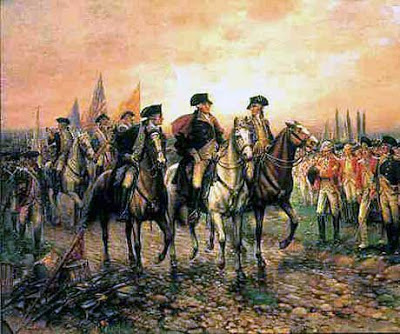

British infantry routing the French on the Plains of Abraham


Managing Quebec

By 1766, Carleton had returned to Quebec as its Lieutenant-Governor. Quebec was a French-speaking Catholic colony, and effectively governing it required all the skills and finesse that Carleton could bring. He won over the residents with initiatives aimed at ensuring religious and political freedoms. He cultivated relationships with the elites and soon gained their support for British rule.  


Lord Dunmore


However, conflicts with the Governor-General, John Murray, Earl of Dunmore, over the best ways to administer the new land, led to his return to London. This trip would prove to be very beneficial for him. Later, Lord Dunmore served as governor in North Carolina and then Virginia. The Scotsman's aggressive attitude helped push both colonies toward rebellion.


Promotion and Eros

On May 22, 1772, nearly 48 years old, Carleton married Lady Maria Howard, the daughter of Thomas Howard, 2nd Earl of Effingham. They had nine sons and two daughters. While he was in London, Parliament passed the Quebec Act of 1774, mainly based on his recommendations. This act defined how the province was governed, guaranteed religious freedom, and expanded Canada's colonial territory down the Mississippi River. Unfortunately, these measures put Britain on a collision course with the Protestant and expansionist thirteen colonies. 


The Quebec Act was a far-sighted policy


Governor-General

Major General Guy Carleton returned to Canada as Quebec's Governor-General in 1774 to find the 13 seaboard colonies embroiled in political unrest and rebellion.


General Guy Carleton


The outbreak of full rebellion by the New England colonies in 1775 had an immediate effect on Carleton's Quebec. The British commander-in-chief in North America, General Thomas Gage, took 800 British regulars from him to defend Boston. The local French did not rally in large numbers to support his militia forces, and he refused calls to enlist the native tribes.


Thomas Gage

Invasion and War

Thus weakened, he was unprepared for the winter assault launched by the American invasion in the fall of 1775. Two of America's best commanders, General Richard Montgomery and Colonel Benedict Arnold, led bold advances across two fronts.


General Montgomery marshals his troops to invade Canada


Fortunately, the Americans' poor timing, insufficient supplies, and worsening weather hindered what appeared to be an imminent and quick victory.

Stout Defender

Guy Carleton also showed true courage in his own right. He carried out a defensive action that slowed Montgomery's push on Montreal, trading space for time. The besieged governor managed to hold out for a while in Montreal but nearly fell into rebel hands during his evacuation—determined to continue his defense further down the Saint Lawrence River at Quebec City, where he would make a last-ditch stand. 


Quebec


With Arnold now in front of Quebec and Montgomery ready to join him, Carleton counted on three factors: the arrival of winter, the bravery of his small group of regulars and provincials, and reinforcements from Britain. Miraculously for him, all three came together, but not without significant effort and sacrifice. 


Benedict Arnold

The Americans' full-scale attack on Quebec failed due to severe weather, a resilient and steadfast defense, and effective tactical choices. General Montgomery was mortally wounded in the blinding snowstorm that swirled around the city. Colonel Arnold was hit in the leg by a musket ball, and the British captured several American leaders, including Dan Morgan and Ethan Allen. Carleton remained strong against a weak American army scattered throughout the city until General John Burgoyne arrived in March 1776. 


Failed assault on Quebec

Counter Stroke

With new troops reinforcing him, Carleton launched a counterattack. In June, his devastating strike against acting American commander General John Sullivan at Trois Rivieres caused the scattered and poorly supplied Americans to retreat back into New York.


Canadian Militia at Trois-Rivieres


Carleton then went on the offensive. Over the next few months, he built a fleet and launched it down Lake Champlain in October 1776. However, Colonel, now Brigadier-General Arnold, had recovered and stayed busy assembling a fleet of his own. The two clashed at Valcour Island on October 10. Arnold fought a clever battle and inflicted losses on the British fleet before Carleton decisively defeated him. The route to Albany and deep into the rebel heartland was now open.


Valcour Island


But the Governor-General had second thoughts about continuing a new campaign so late in the season. He withdrew north to strengthen his supply line and prepare for a final push the next season. It was a season that would not belong to him. Carleton's hesitancy in 1776 caused London to "go in a different direction."

A Different Direction

While the Americans used the winter break to regroup and strengthen their hold on Lake Champlain, General Burgoyne returned to Britain. He convinced Lord George Germain and King George to appoint him as commander of the new army and to lead the spring offensive into New York. Carleton responded by resigning as Governor-General and returning to Britain as the governor of Armagh, Ireland. 


John Burgoyne

Military Disaster

Meanwhile, Burgoyne's defeat and surrender to the Americans at Saratoga in October 1777 triggered a series of events that drew France and Spain into the fight against Britain. After Cornwallis surrendered at Yorktown in October 1781, the British realized they needed to deal with what appeared to be their defeat in America. 


Surrender at Yorktown

Managing Defeat

With the signing of the Treaty of Paris, London recalled General Henry Clinton and sent Carleton to replace him as commander-in-chief in North America. His role was to oversee the aftermath of defeat by enforcing the terms of the peace treaty. Carleton ensured an orderly process and advocated for the rights and interests of the remaining Loyalists and British supporters of former slaves in the colonies. He refused to evacuate the last British garrison in New York until all Loyalist refugees were safely settled in Québec and Nova Scotia. 


The British departed New York City in 1783

The Peer

In 1783, he was named the 1st Baron Dorchester when he returned to England. However, London once again needed his administrative skills in North America. In 1786, he went back for another term as Governor-in-Chief of North America – Canada and the various maritime provinces.

Governor-in-Chief

He focused on the economic growth of the colonies. To achieve this, he deliberately misinterpreted the British ban on American imports to promote trade with the American West. The ban would only affect seaports. 


1st Baron Dorchester


Carleton played a key role in splitting the colony into Upper Canada (Ontario) and Lower Canada (Quebec), each with its own assembly, and he outlined the plan for British control over all its North American territories.


Carlton's Canada

To England's Green Pastures

On July 9, 1796, Carleton sailed from Canada to Britain, never to return. He died suddenly on November 10, 1808, at Stubbings House in Burchett's Green near Maidenhead, England. Guy Carleton, Lord Dorchester, was buried in the parish church of St. Swithun's, Nately Scures.


Carleton in Winter

Lasting Legacy

Although he was a skilled combat leader, Carleton's legacy centers on his abilities as an administrator—someone capable of organizing and managing in times of peace, crisis, and war. His talents helped bring the eight-year American War for Independence to a respectful close and also contributed to building the future Dominion of Canada. Both achievements demonstrate his status as a great leader who left a significant impact on the future of North America.


Carleton Memorial


Sunday, January 30, 2022

What Ho, Horatio

Veterans Become Patriots


Many former British officers later settled in America and served in the Continental Army. Some of them were controversial. A previous Yankee Doodle Spies post on Major General Charles Lee is arguably the best example. 


You can read about him in A General Disaster: 

https://yankeedoodlespies.blogspot.com/2019/07/this-edition-of-yankee-doodle-spies.html. 

There were others, such as my recent post on Arthur St. Clair.

You can read about him in Frustrated Founder:

 https://yankeedoodlespies.blogspot.com/2021/10/frustrated-founder.html 


What, Ho, Horatio!


This post profiles an Englishman whose life became just as uncertain as the fictional Horatio in Shakespeare’s Hamlet. Horatio Gates came from humble beginnings, the son of a housekeeper to the Duke of Leeds. She was said to be his favorite, and why not? On July 26, 1727, she gave birth to a boy in Maldon, Essex, England, who was rumored to be the Duke’s illegitimate son. 


For some reason, the Duke favored the young boy from an early age. He received an education far beyond what ordinary servants could afford for a child. And curiously, his servant parents managed to come up with the pounds sterling needed to purchase a commission as an Ensign in the 21st Regiment of Foot in 1745! Methinks a Sugar Daddy Duke played no small role in securing this post. If so, the investment paid off.


Dukedom of Leeds Coat of Arms 


Following the Drum


Over the next 25 years, Gates served capably in Britain’s numerous wars, gaining experience in the European War of the Austrian Succession, the Micmac War in North America, and the French and Indian War. Young Horatio developed and excelled in staff skills, a type of work most young and ambitious British officers would avoid whenever possible. He served under many accomplished governors and field commanders like Edward Cornwallis, John Stanwix, and Robert Monckton. The now Major Gates returned to England after the French and Indian War, seconded to the 45th Regiment of Foot. 


The French and Indian War 


Love and War


Like many young officers who served in the New World, Gates found love during his time in service. In June 1749, he was sent to Halifax, Nova Scotia, to serve as aide-de-camp to Colonel Edward Cornwallis (uncle of Lord Charles Cornwallis of Yorktown fame). During this period, he met the young Elizabeth Phillips. The young officer was smitten and determined to marry her. 


The women of North America were irresistible
 to many British officers


In January 1754, Horatio returned to London, hoping to improve his situation. But when that did not work out, he went back to the New World, specifically Maryland, where he was able to buy a captain’s commission. The captaincy provided him with the income and status he needed, so in October 1754, he returned to Nova Scotia and married Elizabeth, who bore him a son.

During the French and Indian War, young Captain Gates joined his new company in Maryland in March 1755, as it prepared to join General Edward Braddock’s ill-fated expedition against the French and Indians.

You can read about Braddock in Road of Destruction:

 https://yankeedoodlespies.blogspot.com/2017/07/things-road-of-destruction.html 

Along for the march into the mountains and forests of the western frontier were future notables such as George Washington, Charles Lee, Thomas Gage, and Daniel Morgan. During Braddock’s defeat at the Monongahela River in July 1755, Horatio was severely wounded – he took a musket ball in the chest. His wound took a long time to heal. When he did return to active service, it was for garrison duty along New York’s Mohawk River. Elizabeth was living in New York City during this period.


Battle of Monongahela


By 1761, Gates was a major who had become skilled in military administration and a seasoned leader in battle. However, without a war to accelerate progress, advancement in the British Army depended on money and influence. The maid’s son quickly understood that his social status would limit any further promotion. Therefore, he sold his commission in 1769 and returned to America. 


With a Little Help from My Friends


The French and Indian War was good for Horatio. It introduced him to the new world and new ways of thinking, where people from humble backgrounds could succeed. Of course, having friends and connections doesn’t hurt, and Horatio was now linked to one of the biggest land sellers and surveyors in America: Colonel George Washington. 

Washington helped his fellow French and Indian War veteran buy a 659-acre farm in Virginia’s Berkley County. Gates turned the land into a plantation named Traveler’s Rest. He settled there with Elizabeth and their son, Robert, in 1773. They built a successful plantation and enjoyed a happy married life until political disagreements and increasing unrest turned into open war against the crown.


Colonel George Washington


War Clouds on the Horizon


News of Lexington and Concord reached Traveler’s Rest in May 1775. Horatio wasted no time. He leaped onto one of his chargers and galloped to Mount Vernon, where he offered his services to his fellow veteran and friend, George Washington. At Washington’s recommendation, Horatio Gates received a commission as a brigadier general from the Continental Congress and was named Adjutant General of the Continental Army.


Battle at Concord Bridge


Horatio’s administrative experience in British service was vital to forming a new army. He improved the army’s record-keeping system for orders and unified the structure of regiments from around a dozen states. Horatio was with Washington during the siege of Boston. It always helps to be around the right people at the right time. Impressed with his performance, Washington praised Horatio’s contributions. In 1776, Congress promoted him to major general. 


Major General Gates


At his request, Gates was assigned a field command—the Canadian Department. However, the American invasion of Canada and the army’s dissolution moved him to a position as an assistant to Major General Philip Schuyler in the Northern Department.


A General Nuisance

Gates rejoined the main Continental Army under George Washington later in 1776. However, Gates’s growing sense of his military superiority led to conflict with his mentor. Gates believed in the superiority of defense over offense and advised Washington to retreat rather than launch a bold and reckless attack on Trenton in the middle of winter. 


Gates advised against recrossing the Delaware


You can read about the attack on Trenton in Gambling through Defeat and Victory: https://yankeedoodlespies.blogspot.com/2013/12/gambling-through-defeat-and-victory_21.html. 

Washington did not follow his advice, so Gates faked an illness to avoid joining the night crossing. He allowed his command to go into battle without its leader. Not a good look.


Despite the victories at Trenton and Princeton, Horatio grew more convinced that he should lead the Continental Army. Many wealthy and influential delegates to Congress, mainly from New England, shared his opinion. By December, Gates was actively lobbying Congress for the position. However, the two victories kept Washington in command. 


Danger in the North


Gates bided his time. When the failures in Canada and northern New York impacted Major General Phillip Schuyler (himself no stranger to politics), Gates was sent north to assist and eventually replace him as commander of the Northern Department. He took full command in August 1777. 


Major General Phillip Schuyler


But this army needed a staff officer to organize everything. Gates’s organizational skills helped rearm and refit the troops who were pushed back from Canada. He merged the different militia units coming from New York and New England. Horatio Gates was not an inspiring leader. His bookish ways, average build, and demeanor shouted “staff officer!” 


Staff officers ran the army


His organizational skills were essential because the British columns that seized Fort Ticonderoga and moved through the forests to the north were about to attack Albany and cut New England off from the rest of the rebellious states. 


Fort Ticonderoga 


Fortunately, the army would soon find out it had plenty of officers capable of leading men on the battlefield. John Stark‘s victory over a sizable British raiding force at the Battle of Bennington showed the British what well-led Americans could do.


Victory at Bennington


The American victories and British surrender at Saratoga shocked the world and pushed the French from silent support to an open alliance with the new American states. The battles of Freeman’s Farm and Bemis Heights in September and October of 1777 led to the defeat of an army of British and German professionals. 


Fierce fighting stymied General Burgoyne's 
last hope of victory


Horatio Gates was credited with command in both battles and as the campaign architect. However, his poor management on the battlefield tarnished his reputation. The American strikes and counterstrikes that delivered a heavy blow to General John Burgoyne’s army were only reluctantly approved by Gates. He appeared content to stay in camp while Benedict Arnold, Dan Morgan, Enoch Poor, Charles Dearborn, and other officers led the men into danger.


Many American field commanders excelled at 
Bemis Hts & Freeman's Farm


A Political General?


Still, the commander is responsible for all that his men do and do not do. If the campaign had gone the other way, Gates would have taken the blame at a court-martial and possibly would have been drummed out of the service. Gate’s political instincts told him the first report was the one that mattered. So he immediately sent his Adjutant, James Wilkinson, galloping south to bring the news to Congress – not stopping along the way to inform his commander-in-chief!


Burgoyne's forces ground arms at Saratoga


Following Saratoga, Gates was appointed President of the Board of War, the military oversight body of Congress, while maintaining his field command. Friends in Congress turned a blind eye to the obvious conflict of interest. And why wouldn't they? They also supported removing General Washington as Commander-in-Chief and replacing him with Gates. 

The so-called Conway cabal was a network of officers supporting Horatio Gates’s rise to the highest command. General Thomas Conway, an Irish-French officer, was a supporter of Gates’s cause. However, the alleged plot was exposed. Washington did not act directly, but allowed his allies to attack Conway and others. Notably, on July 4th, Brigadier General John Cadwalader shot Conway in a duel. Ironically, it was Gates’s dishonest aide Wilkinson who uncovered Conway’s schemes. 


General Thomas Conway was at the center 
of a group favoring Gates


After a series of attacks, recriminations, and apologies, the affair faded out. Washington’s position was stronger than ever, while Gates was humiliated. In October 1778, Gates was appointed commander of the Eastern Department in Boston, which was now a backwater. He resigned in 1779 and retired to his Virginia plantation. It has never been proven that the circle of officers and politicians supporting Gates was an actual "cabal." But if there was a real conspiracy, it soon fell apart and Gates looked foolish. How involved he was remains a matter of debate. But don't worry, more controversy is ahead.


Song of the South


The post-Saratoga “Southern Strategy” was now benefiting the British, who captured Charleston in May 1780. Thousands of men from the Southern Department and their commander, Benjamin Lincoln, were taken prisoner. Congress and the American people were stunned. The politicians wanted an experienced officer to lead and chose Horatio Gates to command the Southern Department. Eager to rejoin the fight, Gates traveled south and, on July 25, 1780, took command of the disheartened remnants of the army near Deep River, North Carolina.


General Benjamin Lincoln


More trouble was brewing as the British, now under the command of Major General Lord Charles Cornwallis, were consolidating their grip on the Carolinas. Post after post fell, and suddenly the Loyalists gained the upper hand. Gates was under pressure to deliver results quickly. In August 1780, he gathered what forces he had, mostly untrained militia. Gates planned to move southward. But now Cornwallis’s forces were regrouping to face this new threat from the north. 


Lord Cornwallis


Camden and Chaos


They clashed on August 16 near Camden, South Carolina. Cornwallis took the lead early in the morning. Gates preferred to stay defensive, but his continentals were tired and poorly equipped. His militiamen were inexperienced. All were underfed. Many were sick from eating raw corn. Even without these issues, his army was unprepared for what they faced – the bayonets of determined regulars. They quickly broke and fled in chaos. French-American General Baron De Kalb fell during the battle.


Battle of Camden


Muskets still rattled as men continued to die when Gates left the battlefield. He rode 70 miles north, not stopping until his foaming horse reached Charlotte, North Carolina that evening. Gates’s claim of seeking a rally point for the army didn't seem believable to most – 70 miles was a long way for rallying troops. He was upset over the defeat at Camden, but in October, his mood sank even further with news of his son Robert’s death in combat at twenty-two.


Gates rode hard as his Army crumbled


Board of Inquiry


Gates was relieved and replaced by Nathanael Greene on December 3, 1780. The upset general returned to his plantation to mourn his career and son. Congress demanded a board of inquiry to investigate his actions at Camden. Gates resisted this and called on his political supporters for help. In 1782, Congress canceled the board of inquiry. However, a future command was out of the question. Returning to duty, Gates rode north and joined Washington’s staff at Newburgh, New York. Perhaps this was the ultimate humiliation.


Gates was back to staff officer at Washington's Newburgh HQ


Peace and Prosperity


Although the war was winding down in 1783, Horatio’s troubles were not over. His wife, Elizabeth, died that summer. The last British troops left New York City in late November, and Horatio Gates retired to his Virginia estate. He lived the life of a gentleman planter and also served as the president of the Virginia Society of the Cincinnati – a controversial group of former Continental Army officers. The widowed Gates proposed marriage to Janet Livingston Montgomery, the widow of another former British officer and one of the nation’s first heroes, General Richard Montgomery. But she refused.


General Montgomery's widow, Janet  


Still, during those days, a prosperous gentleman could not remain unmarried. In 1786, he married Mary Valens, a wealthy widow. He chose to move north and live on her estate, Rose Hill Farm, on the Island of New York (today’s Manhattan). Its location near the northern edge of the rapidly growing city was ideal. When he sold Traveler’s Rest in 1790, Horatio conditionally (after five years) freed his slaves on the recommendation of his friend John Adams. 


John  Adams


A New Life of Politics, Society & Service


With his new wife Mary by his side, Horatio immersed himself in New York City society and politics. However, he served only one term in the New York State legislature in 1800. As New York had become an anti-Federalist and later Republican stronghold, Gates leaned toward the rising star Thomas Jefferson as a presidential candidate. This change in allegiance ended his friendship with John Adams. 


Farms on  the NYC outskirts


Unlike nearly all of his Revolutionary War peers, Gates devoted much of his wealth to caring for less fortunate veterans of the war. The country's streets were filled with these worn and needy men who sacrificed their lives and futures for a nation that was slow to repay them. 


Gates with Congressional Medal for Saratoga victory


Gates approached his “evening parade” with a growing sense of happiness about joining the new nation and the role, controversial as it was, in fighting for its independence and founding. 

Although his career had some "sketchy" moments, Gates, after all, commanded the forces that turned the tide of the war. He did an admirable job helping organize the Continental Army. Sitting out Trenton was a mistake— a mistake of false pride. His actions at Camden were disgraceful on several levels, and although he didn’t face a board of inquiry, the fact was— none was needed. 

His actions spoke for themselves. And while he had every reason to stay home at Traveler's Rest, he swallowed his pride and joined Washington at Newburgh in a less prominent role. To me, that makes him a patriot— if not a military genius. So do his efforts on behalf of the beleaguered post-war veterans. He died at his farm on April 10, 1806, at seventy-nine, and was buried in Trinity Churchyard on Wall Street.


General Horatio Gates's gravesite