Followers

Showing posts with label Benjamin Franklin. Show all posts

Saturday, December 27, 2025

The Irascible Spy


This final Yankee Doodle Spies blog post of 2025 is the last profile of the historical characters in my novel, The Reluctant Spy, now available through Amazon and other fine purveyors of books: https://www.amazon.com/Reluctant-Spy-Yankee-Doodle-Spies/dp/B0FF23NMN1


In the shadowy world of 18th-century Europe, Arthur Lee emerged as a pivotal yet contentious figure in America's fight for independence. Born in 1740 into Virginia's influential Lee family, Arthur pursued medicine at the University of Edinburgh and law in London, arriving in the British capital in 1770. There, amid the bustling streets and political salons, he honed his skills as an advocate against British tyranny, penning fiery essays against the Stamp Act and advocating for colonial rights. As tensions escalated, Lee evolved from a mere expatriate into America's unofficial eyes and ears in the heart of the enemy.

 London Asset

The Continental Congress recognized Lee's unique position. Through the secretive Committee of Secret Correspondence, they dispatched him to London as a spy to gather intelligence on British military plans, public sentiment, and potential European allies. See my post, Committee of Secrets at https://yankeedoodlespies.blogspot.com/2020/12/committee-of-secrets.html


Lee's London

Officially, Lee served as a practicing attorney and colonial agent for the colonies. He navigated a treacherous web of informants and double agents. He cultivated contacts within London's intellectual circles, discreetly probing for weaknesses in British resolve. One of his most daring ventures involved clandestine meetings with Pierre-Augustin Caron de Beaumarchais, the French playwright turned arms dealer and covert operative. These unsanctioned discussions sowed the seeds for French aid, convincing Beaumarchais to lobby Versailles for support disguised as private commerce. See my blog post, The Clockmaker’s Gambit. https://yankeedoodlespies.blogspot.com/2025/08/the-watchmakers-gambit.html 


Beaumarchais


Lee's reports back to Philadelphia showed that Britain was overextended, its navy in disarray after years of war, and that European powers like France and Spain were eager to humble their rival. Lee was on a razor’s edge, surrounded by loyalists, British spies, and possible exposure at every turn, yet his efforts provided crucial insights that shaped early American strategy.


Spies lurked everywhere in Paris

As the war shifted from resistance to open rebellion, Lee's role evolved from solitary spy to roving diplomat. In late 1776, he crossed the Channel to Paris, the glittering epicenter of intrigue, where he joined Silas Deane as an American commissioner tasked with securing foreign alliances. See my blog post, Deane of Spies. https://yankeedoodlespies.blogspot.com/2025/06/deane-of-spies.html


 Diplomat in Paris

Paris’s glamorous salons and complex politics became the backdrop for Lee's most intense contributions and disputes. Lee discovered Deane already deeply involved in secret negotiations for arms and munitions through Beaumarchais's front company, Roderigue Hortalez et Cie. France, guided by Foreign Minister Comte de Vergennes, was offering two million livres in aid, matched by Spain, but required secrecy to prevent provoking Britain into war too early. 

For more details about these intricate maneuvers, see my earlier blog posts: Roderigue Hortalez et Cie. https://yankeedoodlespies.blogspot.com/2017/02/things-rodrigue-hortalez-cie.html and The French Fox:  https://yankeedoodlespies.blogspot.com/2025/05/the-french-fox.html 


Paris was a center of espionage


Eager to push things along, Lee began advocating for more substantial commitments. His diplomatic ventures extended beyond France; in 1777, he traveled to Berlin as an envoy to Prussia, seeking Frederick the Great's recognition, but the wily Der Alter Fritz (Old Fritz) offered only vague promises.


Der Alter Fritz
 

In Spain, he more successfully navigated restrictions by meeting secretly with the Marquis de Grimaldi and the merchant Diego de Gardoqui in Vitoria, where he secured commitments for 24,000 muskets, 30,000 blankets, and uniform fabric—crucial supplies that were covertly shipped to the Continental Army. Lee skillfully combined diplomacy with espionage to gather intelligence on Spanish and French strategies against Britain. However, as the war continued, Paris evolved into a hub of betrayal and rivalry, further complicated by the involvement of the era's most renowned figure.

Dark Suspicions, Bold Accusations

In 1777, Benjamin Franklin joined the commission, forming a triumvirate plagued by discord. Lee, suspicious and uncompromising, clashed with his colleagues. He accused Deane of financial improprieties, including embezzlement and prioritizing personal gain over the cause. See last month's blog post on Franklin, The Polymath Spy: https://yankeedoodlespies.blogspot.com/2025/11/the-polymath-spy.html 


Franklin was the key commissioner

Intrigue erupted into conflict when Lee uncovered evidence that Edward Bancroft, the commission's trusted secretary and a close associate of Franklin and Deane, was a British spy. Bancroft, paid handsomely by London, relayed sensitive details—treaty negotiations, supply routes, and even American correspondence—via invisible ink in faux love letters dropped in the Tuileries Gardens for a courier to retrieve for the British Ambassador Lord Stormont. See more on this in my blog post, A Peer in Paris: https://yankeedoodlespies.blogspot.com/2025/09/a-peer-in-paris.html


Lord Stormont


Lee's accusations, supported by evidence of Bancroft's London meetings, were rejected by Franklin, who viewed Lee as paranoid and obstructive. Ironically, Lee's own aides were later revealed to be British agents, underscoring the pervasive espionage that infiltrated the American legation.


 Diplomatic Triumph

Despite the infighting, the commissioners achieved a landmark. The February 1778 Treaty of Alliance with France, which Lee co-negotiated, secured open military support after Saratoga's victory. This alliance shifted the war's tide, with French troops and fleets aiding Yorktown's triumph. John Adams joined the commission in April of that year, adding another prickly personality to the mix.


John Adams


Lee's spying extended to monitoring European courts, reporting on troop movements and diplomatic shifts that informed Congress. Lee’s clashes continued. By 1779, the feuds culminated in Lee's recall, and he was replaced by John Jay, who was serving as envoy in Spain. 


Uneventful Return and Understated Legacy

Returning to America in 1780, Lee kept a relatively low profile. He served in Congress before retiring to Virginia, where he died in December 1792, unmarried and childless, at his estate, Lansdowne, in Urbanna, Middlesex County.


Arthur Lee

  Often criticized as jealous and abrasive—John Adams described him as "acrimonious" but "faithful"—Arthur Lee's legacy remains as one of America's first spies and diplomats.


Lansdowne
 

His efforts in London and Paris, where he combined espionage with bold diplomacy, secured crucial intelligence and alliances vital to America’s independence. Arthur Lee serves as a reminder that success in espionage and diplomacy frequently depends on the actions of even the most disfavored and experienced diplomats.


Monday, November 24, 2025

The Polymath Spy

 Winter Journey
 

In the chill December of 1776, as ice floes were forming on the Delaware River, the USS Reprisal docked at Auray, a port town shrouded in Atlantic mist. Benjamin Franklin, a key historical figure in my novel, The Reluctant Spy, stepped onto what would prove to be a decisive, if not kinetic, field of battle.

Sailing to France


Doctor in the House?

At the then very ripe age of seventy, the polymath from Philadelphia—printer, inventor, philosopher—arrived not as a conqueror but as a supplicant spy, his fur cap and spectacles deliberately signaling rustic American virtue. Dispatched by Congress, Franklin's mission was to persuade the French King Louis XVI to join the war against Britain and secure more loans, arms, and ships to shift the balance in America's favor. To achieve this, he would walk a tightrope among the most skilled practitioners of the dark arts in history.


King Louis XVI


Diplomat as Rock Star

Paris, the glittering center of Enlightenment salons and Bourbon intrigue, would be his battleground, where diplomacy swayed with deception, and every whispered promise concealed a shadowed meaning.

 Franklin's Home Away from Home: Hotel Le Valentinois


Franklin energized the city like he was an 18th-century Rock Star! His international reputation—from lightning rods to Poor Richard's almanacs—preceded him like a comet. He settled into Passy, a leafy suburban villa lent by a generous patron, turning it into a hub of intrigue. Here, amid cherry orchards, he crafted a web of alliances that mixed charm with calculation.

The Comte

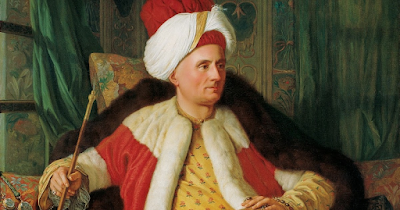
Chief among his patrons and adversaries was Charles Gravier, Comte de Vergennes, the foreign minister whose gaze fixed on Britain's North American jewel. Vergennes, a calculating aristocrat scarred by the Seven Years' War's humiliations, saw the rebels as a tool for French revenge.

Charles Gravier, comte de Vergennes

Franklin knew as much and outwitted him masterfully, hosting salons where philosophes like Raynal and d'Alembert debated liberty over claret, subtly steering discourse toward Franco-American solidarity. "We must make them believe the cause is theirs," Franklin confided to Deane, his early ally—a Connecticut merchant whose prior secret shipments of powder had already greased the wheels.

Working the “Street”

 Yet alliances were fragile blooms in a thorned garden. Franklin's network extended into the underworld — a tangled web of booksellers, couriers, and informants who smuggled secrets amid salons and at French ports, where informants tracked British naval dispatches. He even enlisted the Marquis de Lafayette's circle, funneling funds to the young nobleman's expeditionary force.

Charles-Joseph Panckoucke

 A key ally was Charles-Joseph Panckoucke, the powerhouse Parisian bookseller and publisher whose Palais-Royal shop was a revolutionary printing hub. He openly collaborated with Franklin, churning out pro-American pamphlets such as the Affaires de l'Angleterre et de l'Amérique series in 1776–1777 to sway French public opinion and elites toward an alliance. 

 By 1777, more French gunpowder and muskets flowed covertly to Washington's ragged Continentals, sustaining Valley Forge's winter quarters.

Sultan of Sophistication

 Franklin's espionage was no cloak-and-dagger affair so much as a symphony of subtlety. He cultivated British expatriates in Paris, posing as a harmless savant while extracting tidbits on troop movements from loose-lipped officers at the iconic theater and social venue, Comédie-Française.

Comédie-Française

One such ploy netted details of Burgoyne's Saratoga campaign, intelligence relayed in invisible ink to Congress. The stunning American victory at Saratoga that October sealed the deal: bolstering American morale and tipping Vergennes toward an open alliance. In February 1778, France formalized the Treaty of Amity and Commerce and the Treaty of Alliance in a blaze of mutual pledges—commerce, defense, and the dream of a transatlantic republic. A formal declaration of war came the following month.

Signing the Treaties

Spies Among Us

Adversaries lurked in every corner of the city. The British embassy, a hive of spies under Paul Wentworth and Edward Bancroft—a turncoat American chemist in Franklin's own employ—plotted ceaseless sabotage. Bancroft, double-dipping for London while transcribing Franklin's dispatches in lemon juice, fed Whitehall a stream of half-truths, nearly unraveling the mission when forged letters in 1778 accused Deane of profiteering.


Edward Bancroft

Then there was Arthur Lee, Franklin's fellow commissioner, a Virginia lawyer whose paranoia festered into outright enmity. Lee, sidelined by his own prickly demeanor, accused Franklin of embezzlement and senility, caballing with British agents to discredit him. "Lee is a wretch," Franklin later quipped, but the barbs stung, fracturing the American delegation and inviting French skepticism.

Beyond, George III's envoys like William Eden prowled the salons, dangling peace overtures to peel France away. At the same time, Prussian and Spanish diplomats—wary of Bourbon overreach—whispered doubts in Vergennes's ear.

Obstacles

Challenges mounted. Secrecy was paramount. A single leak could summon British frigates to Brest. Franklin countered using a cipher system blending Polybius squares and homophonic substitutions, smuggling letters in wine bottles or hollowed canes.

Crafting Secret Letters

Financial straits gnawed deeper—Congress's credit evaporated amid war's voracity, forcing Franklin to beg loans from French bankers like the Neufvilles, who demanded ruinous interest. "I am become the diplomatic beggar of Europe," he lamented in a dispatch.

Chick Magnet

Yet he responded with unflagging bonhomie, charming Versailles courtiers with bifocal demonstrations and anti-slavery tracts that aligned American ideals with French humanism. Franklin used his avuncular image to woo the French noblewomen.  A trait that his other commissioners found off-putting, but yielded no small conquests.

Twists and Barbs

When British spies torched American supply ships in the summer of 1779, crippling reinforcements bound for the Carolinas, Franklin retaliated not with rage but with a mock obituary for the "late" General Howe (who returned to Britain in disgrace in 1778), circulated in private letters, humiliated London, and eroded morale. To the French, he spun the arson as proof of British desperation, urging Vergennes to dispatch Admiral d'Estaing's fleet anew, even as d'Estaing's stalled Savannah siege that autumn tested the alliance's mettle.

The "Late" General Howe

Meanwhile, Bancroft's betrayals went unnoticed, but Lee's slanders echoed through Congress, and Britain's steadfast resolve suggested a tough struggle ahead. Franklin, always the optimistic strategist amid chaos, wrote to Washington: "Persevere, and the sun will break through."

Deception’s Twilight

By the close of 1778, Franklin sat by Passy's hearth, spectacles fogged by pipe smoke, studying a chessboard tilted in delicate advantage. The alliance thrived—French ships filled with cannon slicing through Atlantic waves, Vergennes's coffers opening for yet another loan, and soon French soldiers would fight side by side with the hard-pressed Americans.

The French Army - Crucial to Victory

The old scholar had woven a web of cleverness and charm, outsmarting empires with a smile and a secret. His first year in Paris marked a tour de force of realpolitik amid the rising storm. He would need to keep playing his game, as the stakes would be higher as the long-warring nations struggled to reach peace.


Sunday, September 28, 2025

A Peer in Paris

The Peer's Challenge

As Paris buzzed with intrigue during the American Revolution, Lord David Murray, the seventh Viscount Stormont, the British ambassador to Louis XVI's court and chief of intelligence, was at the center of this complex web of intrigue. Appointed in 1772, Stormont was a Scottish peer related to Lord Mansfield, the chief justice who had ruled against colonial protests during the Stamp Act crisis of 1765. His diplomatic cover cloaked espionage aimed at blocking French support for the rebelling colonies.

Lord Stormont


Covert Aid

The 1776 Declaration of Independence upped the stakes. George Washington's Continental Army faced severe shortages of weapons, powder, and funds. Franklin's arrival in Paris in December was a game-changer: the Philadelphian captivated French intellectuals and aristocrats alike. He lobbied Foreign Minister Charles Gravier, the Comte de Vergennes, for more covert aid. Vergennes, estimating the strategic blow to Britain, authorized secret shipments through intermediaries, such as the front company Rodrigue, Hortelez & Cie.

Comte de Vergennes


Unleashing a Master Spy

From his Rue du Faubourg Saint-Honoré estate, Stormont took this as a dire threat. His network, funded by Whitehall subsidies and coordinated with Loyalist exiles, became Britain’s eyes and ears in a city full of conspiracy. At the core of Stormont's operation was Dr. Edward Bancroft, a Massachusetts-born physician and chemist whose scientific credentials masked his duplicity. Recruited in March 1776 by British secret service agent Paul Wentworth, a wealthy Loyalist tobacco merchant acting as Stormont's intermediary, Bancroft had infiltrated the American mission.


Edward Bancroft

Placement and Access

Serving as Silas Deane's secretary—the Connecticut merchant tasked with buying munitions—Bancroft gained access to Franklin's villa in Passy, a hub of covert diplomacy. From there, he documented every detail: Vergennes' promises of gunpowder, arms shipments disguised as commercial cargo; the negotiations over loans to fund the American cause. Bancroft’s use of spycraft was brilliant. He used stain (invisible ink), hidden papers, and pseudonyms.

Silas Deane


Sophisticated Spycraft

He made weekly visits to a “dead drop" in a crevice at the base of a tree on the south terrace of the Jardin des Tuileries. Stormont dispatched his private secretary, Thomas Jeans, who retrieved these drops under the cover of darkness. Stormont’s instructions and new requests for intelligence were also left by Jeans, often accompanied by payments of up to £500 annually.

Jardin des Tuileries 


Exquisite Intelligence

By April 1777, as negotiations between France and America intensified, Bancroft's leaks included verbatim transcripts of commissioners' minutes and drafts of the 1778 Treaty of Alliance. One dispatch, smuggling the final version of the treaty, reached King George III within 48 hours of its signing in Paris, allowing Britain to prepare naval responses.

King George III


Démarcheing the Bourbons

Stormont used this intelligence in heated meetings with Vergennes, citing specifics to accuse France of violating the 1776 Treaty of Commerce and demanding inspections—his démarches spawned hesitation and bought Britain months of breathing space. 

Signing the Treaty


An Army of Agents

His influence reached the Atlantic ports of Lorient, Brest, and Nantes, which were crucial points for American supplies. Here, a network of embedded agents—dockyard foremen, corrupt customs officials (douaniers), and bribed ship chandlers—monitored rebel privateers such as the USS Reprisal, commanded by the daring American Captain Lambert Wickes.

USS Reprisal


Stormont’s informants tracked illegal exchanges: American tobacco and indigo were traded for Charleville muskets and gunpowder, which was routed through Roderigue Hortalez et Cie.

Actionable Intelligence

In July 1777, Lambert Wickes' squadron escorted a Dutch convoy loaded with arms past Ushant. Stormont's informers provided intelligence that led the Royal Navy to intercept the convoy, seizing prizes worth £100,000. As the British ambassador, he issued a strong démarche to Versailles. This pressured Vergennes to issue mild protests against "illegal" sailing.  Although enforcement was pro forma, Stromont’s protests delayed France’s full naval involvement until 1778.

Illegal Sailing


French Mole

Meanwhile, spymaster Stormont developed a mole within the Foreign Ministry's Archives Section—a junior archivist, possibly bribed with 500 louis d'or—who stole dispatches from locked cabinets.

Lord North


Breaking into the Quai d'Orsay's bureaucracy was a master stroke against the French.  These stolen dispatches revealed Franco-American subsidies, as well as overtures to Spain's Charles III for a Mediterranean diversion against Gibraltar. Stormont forwarded copies to London via secure couriers, helping Prime Minister Lord North lobby neutral European nations, such as the Dutch, against Bourbon plans.

Unplugging the Electrician

But no target infuriated Stormont more than Franklin, the "electrician of sedition,” whose charm threatened French neutrality. Intercepts exposed Franklin's secret letters to William Petty, the second Earl of Shelburne, a Whig opposition leader who called the war "madness" in Parliament and secretly provided £10,000 to American agents such as Arthur Lee.

Benjamin Franklin


In a slick psychological operation, Stormont leaked "correspondence" accusing Franklin of treasonous dealings—leaking rebel plans to Lord Shelburne for personal gain. These accusations were circulated in London newspapers and Paris coffeehouses, sparking a scandal. 


Lord Shelburne

Angered at the false reports, Shelburne fought a duel with his purported accuser, Colonel William Fullarton, in Hyde Park, but both survived unscathed. This episode damaged trust within the American delegation, with Deane suspecting Lee of leaks and making French courtiers wary of deeper involvement. It also provided the predicate for my fifth novel in the Yankee Doodle Spies series, The Reluctant Spy.

Success and Failure

Lord Stormont’s web of espionage delayed French arms shipments, kept London apprised of secret negotiations, and sowed discord among both French and American diplomats. However, Stormont's efforts in Paris could not stop the momentum of support for America by France, Spain, and the Netherlands.


Admiral d'Estaing


After the treaty of alliance was signed in 1778, French fleets under Admiral d'Estaing sailed for Savannah, shifting the war. Stormont, whose protests were ignored, was recalled that June — bringing a great sigh of relief to Vegennes and Franklin. Although his network dissolved, its efforts had sustained the British struggle for two more years—a testament to the power of espionage in the forging of revolution.

The Peer's Postscript

In a final note, Edward Bancroft's treason to America was not revealed in 1889 — from Stormont's secret papers—highlighting how Britain’s intelligence secrets were sustained over many decades.


Friday, July 25, 2025

The Triple Agent

 Game of Secrets

Paris, December 1776. The air was crisp with winter’s chill, and the Tuileries Gardens lay shadowed, their neat paths empty except for a single figure moving purposefully. Edward Bancroft, a doctor, scientist, and man of letters, slipped through the darkness, his breath fogging in the cold. In his coat pocket, a rolled letter to “Mr. Richards” rested, its ink written in a special code only the right eyes could decipher. To the world, Bancroft seemed to be a loyal American, a trusted aide to Benjamin Franklin. Still, tonight, as he approached a twisted box tree and slipped his message into a hollow, he played a different role: a spy for King George III.


Tuileries Gardens


New England Student

Born in Westfield, Massachusetts, in 1744, Edward Bancroft moved to Connecticut with his widowed mother after she remarried David Bull. There he was tutored by none other than Silas Deane, the schoolteacher who would become our Deane of Spires—America’s agent in Paris.


Home in 18th-century Massachusetts


Fake Physician

Young Bancroft was a quick study, but he was restless. At sixteen, he gave up an apprenticeship with a doctor in Killingworth to seek adventure in Dutch Guiana or Suriname. There, he assumed the mantle of a physician, treating plantation workers while pursuing his study of the natural world. A fateful acquaintance was made when Paul Wentworth, a wealthy plantation owner, hired Bancroft to survey his land. While there, Bancroft penned a semi-biographical novel as a homage to his employer, detailing the life of a planter.


Surinam: Dutch Guiana 


Celebrated Scientist

He made his way to London, where in 1769, his Essay on the Natural History of Guiana earned him recognition. He began calling himself “Doctor,” despite having no formal degree. He made the rounds in coffeehouses and intellectual salons, where he met Doctor Benjamin Franklin, the American colonial representative in London. Franklin recognized potential in Bancroft’s wit and worldly charm, and they soon became close friends. As the colonies moved down the road to rebellion, Bancroft’s pro-American writings—like his 1769 Remarks on the Review of the Controversy between Great Britain and Her Colonies—enhanced his patriot bona fides. 


Ben Franklin: Mentor and Mark?


Family Man

In 1771, Cupid’s arrow struck, and Bancroft married young Penelope Fellows, daughter of a prominent Catholic family. Ironic as Bancroft was, at best, a Deist. A son, Edward, was born in 1772, and the couple went on to have six more children.


Loyal Secretary

In 1776, Silas Deane arrived in Paris to seek French aid, as Congress’s representative (using a cover), he tapped his former student to help. Franklin, now an American commissioner, soon arrived, appointing his London acquaintance as secretary to the American delegation. To Deane and Franklin, Bancroft was a trusted employee, copying letters, translating dispatches, and organizing supplies for American ships. But beneath this front, a darker loyalty simmered—Bancroft was, in actuality, now a mole.


Silas Deane


What Went Wrong?

Before Bancroft left London for France, Paul Wentworth, now a recently recruited agent of the British Secret Service who ran a spy ring, approached him. Wentworth was an American-born loyalist who ran a British spy ring and had employed Bancroft when they were both living in Dutch Guiana. A meeting was arranged with William Eden, the head of the Secret Service, and a deal was struck. For $ 200 a year—later increased to $500, then $1,000—Bancroft agreed to betray his fellow Americans. 


William Eden


His motives were a mix of loyalty to the British Empire, financial ambition, and doubt about the chances of American independence. Believing that the colonies’ best future was within the Empire, he began a life in the shadows, engaging in a risky game—secretly passing information to the British while working for Franklin and Deane. In the spy parlance, he had perfect placement and access.


Dead Drops in the Dead of Night

On Tuesday nights, Bancroft carried out his secret routine. Using the alias “Edward Edwards,” he penned reports to a “Mr. Richards,” using invisible ink while cleverly disguising his intelligence reports within stories of romantic escapades. Details about American negotiations with France, troop movements, and Franklin’s personal thoughts would be slipped into a bottle, tied with a string, and hidden in a hollow in a Tuileries tree after 9:30 p.m. When Bancroft cleared the area (departed), a British agent from the embassy would make the pickup, leaving new orders, which Bancroft would gather later that night. America’s secrets were in the hands of William Eden and King George III just two days later.


George III 


Suspicious Colleague

Yet Bancroft’s game was filled with danger: Arthur Lee, an American diplomat, suspected betrayal. Of course, the prickly Virginian suspected everyone! Lee saw Bancroft’s stock speculations and rumored mistress as a red flag.  He warned Franklin and Congress in 1778, claiming there was evidence of Bancroft’s treachery. “I consider Dr. Bancroft a Criminal concerning the United States,” Lee wrote. But he had no proof. Franklin remained loyal to his friend and dismissed them. 


Arthur Lee


Sly Deception

Bancroft caught wind of these accusations and warned his friends. To avoid suspicion, the British staged a fake arrest of Bancroft, accusing him of aiding the rebels—a ruse that kept his cover intact. Lee’s warnings diminished, and Bancroft’s deception remained hidden.


Astounding Success

Bancroft’s actions were remarkable. He translated the commission’s correspondence, repaired American ships, and even advised John Paul Jones, all while passing secrets to London. In 1781, he stole Deane’s private letters, which revealed despair over America’s prospects and called for peace with Britain. Published in New York after Cornwallis surrendered at Yorktown, the stolen letters damaged Deane’s reputation, calling him a traitor. 


John Paul Jones


Post War Laurels

After the war ended, Bancroft’s reputation continued to grow. In 1783, he moved to England to secure his British pension, while continuing to correspond with Franklin. Bancroft’s scientific work thrived; his 1794 book, Experimental Researches Concerning the Philosophy of Permanent Colors. This earned him a fellowship at the Royal Society, and his patents for quercitron dye made him a wealthy man. Our secretary, double and triple agent, mole and scientist, died on 7 September 1821, at Addington Place in Margate.


Edward Bancroft


A Riddle

Was Bancroft a traitor to America or a patriot to Britain? The question hangs like fog over the Tuileries. Some historians suggest he was a British loyalist who truly believed in the Empire’s unity. Bancroft’s betrayal, though daring, did not destroy the American cause. Ironically, his intelligence, though detailed, often went unused by the British, who did not utilize his reports effectively. Why not? Did they suspect him of being a triple agent? Some speculate Franklin knew of his duplicity but let him operate under the adage of keeping friends close and enemies closer. 


A Spy at Work?


And an Enigma

Whatever the truth, his espionage activities remained hidden until 1891, when British archives revealed his treachery, shocking historians and damaging his legacy. Regardless of who he betrayed, Bancroft’s spying, though daring, did not destroy the American cause. That might just provide our answer—or not. Such is the dilemma of traversing the wilderness of mirrors.


Saturday, May 31, 2025

The French Fox

Although action and intrigue are the hallmarks of the Yankee Doodle Spies series, the war was, in fact, mainly won through the latter. Intrigue, fortified by no small dose of guile, enabled the rebel American colonies to throw off the yoke of the British Empire. They also received a little help from their friends, particularly a Frenchman who played the great game of international diplomacy through a mix of statesmanship, espionage, and deception. 

Charles Gravier, comte de Vergennes

 Charles Gravier, Comte de Vergennes, was a shrewd statesman who orchestrated a complex diplomatic strategy against France’s despised enemy, Great Britain. He maintained a calm and accommodating demeanor with his opponents and even kept his friends and allies on their toes.

Burgundian Roots

It is almost ironic that this relentless foe of Britain originated from an ancient ally of the English and an adversary of France, the Grand Duchy of Burgundy. However, when Charles Gravier was born in Dijon on a chilly December day in 1719, the region was merely a province of France. Gravier’s father was a local magistrate, respectable but not particularly high in the French social hierarchy.

Dijon, Capital of Burgundy

Following in his father’s footsteps, young Charles studied law. Eschewing the military or clergy that ensnared so many sons of the elites, he entered the French diplomatic service at the age of twenty. Soon, his patience, intellect, and knack for intrigue set him on a lifetime trajectory that would change the world.

A Diplomat’s Rise

 Vergennes’ early posts provided the training of a diplomat and a spy. His apprenticeship began in Lisbon in 1740 during the heated years of the War of the Austrian Succession. He learned to read a room, assessing the strengths and weaknesses of couriers and diplomats—and their true intentions.  Postings in Bavaria and the Palatinate followed. More challenging was the 1755 plum posting as ambassador to Istanbul (formerly Constantinople), where the Ottomans and diplomats of the Russian Empire tested his wiles.

Istanbul

Experience in the Byzantine world of the formerly Byzantine Ottoman Empire prepared him for later challenges, like Sweden in 1768. There, he faced his Russian adversaries once more, employing a mix of charm, persuasion, espionage, and gold to keep the court’s pro-French party in power and the Swedes who favored Catherine the Great's Russia out. 

Gravier: Ambassador to the Sublime Porte


These posts schooled Vergennes in the art of high (and low) diplomacy, and foreshadowed what the mastermind could do when he reached the next level in the diplomatic corps.

Catherine the Great, Czarina of Russia

The next level emerged when Louis XVI ascended to the throne in 1774. Now a seasoned diplomat, Gravier would take on the challenge of a lifetime, guiding a France weakened by the Seven Years' War back to the center of the world stage as foreign minister. A year later, events across the ocean would provide that opportunity.

Exploiting Revolution

In the spring of 1775, the slow-burning insurrection in the American colonies erupted into a powder keg of revolutionary warfare. Even from far-off Versailles, the canny Vergennes could smell opportunity, if not the gun smoke. The catastrophic treaty ending the Seven Years’ War had torn away France’s most valued colonies—Canada was gone, India had been diminished, the West Indies islands were lost, West Africa had been lost to Britain, and Louisiana was given to Spain as compensation. France might not regain any of its lost colonies, but it sought revenge. The prickly American colonists now allowed Vergennes to bleed Britain dry.

Action at Lexington Brings War to America

Vergennes was no friend of liberty. He played a power game, using the Yankees as his baseball bat. While Britain’s army and navy were bogged down, France had a chance to regain its power and prestige. He dispatched agents to investigate the rebels. Were they tough enough to endure? Could they fight the world’s most powerful military? Vergennes wanted answers before he risked his nation.

Black Operations

When America’s first envoy, Silas Deane, turned up in Paris in 1776, with his hand out, looking for aid. Vergennes kept it low—he was not ready to connect France to the rebellion. But a covert op might buy him time. When Pierre-Augustin Caron de Beaumarchais, a playwright with a sideline in skullduggery, approached him with a secret scheme to help America (and harm the Anglais), Vergennes consented.  With Vergennes looking the other way, he set up a fake trading outfit called Roderigue Hortalez et Cie. This front company shipped muskets, powder, and cannons across the ocean with tobacco and other cash crops sailing to France, where they'd sell and the profits then used to replace the French munitions and ordnance.  At the same time, France had plausible deniability (it was a Spanish firm). The ports of France became smuggling hubs, with crates marked for “private merchants” ignored by French customs officials.  

Beaumarchais: Playwright and Schemer

Enter Doctor Franklin

The stakes grew higher when the most famous American in the world, Benjamin Franklin, wandered into Paris in December 1776. Franklin’s fur cap and homespun wit charmed and disarmed everyone from salon ladies to shopkeepers. Vergennes wisely let Franklin-mania work the crowd but kept the serious business behind closed doors. Despite Franklin's charm offensive, Gravier remained adamant. He would not risk an open alliance until the Americans produced a major battlefield victory.

Benjamin Franklin

 Turning Point

That happened in October 1777. A British invasion from Canada was defeated in two fierce battles, leading to the British surrender at Saratoga, New York. Paris was in chaos when news of the victory arrived. For his part, Vergennes now had proof of success and began persuading the still-antsy King Louis XVI to officially support the American cause.

Turning Point: Saratoga Surrender

On 6 February 1778, France and the United States signed two treaties. The Treaty of Amity and Commerce primarily aimed to promote trade and commercial relations between the two nations. The Treaty of Alliance established military cooperation against Great Britain during the American Revolutionary War. Just like that, France was at war with Britain, and Vergennes was all in. But the ever-cautious King Louis delayed a public proclamation until Late March.

Signing the Treaty of Amity

This war would be expensive, and Vergennes secretly pursued support from Spain and the Netherlands. Despite diplomatic and secret maneuverings, Spain did not join until 1779, with the stated goal of reclaiming lands lost to the British, specifically West Florida and Gibraltar, rather than aiding the upstart Protestant rebels. Although they had been secretly lending to the Americans, the Dutch did not join until 1780. Vergennes’ diplomatic tour de force had finally paid off.

City of Spies

Paris during the Revolution rivaled Cold War-era Berlin as a hub of intrigue. Spies lurked in every tavern and salon, the British sniffing out American plans, the French tracking British agents, and Spain’s agents gathering on behalf of His Catholic Majesty. Vergennes’s counterintelligence was everywhere: surveilling diplomats, intercepting letters, and planting false leads. One wolf in sheep’s clothing was Edward Bancroft, Franklin’s secretary, who was feeding secrets to London. Despite his agents’ best efforts, Vergennes did not uncover Bancroft’s treachery, which stayed hidden till later. Some believe Franklin was in on the treachery and exploited it.

Spy: Edward Bancroft


France at War

Versailles was replete with naysayers on the alliance (perhaps persuaded with British gold), and they yapped at the always wobbly Louis. However, the Foreign Minister was now fully aligned with the Americans, ensuring that the flow of aid never stopped. But America’s real need was French military might, especially its navy. Despite some early fits and starts, when it came, it proved decisive.

Chesapeake: The French Fleet Played a Decisive Role

Now was the time for the vengeance Vergennes struggled so long to achieve.  Troops and ships sailed to the New World to join the Americans and exact that vengeance. Franco-American efforts faltered at Newport, Rhode Island, and Savannah, Georgia. Still, the 1781 Yorktown campaign, where French troops and ships under Rochambeau and de Grasse sealed Cornwallis's troops on the York River in tidewater Virginia, was the brainchild of Vergennes.

A Separate Peace

The surrender of Lord Cornwallis at Yorktown convinced the British that the game was over. But what they could not win on land and sea, they would try to win at the peace table. The spy-versus-spy atmosphere in Paris intensified further when the British and American peace commissioners began sparring over the details, such as boundaries, fishing rights, trading rights, western land ownership, and Indian affairs.

French Support Made Yorktown Possible

Vergennes worked to align the interests of France, Spain (a French ally, not an American one), and the United States during peace negotiations. He pushed for a unified approach to ensure that the Americans coordinated with French interests.  However, the Americans sometimes acted independently, to Vergennes' frustration.

Peace of Paris

Vergennes spent most of his time on the broader peace process. The Treaty of Paris was part of a series of agreements collectively known as the Peace of Paris. That resolved the global conflicts among Britain, France, Spain, and the Netherlands. He negotiated terms for France, securing minor territorial gains (like Tobago and parts of Senegal) and protecting French interests in the West Indies and India.

Celebrating the Treaty of Peace with Britain in Paris

Vergennes was leery of American commissioners skirting French guidance.  And with good reason. They signed a preliminary peace agreement with Britain in November 1782 without consulting France fully and violating the terms of the 1778 alliance. Despite this, Vergennes accepted the outcome, recognizing that American independence aligned with France’s overall goal of weakening Britain. Vergennes signed his own treaty with Britain the following year.

Cost of Empire

Vergennes' service came at a cost. In 1781, King Louis appointed him as his Chief Minister, combining the roles of Foreign Minister and Prime Minister. Long days and nights of toil and the pressure of orchestrating financial, diplomatic, intelligence, and even military affairs strained him mentally and physically to the point where, on February 13, 1787, he keeled over at 67. He passed away just as France’s war debts started fueling talk of revolution. Some say Vergennes’ great gamble on America bankrupted France, which eventually led to the French Revolution in 1789. 

But hindsight is fifty-fifty. Charles Gravier’s goal was to check British hegemony and restore French glory. To that end, he succeeded. As for the French Revolution? Even the greatest and most perceptive minds cannot see the future. Who in 1778 would have thought King Louis's support for America would ultimately result in a trip to the guillotine? But one might speculate that with him guiding the vacillating King Louis, the nation and the monarchy might have avoided the chaos of the French Revolution and the carnage that it brought to France and the world.

King Louis XVI

Americans owe a debt to Charles Gravier, Comte de Vergennes—the man who viewed a ragged revolution as France’s opportunity. His cunning and insight were instrumental in America’s founding alongside the Minutemen and Continentals. Lauded neither in France nor America, the diplomat from Dijon played a pivotal role in the birth of a nation and changing the world like few others have.


Alliance Rosette Worn By Continental Army Officers