Followers

Showing posts with label French History. Show all posts

Monday, November 24, 2025

The Polymath Spy

 Winter Journey
 

In the chill December of 1776, as ice floes were forming on the Delaware River, the USS Reprisal docked at Auray, a port town shrouded in Atlantic mist. Benjamin Franklin, a key historical figure in my novel, The Reluctant Spy, stepped onto what would prove to be a decisive, if not kinetic, field of battle.

Sailing to France


Doctor in the House?

At the then very ripe age of seventy, the polymath from Philadelphia—printer, inventor, philosopher—arrived not as a conqueror but as a supplicant spy, his fur cap and spectacles deliberately signaling rustic American virtue. Dispatched by Congress, Franklin's mission was to persuade the French King Louis XVI to join the war against Britain and secure more loans, arms, and ships to shift the balance in America's favor. To achieve this, he would walk a tightrope among the most skilled practitioners of the dark arts in history.


King Louis XVI


Diplomat as Rock Star

Paris, the glittering center of Enlightenment salons and Bourbon intrigue, would be his battleground, where diplomacy swayed with deception, and every whispered promise concealed a shadowed meaning.

 Franklin's Home Away from Home: Hotel Le Valentinois


Franklin energized the city like he was an 18th-century Rock Star! His international reputation—from lightning rods to Poor Richard's almanacs—preceded him like a comet. He settled into Passy, a leafy suburban villa lent by a generous patron, turning it into a hub of intrigue. Here, amid cherry orchards, he crafted a web of alliances that mixed charm with calculation.

The Comte

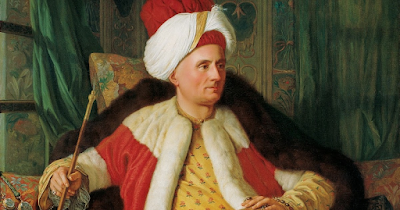
Chief among his patrons and adversaries was Charles Gravier, Comte de Vergennes, the foreign minister whose gaze fixed on Britain's North American jewel. Vergennes, a calculating aristocrat scarred by the Seven Years' War's humiliations, saw the rebels as a tool for French revenge.

Charles Gravier, comte de Vergennes

Franklin knew as much and outwitted him masterfully, hosting salons where philosophes like Raynal and d'Alembert debated liberty over claret, subtly steering discourse toward Franco-American solidarity. "We must make them believe the cause is theirs," Franklin confided to Deane, his early ally—a Connecticut merchant whose prior secret shipments of powder had already greased the wheels.

Working the “Street”

 Yet alliances were fragile blooms in a thorned garden. Franklin's network extended into the underworld — a tangled web of booksellers, couriers, and informants who smuggled secrets amid salons and at French ports, where informants tracked British naval dispatches. He even enlisted the Marquis de Lafayette's circle, funneling funds to the young nobleman's expeditionary force.

Charles-Joseph Panckoucke

 A key ally was Charles-Joseph Panckoucke, the powerhouse Parisian bookseller and publisher whose Palais-Royal shop was a revolutionary printing hub. He openly collaborated with Franklin, churning out pro-American pamphlets such as the Affaires de l'Angleterre et de l'Amérique series in 1776–1777 to sway French public opinion and elites toward an alliance. 

 By 1777, more French gunpowder and muskets flowed covertly to Washington's ragged Continentals, sustaining Valley Forge's winter quarters.

Sultan of Sophistication

 Franklin's espionage was no cloak-and-dagger affair so much as a symphony of subtlety. He cultivated British expatriates in Paris, posing as a harmless savant while extracting tidbits on troop movements from loose-lipped officers at the iconic theater and social venue, Comédie-Française.

Comédie-Française

One such ploy netted details of Burgoyne's Saratoga campaign, intelligence relayed in invisible ink to Congress. The stunning American victory at Saratoga that October sealed the deal: bolstering American morale and tipping Vergennes toward an open alliance. In February 1778, France formalized the Treaty of Amity and Commerce and the Treaty of Alliance in a blaze of mutual pledges—commerce, defense, and the dream of a transatlantic republic. A formal declaration of war came the following month.

Signing the Treaties

Spies Among Us

Adversaries lurked in every corner of the city. The British embassy, a hive of spies under Paul Wentworth and Edward Bancroft—a turncoat American chemist in Franklin's own employ—plotted ceaseless sabotage. Bancroft, double-dipping for London while transcribing Franklin's dispatches in lemon juice, fed Whitehall a stream of half-truths, nearly unraveling the mission when forged letters in 1778 accused Deane of profiteering.


Edward Bancroft

Then there was Arthur Lee, Franklin's fellow commissioner, a Virginia lawyer whose paranoia festered into outright enmity. Lee, sidelined by his own prickly demeanor, accused Franklin of embezzlement and senility, caballing with British agents to discredit him. "Lee is a wretch," Franklin later quipped, but the barbs stung, fracturing the American delegation and inviting French skepticism.

Beyond, George III's envoys like William Eden prowled the salons, dangling peace overtures to peel France away. At the same time, Prussian and Spanish diplomats—wary of Bourbon overreach—whispered doubts in Vergennes's ear.

Obstacles

Challenges mounted. Secrecy was paramount. A single leak could summon British frigates to Brest. Franklin countered using a cipher system blending Polybius squares and homophonic substitutions, smuggling letters in wine bottles or hollowed canes.

Crafting Secret Letters

Financial straits gnawed deeper—Congress's credit evaporated amid war's voracity, forcing Franklin to beg loans from French bankers like the Neufvilles, who demanded ruinous interest. "I am become the diplomatic beggar of Europe," he lamented in a dispatch.

Chick Magnet

Yet he responded with unflagging bonhomie, charming Versailles courtiers with bifocal demonstrations and anti-slavery tracts that aligned American ideals with French humanism. Franklin used his avuncular image to woo the French noblewomen.  A trait that his other commissioners found off-putting, but yielded no small conquests.

Twists and Barbs

When British spies torched American supply ships in the summer of 1779, crippling reinforcements bound for the Carolinas, Franklin retaliated not with rage but with a mock obituary for the "late" General Howe (who returned to Britain in disgrace in 1778), circulated in private letters, humiliated London, and eroded morale. To the French, he spun the arson as proof of British desperation, urging Vergennes to dispatch Admiral d'Estaing's fleet anew, even as d'Estaing's stalled Savannah siege that autumn tested the alliance's mettle.

The "Late" General Howe

Meanwhile, Bancroft's betrayals went unnoticed, but Lee's slanders echoed through Congress, and Britain's steadfast resolve suggested a tough struggle ahead. Franklin, always the optimistic strategist amid chaos, wrote to Washington: "Persevere, and the sun will break through."

Deception’s Twilight

By the close of 1778, Franklin sat by Passy's hearth, spectacles fogged by pipe smoke, studying a chessboard tilted in delicate advantage. The alliance thrived—French ships filled with cannon slicing through Atlantic waves, Vergennes's coffers opening for yet another loan, and soon French soldiers would fight side by side with the hard-pressed Americans.

The French Army - Crucial to Victory

The old scholar had woven a web of cleverness and charm, outsmarting empires with a smile and a secret. His first year in Paris marked a tour de force of realpolitik amid the rising storm. He would need to keep playing his game, as the stakes would be higher as the long-warring nations struggled to reach peace.


Wednesday, August 27, 2025

The Clockmaker's Gambit

 Beaumarchais and the  Cause of Liberty

In April 1775, the American colonies had burst into open rebellion against King George III. In the glittering salons of Paris, whispers of liberty mingled with the clink of wine glasses as the nobility watched the war in America unfold from afar. Some volunteered to join the fight, defying their King Louis XVI's wishes. Most simply read the bulletins and broadsheets, whispering their support.


Beaumarchais: Clcomaker, Playwright & Spy


But a commoner, a clockmaker and part-time playwright, was weaving a web that would stretch across the Atlantic and help give birth to a nation. Pierre Augustin Caron de Beaumarchais, a watchmaker turned playwright, was about to help elevate the most significant rebellion of the century.

The Clockmaker

Born in 1732 to a Parisian clockmaker, young Pierre Caron was no stranger to tinkering. His skillful fingers crafted timepieces so fine they caught the eye of King Louis XV’s court. By his twenties, he had charmed his way into Versailles, teaching harp to the royal daughters and earning the noble suffix “de Beaumarchais” through a clever marriage and a talent for reinvention. His skills brought him close to young Louis XVI, an amateur clockmaker.


18th-century Century Clocks were 
High Tech Gadgets of the Age

The Playwright

But clocks and courtly manners were just the beginning. Beaumarchais had a restless mind, thriving on the stage and in the shadows. His plays, like The Barber of Seville and The Marriage of Figaro, delivered sharp jabs at the aristocracy, earning him both applause and enemies. His plays drew the King's ire and were banned, but later revived as operas by Mozart. By the 1770s, he wore many masks: dramatist, merchant, and secret agent for the French crown.


Scene from Marriage of Figaro

A Complex Script

But it was in a different kind of play where Beaumarchais truly found his calling. France, still sore from its defeat in the Seven Years’ War, saw a chance to poke Britain in the eye by aiding the American rebels. But Louis XVI, cautious of open war, needed plausible deniability. Beaumarchais's flair for drama made him the perfect man to orchestrate a covert operation. 


King Louis XVI

In 1775, he met with American agents in London, including Arthur Lee, a Virginia lawyer with a fiery patriot’s spirit. Lee’s stories of colonial resolve ignited a spark in Beaumarchais. Here was a cause that blended profit with principle—a chance to arm the rebels, weaken Britain, and help rearm France.

The Pitchman

Beaumarchais pitched his plan to Foreign Minister Comte de Vergennes with the enthusiasm of a man promoting a hit play. “Sire, the Americans need muskets, powder, and cannon,” he argued. “Let me supply them through a front—a trading company. France stays clean, Britain is caught off guard, and liberty wins.” Vergennes, no fool, saw the merit. 


Comte de Vergennes


By 1776, Beaumarchais had created Roderigue Hortalez & Compagnie, a front (a sort of shell) company that acted as both merchant house and espionage hub. With a million Livres from the French treasury (and another from Spain, persuaded by Beaumarchais’ silver tongue), our playwright got to work.

Secret Script

Imagine a busy office in Paris, clerks scribbling invoices, while in the back room, Beaumarchais haggles with arms dealers and dodges British spies. The operation was a dangerous game. Britain’s spies prowled the docks, looking for French interference. 


Back-room Scheming and Planning


Beaumarchais wrote coded letters, used aliases like “Durand,” and spun stories to mislead the enemy. One moment, he was a merchant shipping “cloth” to the West Indies; the next, he was smuggling muskets to American privateers. His ships, loaded with 200 cannons, 25,000 muskets, and tons of gunpowder, sailed under neutral flags to ports like Saint-Domingue, where American agents waited.


Stormy Reviews

But the sea was no friend to Beaumarchais. Storms, British patrols, and shoddy captains sank half his cargoes. Worse, the Americans were slow to pay. Congress, short on cash, sent promissory notes and tobacco instead of money. 


Stormy Seas, Secret Cargoes

Beaumarchais was under pressure but kept going, driven by a mix of ideals and ambition. His supplies arrived at critical moments for General Washington’s army. At Saratoga in 1777, American troops, armed with French muskets, crushed General Burgoyne’s redcoats—a victory that convinced France to join the war openly. Beaumarchais’ guns had tipped the scales.

The Clock Strikes

Despite his successes, Beaumarchais’ life was a risky balancing act. His enemies at court, jealous of his influence, whispered accusations of treason. His debts piled up as Congress delayed payments. In 1777, he faced brief exile after a duel gone wrong but bounced back, ever the survivor. His plays kept him in the public eye, their sharp wit echoing his own defiance. The Marriage of Figaro, banned for its cheek, was a jab at the old order—a nod, perhaps, to the American rebels he admired.

Resetting the Clock

By 1778, France’s formal alliance with America changed Beaumarchais’s role. His secret trading gave way to official French aid. But he kept scheming, running spy operations for Vergennes, uncovering British plans, and even outfitted ships for privateering to harass British trade.  These activities were less about traditional espionage and more about logistical coordination to disrupt British supply lines. For instance, Beaumarchais used his network to monitor British merchant vessels, enabling privateers to target them effectively, which indirectly supported the Allied war effort.


Doctor Franklin


His Paris home became a hub for American envoys like Silas Deane and Benjamin Franklin, who valued his charm and connections. Franklin, in his fur cap and with a sly grin, called Beaumarchais “a genius in his way,” though he joked about Beaumarchais’ endless requests for repayment.

Winding Down

By 1779, his focus increasingly shifted to settling financial disputes with the Continental Congress over unpaid debts for earlier covert aid, decreasing his role in intelligence-gathering. The war’s end in 1783 didn’t bring peace for Beaumarchais. Congress owed millions, but American funds were limited. He spent years chasing debts, with his wealth shrinking.


Peace celebrated in Paris


The Clock Strikes Midnight

When the French Revolution broke out in 1789, Beaumarchais supported its ideals but recoiled at its violence. Accused of hoarding arms, he fled to Germany, returning only after Robespierre’s fall. He died in 1799, his life a whirlwind of victories and setbacks.


Storming the Bastille Launched the Revolution


Curtain Call

Beaumarchais saw America’s fight as a reflection of his own struggles against privilege and authority. His plays mocked the nobility; his guns supported the rebels. He was a man full of contradictions—a courtier who despised tyranny, a profiteer risking everything for a cause.


Saturday, May 31, 2025

The French Fox

Although action and intrigue are the hallmarks of the Yankee Doodle Spies series, the war was, in fact, mainly won through the latter. Intrigue, fortified by no small dose of guile, enabled the rebel American colonies to throw off the yoke of the British Empire. They also received a little help from their friends, particularly a Frenchman who played the great game of international diplomacy through a mix of statesmanship, espionage, and deception. 

Charles Gravier, comte de Vergennes

 Charles Gravier, Comte de Vergennes, was a shrewd statesman who orchestrated a complex diplomatic strategy against France’s despised enemy, Great Britain. He maintained a calm and accommodating demeanor with his opponents and even kept his friends and allies on their toes.

Burgundian Roots

It is almost ironic that this relentless foe of Britain originated from an ancient ally of the English and an adversary of France, the Grand Duchy of Burgundy. However, when Charles Gravier was born in Dijon on a chilly December day in 1719, the region was merely a province of France. Gravier’s father was a local magistrate, respectable but not particularly high in the French social hierarchy.

Dijon, Capital of Burgundy

Following in his father’s footsteps, young Charles studied law. Eschewing the military or clergy that ensnared so many sons of the elites, he entered the French diplomatic service at the age of twenty. Soon, his patience, intellect, and knack for intrigue set him on a lifetime trajectory that would change the world.

A Diplomat’s Rise

 Vergennes’ early posts provided the training of a diplomat and a spy. His apprenticeship began in Lisbon in 1740 during the heated years of the War of the Austrian Succession. He learned to read a room, assessing the strengths and weaknesses of couriers and diplomats—and their true intentions.  Postings in Bavaria and the Palatinate followed. More challenging was the 1755 plum posting as ambassador to Istanbul (formerly Constantinople), where the Ottomans and diplomats of the Russian Empire tested his wiles.

Istanbul

Experience in the Byzantine world of the formerly Byzantine Ottoman Empire prepared him for later challenges, like Sweden in 1768. There, he faced his Russian adversaries once more, employing a mix of charm, persuasion, espionage, and gold to keep the court’s pro-French party in power and the Swedes who favored Catherine the Great's Russia out. 

Gravier: Ambassador to the Sublime Porte


These posts schooled Vergennes in the art of high (and low) diplomacy, and foreshadowed what the mastermind could do when he reached the next level in the diplomatic corps.

Catherine the Great, Czarina of Russia

The next level emerged when Louis XVI ascended to the throne in 1774. Now a seasoned diplomat, Gravier would take on the challenge of a lifetime, guiding a France weakened by the Seven Years' War back to the center of the world stage as foreign minister. A year later, events across the ocean would provide that opportunity.

Exploiting Revolution

In the spring of 1775, the slow-burning insurrection in the American colonies erupted into a powder keg of revolutionary warfare. Even from far-off Versailles, the canny Vergennes could smell opportunity, if not the gun smoke. The catastrophic treaty ending the Seven Years’ War had torn away France’s most valued colonies—Canada was gone, India had been diminished, the West Indies islands were lost, West Africa had been lost to Britain, and Louisiana was given to Spain as compensation. France might not regain any of its lost colonies, but it sought revenge. The prickly American colonists now allowed Vergennes to bleed Britain dry.

Action at Lexington Brings War to America

Vergennes was no friend of liberty. He played a power game, using the Yankees as his baseball bat. While Britain’s army and navy were bogged down, France had a chance to regain its power and prestige. He dispatched agents to investigate the rebels. Were they tough enough to endure? Could they fight the world’s most powerful military? Vergennes wanted answers before he risked his nation.

Black Operations

When America’s first envoy, Silas Deane, turned up in Paris in 1776, with his hand out, looking for aid. Vergennes kept it low—he was not ready to connect France to the rebellion. But a covert op might buy him time. When Pierre-Augustin Caron de Beaumarchais, a playwright with a sideline in skullduggery, approached him with a secret scheme to help America (and harm the Anglais), Vergennes consented.  With Vergennes looking the other way, he set up a fake trading outfit called Roderigue Hortalez et Cie. This front company shipped muskets, powder, and cannons across the ocean with tobacco and other cash crops sailing to France, where they'd sell and the profits then used to replace the French munitions and ordnance.  At the same time, France had plausible deniability (it was a Spanish firm). The ports of France became smuggling hubs, with crates marked for “private merchants” ignored by French customs officials.  

Beaumarchais: Playwright and Schemer

Enter Doctor Franklin

The stakes grew higher when the most famous American in the world, Benjamin Franklin, wandered into Paris in December 1776. Franklin’s fur cap and homespun wit charmed and disarmed everyone from salon ladies to shopkeepers. Vergennes wisely let Franklin-mania work the crowd but kept the serious business behind closed doors. Despite Franklin's charm offensive, Gravier remained adamant. He would not risk an open alliance until the Americans produced a major battlefield victory.

Benjamin Franklin

 Turning Point

That happened in October 1777. A British invasion from Canada was defeated in two fierce battles, leading to the British surrender at Saratoga, New York. Paris was in chaos when news of the victory arrived. For his part, Vergennes now had proof of success and began persuading the still-antsy King Louis XVI to officially support the American cause.

Turning Point: Saratoga Surrender

On 6 February 1778, France and the United States signed two treaties. The Treaty of Amity and Commerce primarily aimed to promote trade and commercial relations between the two nations. The Treaty of Alliance established military cooperation against Great Britain during the American Revolutionary War. Just like that, France was at war with Britain, and Vergennes was all in. But the ever-cautious King Louis delayed a public proclamation until Late March.

Signing the Treaty of Amity

This war would be expensive, and Vergennes secretly pursued support from Spain and the Netherlands. Despite diplomatic and secret maneuverings, Spain did not join until 1779, with the stated goal of reclaiming lands lost to the British, specifically West Florida and Gibraltar, rather than aiding the upstart Protestant rebels. Although they had been secretly lending to the Americans, the Dutch did not join until 1780. Vergennes’ diplomatic tour de force had finally paid off.

City of Spies

Paris during the Revolution rivaled Cold War-era Berlin as a hub of intrigue. Spies lurked in every tavern and salon, the British sniffing out American plans, the French tracking British agents, and Spain’s agents gathering on behalf of His Catholic Majesty. Vergennes’s counterintelligence was everywhere: surveilling diplomats, intercepting letters, and planting false leads. One wolf in sheep’s clothing was Edward Bancroft, Franklin’s secretary, who was feeding secrets to London. Despite his agents’ best efforts, Vergennes did not uncover Bancroft’s treachery, which stayed hidden till later. Some believe Franklin was in on the treachery and exploited it.

Spy: Edward Bancroft


France at War

Versailles was replete with naysayers on the alliance (perhaps persuaded with British gold), and they yapped at the always wobbly Louis. However, the Foreign Minister was now fully aligned with the Americans, ensuring that the flow of aid never stopped. But America’s real need was French military might, especially its navy. Despite some early fits and starts, when it came, it proved decisive.

Chesapeake: The French Fleet Played a Decisive Role

Now was the time for the vengeance Vergennes struggled so long to achieve.  Troops and ships sailed to the New World to join the Americans and exact that vengeance. Franco-American efforts faltered at Newport, Rhode Island, and Savannah, Georgia. Still, the 1781 Yorktown campaign, where French troops and ships under Rochambeau and de Grasse sealed Cornwallis's troops on the York River in tidewater Virginia, was the brainchild of Vergennes.

A Separate Peace

The surrender of Lord Cornwallis at Yorktown convinced the British that the game was over. But what they could not win on land and sea, they would try to win at the peace table. The spy-versus-spy atmosphere in Paris intensified further when the British and American peace commissioners began sparring over the details, such as boundaries, fishing rights, trading rights, western land ownership, and Indian affairs.

French Support Made Yorktown Possible

Vergennes worked to align the interests of France, Spain (a French ally, not an American one), and the United States during peace negotiations. He pushed for a unified approach to ensure that the Americans coordinated with French interests.  However, the Americans sometimes acted independently, to Vergennes' frustration.

Peace of Paris

Vergennes spent most of his time on the broader peace process. The Treaty of Paris was part of a series of agreements collectively known as the Peace of Paris. That resolved the global conflicts among Britain, France, Spain, and the Netherlands. He negotiated terms for France, securing minor territorial gains (like Tobago and parts of Senegal) and protecting French interests in the West Indies and India.

Celebrating the Treaty of Peace with Britain in Paris

Vergennes was leery of American commissioners skirting French guidance.  And with good reason. They signed a preliminary peace agreement with Britain in November 1782 without consulting France fully and violating the terms of the 1778 alliance. Despite this, Vergennes accepted the outcome, recognizing that American independence aligned with France’s overall goal of weakening Britain. Vergennes signed his own treaty with Britain the following year.

Cost of Empire

Vergennes' service came at a cost. In 1781, King Louis appointed him as his Chief Minister, combining the roles of Foreign Minister and Prime Minister. Long days and nights of toil and the pressure of orchestrating financial, diplomatic, intelligence, and even military affairs strained him mentally and physically to the point where, on February 13, 1787, he keeled over at 67. He passed away just as France’s war debts started fueling talk of revolution. Some say Vergennes’ great gamble on America bankrupted France, which eventually led to the French Revolution in 1789. 

But hindsight is fifty-fifty. Charles Gravier’s goal was to check British hegemony and restore French glory. To that end, he succeeded. As for the French Revolution? Even the greatest and most perceptive minds cannot see the future. Who in 1778 would have thought King Louis's support for America would ultimately result in a trip to the guillotine? But one might speculate that with him guiding the vacillating King Louis, the nation and the monarchy might have avoided the chaos of the French Revolution and the carnage that it brought to France and the world.

King Louis XVI

Americans owe a debt to Charles Gravier, Comte de Vergennes—the man who viewed a ragged revolution as France’s opportunity. His cunning and insight were instrumental in America’s founding alongside the Minutemen and Continentals. Lauded neither in France nor America, the diplomat from Dijon played a pivotal role in the birth of a nation and changing the world like few others have.


Alliance Rosette Worn By Continental Army Officers


Monday, October 30, 2023

Noble Patriot

 Noble Patriot

The American War for Independence gained the attention of all the European powers, and even the nobility and royalty were, at least initially, enthralled by it as the embodiment of the ideals of The Age of Reason. It did not take long before many of the nobility and upper class were scrambling to join the effort to secure liberty. Soon, names like Steuben, Kosciusko, de Kalb, and Pulaski joined the ranks of the Continental Army. Each made his mark in the Glorious Cause, but none so much as Marie-Joseph-Paul-Yves-Roch-Gilbert du Motier, Marquis de Lafayette.

Major General Lafayette


Old Blood, Old Money

Lafayette was born into one of the oldest families in France's aristocracy on 6 September 1757. The young Lafayette had a troubled youth despite a rich lineage, wealth, and privilege. His father, Michel de Lafayette, was struck by a cannonball fighting the British at the Battle of Minden, leaving him an orphan and marquis at two. As was typical of his class, Lafayette was commissioned into a French royal musketeer regiment at thirteen. However, his actual leadership experience was limited to parade and garrison duties when not partaking of the pleasures at court.

Lafayette senior fell at Minden

He was early on engaged to Marie Adrienne Françoise, the daughter of a powerful Duc d'Ayen, whom he married at sixteen (she was two years younger). The arranged match also proved a love match, and despite many trials and tribulations, the pair stayed together until she died in 1807. In 1776, the young marquis received a commission as a captain of dragoons, which should have begun his climb up the French military hierarchy, but for events across the ocean.

A Young Idealist

Lafayette was well-read in the classics and the principles of the Enlightenment, and from an early age, hoped to make a difference for mankind. By 1776, the political friction in America had erupted into open rebellion against the King of England. Like so many others, he followed the events with interest. Unlike so many others, he decided to act on his principles, which he saw enshrined in the sentiments of The Declaration of Independence — he determined to throw his lot in with the Americans and strike a blow for liberty. Equality and fraternity would have to wait, however.

The Declaration of Independence inspired Lafayette 


An American Agent

But what to do? Silas Deane, an American politician from Connecticut, represented the American Continental Congress in Paris — in effect, he was an American agent. Many European officers approached Deane to solicit commissions in the Continental Army. Deane's job was to screen them and make referrals of those with bona fide military experience or who provided some other advantage to the American cause. Lafayette's youth and inexperience would have usually precluded a referral, but his pedigree and connections at court, combined with his evident enthusiasm, got him a referral.

Silas Deane


Outlaw

Lafayette's family, especially his powerful father-in-law, objected to the move. As did his wife. She was pregnant. Influenced by the Duc d'Ayen, the government also refused permission for Lafayette to travel, expressly forbidding it. At the time, Deane was negotiating secret assistance from the French government and overt support. The presence of such a nobleman fighting for America would alarm the British. But the headstrong idealist bucked authority and managed to sneak into Spain, where he eventually boarded the ship Victoire, loaded with ordnance for the American cause. King Louis XVI subsequently declared him an outlaw. How much of this was actual pique at his disobedience or to throw off the British is hard to say, but likely both.

Lafayette escaped France via a subterfuge

Coming to America

The nineteen-year-old marquis landed in South Carolina in 1777, accompanied by several officers, including Baron Johann de Kalb, a French nobleman who would give his life for the American cause. He then traveled to Philadelphia to claim his promised commission as a major general. Congress hesitated due to his youth and inexperience. Major general was the army's highest rank at the time, and only a few were serving, but because of his connections, they finally appointed him — without command.

Johann de Kalb


Meeting His Excellency

Lafayette met Washington for the first time at a reception held in Philadelphia in August 1777 when the commander-in-chief came to the capital to consult with Congress on military matters. The two shook hands in the receiving line and then met privately — bonding almost immediately. Washington was impressed by his enthusiasm and military bearing. He returned to camp with Washington, but his status was still unclear. Lafayette still expected a field command. Was his commission actual or honorary? Washington took him into his "military family" and made him a sort of senior advisor.

Meeting with Washington

First Battle, First Blood, First Winter

The youthful general's mettle was tested the following month at the Battle of Brandywine, where Lafayette received a leg wound while helping rally a regiment fleeing the field. His mentor was pleased. His gallantry earned him a small command. In late  November, he led a detachment of 300 infantry in a skirmish against a large force of the vaunted Hessians at Gloucester, New Jersey — repulsing the Germans. His enthusiasm and energy throughout the harsh winter quarters at Valley Forge and his willingness to suffer along with the rest of the army further endeared him to Washington. A father-son relationship had developed. The childless Washington and fatherless Lafayette had a unique bond.

Wounded at Brandywine

Warmth of Spring

As winter ebbed, the sun's rays warmed the earth, and both the Continental and British forces uncoiled from hibernation and began to stir. Lord George Germain had recalled General William Howe to London to be replaced by his number two, General Henry Clinton. A new strategy was in motion, and Germain ordered Clinton to abandon Philadelphia for the security of New York, as a chunk of his troops were being sent to protect British interests in the West Indies.

Major General William Howe


Aware of upcoming changes, General Washington sent with an even larger command, a division of 2,000 troops and five guns, to observe British movements in and out of Philadelphia. Lafayette deployed his division in the vicinity of Barren Hills, Pennsylvania. Howe had not yet departed and decided to thrash the upstart Frenchman before he left. He dispatched the formidable General James Grant with 5,000 men and fifteen guns to entrap Lafayette. A three-pronged maneuver by Grant had British and Hessian columns on three sides of Lafayette's command, but he saw the trap about to be sprung and wisely slipped away via a road he knew would evade British observation.

British grenadiers advancing at Barren Hills

Lafayette's ability to quickly assess a tactical situation maneuver to safety pleased Washington, who entrusted him with a more significant command the following month. By the end of June 1778, Howe was gone, and Clinton led the bulk of his army overland to NewYork, crossing the hot, humid fields of New Jersey with the Continental Army following. 

Foul Up and Success at Monmouth

At Monmouth Court House, the British paused for a rest. Not ready to commit to an all-out attack, Washington agreed to send a  force to strike Clinton's rear guard. When his second in command, General Charles Lee, demurred from leading the attack, Lafayette offered his services. Wahington accepted the offer, but the wily Lee decided he wanted the command after all and marched off with Lafayette.

Washington at Monmouth


When the Americans launched their attack, the British, rather than retreat as was hoped, turned and fought, then when reinforced, the British rear guard counterattacked. Faced with a stiff fight, Lee gave conflicting orders, causing chaos in the American ranks. Seeing the American line crumbling and confusion growing, Lafayette sent a message to Washington to urge him to ride forward and take command. Washington was incensed when he arrived and began rallying the troops and relieved Lee of command (in a famous confrontation). The line steadied, and the Continental Army fought toe toe-to-toe with the Britsh, the swirl of combat ending at dark with both sides sleeping on the line. The following day, Lafayette rose and awakened Washington. As the two generals peered across the misty fields at dawn, the Britsh had retreated.

Summer in Newport

Lafayette was given command of two brigades as part of General John Sullivan's hapless expedition to Rhode Island that summer. The taking of the vital port hinged on cooperation with the naval forces of France's admiral Charles-Hector Theodat, comte d'Estaing. One of Lafayette's tasks was to convince the obstinate d'Estaing to support the American effort, but d'Estaing demurred. On 9 August, Sullivan's land forces attacked the British without d'Estaing, who refused to place his ships in Narragansett Bay. A storm struck, scattering the French and British fleets, and the land force attack failed. Sullivan's northern army withdrew, with Lafayette playing a pivotal role in keeping it an orderly retreat.

Admiral d'Estaing


 Home for the Holidays

In January 1779, the young marquis went on furlough, returning to France to advocate for wider French involvement in the war. Lafayette was initially arrested after landing on French soil, but the king quickly pardoned him. He was received in Paris as a hero, a sort of rock star — King Louis actually promoted him to colonel in the French Army. 

Louis XVI


Things were different with France and Spain openly at war with Britain. Lafayette proposed a joint invasion of Britain with him in command. However, the Spanish ships did not arrive until August, and a British fleet of fast ships complicated the plan, which was eventually abandoned. 

The Francp-Spanish  naval invasion of Britain was canceled

So, Lafayette refocused on gaining more support for the American cause, collaborating with American Commissioner Benjamin Franklin to arrange French troops for North America. He also refocused on his family, and in December, Adrienne gave birth to a son, whom he proudly named George Washington Lafayette. 

Benjamin Franklin

Meanwhile, the king had agreed to send more forces to America. He dispatched Lafayette to return with news of General Jean-Baptiste,comte de Rochambeau's impending arrival with some 6,000 men. Lafayette dutifully sailed from Rochefort to America aboard the frigate Hermione, arriving in Boston on 27 April 1780.

Fighting for Liberty

Washington, the commander-in-chief of both nation's forces, used Lafayette as a high-level liaison between Rochambeau and himself. Little was accomplished during the remainder of 1780. Washington and Rochambeau's forces postured while the generals pondered and planned. Most of the fighting was taking place in the Carolinas, where the British launched a successful invasion but then got tied down, trying to hold on to what they grabbed. 

General Rochambeau


But by 1781, trouble and opportunity beckoned in the warmer climes of Virginia when General Charles Cornwallis marched north from the Carolinas to establish firm British control over the Old Dominion in a desperate ploy to reshape the balance of power. British forces under Generals William Phillips and Benedict Arnold ( the same) based out of Portsmouth had advanced as far as the new capital in Richmond and raided as far as Charlottesville. 

British Brigadier General Benedict Arnold


General Friedrich von Steuben's small detachment of Virginia militia did what they could to block and harass. Still, it was not enough, and now the impending arrival of another army from the Carolinas put von Steuben and Washington's home state at grave risk. 

The Old Dominion

But with risk came opportunity. So, in response, Washington sent Lafayette to Virginia to support and take command of all American forces. Lafayette spent several weeks sparring with Cornwallis around Richmond and Petersburg. The canny veteran, Cornwallis, made several efforts to overpower the young general. But  Lafayette was up to the task. 

Lafayette led the way in the Old Dominion


At Green Spring on 6 July 1781, he moved quickly to support the beleaguered forces under General Anthony Wayne. Cornwallis was soon boxed into the Virginia peninsula, where Lafayette pushed him slowly toward Williamsburg and the supposed refuge on the York River. Tipped off by an African-American spy named James Armistead,  the young marquis carefully shadowed Cornwallis to Yorktown and helped trap him in his works. 

Yorktown

By August, Cornwallis had established his base at Yorktown, and the marquis positioned his forces on Malvern Hill, placing guns zeroed in on the British. Cornwallis's tired and now disease-ridden army waited for supplies and reinforcement from or evacuation to New York. Thanks to the French fleet, it would come too late for him and his men.

Major General Charles Cornwallis


Washington and Rochambeau's forces converged on Williamsburg after force marching from New York. Lafayette met them and helped plan the final phase of the campaign — besieging Yorktown. Time was critical as the weather would allow the French navy to linger only a few more weeks. 

Storming the Redoubt


Lafayette commanded the Light Infantry Division during the siege and was in overall command of the French and American forces that stormed Redoubts Nine and Ten, the final nail in the British coffin. On 19 October 1781, Cornwallis's army grounded arms and marched into captivity. The war would not end for two long years, but most major combat on land had ended.

Surrender at Yorktown

What Next?

The British still clung stubbornly to garrisons throughout the Carolinas and firmly held Savannah, Georgia. Lafayette offered to command forces to capture them, but Washington was confident in Major General Nathanael Green's handling of the South. Besides, Lafayette would prove more valuable as an advocate for more naval and monetary support from France.

General Nathanael Greene


Lafayette traveled north to Philadelphia, where Congress appointed him its advisor to the commissioners in Europe, Ben Franklin (Paris), John Jay (Madrid), and John Adams (The Hague), and sent a letter of commendation for the marquis to the King of France.

Hero of Two Worlds

On 18 December 1781, the young hero of two worlds sailed from Boston for France. Everywhere welcomed the hero, Lafayette had an audience with the king at the Palace of Versailles on 22 January 1782. Louis XVI named him maréchal de camp and a Knight of the Order of Saint Louis. Lafayette went to work helping plan a Spanish-French expedition against the West Indies as the war was now a world war and, despite Yorktown, far from over. He also helped advise the negotiations that led to The Treaty of Paris in 1783.

Treaty of Paris signing


But possibly Lafayette's greatest triumph and joy was reuniting with his family. He was there for the birth of his daughter, Marie Antoinette Virginie Motier de la Fayette, on 17 September 1782. Prospects for the marquis and his family were bright. Wealth, nobility, military success, and fame glorified him. Freedom had triumphed in the New World. Now, the young idealist sought ways to replicate the same in the Old World.