Although action and intrigue are the hallmarks of the Yankee Doodle Spies series, the war was, in fact, mainly won through the latter. Intrigue, fortified by no small dose of guile, enabled the rebel American colonies to throw off the yoke of the British Empire. They also received a little help from their friends, particularly a Frenchman who played the great game of international diplomacy through a mix of statesmanship, espionage, and deception.
.jpg)
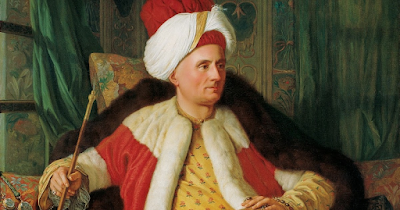
Charles Gravier,
Comte de Vergennes, was a shrewd statesman who orchestrated a complex diplomatic strategy against France’s despised enemy, Great Britain. He maintained a calm and
accommodating demeanor with his opponents and even kept his friends and allies
on their toes.
Burgundian Roots
It is almost ironic that this relentless foe of Britain
originated from an ancient ally of the English and an adversary of France, the
Grand Duchy of Burgundy. However, when Charles Gravier was born in Dijon on a
chilly December day in 1719, the region was merely a province of France.
Gravier’s father was a local magistrate, respectable but not particularly high
in the French social hierarchy.

Following in his father’s footsteps, young Charles studied
law. Eschewing the military or clergy that ensnared so many sons of the elites,
he entered the French diplomatic service at the age of twenty. Soon, his
patience, intellect, and knack for intrigue set him on a lifetime trajectory
that would change the world.
A Diplomat’s Rise
Vergennes’ early
posts provided the training of a diplomat and a spy. His apprenticeship began in
Lisbon in 1740 during the heated years of the War of the Austrian Succession.
He learned to read a room, assessing the strengths and weaknesses of couriers and diplomats—and their true intentions.
Postings in Bavaria and the Palatinate followed. More challenging was
the 1755 plum posting as ambassador to Istanbul (formerly Constantinople), where the Ottomans and
diplomats of the Russian Empire tested his wiles.

Experience in the Byzantine world of the formerly Byzantine Ottoman Empire prepared him for later challenges, like Sweden in 1768. There, he faced his Russian adversaries once more, employing a mix of charm, persuasion, espionage, and gold to keep the court’s pro-French party in power and the Swedes who favored Catherine the Great's Russia out.
These posts schooled Vergennes in the art of high (and low)
diplomacy, and foreshadowed what the mastermind could do when he reached the
next level in the diplomatic corps.

Catherine the Great, Czarina of Russia
The next level emerged when Louis XVI ascended to the throne in 1774. Now a seasoned diplomat, Gravier would take on the challenge of a lifetime, guiding a France weakened by the Seven Years' War back to the center of the world stage as foreign minister. A year later, events across the ocean would provide that opportunity.
Exploiting Revolution
In the spring of 1775, the slow-burning insurrection in the American colonies erupted into a powder keg of revolutionary warfare. Even
from far-off Versailles, the canny Vergennes could smell opportunity, if not
the gun smoke. The catastrophic treaty ending the Seven Years’ War had torn
away France’s most valued colonies—Canada was gone, India had been diminished, the West Indies islands were lost, West Africa had been lost to Britain, and Louisiana was given to Spain as
compensation. France might not regain any of its lost colonies, but it sought revenge. The prickly American colonists now allowed Vergennes to bleed Britain
dry.

Vergennes was no friend of liberty. He played a power game,
using the Yankees as his baseball bat. While Britain’s army and navy were
bogged down, France had a chance to regain its power and prestige. He
dispatched agents to investigate the rebels. Were they tough enough to endure?
Could they fight the world’s most powerful military? Vergennes wanted answers
before he risked his nation.
Black Operations
When America’s first envoy, Silas Deane, turned up in Paris in 1776, with his hand out, looking for aid. Vergennes kept it low—he was not ready to connect France to the rebellion. But a covert op might buy him time. When Pierre-Augustin Caron de Beaumarchais, a playwright with a sideline in skullduggery, approached him with a secret scheme to help America (and harm the Anglais), Vergennes consented. With Vergennes looking the other way, he set up a fake trading outfit called Roderigue Hortalez et Cie. This front company shipped muskets, powder, and cannons across the ocean with tobacco and other cash crops sailing to France, where they'd sell and the profits then used to replace the French munitions and ordnance. At the same time, France had plausible deniability (it was a Spanish firm). The ports of France became smuggling hubs, with crates marked for “private merchants” ignored by French customs officials.

Enter Doctor Franklin
The stakes grew higher when the most famous American in the
world, Benjamin Franklin, wandered into Paris in December 1776. Franklin’s fur
cap and homespun wit charmed and disarmed everyone from salon ladies to shopkeepers.
Vergennes wisely let Franklin-mania work the crowd but kept the serious
business behind closed doors. Despite Franklin's charm offensive, Gravier
remained adamant. He would not risk an open alliance until the Americans
produced a major battlefield victory.

Turning Point
That happened in October 1777. A British invasion from Canada was defeated in two fierce battles, leading to the British surrender at Saratoga, New York. Paris was in chaos when news of the victory arrived. For his part, Vergennes now had proof of success and began persuading the still-antsy King Louis XVI to officially support the American cause.

On 6 February 1778, France and the United States signed two
treaties. The Treaty of Amity and Commerce primarily aimed to promote trade and
commercial relations between the two nations. The Treaty of Alliance established
military cooperation against Great Britain during the American Revolutionary
War. Just like that, France was at war with Britain, and Vergennes was all in.
But the ever-cautious King Louis delayed a public proclamation until Late March.

This war would be expensive, and Vergennes secretly pursued
support from Spain and the Netherlands. Despite diplomatic and secret
maneuverings, Spain did not join until 1779, with the stated goal of reclaiming
lands lost to the British, specifically West Florida and Gibraltar, rather than
aiding the upstart Protestant rebels. Although they had been secretly lending
to the Americans, the Dutch did not join until 1780. Vergennes’ diplomatic tour
de force had finally paid off.
City of Spies
Paris during the Revolution rivaled Cold War-era Berlin as a
hub of intrigue. Spies lurked in every tavern and salon, the British sniffing
out American plans, the French tracking British agents, and Spain’s agents
gathering on behalf of His Catholic Majesty. Vergennes’s counterintelligence
was everywhere: surveilling diplomats, intercepting letters, and planting false
leads. One wolf in sheep’s clothing was Edward Bancroft, Franklin’s secretary, who
was feeding secrets to London. Despite his agents’ best efforts, Vergennes did
not uncover Bancroft’s treachery, which stayed hidden till later. Some believe
Franklin was in on the treachery and exploited it.

France at War
Versailles was replete with naysayers on the alliance (perhaps
persuaded with British gold), and they yapped at the always wobbly Louis. However,
the Foreign Minister was now fully aligned with the Americans, ensuring that the
flow of aid never stopped. But America’s real need was French military might,
especially its navy. Despite some early fits and starts, when it came, it
proved decisive.

Now was the time for the vengeance Vergennes struggled so
long to achieve. Troops and ships sailed
to the New World to join the Americans and exact that vengeance. Franco-American
efforts faltered at Newport, Rhode Island, and Savannah, Georgia. Still, the
1781 Yorktown campaign, where French troops and ships under Rochambeau and de
Grasse sealed Cornwallis's troops on the York River in tidewater Virginia, was
the brainchild of Vergennes.
A Separate Peace
The surrender of Lord Cornwallis at Yorktown convinced the
British that the game was over. But what they could not win on land and sea,
they would try to win at the peace table. The spy-versus-spy atmosphere in
Paris intensified further when the British and American peace commissioners
began sparring over the details, such as boundaries, fishing rights, trading
rights, western land ownership, and Indian affairs.

Vergennes worked to
align the interests of France, Spain (a French ally, not an American one), and the
United States during peace negotiations. He pushed for a unified approach to
ensure that the Americans coordinated with French interests. However, the Americans sometimes acted
independently, to Vergennes' frustration.
Peace of Paris
Vergennes spent most of his time on the broader peace
process. The Treaty of Paris was part of a series of agreements collectively
known as the Peace of Paris. That resolved the global conflicts among Britain,
France, Spain, and the Netherlands. He negotiated terms for France, securing
minor territorial gains (like Tobago and parts of Senegal) and protecting
French interests in the West Indies and India.

Vergennes was leery of American commissioners skirting
French guidance. And with good reason.
They signed a preliminary peace agreement with Britain in November 1782 without
consulting France fully and violating the terms of the 1778 alliance. Despite
this, Vergennes accepted the outcome, recognizing that American independence
aligned with France’s overall goal of weakening Britain. Vergennes signed his own treaty with Britain the following year.
Cost of Empire
Vergennes' service came at a cost. In 1781, King Louis appointed him as his Chief Minister, combining the roles of Foreign Minister and Prime Minister. Long days and nights of toil and the pressure of orchestrating financial, diplomatic, intelligence, and even military affairs strained him mentally and physically to the point where, on February 13, 1787, he keeled over at 67. He passed away just as France’s war debts started fueling talk of revolution. Some say Vergennes’ great gamble on America bankrupted France, which eventually led to the French Revolution in 1789.
But hindsight is fifty-fifty. Charles Gravier’s goal was to check British hegemony and restore French glory. To that end, he succeeded. As for the French Revolution? Even the greatest and most perceptive minds cannot see the future. Who in 1778 would have thought King Louis's support for America would ultimately result in a trip to the guillotine? But one might speculate that with him guiding the vacillating King Louis, the nation and the monarchy might have avoided the chaos of the French Revolution and the carnage that it brought to France and the world.

Americans owe a debt to Charles Gravier, Comte de
Vergennes—the man who viewed a ragged revolution as France’s opportunity. His
cunning and insight were instrumental in America’s founding alongside the
Minutemen and Continentals. Lauded neither in France nor America, the diplomat
from Dijon played a pivotal role in the birth of a nation and changing the
world like few others have.


