Followers

Showing posts with label Comte de Vergennes. Show all posts

Sunday, September 28, 2025

A Peer in Paris

The Peer's Challenge

As Paris buzzed with intrigue during the American Revolution, Lord David Murray, the seventh Viscount Stormont, the British ambassador to Louis XVI's court and chief of intelligence, was at the center of this complex web of intrigue. Appointed in 1772, Stormont was a Scottish peer related to Lord Mansfield, the chief justice who had ruled against colonial protests during the Stamp Act crisis of 1765. His diplomatic cover cloaked espionage aimed at blocking French support for the rebelling colonies.

Lord Stormont


Covert Aid

The 1776 Declaration of Independence upped the stakes. George Washington's Continental Army faced severe shortages of weapons, powder, and funds. Franklin's arrival in Paris in December was a game-changer: the Philadelphian captivated French intellectuals and aristocrats alike. He lobbied Foreign Minister Charles Gravier, the Comte de Vergennes, for more covert aid. Vergennes, estimating the strategic blow to Britain, authorized secret shipments through intermediaries, such as the front company Rodrigue, Hortelez & Cie.

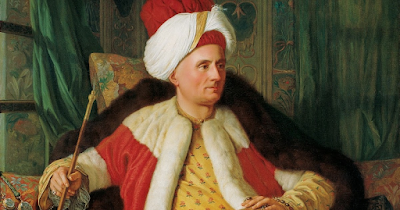
Comte de Vergennes


Unleashing a Master Spy

From his Rue du Faubourg Saint-Honoré estate, Stormont took this as a dire threat. His network, funded by Whitehall subsidies and coordinated with Loyalist exiles, became Britain’s eyes and ears in a city full of conspiracy. At the core of Stormont's operation was Dr. Edward Bancroft, a Massachusetts-born physician and chemist whose scientific credentials masked his duplicity. Recruited in March 1776 by British secret service agent Paul Wentworth, a wealthy Loyalist tobacco merchant acting as Stormont's intermediary, Bancroft had infiltrated the American mission.


Edward Bancroft

Placement and Access

Serving as Silas Deane's secretary—the Connecticut merchant tasked with buying munitions—Bancroft gained access to Franklin's villa in Passy, a hub of covert diplomacy. From there, he documented every detail: Vergennes' promises of gunpowder, arms shipments disguised as commercial cargo; the negotiations over loans to fund the American cause. Bancroft’s use of spycraft was brilliant. He used stain (invisible ink), hidden papers, and pseudonyms.

Silas Deane


Sophisticated Spycraft

He made weekly visits to a “dead drop" in a crevice at the base of a tree on the south terrace of the Jardin des Tuileries. Stormont dispatched his private secretary, Thomas Jeans, who retrieved these drops under the cover of darkness. Stormont’s instructions and new requests for intelligence were also left by Jeans, often accompanied by payments of up to £500 annually.

Jardin des Tuileries 


Exquisite Intelligence

By April 1777, as negotiations between France and America intensified, Bancroft's leaks included verbatim transcripts of commissioners' minutes and drafts of the 1778 Treaty of Alliance. One dispatch, smuggling the final version of the treaty, reached King George III within 48 hours of its signing in Paris, allowing Britain to prepare naval responses.

King George III


Démarcheing the Bourbons

Stormont used this intelligence in heated meetings with Vergennes, citing specifics to accuse France of violating the 1776 Treaty of Commerce and demanding inspections—his démarches spawned hesitation and bought Britain months of breathing space. 

Signing the Treaty


An Army of Agents

His influence reached the Atlantic ports of Lorient, Brest, and Nantes, which were crucial points for American supplies. Here, a network of embedded agents—dockyard foremen, corrupt customs officials (douaniers), and bribed ship chandlers—monitored rebel privateers such as the USS Reprisal, commanded by the daring American Captain Lambert Wickes.

USS Reprisal


Stormont’s informants tracked illegal exchanges: American tobacco and indigo were traded for Charleville muskets and gunpowder, which was routed through Roderigue Hortalez et Cie.

Actionable Intelligence

In July 1777, Lambert Wickes' squadron escorted a Dutch convoy loaded with arms past Ushant. Stormont's informers provided intelligence that led the Royal Navy to intercept the convoy, seizing prizes worth £100,000. As the British ambassador, he issued a strong démarche to Versailles. This pressured Vergennes to issue mild protests against "illegal" sailing.  Although enforcement was pro forma, Stromont’s protests delayed France’s full naval involvement until 1778.

Illegal Sailing


French Mole

Meanwhile, spymaster Stormont developed a mole within the Foreign Ministry's Archives Section—a junior archivist, possibly bribed with 500 louis d'or—who stole dispatches from locked cabinets.

Lord North


Breaking into the Quai d'Orsay's bureaucracy was a master stroke against the French.  These stolen dispatches revealed Franco-American subsidies, as well as overtures to Spain's Charles III for a Mediterranean diversion against Gibraltar. Stormont forwarded copies to London via secure couriers, helping Prime Minister Lord North lobby neutral European nations, such as the Dutch, against Bourbon plans.

Unplugging the Electrician

But no target infuriated Stormont more than Franklin, the "electrician of sedition,” whose charm threatened French neutrality. Intercepts exposed Franklin's secret letters to William Petty, the second Earl of Shelburne, a Whig opposition leader who called the war "madness" in Parliament and secretly provided £10,000 to American agents such as Arthur Lee.

Benjamin Franklin


In a slick psychological operation, Stormont leaked "correspondence" accusing Franklin of treasonous dealings—leaking rebel plans to Lord Shelburne for personal gain. These accusations were circulated in London newspapers and Paris coffeehouses, sparking a scandal. 


Lord Shelburne

Angered at the false reports, Shelburne fought a duel with his purported accuser, Colonel William Fullarton, in Hyde Park, but both survived unscathed. This episode damaged trust within the American delegation, with Deane suspecting Lee of leaks and making French courtiers wary of deeper involvement. It also provided the predicate for my fifth novel in the Yankee Doodle Spies series, The Reluctant Spy.

Success and Failure

Lord Stormont’s web of espionage delayed French arms shipments, kept London apprised of secret negotiations, and sowed discord among both French and American diplomats. However, Stormont's efforts in Paris could not stop the momentum of support for America by France, Spain, and the Netherlands.


Admiral d'Estaing


After the treaty of alliance was signed in 1778, French fleets under Admiral d'Estaing sailed for Savannah, shifting the war. Stormont, whose protests were ignored, was recalled that June — bringing a great sigh of relief to Vegennes and Franklin. Although his network dissolved, its efforts had sustained the British struggle for two more years—a testament to the power of espionage in the forging of revolution.

The Peer's Postscript

In a final note, Edward Bancroft's treason to America was not revealed in 1889 — from Stormont's secret papers—highlighting how Britain’s intelligence secrets were sustained over many decades.


Wednesday, August 27, 2025

The Clockmaker's Gambit

 Beaumarchais and the  Cause of Liberty

In April 1775, the American colonies had burst into open rebellion against King George III. In the glittering salons of Paris, whispers of liberty mingled with the clink of wine glasses as the nobility watched the war in America unfold from afar. Some volunteered to join the fight, defying their King Louis XVI's wishes. Most simply read the bulletins and broadsheets, whispering their support.


Beaumarchais: Clcomaker, Playwright & Spy


But a commoner, a clockmaker and part-time playwright, was weaving a web that would stretch across the Atlantic and help give birth to a nation. Pierre Augustin Caron de Beaumarchais, a watchmaker turned playwright, was about to help elevate the most significant rebellion of the century.

The Clockmaker

Born in 1732 to a Parisian clockmaker, young Pierre Caron was no stranger to tinkering. His skillful fingers crafted timepieces so fine they caught the eye of King Louis XV’s court. By his twenties, he had charmed his way into Versailles, teaching harp to the royal daughters and earning the noble suffix “de Beaumarchais” through a clever marriage and a talent for reinvention. His skills brought him close to young Louis XVI, an amateur clockmaker.


18th-century Century Clocks were 
High Tech Gadgets of the Age

The Playwright

But clocks and courtly manners were just the beginning. Beaumarchais had a restless mind, thriving on the stage and in the shadows. His plays, like The Barber of Seville and The Marriage of Figaro, delivered sharp jabs at the aristocracy, earning him both applause and enemies. His plays drew the King's ire and were banned, but later revived as operas by Mozart. By the 1770s, he wore many masks: dramatist, merchant, and secret agent for the French crown.


Scene from Marriage of Figaro

A Complex Script

But it was in a different kind of play where Beaumarchais truly found his calling. France, still sore from its defeat in the Seven Years’ War, saw a chance to poke Britain in the eye by aiding the American rebels. But Louis XVI, cautious of open war, needed plausible deniability. Beaumarchais's flair for drama made him the perfect man to orchestrate a covert operation. 


King Louis XVI

In 1775, he met with American agents in London, including Arthur Lee, a Virginia lawyer with a fiery patriot’s spirit. Lee’s stories of colonial resolve ignited a spark in Beaumarchais. Here was a cause that blended profit with principle—a chance to arm the rebels, weaken Britain, and help rearm France.

The Pitchman

Beaumarchais pitched his plan to Foreign Minister Comte de Vergennes with the enthusiasm of a man promoting a hit play. “Sire, the Americans need muskets, powder, and cannon,” he argued. “Let me supply them through a front—a trading company. France stays clean, Britain is caught off guard, and liberty wins.” Vergennes, no fool, saw the merit. 


Comte de Vergennes


By 1776, Beaumarchais had created Roderigue Hortalez & Compagnie, a front (a sort of shell) company that acted as both merchant house and espionage hub. With a million Livres from the French treasury (and another from Spain, persuaded by Beaumarchais’ silver tongue), our playwright got to work.

Secret Script

Imagine a busy office in Paris, clerks scribbling invoices, while in the back room, Beaumarchais haggles with arms dealers and dodges British spies. The operation was a dangerous game. Britain’s spies prowled the docks, looking for French interference. 


Back-room Scheming and Planning


Beaumarchais wrote coded letters, used aliases like “Durand,” and spun stories to mislead the enemy. One moment, he was a merchant shipping “cloth” to the West Indies; the next, he was smuggling muskets to American privateers. His ships, loaded with 200 cannons, 25,000 muskets, and tons of gunpowder, sailed under neutral flags to ports like Saint-Domingue, where American agents waited.


Stormy Reviews

But the sea was no friend to Beaumarchais. Storms, British patrols, and shoddy captains sank half his cargoes. Worse, the Americans were slow to pay. Congress, short on cash, sent promissory notes and tobacco instead of money. 


Stormy Seas, Secret Cargoes

Beaumarchais was under pressure but kept going, driven by a mix of ideals and ambition. His supplies arrived at critical moments for General Washington’s army. At Saratoga in 1777, American troops, armed with French muskets, crushed General Burgoyne’s redcoats—a victory that convinced France to join the war openly. Beaumarchais’ guns had tipped the scales.

The Clock Strikes

Despite his successes, Beaumarchais’ life was a risky balancing act. His enemies at court, jealous of his influence, whispered accusations of treason. His debts piled up as Congress delayed payments. In 1777, he faced brief exile after a duel gone wrong but bounced back, ever the survivor. His plays kept him in the public eye, their sharp wit echoing his own defiance. The Marriage of Figaro, banned for its cheek, was a jab at the old order—a nod, perhaps, to the American rebels he admired.

Resetting the Clock

By 1778, France’s formal alliance with America changed Beaumarchais’s role. His secret trading gave way to official French aid. But he kept scheming, running spy operations for Vergennes, uncovering British plans, and even outfitted ships for privateering to harass British trade.  These activities were less about traditional espionage and more about logistical coordination to disrupt British supply lines. For instance, Beaumarchais used his network to monitor British merchant vessels, enabling privateers to target them effectively, which indirectly supported the Allied war effort.


Doctor Franklin


His Paris home became a hub for American envoys like Silas Deane and Benjamin Franklin, who valued his charm and connections. Franklin, in his fur cap and with a sly grin, called Beaumarchais “a genius in his way,” though he joked about Beaumarchais’ endless requests for repayment.

Winding Down

By 1779, his focus increasingly shifted to settling financial disputes with the Continental Congress over unpaid debts for earlier covert aid, decreasing his role in intelligence-gathering. The war’s end in 1783 didn’t bring peace for Beaumarchais. Congress owed millions, but American funds were limited. He spent years chasing debts, with his wealth shrinking.


Peace celebrated in Paris


The Clock Strikes Midnight

When the French Revolution broke out in 1789, Beaumarchais supported its ideals but recoiled at its violence. Accused of hoarding arms, he fled to Germany, returning only after Robespierre’s fall. He died in 1799, his life a whirlwind of victories and setbacks.


Storming the Bastille Launched the Revolution


Curtain Call

Beaumarchais saw America’s fight as a reflection of his own struggles against privilege and authority. His plays mocked the nobility; his guns supported the rebels. He was a man full of contradictions—a courtier who despised tyranny, a profiteer risking everything for a cause.


Saturday, May 31, 2025

The French Fox

Although action and intrigue are the hallmarks of the Yankee Doodle Spies series, the war was, in fact, mainly won through the latter. Intrigue, fortified by no small dose of guile, enabled the rebel American colonies to throw off the yoke of the British Empire. They also received a little help from their friends, particularly a Frenchman who played the great game of international diplomacy through a mix of statesmanship, espionage, and deception. 

Charles Gravier, comte de Vergennes

 Charles Gravier, Comte de Vergennes, was a shrewd statesman who orchestrated a complex diplomatic strategy against France’s despised enemy, Great Britain. He maintained a calm and accommodating demeanor with his opponents and even kept his friends and allies on their toes.

Burgundian Roots

It is almost ironic that this relentless foe of Britain originated from an ancient ally of the English and an adversary of France, the Grand Duchy of Burgundy. However, when Charles Gravier was born in Dijon on a chilly December day in 1719, the region was merely a province of France. Gravier’s father was a local magistrate, respectable but not particularly high in the French social hierarchy.

Dijon, Capital of Burgundy

Following in his father’s footsteps, young Charles studied law. Eschewing the military or clergy that ensnared so many sons of the elites, he entered the French diplomatic service at the age of twenty. Soon, his patience, intellect, and knack for intrigue set him on a lifetime trajectory that would change the world.

A Diplomat’s Rise

 Vergennes’ early posts provided the training of a diplomat and a spy. His apprenticeship began in Lisbon in 1740 during the heated years of the War of the Austrian Succession. He learned to read a room, assessing the strengths and weaknesses of couriers and diplomats—and their true intentions.  Postings in Bavaria and the Palatinate followed. More challenging was the 1755 plum posting as ambassador to Istanbul (formerly Constantinople), where the Ottomans and diplomats of the Russian Empire tested his wiles.

Istanbul

Experience in the Byzantine world of the formerly Byzantine Ottoman Empire prepared him for later challenges, like Sweden in 1768. There, he faced his Russian adversaries once more, employing a mix of charm, persuasion, espionage, and gold to keep the court’s pro-French party in power and the Swedes who favored Catherine the Great's Russia out. 

Gravier: Ambassador to the Sublime Porte


These posts schooled Vergennes in the art of high (and low) diplomacy, and foreshadowed what the mastermind could do when he reached the next level in the diplomatic corps.

Catherine the Great, Czarina of Russia

The next level emerged when Louis XVI ascended to the throne in 1774. Now a seasoned diplomat, Gravier would take on the challenge of a lifetime, guiding a France weakened by the Seven Years' War back to the center of the world stage as foreign minister. A year later, events across the ocean would provide that opportunity.

Exploiting Revolution

In the spring of 1775, the slow-burning insurrection in the American colonies erupted into a powder keg of revolutionary warfare. Even from far-off Versailles, the canny Vergennes could smell opportunity, if not the gun smoke. The catastrophic treaty ending the Seven Years’ War had torn away France’s most valued colonies—Canada was gone, India had been diminished, the West Indies islands were lost, West Africa had been lost to Britain, and Louisiana was given to Spain as compensation. France might not regain any of its lost colonies, but it sought revenge. The prickly American colonists now allowed Vergennes to bleed Britain dry.

Action at Lexington Brings War to America

Vergennes was no friend of liberty. He played a power game, using the Yankees as his baseball bat. While Britain’s army and navy were bogged down, France had a chance to regain its power and prestige. He dispatched agents to investigate the rebels. Were they tough enough to endure? Could they fight the world’s most powerful military? Vergennes wanted answers before he risked his nation.

Black Operations

When America’s first envoy, Silas Deane, turned up in Paris in 1776, with his hand out, looking for aid. Vergennes kept it low—he was not ready to connect France to the rebellion. But a covert op might buy him time. When Pierre-Augustin Caron de Beaumarchais, a playwright with a sideline in skullduggery, approached him with a secret scheme to help America (and harm the Anglais), Vergennes consented.  With Vergennes looking the other way, he set up a fake trading outfit called Roderigue Hortalez et Cie. This front company shipped muskets, powder, and cannons across the ocean with tobacco and other cash crops sailing to France, where they'd sell and the profits then used to replace the French munitions and ordnance.  At the same time, France had plausible deniability (it was a Spanish firm). The ports of France became smuggling hubs, with crates marked for “private merchants” ignored by French customs officials.  

Beaumarchais: Playwright and Schemer

Enter Doctor Franklin

The stakes grew higher when the most famous American in the world, Benjamin Franklin, wandered into Paris in December 1776. Franklin’s fur cap and homespun wit charmed and disarmed everyone from salon ladies to shopkeepers. Vergennes wisely let Franklin-mania work the crowd but kept the serious business behind closed doors. Despite Franklin's charm offensive, Gravier remained adamant. He would not risk an open alliance until the Americans produced a major battlefield victory.

Benjamin Franklin

 Turning Point

That happened in October 1777. A British invasion from Canada was defeated in two fierce battles, leading to the British surrender at Saratoga, New York. Paris was in chaos when news of the victory arrived. For his part, Vergennes now had proof of success and began persuading the still-antsy King Louis XVI to officially support the American cause.

Turning Point: Saratoga Surrender

On 6 February 1778, France and the United States signed two treaties. The Treaty of Amity and Commerce primarily aimed to promote trade and commercial relations between the two nations. The Treaty of Alliance established military cooperation against Great Britain during the American Revolutionary War. Just like that, France was at war with Britain, and Vergennes was all in. But the ever-cautious King Louis delayed a public proclamation until Late March.

Signing the Treaty of Amity

This war would be expensive, and Vergennes secretly pursued support from Spain and the Netherlands. Despite diplomatic and secret maneuverings, Spain did not join until 1779, with the stated goal of reclaiming lands lost to the British, specifically West Florida and Gibraltar, rather than aiding the upstart Protestant rebels. Although they had been secretly lending to the Americans, the Dutch did not join until 1780. Vergennes’ diplomatic tour de force had finally paid off.

City of Spies

Paris during the Revolution rivaled Cold War-era Berlin as a hub of intrigue. Spies lurked in every tavern and salon, the British sniffing out American plans, the French tracking British agents, and Spain’s agents gathering on behalf of His Catholic Majesty. Vergennes’s counterintelligence was everywhere: surveilling diplomats, intercepting letters, and planting false leads. One wolf in sheep’s clothing was Edward Bancroft, Franklin’s secretary, who was feeding secrets to London. Despite his agents’ best efforts, Vergennes did not uncover Bancroft’s treachery, which stayed hidden till later. Some believe Franklin was in on the treachery and exploited it.

Spy: Edward Bancroft


France at War

Versailles was replete with naysayers on the alliance (perhaps persuaded with British gold), and they yapped at the always wobbly Louis. However, the Foreign Minister was now fully aligned with the Americans, ensuring that the flow of aid never stopped. But America’s real need was French military might, especially its navy. Despite some early fits and starts, when it came, it proved decisive.

Chesapeake: The French Fleet Played a Decisive Role

Now was the time for the vengeance Vergennes struggled so long to achieve.  Troops and ships sailed to the New World to join the Americans and exact that vengeance. Franco-American efforts faltered at Newport, Rhode Island, and Savannah, Georgia. Still, the 1781 Yorktown campaign, where French troops and ships under Rochambeau and de Grasse sealed Cornwallis's troops on the York River in tidewater Virginia, was the brainchild of Vergennes.

A Separate Peace

The surrender of Lord Cornwallis at Yorktown convinced the British that the game was over. But what they could not win on land and sea, they would try to win at the peace table. The spy-versus-spy atmosphere in Paris intensified further when the British and American peace commissioners began sparring over the details, such as boundaries, fishing rights, trading rights, western land ownership, and Indian affairs.

French Support Made Yorktown Possible

Vergennes worked to align the interests of France, Spain (a French ally, not an American one), and the United States during peace negotiations. He pushed for a unified approach to ensure that the Americans coordinated with French interests.  However, the Americans sometimes acted independently, to Vergennes' frustration.

Peace of Paris

Vergennes spent most of his time on the broader peace process. The Treaty of Paris was part of a series of agreements collectively known as the Peace of Paris. That resolved the global conflicts among Britain, France, Spain, and the Netherlands. He negotiated terms for France, securing minor territorial gains (like Tobago and parts of Senegal) and protecting French interests in the West Indies and India.

Celebrating the Treaty of Peace with Britain in Paris

Vergennes was leery of American commissioners skirting French guidance.  And with good reason. They signed a preliminary peace agreement with Britain in November 1782 without consulting France fully and violating the terms of the 1778 alliance. Despite this, Vergennes accepted the outcome, recognizing that American independence aligned with France’s overall goal of weakening Britain. Vergennes signed his own treaty with Britain the following year.

Cost of Empire

Vergennes' service came at a cost. In 1781, King Louis appointed him as his Chief Minister, combining the roles of Foreign Minister and Prime Minister. Long days and nights of toil and the pressure of orchestrating financial, diplomatic, intelligence, and even military affairs strained him mentally and physically to the point where, on February 13, 1787, he keeled over at 67. He passed away just as France’s war debts started fueling talk of revolution. Some say Vergennes’ great gamble on America bankrupted France, which eventually led to the French Revolution in 1789. 

But hindsight is fifty-fifty. Charles Gravier’s goal was to check British hegemony and restore French glory. To that end, he succeeded. As for the French Revolution? Even the greatest and most perceptive minds cannot see the future. Who in 1778 would have thought King Louis's support for America would ultimately result in a trip to the guillotine? But one might speculate that with him guiding the vacillating King Louis, the nation and the monarchy might have avoided the chaos of the French Revolution and the carnage that it brought to France and the world.

King Louis XVI

Americans owe a debt to Charles Gravier, Comte de Vergennes—the man who viewed a ragged revolution as France’s opportunity. His cunning and insight were instrumental in America’s founding alongside the Minutemen and Continentals. Lauded neither in France nor America, the diplomat from Dijon played a pivotal role in the birth of a nation and changing the world like few others have.


Alliance Rosette Worn By Continental Army Officers


Sunday, February 12, 2017

Rodrigue Hortalez & Cie.


As I began my research into the American War for Independence to gain background and context for the Yankee Doodle Spies novels, I uncovered many things I had not known or even imagined existed. The struggle for independence was long and complex, featuring, in addition to traditional aspects of warfare, civil war, insurgency, guerrilla warfare, diplomacy, piracy, espionage, counterespionage, code-breaking, propaganda, spying, and covert operations.


A Secret War


Not widely known, the French began a covert operation to bolster the American rebels against the British crown. But some French secret activities began much earlier. The King of France, Louis XVI, and his ministers were smarting from the considerable losses of land suffered in the Seven Years' War, known as the French and Indian War in America. France lost all of her North American colonial possessions (except a few small islands off the maritime provinces) and had been militarily humiliated by the British. Shortly after the Treaty of Paris in 1763 was signed, French agents went to the American colonies to sow discord between the colonists and their masters. As the actual conflict drew closer, both the Americans and the British expected some sort of French intervention. The question was where, what, and how?


The French & Indian War cost France her
New World power and global prestige


The Minister


Any intervention would be directed by Charles Gravier, Comte de Vergennes, appointed foreign minister of France by Louis XVI in 1774. Vergennes hated the British, whom he considered France's natural enemy. With Vergennes at the helm of foreign policy, many believed France would be quick to provide aid following the actions at Lexington and Concord in April 1775. But Vergennes and the King moved deliberately. They anticipated another war (of revenge) against the British. They knew France was not yet ready, and they did not think the colonies could succeed. How to proceed?


Charles Gravier, Comte de Vergennes

The Playwright Spy


On the scene comes an unlikely figure: Pierre-Augustin Caron de Beaumarchais, a watchmaker, playwright (Marriage of Figaro, Barber of Seville, etc.), inventor, musician, politician, fugitive, spy, publisher, arms-dealer, and... revolutionary.  Something akin to the "world's most interesting man", Beaumarchais was well known at the highest circles of French society. Louis XVI was an amateur watchmaker and one-time student of Beaumarchais. 


John Wilkes


As America boiled with patriotic fervor and rebellion, Beaumarchais developed a passion for liberty and the colonists' cause. It is no small irony that many in the highly stratified, autocratic French society were also bedazzled by the ideals of the American cause. This included the king and Vergennes - although their bedazzlement was as much an opportunity for revenge as a love of liberty. Beaumarchais approached Vergennes with a proposal to support the Americans. 

At first, Vergennes demurred. He knew the king was not ready to commit to action that might be exposed prematurely. During the run-up to and early months of the American Revolution, Beaumarchais was a French agent in London. He had made numerous secret connections with Americans and British, particularly Arthur Lee and British radical politician John Wilkes. Beaumarchais penned a letter (via Vergennes) to the king in late 1775, proposing a scheme to deliver covert arms to the Americans via the West Indies in exchange for tobacco and other American produce. Louis XVI demurred again at first but soon agreed.


Pierre-Augustin Caron de Beaumarchais- the 
world's most interesting man in an age of
interesting men?

The Company


Arthur Lee
With the king's quiet approval, Vergennes instructed Caron de Beaumarchais to execute his scheme and set up a "proprietary" called Rodrigue Hortalez et Cie. This was a front company whose primary purpose was to protect France's role in aiding the American rebels. Beaumarchais, a master of intrigue, registered the company in Spain and ensured no paper trail could be traced to the French government or any other French public entity. Beaumarchais had "backers" for the company whose identities were kept secret. Beaumarchais engaged the sole American representative in Paris, Silas Deane of Connecticut. Secret correspondence across the Atlantic and into London and Spain set things in motion. Deane would eventually be joined by Arthur Lee and Benjamin Franklin, which would take things into intrigues best left for another time.


Silas Deane played a pivotal role that ended
in controversy and ignominy


The "Business"


When the king approved the operation, Vergennes granted Beaumarchais an initial one million livres (several million dollars) to purchase and ship weapons and other war materiel to the Continental Army. At the same time, Vergennes pressured Spain, which contributed the same amount. Spain chafed at British ascendancy but, suspicious of Americans' intentions in Louisiana, dragged its feet. The crafty and persistent Vergennes soon succeeded in pushing them along. The front company prospered. In its first year of "business," Rodrigue Hortalez et Cie shipped over 30,000 muskets, 100,000 rounds of shot, hundreds of cannons, tents, ordnance, and clothing through New England merchants with shipping connections to the Indies. These items were critical to continuing the war effort, as America, by design, had little industrial capacity. 

The neutral Dutch islands in the Caribbean, such as Sint Eustatius, became a hotbed of clandestine shipping. Experienced American smugglers would navigate around British naval pickets to make secret transactions: typically, tobacco for arms and equipment. France shipped surplus and old (if not obsolete) weapons from its fortresses and armories. The tobacco and goods received were to be sold for cash, which was used to finance the French armaments industry, procuring new weapons for the French armies and navies that would eventually fight Britain. Rodrigue Hortalez et Cie continued in business for two years.


Sint Eustatius was a major transit point for
the secret weapons-for-goods trade


The Covert War goes Overt


Franklin and Lee's arrival heated up the diplomatic situation as Franklin, surrounded by British agents, employed a masterful stratagem to woo the French public and ruling class. Yet the covert war had long been established by Deane and Beaumarchais. Now, however, Beaumarchais faded into the shadows, and Deane was soon recalled to America on corruption charges that were never proven. 

After the Continental Army soundly defeated the British at the Battle of Saratoga in October 1777, things changed dramatically. France entered into an alliance with the infant United States in early 1778, while a reluctant Spain finally declared war on Britain in 1779. Still suspicious of the Americans, Spain allied itself only with France. Regardless, much more aid was now shipped to the colonies, this time openly, in the bellies of warships and transports, rather than under cover of the covert and private enterprise that was Rodrigue Hortalez et Cie.


Benjamin Franklin waged a masterful subterfuge and
charm offensive as commissioner in Paris


The Legacy of Untidy Business


As the war's progress made Rodrigue Hortalez et Cie unnecessary, some "unfinished business" fell to the American Commission in Paris, which now included John Adams in place of Deane. The correspondence below offers a glimpse into the untidiness of wrapping up covert affairs... even in the time of the Yankee Doodle Spies...


From the American Commissioners

To Comte de Vergennes

Sir
By some of the last Ships from America, we received from Congress certain Powers and Instructions, which we think it necessary to lay before your Excellency, and which we have the Honor to do in this Letter.
We have the Honor to enclose to your Excellency a Copy of the Contract made between the Committee and Mr. Francy, a Copy of Mr. Francy's Powers, and a Copy of the list of Articles to be furnished, according to that Contract, that your Excellency, may have before you all the Papers relative to this Subject.
We are under a Necessity of applying to your Excellency upon this Occasion, and of requesting your Advice.
With Regard to what is passed, we know not who the Persons are, who constitute the House of Roderigue Hortalez & Company, but we have ever understood, and Congress has ever understood, and so have the People in America in general, that they were under Obligation to his Majestys good will, for the greatest part of the Merchandizes, and Warlike Stores heretofore furnished, under the Firm of Roderigue Hortalez & Company. We cannot discover that any written Contract was ever made between Congress or any Agent of theirs, and the House of Roderigue Hortalez & Co., nor do we know of any living Witness, or any other Evidence, whose Testimony can ascertain to us, who the Persons are that constitute the House of Roderigue Hortalez & Company, or what were the Terms upon which the Merchandises and Munitions of War were supplied, neither as to the Price, nor the Time or Conditions of Payment.
As we said before, we apprehend that the United States hold themselves under Obligation to his Majesty, for all these Supplies, and we are sure it is their Wish and their Determination to discharge the Obligation to his Majesty, as soon as providence shall put it in their Power. In the mean time, we are ready to settle and liquidate the Accounts according to our Instructions, at any time and in any Manner, which his Majesty, or your Excellency shall set out to us.
As the Contract for future Supplies is to be ratified, or not ratified by us, as we shall judge expeditious we must request your Excellencys Advice as a favor upon this Head, and whether it would be safe or prudent in us to ratify it, and in Congress to depend upon Supplies from this Quarter, because if we should depend upon their Resource for Supplies, and be disappointed, the Consequences would be fatal to our Country. 

We have the Honor to be
 with all Respect Your Excellencys
 most Obedient and very humble Servants

B Franklin
Arthur Lee
 John Adams