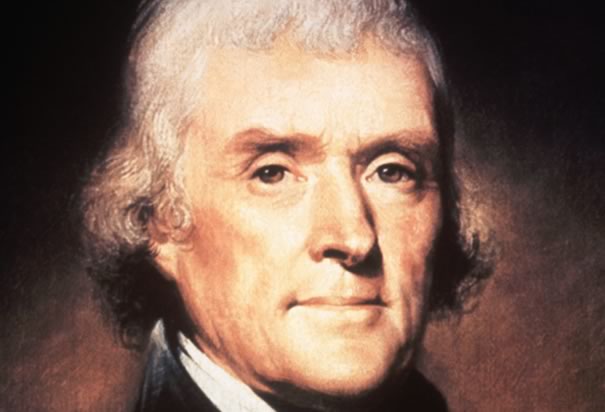
N.B. This is an edited reprise of an earlier post on the subject. With Father's Day tomorrow, I decided to revisit the tragic case of the Lynch father-son team.
Who’s your Daddy?
Who’s your Daddy?
There were many father-son pairs during the American War of Independence, especially in the local militia units that fluctuated with the intensity of hostilities. However, some served at the highest levels of the Revolution. The Lynches were one such duo.
Father-Son Signers...
Thomas Lynch Sr. was the son of Jonas Lynch from the Galway branch of the Lynch family, who were expelled from Ireland after their defeat in the Irish wars of William of Orange. Jonas Lynch came to America and became a successful planter. His son Thomas was born in Berkeley County, South Carolina, in 1727.
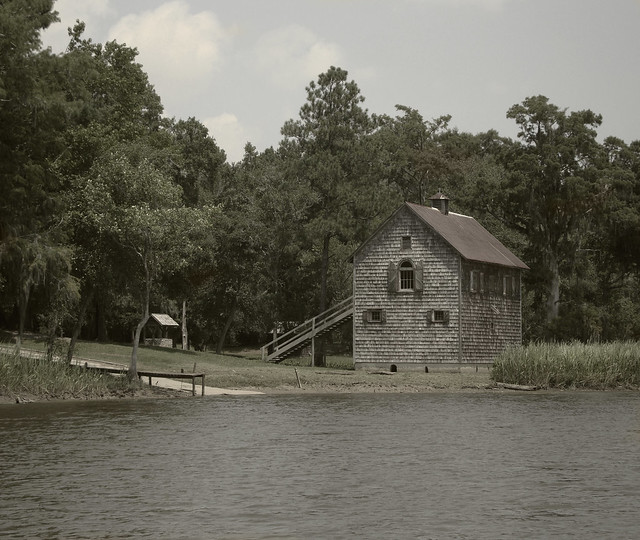 |
| Eighteenth-century rice house |
By the time his son Thomas Jr. was born in 1747, he owned a large estate called Hopsewee Plantation along the North Santee River and other watercourses. He was also active in politics. As tensions with Britain grew, the elder Lynch became a prominent and often fiery supporter of the revolution. He later served in the Continental Congress from 1774 to 1776. The senior Lynch was set to sign the Declaration of Independence for South Carolina, but he suffered a massive stroke early in 1776.
With the father fallen, the South Carolina Assembly appointed his son, Thomas Lynch Jr., to succeed him. Thomas Jr. was born at Hopeswee and, unlike his father, had the benefit of a top-tier education. He attended prestigious schools in America and then Eton, Cambridge, and finally studied law in London. He returned to America and married well. He then went into planting. As the heir of a passionate revolutionary and influential man in the colony, Lynch Jr. naturally took a keen interest in politics. He enjoyed strong support from voters. During 1774-76, while his father served in the Continental Congress, he worked on the home front, attending the first and second provincial congresses as well as the first State legislature and sitting on the State constitutional committee.
A Military Career Curtailed
In 1775, Lynch took a captaincy in the First South Carolina Regiment of Continentals. This upset his father, who wanted to use his influence to secure a higher rank for his son. Unfortunately, young Lynch caught bilious fever (an intestinal fever) while on recruiting duty in North Carolina. Sick and unable to serve, he had to give up his promising military career.
The Stand-In
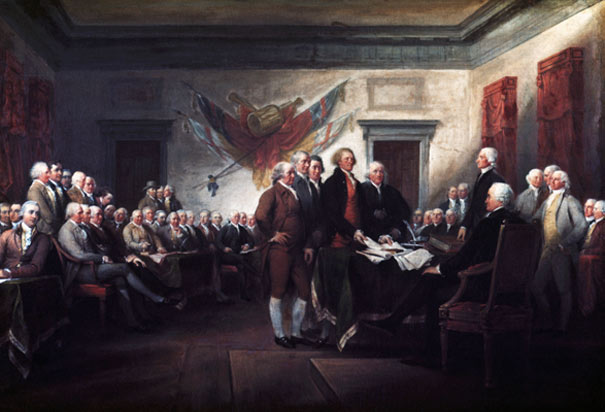
But in the spring of 1776, when Thomas Sr.’s condition became critical, South Carolina’s Assembly elected Thomas Jr. to the Continental Congress. Despite facing his own serious health issues, the younger Lynch dutifully traveled to Philadelphia, where he stayed for the entire summer. During that revolutionary season, he was able to vote for and sign the Declaration of Independence at just twenty-seven years old. The Lynches were the only father-son pair to serve simultaneously in the Continental Congress.
 |
| Signing the Declaration of Independence |
Double Tragedy
Political triumph was met with personal tragedy, and more blows to the patriot family were yet to come. Both Lynchs' health worsened, and by the end of the year, they headed homeward. En route, in Annapolis, MD, a second stroke took the life of the senior Lynch. Thomas Jr. returned home a broken man—physically and emotionally. Late in 1779, he and his wife traveled to France in an attempt to regain his health. They sailed for the Dutch island of St. Eustatius in the West Indies to find a ship to return across the ocean, but a storm struck, and their ship was lost at sea.