Followers

Showing posts with label Yorktown. Show all posts

Wednesday, May 29, 2024

The Enslaved Spy

 A Secret Meeting

James Armistead stood before Lafayette in tattered work clothes and a ragged jacket. Months earlier, he had offered his services to the Continental Army and became a spy in the traitorous Benedict Arnold’s camp. His secret reports enabled Lafayette to wage a brilliant campaign to check, if not repulse, the renegade Arnold, now a Brevet Brigadier General in British employ.


Lafayette and Armistead

“Is spying on Lord Cornwallis the same as spying on Arnold?”

Armistead’s coal-black eyes flashed. “It’s always more satisfying to deceive a deceiver, sir.”

Lafayette smiled mischievously. “Well put, Monsieur Armistead.”

“Sir, it’s better if you just call me Junius.” His eyes shifted left and right. “You know, just in case.”

The comment impressed Lafayette, and he nodded in agreement. He eyed the papers Armistead had drawn up. The spy’s reports were always concise and precise. “Are you sure of this, Junius?”

“Indeed, sir. If you move forces to that position at that time, you will deny General Cornwallis his last chance of reinforcement and, more importantly, replenishment. His men also suffer miserably from lack of food and other vitals. Even their officers mumble about it.”

Lafayette nodded. “How fitting, as the Americans have gone all these years of struggle on empty bellies and wearing….” He paused as he eyed the rags on Armistead’s back. “Insufficient clothing.”

“It will be dark soon. I must return as soon as I have the cover of the night.”

Lafayette eyed the man with wonder. “You have risked your neck for many months. That is commendable enough for any man, but for a slave, it is a thing of wonder.”

“I believe in the cause and that I will justly earn my liberty.”

Lafayette’s head moved slowly from side to side. “I truly hope so.”

Enslaved Spy

The above excerpt from my novel, The Lafayette Circle, is a fictionalized event. Still, it portrays the actual derring-do of a man whose commitment and courage transcended his race, his welfare, and his bondage. Just who was this man? James Armistead was a slave owned by one Wallace Armistead of New Kent County, Virginia. Born on his master’s plantation, little is known of Armistead’s early years. Even his birth year is debated—estimates range anywhere between 1746 and 1760.


Area of Armistead's Birth and Yorktown Campaign

In 1781, the Marquis de Lafayette was leading American forces near Yorktown, where the British commander, Major General Charles Cornwallis, and his Army had dug in. The Franco-American forces were enroute. It was Lafayette’s task to prevent Cornwallis from escaping the cauldron he was soon to be in. When young James Armistead received permission from Wallace to join the American Army, it was with the proviso he would remain a slave after his service.

Lafayette’s Agent

Lafayette, a champion of emancipation, might have had other ideas, but he needed the services of the young man who knew the area—he needed a spy. Since the British emancipated escaped slaves, that became Armistead’s cover story when he entered the British camp as Juniper, the runaway. His task initially was to courier intelligence from spies behind British lines. When they learned he belonged to a local planter, the British took no heed of the young black man.


British camp at Yorktown


Armistead’s race and status as an enslaved person were perfect—his lowly position enabled him to slip in and out of both sides' camps without drawing attention. His knowledge of the land helped him to avoid detection when needed and find the best routes to travel. The unsuspecting British paid him no heed as he ambled through the camp, listening to conversations.


Benedict Arnold


Slipping out of camp, he would bring Lafayette details on British plans, capabilities, and, most of all, the state of their morale. The British trusted him. At one point,  the traitor Benedict Arnold tasked Armistead to gather information directly from Lafayette’s headquarters. By the height of the Yorktown campaign, Arnold had gone back to New York. Cornwallis was holed up in the port on the York River, hoping for reinforcements from General Henry Clinton, the British commander-in-chief.

Double Agent

As the stakes grew higher, Cornwallis grew desperate and decided to use him to spy on the Americans, tasking him to bring back information on American troop strength and movements. Armistead was now a double agent, playing the dangerous game in the espionage business. Of course, he reported right to Lafayette, who decided to use the opportunity to deceive his opponent—a classic use of a double agent.


Major General Charles Cornwallis

Deception

Lafayette scribbled a letter to American general Daniel Morgan, citing completely bogus units. After crumpling it up and rubbing some dirt on it, Armistead tucked it in his jacket and took off. Once in the British camp, he told the officers questioning him that he had observed American regiments marching and was returning with the “intelligence” when he found the paper on the road. Explaining he could not read it but took it just in case it might prove of value. Upon reading the note, the British were impressed with the intel coup.


Armistead's note fooled the British


Armistead’s daring had helped Lafayette pull off a high-stakes deception—the appearance of new units kept them on the defensive. The British would soon face the combined Franco-American forces and capitulate at Yorktown on 19 October 1781.


Yorktown Surrender


An unlikely postscript written years later (in the 19th century, in fact) puts Armitage at a post-surrender dinner where General Washington hosted Cornwallis. The vanquished British general is said to have remarked. “Ah, you rogue, you have been playing me a trick all this time!”

Struggle for Freedom

James Armistead’s post-war fate was a sad reminder of the cruelty of slavery and the law. The Virginia Emancipation Act of 1783 granted manumission to slaves who rendered considerable military service to the cause. In a cruel twist of fate, Armistead’s service as a spy was not deemed military service, and thus, he remained the property of Wallace. As egregious as this seems, one needs to remember that a spy was considered contemptible and spying dishonorable to the eighteenth-century mind.


James Lafayette Armistead

However, the good angels finally intervened when General Lafayette endorsed James Armistead’s petition for freedom to the Virginia Assembly, which they granted in 1787. To honor the man who came to his aid, James, on manumission, officially changed his name to James Armistead Lafayette.


Lafayette's letter helped bring freedom

Freedom and Friendship

The freeman James Armistead Lafayette purchased land in New Kent County. Eventually, he married and had children. Like so many other veterans of war, he fought a long-standing battle to gain a pension, which he finally received in 1819. When General Lafayette made his celebrated tour of America in 1824, he acknowledged Armistead at the Yorktown commemoration. Before the assembled crowd, the spymaster embraced the spy—a unique event and a fitting recognition for the former slave’s bravery and resourceful service to the Glorious Cause.


Yorktown Victory Monument


Monday, September 14, 2020

Tinkerer, Sailor, Soldier, Surgeon

A Connecticut Yankee


Many of our early patriots were accomplished men of letters—lawyers, judges, planters, and merchants—but relatively few were involved in science and technology. David Bushnell belongs to the latter group. Born in Saybrook, Connecticut, on August 30, 1742, he was the son of a farmer. As the eldest of five children, he grew up working on the family farm near Westbrook. After his father died in 1769, he sold his half interest in the farm to his brother Ezra and entered Yale College in 1771.


David Bushnell


Bombs to Boats


While at Yale, he became intrigued by the idea of underwater explosions. An inventive tinkerer by nature, Bushnell successfully combined a black powder charge with a clockwork timing device, creating the first naval mine. He used this knowledge not only in building the underwater mine but also later in making floating torpedoes that exploded on contact. 

He worked with the wealthy New Haven inventor and manufacturer Isaac Doolittle to develop the first mechanically triggered time bomb as well as the first screw propeller. As he worked on developing a practical delivery system for this unique weapon, the start of the American War for Independence gave a new sense of urgency to his efforts. 

By fall that year, he had designed and built the American Turtle (better known simply as Turtle), a primitive submarine. He named it Turtle because it looked like two turtle shells lashed together. It wasn't pretty, but it worked.


Turtle Design Sketch


Test and Evaluation


Gen Israel Putnam
This primitive submarine was operated by a single operator, who powered it with two hand-cranked screw propellers. A system of water pumps took in and expelled water to control the craft's climb or descent, which could reach a depth of about 15 feet. The pilot had a small conning tower with several windows. The tower contained a depth gauge and a phosphorus-lit compass. 

The Turtle’s punch was Bushnell’s original clock/mine combination connected to a metal drill engineered to bore through the copper sheathing coating the hulls of British warships. Once the mine was attached and released, the timing mechanism engaged, giving the Turtle one hour to escape before a 150-pound charge exploded, detonated by a flintlock trigger device. 

Bushnell arranged a successful demonstration, essentially a “demval” in today’s acquisition parlance. Present for the event on the Thames River was Connecticut General Israel Putnam, who urged the American government to continue funding for its “full operational capability.”


Turtle Replica


Run Silent, Run Deep - Sorta


History was made in the summer of 1776 when the Turtle attacked the British fleet anchored in New York Harbor under the command of Admiral Richard Howe. Unfortunately, Bushnell fell ill, and a sergeant named Ezra Lee volunteered to take his place. On the night of September 6, a pair of whaleboats towed the Turtle offshore, where it began its attack. Pumping feverishly, Lee slowly guided the Turtle toward the British fleet. 

Despite challenging tides, Lee managed to reach the primary target, Lord Howe’s flagship, the 64-gun ship of the line, HMS Eagle. The Turtle’s drill failed to penetrate the hull because it was blocked by an iron bar. With air running low, Lee abandoned the effort and released the mine, which floated free. The mine ultimately exploded in a massive blast that sent a plume of water into the night sky. 

The unexpected iron bar prevented what could have been a disastrous hit to a major target, potentially changing British naval tactics for the rest of the war. See my Yankee Doodle Spies post on "The Boat" for a more detailed discussion of this attack.


Bushnell's Turtle takes on HMS Eagle
and initiates submarine warfare


Torpedoes are Running


Bushnell remained undaunted. Confident in his progress, he kept improving the Turtle. He launched several small attacks on individual British ships, but inexperienced pilots and unfavorable tides prevented each attempt. The Turtle was lost the following October when a transport carrying it was sunk by British cannon fire on the North (Hudson) River. Undeterred by setbacks, Bushnell continued experimenting with naval mines and explosives. On August 13, 1777, he released another mine that floated toward the HMS Cerebus, anchored in Black Point Bay. This time, the tides were favorable, but the device got caught on a small schooner. It exploded, killing three British sailors.


 Turtle needed to be towed  into attack position by rowboats


Battle of the Kegs

A Bushnell mine exploding
unnerved the British

He tried again in January 1778, this time releasing 20 large kegs filled with explosives off Bordentown, New Jersey. The kegs were intended to float down the Delaware River and destroy the British fleet at Philadelphia. One mine exploded near a British rowboat, killing several sailors. 

The attack so rattled the British fleet that it spent the rest of the day shooting at the floating kegs and nearly anything else that floated. This event was satirized in the poem, “Battle of Kegs,” by Francis Hopkinson. Rebel propaganda portrayed this as an embarrassment for the hapless Royal Navy. However, Bushnell's career as an undersea weapons developer was over.


Captain David Bushnell's sappers and miners
fought during the siege at Yorktown

The Sapper


Bushnell returned to Saybrook in the spring of 1778. Local Loyalists had once detained him, but he managed to secure his release. Later that year, Bushnell left the world of maritime warfare and joined the Continental Army after General George Washington appointed him as commander of the first company of sappers and miners at West Point, NY. Captain Bushnell served competently for the rest of the conflict and led the sappers during the siege of Yorktown, the battle that effectively ended the war. After his discharge from the Continental Army, he briefly returned to Connecticut and later spent some time in France before coming back to the United States to settle in Warrenton, Georgia, where he practiced medicine. He died there in 1824.


David Bushnell Memorial in Georgia


Seminal Submariner


In the long run, David Bushnell’s efforts laid the groundwork for the later development of underwater mines, torpedoes, and, of course, the submarine. His fundamental use of water for ballast still applies today, as does the use of the propeller. Although his impact on the course of the American War for Independence was limited, he nonetheless shaped the future direction of naval warfare. No small feat for a Connecticut farm boy.


Today's submarines are descendants of Bushnell's
Turtle and still share its basic design, albeit on steroids


Saturday, October 31, 2015

George Washington, Vampire Slayer!

Excuse the Halloween hyperbole, but now that I have your attention, I can discuss hauntings during the time of the Yankee Doodle Spies. Truth be told, if I had started the action and adventure series with a book titled, say, "The Marching Dead," I would be on easy street today. People enjoy being scared, and they prefer the macabre and horrifying over mundane things like action and intrigue. Just imagine, a tale of a rebel unit massacred while bivouacking at a cemetery. Only this unit of wraiths rises, zombie-like, whenever the Cause needs them. Still imagine a team of clever British officers desperately trying to find a way to stop this phantom army's onslaught, not realizing that silver, not lead balls, would do the trick... What's in your ammo box?


Greenwood Cemetery in Brooklyn, New York


The American Revolution has its fair share of hauntings and spooky stories. Most of these are known only locally, as most hauntings are celebrated in their own communities. Many are tied to specific places... like a Poltergeist-like phenomenon. But one legend has become a national story: Sleepy Hollow by Washington Irving. The original story of Ichabod Crane, the superstitious schoolteacher afraid of the legendary headless horseman of the Old Dutch Church, has haunted both young and old for generations. I remember driving through the story's setting, Tarrytown, New York, with my father when I was a boy. I was about ten. As we drove south on NY 9, he pointed to the church and cemetery and said, "the Headless Horseman of Sleepy Hollow is here, the Hessian's ghost haunts the cemetery," and I felt a chill run down my spine. It was broad daylight in summer. Can you imagine how I'd feel on a dark October night? I don’t think I knew what a Hessian was back then, but he had me at Headless Horseman. Over time, the story grew as new media brought it to wider audiences and stretched the original plot to its limits. It’s been adapted into radio shows, TV dramas, cartoons, and recently a major film (featuring Johnny Depp) as well as a TV series that takes the story even further.


The Headless Horseman is the iconic RevWar Spook


Ringwood Manor
The Mid-Atlantic is full of Revolutionary War hauntings. In a past Yankee Doodle Spies Blog, I discussed the Morris-Jumel House in New York's Harlem and the stories and tales of its haunting. The Van Cortlandt Mansion, Greenwood Cemetery (ground zero for the Battle of Long Island - a place that saw the most bloodshed of the war), are other notable New York sites. Just across the great North River, in Passaic, New Jersey, stands Ringwood Manor. 


This was once the home of General Robert Erskine, who was the geographer for George Washington's army. Later, he ran an ironworks on the property. He's buried near the manor house, and it's said that at dusk, he sits on his grave, gazing at the pond beyond. Some have reported his ghost walking the grounds, carrying a lantern. There are also French soldiers buried nearby, who fought for the American cause. They, too, emerge at night and walk along the pond, speaking in French. The house itself is not the original, but it has its own hauntings dating back to the 19th century.


Erskine's ghost haunts Ringwood Cemetery


New England Nightmare


New England, home of the Salem witch trials a century earlier, is no stranger to tales of the macabre. Boston Harbor’s scenic Long Island is known for one of the most tragic Boston ghost stories. At the end of the American Revolution's actions around Boston, the British still had several ships in the harbor, mainly to evacuate Loyal Americans who wanted to leave before the rebels took control of the city. Onboard one of these ships were William and Mary Burton. The young couple, passionate Loyalists, were among those fleeing. While sailing away from the harbor, a shot from the besiegers' battery on Long Island struck Mary in the back of the head.


Mary Burton's ghost roams
 Long Island Dunes


According to the legend, she lingered for several days in excruciating pain before dying. In her death throes, Mary supposedly asked her husband not to bury her at sea. After she died, William
returned to Long Island to fulfill his love's dying wish.

He wrapped her bloodied body in a red blanket that Mary owned and buried her beneath the island's sand dunes. Her headstone was a piece of driftwood carved with her name. Before leaving her
grave, William swore he would return someday with a proper headstone. He never did. But according to
the legend, Mary still waits for him.

Over the years, visitors to the island have reported seeing a woman with pallid skin, covered in mud,
wearing a scarlet cloak, walking among the dunes. Many have seen blood on her cloak and noticed a
gaping hole in the back of her head, where cannon fire had struck her skull.

Southern Spooks


The South is no stranger to incredible stories, and RevWar hauntings are no exception. The focal point is the site of a major war event, Yorktown, Virginia. In October 1781, a desperate British General, Charles Cornwallis, led his troops hoping the Royal Navy would rescue him from land now swarming with rebel soldiers and their French allies. Prolonged sieges under harsh conditions set the stage for eerie stories that still persist today. 

The anguish and suffering during the siege make Yorktown hauntingly memorable. From “Cornwallis’s Cave on the banks of the York River to Crawford Road – the town is filled with urban legends and ghost stories. Cornwallis’ Cave has no direct connection to Cornwallis, but legend says British troops hid in the cave to escape the constant bombardment by Continental and French artillery.


Cornwallis's Cave


Some legends suggest that the civilian residents of Yorktown took refuge there. Evidence does show that after the war, the cave was probably used by smugglers. It is located along the waterfront. Perhaps they spread haunting tales to keep prying eyes away from their lair? There are still reports that voices can be heard at night emanating from the dark recesses of the cave. Those who follow such stories believe them to be the voices of Revolutionary War soldiers, the moaning of the injured and dying hiding inside.

Myths are to cultures what dreams are to people. Similarly, horror stories are to cultures what nightmares are to individuals. The eight-year war for independence was a nightmare for everyone involved: the Americans who suffered during the rebellion; the Loyalists who lost their homes and property; and the British who lost their empire. It’s perhaps fitting that such a war serves as both a source of myth and horror. Have a spooky Halloween. Stay frightened, my friends.


Sunday, November 16, 2014

Yankee Doodle Music

I am going out on a very long and shaky limb with this post. I have decided to add a bit of culture to my musings on the time of the American War for Independence, also known as the era of the Yankee Doodle Spies. Music is a reflection of the society and culture from which it springs: aspirations, frustrations, and dreams all collide in a mix that is meant to inspire, influence, and sometimes just entertain. Whether music is composed for the concert hall, salon, church, or tavern, it has an effect on society and sometimes helps transform it. Since the American Revolution was one of the most transformative events in history, its music bears some attention. As I write, I happen to be listening to some of Haydn's string quartets, so I will focus on "serious" music during the time of the Yankee Doodle Spies in this post.


Mozart


Within the genre we call "classical" music, the eighteenth century was a time of transition from the Baroque period, which is actually referred to as the Classical period. In some ways, the transition mirrors the overall cultural shift during what is called the Age of Reason. During the eighteenth century, a new awakening to the study and appreciation of classical Greece and Rome led to a renewed interest in classical architecture, literature, arts, and history. The study of those once-forgotten languages experienced a resurgence. Oratory became an essential part of education, as did mathematics and science. 


Music was an important part of 18th-century life


The evolution of music from the more formal and structured Baroque to the less formal and cleaner style of the Classical period is a manifestation of this transitional period. Such music was still closely associated with court culture and absolutism, characterized by its formality and emphasis on order and hierarchy. After all, these were the patrons, sponsors, and benefactors.  They paid the bills. However, the new style was also "cleaner" - favoring clearer divisions between parts, starker contrasts, and simplicity over complexity. As the 18th century progressed, the nobility became the primary patrons of instrumental music, while public taste increasingly preferred comic opera. This led to changes in the way music was performed and written. The central figure of the last quarter of the century was, of course, Mozart. Wolfgang Amadeus Mozart's compositions characterized the music of the classical era.


Most gatherings included but a few instruments


Across the ocean, things followed, albeit more slowly. The period of Puritan domination (That is, New England) was waning by the 1730s, and musical concerts began to spring up. The first public concert in America, of which we have a record, was held in Boston. This took place in 1731, at a time when the New England ban against secular music was gradually waning. The event, called "a Concert of Music on sundry Instruments," was held in "the great room" of a local dancing master, who was also a teacher, tradesman, and tobacco trader. 

Chamber Music 


A few years later, Fanueil Hall began to be used for musical concerts.  By 1754, there was a concert hall at the corner of Hanover and Court Streets in Boston. The next American city to have a public concert was Charleston, South Carolina. The upper classes already had their private recitals, dances, and such. Then came to New York. In 1736, a "Consort of Musick, Vocal, and Instrumental" was advertised, showcasing various instruments. Philadelphia had its first public concert in 1757. 

Faneuil Hall


But as the largest city in the American colonies, Philadelphia likely had private concerts previous to this, as it had a vibrant culture of entertainment (despite the strong Quaker influences). By the time of George Washington's era, the variety of musical instruments used in America was growing. As early as 1761,  Washington ordered a spinet from England. The harpsichord, and later the piano-forte, were found in many homes and were used at concerts. Violins and cellos were well-known, and the versatile German flute grew in popularity.

Harpsicords were popular


The concert programs of the day offer a glimpse into the instruments most commonly used, as many of them announced the instrumentation of the orchestras that performed, as well as the instruments used by soloists. At least one concert in 1769 included solos on the violin, flute, clarinet, harpsichord, and mandolino.  Other instruments used during the time of the Yankee Doodle Spies included the violin, the viola, flutes, and French horns. Trombones were in use, too. 

The violin was among the most 
popular instruments


According to one account, one night in 1755, some trombonists at Bethlehem, Pennsylvania, warded off an Indian attack by playing chorales. Trumpets were introduced in America in the early eighteenth century. Woodwinds, such as the oboe and the bassoon, were also beginning to appear. All of these were in very small numbers and scattered near the more developed parts of the colonies. The point is that by the mid-eighteenth century, the colonies were experiencing economic growth.  Cultural expansion followed, and the tools (instruments) made their way across the ocean to fill the need.


The Snare Drum is one of the oldest military instruments


During the mid-eighteenth century, American church music also began to emerge as a distinct entity. So-called Psalm Music was primarily vocal, as was most music in colonial America. The great religious awakening of the mid-century spurred it on. Regardless, this was the harbinger of the unique relationship between church and secular that exists even today. It should be remembered that the same phenomena existed in Europe as well. Most musicians wrote for both audiences. 


The military also had an impact on musical appreciation during the American Revolution. Military bands had both “field music,” primarily fife and drum, to move troops around the battlefield as well as “bands of music.’ The latter were small ensembles hired by officers to play at balls, fetes, and sometimes for the public. These were the antecedents to the later 19th-century bands that became popular in America and Europe and still perform public functions today. The music played on the fife and drum can be identified from published tutors and from tune books written out by the players themselves.  Giles Gibbs's.  The Book for the Fife (1777) represented all the music needed for an army, including military signals and marches, as well as dances, songs, and hymns. It also includes the music to the song we know today as "Yankee Doodle."


Military bands came into their own during the
struggle for independence


In the fall of 1768, British troops landed in Boston to protect crown officials who were being harassed by local citizens and could not carry out their duties. The British regiments had bands of music attached to them. By 1769 these bands were participating in public concerts. The programs included symphonies, concertos, overtures, and songs—not military music, but typical eighteenth-century concert fare. Americans organized their military units along British lines, and military musicians were part of the plan. 

British Bands helped inspire Loyalty to the Crown


The Continental Army, consisting of one artillery and twenty-seven infantry regiments, was formed from the various state militias. Each regiment had eight companies of ninety officers and men, including two fifers and two drummers. Drum majors and fife majors were also appointed in many regiments to instruct and lead the field music. The organization thus provided positions quite a number of fifers and drummers alone—448 of each. Whether or not all fife and drum positions were filled, military music had a forcible impact on the atmosphere of American towns and cities after the outbreak of the war. 


The Continental Army Bands also inspired Patriotism


Legend has it that at the surrender of General Cornwallis’s troops ending the siege of Yorktown, a British military band played a popular tune of the period as the British and Hessians grounded their arms: “The World Turned Upside Down.” There is no contemporary account of this (the story grew out of an early 19th-century memoir) but clearly, the very idea that a musical theme should accompany such a momentous occasion completes the cycle that made music a central part of American culture in the years following America's independence.


The World Turned Upside Down? Musically, politically...


A future look at music during the Revolutionary War will focus on the “pop music” of the day. Songs sung by the masses were used by both sides to rally support for their causes. Out of that genre came the first composer born in America, whom we shall meet another time.

Sunday, October 12, 2014

The Hessians

Who were these guys?


In the days when American schools taught history with some substance, almost all students learned the word "Hessian" when the American Revolutionary War was discussed. These were the tall, fierce foreigners hired to help crush the rebellion. Tall men who fought us with a cold-bloodedness that even unsettled some British officers and soldiers. 

Most of what we learned about the Hessians in school centered around perhaps their lowest point - the battle of Trenton, where a force of over a thousand elite infantry was captured by General George Washington's ragtag, half-starved army. But the Hessians were just some of the Germans King George hired to put down the rebellion. Although they made up the largest group, more than half, since there were German settlers in parts of Pennsylvania, Maryland, and Virginia, it was easy to label all the German mercenaries as the same. That name, which struck fear into the hearts of Americans, became a symbol of their fierce reputation.

Who they were


German soldiers made up about a quarter of the British fighting force in America. That term 'Hessian' refers to all the soldiers fighting in units leased to the King of England by various prince-lings of what was called Germany. Friedrich Wilhelm II, Landgrave of Hesse-Kassel, was the most famous among these German princelings, and he had the best mercenary force on the continent. 

During the time of the Yankee Doodle Spies, Germany consisted of over 300 independent yet interconnected states, including dukedoms, princedoms, archbishoprics, electorates, margravates, landgraves, and others. These would be significantly consolidated about thirty-five years later by Napoleon. Most of these soldiers came from Hesse-Kassel and Hesse-Hanau, with others recruited from regiments raised in Brunswick, Ansbach-Bayreuth, Waldeck, and Anhalt-Zerbst.


Hessian Grenadiers


The typical German soldier was conscripted from the lower classes of these regions: men who had no other way to avoid conscription, such as paying a tax, leveraging social status, or bribing a corrupt official. Occasionally, these "dregs" included craftsmen, tradesmen, educated men, and other men of substance, as well as the occasionally fallen cleric. However, most German soldiers who fought in America were farm boys from farms that had fallen on hard times. 

Therefore, in most cases, these men were forced into service by circumstances. The fortunate soldier who did not fall in battle or die from disease might reach the rank of corporal or sergeant. But calling the German soldiers mercenaries is a bit misleading. They were soldiers serving in the army of their prince. It was their princes who were mercenaries in leasing out entire regiments and companies to the King of England. This was not uncommon in the 18th century.


Hessian Jaegers zu Fuss und zu Pferde

Where  they served


The first wave of German troops arrived in 1776 to support the British in their planned attack on New York. Their initial engagement was at the Battle of Long Island. Still, the Hessians also fought in many other battles during the Revolutionary War, including Harlem Heights, Fort Washington, White Plains, Savannah, Trenton, Bennington, Bemis Heights, Freeman's Farm, and Guilford Courthouse. 

They served as garrison forces and participated in hundreds of smaller skirmishes throughout the colonies. German troops comprised a significant part of Cornwallis's surrendering army at Yorktown. They were known for their ruthlessness, and American propagandists often exploited that reputation to stir up fear, anger, and resentment against them and their British commanders.


Hessians were present at Yorktown's surrender


How many came

Jaegers
The British hired 30,000 German soldiers, and the payment went into the royal coffers of the German princes, not the troops. The units came from the German states of Hesse Cassel, Hesse Hanau, Brunswick, Anspach, Bayreuth, Anhalt Zerbst, and Waldeck.

               Place               Number sent    Number not returned home

           Hesse Cassel                16,992             6,500
           Hesse Hannau                 2,422               981
           Brunswick                    5,723             3,015
           Anspach - Bayreuth           2,553             1,178
           Anhalt Zerbst                1,152               168
           Waldeck                      1,225               720

The total sent was 30,067 from 1776 to 1782; 12,562 did not return... 7,754 died (mostly from disease) and 4,808 remained in America... Perhaps they were the first great wave of non-English speaking immigrants to America. 


How they dressed and armed


The Hessian soldiers included infantry and hussars (dismounted), three artillery companies, and four battalions of grenadiers. The infantry were sharpshooters, musketeers, and fusiliers armed with smoothbore muskets. The line companies carried muskets, bayonets, and short swords called hangers. They contrasted with the redcoats by wearing dark blue jackets and tricorne hats. In a style unique to the Germans, their traditional queue was twisted so tightly that it protruded straight out from beneath their headgear, resembling a skillet handle. 

The Jaeger units carried special short rifled muskets and were skilled at skirmishing in the rough American terrain. Most were hunters from Germany and excellent marksmen. They wore dark green jackets and hunting-style hats. The grenadiers, easily recognized by their tall miter hats, were the tallest of the soldiers. German troops, especially from Hesse-Cassell, were notably powerfully built. 

The Hessian artillery used three-pounder cannons—called that because they fired three-pound balls. These lighter cannons supported the infantry and were easier to manage in America’s dense forests. A key event during the Americans’ attack on the Hessian Garrison at Trenton in December 1776 was a fight over one of these cannons. Over one thousand Hessian soldiers were captured during this struggle, which arguably prevented the American cause from ending that winter. This story is mentioned in book two of the Yankee Doodle Spies, The Cavalier Spy.


Hessians overrun Fort Washington

How they fought


Well, they fought valiantly. The German regiments were disciplined, capable of enduring great hardship, highly trained, skilled, and most importantly brave. Despite the tough conditions of their enlistment and the strict discipline they faced, they had great elan and esprit de corps. They took pride in their profession and disliked losing. In fact, they always believed they would win. The Germans were well equipped with the best weapons of the time and fought in disciplined companies of forty to eighty men. 

These companies usually formed part of a regiment, often named after its commander or place of origin. With highly professional officers and non-commissioned officers, the Germans made a dependable force with combat effectiveness that exceeded their numbers. German regiments rarely failed to make a significant impact on a battle. They led the attack at the passes on Long Island and stormed Fort Washington's outer works. Their reputation was such that their presence near Washington's army helped pin the American front at Brandywine while the rebel flank was turned upstream. I could go on.


Hessians adapted well to combat in America
Jaegers skirmishing


Who led them

 The German officer corps, both commissioned and non-commissioned, was outstanding. They led from the front, and many fell in combat—most famously Colonel Johann Von Rall, who was mortally wounded while trying to rally his regiments for a counterattack after the Continental Army surprised them at Trenton. Another noted Hessian officer was Colonel Carl von Donop, who fought in many battles during the war until he was killed leading an assault at the Battle of Red Bank in 1777. 

Von Knyphausen


The commander of the Hessian forces was Wilhelm, Reichsfreiherr zu Innhausen und Knyphausen. He took over from the original commander, Von Heister, who commanded the Hessian troops effectively if not with distinction. After the disastrous Hessian defeat at Trenton, for which Heister, as corps commander, bore the ultimate responsibility, the old and ailing general was called back to Hesse in 1777. It’s worth noting that Heister clashed with Howe over strategy. 

Unlike other British generals, he could be pretty blunt with the commander-in-chief. This might have also contributed to his return. Knyphausen remained the senior German officer for the rest of the war. He led the attack on Fort Washington, and one of the redoubts was later renamed in his honor. He also commanded the New York garrison but returned to Germany in 1782 for health reasons. General Friedrich Wilhelm von Lossberg succeeded him as commander of the Hessian troops in New York.


Von Heister

Legend and Legacy 


Some might argue that the German contingent played a vital but not decisive role in the war. Still, it is hard to see how Britain could have raised as many quality regiments at home to fill the gaps if the Teutonic regiments hadn’t been there. The widespread use of hired foreign troops fueled the Americans' worst fears and prejudices, helping newspapers, pamphlets, and rumors spread myths about these unfamiliar invaders, all to rally the people in what was ultimately a war for hearts and minds. 

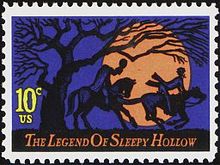
While the Hessians did act harshly toward civilians in some cases, many stories were exaggerated or amplified to stir up public sentiment. They were brutal to rebels during combat and treated prisoners more cruelly than the British did, but not more harshly than American Loyalists and Patriots treated each other. These myths and legends grew and still persist. It’s no coincidence that Washington Irving's famous "Headless Horseman of Sleepy Hollow" was a Hessian artilleryman whose head was taken by a cannonball. However, it’s also true that the Hessians were brave and dependable soldiers who added a unique element to the American fight for independence.


Even the USPS contributes to the legend

Sunday, March 30, 2014

Second to None


This blog discusses one of the last senior officers to fall in the campaign that ended the war: Alexander Scammell. There are many First Patriots in what I call the "second tier" of fame (but not importance). The "first tier" includes those most Americans learn about in school and in popular history: Washington, Greene, Knox, Von Steuben, Lafayette, Marion, Hamilton, and others. Like in all wars, the American War for Independence had many lesser-known figures, many of whom played very important yet less celebrated roles crucial to the war's ultimate success.

Alexander Scammell


Accomplished in Peace


John Sullivan

Alexander Scammell was born in 1744 in Milford, Massachusetts. His father died when he was six, and he and his brother went to live with a minister until he attended Harvard. After graduating from Harvard in 1769, he taught school near Plymouth, Massachusetts. In 1772, he moved to Portsmouth, New Hampshire, where he engaged in surveying and exploring the lands of the Royal Navy Timber. He also taught school at Berwick and occasionally assisted in making surveys for his Topographical Map of New Hampshire. It’s likely that these activities gave Scammell an eye for the land, which would prove useful in the military. Despite these diverse interests, Scammell eventually decided to study law (go figure), and in 1774, he went to Durham to study under John Sullivan, a prominent attorney.


A Call to Arms


By that time, New England was caught up in war fever, and Sullivan, along with Scammell, became part of it. Scammell participated in a raid organized by Sullivan against the British outpost Fort William and Mary in December 1774. This likely prepared him for an active role in the upcoming conflict. He was appointed a major in the 2nd New Hampshire Regiment, part of Sullivan's Brigade, and served during the siege of Boston and later in the ill-fated invasion of Canada, where Sullivan played a controversial role. Sullivan's brigade returned to Fort Ticonderoga by mid-July 1776, and Scammell became the dedicated aide de camp to the fiery general. 

At the Siege of Boston


However, in September, he was sent to New York City and fought in the Battle of Long Island. As Washington's army regrouped after losing New York, Scammell was appointed Assistant Adjutant General for Charles Lee's division, which was often divisive. A month later, in November 1776, he was promoted to colonel and soon took command of the 3rd New Hampshire Regiment. Since the regiment was still forming, Scammell joined the 1st and 2nd regiments under Colonel John Stark, another Tier 2 First Patriot, as they moved south to join Washington's army on the west bank of the Delaware. He crossed the Delaware with Washington and fought in both the Battle of Trenton and the Battle of Princeton. At Princeton, he helped rally the troops and turn what was nearly a defeat into a victory.


Long Island 1776 Battle Pass


From  Line Officer to Staff Officer to Counter-Spy


In June 1777, he commanded the 3rd New Hampshire Regiment at Fort Ticonderoga under Major General Arthur St. Clair. But St. Clair abandoned the fortress to the advancing British forces under General Burgoyne. Nevertheless, the regiment's escape allowed it to fight at Saratoga, where Scammell distinguished himself at Freeman's Farm and Bemis Heights. Just two days after Burgoyne's surrender, the regiment marched south to winter quarters at Valley Forge. 

At Burgoyne Surrenders at Saratoga


There, Washington appointed Scammell as the Adjutant General of the Continental Army. Scammell clearly demonstrated unique military and organizational skills to earn such a key position when the army was at its lowest point. In an interesting twist of Yankee Doodle Spies, Scammell was appointed as the executioner for the British spy, Major John André, in October 1780. Scammell became so upset over this task that he requested and received another field command. Aside from the espionage connection, one of the themes in Yankee Doodle Spies is protagonist Jeremiah Creed's desire to leave espionage and return to a line command. The connection, however, is purely coincidental.


Fall of Duty


In early 1781, Scammell was appointed commander of the 1st New Hampshire Regiment. However, in the spring of that year, he was assigned to lead a light infantry detachment that became known as Scammell's Light Infantry. This elite unit fought at King's Bridge (The Bronx) and served as the vanguard for the Continental Army's historic march to Yorktown. Upon its arrival, it became part of The Light Infantry Division. 

As the decisive campaign of the war neared its end, Colonel Alexander Scammell seemed destined for fame. But on the morning of September 30th, Scammell was serving as Field Officer-of-the-Day. This role made him responsible for sentries, scouts, passage of lines, or anything requiring immediate action. The trapped General Cornwallis had decided to strengthen his defense lines by abandoning his outer works around Yorktown. 

Yorktown


At dawn that day, Scammell's pickets discovered an abandoned redoubt near the road to Williamsburg. Recognizing a potential opportunity to advance the siege, the former surveyor led a reconnaissance of the recently abandoned British fortifications. It cost him his life. As he advanced on the outpost, he became separated from his scouting party. Then he spotted a cavalry patrol. In the mists, he thought it was American, but it turned out to be Tarleton's dragoons. 

Tarleton's Dragoons


Banastre Tarleton was a notorious British officer whose men were known to give little quarter. The horsemen surrounded Scammell, and during or after his surrender, the brave New Englander was shot in the back. His men could only watch as their wounded officer was taken into captivity at Yorktown. The British surgeons treated Scammell as best they could. Due to the seriousness of his wound, Cornwallis soon paroled him. He was sent to Williamsburg (now in American hands) to recover but died on October 6th, just weeks before Yorktown fell to the Allies.


Legacy Denied


A little personal background to share about the noble patriot. Scammell was tall for his era, over six feet with pale eyes. He had a straightforward manner that endeared him to his troops, his peers, and most of all—George Washington. Scammell had a great sense of humor and famously entertained the commander in chief with his tales. 

Up until the end, Alexander Scammell served his country selflessly. He had given up property and a promising law career to join the glorious cause. A few years earlier, then in his mid-thirties, Scammell lamented in a letter about ever finding a wife because of the length and nature of his service. While others like Alexander Hamilton went in and out of service as it suited them, he remained in service throughout the eight-year conflict. 
Might Scammell Have Led the Assault?


Scammell had an almost Forrest Gump-like knack for being at pivotal moments of the war and serving with key figures. Had he lived, the gallant Colonel Alexander Scammell might have been the officer leading the Light Infantry against Redoubt Number 10 at Yorktown instead of Alexander Hamilton. And who knows what greatness his character and leadership might have brought to the new nation after the war? Many with fewer wartime accomplishments went on to important political and diplomatic posts. But something tells me Alexander Scammell would have been happy back in New England with his law books and a loving wife.