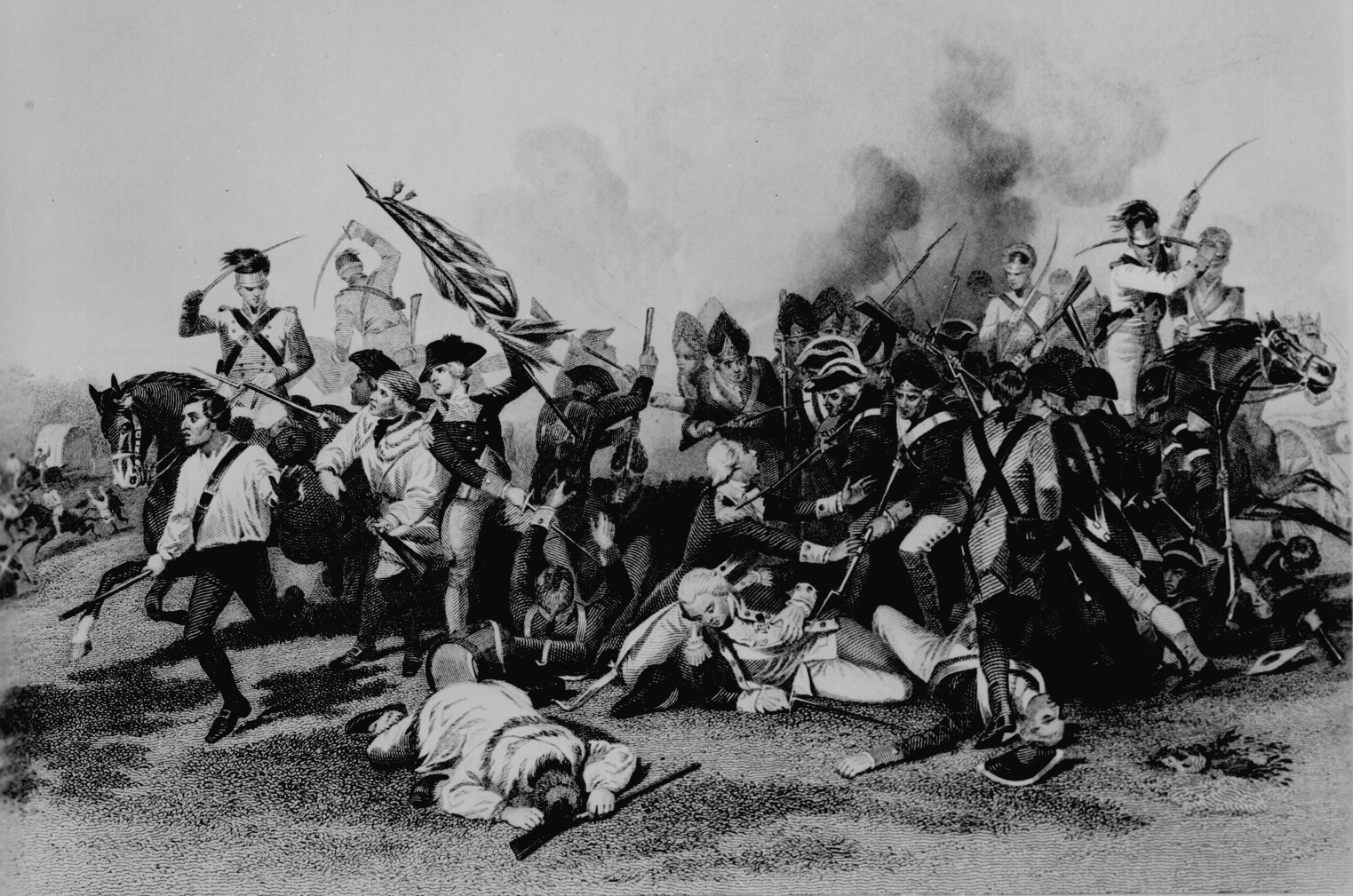
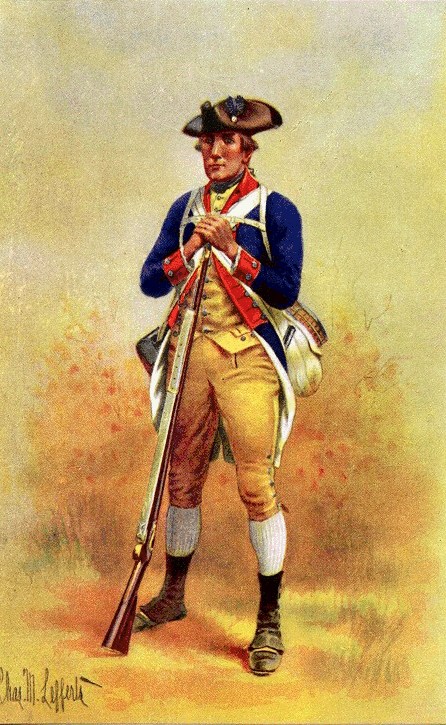
Since this week is George Washington's birthday, I feel compelled to write something about His Excellency, the "Indispensable Man."
 |
| Young Washington |
These two sobriquets are just a sampling of the many honorifics given to Washington both during his lifetime and as his legacy grew. You might be surprised to know that some early biographies of Washington were poorly drawn and, in some instances, created or perpetuated myths that continue to this day, such as the cherry tree incident, wooden teeth, and his "vision" at Valley Forge. However, Washington's real achievements surpass all fictional characterizations. In this blog, we'll discuss some of his earlier accomplishments.
The young George Washington managed to overcome relatively modest beginnings and rise to a stature that has transcended the ages. Born to a small Virginia landholder's second marriage, a nearly cosmic chain of events helped elevate George Washington to the forefront of Virginia society—the platform from which he launched his career. These events include a series of early deaths (father, male siblings), failure in love, finding a wealthy benefactor, entering a successful marriage, exploiting political connections, and ultimately profiting from a series of near-catastrophic failures.
 |
| Young Martha Custis |
When Washington's older brothers died at relatively young ages, young Washington inherited Virginia lands he had never aspired to. Before acquiring them, Washington set out to create his own path through surveying. He learned about land and mathematics—knowledge that would later aid him in land speculation and planning military campaigns. Young Washington became acquainted with Lord Fairfax (we won't speculate on rumored paramour Sally Fairfax here) and the brilliant and wealthy George Mason. Both connections helped him gain prominence. Failed early romances introduced him to some prominent families and ultimately led him to the acquaintance of the wealthy young widow, Martha Custis. His marriage to Martha made him a "man of consequence" in Virginia planter society. It also grounded him and helped him mature into a man of financial and emotional substance.
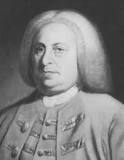 |
Virginia Governor
Robert Dinwidie |
Due to his persistent lobbying and survey experience, Virginia's Royal Governor Dinwiddie sent a very young Washington west to explore Virginia's vast holdings. At that time, the Commonwealth included West Virginia and claimed large parts of what are now Kentucky, Ohio, and beyond. The issue was that those lands were inhabited by Indians whose tomahawks were influenced by their French benefactors to the north. Neither the French nor the Indians considered the territories that now make up Ohio and Kentucky to be part of the Old Dominion. Nevertheless, Washington undertook several missions west, one of which led to the massacre of a French Ambassador. This incident directly set off a chain of events that initiated the Seven Years War in Europe and the French and Indian War in America. Essentially, George Washington triggered the world war that would eventually contribute to the American Revolution!
 |
| Serving as Aide to General Braddock in 1755 |
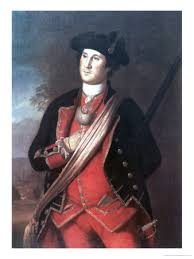 |
Colonel Washington
of the Virginia Militia |
During the French and Indian War, politics led to Washington becoming the commander of the Virginia militia. However, when Britain's Lord Loudoun and a series of other British commanders rejected his requests for a regular commission, Washington began to question his "Britishness." Although denied a regular commission, his knowledge of the West earned Washington an appointment as aide to General William Braddock's fateful (and fatal) campaign to capture the French fort near present-day Pittsburgh. The column of over 1,000 British regulars was ambushed in the forests of western Pennsylvania. Yet, Washington's composure in the face of panic among officers and men alike in the presence of the French and Indians brought him renown. Despite this, Washington spent the remainder of the war leading a weak militia force in a challenging defense of western Virginia settlements against Indian raids.
The post-war period in America once again relegated Washington to a local figure who focused his efforts on farming and land dealings while dabbling in petty Virginia politics. However, after the French and Indian War, Washington also embarked on a period of political reflection that enhanced his intellect and gravitas. As the struggle with the mother country began to loom over the colonies, Washington's early exploits—both his successes and failures—would eventually lead to his acclamation as commander in chief of the Continental Army in June 1775.
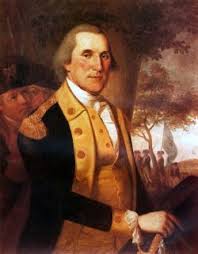 |
His Excellency, George Washington,
was proclaimed commander-in-chief of
the Continental Army |