Followers

Showing posts with label Charles Lee. Show all posts

Friday, July 19, 2019

General Disaster

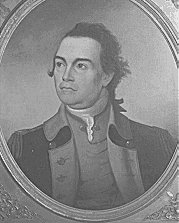
This edition of the Yankee Doodle Spies shifts focus from the Loyalists to an Englishman. However, this Englishman, a professional officer by training, came to America after his British military career stalled. Settling in Winchester, Virginia, in 1773, Lieutenant Colonel Charles Lee adopted Whig and patriot politics, and thanks to his experience in the regular army, was appointed second in command to General George Washington. It is more than an understatement to say Lee was controversial, odd, ambitious, and morally uncertain. But I digress. Instead of detailing his entire career – which is too rich to fit into one post — I thought we’d examine his “evening parade.”

Early Career at a Glance


Lee was a well-educated son of a (not so modern) major general. After attending school in Switzerland, he entered the Royal Army as an ensign in 1747. Like others of his generation of soldiers and sailors, he saw a lot of action, as Britain had no shortage of wars in the mid-eighteenth century.


Major General Charles Lee


His exploits in the Seven Years War, actually the French and Indian War, took him from Braddock’s defeat on the Monongahela to the final victory on the Plains of Abraham. He ended the war as a major and returned to Europe, where he served briefly as a lieutenant colonel in the Portuguese Army and later in the Polish service. In the latter, he managed to lose two fingers in a duel in which his opponent died. Lee was no snowflake.


Lee was a Seven-Year War
and French and Indian War Veteran


With his career in the Royal Army at its lowest point, he moved to North America to pursue farming and politics. When the American Revolution erupted, he was among those considered to lead the new American army. He lost to George Washington but was awarded the second-in-command position as a consolation. Major General Lee displayed talent but was also cantankerous and involved in many intrigues along with military engagements. He was known as a seducer of women but was quirky, disheveled, and always accompanied by his pack of dogs. Captured under mysterious circumstances as America’s fortunes declined in late 1776, many suspected Lee of aiding his British captors, who used him for their advantage.


Lee was captured at Basking Ridge, NJ
while away from his army


Renewal and Redemption


Lee was paroled as part of a prisoner exchange in April 1778, being swapped for British General Richard Prescott. Despite suspicions of duplicity and back-stabbing by Lee, George Washington welcomed him home to the Continental Army like a prodigal son. Circumstances placed the quirky but still considered a professional officer in a position to make up for any past quirks, obfuscations, and manipulations. The Continental Army emerged from Valley Forge as a revitalized force, professionally trained and equipped. British actions would give Charles Lee a chance to use that new force and prove once and for all that he was the best officer in the army, a view long held by Lee and his supporters.


The Continental Army emerged from Valley Forge
as well-trained professionals


General Clinton’s Gift


By spring 1778, the British had decided to abandon the American capital and concentrate their forces in the major stronghold of New York. This would allow London to redirect land and naval forces to the new active theater in the West Indies. Clinton sent part of his forces north by sea, but a significant force would have to march north across the hot fields of the Jerseys before they could be transported to New York. Washington’s spies warned him of this, and he positioned the Continental Army to take advantage of Clinton’s predicament. A slow-moving land force, reduced in numbers, became an easy target for the commander in chief. Clinton had given the long-suffering Continentals a gift.


Sir Henry Clinton


Councils of War


During a series of war councils, Washington sought to decide the best course of action. Should they risk an all-out attack? Shadow the British and harass their movements? Or try to block them and force a British assault?

The final meeting took place on June 24. Many wanted to take decisive action against the British, but the generals were divided on how to proceed. Marquis de Lafayette considered it a matter of honor to strike at the enemy. Nathanael Greene advocated for a partial effort as a way to boost morale. The aggressive “Mad” Anthony Wayne preferred an all-out fight. However, Lee clarified that his only goal was to observe the British army as it retreated.


Mad Anthony Wayne


The quirky, self-important Lee offered surprisingly cautious advice and had a good understanding of the risks involved. Lee thought an all-out attack on the British was absurd and believed that a defeat for the Americans would be disastrous. To be fair, he probably didn’t realize that this army was unlike any previous command—the American army of the past. Washington decided to keep harassing the British. His combative, young aide Alexander Hamilton dryly remarked that the results of this meeting "would have done honor to the most honorable body of midwives and to them only."

To Lead or Not to Lead


Events gave Washington pause. The New Jersey militia under General Philemon Dickinson (see the Yankee Doodle Spies post on the Militia General) slowed and harassed the British column, which was already being troubled by New Jersey militia blocking roads and launching nuisance attacks.


Major General Philemon Dickinson


Seeking to capitalize on this, Washington dispatched an advance guard of six hundred riflemen under famed Colonel Dan Morgan, then added a second detachment of 1,440 selected Continentals. He followed with a third wave of a thousand chosen men led by Wayne. Washington asked his recently returned second in command, Charles Lee, to lead this strike force, but Lee declined. Did he feel that taking on the British in this manner was too risky or that the command was beneath him?


Dan Morgan


Lafayette, I am Here


So Washington turned to one of his favorites – the Marquis de Lafayette, the young French aristocrat who accepted the command. But Lee then had second thoughts and demanded command of the force. Washington felt he had no choice but to agree. However, he increased the force by another six hundred men as a reason for replacing Lafayette. Now, a force of about 5,000 was closing in on the British rear.


Marquis de Lafayette


A final war council on June 27 offered little clarity on how severely to attack the British, who were nearing Monmouth Court House on their way to a Sandy Hook rendezvous with the fleet. Lee and the strike force slowly positioned themselves near the British rear guard. Several messages from Washington did not provide clear guidance on what actions to take. Therefore, Lee decided to proceed with a watchful waiting approach.


His placement of forces was uneven, making mutual support difficult. On June 28th, he advanced carefully with Anthony Wayne's brigade leading. The day was hot and humid, soaking coats in both red and blue. When the initial contact on June 28th caught the British rear guard off guard, Anthony Wayne pressed for a more aggressive stance, as was his style. (See the Yankee Doodle Spies post on The Mad Man) But without clear orders, Lee hesitated. The chance to outflank the British rearguard was lost.

Baptism by Fire


But upon learning of the contact, General Clinton, meanwhile, decided to give the rebels one last lesson. He reinforced his rearguard and sent them south after their pursuers. Lee’s situational awareness was confused. He received conflicting reports on British strength and activities. But he decided to fix the British rearguard in front of him — if he could find it. He sent forward Wayne’s force, but Wayne circled around the British left to attempt an ambush. Wayne was surprised by a detachment of dragoons, and firing erupted. Lee had to change plans. He pushed Lafayette forward and maneuvered to take advantage of Wayne’s situation.


Old Monmouth Courthouse 

Run Away, Run Away Run 


Then Clinton unexpectedly attacked the rebels and sent the grenadiers against Lee’s right. Chaos broke out. A series of firefights erupted. Volleys of lead shot across the steamy farm fields. Guns began spewing heavy iron balls across meadows and fields. Lee’s situational awareness quickly worsened. He didn't know what was facing him, and he didn't have his forces well controlled. Without clear orders from Lee, his brigades moved on their own in response to the situation as they understood it. Normally, this isn’t entirely bad. Initiative in battle is a good thing. But this situation was heading toward disaster because the formations weren’t working together—they were acting independently.


Lee's units operated independently against
the British

Fearing the worst—a potential engagement he wanted to avoid—Lee retreated three times. His aim was to extract his forces from a dire situation and steer clear of the grasp of the British regulars with the army's most elite infantry and cavalry. Puzzled by the withdrawals, soldiers and commanders started to lose morale. Was something going wrong that they did not understand? The fog of battle made the retreat look and feel like a rout. These were perhaps understandable actions given the circumstances he faced. But he made one crucial mistake. He did not keep the commander in chief informed.

You May Leave the Army


In the rear, Washington was advancing with his staff through a stand of woods. Suddenly he saw a civilian and a fifer coming down the road. He disbelieved them when told the army was in retreat. Then stragglers bereft of gear and weapons staggered past. Soon, an entire unit was seen running away from the front. Washington, now enraged, rallied the men and pushed forward. Soon, he spotted an officer on horseback ostensibly fleeing the battle. It turned out to be Charles Lee.


Washington confronts Lee


“What is all this?” Washington demanded. Lee hesitated at first. Then Lee blurted out a series of incoherent defensive statements about intelligence and the power of the British. That did not go over well. Washington insisted they were facing only a strong covering party of the enemy. Lee replied that the British had greater numbers than previously thought and did not believe it was proper to risk the army. Washington erupted into a tirade unlike anything anyone had seen before, questioning Lee’s bravery. Washington ended the exchange when he saw some units retreating and hurried over to rally them. Lee seemed to have remained in stunned silence for a few minutes.
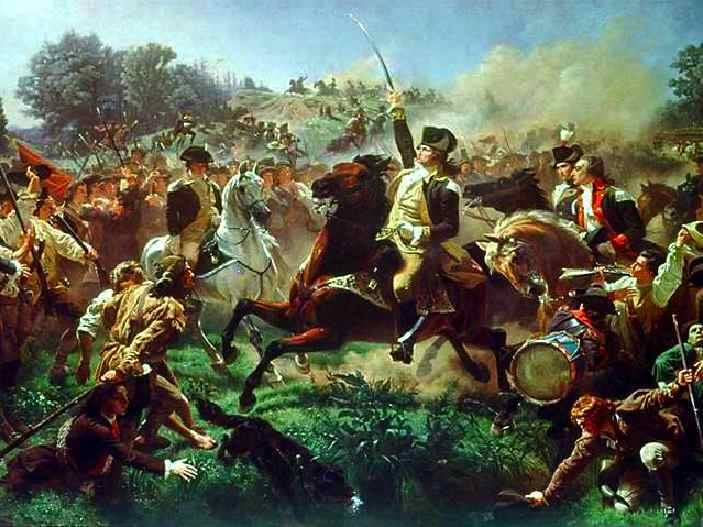

Washington managed to rally the army


Washington meanwhile rallied the retreating troops, regrouped his forces, and fought Clinton’s regulars to a standstill. The fighting went back and forth as neither side would concede. Despite the burning summer heat, both sides unleashed musket volleys and thunderous artillery. The savage day's fighting ebbed with the dark of night, and both armies collapsed where they fought and slept on their arms. But when the Americans stood at dawn, they found the entire British had beat feet to Sandy Hook and the safety of the fleet. Although a sort of moral victory, Washington was vexed at losing a chance to crush the enemy.


The Americans stood their own against British assaults


The End of the Affair


By the 29th, Washington revisited the issue of Lee and his behavior. In a series of letters, Lee became petulant and unremorseful. When Washington questioned his reason for the withdrawal, the two men exchanged words. Demanding a hearing, Lee was charged with insubordination. A court-martial was convened over several weeks. Lee was found guilty of dereliction and cowardice. His punishment: removal from command in the army for one year. Unsatisfied with the outcome, Lee became involved in several affairs of honor and frequently criticized the Continental Congress for enforcing the sentence. These actions resulted in his permanent dismissal from the Continental Army in January 1780.


Lee once advised that he liked his
dogs better than people


Retrospective


Charles Lee’s quirky personality, arrogance, and narcissism made him very controversial. Yet, for most of the war, he was admired by many in the army and Congress for his experience and professionalism. He has a mixed record, though, and there were times when his loyalty was suspect. But his actions at Monmouth were the result of his awe of the British professionals, fear of getting decisively engaged, and confusion in the fog of battle. I also suspect he was undermined by a lack of respect for Washington, poor chemistry with his subordinate commanders, and lack of confidence in the American soldiers under him. Of these, the third was his greatest failure.


Sunday, June 25, 2017

The Palmetto Fortress

A Tour de Force


In the spring of 1776, the British planners in London aimed to turn their recent stalemate and embarrassing withdrawal from Boston into a strategic victory that would end the rebellion that year. One fleet was ready to strike the crucial port of New York with a direct attack, while another planned a quick left hook at the equally important port of Charleston. The latter strike was to come first, setting the stage for a more decisive blow in the middle Atlantic colonies. Charleston, the major southern city at the time, had vital connections to the key islands in the West Indies, which were always a top priority for British interests. Dominated by a planter class, South Carolina wasn't seen as a heavily rebel area that would fall easily. However, a few brave patriots proved them wrong.


A Last-Minute Plan


Lord Dartmouth
The British strike at the southern colonies actually began earlier in the year when William Legge, Lord Dartmouth, and Secretary of State for the Colonies ordered General Henry Clinton and Commodore Peter Parker to rendezvous with another armada under General Lord Charles Cornwallis off Cape Fear, North Carolina. Misfortune on land and at sea turned the North Carolina plan to mud. But before Clinton could sail north, Parker reported that a reconnoiter of Charleston indicated the defenses were ill-prepared and that a quick strike against Fort Sullivan on Sullivan's Island in the harbor would be successful. After that, the city could be successfully assaulted. Anxious for some "low-hanging fruit" after the Tar Heel frustration, Clinton concurred, and so they made their way south, anchoring off the city on 7 June 1776.


A City Prepares


Charleston's waters were treacherous
as the British would soon discover

But the South Carolinians in Charleston had long anticipated that they would be a target of the British and eagerly built up defenses on Sullivan's Island. This was a three-sided fort with sixteen-foot-high sand walls surrounded by softwood palmetto logs. The spongy palmetto wood absorbed the impact of cannonballs—the main threat to the fort. The fort was armed with twenty-five guns of various sizes and calibers, and housed a garrison of over four hundred men. Most importantly, the commanding officer of Fort Sullivan was militia Colonel William Moultrie, who would soon prove to be one of the most capable fighting generals of the war. The city itself had a garrison of over six thousand troops, including Continental Line infantry. In command was Major General Charles Lee, a former British officer and widely regarded (especially by himself) as the finest officer in the American cause. Lee believed that Fort Sullivan was too exposed to the fire of British warships and ordered it to be abandoned. However, South Carolina Governor John Rutledge overruled Lee, viewing it as a necessary buffer against a naval attack. Geography and hydrography favored the defenders; the narrow harbor channel, with strong currents and shoals, troubled the British as they planned where to land and how to position their ships. It took a month before they were ready to attack the city that was just within their reach.


Colonel William Moultrie's militia
staged a gallant defense


Bombs Bursting in Air... Sand.. and Wood


The South Carolina flag hoisted in battle
boosts morale

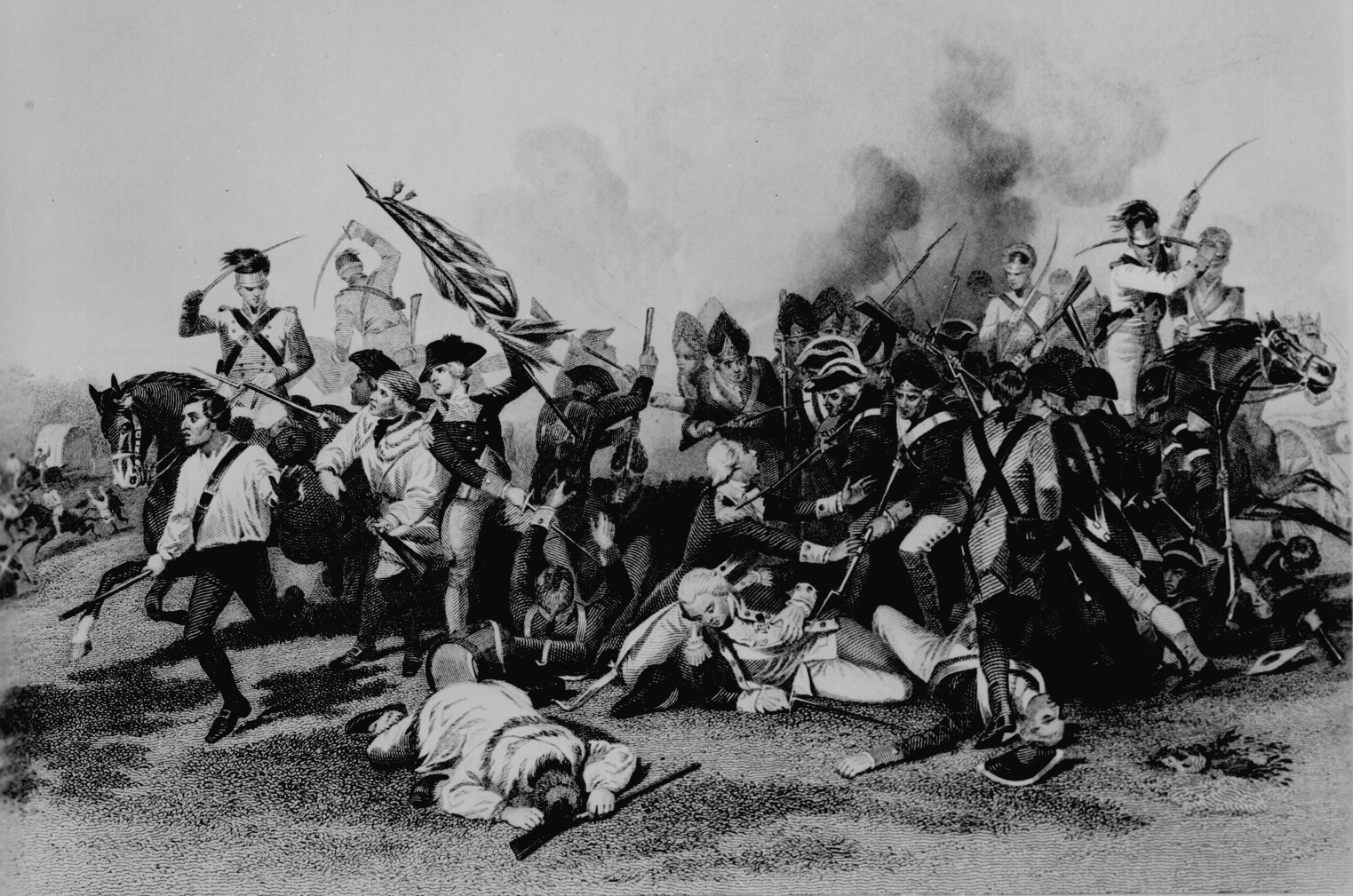
On 28 June, a bombardment commenced between Parker's warships aligned off Sullivan Island and Moultrie's raw militia manning the guns protected by sand and palmetto logs. The barrage went on for hours. The British gunners were frustrated that, despite hit after hit, the combination of sand and spongy logs inflicted little damage on the fort. Shot after shot from the warships either bounced off the walls or got absorbed into the soft walls of the palmetto. The Americans fired back. But low on gunpowder, Moultrie insisted that each shot be well-aimed. In the middle of the hours-long engagement, a British shot cut down the South Carolina flag. A brave sergeant named William Jasper, in full view of the British and the Americans, ignored the hail of lead and iron to mount the parapet and restore the flag. The impact on the morale of both sides was telling. As the battle continued, the defenders' deliberate fire took its toll on the British ships, scoring hit after hit. Things took a final turn against the British when Parker sent three frigates around Sullivan Island to take the defenders in the flank. Unaware of the dangerous waters of the channel, all three suddenly grounded in the shallows. After a struggle, the two freed themselves, but the third, HMS  Acteon, remained stuck. The frustrated crew burned it to prevent the rebels from taking it.


The savage naval bombardment was decided
by shoals, sand, and wood


Fight  on till Dark


Commodore Parker
The firing continued on both sides. Commodore Parker's flagship had its anchor cable severed by a shot, causing the ship to turn and present its exposed stern to American fire. The rounds poured in, and one actually passed between Parker's legs as he shouted out commands. The commodore was unhurt but indignant as the shot tore his pants off. When darkness descended on the harbor, Parker signaled the fleet to disengage. Exasperated, the British fleet sailed from the harbor. It would be four long years before they would deign to return to face the Carolinians and their palmettos. The next one would end differently, but in 1776, the failed attack presented the British with a near disaster. The Royal Navy incurred well over two hundred casualties - Moultrie's men less than forty. And what of General Clinton? His men had landed on nearby Long Island to prepare for an assault on the mainland once Fort Sullivan fell. With the warships gone, this would not be. Instead, they remained exposed there for several weeks before the British transports were able to sail in and they could re-embark.


The Result


The British armada returned to New York at the end of July with ships damaged and sailors and soldiers discouraged. However, they soon had a chance for some revenge when the British launched their massive attack on Long Island in late August. Still, the victory at Fort Sullivan kept the South safe for four crucial years. It introduced the world to a brave new leader and boosted morale across the Carolinas and the entire rebellion. And in honor of the palmetto’s role in the victory, the noble tree with soft bark was added to the South Carolina state flag, where it remains today.


South Carolina State Flag


Friday, May 23, 2014

Heath in the Highlands

First Patriot


I often use the term "First Patriot" to describe those who served in the American War for Independence or who played a role in the political thought and action leading up to it. Many of my Yankee Doodle Spies Blogs discuss these men and women. As I researched the first few books in the series, a name kept appearing: Heath. More precisely, the name "Heath" was often printed across maps showing activity around New York, primarily in the lower Hudson Valley, western Connecticut, and the area now known as the Bronx (Kings Bridge). William Heath was one of those serious men, a New Englander like many others, who stayed committed to the cause from start to finish and served it in whatever way was needed. Certainly, many American officers were self-serving and easily offended by slights or secondary tasks. Not Heath, who I believe served professionally and effectively throughout the war.


Citizen Soldier


William Heath
William Heath was born in 1737. He made his home at his farm in Roxbury, Massachusetts. Like many of his generation, he became active in the militia as a young man, and by 1770, he was a colonel and leader of the Suffolk County militia. At the beginning of the war, Massachusetts named him a brigadier general, and he commanded Massachusetts forces during the final stage of the Battle of Lexington and Concord in April 1775. As the siege of Boston started, Heath focused on training the militia involved in the siege. In June of that year, Massachusetts appointed him a major general in the state troops, and the Continental Congress made him a brigadier general in the new national army, the Continental Army.


Solid Service


Charles Lee

In 1776, Heath took part in defending New York City, where he fought at Long Island and was among those who urged General Washington not to abandon the city. Heath's role involved overseeing the defense of the northern approaches to Manhattan. He did a reliable job monitoring potential British landings, dispatching intelligence missions, and gathering supplies. Heath served under Washington at Harlem Heights and White Plains, where he commanded the left flank of the Continental Army. In November, he was put in charge of forces in the Hudson River Highlands. When Washington conducted a frantic rearguard action across New Jersey to avoid destruction in the final months of 1776, he left Major General Charles Lee and Heath to guard critical communication lines between the mid-Atlantic and New England. When Lee finally responded to Washington's call to join him in the Jerseys, William Heath remained steadfast in defending the Hudson Valley. It was a command that demanded duty, not glory. After the British took control of New York City in 1776, the defenses just north of there became highly important. The ongoing presence of British land and naval forces in New York underscored the significance of the Hudson River, and both sides recognized the need to control this vital waterway. The Americans built fortifications, including West Point with its chain across the river. Washington assigned Continental troops under General Heath to the Highlands on November 12, 1776, and a Continental Army garrison remained there until the end of the war. Heath's assignment effectively created a military department. The British aimed to gain control during the Saratoga campaign in 1777 and frequently raided the southern parts of the department to disrupt military logistics and movement. One of the most notable incidents in this department's history was Benedict Arnold's defection in September 1780.


Hessain Grenadiers Advance


The Dog House?


Robert Rogers
Heath faces scrutiny during this period. In January 1777, Washington directed Heath to attack Fort Independence in the Bronx, New York, to support the American operations at Trenton and Princeton. Over ten days amid a harsh winter, Heath commanded 6,000 men in three attack columns heading south to seize the fort that guarded access from Spuyten Duyvil to the Kings Bridge crossing into Manhattan. Initially, the attack went well as British outposts were quickly taken. However, when they reached the fort, they encountered 2,000 disciplined Hessians. Unfazed, the Hessians responded to Heath's plea to surrender with heavy artillery fire. Heath attempted to flank the enemy, but a sudden thaw made crossing the creek impossible. After several days of skirmishes, a surprise movement by British troops on the American flank and rear forced Heath to consider retreat. The weather worsened, and Heath and his commanders decided to withdraw, which Washington criticized. Nonetheless, Washington understood the importance of avoiding a defeat—his own retreat across New Jersey proved that retreat can be a strategic choice. Had Heath's forces been defeated or captured, it could have cut off New England from the Middle Colonies and destabilized the overall strategic situation.

But Heath was never again assigned command of troops in action. Still, he remained in important posts, which was common at that time. Heath was a dependable commander of this American army of observation (my words) patrolling the no man's land north of Manhattan. His presence maintained the vital link between the colonies, protected the Hudson River, and helped keep the British in check. Heath's forces assisted in gathering and relaying intelligence to Washington. Reading his dispatches, one realizes he had a good eye for terrain, people, and the enemy situation. Heath worked diligently on logistics and overall helped sustain the Patriot presence in a crucial region. His handling of the Daniel Strang Court Martial for espionage shows the wide range of his duties as a commander and administrator. He approved the death sentence, which was duly carried out. Strang was found guilty of spying and recruiting for the notorious Loyalist Colonel Robert Rogers. Later, Heath was put in charge of the Convention Army of John Burgoyne's surrendered troops after the Battle of Saratoga in October 1777. However, in 1780, he returned to command the Highland Department following Benedict Arnold's treason. And in July 1783, he was given command of the Lower Hudson District while George Washington was with the Main Army in Yorktown—again standing watch over the powerful British forces in New York.

Post-War Patriot


After the war, Heath was a member of the Massachusetts Convention that ratified the United States Constitution in 1788. He served in the state Senate from 1791 to 1792 and as a probate court judge. In 1806, he was elected Lieutenant Governor of Massachusetts but declined the office. Heath was listed as an original member of the Massachusetts Society of the Cincinnati. Our first patriot died at home in Roxbury on January 24, 1814, and was buried nearby in Forest Hills Cemetery. The town of Heath, Massachusetts, is named in his honor.


Heath's Monument at
Forest Hills Cemetery

Saturday, December 21, 2013

Winter Gamble

Darkness Descends


December 1776 was truly a month that tested men's resolve. The British had been pressing the Continental Army since their invasion of Long Island in the summer. The "victory" at Harlem was the closest the struggling Americans came to stopping Lord Howe's advance. The only thing standing between Washington and an early British victory that could end the rebellion was, well, Lord Howe. His smart strategic moves, well-executed naval landings, precise tactics, and professional sieges characterized Howe's offensive. However, his slow movements allowed Washington to repeatedly slip free.


Cornwallis crossed with five thousand crack troops to begin
the rout through the Jerseys


Winter Quarters

Lord Cornwallis
 By late December, Washington's army was safe across the Delaware River and prepared to defend the nation's capital, Philadelphia. He had fewer than 2500 effective troops, and that number would soon decrease as many enlistments ended in January, with the much-needed replacements not arriving until early the next year, if at all. 

The Continental Army lacked supplies of all kinds, especially
clothing- not just winter gear, but any clothing at all! However, Washington had help from Howe, who halted General Cornwallis's 5,000 crack troops at the Delaware. Washington's men had confiscated every civilian boat for miles along the river, forcing Cornwallis to wait for the British pontoon trains before crossing. 

Meanwhile, Howe, believing Washington was defeated, ordered his army into "winter quarters," and he himself hurried back to New York to be with his mistress. Cornwallis's wife was reportedly ill, and he headed to New York to catch a ship to England before winter made crossing impossible. To guard his New Jersey holdings, Howe left brigade-sized garrisons at Princeton, Brunswick, Bordentown, and Trenton.


An Army at rest and an Army formed

General John Sullivan
As soon as he escaped Cornwallis' onslaught, Washington began to think about his next move. Congress abandoned the capital and fled to Baltimore. Congress also offered him near-dictatorial powers, which he refused. Then, the help he had counted on, and had previously dismissed, suddenly arrived. General John Sullivan, returned from British captivity, led the division of General Charles Lee across the Delaware and joined Washington near Yardley, New Jersey. 

Washington then decided to proceed with his plan; he would gamble on a surprise attack against the British garrisons closest to the Delaware: Bordentown and Trenton. Washington's bold gamble required meticulous planning, daring, and a bit of luck. His first stroke of luck was Sullivan's arrival. 

The second was his ability to persuade the troops to extend their enlistments long enough for his plan to succeed. Washington personally met with the men, and his sincerity and apparent dedication to them and the cause swayed just enough. 

The third factor was the weather, and the last was maintaining the element of surprise during a period when not only Loyalists but even discouraged patriots might betray him to the British. Spies were everywhere.


The Crossing

Washington concealed his movements from Loyalist spies and led his army to McGonkey's Ferry on the evening of December 25th. The weather was cold with snow flurries, but the river had not yet frozen over. The crossing began after dark, but one delay followed another, throwing off Washington's schedule. He planned to march about nine miles downstream and surprise the Hessian garrison commanded by Colonel Johan Rall at dawn. The critical element was the guns. Henry Knox assured him he could get all 18 cannons across. However, the snow increased in intensity, and ice floes started to form. With each wave of boats crossing in the darkness, the risk grew. Yet, Colonel John Glover's Marblehead sailors, along with the renowned Gloucester Regiment, outperformed even the heroics of Long Island. A delay in crossing would not mean crossing denial—at least at McGonkey's. Further downriver, two other divisions of Pennsylvanians, under Generals Ewing and Cadwallader, were supposed to cross and take Bordentown, as well as assist at Trenton. But the ice floes thickened to the point where neither division could cross that night. This part of Washington's plan had failed.


The Miracle


Washington's forces did not fully cross until late at night. Then, they began the night march in two columns—one along the river road and the other, which Washington joined, moving further inland. The men, cold, wet, and exhausted, struggled across rugged, rocky, and wooded terrain. With limbs frozen and nearly blind from the elements, the soldiers used patches of white paper to guide them in the dark.


All the time, Washington hoped the other columns could cross without being detected and that the Hessians would not be alerted and waiting. His worst fears were confirmed in the first case, but his greatest hopes came true in the second. Arriving well into the early morning light, the Americans were surprised to find the small town still asleep and the weather clearing. The sound of a cannon signaled the two-pronged attack. 

Surprised, the Hessian professionals formed up as best they could to meet the invaders, but within an hour, the battle was over. Rall, the enemy commander, was mortally wounded, and his men soon surrendered. Not a single American died, and only a few were wounded. Washington's gamble succeeded... but his winter campaign was only just beginning.


Continentals rush a Hessian gun to open the battle


Sunday, September 22, 2013

How they Fought

Mongol Warriors 

Myth


Most wars have more than their share of urban legend, mythology, and plain old disinformation. Sometimes it is deliberate.  For example, the Mongols encouraged and spread myths about the size of their armies,  The results:  just the idea they were coming caused many cities, kingdoms, and peoples to surrender without a struggle. Always the best way to win wars. I'll use the myth busters theme to debunk or discuss some of the popular myths of the American Revolution of which there were not a few. After all, the 18th century in general is a misunderstood period of history - calling it the Age of Reason comes to mind as one myth.  Reason has been around since man walked the earth. It is how he reasons that has changed with the advent of the printed word and literacy that expanded in the 1700s.

Soldiers


Thought I would begin with some musings on how the armies fought during the war. Here the myth centers around the indomitable and indefatigable American patriot using his frontier skills against an unimaginative and drone-like British soldier. The patriot is most usually a "Minuteman," citizen soldiers expert with the
famed long rifle picking off stupid redcoats and oxen-like Hessians. Yes, there really were Minutemen (in Massachusetts), and the militia was the mainstay of the Cause. When they performed well, things generally went well. But their performance (and reliability in terms of sticking around) was sketchy throughout the war. Perhaps we'll go into the why in a future blog but the fact is the militia, in a pitched battle, had a poor record.

Tactics


This leads to the myth of the war being an irregular conflict. The military leadership of the Americans, beginning with General Washington, attempted in almost every case to fight a "Euro" style of war. In the 18th century that meant either a war of "posts," attacking or besieging strong points, or attempting to defend the same. If a war of "posts" was not waged, then a war of maneuver and the open battle was desired. Washington favored the latter. Remember, most of the American senior leadership had fought in the French and Indian War as British soldiers.  They studied and learned British tactics, techniques, and procedures. Although Washington never received the British Army commission he sought, he fought with them in Braddock's failed campaign against Fort Duquesne, and later organized the Virginia militia along British lines. Conversely, the British learned a lot about woodland warfare during the French and Indian War. Their flank companies, light infantry, and grenadiers were adept at irregular fighting and as the war progressed, the line units adapted as best they could. In addition to European -style volley fire, both sides resorted to individually aimed fire, depending on the tactical situation, terrain, etc.

                                                        British infantry fighting in forest


Leaders


Battle of Camden
Several Senior American officers had been British regulars in the Seven Years War.  Charles Lee, a former British officer, became Washington's second in command.  Horatio Gates became commander of the Northern Department where he won laurels at Saratoga, and the Southern Department where he was disgraced at Camden.
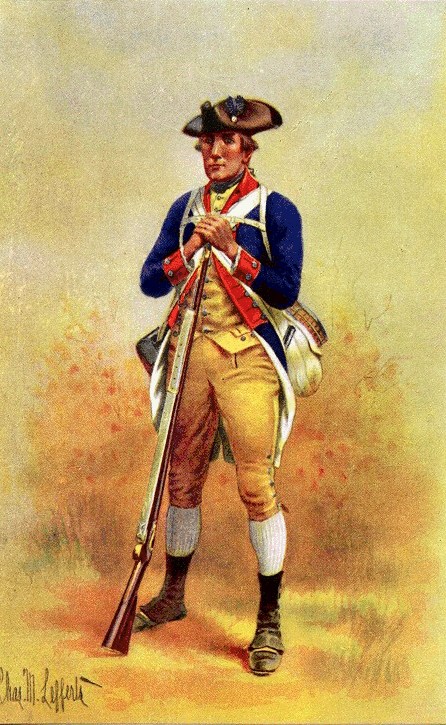
So the American ideal was to fight the British Army as a "regular" field army and not a "rabble in arms."  The American counter to the British regulars and Hessian mercenary was the Continental.


The Continental


Saturday, February 2, 2013

Promotions and Pride

I served over 20 years in the US Army and had 8 years of ROTC experience before that. Not what you might think—I took junior ROTC at Xavier High School, the Jesuit Military Academy in New York. However, throughout all those years, there was one event that always brought me a sense of accomplishment, mixed with a bit of dread—the promotion!

In the military, a person's success is measured in three ways when not actually in combat: surviving, ensuring your unit members survive, or advancing on the enemy with fire and movement to achieve or hold your objective. In other words, winning battles and wars. However, throughout a war or a career, awards and medals for accomplishments, gallantry, and similar achievements are sometimes complemented by promotions. The Army does not provide cash bonuses like the civilian sector; therefore, promotions (which include longevity steps) are the only tangible form of compensation... the gift that keeps on giving. And they definitely boost the ego.

                                                                                
                                                         Medals are symbols of achievement


While many who serve their country may publicly dismiss the need for such recognition, most of these sentiments are simply nonsense. Nearly everyone appreciates acknowledgment, and in the military, promotions are the main form of recognition, besides gallantry awards. During the era of the Yankee Doodle Spies, the promotion of officers was highly important.

And just like their British counterparts, the American officer corps was highly political. Congress controlled promotions and commands at the highest levels. Officers actively lobbied congressional representatives to advance their careers. The American agents in France, Silas Deane and Benjamin Franklin, even sought rank and command for foreign officers and civilians. John Adams, disgusted by this military politicking, wrote that he “wearied to Death with the Wrangles between military officers, high and low. They Quarrell like Cats and Dogs. They worry one another like Mastiffs Scrambling for Rank and Pay like Apes for Nuts.”


Silas Dean


Military pride almost cost us our independence. More importantly, a denied promotion or command often played a key role during the war. Note the less-than-honorable service of General Charles Lee, Washington's second-in-command, who avoided excelling whenever it threatened Washington's authority. The scheming of General Horatio Gates, victor at Saratoga, became the focus of an anti-Washington group aimed at replacing Washington with him. Furthermore, pride, as harmful to the nation's fight for independence, is most famously shown by the treason of General Benedict Arnold, whose grievances (and they were many) included the unfair denial of a well-deserved promotion to Major General. Each of these men turned against Washington and, therefore, against the cause, because of excessive pride.

                                               
                                                                              Horatio Gates

We often forget that the men who served as our First Patriots were human beings with families and obligations. Promotion meant prestige and honor, which were highly valued traits in the 18th century. These promotions also brought higher pay, and most officers, along with all enlisted men, were not wealthy landowners but rather teachers, shopkeepers, small farmers, and so on. Therefore, the possibility of a promotion and the potential for increased earnings were important considerations. They all (correctly) believed that a higher rank during the war would lead to greater prestige, which could be helpful after the war. Again, they weren't much different from people today. In an ideal world, patriotism would be its own reward. But, in reality, patriotism should be rewarded fairly.

                                                                             
                                                                         Charles Lee

Unfortunately, a promotion in the Continental Army did not always come with a pay raise. In fact, payments for officers and enlisted personnel were irregular. Congress had to request funds from the states to pay the Army, and the states often delayed or refused whenever they could. Without going into detail here, this nearly undermined the new republic before it even began, and only swift action by George Washington himself prevented a disaster. It also shaped Washington's political views toward a strong central government, one capable of funding national defense and serving the common good. Interestingly, the politics of promotion played an important role in both the war's progress and the country's formation.


                                                                Continental Army Officers