Followers

Showing posts with label American Army. Show all posts

Friday, July 19, 2019

General Disaster

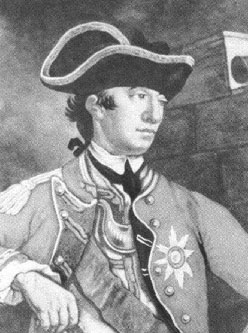
This edition of the Yankee Doodle Spies shifts focus from the Loyalists to an Englishman. However, this Englishman, a professional officer by training, came to America after his British military career stalled. Settling in Winchester, Virginia, in 1773, Lieutenant Colonel Charles Lee adopted Whig and patriot politics, and thanks to his experience in the regular army, was appointed second in command to General George Washington. It is more than an understatement to say Lee was controversial, odd, ambitious, and morally uncertain. But I digress. Instead of detailing his entire career – which is too rich to fit into one post — I thought we’d examine his “evening parade.”

Early Career at a Glance


Lee was a well-educated son of a (not so modern) major general. After attending school in Switzerland, he entered the Royal Army as an ensign in 1747. Like others of his generation of soldiers and sailors, he saw a lot of action, as Britain had no shortage of wars in the mid-eighteenth century.


Major General Charles Lee


His exploits in the Seven Years War, actually the French and Indian War, took him from Braddock’s defeat on the Monongahela to the final victory on the Plains of Abraham. He ended the war as a major and returned to Europe, where he served briefly as a lieutenant colonel in the Portuguese Army and later in the Polish service. In the latter, he managed to lose two fingers in a duel in which his opponent died. Lee was no snowflake.


Lee was a Seven-Year War
and French and Indian War Veteran


With his career in the Royal Army at its lowest point, he moved to North America to pursue farming and politics. When the American Revolution erupted, he was among those considered to lead the new American army. He lost to George Washington but was awarded the second-in-command position as a consolation. Major General Lee displayed talent but was also cantankerous and involved in many intrigues along with military engagements. He was known as a seducer of women but was quirky, disheveled, and always accompanied by his pack of dogs. Captured under mysterious circumstances as America’s fortunes declined in late 1776, many suspected Lee of aiding his British captors, who used him for their advantage.


Lee was captured at Basking Ridge, NJ
while away from his army


Renewal and Redemption


Lee was paroled as part of a prisoner exchange in April 1778, being swapped for British General Richard Prescott. Despite suspicions of duplicity and back-stabbing by Lee, George Washington welcomed him home to the Continental Army like a prodigal son. Circumstances placed the quirky but still considered a professional officer in a position to make up for any past quirks, obfuscations, and manipulations. The Continental Army emerged from Valley Forge as a revitalized force, professionally trained and equipped. British actions would give Charles Lee a chance to use that new force and prove once and for all that he was the best officer in the army, a view long held by Lee and his supporters.


The Continental Army emerged from Valley Forge
as well-trained professionals


General Clinton’s Gift


By spring 1778, the British had decided to abandon the American capital and concentrate their forces in the major stronghold of New York. This would allow London to redirect land and naval forces to the new active theater in the West Indies. Clinton sent part of his forces north by sea, but a significant force would have to march north across the hot fields of the Jerseys before they could be transported to New York. Washington’s spies warned him of this, and he positioned the Continental Army to take advantage of Clinton’s predicament. A slow-moving land force, reduced in numbers, became an easy target for the commander in chief. Clinton had given the long-suffering Continentals a gift.


Sir Henry Clinton


Councils of War


During a series of war councils, Washington sought to decide the best course of action. Should they risk an all-out attack? Shadow the British and harass their movements? Or try to block them and force a British assault?

The final meeting took place on June 24. Many wanted to take decisive action against the British, but the generals were divided on how to proceed. Marquis de Lafayette considered it a matter of honor to strike at the enemy. Nathanael Greene advocated for a partial effort as a way to boost morale. The aggressive “Mad” Anthony Wayne preferred an all-out fight. However, Lee clarified that his only goal was to observe the British army as it retreated.


Mad Anthony Wayne


The quirky, self-important Lee offered surprisingly cautious advice and had a good understanding of the risks involved. Lee thought an all-out attack on the British was absurd and believed that a defeat for the Americans would be disastrous. To be fair, he probably didn’t realize that this army was unlike any previous command—the American army of the past. Washington decided to keep harassing the British. His combative, young aide Alexander Hamilton dryly remarked that the results of this meeting "would have done honor to the most honorable body of midwives and to them only."

To Lead or Not to Lead


Events gave Washington pause. The New Jersey militia under General Philemon Dickinson (see the Yankee Doodle Spies post on the Militia General) slowed and harassed the British column, which was already being troubled by New Jersey militia blocking roads and launching nuisance attacks.


Major General Philemon Dickinson


Seeking to capitalize on this, Washington dispatched an advance guard of six hundred riflemen under famed Colonel Dan Morgan, then added a second detachment of 1,440 selected Continentals. He followed with a third wave of a thousand chosen men led by Wayne. Washington asked his recently returned second in command, Charles Lee, to lead this strike force, but Lee declined. Did he feel that taking on the British in this manner was too risky or that the command was beneath him?


Dan Morgan


Lafayette, I am Here


So Washington turned to one of his favorites – the Marquis de Lafayette, the young French aristocrat who accepted the command. But Lee then had second thoughts and demanded command of the force. Washington felt he had no choice but to agree. However, he increased the force by another six hundred men as a reason for replacing Lafayette. Now, a force of about 5,000 was closing in on the British rear.


Marquis de Lafayette


A final war council on June 27 offered little clarity on how severely to attack the British, who were nearing Monmouth Court House on their way to a Sandy Hook rendezvous with the fleet. Lee and the strike force slowly positioned themselves near the British rear guard. Several messages from Washington did not provide clear guidance on what actions to take. Therefore, Lee decided to proceed with a watchful waiting approach.


His placement of forces was uneven, making mutual support difficult. On June 28th, he advanced carefully with Anthony Wayne's brigade leading. The day was hot and humid, soaking coats in both red and blue. When the initial contact on June 28th caught the British rear guard off guard, Anthony Wayne pressed for a more aggressive stance, as was his style. (See the Yankee Doodle Spies post on The Mad Man) But without clear orders, Lee hesitated. The chance to outflank the British rearguard was lost.

Baptism by Fire


But upon learning of the contact, General Clinton, meanwhile, decided to give the rebels one last lesson. He reinforced his rearguard and sent them south after their pursuers. Lee’s situational awareness was confused. He received conflicting reports on British strength and activities. But he decided to fix the British rearguard in front of him — if he could find it. He sent forward Wayne’s force, but Wayne circled around the British left to attempt an ambush. Wayne was surprised by a detachment of dragoons, and firing erupted. Lee had to change plans. He pushed Lafayette forward and maneuvered to take advantage of Wayne’s situation.


Old Monmouth Courthouse 

Run Away, Run Away Run 


Then Clinton unexpectedly attacked the rebels and sent the grenadiers against Lee’s right. Chaos broke out. A series of firefights erupted. Volleys of lead shot across the steamy farm fields. Guns began spewing heavy iron balls across meadows and fields. Lee’s situational awareness quickly worsened. He didn't know what was facing him, and he didn't have his forces well controlled. Without clear orders from Lee, his brigades moved on their own in response to the situation as they understood it. Normally, this isn’t entirely bad. Initiative in battle is a good thing. But this situation was heading toward disaster because the formations weren’t working together—they were acting independently.


Lee's units operated independently against
the British

Fearing the worst—a potential engagement he wanted to avoid—Lee retreated three times. His aim was to extract his forces from a dire situation and steer clear of the grasp of the British regulars with the army's most elite infantry and cavalry. Puzzled by the withdrawals, soldiers and commanders started to lose morale. Was something going wrong that they did not understand? The fog of battle made the retreat look and feel like a rout. These were perhaps understandable actions given the circumstances he faced. But he made one crucial mistake. He did not keep the commander in chief informed.

You May Leave the Army


In the rear, Washington was advancing with his staff through a stand of woods. Suddenly he saw a civilian and a fifer coming down the road. He disbelieved them when told the army was in retreat. Then stragglers bereft of gear and weapons staggered past. Soon, an entire unit was seen running away from the front. Washington, now enraged, rallied the men and pushed forward. Soon, he spotted an officer on horseback ostensibly fleeing the battle. It turned out to be Charles Lee.


Washington confronts Lee


“What is all this?” Washington demanded. Lee hesitated at first. Then Lee blurted out a series of incoherent defensive statements about intelligence and the power of the British. That did not go over well. Washington insisted they were facing only a strong covering party of the enemy. Lee replied that the British had greater numbers than previously thought and did not believe it was proper to risk the army. Washington erupted into a tirade unlike anything anyone had seen before, questioning Lee’s bravery. Washington ended the exchange when he saw some units retreating and hurried over to rally them. Lee seemed to have remained in stunned silence for a few minutes.
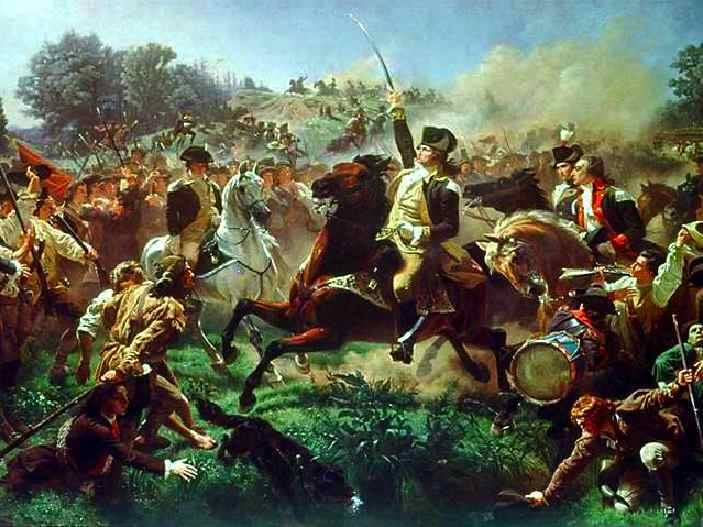

Washington managed to rally the army


Washington meanwhile rallied the retreating troops, regrouped his forces, and fought Clinton’s regulars to a standstill. The fighting went back and forth as neither side would concede. Despite the burning summer heat, both sides unleashed musket volleys and thunderous artillery. The savage day's fighting ebbed with the dark of night, and both armies collapsed where they fought and slept on their arms. But when the Americans stood at dawn, they found the entire British had beat feet to Sandy Hook and the safety of the fleet. Although a sort of moral victory, Washington was vexed at losing a chance to crush the enemy.


The Americans stood their own against British assaults


The End of the Affair


By the 29th, Washington revisited the issue of Lee and his behavior. In a series of letters, Lee became petulant and unremorseful. When Washington questioned his reason for the withdrawal, the two men exchanged words. Demanding a hearing, Lee was charged with insubordination. A court-martial was convened over several weeks. Lee was found guilty of dereliction and cowardice. His punishment: removal from command in the army for one year. Unsatisfied with the outcome, Lee became involved in several affairs of honor and frequently criticized the Continental Congress for enforcing the sentence. These actions resulted in his permanent dismissal from the Continental Army in January 1780.


Lee once advised that he liked his
dogs better than people


Retrospective


Charles Lee’s quirky personality, arrogance, and narcissism made him very controversial. Yet, for most of the war, he was admired by many in the army and Congress for his experience and professionalism. He has a mixed record, though, and there were times when his loyalty was suspect. But his actions at Monmouth were the result of his awe of the British professionals, fear of getting decisively engaged, and confusion in the fog of battle. I also suspect he was undermined by a lack of respect for Washington, poor chemistry with his subordinate commanders, and lack of confidence in the American soldiers under him. Of these, the third was his greatest failure.


Wednesday, December 27, 2017

The Mad Man

Who was that Mad Man?


As a boy learning about the American Revolution, I found it quite amusing that a general would be called "Mad" Anthony Wayne. I wondered who that madman was and what he was so mad about. Any study of the American War for Independence should include this colorful Pennsylvanian, who captured the imagination of his contemporaries and endures through the ages.

Scion of a Scots-Irish Military Family


Anthony Wayne was born on January 1, 1745, to Isaac Wayne and Elizabeth Iddings Wayne in Easttown Township, Chester County, Pennsylvania. Isaac Wayne was born in Ireland, the son of Captain Anthony Wayne, a military officer who immigrated to America with his Dutch wife, Hannah. Their son Isaac became a tanner, establishing one of Pennsylvania's top businesses, and eventually took over the family estate, Waynesboro, from the aging captain. 

Young Anthony Wayne was well-educated, attending the Philadelphia Academy and the College of Philadelphia. Like George Washington, Wayne also worked as a surveyor, especially in Nova Scotia. He returned to Pennsylvania in 1766, where he continued surveying and worked at Isaac's tannery. He also married Mary Penrose, who bore him two children, Margretta and Isaac. 

As tensions with Great Britain increased, young Anthony became involved in the American cause. Like many emerging leaders of means, he turned to public service. Wayne served in the Pennsylvania legislature in 1774, and the next year, he raised a militia regiment in Chester County. In January 1776, he received a commission as colonel of the 4th Pennsylvania Continental Line. Things were about to get interesting for Anthony and the war.


Wayne's Home in Waynesboro


A Mad Campaigner in a Mad Campaign


As colonel of the 4th Pennsylvania, Wayne headed north to join General John Sullivan's division in the reckless and doomed invasion of Canada. In his first action, Wayne fought bravely but unsuccessfully against larger forces at the Battle of Trois-Rivieres in June 1776. 

The campaign soon fell apart, but Wayne proved himself through his leadership in guiding the army's retreat into New York. He then took command of Fort Ticonderoga, a crucial defense point on New York's northern frontier. Congress, pleased with his efforts, promoted him to Brigadier General in February 1777. Not long after, he was called south to join General George Washington and the main Continental Army, where he was given command of a brigade of Pennsylvanians.


Anthony Wayne

A Colorful Character


Wayne was a vibrant and irreverent leader who seemed to set the stage for later military figures like George Custer and George Patton. He used profanity effectively, often amusing his troops. Like Patton, he understood that soldiers should look sharp and that military pride comes from a good appearance. Similar to Custer and Patton, he was always well-dressed and kept a neat appearance. His bravado added to his legend, making him a favorite subject not just among troops but also among fellow officers. And like Custer and Patton, Wayne proved himself with inspiring performances in battle.


Holding the line at Brandywine


Although Washington was defeated, he managed to extricate his army and keep it as a threat to the slowly advancing British forces. When the Americans abandoned Philadelphia, Washington sent Wayne to shadow the British army and threaten their lines of communication. 

Unfortunately, the British received intelligence that revealed Wayne's position. Wayne's encampment near the Paoli Tavern was overrun in a stealthy night attack by Major General Charles Grey on the evening of September 20th. Grey earned the nickname "No Flint" because he ordered his men to remove their flints to avoid accidental discharges that could spoil his surprise: cold steel for the rebels. Later, claims emerged that the British took no prisoners and granted no quarter, leading to the engagement being known as the "Paoli Massacre." 

The massacre tarnished Wayne's reputation somewhat. Undaunted, he led his men across the fog-shrouded fields near Germantown, Pennsylvania, on October 4, 1777. With typical audacity, Wayne's command advanced ahead of other Continental brigades and pressed on the retreating British with the bayonet. However, Wayne and his old commander, General John Sullivan (also known to be headstrong and impetuous), advanced too quickly. Both were cut off about two miles ahead of the other Continental regiments. 

When the British regained their composure, their defenses stiffened. When Washington finally ordered a retreat, he once more called on Wayne to provide the rear guard. Not long after, the Continental Army went into winter quarters at Valley Forge.


Despite  the Paoli Massacre, 
Wayne was held in high regard


The harsh winter at Valley Forge had a silver lining. A new American army was born, trained, and drilled to fight in European style by German General Von Steuben. This new army would get its chance to prove itself the following summer, and Wayne would be in the mix once again. The British relieved Lord Howe of his command and replaced him with Sir Henry Clinton, who decided to abandon Philadelphia and concentrate forces once more around New York City. 

In June 1778, Clinton ordered half of his forces to sail north. However, a sizable column marched across New Jersey toward their new base of operations. Wayne was called upon to lead the advance guard at Monmouth Court House, New Jersey. Once again thrust into a controversial engagement, Wayne's forces were abandoned by Major General Charles Lee. His men were soon pinned down by superior British forces, a rearguard that struck back at the pursuing Americans. Demonstrating determination and resourcefulness under fire, Wayne held his ground until reinforcements sent by Washington arrived. Wayne reorganized his troops and continued fighting.


American attack at Monmouth


Light Anthony


By the spring of 1779, Washington's Army focused on the main British garrison in New York. The British tried to lure Washington into a decisive battle. Awaiting anticipated French support, Washington played a game of cat and mouse. 

In May 1779, Sir Henry Clinton, the British Commander in Chief, launched the first phase of a complex plan to destroy Washington's army. Using their superior naval forces, the British moved up the North (Hudson) River and took the strategic position at Stony Point, about 10 miles south of West Point and 35 miles north of New York City. 

This move aimed to draw Washington out of the Hudson Highlands. Clinton then sent an expedition to Connecticut, leaving a reinforced regiment with fifteen guns to defend the earthworks around Stony Point. Washington observed the British defenses and decided to take them by force. 

To accomplish this, the Corps of Light Infantry was formed on June 12, 1779. There was no doubt who would command the unit or the mission: Anthony Wayne. The Corps of Light Infantry was an elite unit assembled for campaigns from 1777 to 1781. Its members came from the light infantry companies of each regiment in Washington's army. 

In 1779, the Corps consisted of a brigade of four regiments, each with two battalions of four companies. At midnight on July 16, the attack began in three columns, with Wayne personally leading one. In a tactic successfully used against him at Paoli, Wayne had his men advance with unloaded muskets, ready to storm the defenses with bayonets. Wayne's column came under musket fire, and he was wounded. Nevertheless, Wayne's men pressed on and quickly overran the British defenses. They captured over 500 prisoners and suffered only 100 casualties. 

This victory boosted the morale of the American Army and the cause, which had suffered setbacks. For his heroism and tactical success, Congress awarded Wayne a rare medal in recognition of the victory.


Stony Point was Wayne's most celebrated exploit


Why so Mad?


I always thought Wayne was nicknamed "Mad" because of his heroics in battle, especially for his actions at Stony Point. However, ironically, he didn't earn his nickname for his reckless fighting style; instead, it came from an incident in Morristown, New Jersey, during winter quarters in 1781. 

The story goes that New Jersey law officers detained an eccentric soldier known as “the Commodore” or “Jimmy the Drover” for a minor civil infraction. The soldier asked Wayne for help, but Wayne threatened to have the troublemaker whipped instead. “Jimmy the Drover” supposedly responded, “Anthony is mad! Farewell to you; clear the coast for the Commodore, ‘Mad Anthony’s’ friend.” Wayne’s Pennsylvanians really enjoyed the story and decided that “Mad Anthony” was a fitting nickname for their leader. You have to admit, it’s not a bad nickname.

 Winning the War


In the spring of 1781, Wayne led his Pennsylvanians into Virginia and served under Lafayette to help stop the British. On July 6, 1781, he fought alongside Lafayette at the Battle of Green Spring. His aggressive charge surprised the larger British forces, probably saving the Americans from defeat. Wayne then joined Washington to help defeat Cornwallis at Yorktown. 

However, the war did not end there. In 1782, Wayne was sent to Georgia to help drive out British forces. He broke the longstanding British alliance with the Indian tribes in Georgia. As British power declined, he managed to negotiate treaties with the two strongest tribes, the Creek and the Cherokee. As a final honor, Congress promoted him to major general on October 10, 1783. 

After the hostilities ended, Wayne went back to Pennsylvania. The well-known war hero served in the Pennsylvania Assembly and was a delegate to the Constitutional Convention. But after the war, his life was focused on peace and quiet, as it was for many of his peers.

Commander of the US Army


Wayne, as Commander of the
Legion of the United States
In 1792, it was time for Anthony Wayne to answer the bugle call once again. 

President George Washington appointed Wayne as commander-in-chief of the modest U.S. Army, known as the Legion of the United States. The Legion had suffered several defeats at the hands of the intertribal Indian Confederation formed to resist white encroachments into the Ohio Territory— the Midwest. 

The Indian Confederacy decisively defeated U.S. forces in 1790 and 1791 under the leadership of Shawnee chieftain Blue Jacket and Miami chief Little Turtle. The Indians had been supported and supplied by the British, who refused to evacuate British fortifications in the region as stipulated in the Treaty of Paris.


Wayne's victory at Fallen Timbers was the new
Army's first post in the RevWar


Upon his arrival, Mad Anthony energized the beleaguered Legion with his own passionate leadership. At the Battle of Fallen Timbers, Wayne decisively ended Indian resistance when his experienced force of 1,000 men routed the 2,000 warriors assembled for a final showdown near Fort Miami on the Maumee River. 

This victory allowed Wayne to negotiate the Treaty of Greenville in August 1795. Under its terms, the Indians ceded most of Ohio and large parts of Indiana, Illinois, and Michigan. This outcome was not guaranteed for many reasons (British schemes aimed to keep the 13 states along the Atlantic coast). Wayne's victory secured thousands of square miles of disputed land for the United States and led to signed peace treaties with the Indian tribes. Mad Anthony Wayne successfully completed the mission for which President George Washington had called him back to active duty.


Treaty of Fort Greenville secured peace in the
 Northwest Territory and American expansion


Untimely Death


Having finished his work in the northwest, Wayne started the long journey home. He sailed from what is now Detroit on a sloop. After five days, he reached the site of the old French outpost at Fort Presqu'Isle, now known as Erie, Pennsylvania. Though the weather was nice, his thoughts grew darker, and he wrote several letters about his final wishes. 

At Presque Isle, Wayne had a serious gout attack. Anyone who's experienced gout knows that’s enough reason to be upset. This was clearly a severe case with complications. Urgent calls for doctors were sent to Pittsburgh and the Army hospitals. Wayne's health kept getting worse as he developed intense stomach pains. The doctors from the east arrived, but on the same day, December 15, 1796, "Mad" Anthony Wayne died. He was buried in a simple coffin, with his initials and date of death carved into the wood using round-headed brass tacks, at the foot of the blockhouse flagstaff on garrison hill.


Rebuilt blockhouse on Presque Isle

A Strangely Eerie Homecoming

In 1808, Wayne's son Isaac returned to Presque Isle to take his father's remains back home. 


Unfortunately, he lacked enough space for all the remains in his small, sulky wagon. The doctor helping him boiled the late hero's corpse, then returned the flesh and clothing to the coffin and reburied it. He then packed the bones for transport to the east. "Mad" Anthony Wayne's bones were buried in the family plot at St. David's Episcopal Church cemetery in Radnor, Pennsylvania. The strange end to the great warrior's earthly remains gave rise to legends of hauntings. One could say that while Anthony Wayne may have become enraged for little reason in life, he certainly had a reason for anger in death.


Wayne's 2d Gravesite Radnor, Penna.


Sunday, December 8, 2013

Gambling through Defeat and Victory

The Gambler


Apologies to Kenny Rogers, and no, His Excellency did not have a gambling problem. Although, as a landed Virginia planter, he was no stranger to money won and lost at the horse race or whist table. Ever the champion of order and integrity, Washington knew that excessive gambling was problematic. He is quoted on the subject: "Gambling is the child of avarice, the brother of iniquity, and the father of mischief." But during the time of the Yankee Doodle Spies, it was sometimes a necessity, at least on the field of battle.

The Gambler


The North and Early Success


Even as he adopted a risk-averse Fabian strategy for the war, Washington understood that a successful commander must be willing to take calculated risks. Since his army was almost always outnumbered and outgunned, the need to take risks arose frequently. In Boston in 1775, Washington took three significant chances: outfitting ships to challenge the British Navy, dispatching troops to Canada, and sending a small force to capture Fort Ticonderoga and its formidable artillery. 


Guns of Ticonderoga


The Canada campaign failed, and the navy's efforts highlighted the need for a Continental Navy, but Ticonderoga was taken by a surprise attack. This victory gave the Americans control of the largest fortress in the colonies and, more importantly, the heavy guns the Continental Army needed to make the siege of Boston a success.


The Middle Brings Failure


After Boston fell, the British threatened the middle states (or colonies, as you prefer) with an attack on New York. Not yet the largest city in North America, New York was strategically important because of its location and its excellent harbor. Additionally, New York had a larger Loyalist base than New England. Washington hurried his forces south in anticipation of a sea invasion. When the British took Staten Island, Washington risked dividing his forces and deployed about a third of his army on Long Island to stop an expected phased approach to capturing Manhattan. 

The result was a severe defeat, as the vastly outnumbered forces on Long Island only escaped total destruction by taking the risk of a night move through a storm while the enemy was nearby. Two principles of war were abandoned out of desperation. Washington also gambled in the secret war — sending the unready Captain Nathan Hale behind British lines and launching the "wonder weapon" (not) - the submarine Turtle. 

The last gamble in New York was leaving a sizeable force of valuable troops at the fort named Washington on upper Manhattan. This was done to keep a foothold on the island, with the hope of retaking it later. However, the result was the loss of the fort and its troops, who could have been more useful in the upcoming campaign for the Jerseys. 


Americans faced overwhelming British forces at Long Island

The South Brings Triumph


That area would be south (some might say central) Jersey. Most Americans are familiar with Washington crossing the Delaware, and a few know it resulted in a victory at Trenton. But few understand that this unlikely win was one of Washington's biggest gambles. His forces were exhausted and demoralized after a chaotic retreat across the Jerseys. Washington's army abandoned Fort Lee to General Cornwallis and hurriedly moved from Hackensack through Newark, New Brunswick, and Princeton. 

In December, Washington managed to get his small force across the Delaware to safety in Pennsylvania. After a tough year of fighting, with barely fifteen hundred underfed and poorly equipped soldiers and a demoralized nation ready to give up the glorious cause, Washington's situation was dire. Enlistments were ending, supplies were scarce, and a panicked Congress had fled the capital, Philadelphia. To make things worse, the British captured Washington's second-in-command, General Charles Lee, in a daring cavalry raid. Those were the times that tried men's souls, and the whole world thought the end was near.


General Howe

 Nobody would have blamed Washington for taking his small forces into winter quarters and trying to come back in the spring. That's what the British commander was expecting and doing himself. To the alarm of many of his senior officers, General William Howe put his army into winter quarters just when he had Washington beaten. 

Brigade-sized units garrisoned Princeton, Trenton, and Bordentown, while the rest of Howe's army remained in or near the comforts of New York. Luckily, Lee's division made it to Pennsylvania without their commander, giving Washington the boost he needed to try a risky gamble to save the revolution from ending that winter. How he pulled off this gamble will be our next discussion.

Saturday, May 11, 2013

Yankee Doodle Angels of Mercy

I wanted to devote more time to this particular blog, but the computer gods hosed my operating system, which then imploded, causing me to spend about fifteen hours over three different days trying to get things back in order. Thus, my time has been consumed in less creative ways than I would like. On the positive side, I now have some very good friends in India...

Continental Nurse Corps?

One significant way women contributed to the Continental Army was through nursing. Female nurses were preferred over their male counterparts because every woman nursing meant one more man freed to fight. Women willing to care for the sick were in constant demand yet short supply throughout the war. A woman serving as a nurse received regular pay (which often turned out to be irregular or nonexistent), but the job carried many risks, including exposure to deadly diseases like smallpox, along with other viruses and infections. Nursing was one of the most challenging roles within the medical profession, leading many women around the camps to be bribed and coerced into the position. The promise of full rations and an allowance for volunteer nurses, or threats to withhold rations from women who refused to volunteer, often proved effective.

Shortly after the establishment of the Continental Army on June 14, 1775, Maj. Gen. Horatio Gates reported to Commander-in-Chief George Washington that “the sick suffered much for want of good female Nurses.” Gen. Washington then asked Congress for “a matron to supervise the nurses, bedding, etc.,” and for nurses “to attend the sick and obey the matron’s orders.”


General Horatio Gates recognized
 the need for nurses early in the war


In July 1775, a plan was presented to the Second Continental Congress that designated one nurse for every ten patients and stated “that a matron be allotted to every hundred sick or wounded.”


Second Continental Congress

Big Bucks

Congress allowed two dollars per month as a salary for these nurses, while matrons (women who supervised nurses and acted as liaisons to surgeons) received four dollars monthly. In 1776, Congress raised nurses’ pay to four dollars per month, and in 1777, to eight dollars, possibly to attract more women to nursing or to keep those who were dissatisfied with their jobs. 

Despite Congressional efforts to boost the number of female nurses for the army, a shortage persisted throughout the war. Regiments consistently sought women to care for their sick and wounded. Newspapers in Massachusetts and Virginia advertised requests for nurses to serve in the Continental Army. In July of 1776, Nathanael Greene wrote: "The sick Being Numerous in the Hospital And But few Women Nurses to be Had, the Regimental Surgeon must Report the Number Necessary for the sick of the Regt and the colonels are Requested to supply accordingly."

Nurse or Spy?

The demand for nurses was so high that commanders often overlooked suspicious circumstances to secure women for nursing roles. In April of 1777, General Israel Putnam questioned a woman named Elisabeth Brewer after she left British-occupied New Brunswick, New Jersey. Putnam wrote to Governor William Livingston that Brewer...

Israel Putnam


" . . . has an Inclination of entering the Hospital as a Nurse; in which employment she has been before
employ'd at this place, and the Surgeon giving her a good Character, I have that purpose to detain her here for that purpose—If you have any Objections and will let me know, I will send her Immediately to you."

Brewer was allowed to take up nursing duties with Putnam's units. The fact that she had come from a British-held town did not raise enough suspicion to stop a desperate army from utilizing her skills. However, Putnam should have investigated Brewer’s background more thoroughly, as she was found guilty of espionage in June 1777.

First Patriots

But for the most part, true patriot nurses answered the call. In July 1776, orders for the Pennsylvania battalions at Ticonderoga stated that one woman was chosen from each company to go to the hospital at Fort George to nurse the sick. The returns for the hospital in Albany in July 1777 list nine female nurses. In 1778, Washington ordered his regimental commanders to employ as many nurses as possible to assist regimental surgeons.

Nurses at Work


 In March 1780, an Albany hospital provided provisions for female nurses and their children, as well as for female and child patients. Nurses Rachel Clement (with two children) and Mary DeCamp (with one child) received two rations each, while Mrs. Perkins (with three children) and Sarah Lancaster (with one child) received one ration each. Nurses working there without children received one ration each.


Continental Nurse treating at the front line

In contrast to the skilled and highly educated professionals of today, Continental nurses' duties primarily focused on maintaining cleanliness for both the hospital and its patients. The "Rules and Directions for the better regulation of the military Hospital of the United States" outlined nurses' responsibilities. They were required to remain clean and sober, empty chamber pots as soon as possible after use, wash new patients, wash the hands and faces of existing patients, comb patients' hair daily, change linens, sweep the hospital, sprinkle the wards with vinegar (as a disinfectant) three to four times a day, and deliver deceased patients' belongings to the ward master. Nurses were prohibited from being absent without the permission of their supervising physicians, surgeons, or matrons.

These devoted women served tirelessly and without glory, status, or substantial compensation. Like nurses today, they cared for their patients with quiet and selfless dignity. These First Patriot nurses should be given all the accolades granted to their male counterparts. So this week—and every week—we should honor them above all...


Saturday, February 16, 2013

The Indispensable Man

Since this week is George Washington's birthday, I feel compelled to write something about His Excellency, the "Indispensable Man."  
Young Washington  

These two sobriquets are just a sampling of the many honorifics given to Washington both during his lifetime and as his legacy grew. You might be surprised to know that some early biographies of Washington were poorly drawn and, in some instances, created or perpetuated myths that continue to this day, such as the cherry tree incident, wooden teeth, and his "vision" at Valley Forge. However, Washington's real achievements surpass all fictional characterizations. In this blog, we'll discuss some of his earlier accomplishments.

The young George Washington managed to overcome relatively modest beginnings and rise to a stature that has transcended the ages. Born to a small Virginia landholder's second marriage, a nearly cosmic chain of events helped elevate George Washington to the forefront of Virginia society—the platform from which he launched his career. These events include a series of early deaths (father, male siblings), failure in love, finding a wealthy benefactor, entering a successful marriage, exploiting political connections, and ultimately profiting from a series of near-catastrophic failures.

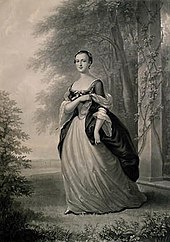
Young Martha Custis
When Washington's older brothers died at relatively young ages, young Washington inherited Virginia lands he had never aspired to. Before acquiring them, Washington set out to create his own path through surveying. He learned about land and mathematics—knowledge that would later aid him in land speculation and planning military campaigns. Young Washington became acquainted with Lord Fairfax (we won't speculate on rumored paramour Sally Fairfax here) and the brilliant and wealthy George Mason. Both connections helped him gain prominence. Failed early romances introduced him to some prominent families and ultimately led him to the acquaintance of the wealthy young widow, Martha Custis. His marriage to Martha made him a "man of consequence" in Virginia planter society. It also grounded him and helped him mature into a man of financial and emotional substance.


Virginia Governor
Robert Dinwidie
Due to his persistent lobbying and survey experience, Virginia's Royal Governor Dinwiddie sent a very young Washington west to explore Virginia's vast holdings. At that time, the Commonwealth included West Virginia and claimed large parts of what are now Kentucky, Ohio, and beyond. The issue was that those lands were inhabited by Indians whose tomahawks were influenced by their French benefactors to the north. Neither the French nor the Indians considered the territories that now make up Ohio and Kentucky to be part of the Old Dominion. Nevertheless, Washington undertook several missions west, one of which led to the massacre of a French Ambassador. This incident directly set off a chain of events that initiated the Seven Years War in Europe and the French and Indian War in America. Essentially, George Washington triggered the world war that would eventually contribute to the American Revolution!


Serving as Aide to General Braddock in 1755


Colonel Washington
 of the Virginia Militia
During the French and Indian War, politics led to Washington becoming the commander of the Virginia militia. However, when Britain's Lord Loudoun and a series of other British commanders rejected his requests for a regular commission, Washington began to question his "Britishness." Although denied a regular commission, his knowledge of the West earned Washington an appointment as aide to General William Braddock's fateful (and fatal) campaign to capture the French fort near present-day Pittsburgh. The column of over 1,000 British regulars was ambushed in the forests of western Pennsylvania. Yet, Washington's composure in the face of panic among officers and men alike in the presence of the French and Indians brought him renown. Despite this, Washington spent the remainder of the war leading a weak militia force in a challenging defense of western Virginia settlements against Indian raids.


The post-war period in America once again relegated Washington to a local figure who focused his efforts on farming and land dealings while dabbling in petty Virginia politics. However, after the French and Indian War, Washington also embarked on a period of political reflection that enhanced his intellect and gravitas. As the struggle with the mother country began to loom over the colonies, Washington's early exploits—both his successes and failures—would eventually lead to his acclamation as commander in chief of the Continental Army in June 1775.


His Excellency, George Washington,
was proclaimed commander-in-chief of
the Continental Army

Saturday, February 2, 2013

Promotions and Pride

I served over 20 years in the US Army and had 8 years of ROTC experience before that. Not what you might think—I took junior ROTC at Xavier High School, the Jesuit Military Academy in New York. However, throughout all those years, there was one event that always brought me a sense of accomplishment, mixed with a bit of dread—the promotion!

In the military, a person's success is measured in three ways when not actually in combat: surviving, ensuring your unit members survive, or advancing on the enemy with fire and movement to achieve or hold your objective. In other words, winning battles and wars. However, throughout a war or a career, awards and medals for accomplishments, gallantry, and similar achievements are sometimes complemented by promotions. The Army does not provide cash bonuses like the civilian sector; therefore, promotions (which include longevity steps) are the only tangible form of compensation... the gift that keeps on giving. And they definitely boost the ego.

                                                                                
                                                         Medals are symbols of achievement


While many who serve their country may publicly dismiss the need for such recognition, most of these sentiments are simply nonsense. Nearly everyone appreciates acknowledgment, and in the military, promotions are the main form of recognition, besides gallantry awards. During the era of the Yankee Doodle Spies, the promotion of officers was highly important.

And just like their British counterparts, the American officer corps was highly political. Congress controlled promotions and commands at the highest levels. Officers actively lobbied congressional representatives to advance their careers. The American agents in France, Silas Deane and Benjamin Franklin, even sought rank and command for foreign officers and civilians. John Adams, disgusted by this military politicking, wrote that he “wearied to Death with the Wrangles between military officers, high and low. They Quarrell like Cats and Dogs. They worry one another like Mastiffs Scrambling for Rank and Pay like Apes for Nuts.”


Silas Dean


Military pride almost cost us our independence. More importantly, a denied promotion or command often played a key role during the war. Note the less-than-honorable service of General Charles Lee, Washington's second-in-command, who avoided excelling whenever it threatened Washington's authority. The scheming of General Horatio Gates, victor at Saratoga, became the focus of an anti-Washington group aimed at replacing Washington with him. Furthermore, pride, as harmful to the nation's fight for independence, is most famously shown by the treason of General Benedict Arnold, whose grievances (and they were many) included the unfair denial of a well-deserved promotion to Major General. Each of these men turned against Washington and, therefore, against the cause, because of excessive pride.

                                               
                                                                              Horatio Gates

We often forget that the men who served as our First Patriots were human beings with families and obligations. Promotion meant prestige and honor, which were highly valued traits in the 18th century. These promotions also brought higher pay, and most officers, along with all enlisted men, were not wealthy landowners but rather teachers, shopkeepers, small farmers, and so on. Therefore, the possibility of a promotion and the potential for increased earnings were important considerations. They all (correctly) believed that a higher rank during the war would lead to greater prestige, which could be helpful after the war. Again, they weren't much different from people today. In an ideal world, patriotism would be its own reward. But, in reality, patriotism should be rewarded fairly.

                                                                             
                                                                         Charles Lee

Unfortunately, a promotion in the Continental Army did not always come with a pay raise. In fact, payments for officers and enlisted personnel were irregular. Congress had to request funds from the states to pay the Army, and the states often delayed or refused whenever they could. Without going into detail here, this nearly undermined the new republic before it even began, and only swift action by George Washington himself prevented a disaster. It also shaped Washington's political views toward a strong central government, one capable of funding national defense and serving the common good. Interestingly, the politics of promotion played an important role in both the war's progress and the country's formation.


                                                                Continental Army Officers


Saturday, December 22, 2012

Silent Night...Silent Might

Christmas celebrations in colonial America were much more staid than those we know today. December 25th in colonial America was just another day unless it fell on a Sunday, in which case it was just another Sunday. America's celebration of Christmas as a very special holiday began with the large wave of German immigrants in the early 1800s. Germans always held Christmas as the most special of days. Christmas's role in the English-speaking world peaked during the Victorian era. Victoria's consort, Albert, brought many Christmas traditions with him, and later Charles Dickens and other novelists popularized the season. Of course, Santa Claus is derived from Sant Niklaus, a Dutch character based on the original Saint Nicholas, a Roman bishop in what is today Turkey. Full disclosure: the original Saint Nicholas is buried in my grandparents' home city of Bari, Italy.

As Christmas approached in December 1776, the fortunes of the American rebellion had plummeted. The British juggernaut advanced into the Jerseys (back then, New Jersey was sometimes referred to as East and West Jersey). Lord Charles Cornwallis led the invading vanguard of some 5,000 British and Hessian troops in pursuit of Washington's dwindling army. Washington abandoned Fort Lee and maneuvered to Hackensack, where he checked the British only briefly before retreating without pause through Newark, New Brunswick, Princeton, and Trenton. On the 8th of December, Cornwallis and his scouts reached the east bank of the Delaware just in time to watch Washington and his personal escort depart on the last boat.


Herssian Grenadier


The patriot cause was at its nadir. Panic had set in, especially in Philadelphia. Lord Howe had issued a proclamation offering amnesty to any rebels willing to swear an oath to the King. Some had begun to accept it. Worse still, many of Washington's best troops had enlistments expiring, with little likelihood that replacements would arrive. Fearful of a British assault on the capital, the Continental Congress fled and turned governance over to the military. To stall the British, Washington had all the serviceable boats along a 70-mile stretch of the Delaware confiscated. The British advance had to await their engineers to plan a crossing. Fortunately, Lord Howe had decided he had all but whipped the rebels and ordered his army into winter quarters, with brigade-sized garrisons at Brunswick, Trenton, Princeton, Bordentown, and Cherry Hill. The remainder took quarters on Staten Island or Manhattan.


Gathering Boats was Critical


But morale across the colonies remained dismal. The end seemed in sight, as Howe assumed. The December 23rd edition of Thomas Paine's pamphlet "The Crisis" inspired many Americans. A desperate Washington gambled on a winter strike against the rebels before many of his best regiments dissolved. He had the pamphlet read to his troops and conceived a plan for a Christmas thrust in three divisions to take the enemy garrisons at Trenton and Bordentown. At first, demoralized by the British advance, New Jersey militia units began probing and harassing the British garrisons, isolating them in their posts. Then General John Sullivan arrived with a division from the Hudson Highlands. These reinforcements gave Washington the strength he needed to complete his plan.


Dramatic portrait - Washington crossed over
in the dark of a December night


On the night of December 25, Washington made his famous crossing at McConkey's Ferry and marched nine miles along the Delaware to Trenton. Divisions under Generals Cadwallader and Ewing (mostly Pennsylvania and New Jersey units) were to cross near Bordentown and link up with Washington, but worsening weather and rapidly forming ice floes prevented them from crossing. Nevertheless, Washington struck with just over 2,000 men just after dawn, even as a mix of rain and snow descended on them.


Overrunning the Hessian guns at Trenton

So what's the Christmas connection? The German garrison, a brigade under the command of the renowned Hessian Colonel Johann Gottlieb von Rall, was caught unprepared. Germans celebrate two days of Christmas, and Washington struck between them. Indeed, the Germans themselves had been worn out by the rigors of the campaign, and the Jersey militia had played a part in tiring them and causing a "hunker down" effect. But Rall never expected the onslaught that caught them in the weary hours of their holiest of days. Rall fell mortally wounded while rallying his battalions, and soon after the garrison surrendered more than one thousand men. The battle did not last an hour. The stunning victory saved the American cause, which was all but finished.