Followers

Showing posts with label Continental. Show all posts

Sunday, September 22, 2013

How they Fought

Mongol Warriors 

Myth


Most wars have more than their share of urban legend, mythology, and plain old disinformation. Sometimes it is deliberate.  For example, the Mongols encouraged and spread myths about the size of their armies,  The results:  just the idea they were coming caused many cities, kingdoms, and peoples to surrender without a struggle. Always the best way to win wars. I'll use the myth busters theme to debunk or discuss some of the popular myths of the American Revolution of which there were not a few. After all, the 18th century in general is a misunderstood period of history - calling it the Age of Reason comes to mind as one myth.  Reason has been around since man walked the earth. It is how he reasons that has changed with the advent of the printed word and literacy that expanded in the 1700s.

Soldiers


Thought I would begin with some musings on how the armies fought during the war. Here the myth centers around the indomitable and indefatigable American patriot using his frontier skills against an unimaginative and drone-like British soldier. The patriot is most usually a "Minuteman," citizen soldiers expert with the
famed long rifle picking off stupid redcoats and oxen-like Hessians. Yes, there really were Minutemen (in Massachusetts), and the militia was the mainstay of the Cause. When they performed well, things generally went well. But their performance (and reliability in terms of sticking around) was sketchy throughout the war. Perhaps we'll go into the why in a future blog but the fact is the militia, in a pitched battle, had a poor record.

Tactics


This leads to the myth of the war being an irregular conflict. The military leadership of the Americans, beginning with General Washington, attempted in almost every case to fight a "Euro" style of war. In the 18th century that meant either a war of "posts," attacking or besieging strong points, or attempting to defend the same. If a war of "posts" was not waged, then a war of maneuver and the open battle was desired. Washington favored the latter. Remember, most of the American senior leadership had fought in the French and Indian War as British soldiers.  They studied and learned British tactics, techniques, and procedures. Although Washington never received the British Army commission he sought, he fought with them in Braddock's failed campaign against Fort Duquesne, and later organized the Virginia militia along British lines. Conversely, the British learned a lot about woodland warfare during the French and Indian War. Their flank companies, light infantry, and grenadiers were adept at irregular fighting and as the war progressed, the line units adapted as best they could. In addition to European -style volley fire, both sides resorted to individually aimed fire, depending on the tactical situation, terrain, etc.

                                                        British infantry fighting in forest


Leaders


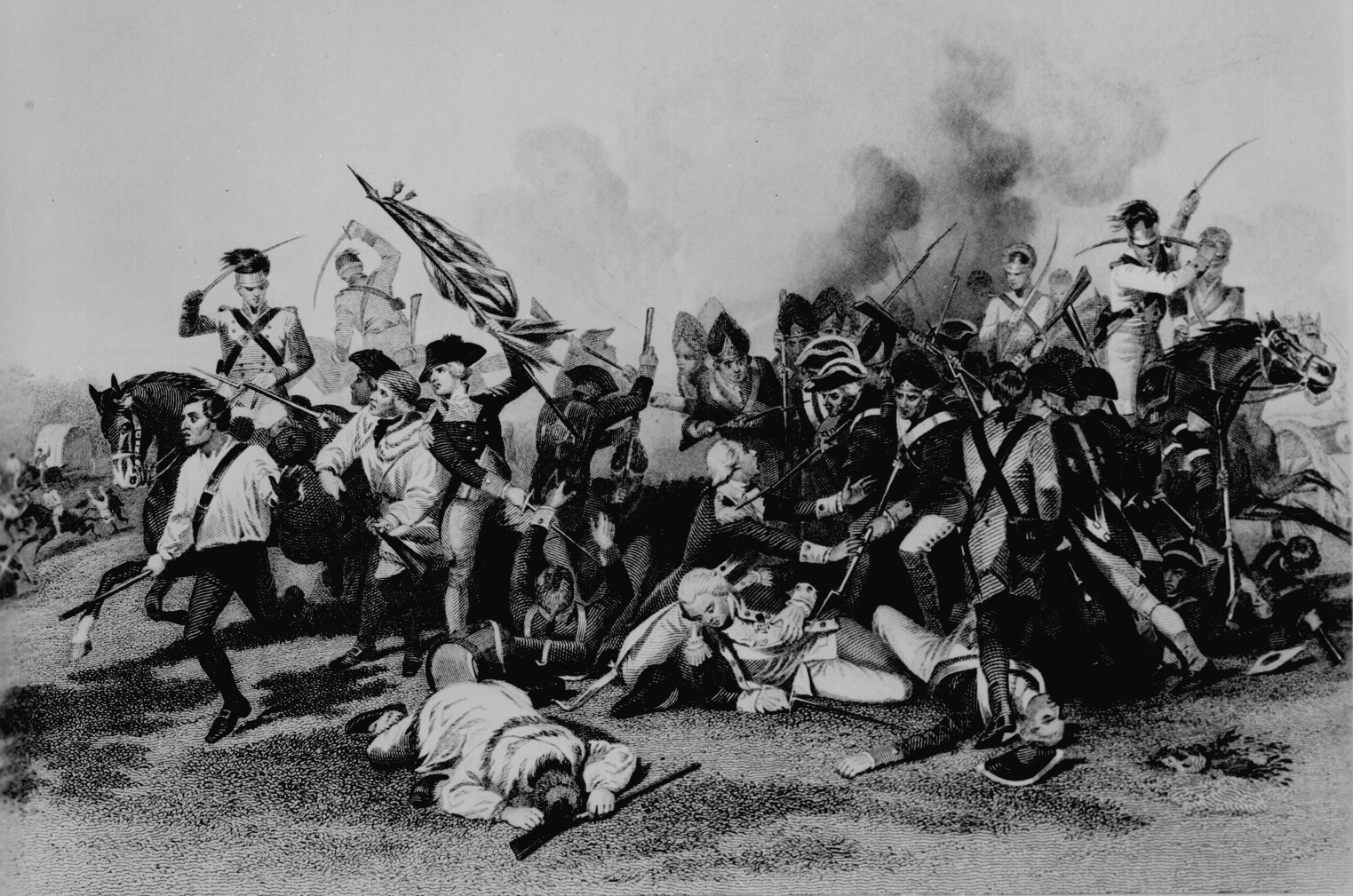
Battle of Camden
Several Senior American officers had been British regulars in the Seven Years War.  Charles Lee, a former British officer, became Washington's second in command.  Horatio Gates became commander of the Northern Department where he won laurels at Saratoga, and the Southern Department where he was disgraced at Camden.
So the American ideal was to fight the British Army as a "regular" field army and not a "rabble in arms."  The American counter to the British regulars and Hessian mercenary was the Continental.
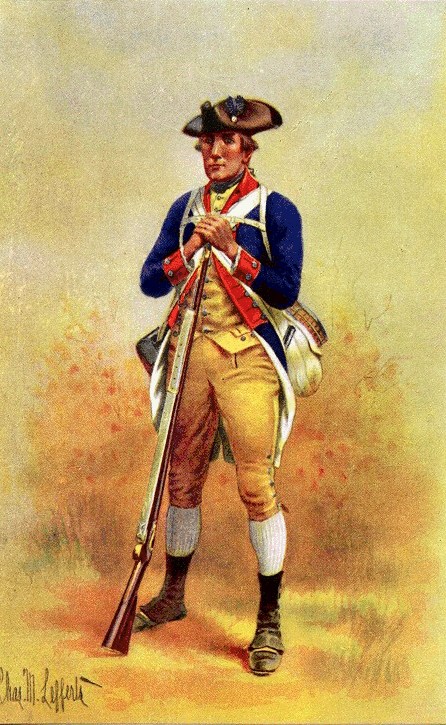

The Continental


Friday, November 9, 2012

The Cortelyou House

The House

This edition of the Yankee Doodle Spies highlights the Vechte-Cortelyou House in Brooklyn, New York, the site of the high-water mark of the Battle of Long Island.

"Here on the 27th of August, 1776, Two hundred and fifty out of four hundred brave Maryland soldiers, under the command of Lord STIRLING, were killed in combat with British troops under CORNWALLIS."
...Inscription on a plaque commemorating the action near the Vechte-Cortelyou House, now called the Old Stone House.


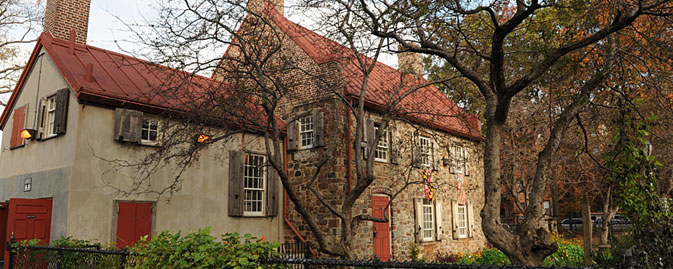
Frontal View of the House today


The Vechte-Cortelyou House in Brooklyn, New York, was built in 1699 by a Dutch settler named Claes Arenston Vechte. Vechte and his family worked the land, farming the neat fields and grazing animals in the verdant pastures of this rich farmland.  They also gathered oysters and other bounty from the nearby Gowanus Creek, which they used to ship their produce to Manhattan.  Around the time of the revolution the land was leased to the Cortelyou family, and one of them later purchased the property.  The simple architecture is classic Dutch colonial with a mixture of stone and mortar, steep tiled roof and a wood shingled appendage (what we might today call a "bump-out") that appears to function as the kitchen.

Major General Cornwallis

The house was situated near the intersection of today's 3rd Avenue and 5th Street in Park Slope. During the events leading up to the cataclysmic fight that took place there, the house served as the headquarters of William Alexander, who called himself "Lord Stirling," because of a claim to that Scottish peerage.While holding the passes south of the house, Lord Stirling found his army surrounded when Major General (himself a Lord) Cornwallis' force of several thousand seized the area around the house after a night march down the Jamaica Road into the unguarded east flank of the American Army. 


Lord Stirling


While he ordered most of his forces to attempt escape across the Gowanus Creek, Lord Stirling led some 400 hundred Continental Line from Maryland and Delaware against the British defending near the Old Stone House, which they had turned into a strong defensive position. Stirling led six assaults against the British at that location and around 250 Americans were killed there and are buried nearby (see my earlier blog on trying to find them entitled "On Hallowed Ground").  The importance of this battle is fully described in The Patriot Spy, and the fictional events that I added form the genesis of the Yankee Doodle Spies.
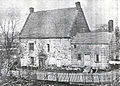
Thumbnail for version as of 09:46, 25 August 2011

The Original House


Interestingly, in the 19th century the original house once served as the headquarters of the Brooklyn baseball club that later became the famed Brooklyn Dodgers. You can see from this photograph the once prosperous farmstead had by the latter 19th century fallen into disrepair. 

Back View of The Old Stone House Today


The original Cortelyou House was later torn down but a reconstruction was built from dug up debris and replica materials and can be found in J.J. Byrne Park in the Park Slope section of Brooklyn. It serves as a museum that celebrates the events of August 1776 that took place on the hallowed ground around it. 
Sadly, little of the feel or look of the times can be found there.  However, nearby Prospect Park and Greenwood Cemetery do present views that might have been "enjoyed" by Lords Stirling and Cornwallis back in August of 1776.
As you can see, the reconstructed house is smack in the heart of a major urban area.  Note the Gowanus Canal, the remains of the Gowanus Creek, not too far distant. 

Where in the world is the Cortelyou House?