Followers

Showing posts with label Henry Laurens. Show all posts

Sunday, August 16, 2026

Patriot of Unambiguous Morality

When I was writing the latest Yankee Doodle Spies novel, The South Spy, I wondered how to handle this edition’s subject. To me, John Laurens is such a heroic figure that I was tempted to make him a major historical character. I decided against it because someone so substantive would require more than I could present in a work like this. Others, such as the legendary Francis Marion, also fell into this category. Face it, the South has plenty of colorful people in its history. So here is my humble attempt to give this impressive First Patriot his due.


John Laurens


A Charleston Heir Answers the Call  

Born October 28, 1754, into one of South Carolina’s wealthiest planter families, John Laurens grew up amid rice fields and the Atlantic slave trade that enriched his father, fellow patriot and future President of the Continental Congress, Henry Laurens. His family traced its roots to French Protestant (Huguenot) refugees who fled religious persecution in France. 

His great-grandfather, AndrĂ© (or Andre) Laurens, left France in the late 17th century (around the time of, or just before, the 1685 revocation of the Edict of Nantes), settled first in New York, and later moved to Charleston, South Carolina. The family intermarried with other Huguenot refugees (such as the Grassets), and by the time of John’s father, Henry Laurens, they were well established in South Carolina society. 

Educated in Geneva and London, the younger Laurens embraced Enlightenment ideals of liberty even as revolution erupted at home. In 1776, John married Martha Manning in London while she was pregnant with their daughter, Frances. He left England in December 1776 to return to America, never to see his wife again or to meet his daughter. 


Henry Laurens

In August 1777, Laurens joined George Washington’s staff as an unpaid volunteer aide-de-camp, where he became close friends with fellow- intellect, Alexander Hamilton. In the following year of campaigning, young Laurens earned a reputation for reckless courage at Brandywine, Germantown, and Monmouth.

A Radical Vision for Southern Arms  

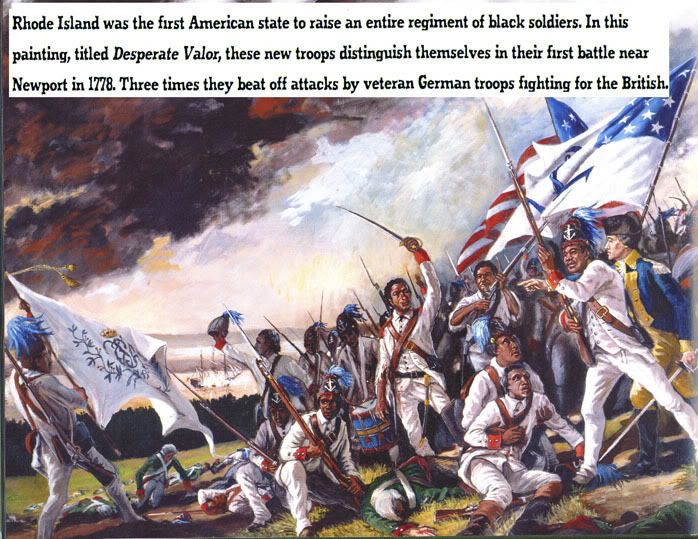
When the British turned their full weight southward, Laurens returned to defend his native state. Before leaving Philadelphia, he proposed a bold solution to the Continental Army’s manpower crisis: raise battalions of enslaved men, promise them freedom for faithful service, and strike at both the enemy and slavery. 


Rhode Island Black Continental Infantry


In response to this “Black Battalion Proposal,” Congress passed a resolution in March 1779 that encouraged South Carolina and Georgia to raise 3,000 enslaved men, promising freedom in exchange for service. Congress appointed Laurens lieutenant colonel to lead the effort, but the South Carolina legislature rejected the proposal in 1779 and again at Jacksonborough in early 1782. 

Undeterred, Laurens took to the battlefield—suffering a wound at Coosawhatchie and leading infantry in the bloodbath at Savannah—while continuing to demand freedom for Black soldiers.

Charleston Falls, a Patriot Captured  

By spring 1780, the conflict in the South had reached a crisis. British troops under Sir Henry Clinton trapped the American garrison during the Siege of Charleston. Laurens fought stubbornly alongside the defenders until the city surrendered on May 12, 1780. The British Southern Strategy was at its apogee. Captured in the war's largest American defeat, he was paroled to Pennsylvania. Rather than breaking his spirit, the fall of his hometown hardened his resolve. Upon his official exchange as a prisoner in November 1780, he immediately sought new ways to strike back. He soon found one.


Charleston Under Siege

Diplomat Across the Atlantic  

Recognizing his intellect and fiery passion, Congress appointed the 26-year-old officer as special minister to France in December 1780. Arriving in Paris in March 1781, Laurens bypassed tedious court etiquette to appeal directly to King Louis XVI and French ministers such as Comte de Vergennes. His relentless diplomacy secured vital loans, military hardware, and a critical French naval commitment. These resources made possible the strategic trap at Yorktown later that year. Mission accomplished, Laurens immediately set sail back across the Atlantic, determined not to miss the coming showdown.


French Minister Comte de Vergennes

Glory at Yorktown, Then South Again  

At the Siege of Yorktown in October 1781, Laurens charged alongside Hamilton in the dramatic nighttime bayonet assault on Redoubt Number 10. After the victory, Washington appointed Laurens to negotiate the British surrender terms—a poetic moment of justice for an officer who had endured the indignity of capture at Charleston. Yet even as the northern theater was secured, Laurens refused to rest. He raced back to South Carolina to join General Nathanael Greene, taking command of light infantry units and directing crucial intelligence operations.

Storming Redoubt Number 10

Eyes and Ears in the Lowcountry  

Throughout late 1781 and early 1782, Laurens ran a clandestine spy network in British-occupied Charleston, funneling reports on enemy troop movements, supply raids, and evacuation preparations to Greene’s headquarters. He balanced these dangerous covert duties with a final, desperate attempt to persuade the South Carolina legislature at Jacksonborough to approve his Black regiments—only to be rejected again. Though thwarted in this attempt to secure justice, Laurens remained a formidable field commander in the Lowcountry’s grinding guerrilla war.


Laurens's Scouts in South Carolina

Final Charge on the Combahee  

On August 27, 1782, while bedridden with a severe fever, Laurens learned that a British foraging force had landed along the Combahee River. Rising from his sickbed, he rode hard to join Brigadier General Mordecai Gist and volunteered to lead a small detachment to block the enemy's retreat at Tar Bluff. Marching into a British ambush, Laurens refused to retreat or wait for support. He ordered a charge and was mortally wounded, making him one of the last high-ranking casualties of the Revolutionary War. 


Mordecai Gist

Legacy of Unambiguous Morality

Though cut down before he could see the nation he fought to build reach full dawn, John Laurens left an enduring legacy as one of the American Revolution’s most fearless and uncompromising visionaries. His relentless pursuit of liberty—not just from British rule but from the bonds of human slavery—marked him as a patriot whose moral conviction matched his legendary courage. General George Washington said it best when he later lamented that Laurens’s only fault was "an intrepidity bordering on rashness," driven by the purest motives of duty and freedom.


Hero's Grave Site


Tuesday, December 31, 2024

Palmetto Patriot

This edition begins a series of profiles to introduce some of the historical characters readers will meet when the fifth historical novel in the Yankee Doodle Spies series is released in 2025. One of the first historical characters the reader will encounter is Henry Laurens, a little-known but essential South Carolina founder who became the Continental Congress's president.


Man of Means

Laurens was born the son of a wealthy Huguenot merchant, John Laurens, in 1724. After his early education in South Carolina, his father sent him to Britain, where he learned about managing money and accounts. His experience in England served him well when he returned to South Carolina a few years later, and combined with his strong work ethic, it set him on the path to becoming one of the colony's most successful merchants. In just a few years, Laurens expanded his interests by purchasing plantations and increasing his stake in the rice trade, but unfortunately, his biggest earnings came from the slave trade.

                                                     Laurens's Company Advertisement


Husband and Father

In 1750, Laurens married the daughter of a wealthy South Carolina rice planter. Eleanor Ball bore thirteen children before dying in 1770, just after giving birth to her last child. Most of his children died young, but at least four reached adulthood, and one, John Laurens, gained prominence during the American Revolution.

John Laurens


Militia Leader

Laurens joined the South Carolina militia and rose to lieutenant colonel during wars against the Cherokee and the French and Indian War. Like many of the wealthy planter class, he also served in the colonial assembly, where he was considered a conservative and leaned Tory.

Militia Fighting the Cherokees


Times of Trouble

As tensions between Britain and the colonies grew worse, Laurens was attracted to the Whigs but faced attacks from both sides. A mob of radicals stormed his house and tore it apart searching for stamped products. Meanwhile, British Customs officials confiscated three of Laurens's merchant ships under the Townshend Acts. This increased his sympathy for the Whigs, and he published a letter criticizing the British for imposing restrictions on American trade. However, he stayed apart from those pushing for direct action or independence.

Laurens's Ships Seized by the British


A trip to London in 1771 to check his sons' education changed everything. Incensed by the corruption in British society, Laurens grew closer to the Whigs. Three years later, when he returned to America, he became a supporter of independence.

Carolina Politics

By 1775, the rebellion was in full swing, and the cautious Laurens was fully committed to the cause. He immersed himself in active politics and was elected to South Carolina's Provincial Congress—an illegal body that soon replaced royal authority. Laurens led the South Carolina Committee of Safety, a crucial role as the colonies prepared for armed conflict with Britain. He clashed with some of the more radical politicians in the state when he championed property rights in the state's new constitution, even protecting Loyalists' property from confiscation. Laurens served as the vice president of South Carolina's new government from March 1776 to June 1777.


                                                   South Carolina Provincial Congress


National Figure

Although long a fixture in his home state, Henry Laurens stepped onto the national stage in June 1777 when he joined the Second Continental Congress as a delegate from South Carolina. The following November, he succeeded John Hancock as president of Congress—a role similar to that of a speaker of the house. He introduced many important bills and led the often contentious factions during his time. His most notable achievements include the Articles of Confederation and the American alliance with France. It is as president of Congress that we meet Laurens in my novel, The Reluctant Spy. 

Henry Laurens, President of the Continental Congress

President of Congress

The South Carolina native displayed the typical Southern aristocratic sense of honor. This, combined with a meticulous attention to detail and a steadfast stance against corruption, whether real or perceived, rubbed many of his peers the wrong way. President Laurens was highly respected but never loved. He would take on anyone, including Robert Morris. The influential Morris swayed many against Laurens when he pushed for an investigation into his actions as the financier of the American Revolution. Laurens's involvement in the corruption accusations against the American agent in Paris, Silas Deane, also upset many. By December 1778, Laurens had enough and resigned as president, being replaced by fellow Huguenot John Jay—the father of American counterintelligence.

Financier Robert Morris


Diplomat and Prisoner

A year later, Laurens shifted from being a controversial figure on the national stage to one on the international stage when he resigned from his Congressional seat to serve as the American commissioner to the Netherlands. However, the British intercepted his ship off the coast of Newfoundland. The clever Laurens quickly threw the trunk full of official dispatches into the ocean, but the Royal Navy recovered them. The Netherlands' role in helping America was revealed, giving London a reason for war.

Laurens was taken to London, charged with treason, and imprisoned in the Tower of London to suffer without adequate food or medical care until December 1781, when he was exchanged for British General Charles, Lord Cornwallis, who had been captured at Yorktown the previous October.

The Tower of London


Envoy

But there was no rest for the sick and weary ex-prisoner. Upon release, he sailed to Amsterdam to settle his affairs with the Dutch. Then Congress directed Laurens to Paris, where he joined Benjamin Franklin, John Adams, and now former Congressional president John Jay in negotiating a peace treaty. He missed the final negotiations and the official signing because he was sent back to London to handle business matters, and when peace was achieved, the two nations would resume trading. He stayed in London as an ex officio representative until formal diplomatic relations were established. One wonders how envoy Laurens felt dealing with his former jailers and tormentors—or how they felt dealing with the traitor and former prisoner!

           Signing the Treaty of Paris

Up from the Ashes

By 1784, John Laurens was back in South Carolina. But he returned to a state devastated by years of brutal warfare and British occupation. His mansion in Charleston had been destroyed, and his businesses were also in ruins—he had lost the equivalent of many millions of dollars in service to his country. He spent his remaining years rebuilding the family fortune, refusing public offices of all kinds. He even declined to represent South Carolina at the Constitutional Convention.

Charleston


Laurens had his reasons. He was aging, and his health was declining. But the likely cause was the blow he suffered when he learned his son, Colonel John Laurens (a staunch opponent of slavery), had died of wounds sustained in a minor skirmish in 1782. So, the elder Laurens stayed in his native state, rebuilding his holdings until his death on December 8, 1792.

Although tarnished by his deep involvement in the slave trade, the former militia leader, businessman, slave trader, planter, politician, and statesman made many contributions to the nation's founding—as did his sacrifices. He should be remembered for both, but celebrated for his dedicated service to his country.


Thursday, June 13, 2013

Founding Fathers Part Two  - Another Palmetto Duo


Father:  Slave Trader and Political Leader


Henry Laurens was one of the wealthiest and influential of the South Carolina planter class.  Laurens became a political leader during the Revolutionary War. He also happened to be the largest slave trader in the colonies too.  In the 1750s alone, his Charleston firm oversaw the sale of more than 8,000 African slaves. When Laurens succeeded John Hancock as President of the Congress he became an important political ally of George Washington and the two maintained close correspondence throughout some of the darkest days of the war. The elder Laurens was someone who Washington could trust would work the sometimes feckless and indecisive Congress.  His support for the Indispensable Man is a little-noted but critical sidebar that led to Washington's continued leadership of a Cause often thought lost but never forsaken.

                                                                               
                                                                         Henry Laurens
                                                                

An Idealistic Son


His son John Laurens was born in Charleston on October 28, 1754. The younger Laurens traveled to London in 1771 for schooling before moving to Geneva, Switzerland, in May 1772. Laurens returned to London to study law in the Middle Temple at the Inns of Court. He returned to an America at war with its motherland and was appointed to the staff of George Washington. Laurens was perhaps the most idealistic and forward-thinking of the First Patriots. While on Washington’s staff he became very close friends with Alexander Hamilton and (along with his father in Congress) played a key role in countering a movement against the commander in chief, which included his winning a duel with one of Washington’s adversaries. He showed reckless courage at the battles of Brandywine, Germantown in which he was wounded, and Monmouth, where his horse was shot out from under him. Lafayette praised his courage and marveled that he had not fallen in the battle. Laurens was an idealist who believed that the republican principals the Americans were fighting for were hypocritical if they continued to utilize slave labor. Strongly influenced by the growing abolitionist literature that circulated in England while he was studying, Laurens encouraged those around him, including Washington, to consider freeing their slaves. The responses that Laurens received were mixed. Some, such as the Marquis de Lafayette, eventually came to the same conclusion. Others, such as Washington, remained hesitant, fearing the economic and social upheaval such a measure would cause.


                                                                      John Laurens

After the British shifted military operations to the South, Laurens proposed that South Carolina arm slaves and grant them freedom in return for their military service. In March 1779 Congress approved his idea and commissioned him a lieutenant colonel. Elected to the South Carolina House of Representatives, Laurens introduced his black regiment plan but met overwhelming defeat. His belief that blacks shared a similar nature with whites and could aspire to freedom in a republican society would set Laurens apart from most prominent southerners in the Revolutionary period. When the British threatened Charleston in May 1779, Laurens opposed Governor John Rutledge’s plan to surrender the city. Later that year he commanded an infantry column in the failed assault on Savannah. Laurens was captured when Charleston finally surrendered to the British in May 1780 but was soon exchanged.


Siege of Charleston

A Youthful Diplomat


Because of his integrity and devotion to duty (and his French fluency), Congress appointed Laurens special minister to France. He arrived in France in March 1781 and quickly obtained a loan from the Netherlands to buy more military supplies and French assurances of active military support. Laurens served once more under Washington at Yorktown where the young prodigy represented the American army in negotiating the British surrender.


Clandestine Warfare and an Untimely Death


Returning south (and losing a final plea for a black regiment) Laurens served under General Nathaniel Greene in the always vicious southern theater. He operated a local spy network that gathered intelligence on British activities around Charleston. To the everlasting loss of his country and his state, Laurens was killed on August 27, 1782, during a meaningless skirmish on the Combahee River.