Followers

Showing posts with label War of 1812. Show all posts

Sunday, October 30, 2022

Patriot Scoundrel Part 2


Patriot Schemer

Resignation from the Continental Army did not mean James Wilkinson's military career had ended. Like many of that era and throughout American history, Wilkinson dealt with failure and frustration by going west. In some ways, his resignation was the beginning of a new military career.

Go West, Young Man

After trading his Continental commission for a state commission, Wilkinson became a brigadier general in the Pennsylvania militia in 1782. The following year, he became a member of the Pennsylvania Assembly. But the canny Wilkinson realized the real potential of developing the new nation's western lands and, in 1784, moved to the Kentucky territory, which was still part of Virginia. Wilkinson immediately got involved in local politics and began advocating for the territory's three counties to separate from the Old Dominion.

Kentucky was claimed by Virginia


Wilkinson's first foray into international affairs occurred a few years later. In April 1787, he traveled to  New Orleans, the largest city and capital of the Spanish colony of Louisiana, and met with the Governor, Esteban Rodríguez Miró. The issue was one of the major concerns of Americans living west of the Appalachian Mountains – the hefty tariffs imposed for transiting goods down the Mississippis River. At the time, transporting goods east was economically prohibitive, slow, and physically challenging. This forced the settlers in Kentucky and other western territories to look west, a notion that would draw Wilkinson himself into the embrace of the new lands. The governor agreed to allow Kentucky to have a trading monopoly on the River. How Wilkinson convinced the governor is the genesis of the real controversy that swirled around James Wilkinson. How did this militia general and backwoods envoy of a primitive territory of gringos pull it off? 

Agent 13

Wilkinson saw the potential of the west linked to the Spanish, who controlled the continent's interior and the lower Mississippi River. It seems Wilkinson engaged in a quid pro quo with the Spanish, offering to represent their interests with the American settlers in the west. In August that year, he swore an affidavit of intent to become a Spanish citizen and swore allegiance to the "Most Catholic King of Spain." Before departing New Orleans for Charleston, SC, he wrote a sort of manifesto in code and cipher, explaining to the Spanish his ideas on "the political future of western settlers" and urging the admission of the western settlers (Kentuckians) as subjects of Spain.

Governor Esteban Rodriquez Miro


Kentucky Failure

When he returned to Kentucky in early 1788, Agent 13 began a covert campaign to move the sticks in the direction of Spain. He strenuously opposed the proposed US Constitution, the adoption of which would have led to statehood. At a Kentucky convention on the Constitution in November, he schmoozed and charmed many members and got himself named a committee chairman. The canny Wilkinson knew many westerners made joining the Union conditional upon the Union engaging Spain on Mississippi navigation rights. And there was a widespread belief the "easterners" would not go to bat for the over-mountain settlers. Fortunately, Wilkinson's proposal to link separation from Virginia to separation from the United States and a treaty with Spain failed.

Wilkinson cynically used the Constitutional debate 
to promote his scheme


A Desperate Gambit

Wilkinson pivoted from this failure with a new proposal to his Spanish masters. He requested a large tract of land along the Yazoo and Mississippi rivers (today's Vicksburg), a $7,000 pension for himself, and pensions for several prominent Kentuckians. But Madrid did not want complications with the new nation and ordered Miro to break off contact with Agent 13 regarding Kentucky and prohibited any pensions. But, perhaps hedging their bets, Wilkinson continued to receive secret funds.


Wilkinson sought  thousands of acres near today's Vicksburg

When the Bugle Calls

North of Kentucky, the Ohio Territory was in flames as the American settlers clashed with the native tribes in a series of savage Indian wars. In 1791, Brigadier General Wilkinson of the Kentucky Militia returned to the new US Army with the rank of lieutenant colonel. He rose to the rank of brigadier general. At the Battle of Fallen Timbers in 1794, Wilkinson commanded the right wing of Major General Anthony Wayne's newly formed American Legion. The resounding victory broke the back of the Indian tribes and eventually forced the British to abandon their forts on America's northwest frontier. Within two years, Agent 13 was the senior officer in the US Army, but in 1798, Wilkinson was dispatched to the south. 

Serving with Mad Anthony Wayne 
at Fallen Timbers


Louisiana Days

By June 1800, he was again the Army's senior general and, in effect, commander in chief. How such a man could gain those heights is an interesting question. Regardless, he commanded during a critical period in the nation's past – the French Pseudo War, Barbary Pirates, and tensions with Britain. And ironically, the 1803 Louisiana Purchase from Napoleon Bonaparte (Spain had ceded the vast trans-Mississippi region to France)  took him back to Louisiana, where he eventually became governor of the vast territory he once conspired with Spain over. 

The Louisiana Purchase made America 
a continental power


Now dual-hatted as governor of the Louisiana Territory and commanding officer of the Army, Wilkinson got involved with Aaron Burr. Burr, the disgraced former Vice President and murderer of Alexander Hamilton, had made his way to New  Orleans with a vague scheme to seize Mexico from moribund Spain, which was under Napoleon's heel. They hoped to make the territory an independent nation, perhaps with Burr as its President. Wilkinson went so far as to send Zebulon M. Pike to scout the Southwest in preparation for a military venture.

Aaron Burr


Foiled Plot & A Double Cross

But the British government, which secretly backed Burr's plan, withdrew its support. Now nervous of a failed attempt that would backfire on him,  Wilkinson sent a dispatch to President Thomas Jefferson accusing Burr of treason. Burr went on the run but was arrested in Alabama on 19 February 1807 for treason and sent to Richmond, Virginia, for trial. Meanwhile, Wilkinson cut a deal with the Spanish to keep the border with Texas (part of Mexico) neutral while declaring martial law in New Orleans. The audit trail of events is murky, and the details are unprovable, with one side betraying the other (Wilkinson seemingly double-crossing everyone). Burr was acquitted at a treason trial presided over by Chief Justice John Marshall in Richmond, Virginia. The Burr trial did set the legal precedent for future treason trials.

Chief Justice John Marshall


In 1810, Wilkinson took a second wife, Celestine Laveau. Governor Wilkinson got caught up in several other scandals and faced another court-martial in 1811 but was acquitted.

War with Britain, Again

In 1812, the long-simmering tensions with Great Britain broke into open warfare. In the fall of 1813, newly promoted Major General James Wilkinson took command of the American Northern Army and planned an invasion of Canada. Wilkinson launched a campaign to capture the British naval base at Kingston, sail up the St. Lawrence River, and attack Montreal. This provided a chance for Wilkinson to prove his mettle on the field of battle.

Battle of Chrysler's Farm ended Wilkinson's military career


Poor coordination and even poorer weather hampered his two-pronged movement, and soon Wilkinson's main column was on its own. Several engagements pushed the Americans back, and a final battle occurred at Chrysler's Farm. The British-Canadian forces soundly beat the Americans in a five-hour fight under snowy conditions. 

Final Court Martial

Wilkinson's invasion had left his base vulnerable to attack. As a result, British and Canadian forces captured Fort George and Fort Niagara in December. His final campaign was over. He faced a court martial for his actions – this time convicted. The patriot scoundrel's conviction finally brought his long and sketchy military career to a dishonorable end.

Major General Wilkinson's career ended
with a final court-martial 


Last Post and Scheme

But resilient as ever, Wilkinson wrangled an appointment as America's Envoy to Mexico during the struggle for Independence against Spain. When Mexico won in 1821, Wilkinson leveraged his position to request a land grant in Texas. It was a long wait for the new Mexican government's approval, and the 68-year-old Wilkinson died in Mexico City on 28 December 1825 and was buried there in a vault under Parroquia de San Miguel Arcángel - the Church of Saint Michael the Archangel.
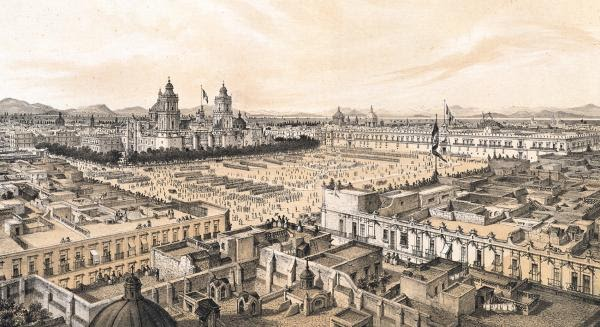

The American scoundrel ended his  life in a foreign capital

Agent 13's Legacy

During his life, many suspected the murky Wilkinson connection to the Spanish. But nothing could be proven. When surveying Missippi's boundary, American cartographer Andrew Ellicot reported his suspicions to President Thomas Jefferson but was rebuffed. One wonders whether Wilkinson was an American double agent, or perhaps the Americans thought he was their double agent. Regardless, James Wilkinson was a proven schemer, mover, and shaker who managed to put himself at the center or, better still, in the shadows of some of the most dramatic touch points in America's early years.

An agent's tools of the trade: the cipher wheel


Saturday, November 11, 2017

First Patriots... First Veterans


Issues regarding veterans and their fair treatment pre-date the founding of our nation. The colonists fought a series of wars against the natives and the French in the run-up to the break with Britain. The English colonies in North America provided pensions for disabled veterans. The first law in the colonies on pensions, enacted in 1636 by Plymouth, provided money to those disabled in the colony’s defense against Indians. Other colonies eventually followed Plymouth’s example.


Revolutionary War


But the American Revolution brought treatment of veterans to the forefront of the earliest politics in America. In 1776 the Continental Congress tried to encourage enlistments and reduce
desertions by passing the nation’s first pension law. It granted half pay for life in cases of loss of limb or other serious disability. But because the Continental Congress did not have the authority or the money to make pension payments, the actual payments were left to the individual states. This obligation was carried out in varying degrees by different states. At most, only 3,000 Revolutionary War veterans ever drew any pension. Later, grants of public land were made to those who served to the end of the war.


Continental Army Soldiers


A Veterans Rebellion?


But again the money was not appropriated and many veterans or their families sold off what pension rights they had for pennies on the dollar. The political fall out of all this was tremendous. The boiling point came with Shays' Rebellion in 1786 when western Massachusetts farmers, mostly veterans of the War for Independence, could not get credit for their farming despite the government reneging on their wartime and veterans' compensation. Shays himself, was a captain who served at Lexington & Concord, was a wounded veteran.


Shays' Rebellion: A Veterans' rebellion?


A New Government


Ironically, Shays' rebellion showed the need (among other things) for a stronger central government, which led to the Continental Congress and the US Constitution adopted and ratified in 1789, with the ratification of the U.S. Constitution. The first United States Congress assumed the burden of paying veterans benefits. The first federal pension legislation was passed in 1789. It continued the pension law passed by the Continental Congress. The Secretary of War administered pensions in the early years of the republic. Yet fair payment and treatment for veterans continued to impact America's political landscape. Those who answered the colors had to fight to maintain their rights even as they sacrificed for others to retain theirs.


Constitutional Convention


A Second "War for Independence"


The War of 1812 brought the plight of Revolutionary War pensioners back into the public eye. Veterans of that conflict were provided a reasonable pension, including widows and orphans. As the economy began to thrive Congress looked to new ways to support veterans, especially the remaining Revolutionary War veterans.  A new principle for veterans benefits, providing pensions based on need, was introduced in the 1818 Service Pension Law. The law provided that every person who had served in the War for Independence and needed assistance would receive a fixed pension for life. The rate was $20 a month for officers and $8 a month for enlisted men. Before this legislation, pensions were granted only to disabled veterans.  The result of the new law was an immediate increase in pensioners. From 1816 to 1820, the number of pensioners increased from 2,200 to 17,730, and the cost of pensions rose from $120,000 to $1.4 million.


The War of 1812 brought more veterans to consider


Congress Takes Action


When Congress authorized the establishment of the Bureau of Pensions in 1833, it was
the first administrative unit dedicated solely to the assistance of veterans. Under the 1832 Act that established the Bureau,   Revolutionary War pensions, which until then were given only to regular Army veterans—the Continentals—or disabled veterans, were authorized for all who had served at least six months in any of the military forces during the war. For the most part, this meant those who had served in the various state militias, though it also included naval personnel, state line troops, and certain contract civilians such as teamsters. The depositions taken to substantiate the required service are a remarkable record in themselves, providing eyewitness accounts of the Revolution drawn from them reveals. The depositions, however, are more than a collection of personal accounts of service—as fascinating as these can be. They are rich with data concerning Revolutionary War veterans and their families and a unique record of the life and time of this generation.


Certification that one John Bacon
 was eligible to receive a pension
for Revolutionary War service.


 Veterans enrich our History


It is no small final irony also that our knowledge of the American Revolution is filled out by the accounts of the wartime experiences of the Revolutionary War soldiers. Because records of that war were sparse and fragmented, it was incumbent on veterans or their families to justify pension applications. These accounts, although often spotty or sometimes spurious, provided a unique insight into the conflict as seen by those who fought it. In a sense, the veterans helped portray the war they fought to posterity. And for that, as well as their service, we should thank them.


Honor All Those Who Served - especially our First Patriots


Honor Our Veterans


Sunday, September 18, 2016

Quarrelsome Patriot

This First Patriot is among the many who served their country in diverse and remarkable ways - yet today, they remain virtually unknown to most Americans. These same Americans can recite trivial details about sports or, worse, reality TV. So, wipe the mindless pop culture from your thoughts and take a few minutes to focus on one of the unsung founders of the American republic.


Early Life & Militia Service


One of nine children, Timothy Pickering was born in Salem, Massachusetts, on July 17, 1745. His father was a successful farmer. Pickering attended Harvard College, where he studied law and became a licensed attorney. However, he chose not to practice law and instead became a local civil servant. In 1774, he was appointed register of deeds in Essex. Soon after, he was elected to represent Salem in the Massachusetts General Court and served as a justice on the Essex County Court of Common Pleas. On April 8, 1776, he married Rebecca White of Salem. He became a notable local Whig during the years leading up to the American Revolution. Like many other New England men, he joined the local militia. By 1775, Pickering had risen to the rank of colonel in the Essex County Militia, and in February of that year, he and his men successfully held off a column of British regulars under Colonel Alexander Leslie (see the Yankee Doodle Spies post on Leslie). "Leslie's Retreat" became one of the key events leading to war with Britain. In April that year, open conflict broke out between the colonists and their king. Pickering served with the army assembled around Boston. Recognizing the need for improved standards among the various colonial forces, he published "An Easy Plan for Discipline for a Militia." This manual functioned as the American army's drill guide until the arrival of General Friedrich von Steuben's renowned Blue Book.


Despite his "retreat" Alexander Leslie became
one of the better British generals of the
War for Independence


A Continental Adjutant General


Pickering eventually accepted a commission in the Continental Army—George Washington's response to the British regulars. He played a notable role in the hectic campaigns in New York and New Jersey during 1776. In December 1776, he led a well-trained regiment of the Essex County militia to New York, where General George Washington took notice and offered Pickering the position of adjutant general of the Continental Army in 1777. In this role, he oversaw the construction of the Great Chain, which was forged at Stirling Iron Works. The chain prevented the Royal Navy from advancing up the Hudson River past West Point and protected the crucial fort from attack throughout the conflict. He was widely praised for his efforts in supplying the troops during the remainder of the war. Pickering took over from General Horatio Gates, a former British officer. He served effectively as Adjutant during the Battle of Germantown in October of that year.


The Stirling Iron Works chain blocked the Hudson


A Continental Quartermaster General


Not long after, Congress appointed him to the newly created Board of War. He performed dual roles, continuing to serve as Washington's Adjutant General while helping organize overall war management. Over time, Pickering distanced himself from Washington and focused more on the functions of the Board of War. Around this period, he also became involved with the infamous Conway Cabal, but the cabal dissolved, and Pickering continued his service. In fact, his abilities soon earned him the most difficult post in the entire war effort—except for Washington's. In the summer of 1780, he took over as Quartermaster General, replacing General Nathanael Greene, while still serving on the Board of War. Supplying the needs of the ragged, yet growing, Continental Army was undoubtedly the greatest challenge facing Washington, and the burden of this impossible task largely fell on the shoulders of the Quartermaster General. Nobody wanted this job. The stubbornness of the states frustrated Congress's efforts to raise funds for food, clothing, and equipment necessary to keep the army going. Dishonest contractors and vendors were common—selling substandard supplies for quick profits. But Pickering took it on. Due to shortages of gold and silver, he pioneered the use of "specie certificates" to buy food and supplies. One of his notable achievements was organizing the food and supplies for the Continental Army's epic 1781 march from New York to Yorktown, Virginia. In that sense, he was a pioneer in logistics. The campaign was crucial in forcing the British government to enter negotiations. Pickering remained Quartermaster General for the rest of the war.


Pickering's logistics enabled the long march to Yorktown


A Servant of the Republic


After a period of controversial land speculation in Pennsylvania, Pickering had a turbulent post-war career in public service, holding successive appointments under George Washington. These included the Postmaster General, the Secretary of War, and the Secretary of State. Like Washington, Pickering helped establish the new republic and set precedents for how the cabinet functioned. In 1791, Washington asked him to negotiate a key treaty with the New York Iroquois under the great chief Corn-Planter. Pickering successfully negotiated what became the Treaty of Canandaigua in 1794.
Pickering allied with 
Hamilton's Federalists.
When John Adams succeeded Washington as president, he asked Pickering to stay on. Pickering did, but he was strongly anti-France and pro-Britain. This put him at odds with Adams, who was trying to avoid war with the French Republic. Politically, Pickering shifted into the camp of fiery New York politician and former cabinet member Alexander Hamilton. He conspired with others against Adams and was eventually dismissed in May 1800. In 1802, the contentious Pickering and a group of Federalists, upset about the lack of support for Federalists, attempted to gain support for the secession of New England from the Jeffersonian United States. It did not go well.


Pickering in the Cabinet


A Partisan in Congress


Despite, or perhaps because of his efforts, he was appointed to the United States Senate as a senator from Massachusetts in 1803, representing the Federalist Party. Pickering proved to be a staunch Federalist, fiercely opposing Thomas Jefferson and later James Madison in their populist initiatives. He opposed the American seizure and annexation of Spanish West Florida in 1810—anything to counter the expansionist policies of the Democrats was fair game to him. He fought strongly against the Embargo Act, calling for its nullification and even colluding with the British. His extreme agitation led him to read confidential documents on the Senate floor—an act that resulted in his censure. After his term as senator ended, Pickering was elected to Congress in 1812. Like most New England Federalists, Pickering opposed the War of 1812 with England and became a leader in the New England separatist movement.


The Embargo Act engendered much polemic and satire


Post-Public Life


Denied re-election in 1816, the passionate, controversial, and often quarrelsome Pickering retired to private life on a farm near Salem, where he pioneered improvements in agriculture. He died in Salem in January 1829, leaving a legacy of pugnacious and relentless public service as an effective military and civilian administrator who helped create and build a new nation. However, he was also one of the original proponents of factionalism, as well as partisan and regional struggles within the political arena.


Salem MA waterfront


Monday, May 30, 2016

Mister Smith fights for Washington

Coincidence?


Lord Stirling

While writing The Patriot Spy, I researched and continued to explore various people, places, and events involved in the campaigns around New York in 1776. One key event in the campaign—and in the book—was the daring attack of the "Maryland 400." The number of Marylanders was about 250, with remnants of Haslet's Delaware Regiment joining in to make up the difference. 

This was a desperate hope attack led by New Jersey General "Lord" Stirling against a large force of redcoats commanded by General Lord Cornwallis. While Stirling claimed the title of lord (or, in his case, laird, as he claimed Scottish peerage), Cornwallis held real authority. 

Cornwallis had the advantage of good ground and about 2,000 of the best troops in the army, along with two guns, to face the small American force, which was now hopelessly cut off. Stirling led attacks that showcased some of the bravest moments of the entire eight-year war. Intense musket fire was exchanged, and the Americans from Maryland and Delaware made several attempts to reach the British line, but in the end, the force was decimated. All were killed, wounded, or captured, except for the Maryland commander, Major Mordecai Gist, and a handful of others, including the resolute Captain Samuel Smith.


Major Mordecai Gist


In The Patriot Spy, a young officer named Lieutenant Jeremiah Creed, a mysterious Irish immigrant, performs a daring withdrawal and escapes across Gowanus Creek. That act of heroism is observed from the American defenses by General George Washington, who then decides to recruit the talented Creed for an intelligence war against the British. The rest you will have to discover in the novel.


In my research, I, of course, read about the event and the escape of several, including Gist. However, with literary license, I included the fictional Creed, commander of the Maryland Light Infantry company. What I did not know at the time was that a very real commander of the light infantry had indeed escaped with a few of his men.


Haslet's Delaware Line on Long Island


Fact Meets Fiction


The high point of the Battle of Long Island
So, who was this real-life person I unintentionally channeled in my novel? His name was Captain Samuel Smith. Oddly, although he was born in Pennsylvania, he also had Irish roots, as his family came from County Tyrone. 

Smith's family moved to Baltimore when he was young, and he eventually worked in his father's successful merchant business. Young Smith sailed to Europe, where he traveled widely. The fictional Creed also visited various parts of Europe and other locations before settling in Maryland. 

Smith returned to America after the battles at Lexington and Concord in 1775. By early 1776, he was appointed commander of the 6th company in First Maryland, Colonel Smallwood's Regiment. 

As noted in The Patriot Spy, Smallwood was absent from the action on Long Island while serving (with Colonel John Haslet) on court-martial duty in Manhattan. Ironically, it was an espionage trial!


Mordecai Gist, urging the Maryland 400 to glory on Long Island


As an 18th-century company commander, Smith would lead his troops in the attack and be at the rear during the withdrawal. He likely faced enemy fire many times because, make no mistake about it, this was a battle of hellish proportions: massed volleys, withering skirmish fire, smoke everywhere, the crack of muskets, and the boom of cannon, overpowering the screams and cries of the dead and dying. 

The evacuation by Smith and his men was no small feat. To do this, they had to withstand enemy musket and cannon fire, avoid the close pursuit of bayonet-wielding regulars, navigate rough terrain, and finally cross swampland and the Gowanus Creek itself. 

During the battle, Washington watched the action from a redoubt on nearby Cobble Hill (the intersection of today's Court Street and Atlantic Avenue). Upset by the destruction of the best troops, he is reported to have said, "Good God, what brave fellows I must this day lose!"


Captain Samuel Smith leads his men on Long Island


I should note that the action there was the largest and bloodiest of the war—and the first pitched battle fought by the United States as a nation, happening just weeks after the Declaration of Independence. Smith's military career kept gaining momentum after the action on Long Island. He fought prominently at White Plains and Brandywine. In 1777, he was promoted to Lieutenant Colonel and tasked with defending Fort Mifflin, located on an island in the Delaware River.

Mifflin was one of two key forts protecting Philadelphia from Admiral Lord Richard Howe's British fleet. The fort was mainly made of mud walls and had a garrison of just 400 men. Still, Smith repelled a determined attack by a squadron of British ships in October. A ship of the line and a sloop-of-war both ran aground under intense fire from Mifflin's defenders. 

However, the British returned in force in November, this time with frigates, floating batteries, and land-based artillery. They battered Mifflin from all sides with a brutal bombardment, often at close range. The defenders fought bravely but paid a heavy price. They kept firing until all their guns were silenced by the more powerful British shot.

Toward the end, Smith was seriously wounded and had to be evacuated. Soon after, the remaining defenders also left the fort. But not before they had done an admirable job against great odds. Smith received a commendation from Congress for his actions and was awarded a commemorative sword. He recovered and went on to fight at the Battle of Monmouth in 1778. After the battle, he resigned his commission and returned to Baltimore, where he became a privateer, sending ships out to harass and seize the British merchant fleet.


Sketch of British naval assault on Fort Mifflin in 1777


A Man of Peace... and then again of War...


 Following the war, Smith resumed his mercantile pursuits and became one of Maryland's wealthiest men. In 1791, he was appointed commander of the state militia to help suppress the Whiskey Rebellion in western Pennsylvania. His popularity earned him a seat in the House of Representatives in 1792, where he served four terms. 

Smith supported Thomas Jefferson in the 1800 election and served as Acting Secretary of the Navy until 1803. Afterwards, he became a U.S. Senator. When tensions with Britain escalated, Smith opposed going to war. Yet, he donned his uniform again in 1814 when a combined fleet attacked Baltimore.

As a major general and militia leader once more, Smith organized the city’s defenses against a combined land and sea attack. The results are legendary: the naval victory at Fort McHenry (which inspired "The Star-Spangled Banner") and the lesser-known defense at North Point of the British landing force under another Irishman, British General Robert Ross. 

The British land forces at North Point were routed—a rare feat of arms that was overshadowed by the more famous defeat at New Orleans. In many ways, Samuel Smith saved the nation. If the British had captured America's most strategic port and split the states geographically, the outcome could have been disastrous.


Major General Smith  at Baltimore in 1814


Final Years


Smith served multiple terms in the Senate before becoming the mayor of Baltimore in 1836. During his career, he helped establish the Bank of Maryland and was among the founders of the Washington Monument and the Battle Monument in Baltimore.


Samuel Smith as Senator


The brave captain of the Maryland 400 passed away in his city on April 22nd, 1839. His funeral was a tribute to one of Maryland and Baltimore's greatest, as well as one of America's earliest patriots.

One of his biographers reminds us that these last rites were:

"...a tribute to the political achievements of the man who represented his State in the national legislature through the administration of seven presidents. As the procession reached Baltimore Street and turned east along the waterfront, the ships in the Patapsco lowered their colors to half-mast for the merchant whose ships had known the ports of the world from Europe to China. And as the throng of citizens watched the hearse with its military escort ascend Hampstead Hill, the guns of Fort McHenry boomed a final salute..."

Samuel Smith's life was noteworthy and well-lived by any measure. The former Captain of the Maryland 400 became one of the most popular and accomplished men of his time, although sadly, he enjoys little fame today. First Patriot Samuel Smith is buried at the Old Western Burying Ground, at the intersection of Fayette and Greene Streets, Baltimore, Maryland.


Samuel Smith Burial Site