The Winter Spy, the next book in the "Yankee Doodle Spies series," introduces some new characters, both real and fictional. This post highlights one of those historical figures, an acerbic, two-fisted Scots-Irishman who seemed to tick off everyone but was often called upon when there was fighting to be done and battles to win.

Our subject is William Maxwell, who hailed from County Tyrone, Ireland. Born in 1733, young Maxwell emigrated to the colonies with his parents in 1747, settling in what was then Sussex County, New Jersey. Little is known of his early life until he followed the drum and enlisted in the provincial forces when the French and Indian War erupted in 1754.

Maxwell played a key role in the
Winter Spy
The 21-year-old Maxwell was with Braddock's forces during the disastrous defeat at the Monongahela River in western Pennsylvania. But the brave Maxwell survived the massacre and continued service to King and Country, first as an ensign in Col. John Johnson's New Jersey Regiment and later as a lieutenant in the Jersey Blues.

Maxwell was under arms during the 1758 campaign and the British defeat by General Montcalm at the Battle of Carillon (Fort Ticonderoga). But two disasters did not lead to three. Third time's a charm - he participated in the decisive British victory on the Plains of Abraham and the fall of Quebec in 1759.
 |
| French Victory at Fort Carillon |
The drum and musket seemed to become our fiery Irishman. The end of the war saw him remain in the service of the crown. He was posted to the western frontier (Britain now had a larger empire to guard). Over time, he rose to the position of commissary officer at Fort Michilimackinac. This highlights Maxwell's administrative talent, as he was responsible for purchasing and delivering the army's supplies.

When tensions between the colonies and the crown increased, Maxwell firmly supported the rebellion. He resigned his commission and moved east. Wanting to join the cause, he returned to his now adopted colony of New Jersey and actively participated in its political scene. Maxwell was appointed to the provincial Congress and eventually became Chairman of the Committee of Safety. This position utilized his military experience, as Committees of Safety were responsible for arming and preparing the colonies for potential war.
 |
| Shot Heard 'round the World: Lexington turned insurgency into rebellion |
The shot heard 'round the world in April 1775 resonated loudly in the Jerseys, and the call to arms was answered. Maxwell abandoned his political role for a military one, this time to defend his adopted country. In November of that year, he was appointed colonel of the 2nd New Jersey Continental Line infantry. His field service would come quickly and intensely.
 |
| Continental Line Infantry |
A late 1775 campaign to win Canada for the American cause was faltering. So, in the spring of 1776, he joined General John Sullivan’s expedition to bolster American forces in Canada. He fought under General William Thompson in the battle at Trois Rivieres on June 6, 1776. Although he endured another defeat, he was now a highly experienced field commander, and there was more fighting to prevent the shattered army from falling apart during its retreat back to New York.
 |
| General John Sullivan |
Like many military men of the war, Maxwell was quick to feel slighted, especially regarding his achievements. When Colonel Arthur St. Clair was promoted to brigadier general ahead of him, he bitterly wrote to Congress. He was also outspoken against the commander of the Northern Department, General Philip Schuyler, and his plan to abandon the French fort at Crown Point, New York, to the advancing forces of General Guy Carleton. Crown Point is just north of Ticonderoga on Lake Champlain. Perhaps he felt some resentment at witnessing another defeat on the lake.
 |
| Fort Ticonderoga |
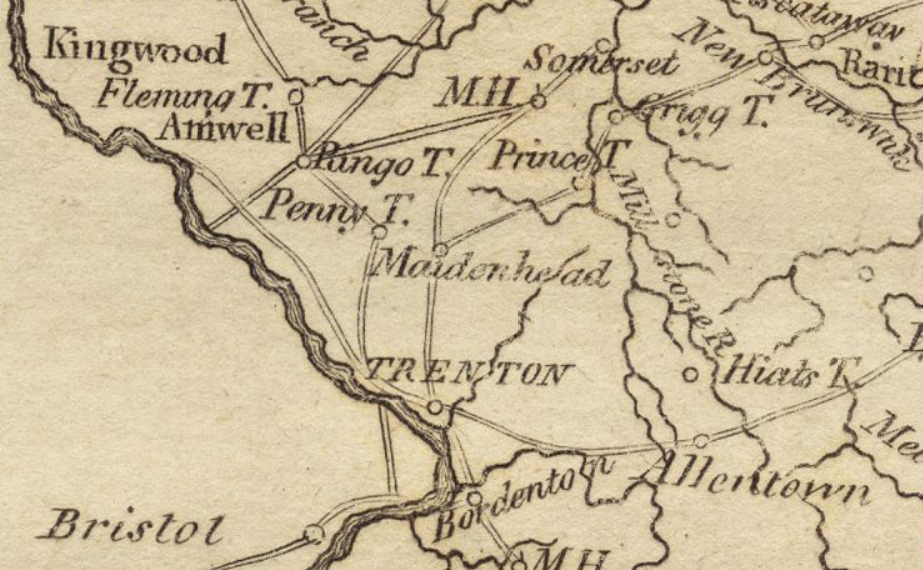
But Maxwell received good news when, on 23 October 1776, he was also appointed brigadier general. The promotion brought him back to the Jerseys, this time serving under General George Washington at the very end of the New Jersey campaign. His knowledge of the Jerseys kept him in active service, screening against British inroads after the successful one-two punch Washington dealt at Trenton and Princeton.
 |
| The American attack on Trenton |
The Continental Army settled into winter quarters at Morristown, New Jersey. During the winter of 1777, he led a mix of continental and militia units in a series of forage fights. He demonstrated the ability to orchestrate quick strikes, utilize intelligence and terrain, and secure victories. The British suffered heavy casualties during a period when they were supposed to rest and recover.
 |
| Maxwell struck at British forays for food throughout the Winter |
Maxwell was proving to be a brave combat officer, but there were some murmurs about his personality and habits. His taciturn demeanor and thick Ulster accent earned him the nickname, “ScotchWillie.”
 |
| Brigadier General William Maxwell |
In the spring, Maxwell received a high command and took control of the Light Infantry Brigade. This elite unit included carefully selected men from every regiment in the army. The brigade was intended to fill the gap created when Colonel Daniel Morgan's riflemen were sent to northern New York.
 |
| Maxwell's Light Infantry Brigade was an elite corps |
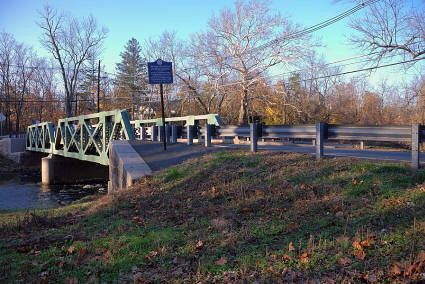
Not for the last time, Maxwell was thrust into the spotlight. Charged with guarding the British advance, he skillfully led his men at Cooch's Bridge, Delaware, on September 3, 1777. This was the first skirmish in General William Howe's crucial campaign to capture the rebel capital, Philadelphia. Maxwell's troops fought bravely until outflanked by Hessian enemies and forced to retreat by stronger forces. This battle was reportedly fought under the new “Stars and Stripes” flag recently adopted by Congress.
 |
| Cooch's Bridge |
Maxwell performed well at Brandywine and Germantown that fall, although he was accused of excessive drinking. A court of inquiry proved inconclusive, so he returned to Valley Forge that winter, leading a newly recruited New Jersey brigade. The following summer, Maxwell’s troops were heavily engaged at Monmouth in August 1778, and he later testified against General Charles Lee at his court-martial for abandoning his post.
 |
| At Monmouth, Washington rallied the Army when General Charles Lee mishandled the advance guard |
In the summer of 1779, Maxwell again joined General Sullivan, this time for his controversial punitive expedition into the heart of Iroquois territory in central New York. Sullivan specifically requested his services. His brigade played a key role at the Battle of Newtown. Maxwell did not disappoint, and in August, when Sullivan fell ill, he temporarily took command of the entire army.
 |
| Battle of Newtown, Sullivan's Iriquois Campaign |
That fall, Maxwell returned to the Jerseys with his brigade. In June 1780, he proved crucial in organizing troops and militia. With his forces now deployed to defend the Continental Army base at Morristown, they played a key role in resisting the advance of British and Hessian units at Connecticut Farms and later Springfield.
At Connecticut Farms, on June 7, his men successfully delayed the advance of General von Knyphausen's six thousand British and Hessian troops. Maxwell was able to harass and slow the enemy's advance while inflicting roughly an equal number of casualties. Frustrated, von Knyphausen ultimately withdrew.
 |
| Maxwell delayed the British-Hessian forces at Connecticut Farms |
A few weeks later, von Knyphausen launched another attack, his column clashing with Maxwell’s brigade and once again covering the army’s advance. Maxwell continued to fight a delaying action, giving the American commander, General Nathanael Greene, time to set up his defenses around Springfield. When Maxwell took command of one of the reserve wings, Greene managed to repel von Knyphausen, who then retreated back to Staten Island. These were among the last actions in the north, as the British shifted their focus to a southern strategy.

Around this time, Maxwell was troubled by various issues. He was worried about the shrinking size of his brigade due to failed enlistments and a wave of mutinies in the Army. Tensions with subordinate officers also weighed heavily on him. Additionally, he had become dissatisfied with the lack of recognition. He urged General Washington to send his resignation to Congress, possibly incorrectly believing he could secure a promotion. However, the plan backfired when it was accepted, and command of the New Jersey troops passed to Colonel Elias Dayton, who had supporters both in and out of the army.
 |
| Elias Dayton succeeded Maxwell as Brigadier General |
In a petition to Washington, Maxwell tried but failed to secure reinstatement. Politics had caught up with Scotch Willie. Dayton now held his former general officer position, and Congress was not willing to demote him. With his military career over, Maxwell turned back to politics. In 1783, he served a term in the New Jersey state legislature but otherwise failed to make a mark and returned to his farm at the end of the term. The hard-drinking Maxwell died at Lansdowne, New Jersey, on November 4, 1796.
 |
| ScotchWillie's Grave |
Scotch Willie falls into an interesting group of Revolutionary War commanders: not brilliant, flawed, but competent, brave, and resolute. Sullivan himself and Lord Stirling fall into the same category. Yes, they are overshadowed by the likes of Nathanael Greene, Henry Knox, Anthony Wayne, and the Marquis de Lafayette. But they served in key posts, in key campaigns, and brought enough leadership and success to keep the cause alive during some of its toughest moments.