Followers

Showing posts with label Trenton. Show all posts

Saturday, April 30, 2022

The Granite General

The American War for Independence had many fierce fighters, but few senior officers were tougher than the Granite State's own John Stark. Stark was an American made from the same rough cloth as Anthony Wayne and Daniel Morgan, yet also possessed the sharp tactical mind of Benedict Arnold and the strategic vision of Nathanael Greene. Still, John Stark is little known outside his home state of New Hampshire, and even there, he's mostly remembered for his statue in Manchester. 


John Stark statue in Manchester


A Rugged American

John Stark, the son of Scottish immigrants, was born on August 28, 1728, in Londonderry, New Hampshire. As a boy, he moved with his family to Derryfield, now called Manchester. It was Stark's home whenever he was not out hunting or fighting.


Trapping in Deep Forests


In the mid-18th century, much of New Hampshire was a frontier of rugged mountains, dense forests, plenty of game—and native tribes. Stark grew up in this wild wilderness, spending much of his time in the forests hunting, trapping, and honing the skills of a backwoodsman. And he was no stranger to the region's violence. These experiences helped shape his rugged individualism and self-confidence, which would later serve him and the nation.


The Hunter or the Hunted?


Frontier Hostage 

On April 28, 1752, a group of Abenaki warriors captured young Stark while he was out hunting game and trapping fur along the Baker River. One of their members, David Stinson, was killed. Luckily, Stark managed to warn his brother William, who escaped in a canoe. However, the warriors took John and his companion, Amos Eastman, to Canada. 


Abenaki Hostages


His time as a prisoner toughened him. He and fellow captive Amos were ordered to "run the gauntlet" of braves wielding clubs during their captivity. Few get through the ordeal of the gauntlet without suffering a savage beating, and some succumbed. Stark was not intimidated. Showing the grit he would later be known for, the young man jumped on the first warrior, seized his club, and attacked the astonished braves. 


Running the Gauntlet


His bravery and strength impressed the Abenakis, and the chief took Stark as a member of their tribe, where he spent the winter. Later, the colony sent representatives to ransom the two captives, with Stark alone costing the treasury 103 Spanish dollars. Stark returned home but now had a strong bond with the clan he had lived with.

Let's Go Rangers!

In 1755, the simmering conflict on the western frontier erupted in North America. The French and Indian War (Seven Years' War in Europe) pulled Stark and his brother William into the fighting. To the British, the war was about building an empire in North America and around the world. For the colonists, it was a fight for survival against relentless enemies.


John william joined Major Robert Rogers's company of rangers. Rogers's Rangers became the most famous frontier fighting force of their time and the inspiration for books and movies. Tough men, accustomed to the hardships of the frontier, the rangers knew and used every trick to venture deep into the forests and cause trouble for the French and their Native American allies. 


Rogers's Rangers


Young John Stark distinguished himself in the battles at Lake George, Bloody Pond, Halfway Creek, Fort William Henry, the Battle of Snowshoes, as well as the 1758 Battle of Fort Carillon and the 1759 campaign during which Fort Carillon was abandoned. 


Crisis of Conscience

In a strange twist, the gritty and hardened Stark faced a unique crisis of conscience in 1759 when British General Jeffery Amherst ordered the rangers to march from Lake George (NY) to the village of St. Francis in Quebec. The town was founded by Jesuit missionaries for converted Indians and was the home of the Abenaki, who had become his foster parents during captivity. Although now a captain and serving as Roger's second in command, the rugged young frontiersman refused to take part in the attack. He soon left the rangers and returned to New Hampshire to spend time with his wife of one year, Molly Page.


Rangers move against St. Francis


Home

When the war ended in 1763, Captain Stark retired and returned home to Derryfield to join Molly and raise a family of eleven children. Unlike most of his peers, young John Stark refused to participate in local politics and declined to attend political meetings, even as the American Revolution approached. However, he overcame his natural aversion to authority when he sensed his country was in peril. In 1774, he joined the local Committee of Safety, which organized the colonies' self-defense and served as the foundation for resistance against British authority. Local safety committees prepared the colonies' towns and counties for political action, self-defense, and war.


Committee Meeting


Call to Arms

When word of Lexington and Concord reached him, Stark left his farm and sawmill with musket in hand, heading for Boston, where New England was rallying to face the British. Appointed a colonel, Stark was put in charge of the regiment he recruited—tough New Hampshire men. He quickly got into action on 27 May 1775, leading a raid on a British foraging party on Boston harbor's Noodles Island. 


Raiding in the Harbor

Mystic Beach

But his real debut came at a place called Bunker (Breed's) Hill on June 17. Stark's regiment was among the first to face the heavy British naval fire to seize the vital ground below the crest. Stark now commanded his own unit plus the Second New Hampshire. On site, Colonel Prescott, the commander, told Stark to decide where he wanted his regiments to defend. 

The former ranger quickly saw that the north flank was the weak spot of the American position. There, he placed his men behind a rail fence running from the hill to the Mystic River bank and had them reinforce the rails with straw to fool the British. He also instructed the men to pile boulders along the exposed beach to create a makeshift wall. Then Stark stepped in front of the defenses, marked a spot about eighty paces away, and ordered his men not to fire until the redcoats reached that point.


Facing the Welch Fusiliers

The sound of the advancing elite Welch Fusiliers at the front of the British army caused men to check their flints as they waited patiently for Stark's command to "aim at their waistbands!" A horrific volley killed ninety fusiliers, causing the rest to panic and flee. The next wave fared no better, as a second volley blasted them. The final British assault was also repelled, ending the attack on the American flank. 
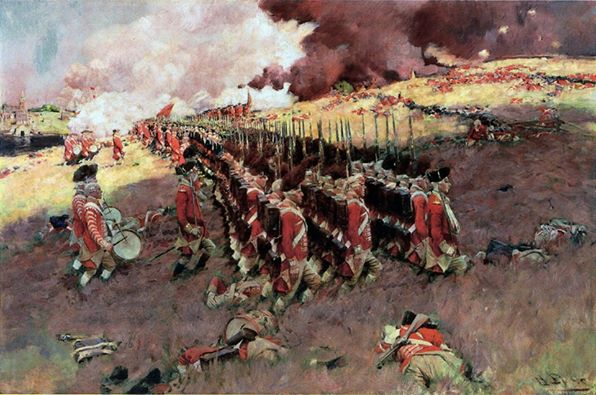

Bunker Hill: synonymous with Pyrrhic  victory


Similar results occurred on Bunker Hill itself until a lack of powder forced an American withdrawal, which Starks's men covered with disciplined musket fire. The British took the hill but with the devastating loss of officers and men. Over 1,000 officers and other ranks were killed or wounded. And so, typical of 18th-century warfare, many wounded would eventually succumb. 

Passed Over

Sadly, many promotions and appointments, especially early in the war, were driven by politics. When the post-Bunker Hill round of promotions occurred, the Continental Congress passed over Colonel John Stark in favor of less accomplished officers. This would anger Stark and fuel his resentment toward authority.

Continental Line

After the battle, Colonel Stark's command was incorporated into the Continental Army as the 5th New Hampshire Line. The unit distinguished itself while serving with General George Washington's army during the New York and New Jersey campaigns. Stark's men fought fiercely against the enemy in several battles, including Trenton, Assunpink Creek (2nd Trenton), and Princeton. 


Taking Trenton


At Trenton, Washington recognized his bravery and leadership skills in battle, entrusting him with command of the crucial right flank of Nathanael Greene's advance guard. 


Nathanael Greene


In the case of Assenpink Creek, he famously led a determined and gritty "forward defense" that stalled the British advance on the main army. Stark's actions at Assenpiunk Creek are vividly portrayed in my novel, The Winter Spy


Stark's defense at Assenpink Creek


But the headstrong and quick to take offense, Stark took issue when the Continental Congress promoted Enoch Poor to brigadier general ahead of him. In March 1777, he resigned from the army in a huff, refusing to obey either man or Congress. But unlike that other famously wronged general, Benedict Arnold, Stark's resentment never turned to treason, only a desire to prove himself.

Stubborn Patriot

While Stark now simmered at his New Hampshire farm, a new threat appeared in the north: a large British invasion force led by Major General John Burgoyne. Conditions in the north were so dire in the summer of 1777 that the New Hampshire authorities urged him to return to active duty in August. He agreed—on the condition that he commanded independently and was not under anyone's control. Then, rallying nearly 2,000 militia, he took the field. However, true to his independent spirit (and stubbornness), he refused a command from the local leader, General Benjamin Lincoln, and kept his men on the east bank of the Hudson River, separate from the main army in New York. 


General Burgoyne

Glory at Bennington

Burgoyne's army was moving south, but his supply lines soon became stretched thin. Hearing about an American supply depot near Bennington, he sent a large force of Germans under the experienced Lieutenant Colonel Friedrich Baum east toward what is now Vermont. When Stark learned of the move, he quickly marched to stop the advance. When Seth Warner's 600 men joined him, the combined forces attacked Baum near Bennington. 


Stark's militia would join with Seth Warner's


Before the main body commenced its attack, Stark stood before his men as he did at Bunker Hill and exhorted them, "There are the red coats, and they are ours or this night Molly Stark sleeps a widow."


Stark leading the attack


The ensuing battle was decisive. The American muskets wore down the exhausted Germans, and soon Stark's men launched an attack, killing 200 and capturing 700 of the Germans. Baum was among those killed. The victorious Americans only suffered 100 casualties but gained a significant psychological and material victory. John Stark's decisive action at Bennington is an exciting part of my upcoming novel in the Yankee Doodle Spies series, The North Spy.

Saratoga Sunset

In September, news of the victory rallied more Americans to the cause – men desperately needed as Burgoyne's final push to Albany clashed with General Horatio Gates's army south of Saratoga, New York. After a second encounter in October, Burgoyne retreated around Saratoga as he debated whether to risk another attack, hold his ground, or retreat along his supply line for the winter. When he finally decided to withdraw, Colonel John Stark had already taken that option away. The Granite General's troops swarmed the woods north of the British forces and cut them off from the safety of Fort Ticonderoga. Burgoyne was forced to surrender, marking a turning point in the struggle.
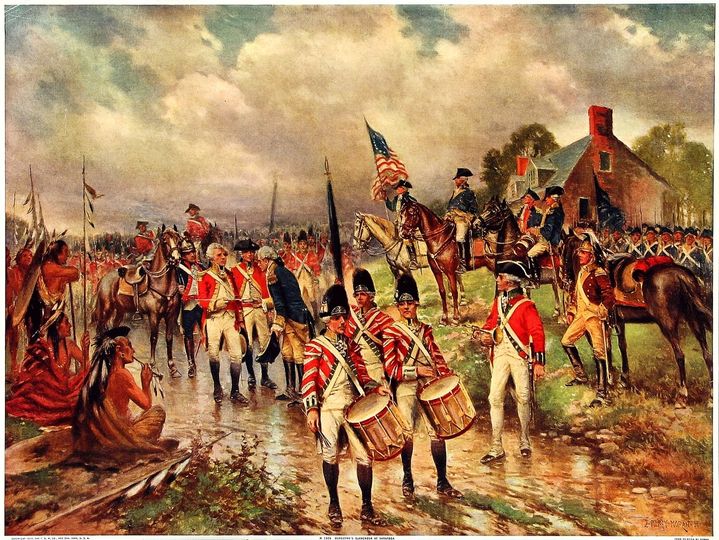

British troops in captivity


Getting His Due

In recognition of his distinguished leadership in the campaign that defeated the threat from Canada, Congress finally promoted Colonel John Stark to brigadier general. Congress later awarded him command of the Northern Department, where he twice assisted General John Sullivan during the Rhode Island campaign of 1778. Ironically, Sullivan was a general promoted over Stark earlier in the war. 


Brigadier General Stark

Brigadier General Stark last distinguished himself in combat in June 1780 against General Wilhelm von Knyphausen's Hessians at Springfield, New Jersey. He commanded two New Hampshire regiments that helped stop one of the advancing enemy columns. As a result, Knyphausen retreated, leaving several hundred casualties. This American victory was the last major battle in the north. The British remained holed up in New York City, content to leave major maneuvers to Lord Cornwallis's southern army.


Battle of Springfield


Although not part of major operations during this period, Stark contributed to the most significant espionage case of the war when he was called to serve on the board of generals for the court-martial of British spy Major John Andre. Andre had gone behind American lines in civilian clothes to meet the traitor Benedict Arnold. While Arnold escaped, Andre was captured while trying to return to British lines. Though Andre was a sympathetic figure, he was nevertheless rightly convicted and received the punishment assigned to spies: death by hanging.


Major John Andre


Stark finally left the army in 1783 with the rank of major general. Since George Washington was a lieutenant general (the highest position in the army at the time), Stark had reached the top level of serving Continental officers. 


Major General Stark


Granite State Citizen

Unlike many of his peers, John Stark did not use his wartime patriotism as a platform for political or economic gain. In 1809, the state of Vermont asked him to travel to Bennington to speak on the 32nd anniversary of the battle. However, Stark was too debilitated from rheumatism to make the trip. Instead, he wrote an eloquent letter praising those who served and everyone who fought, civilian or military, for independence. The old general issued a stern (or perhaps, stark) warning to always stay vigilant in the cause of liberty. The stoic general concluded his letter in a way only he could, injecting some of his fighting spirit with this warning: "Live free or die—Death is not the worst of evils." 


Stark's Monument at Bennington


Although it should, John Stark's name does not come to mind for most when thinking of Revolutionary War heroes, even in his home state. Interestingly, New Hampshire and Vermont have numerous places named after Molly Paige Stark, while John has only a few monuments. Stark's passionate use of Molly's name before Bennington made her more celebrated than him.

Molly Stark statue


John Stark died, the longest-living Continental Army general of the war, in Manchester, New Hampshire, on May 8, 1822. John Stark was more than a tough fighter—he struck the enemy hard whenever and wherever he could. He lived a life that reflects ideals cherished by all Americans: independence, rugged individualism, and defiance against unjust authority. These ideals remain the Granite General's enduring legacy. 


Stark's grave in Manchester


Monday, September 28, 2020

The Winter War


“I shall constantly bear in Mind, that as the Sword was the last Resort for the preservation of our Liberties, so it ought to be the first thing laid aside, when those Liberties are firmly established.”

Letter from General George Washington to the Executive Committee of the Continental Congress, January 1, 1777


                                                Washington's pen was as mighty as his sword


January 1777

The Jerseys are aflame in a deep winter-war!

Backs against a frozen river and facing a column of crack redcoats intent on their destruction, George Washington’s army has a serious gut-check. They must outfight or outwit the British to preserve the faltering struggle for independence. With the help of the winter spy, General Washington intends to do both…

Back cover of The Winter Spy, June 2020


The Genesis

This is a book I never expected to write. But as I finished book two in the Yankee Doodle Spies series, my research and curiosity guided me to a straightforward question: what did Washington do AFTER crossing the Delaware? It turns out, quite a bit. I became so interested that I created a follow-up story to capture the feel and action of this important yet little-understood chapter in the American War for Independence.


                                       What did Washington do after he crossed the Delaware?


Winter Quarters

In the 18th century, armies typically fought from late April or early May through November. During the off-season, some soldiers and officers were sent home on furlough, but most simply tried to survive the winter while the armies were restocked and equipped for the next season of marching and fighting. The British had the advantage of quartering many of their forces in towns and cities, using stores, shops, stables, public buildings, and private homes.


                                         Gen Steuben drilling American troops at Valley Forge


For Americans, winter quarters were often a harsh experience of cold, disease, and starvation. For the British, it was a time of relative comfort between grueling military duties. Naturally, both sides had to keep guards and sentries posted. Some patrols were dispatched. During the 1778 Valley Forge encampment, winter quarters became a training ground with the arrival of General Steuben as Inspector-General and Drillmaster.


Winter Action


My readings for my second novel, The Cavalier Spy, opened my eyes to the actions General George Washington took after the Battle of Trenton: two major battles (2nd Trenton, Princeton), along with many skirmishes, marches, and hardships before his increasingly small army reached its final destination at Morristown, New Jersey. 

That decision was highly tactical. His actions compelled the British to withdraw most of their outposts in the Jerseys, leaving them in control of the area around Brunswick, Paulhus Hook (Jersey City), and their main strongholds in Staten Island, Long Island, and Manhattan. With the British in winter quarters, most armies would have hunkered down, recovered, and rearmed. The choice was tactical because Washington could monitor enemy movements with his forces safely behind the Watchung Hills, ready to move in any direction the British advanced in the spring. That was the original plan.


                                        Princeton was one of two actions fought in as many days


But as the British sent out foraging parties into New Jersey to buy or requisition foodstuffs, the Jersey militia responded. Small groups were ambushed, leading to larger foraging parties and bigger ambushes. The numbers grew until Washington authorized some of his Continental regiments, including those led by Generals Philemon Dickinson, William Alexander (Lord Stirling – an American who claimed a Scots peerage), and Ulster-born William “Scotch Willie” Maxwell. By the end of this winter of discontent, the British had lost roughly as many men killed or wounded during “winter quarters” as they did in the previous three pitched battles. Losses that British commander-in-chief, General William Howe, could not afford.


                                                     Gen William Alexander - Lord Stirling


The Plot

No spoiler alerts here – read the book! But needless to say, Lieutenant Jeremiah Creed and his White Knights are thrown into action once again, operating both within and outside the Continental Army. They clash again with the ruthless British dragoon, Major Sandy Drummond, who continues to use his intelligence network to break the rebellion. Along the way, a variety of soldiers and citizens clash, make friends, make enemies, fall in love, and struggle to stay sane during a time that tests men’s souls. Woven into the plot are two themes: the bonding of men in conflict and the war’s impact on families. And, there is always the weather—winds that can cut a man in two, frigid temperatures, and ice-covered roads and rivers play a significant role in a story that, after all, was named for them.


The Book


All three books in the Yankee Doodle Spies series are published by Lanyard Press.

The Winter Spy is available on Amazon in Paperback or Kindle.

https://www.amazon.com/Winter-Spy-Yankee-Doodle-Spies/dp/B08JVNPPKG/ref=tmm_pap_swatch_0?_encoding=UTF8&qid=&sr=


Saturday, August 31, 2019

Marblehead Men

Sailors become Soldiers who become Sailors

One of the most overlooked units in the Continental Army also played a vital role in saving the American cause, paving the way for several iconic commemorative paintings. The people who live along the rocky New England coast are as tough and rugged as the landscape itself. 

At least, they were during the era of the Yankee Doodle Spies. Hard, gritty men and women were the first to take meaningful action against what they saw as the injustices of British rule. I suppose carving out a civilization from a weather-beaten wilderness requires folks of tough mettle and stubborn ways.


New England's coast bred tough people


Among the toughest and most resourceful of that group were the men who sailed the cold and stormy waters along the North Atlantic coast, fishing, trading, and smuggling in both fair and foul weather. It is only natural that a militia regiment drawn from such stock would prove to be one of the go-to units of the struggle.

Marblehead Militia


All counties and some towns in New England had militia units that established a long-standing tradition dating back to at least the late 17th century. These units had experience from several wars fought against native tribes, Canadian neighbors, and their French rulers.

At the start of the fight against Britain, the Marblehead militia was among these. Because it was formed along the rugged New England coast, it was naturally composed of men who spent their civilian lives at sea.

Marblehead Militia


As tensions peaked in April 1775, the regiment was lucky to get a commander who proved to be as tough and resourceful as the men he led – Colonel John Glover. Under Glover, the regiment marched to Cambridge, where they joined the New Englanders besieging the British at Boston.


During the siege, Congress formed the new Continental Army under General George Washington's command. The Marblehead Militia, known as “Glover’s Regiment,” joined the Continental Army in June. It was originally called the 23rd Massachusetts Regiment. Only the best militia units were combined into the Continental regiments, creating America's first “professional” army.

The Continental Line


With their new status, they also received a new name, and the Marblehead militia was quickly renamed the 14th Massachusetts Continental Line. As a continental regiment, they would now be required to march and fight wherever the army moved, and wherever George Washington led them. He soon took them south to face new dangers and seek new opportunities for glory.

Nevertheless, the regiment of about 750 sailors never completely abandoned their heritage. Unlike other continental regiments, which started wearing similar uniforms of dark blue tunics, white or buff breeches, and leggings topped with a cocked hat, the Marblehead sailors dressed more like traditional sailors. The Marbleheaders wore distinctive blue jackets, white pants, and white caps. However, it was the skill, not their appearance, that was the greatest trait of these hardy sailors.

Washington’s Navy


As the siege of Boston went on, Washington decided he needed a naval force to stop supplies from reaching the British garrison. He assigned the 14th Massachusetts Line to outfit and crew four schooners for this purpose. Glover even offered his own schooner, the Hannah. His port at Beverly became the base of “Washington’s Navy.” Operating with a limited budget, the small fleet of five schooners managed to disrupt British supply lines and bring in captured supplies to support the Americans. Sailors from Marblehead also built most of the defenses that kept the British from taking the base.


Washington's Navy consisted of
fast schooners manned by experienced sailors


The Miracle on Long Island


Long before it became a traffic nightmare, Long Island was the scenic and rural breadbasket of New York. In the summer of 1776, it became the focal point of the British plan to crush the American rebellion.

Driven from Boston earlier that year, Lord William Howe’s reinforced army of over twenty thousand sailed into New York Harbor and landed at Staten Island. Soon, he moved his troops across the water and quickly encircled George Washington’s forces along the heights of Brooklyn. Although there was fierce fighting, the British numbers and well-positioned guns made Washington’s hold on the island a dangerous liability. He faced a difficult choice: defend with little hope or attempt to escape.


British Landing at Long Island would soon threaten the
American Army and the cause


In some ways, the latter was the toughest decision. The British naval strength was even more powerful than their land forces. Crossing despite these two hurdles would almost certainly cause disaster. But when a sudden fog rolled into New York harbor on the night of August 29th, Washington seized a brief chance to act.


So under cover of darkness and a thick fog, he made a risky decision and ordered his army to move against the enemy. His advantage was the 14th Massachusetts’ sailor-soldiers. For hour after hour, Glover’s men rowed boat after boat, carrying soldiers, horses, and equipment they could manage without alerting the British, who waited just a few hundred yards away.


Glover worked his men through the night to save an army


Despite the darkness and fog, the Marblehead men moved smoothly and silently. A splash or the bumping of a boat against another could easily have alerted the Royal Navy, whose warships lay anchored nearby. By the next morning, they had evacuated around 9,000 men from the jaws of the British lion to the safety of Manhattan.


The miracle retreat from LI saved the army and the cause


A War of Maneuver


The regiment’s usefulness was evident during the “war of maneuver,” which caused Washington to hurriedly relocate positions to avoid being destroyed by the British. Glover’s men slowed down the British advance at Kips Bay, giving the rest of the army time to retreat to the safety of Harlem. As the campaign moved north to Westchester, the regiment again played a vital role—this time as soldier-sailors.


Glover's sailor-soldiers stymied the British at Pelham


On October 13th, about 4,000 British and Hessian troops advanced inland from Pelham Bay. However, along the stone walls crossing the farmland, 750 men from the 14th Massachusetts and John Glover’s forces stood ready. They kept the British at bay, trading space for time and allowing the Continental Army a chance to prepare for the next attack. Glover’s men, skilled in scouting and raiding, showed they were just as comfortable on land as they were on their schooners’ decks. They captured supplies and enemy prisoners, then helped operate the artillery during Washington and Howe’s clash at White Plains.

The Crossing that Shocked the World


By December of that year, a battered and severely diminished Continental Army reached its breaking point as it looked across the Delaware River. Just hours behind, the advanced guard of a British column led by Major General Charles Cornwallis was closing in quickly. The men from Marblehead collected anything that floated along the river for miles and quickly ferried the ragtag army to safety.


Gen Charles Cornwallis nearly bagged
Washington, but for the Marblehead Regt.


But their greatest challenge still lay ahead. With enlistments dwindling as a new year approached, Washington had a short window to do something with his army besides fleeing from the redcoats. General Howe gave him the chance. Believing the Americans beaten, he scattered his army into winter quarter garrisons, leaving only a few isolated brigades in West Jersey.


The Glover Regiment brought Washington to destiny


Washington turned to Glover’s men once again. In another secret nighttime operation, Washington enlisted the experienced sailors to operate a different kind of boat. Long and sleek, the Durham boats were powered by pushing long poles into the riverbed. 

On a night when snow mixed with rain, file after file of Continentals, poorly dressed and poorly fed but determined, silently boarded the boats under the watchful eyes of the sailors. Throughout the night, strong arms pushed staffs into the swirling water. Strong legs and backs moved the boats, filled with men and equipment, across the swift current toward the dark and dangerous Jersey side. Despite the ice flows, Glover’s sailors managed to ferry over 2,000 troops and 18 guns.


Sailors to soldiers as Glover's Marblehead Regiment
 joins the night march on Trenton


But their work was not finished. The sailors then became soldiers and marched the grueling nine miles to Trenton, fighting valiantly in the short battle that shocked the world and saved the cause. Their final act was to lead the army back across the river, as their enlistments had expired and the regiment was disbanded.


Down to the Sea in Ships


Glover stayed with the Continental Army, but his men went home. New England was never a major battlefield for the rest of the war, but it still played a crucial role—providing support and attacking the British at sea. Glover’s experienced soldiers now became sailors again, engaging in a different kind of war, less showy but just as damaging to the British.

Privateers devastated British merchant shipping and tied down
the Royal Navy


Some people resorted to smuggling, a crucial way to support the war effort. Others went even further and turned to privateering, attacking British merchant ships in a conflict that deprived the British of wealth and supplies while boosting America’s limited resources. The Marblehead men played a key role in capturing more than 3,000 vessels during the war.


Sunday, December 23, 2018

The Iron Colonel


A little-known Hessian Colonel named Johann Gottlieb Rall played a significant role in the course of the American War for Independence. Sadly for him, that course led to his defeat and death. However, this should not diminish the life and service of this German military officer. An experienced Hessian officer, Rall is often portrayed as the unlucky loser of the Battle of Trenton. But he was much more than that. He was the quintessential professional German officer of the mid-18th century: skilled and confident, built from experience.

Advancement


Johann Rall was born in the German principality of Hesse-Kassel in 1720. His father was a captain in the regiment Von Donop. At an early age, the younger Rall joined as a cadet, then became a warrant officer, and finally was commissioned as a Second Lieutenant on August 28th, 1745. Within eight years, he had become a captain and was then promoted to Major on May 7th, 1760, under the command of Major General Bischhausen. In January 1763, he was transferred to the garrison at Stein, where he was appointed Lieutenant Colonel.


On April 22, 1771, now a Colonel, he took command of the Mansbach Infantry Regiment, a renowned unit. Unlike the British army of that time, officers were promoted based on merit rather than by purchasing their ranks. On his path to becoming a colonel, Rall likely served as a platoon leader, a company commander (possibly multiple times), and a staff officer, probably as an adjutant. By age 51, he was a highly experienced and professional military officer—perhaps among the best of his generation.

Early Service


So where did Johann Rall serve to reach the high ranks of regimental command? Actually, Rall's service is almost a detailed record of the wars in the mid-18th century. He fought in the War of the Austrian Succession - taking part in campaigns from the Low Countries of Flanders, through the Rhineland, and in Bavaria.


A youthful Rall fought in the War of the Austrian Succession


He even served in Scotland during the Jacobite rising of 1745 – not his last service to the German kings of England. Here, Rall was part of a group of about six thousand Hessian troops under the command of their prince, the Elector, Frederick II, Landgrave of Hesse-Kassel. Frederick deployed his forces to support his father-in-law, George II of England.


The battle of Culloden ended the Jacobite Rising


Of course, Rall was there when the big one broke out. Like nearly all European professional soldiers, he saw action in numerous battles during the Seven Years' War (America’s French and Indian War). This global conflict was fought between 1756 and 1763 and involved every major European power. It spanned five continents, affecting Europe, the Americas, West Africa, India, and the Philippines. The war involved two main coalitions, one led by Great Britain (along with Prussia, Portugal, Hanover, and smaller German states like Hesse-Kassel), and the other led by France (with allies Austria, Russia, Spain, and Sweden).


Storming a village in the Seven Years War


Most of the professional armies in Europe experienced a period of peace after the Treaty of Paris of 1763 ended the French and Indian War/Seven Years' War. However, Rall managed to stay busy in his chosen profession. From September 1771 to August 1772, he fought for Russia’s Catherine the Great under Count Orlov in the Russo-Turkish War.


The Russo-Turkish War of 1771 was one of many
fought between the two empires

Coming to Amerika


What makes Johann Gottlieb Rall interesting to the Yankee Doodle Spies is his role as a Hessian officer in His Majesty’s service during the American War for Independence.  Upon his return to Germany, Rall received command of a grenadier regiment that bore his name. In 1775, Landgrave Frederick Wilhelm II offered to “rent” several of his professional regiments to the King of England. It is said he used the revenues from such ventures to pay for his patronage of the arts. I guess it was blood for beauty.  And so Rall and the regiment bearing his name embarked for America with a division of German troops under General Wilhelm von Knyphausen.

Knyphaussen’s forces were part of British Major General William Howe’s army that invaded Staten Island, Long Island, New York (Manhattan), Westchester, and the Jerseys in 1776. Rall was noted for his performance under fire on Long Island and again at Fort Washington, where Knyphausen’s Hessians distinguished themselves with audacity, skill, and courage.


Rall's Grenadiers storm a redoubt at Fort Washington


At Fort Washington, Rall led the final assault from the front. One of his men, Private Johann Reuber, recalled him encouraging the grenadiers, "All that are my grenadiers, march forward." Leading the charge, Rall’s grenadiers captured their objective. His grenadiers lost 177 men in the action, a large number of casualties for the period, and a tribute to their courage and audacity, as well as Yankee marksmanship.

Most of these battles were against raw, undisciplined, and poorly supplied troops, although not always. It didn’t take long for the Hessians and Rall himself to come to see the rebellers as beneath respect. In fact, many Hessian officers were perplexed that Howe didn’t strike the "rabble" more aggressively to destroy them. Howe’s slow, careful style of warfare clashed with the aggressive, smash-mouth approach of the sharp German troops and their leaders.

Blitzkrieg turns to Winter Quarters


As General George Washington led his battered army across the cold, snowy New Jersey in December 1776, it seemed like the war was nearly over. The Germans, along with many British officers, believed it was only a matter of days before they would crush Washington and seize the rebel capital. To their disappointment, Howe decided he had done enough for the year. He settled his army into winter quarters, confidently expecting an easy march to Philadelphia in the spring. After all, the rebels had been driven across the Delaware with their tails between their legs, and the morale of the American people was at an all-time low. He was right, too—except for one small problem: General Washington was not in winter quarters.


Gen William Howe put his
army into winter quarters a bit too early


Howe compounded his mistake by dispersing his forces into small garrisons across West Jersey, including Perth Amboy, New Brunswick, Princeton, Trenton, and Bordentown. The weather and the appealingly small, brigade-sized garrisons gave the beleaguered American commander the opportunity he needed. He planned to strike the closest garrisons: Bordentown and Trenton. Bordentown proved to be a missed opportunity, but Trenton was not.

The approximately sixteen hundred Hessians comprising Trenton’s garrison had been under pressure. The Jersey militia had rallied against them. Couriers, patrols, and foraging efforts were attacked. Rall’s officers recommended they fortify Trenton. The town had a comfortable barracks where the troops stayed, but aside from an isolated blockhouse north of the town, they had nothing else. Despite Rall’s professionalism, his contempt for the Americans was evident. He dismissed the suggestions as unnecessary, and he actually stated he dared the Americans to attack so he could crush them. This was not just hubris but a cold, professional calculation. However, it would turn out to be a poor one.


The Trenton garrison had some of the best infantry
of any army of its day


Rall also dismissed the engineer officer sent to help with the defenses. He simply believed his men would overpower any rebel force that approached Trenton. Rall claimed he could be attacked from all sides and would defend from every direction. No redoubts were necessary. However, he did increase patrols, some of which he led himself.

As Christmas neared, British intelligence received word from a spy that the Americans might be planning an attack on Trenton. The British commander in the Jerseys, General James Grant himself, was skeptical of a rebel assault. However, he sent a note to Rall to warn him anyway. Rall scoffed at the idea and dismissed it as alarmist. Besides, he had complete faith and trust in the professionalism of his men and the incompetence of the enemy. The former is usually a good thing; the latter, not so much. Rall stuffed the note in his pocket.


Washington launches his gambit on Christmas Night

Heilige Nacht


Now, in the German world, Christmas Eve is a very big deal—more than Christmas Day. How much “celebrating" actually took place is open to some speculation. Likely, some did. But the real problems the Hessians faced were the weather, the Jersey militia, and frankly, some fatigue. The campaign had been long.

Rall spent Christmas Eve at the Stacey Potts house in Trenton. Unbeknownst to him, his officer of the day, Major Friedrich von Dechow, canceled the next morning’s dawn patrol due to the bad weather. Other officers ordered their troops in outposts to shelter in place as the weather moved in. It was, as they say, a perfect storm. Washington struck Trenton in a surprise early morning attack on Christmas Day 1776. Washington’s 2400 men outnumbered the 1600 defenders. But numbers were not the decisive factor- surprise was.


The Americans depended on the cover of darkness
and bad weather to fuel their surprise


The Element of Surprise


Just after sunrise, one of the Hessian officers sheltering near the outskirts of Trenton, Lieutenant Andreas von Wiederholdt, stepped out of the building he had taken cover in and was surprised to see rebels emerging from the woods around the town. He rallied his platoon and exchanged fire with the approaching troops, but was quickly overwhelmed. By the time the alarm was finally sounded, Trenton was already surrounded on three sides.

Artillery rounds from Henry Knox’s battery began to bombard the town. The Americans had occupied several houses, and as the infantry tried to rally, they were picked off. In the wet snow, the Hessians' return fire was hard to manage due to wet powder and flints.


Knox's Artillery suppressed the Hessian attempt to
counterattack


Surprised, outnumbered, surrounded, and overwhelmed by firepower, the defenders faced a bleak situation. But Hessian discipline was still strong. What you do in training, you will do in combat. The Hessians were well trained. Drummers quickly started beating, and Rall’s regiment rallied. Officers signaled to form ranks. Sergeants and corporals organized the men into lines. Some were only partially dressed or missing some equipment, but they still formed up.


Washington's pincer movement almost bagged the entire garrison


Commands were shouted over the crack of musket shots. But confusion began to turn into order when Rall appeared. He looked tired, some say in his cups, but this is unproven. Rall struggled to mount his horse and rally the troops for a charge that would disperse the rebels like chaff from a scythe. That is how they always did it. They would do it again.

At Fort Washington, Rall summoned his grenadiers to advance with him. They did, and two of the three regiments formed ranks, moving forward with colors flying and drums beating. They would disperse the rebels yet. But this was a different army—well-led and motivated. More importantly, the advancing formation was enfiladed from three sides by Continental infantry firing from behind the cover of houses and artillery bombarding them from the flank. The wet snow limited their return fire, and cold steel alone wouldn't be enough today. Still, they pressed on toward the enemy. "Nach Vorne!"


The American infantry surpassed the crack Hessian regulars


At that critical moment, a musket ball struck Rall in the side. He jerked but managed to turn his horse around and tried to raise his saber. Then a second shot hit him. Rall fell, mortally wounded. Seeing their commander shot from his horse, the usually steadfast Hessian infantry retreated into an orchard and tried to reform once more. Rall was taken to a nearby church and eventually back to Stacey Potts' house. He died there that night.


Rall was stuck down at the critical moment


Determined, Washington had his men fire into their ranks while Knox’s guns tore through them with round shot. Men were falling. Having just seen their beloved commander carried off, morale quickly began to fade. At first, the Hessians refused calls to surrender. Washington was about to tell Henry Knox to switch to canister – which would have torn through the Hessian ranks like a 12-gauge round through a flock of fat geese. But the grim work was not to be. Always professional, the Hessians realized it was over and began to ground their arms in surrender. Aside from a few hundred who fled across the Assunpink River, the Trenton garrison was captured by the ragged rebel forces led by General George Washington.


After he was struck down,
Rall's men forced to surrender to die Rebellen


What of Rall?


Was Johann Gottlieb Rall an arrogant Teuton and drunk, whose hubris cost him his command, his life, and most importantly, his reputation? As is often the case, the verdict is mixed. Rall was well respected by his men. In an army where blind obedience to officers and NCOs was required, respect was not. And he had their respect. Even more remarkable, Rall was liked by his men.


Rall in better times


A noted war diarist and Rall's adjutant at Trenton, Lieutenant Jakob Piel, writes, “Considered as a private individual, he merited the highest respect. He was generous, magnanimous, hospitable, and polite to everyone; never groveling before his superiors, but indulgent with his subordinates. To his servants, he was more of a friend than a master. He was an exceptional friend of music and a pleasant companion."

Note that Rall was outspoken with his superiors. Few had his combat experience. The brutally frank Rall made sure they knew it. Fellow Hessian Colonel Carl von Donop treated Rall with contempt. However, Captain Johann Ewald of the Jaegers, who later rose to the rank of Lieutenant General, claimed that when it came to fighting, none of the other German officers were fit to carry Rall’s sword. British Colonel William Faucitt considered Rall “... one of the best officers of his rank in the Landgrave’s Army."


Goat? Or Scapegoat?


Friedrich Wilhelm II - not
pleased
Rall’s ruler and commander in chief, Prince Frederick Wilhelm II, convened a court-martial to determine what had happened to his proud army at Trenton. It was bad for business if the Hessians were seen as easy targets for undisciplined troops. Predictably, the court blamed the defeat on Rall and four of his officers. Since they were now dead, there was no real defense made. Colonel Rall was found "guilty" of not fortifying Trenton. 

However, the truth is that fortifications would have been of little help, as most of the men were sheltering from the weather. Additionally, the Americans had superiority in artillery. Not surprisingly, all the surviving Hessian officers were conveniently cleared of wrongdoing. Of course, a Hessian court could not address the larger factors in the defeat: Howe’s dispersal of small garrisons in a hostile region and Grant’s inability to support the forward garrisons, who faced constant rebel militia pressure. Colonel Johann Gottlieb Rall was not completely blameless, of course – but he took the blame for the whole thing.


Yankee Doodle Postscript


Actually, a shameless Yankee Doodle Spies plug—my second novel in the popular Revolutionary War espionage series—concludes with all the events surrounding the campaign leading up to and including the Battle of Trenton. I take some liberties with dialogue and certain scenes, but not with the actual historical events. I believe I captured Rall pretty well as part of the story.