Followers

Showing posts with label Sleepy Hollow. Show all posts

Sunday, October 28, 2018

Chatterton Hill

A War of Maneuver


The campaign of conquest in New York involved both land and sea maneuvers. In the late summer of 1776, the British landed on Long Island and pushed the Continental Army back to the Island of New York (Manhattan), where they faced a stalemate at Harlem Heights.


After the fighting at Harlem Heights, General George Washington’s Continental Army continued to hold onto upper Manhattan. By mid-October, Washington learned that the British were again on the move, planning to land in what is now Westchester County and surround him. Washington moved most of his forces across King's Bridge, leaving a garrison of about 1,500 men under General Nathanael Greene to hold Fort Washington. 

The British landed at Pell’s Point, and a cat-and-mouse game ensued as their advance was slowed by a series of brave American riflemen's holding actions. Eventually, Washington decided to stand against the British, who were pushing west toward the North (Hudson) River, which would cut Washington off from his supply line. He established a defensive position in the hills of White Plains, where the terrain would favor a defensive stand. The armies were roughly evenly matched, though Washington’s force of 14,500 men was far less trained and equipped than Howe’s force of 13,00 British regulars and Hessian professionals.


Gen George Washington's initial overlook
of Chatterton Hill gave the British an opportunity


A Place of Battle


Present-day White Plains offers few reminders of the American Revolution. In this Westchester County suburb of New York, office buildings and a bustling downtown area are surrounded by residential neighborhoods. It was in White Plains that the youthful version of your author took the road test for his driver’s license. At the time, I, like the thousands who live and work in the city, had no idea that nearby was once a bitterly contested battlefield.


Washington's HQ was at the Elijah Miller House in North White Plains


Washington Decides to Stand His Ground


Col Joseph Spencer
By October 28, 1776, Washington’s forces occupied a crescent-shaped three-mile line stretching from the Bronx River to the east to the Croton River to the west. Washington set up his headquarters at the Elijah Miller House in North White Plains and chose a defensive position fortified with two lines of entrenchments. The trenches were dug on elevated terrain, with the right flank protected by swamps near the Bronx River and steep hills further back serving as a retreat. Divisions under Israel Putnam and William Heath were positioned on the right and left flanks. Washington himself held the center. Beyond the right flank of this line was Chatterton Hill, which dominated the ground over which the British would have to advance. Interestingly, Washington initially only posted some militia companies under Connecticut Colonel Joseph Spencer to guard this strategic piece of terrain. He would soon need to send more troops.


White Plains


Sir William Howe
Around mid-morning, news reached Washington that the British were approaching in two columns along the East Chester Road. When they arrived, the British army deployed in an open area about a mile in front of the American line, where their formation was clearly visible to the defenders. Was this an attempt by British commander Sir William Howe to intimidate the Americans and lower their morale? Who knows what the delay cost him in real terms. Could another Bunker Hill be on the horizon? That had always been Howe’s fear since he played a key role in Britain’s costly victory outside Boston. Combined with his hope for reconciliation with the rebels, it seemed to hold him back from launching a massive attack that might have cost both sides greatly.


Seize the Good Ground


This time, Howe made a series of smart decisions. He scanned the American defenses ahead of him and realized he had enough manpower and firepower to launch a frontal assault. However, Howe quickly recognized there was another option - a way to move Washington without causing a bloodbath. The lightly guarded high ground known as Chatterton Hill, just to Washington’s right, is the key to the battlefield. Taking control of that would secure victory over the Americans. Howe discussed with his staff and decided that the main attack would target Chatterton Hill, while the rest of the army would keep the main American line busy. He began preparing to assault the hill, assigning the task to General Alexander Leslie (see the Yankee Doodle Spies blog on Leslie), with two British infantry regiments supported by Hessian troops. Soon, a fierce but inconclusive battle would unfold.


View of White Plains from Chatterton Hill


Finally, Washington recognized the danger he faced if the British seized the key terrain. He hurried to reinforce the heights with another 2,000 men under Colonel Joseph Reed. The critical outpost on Chatterton Hill was eventually held by about 4,000 men under Colonel Alexander McDougall. His force included two New England militia regiments under Colonel Rufus Putnam and Spencer's men. Even as Howe and his staff conferred, his Hessian artillery began firing on the hilltop. A force of 1500 skirmishers under Colonel Joseph Spencer was positioned along the front. The American defenses seemed strong. But when the British finally launched their attack, they quickly pushed aside the skirmishers, who scattered before the advancing troops. However, the arrival of McDougall and his brigade helped rally the defenders, and a defensive line was formed, with the militia on the right and the Continentals along the top of the hill.


Washington rushes reinforcements to the heights


Although he now faced a well-orchestrated onslaught, McDougall made a stubborn defense of it. He managed to hold Leslie’s column at the ford, repelling several attempts to cross the Bronx River. In response, Howe ordered more men, while a force of Hessian infantry under Colonel Johann Rall, supported by British dragoons, moved on the American right flank. The Hessians managed to cross the river and charge up the steep slope, but the determined and well-positioned Americans drove them back. Not to be outdone by the Rebellen, Rall rallied his men and organized a second attack with additional firepower. The artillery fired at the Americans defending the crest of the hill, causing the militia troops to run. However, despite the intense barrage, the Continentals stubbornly held on until the Hessians finally turned their right flank, forcing them back as well.


Hessians advancing under fire

A Timely Retreat, An Untimely Pause


With his flank exposed and crumbling, Washington ordered a retreat, and the Americans withdrew from the hill. Unfortunately for the British, William Howe stays true to form and does not follow up on his success with a vigorous pursuit that might have destroyed the Continental Army and ended the war. Instead, he waits for reinforcements from the rest of his army and simply bivouacs his men on Chatterton Hill. This gives Washington time to move his army to stronger positions at nearby North Castle a few days later. Although the Americans lost the Chatterton Heights along with approximately one hundred thirty killed and wounded, taking the heights cost Howe around two hundred fifty irreplaceable British and Hessian troops killed and wounded. In a sense, Howe came out ahead in that Washington ultimately evacuated New York and abandoned the defenders of Fort Washington to their ultimate demise. But the war of posts would now evolve into a war of maneuver, this time across the Jerseys.


A  Halloween Connection?


Little remembered in history, the action at Chatterton Hill has a link to American folklore and the spooky celebration of Halloween. Washington Irving’s story, The Legend of Sleepy Hollow, and the film, Sleepy Hollow, focus on the haunting by a “Headless Hessian Horseman.” According to some accounts, Irving based the story on an incident during the Battle of White Plains when a Hessian soldier, decapitated by a cannon shot on Chatterton Hill, roams the Westchester night seeking vengeance. So, Chatterton Hill leaves a legacy of little military importance but an eerie contribution to American folklore… oh yes, and your humble author passed his road test - first time.


A Hessian's death at Chatterton Hill may have inspired
one of America's earliest legends - Sleepy Hollow


Saturday, October 31, 2015

George Washington, Vampire Slayer!

Excuse the Halloween hyperbole, but now that I have your attention, I can discuss hauntings during the time of the Yankee Doodle Spies. Truth be told, if I had started the action and adventure series with a book titled, say, "The Marching Dead," I would be on easy street today. People enjoy being scared, and they prefer the macabre and horrifying over mundane things like action and intrigue. Just imagine, a tale of a rebel unit massacred while bivouacking at a cemetery. Only this unit of wraiths rises, zombie-like, whenever the Cause needs them. Still imagine a team of clever British officers desperately trying to find a way to stop this phantom army's onslaught, not realizing that silver, not lead balls, would do the trick... What's in your ammo box?


Greenwood Cemetery in Brooklyn, New York


The American Revolution has its fair share of hauntings and spooky stories. Most of these are known only locally, as most hauntings are celebrated in their own communities. Many are tied to specific places... like a Poltergeist-like phenomenon. But one legend has become a national story: Sleepy Hollow by Washington Irving. The original story of Ichabod Crane, the superstitious schoolteacher afraid of the legendary headless horseman of the Old Dutch Church, has haunted both young and old for generations. I remember driving through the story's setting, Tarrytown, New York, with my father when I was a boy. I was about ten. As we drove south on NY 9, he pointed to the church and cemetery and said, "the Headless Horseman of Sleepy Hollow is here, the Hessian's ghost haunts the cemetery," and I felt a chill run down my spine. It was broad daylight in summer. Can you imagine how I'd feel on a dark October night? I don’t think I knew what a Hessian was back then, but he had me at Headless Horseman. Over time, the story grew as new media brought it to wider audiences and stretched the original plot to its limits. It’s been adapted into radio shows, TV dramas, cartoons, and recently a major film (featuring Johnny Depp) as well as a TV series that takes the story even further.


The Headless Horseman is the iconic RevWar Spook


Ringwood Manor
The Mid-Atlantic is full of Revolutionary War hauntings. In a past Yankee Doodle Spies Blog, I discussed the Morris-Jumel House in New York's Harlem and the stories and tales of its haunting. The Van Cortlandt Mansion, Greenwood Cemetery (ground zero for the Battle of Long Island - a place that saw the most bloodshed of the war), are other notable New York sites. Just across the great North River, in Passaic, New Jersey, stands Ringwood Manor. 


This was once the home of General Robert Erskine, who was the geographer for George Washington's army. Later, he ran an ironworks on the property. He's buried near the manor house, and it's said that at dusk, he sits on his grave, gazing at the pond beyond. Some have reported his ghost walking the grounds, carrying a lantern. There are also French soldiers buried nearby, who fought for the American cause. They, too, emerge at night and walk along the pond, speaking in French. The house itself is not the original, but it has its own hauntings dating back to the 19th century.


Erskine's ghost haunts Ringwood Cemetery


New England Nightmare


New England, home of the Salem witch trials a century earlier, is no stranger to tales of the macabre. Boston Harbor’s scenic Long Island is known for one of the most tragic Boston ghost stories. At the end of the American Revolution's actions around Boston, the British still had several ships in the harbor, mainly to evacuate Loyal Americans who wanted to leave before the rebels took control of the city. Onboard one of these ships were William and Mary Burton. The young couple, passionate Loyalists, were among those fleeing. While sailing away from the harbor, a shot from the besiegers' battery on Long Island struck Mary in the back of the head.


Mary Burton's ghost roams
 Long Island Dunes


According to the legend, she lingered for several days in excruciating pain before dying. In her death throes, Mary supposedly asked her husband not to bury her at sea. After she died, William
returned to Long Island to fulfill his love's dying wish.

He wrapped her bloodied body in a red blanket that Mary owned and buried her beneath the island's sand dunes. Her headstone was a piece of driftwood carved with her name. Before leaving her
grave, William swore he would return someday with a proper headstone. He never did. But according to
the legend, Mary still waits for him.

Over the years, visitors to the island have reported seeing a woman with pallid skin, covered in mud,
wearing a scarlet cloak, walking among the dunes. Many have seen blood on her cloak and noticed a
gaping hole in the back of her head, where cannon fire had struck her skull.

Southern Spooks


The South is no stranger to incredible stories, and RevWar hauntings are no exception. The focal point is the site of a major war event, Yorktown, Virginia. In October 1781, a desperate British General, Charles Cornwallis, led his troops hoping the Royal Navy would rescue him from land now swarming with rebel soldiers and their French allies. Prolonged sieges under harsh conditions set the stage for eerie stories that still persist today. 

The anguish and suffering during the siege make Yorktown hauntingly memorable. From “Cornwallis’s Cave on the banks of the York River to Crawford Road – the town is filled with urban legends and ghost stories. Cornwallis’ Cave has no direct connection to Cornwallis, but legend says British troops hid in the cave to escape the constant bombardment by Continental and French artillery.


Cornwallis's Cave


Some legends suggest that the civilian residents of Yorktown took refuge there. Evidence does show that after the war, the cave was probably used by smugglers. It is located along the waterfront. Perhaps they spread haunting tales to keep prying eyes away from their lair? There are still reports that voices can be heard at night emanating from the dark recesses of the cave. Those who follow such stories believe them to be the voices of Revolutionary War soldiers, the moaning of the injured and dying hiding inside.

Myths are to cultures what dreams are to people. Similarly, horror stories are to cultures what nightmares are to individuals. The eight-year war for independence was a nightmare for everyone involved: the Americans who suffered during the rebellion; the Loyalists who lost their homes and property; and the British who lost their empire. It’s perhaps fitting that such a war serves as both a source of myth and horror. Have a spooky Halloween. Stay frightened, my friends.


Sunday, October 12, 2014

The Hessians

Who were these guys?


In the days when American schools taught history with some substance, almost all students learned the word "Hessian" when the American Revolutionary War was discussed. These were the tall, fierce foreigners hired to help crush the rebellion. Tall men who fought us with a cold-bloodedness that even unsettled some British officers and soldiers. 

Most of what we learned about the Hessians in school centered around perhaps their lowest point - the battle of Trenton, where a force of over a thousand elite infantry was captured by General George Washington's ragtag, half-starved army. But the Hessians were just some of the Germans King George hired to put down the rebellion. Although they made up the largest group, more than half, since there were German settlers in parts of Pennsylvania, Maryland, and Virginia, it was easy to label all the German mercenaries as the same. That name, which struck fear into the hearts of Americans, became a symbol of their fierce reputation.

Who they were


German soldiers made up about a quarter of the British fighting force in America. That term 'Hessian' refers to all the soldiers fighting in units leased to the King of England by various prince-lings of what was called Germany. Friedrich Wilhelm II, Landgrave of Hesse-Kassel, was the most famous among these German princelings, and he had the best mercenary force on the continent. 

During the time of the Yankee Doodle Spies, Germany consisted of over 300 independent yet interconnected states, including dukedoms, princedoms, archbishoprics, electorates, margravates, landgraves, and others. These would be significantly consolidated about thirty-five years later by Napoleon. Most of these soldiers came from Hesse-Kassel and Hesse-Hanau, with others recruited from regiments raised in Brunswick, Ansbach-Bayreuth, Waldeck, and Anhalt-Zerbst.


Hessian Grenadiers


The typical German soldier was conscripted from the lower classes of these regions: men who had no other way to avoid conscription, such as paying a tax, leveraging social status, or bribing a corrupt official. Occasionally, these "dregs" included craftsmen, tradesmen, educated men, and other men of substance, as well as the occasionally fallen cleric. However, most German soldiers who fought in America were farm boys from farms that had fallen on hard times. 

Therefore, in most cases, these men were forced into service by circumstances. The fortunate soldier who did not fall in battle or die from disease might reach the rank of corporal or sergeant. But calling the German soldiers mercenaries is a bit misleading. They were soldiers serving in the army of their prince. It was their princes who were mercenaries in leasing out entire regiments and companies to the King of England. This was not uncommon in the 18th century.


Hessian Jaegers zu Fuss und zu Pferde

Where  they served


The first wave of German troops arrived in 1776 to support the British in their planned attack on New York. Their initial engagement was at the Battle of Long Island. Still, the Hessians also fought in many other battles during the Revolutionary War, including Harlem Heights, Fort Washington, White Plains, Savannah, Trenton, Bennington, Bemis Heights, Freeman's Farm, and Guilford Courthouse. 

They served as garrison forces and participated in hundreds of smaller skirmishes throughout the colonies. German troops comprised a significant part of Cornwallis's surrendering army at Yorktown. They were known for their ruthlessness, and American propagandists often exploited that reputation to stir up fear, anger, and resentment against them and their British commanders.


Hessians were present at Yorktown's surrender


How many came

Jaegers
The British hired 30,000 German soldiers, and the payment went into the royal coffers of the German princes, not the troops. The units came from the German states of Hesse Cassel, Hesse Hanau, Brunswick, Anspach, Bayreuth, Anhalt Zerbst, and Waldeck.

               Place               Number sent    Number not returned home

           Hesse Cassel                16,992             6,500
           Hesse Hannau                 2,422               981
           Brunswick                    5,723             3,015
           Anspach - Bayreuth           2,553             1,178
           Anhalt Zerbst                1,152               168
           Waldeck                      1,225               720

The total sent was 30,067 from 1776 to 1782; 12,562 did not return... 7,754 died (mostly from disease) and 4,808 remained in America... Perhaps they were the first great wave of non-English speaking immigrants to America. 


How they dressed and armed


The Hessian soldiers included infantry and hussars (dismounted), three artillery companies, and four battalions of grenadiers. The infantry were sharpshooters, musketeers, and fusiliers armed with smoothbore muskets. The line companies carried muskets, bayonets, and short swords called hangers. They contrasted with the redcoats by wearing dark blue jackets and tricorne hats. In a style unique to the Germans, their traditional queue was twisted so tightly that it protruded straight out from beneath their headgear, resembling a skillet handle. 

The Jaeger units carried special short rifled muskets and were skilled at skirmishing in the rough American terrain. Most were hunters from Germany and excellent marksmen. They wore dark green jackets and hunting-style hats. The grenadiers, easily recognized by their tall miter hats, were the tallest of the soldiers. German troops, especially from Hesse-Cassell, were notably powerfully built. 

The Hessian artillery used three-pounder cannons—called that because they fired three-pound balls. These lighter cannons supported the infantry and were easier to manage in America’s dense forests. A key event during the Americans’ attack on the Hessian Garrison at Trenton in December 1776 was a fight over one of these cannons. Over one thousand Hessian soldiers were captured during this struggle, which arguably prevented the American cause from ending that winter. This story is mentioned in book two of the Yankee Doodle Spies, The Cavalier Spy.


Hessians overrun Fort Washington

How they fought


Well, they fought valiantly. The German regiments were disciplined, capable of enduring great hardship, highly trained, skilled, and most importantly brave. Despite the tough conditions of their enlistment and the strict discipline they faced, they had great elan and esprit de corps. They took pride in their profession and disliked losing. In fact, they always believed they would win. The Germans were well equipped with the best weapons of the time and fought in disciplined companies of forty to eighty men. 

These companies usually formed part of a regiment, often named after its commander or place of origin. With highly professional officers and non-commissioned officers, the Germans made a dependable force with combat effectiveness that exceeded their numbers. German regiments rarely failed to make a significant impact on a battle. They led the attack at the passes on Long Island and stormed Fort Washington's outer works. Their reputation was such that their presence near Washington's army helped pin the American front at Brandywine while the rebel flank was turned upstream. I could go on.


Hessians adapted well to combat in America
Jaegers skirmishing


Who led them

 The German officer corps, both commissioned and non-commissioned, was outstanding. They led from the front, and many fell in combat—most famously Colonel Johann Von Rall, who was mortally wounded while trying to rally his regiments for a counterattack after the Continental Army surprised them at Trenton. Another noted Hessian officer was Colonel Carl von Donop, who fought in many battles during the war until he was killed leading an assault at the Battle of Red Bank in 1777. 

Von Knyphausen


The commander of the Hessian forces was Wilhelm, Reichsfreiherr zu Innhausen und Knyphausen. He took over from the original commander, Von Heister, who commanded the Hessian troops effectively if not with distinction. After the disastrous Hessian defeat at Trenton, for which Heister, as corps commander, bore the ultimate responsibility, the old and ailing general was called back to Hesse in 1777. It’s worth noting that Heister clashed with Howe over strategy. 

Unlike other British generals, he could be pretty blunt with the commander-in-chief. This might have also contributed to his return. Knyphausen remained the senior German officer for the rest of the war. He led the attack on Fort Washington, and one of the redoubts was later renamed in his honor. He also commanded the New York garrison but returned to Germany in 1782 for health reasons. General Friedrich Wilhelm von Lossberg succeeded him as commander of the Hessian troops in New York.


Von Heister

Legend and Legacy 


Some might argue that the German contingent played a vital but not decisive role in the war. Still, it is hard to see how Britain could have raised as many quality regiments at home to fill the gaps if the Teutonic regiments hadn’t been there. The widespread use of hired foreign troops fueled the Americans' worst fears and prejudices, helping newspapers, pamphlets, and rumors spread myths about these unfamiliar invaders, all to rally the people in what was ultimately a war for hearts and minds. 

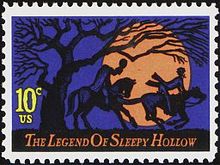
While the Hessians did act harshly toward civilians in some cases, many stories were exaggerated or amplified to stir up public sentiment. They were brutal to rebels during combat and treated prisoners more cruelly than the British did, but not more harshly than American Loyalists and Patriots treated each other. These myths and legends grew and still persist. It’s no coincidence that Washington Irving's famous "Headless Horseman of Sleepy Hollow" was a Hessian artilleryman whose head was taken by a cannonball. However, it’s also true that the Hessians were brave and dependable soldiers who added a unique element to the American fight for independence.


Even the USPS contributes to the legend