Followers

Showing posts with label Lord William Howe. Show all posts

Sunday, October 28, 2018

Chatterton Hill

A War of Maneuver


The campaign of conquest in New York involved both land and sea maneuvers. In the late summer of 1776, the British landed on Long Island and pushed the Continental Army back to the Island of New York (Manhattan), where they faced a stalemate at Harlem Heights.


After the fighting at Harlem Heights, General George Washington’s Continental Army continued to hold onto upper Manhattan. By mid-October, Washington learned that the British were again on the move, planning to land in what is now Westchester County and surround him. Washington moved most of his forces across King's Bridge, leaving a garrison of about 1,500 men under General Nathanael Greene to hold Fort Washington. 

The British landed at Pell’s Point, and a cat-and-mouse game ensued as their advance was slowed by a series of brave American riflemen's holding actions. Eventually, Washington decided to stand against the British, who were pushing west toward the North (Hudson) River, which would cut Washington off from his supply line. He established a defensive position in the hills of White Plains, where the terrain would favor a defensive stand. The armies were roughly evenly matched, though Washington’s force of 14,500 men was far less trained and equipped than Howe’s force of 13,00 British regulars and Hessian professionals.


Gen George Washington's initial overlook
of Chatterton Hill gave the British an opportunity


A Place of Battle


Present-day White Plains offers few reminders of the American Revolution. In this Westchester County suburb of New York, office buildings and a bustling downtown area are surrounded by residential neighborhoods. It was in White Plains that the youthful version of your author took the road test for his driver’s license. At the time, I, like the thousands who live and work in the city, had no idea that nearby was once a bitterly contested battlefield.


Washington's HQ was at the Elijah Miller House in North White Plains


Washington Decides to Stand His Ground


Col Joseph Spencer
By October 28, 1776, Washington’s forces occupied a crescent-shaped three-mile line stretching from the Bronx River to the east to the Croton River to the west. Washington set up his headquarters at the Elijah Miller House in North White Plains and chose a defensive position fortified with two lines of entrenchments. The trenches were dug on elevated terrain, with the right flank protected by swamps near the Bronx River and steep hills further back serving as a retreat. Divisions under Israel Putnam and William Heath were positioned on the right and left flanks. Washington himself held the center. Beyond the right flank of this line was Chatterton Hill, which dominated the ground over which the British would have to advance. Interestingly, Washington initially only posted some militia companies under Connecticut Colonel Joseph Spencer to guard this strategic piece of terrain. He would soon need to send more troops.


White Plains


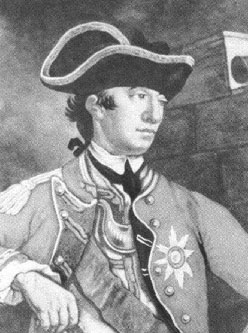
Sir William Howe
Around mid-morning, news reached Washington that the British were approaching in two columns along the East Chester Road. When they arrived, the British army deployed in an open area about a mile in front of the American line, where their formation was clearly visible to the defenders. Was this an attempt by British commander Sir William Howe to intimidate the Americans and lower their morale? Who knows what the delay cost him in real terms. Could another Bunker Hill be on the horizon? That had always been Howe’s fear since he played a key role in Britain’s costly victory outside Boston. Combined with his hope for reconciliation with the rebels, it seemed to hold him back from launching a massive attack that might have cost both sides greatly.


Seize the Good Ground


This time, Howe made a series of smart decisions. He scanned the American defenses ahead of him and realized he had enough manpower and firepower to launch a frontal assault. However, Howe quickly recognized there was another option - a way to move Washington without causing a bloodbath. The lightly guarded high ground known as Chatterton Hill, just to Washington’s right, is the key to the battlefield. Taking control of that would secure victory over the Americans. Howe discussed with his staff and decided that the main attack would target Chatterton Hill, while the rest of the army would keep the main American line busy. He began preparing to assault the hill, assigning the task to General Alexander Leslie (see the Yankee Doodle Spies blog on Leslie), with two British infantry regiments supported by Hessian troops. Soon, a fierce but inconclusive battle would unfold.


View of White Plains from Chatterton Hill


Finally, Washington recognized the danger he faced if the British seized the key terrain. He hurried to reinforce the heights with another 2,000 men under Colonel Joseph Reed. The critical outpost on Chatterton Hill was eventually held by about 4,000 men under Colonel Alexander McDougall. His force included two New England militia regiments under Colonel Rufus Putnam and Spencer's men. Even as Howe and his staff conferred, his Hessian artillery began firing on the hilltop. A force of 1500 skirmishers under Colonel Joseph Spencer was positioned along the front. The American defenses seemed strong. But when the British finally launched their attack, they quickly pushed aside the skirmishers, who scattered before the advancing troops. However, the arrival of McDougall and his brigade helped rally the defenders, and a defensive line was formed, with the militia on the right and the Continentals along the top of the hill.


Washington rushes reinforcements to the heights


Although he now faced a well-orchestrated onslaught, McDougall made a stubborn defense of it. He managed to hold Leslie’s column at the ford, repelling several attempts to cross the Bronx River. In response, Howe ordered more men, while a force of Hessian infantry under Colonel Johann Rall, supported by British dragoons, moved on the American right flank. The Hessians managed to cross the river and charge up the steep slope, but the determined and well-positioned Americans drove them back. Not to be outdone by the Rebellen, Rall rallied his men and organized a second attack with additional firepower. The artillery fired at the Americans defending the crest of the hill, causing the militia troops to run. However, despite the intense barrage, the Continentals stubbornly held on until the Hessians finally turned their right flank, forcing them back as well.


Hessians advancing under fire

A Timely Retreat, An Untimely Pause


With his flank exposed and crumbling, Washington ordered a retreat, and the Americans withdrew from the hill. Unfortunately for the British, William Howe stays true to form and does not follow up on his success with a vigorous pursuit that might have destroyed the Continental Army and ended the war. Instead, he waits for reinforcements from the rest of his army and simply bivouacs his men on Chatterton Hill. This gives Washington time to move his army to stronger positions at nearby North Castle a few days later. Although the Americans lost the Chatterton Heights along with approximately one hundred thirty killed and wounded, taking the heights cost Howe around two hundred fifty irreplaceable British and Hessian troops killed and wounded. In a sense, Howe came out ahead in that Washington ultimately evacuated New York and abandoned the defenders of Fort Washington to their ultimate demise. But the war of posts would now evolve into a war of maneuver, this time across the Jerseys.


A  Halloween Connection?


Little remembered in history, the action at Chatterton Hill has a link to American folklore and the spooky celebration of Halloween. Washington Irving’s story, The Legend of Sleepy Hollow, and the film, Sleepy Hollow, focus on the haunting by a “Headless Hessian Horseman.” According to some accounts, Irving based the story on an incident during the Battle of White Plains when a Hessian soldier, decapitated by a cannon shot on Chatterton Hill, roams the Westchester night seeking vengeance. So, Chatterton Hill leaves a legacy of little military importance but an eerie contribution to American folklore… oh yes, and your humble author passed his road test - first time.


A Hessian's death at Chatterton Hill may have inspired
one of America's earliest legends - Sleepy Hollow


Saturday, December 10, 2016

Cold and Stalemate at Whitemarsh


This week marked the anniversary of Whitemarsh: the final part of the third year of the American fight for independence. For several cold winter days, rebels and redcoats marched and counter-marched as General George Washington aimed to lure British General Howe into an end-of-year disaster.


Background


General William Howe
General William Howe's Philadelphia campaign of 1777 was one of move, lose, move, lose for George Washington and the Continental Army. Despite that, Howe and the British high command remained frustrated because the rebel army and its general continued to remain a force they would need to reckon with if winter quarters were to be enjoyed in peace and comfort. 

Despite his failed surprise attack on Germantown on 4 October, Washington remained unbeaten. He maneuvered his forces from post to post, ultimately settling in at a place called Whitemarsh, about 13 miles northwest of Philadelphia. Both Howe and Washington knew that an unbeaten American force in the field remained a psychological as well as a real threat to British success. 

So in early December, Howe decided to make one last attempt to destroy Washington's army before the onset of winter and began preparations for the attack on the rebel forces rumored to be in the process of moving to a new camp. But Washington's intelligence network, led by Major John Clark, became aware of British plans to surprise the Americans, possibly through a Quaker housewife, Lydia Darragh. Because of the timely, accurate intelligence, regardless of the source, the Continental Army was ready.


Lydia Darragh was a Phila. nurse
and the housewife said to have warned
Washington of British plans

Ready for Action


Undaunted by weeks of retreat, Washington and his men prepared for battle. Washington faced pressure from Congress due to defeats at Brandywine and Germantown and aimed to make amends before the campaign ended. He always pictured a Breed's Hill-style fight where his troops would break British lines with heavy fire from fortified positions. For their part, his men were eager for a chance to vent their frustrations on the 'lobsters.' 

The Americans had ample time to strengthen their defenses, so despite being cold, exhausted, and hungry, they were ready to act and seek retribution. Washington positioned them on high ground—another Breed's Hill scenario seemed possible. Meanwhile, Howe planned to give the rebels the fight they craved. The British hoped for a swift, decisive victory over the struggling rebels before winter arrived, as he too faced troubles of his own.

And Vindication


A British Army capitulated at Saratoga in October—an army many believed Howe was obliged to help. Defeating Washington would be a sweet victory. Both Howe and Washington were overshadowed by the recent devastating British surrender at Saratoga. Howe for not doing more to support Gen. John Burgoyne, the defeated British commander, during the ill-fated invasion from Canada. Washington himself was criticized by some in Congress and the Army who questioned his leadership.


British surrender at Saratoga had
both Washington and Howe in its shadow

The Action


The British and Hessians left Philadelphia at midnight on a bitterly cold December 4th, with 14,000 troops. Howe moved his men in two columns. One, led by Lord Cornwallis, headed up Germantown Pike. The second, commanded by Hessian General Knyphausen, marched toward the American left. Just before dawn on December 5th, they arrived at Chestnut Hill, where they encountered about 15,000 Americans ready for action. 

Attempting to provoke a fight, Washington sent the Pennsylvania militia toward Howe's left. The militia was repelled after a short but intense fight. This led to days of maneuvering by Howe's forces, who attempted to find an opening in Washington's defenses through various feints and marches. The Continentals and militia responded well. Washington's men were prepared and managed to prevent any potential breakthrough. 

Frustrated, the British burned homes and farms, fueling resistance among a populace that was almost subdued by the British advance. Howe launched a final effort to turn the American left flank on December 7th. He advanced forces along Edge Hill, a ridge running parallel to the American lines. But the Americans, including militia and Virginia riflemen under Dan Morgan, responded. After intense fighting, the Americans were again pushed back, but the British retreated. 

This started a long day of small, sharp, yet inconclusive skirmishes throughout the wooded ridge, with no clear outcome. Frustrated at neither breaching the American defenses nor luring them into an open battle, Howe decided to withdraw. He led his army back to Philadelphia. Washington also felt frustrated, as his hope of luring Howe into a second Breed's Hill never materialized. The casualties for Whitemarsh were 90 Americans killed or wounded, and 60 British killed or wounded.


Howe at Whitemarsh


A Winter of Stalemate


Whitemarsh marked the end of the long and eventful campaigns of 1777. Howe and his army are secure in comfortable winter quarters in Philadelphia. A few days later, on December 11, Washington leads his army into the cold comfort of winter quarters at Valley Forge. The uneventful battle at Whitemarsh is unremarkable on its face. But in retrospect, the inconclusive series of skirmishes set the stage for the famous winter at Valley Forge that marked the birth of a professional American Army. As for Sir William Howe, his request for relief was approved, and he would leave the Army the following spring.


Stalemate at Whitemarsh was the last action
before George Washington led his army to
a place called Valley Forge


Wednesday, August 24, 2016

The Battle Pass

I guess this could also be considered a "place" as well. But the place was the location of today's Prospect Park in Brooklyn, New York. To make things more complicated, it was known as the Flatbush Pass at the time. It was the linchpin in the American outer defense ring on Long Island, a battle that took place during this week in August 1776. The good news is you can still visit the Battle Pass, which is now a 526-acre oasis amidst Brooklyn's sprawl. This week marks the anniversary of the events leading up to the critical Battle of Long Island - America's first battle as a nation. I thought a blog post focusing on one aspect of this Revolutionary War battle would be fitting.


The Flatbush (Battle) Pass 1776


The Original Ground Zero 


The Flatbush Pass was a crucial piece of terrain in the outer defenses on Long Island. Most of his troops were frantically building a series of earthworks and small redoubts from Wallabout Bay to Gowanus Creek in an effort to protect the village of Brooklyn and the ferry point below the famous heights of that name. Recognizing British superiority in numbers and equipment, General George Washington relied on a Breed's Hill-style defense that would inflict losses on the British, similar to what the rebel army did outside Boston the previous year. 

However, the advantages of holding the British at the "great Moraine" were too tempting to ignore. The moraine, then known as the Heights of Guan, was the southern edge of the glacier from the last great ice age. When the glacier receded, it left a rugged strip of land across the normally flat terrain of Long Island, running from southwest to northeast. Although only about 100 feet above sea level, the Heights of Guan formed a formidable barrier, only passable through three passes. The central one was the Flatbush Pass.


The Great Moraine dominated the terrain of Long Island


While the British executed a night envelopment via the Jamaica Pass to the east, the British commander in chief, General William Howe, launched two holding attacks to pin the Americans
defending the other two passes. One of some 7,000 men under British General Grant struck near today's  Greenwood Cemetery in an attempt to force the Martense Road.


General von Heister 's force struck the
Flatbush Pass


But the center attack at Flatbush Pass almost made the British encirclement unnecessary. It was mainly composed of Hessians under the command of German General von Heister. The Hessians struck the pass. When they realized the situation was hopeless, most of the approximately 1,500 American defenders abandoned their posts and headed to the safety of the main defenses near Brooklyn. 

The brave American commander at the pass, General John Sullivan, tried to hold his position, but as panic spread, he and his men had to fight their way out. The large and determined enemy trapped him and what remained of his forces at Baker's Tavern (near today's Fulton and Flatbush Avenue). The veteran of Boston and Quebec, brave but headstrong, was cut off from his men and became one of two generals captured on Long Island that fateful day.


American General John Sullivan captured
near the Flatbush Pass


The Place Today


Defenders on Long Island fought desperately against all odds


The site of the Battle Pass is just north of the Prospect Park Zoo.


Battle Pass Marker


The Maryland Monument still stands at the south-central part of the park, nestled between Prospect Park Lake and Lookout Hill. The monument honors the brave fight by the First Maryland Continental Line, who courageously battled the British against all odds. I will save the story of the Maryland 400 for another post (actually, I have already posted about it).


The Maryland Monument


Site of the Dongan Oak - a huge tree felled to block the Flatbush Pass


There is a Quaker Cemetery near Lookout Hill that dates back to the 17th century. The Lefferts Homestead was located at Empire Boulevard and Flatbush Avenue. The original Dutch colonial farmhouse was accidentally burned by American defenders. The owner, Peter Lefferts, rebuilt the house during the latter part of the war using some of the original wood. In 1918, the family donated the residence to the city, and it was moved to Prospect Park from its original site at 563 Flatbush Avenue.


Restored Lefferts House


On a beautiful summer day, Prospect Park is filled with thousands of visitors walking, riding, visiting the zoo, or lounging by the lake. As Brooklyn experiences a kind of renaissance, the park and its lush greenery offer an ideal place to enjoy a touch of nature. But almost none of today's visitors know about the drama and tragedy that unfolded in the heart of their oasis.


Few visitors to Prospect Park today realize
they are on Hallowed Ground


Saturday, December 19, 2015

The Taking of Pelham 1 7 7 6

Readers of The Cavalier Spy might recall some of the maneuvers by the British commander-in-chief, Lord William Howe, as he tried to trap George Washington's forces near Kingsbridge (the Bronx). This led to a series of battles and skirmishes in the New York campaign, which could have crushed the spirit of '76. The small engagement at Pells Point, or Pelham, was one of these minor but strategically important fights.


An Excellent Plan:


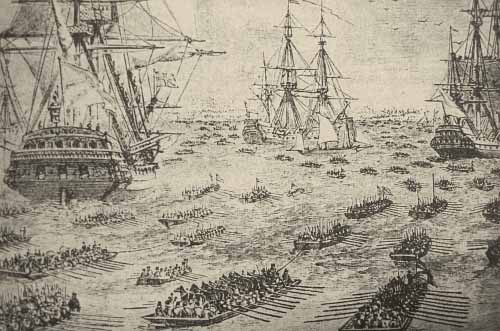
In the summer of 1776, the British and their Hessian (German) allies defeated Washington’s forces in Brooklyn and Manhattan. However, Washington’s ability to organize timely retreats and General Howe’s reluctance to aggressively pursue the rebels prevented total destruction. In September, the Continental Army was holding defensive positions at Harlem Heights on the northern tip of Manhattan, with the British army in front and the Royal Navy (under Howe's brother Richard) controlling the North (Hudson) and East Rivers. But the Continental Army's Harlem defenses were strong, so in mid-October, Howe attempted a flanking move by water, taking advantage of the Royal Navy's dominance. His goal was to cut across Westchester County and trap the Americans.


A Clever Strategy:


Leaving behind a holding force in Manhattan, Howe moved about 4,000 troops, mostly Hessians, up the East River toward Long Island Sound for a landing at Throg’s Neck, which is now part of the Bronx. Howe’s objective was to cut off the American supply line to Connecticut, and the British commander also hoped to lure Washington into a major battle or to crush the Americans from the right flank while the holding force launched a frontal attack. Intelligence reports warned General Washington that the enemy was surrounding him with a naval landing at his rear. In desperation, the besieged American commander-in-chief positioned the few forces available along strategic points. The numerous stone fences and marshy ground made the British approach challenging and his position defensible. However, he realized that a determined British effort was likely to succeed. Additionally, they might have been planning other landings as well.

Prelude at the Neck:


General Clinton
On October 12, the British landing force under General Henry Clinton landed under the cover of fog at Throg’s Neck, a marshy peninsula that was not part of the mainland. There were only two ways to reach the mainland: a causeway and bridge at the lower end, and a ford at the other. The Americans guarded both. American Colonel Edward Hand and a detachment of 25 men from the 1st Pennsylvania Regiment were determined to slow the British until help could arrive. The brave Pennsylvanians tore the planks from the bridge and took position behind a stack of cordwood lining the causeway. Checking flints and powder, each man took a good firing stance and waited. At last, the British arrived. The Pennsylvanians' accurate musket fire startled the advancing British troops. Puffs of smoke, the crack of muskets, and the zing of lead balls had their effect. The British frontline retreated and tried to cross at the ford to bypass the rebels, but they faced another group of defenders. Soon, both American defense points were reinforced, bringing the total American forces to more than 1,800. Howe wisely decided it would be better to retreat and land elsewhere. While the Americans had the advantage of position and interior lines, they also had the advantage of mass and maneuver. The British camped on Throg’s Neck and stayed there for six days while supplies and reinforcements, including 7,000 Hessian soldiers under Gen. Wilhelm von Knyphausen, arrived from New York. When he was confident his force was ready, Howe ordered the move. To surprise the enemy tactically, they moved at night. Just after midnight on October 18, Howe launched his army again and landed at Pell's Point, near Pelham, a few miles north. Maneuvering by sea provided a huge advantage when you control the waters, as the British did.


Taking of Pelham:


The British landed at dawn, with General Clinton commanding the operation. His forward unit of 4,000 British light infantry and Hessian Jägers led the way. Near Eastchester, waiting for them, was a 750-strong brigade led by Massachusetts Colonel John Glover. (Note: Glover is a minor but important character in the first two books of the Yankee Doodle Spies series.) Glover himself spotted the British landing from atop a hill overlooking the coast. He requested orders from his immediate commander, General Charles Lee. Lee, Washington's second in command (and also a key figure in the second book of the Yankee Doodle Spies, The Cavalier Spy), however, gave no orders. Recognizing that the narrow causeways and inlets favored a defensive stand, Glover, the resolute Yankee he was, decided to act on his own. He ordered his brigade into action, consisting of the 14th, 13th, 3rd, and the 26th Massachusetts Continental Regiments. 


Continental Line Infantry


Glover held 150 Continentals in reserve. His force soon engaged enemy skirmishers. Glover deployed his Marblehead Regiment (former seamen) at the front. At Breed's Hill, Glover had seen the carnage caused when the British advanced in ranks against well-positioned infantry. He sent a company forward as an advance guard to keep the British in check. This allowed him time to prepare a defense before the expected assault. Glover arranged a series of ambushes by placing his forces in staggered positions. They cleverly used the stone walls lining each side of the lane that led from the beach inland. His orders were to hold as long as possible and then fall back to a rear position, with the next unit doing the same. Glover planned a classic fighting withdrawal to delay the enemy's progress. He positioned himself with his advance guard. The Marbleheaders opened fire on the advancing British. The sound of muskets and puffs of smoke to the front caused the British to pause. Once again, heavy lead balls zinged past the advance guard, which quickly deployed and returned fire. Volleys were exchanged, and for a time, the Americans held the enemy's advance.  

When the British called for reinforcements, Glover's men withdrew in good order. Seeing the Americans retreating, the British fixed bayonets and advanced. But 200 troops of the 13th Massachusetts Continentals waited anxiously behind the next stone wall. On command, the Americans rose and fired a devastating volley into the British at 30 yards - point-blank range. Surprised, the British column suffered heavy losses and retreated to the main body of the invading army.


Glover's Marblehead Regiment in action at Pelham


Not to be denied, the British reorganized and attacked again with all 4,000 men and seven cannons. They bombarded the Continentals behind the stone wall. Under cover of artillery fire, the infantry launched its attack. Most British shells fell short or flew high, and the few that hit the stone walls caused little damage. The bombardment had little effect. Prepared, the Americans unleashed another deadly volley on the advancing infantry at 50 yards. This time, the British responded with volley after volley. The firefight lasted a full 20 minutes. Finally, British artillery moved closer in support, and this time, their fire was effective. Under pressure from combined arms, the lead American regiment fell back. The next regiment provided strong covering fire to keep the British at bay until their allies could retreat. The British then turned to attack the position of the 3rd Continentals, stationed behind a stone wall on the other side of the road. Both sides kept firing steadily. The British advanced several times, but each time, American fire broke their lines.

 However, the British's superior numbers eventually began to overpower the Americans. Realizing this, Glover pulled the regiment back to another stone wall atop a hill. The next regiment in line, the 26th Continentals, soon engaged the advancing enemy. Once more, using the cover of a stone wall, the 26th fired one last volley before Glover ordered a retreat. Moving in good order, Glover's brigade crossed a bridge over the Hutchinson River. Glover left a rearguard of 150 men from the 14th Massachusetts Continentals to cover them. True to form, Howe chose not to exploit the situation. He camped his forces on a hill on the opposite side of the stream but made no attempt to cross. This allowed Glover to pull his brigade back to Yonkers.


Glover's smartly executed defensive withdrawal
was as classic as the British amphibious tactics


What was the (Pell's) Point?


With the British advance delayed, Washington left a small garrison at the fort on the heights that bears his name and safely evacuated the main American army north through Kingsbridge to Westchester. Howe's army slowly moved through New Rochelle and Scarsdale. This marked the beginning of the Battle of White Plains. The series of skirmishes resulted in relatively few casualties for both sides. However, the clever American actions at Throg's Neck and Pelham bought Washington time to prevent his army from almost certain entrapment. A war of posts would soon evolve into a war of movement.

Author's comment:  

People who live in or are familiar with the New York area might be amused to see famous place names where they have lived, worked, or commuted mentioned as part of a great military campaign and one for the life of the nation at that. Our First Patriots had no idea that the swampy lowlands and rugged uplands of the Bronx and Westchester, where they fought, would become part of arguably the greatest metropolis in the world. What neighborhoods and byways are today are also hallowed ground. We should never forget that.


Sunday, August 31, 2014

In the Navy!

 The Naval Advantage in 1776


This past week marked the anniversary of the British landing on Long Island and the battle that shares its name. As most readers of this blog know, the invasion and the events that followed set the background for my novel, The Patriot Spy. I thought I’d use this blog to discuss the role of naval power in the campaign. The American Army under General George Washington essentially had no information about British plans after General William Howe withdrew his besieged forces from Boston. However, it wasn’t hard to see that the main British advantage in the war was the Royal Navy.

1776: British fleet at Staten Island 


Early Success, Defeat, and Triumphs


Destruction of the Spanish Armada


In some ways, the story of Britain is tied to its navy. During the time of the Yankee Doodle Spies, Britain had the greatest navy in the world and, more importantly, had over a century of knowledge and experience in using that advantage effectively. Many are familiar with the victories of the 16th-century English navy under Elizabeth I against the Spanish. However, during the 17th century, England and its navy went through a period of upheaval. 

The English Civil War, three wars with the Dutch (who had surpassed Spain as the world's leading mercantile and naval power), and the "Glorious Revolution" all affected the navy's development, both positively and negatively. During that period, the English and Scottish fleets merged but, on paper, remained separate. The Dutch Wars initially favored the Dutch, who achieved remarkable naval victories. 

Still, Britain gained the key Dutch colony of New Amsterdam (1664), and it learned how to develop its navy through the experience of defeat. By 1692, the British boasted the finest fleet in the world. The political alliance with the Dutch, which recognized their ruler William of Orange as William III of England, strengthened both navies. 

In a curious partnership, the Dutch fleet operated under British admirals in the subsequent wars with France and Spain that dominated the late 17th and most of the 18th century. The British were able to expand their global operations, and through a series of wars, they captured colonial possessions both large and small to support their naval and commercial needs.


Dutch burn the British fleet at Chatham


 Britannia rules the waves!


Royal Navy in Action


The Royal Navy of 1776 had a confidence rooted in achievement. Part of that success included what would later be called "combined arms" operations—using Royal Marines for small sea-land actions and collaborating with the Royal Army for major campaigns, mainly moving forces and guarding supply routes. This approach was developed during the Seven Years' War (French and Indian War) in North America. 

As the rebellion began, the Royal Navy became Britain's greatest advantage over the poorly connected coastal colonies, which were linked by a few poor roads. America depended on the sea, and controlling it was central to any plan to suppress the colonies. Trade could be blocked, starving the colonies that relied heavily on Britain for many finished goods. 

Ironically, this policy was among the grievances that sparked the rebellion. Britain's dominance at sea swayed some Loyalists' sympathies or at least their hostility toward the rebellion. To many, it seemed reckless to challenge the world’s strongest naval power—what was then the greatest global naval force ever. These concerns proved valid for most of the war. America had no real navy and was hurriedly building a small one, mostly to boost national pride rather than for strategic advantage. 

In reality, America’s naval strength came from privateers—many from merchant ships converted due to British control of the seas—another irony. Effective naval use allowed Howe to escape a tactical trap in Boston. It enabled him to execute a successful sea envelopment and move into New York Harbor, shifting the war’s focus and pace in Britain's favor.


Invasion, they're coming!


British landing at Gravesend on Long Island
(near the site of Brooklyn's Verazano Bridge)


The Royal Navy isolated New York from the sea and made its port useless. The port gave the city its strategic importance, as New York in the 18th century was not the largest city in America. The Royal Navy provided reconnaissance, naval gunfire, and transport for a series of landings at Staten Island, Gravesend, Kips Bay, and Westchester (Throgs Neck, Pelham, etc.). 

British naval movements confused the Americans and threatened nearby areas. General Howe had no plans to attack. More importantly, it limited General Washington's ability to move troops and forced him to defend a larger area than he could cover with his soldiers and guns. Surprise, maneuver, and firepower are key multipliers in any conflict, but they are even more effective when you also have overwhelming forces! 

As discussed in The Patriot Spy, only extremely unfavorable winds and tides kept the other Howe (Admiral Sir Richard, William's brother, and naval force commander) from surrounding Washington's forces on Long Island, who were tucked into a desperate defensive position on Brooklyn Heights. 

If conditions had been right, Howe's fleet could have bombarded Washington from behind and, combined with the army besieging Washington's front, forced surrender in the summer of 1776. Would losing George Washington and a large part of the Continental Army have ended the war then and there in Britain's favor? Well, that's the subject of another blog.


Sunday, December 8, 2013

Gambling through Defeat and Victory

The Gambler


Apologies to Kenny Rogers, and no, His Excellency did not have a gambling problem. Although, as a landed Virginia planter, he was no stranger to money won and lost at the horse race or whist table. Ever the champion of order and integrity, Washington knew that excessive gambling was problematic. He is quoted on the subject: "Gambling is the child of avarice, the brother of iniquity, and the father of mischief." But during the time of the Yankee Doodle Spies, it was sometimes a necessity, at least on the field of battle.

The Gambler


The North and Early Success


Even as he adopted a risk-averse Fabian strategy for the war, Washington understood that a successful commander must be willing to take calculated risks. Since his army was almost always outnumbered and outgunned, the need to take risks arose frequently. In Boston in 1775, Washington took three significant chances: outfitting ships to challenge the British Navy, dispatching troops to Canada, and sending a small force to capture Fort Ticonderoga and its formidable artillery. 


Guns of Ticonderoga


The Canada campaign failed, and the navy's efforts highlighted the need for a Continental Navy, but Ticonderoga was taken by a surprise attack. This victory gave the Americans control of the largest fortress in the colonies and, more importantly, the heavy guns the Continental Army needed to make the siege of Boston a success.


The Middle Brings Failure


After Boston fell, the British threatened the middle states (or colonies, as you prefer) with an attack on New York. Not yet the largest city in North America, New York was strategically important because of its location and its excellent harbor. Additionally, New York had a larger Loyalist base than New England. Washington hurried his forces south in anticipation of a sea invasion. When the British took Staten Island, Washington risked dividing his forces and deployed about a third of his army on Long Island to stop an expected phased approach to capturing Manhattan. 

The result was a severe defeat, as the vastly outnumbered forces on Long Island only escaped total destruction by taking the risk of a night move through a storm while the enemy was nearby. Two principles of war were abandoned out of desperation. Washington also gambled in the secret war — sending the unready Captain Nathan Hale behind British lines and launching the "wonder weapon" (not) - the submarine Turtle. 

The last gamble in New York was leaving a sizeable force of valuable troops at the fort named Washington on upper Manhattan. This was done to keep a foothold on the island, with the hope of retaking it later. However, the result was the loss of the fort and its troops, who could have been more useful in the upcoming campaign for the Jerseys. 


Americans faced overwhelming British forces at Long Island

The South Brings Triumph


That area would be south (some might say central) Jersey. Most Americans are familiar with Washington crossing the Delaware, and a few know it resulted in a victory at Trenton. But few understand that this unlikely win was one of Washington's biggest gambles. His forces were exhausted and demoralized after a chaotic retreat across the Jerseys. Washington's army abandoned Fort Lee to General Cornwallis and hurriedly moved from Hackensack through Newark, New Brunswick, and Princeton. 

In December, Washington managed to get his small force across the Delaware to safety in Pennsylvania. After a tough year of fighting, with barely fifteen hundred underfed and poorly equipped soldiers and a demoralized nation ready to give up the glorious cause, Washington's situation was dire. Enlistments were ending, supplies were scarce, and a panicked Congress had fled the capital, Philadelphia. To make things worse, the British captured Washington's second-in-command, General Charles Lee, in a daring cavalry raid. Those were the times that tried men's souls, and the whole world thought the end was near.


General Howe

 Nobody would have blamed Washington for taking his small forces into winter quarters and trying to come back in the spring. That's what the British commander was expecting and doing himself. To the alarm of many of his senior officers, General William Howe put his army into winter quarters just when he had Washington beaten. 

Brigade-sized units garrisoned Princeton, Trenton, and Bordentown, while the rest of Howe's army remained in or near the comforts of New York. Luckily, Lee's division made it to Pennsylvania without their commander, giving Washington the boost he needed to try a risky gamble to save the revolution from ending that winter. How he pulled off this gamble will be our next discussion.

Sunday, September 8, 2013

The Boat

Fans of the fabulous German naval flick Das Boot should not necessarily be disappointed by my little bait-and-switch. As I write this blog, it is the anniversary of the first submarine (sort of) attack in the American Revolution.


Development of a Secret Weapon


David Bushnell
The history of weapons development in Connecticut is long. The Nutmeg State has been a center of weapons development from colonial times through modern times. Think Colt, Norden, etc. In the early 1770s, a Yale man named David Bushnell began developing underwater explosives. When the war with Britain erupted, he turned his efforts toward a delivery system. He moved his work to Old Saybrook, Connecticut, where he developed a submersible boat that could attach one of his underwater charges to a ship. Bushnell named his boat the Turtle, although it looked more like a shellfish. The Turtle measured 10 feet by 3 and 6 feet tall. Letting water into a bilge tank lowered the Turtle into the water. It climbed when a hand pump evacuated the water. Crude hand-cranked propellers moved the boat. The Turtle held a crew of one and could operate underwater for thirty minutes at three miles an hour.


Diagram of the Boat


In the summer of 1776, the British invaded New York and seized western Long Island (see my highly acclaimed novel, The Patriot Spy), so Bushnell's boat was moved back to Connecticut. The Americans, driven from post to post by superior British soldiers, weapons, and discipline, were even more outmatched by the Royal Navy. Desperate times called for desperate measures.       


British landing at Staten Island
                             

The Black Operation


In a secret operation (the term "black op" had not yet been coined), approved by General George Washington, an expedition aboard the Turtle was launched in New York Harbor. An hour before midnight on September 6, Sergeant Ezra Lee began his daunting mission: to navigate the untested Turtle through hazardous waters in an attack on British Admiral Richard Howe's flagship, HMS Eagle. We know Howe from earlier posts. Black Dick was the brother of William Howe, the British commander in chief in North America. Taking out his ship (and possibly him) would be what we today call an asymmetrical attack

The Turtle takes on the Eagle


The Eagle was moored near Governors Island, just off the southern tip of Manhattan. Yankee rowboats towed the Turtle from the Battery to within striking distance of the British ships at anchor. Lee struggled to navigate for over two hours, and his chances seemed bleak. Then suddenly, the river's tidal currents subsided. Lee, against all odds, reached the Eagle! He tried to fix an explosive charge to the hull, but he failed. The Turtle's boring device struck metal - likely a plate connected to the ship's rudder. Tired and struggling to stay afloat and breathe, the undaunted Sergeant Lee tried once more to pierce the hull. However, he was unable to keep the Turtle beneath the ship.


Treachery


Unknown to Sergeant Lee (or George Washington), a spy had alerted the British to the possibility of an unconventional attack. Expecting subterfuge, alert British soldiers on Governors Island spotted the submarine and rowed out to investigate in the dark waters. Rather than risk capture or an unwanted explosion, Lee cut loose the "torpedo," a specially designed explosive device intended to sink the Eagle. The torpedo floated half-submerged toward the approaching British boat. Fearing the worst, the British turned their longboat around and made straight for Governor's Island. Sergeant Lee, meanwhile, pedaled madly toward the safety of The Battery. Fortunately for the British, the torpedo was caught in the strong currents at the confluence of the North (Hudson) and East rivers and exploded, sending plumes of wood and water high into the dark September sky. But fearful of another such attack, the British ships pulled anchor and moved to the upper bay

A spy may have alerted the British


Both Ezra Lee and David Bushnell went on to serve in other battles and campaigns. Sergeant Lee served in several pitched battles: Trenton, Brandywine, and Monmouth. Bushnell led several other "mining" operations along the Delaware River and served at Yorktown. His torpedoes wreaked havoc near Philadelphia.


Bushnell also received a medal from the commander in chief after the war. Many "black operations" were only grudgingly recognized by Washington, and all of them were acknowledged after the conflict. His Excellency understood that secrecy must be maintained before, during, and after covert operations. Bushnell moved to Georgia after the war, where he died. After the war, Lee returned to Connecticut. Remarkably, both men lived into the third decade of the next century.

What Gives?


Most of the account of the attack comes from Ezra Lee's report. Of the events of the night of September 7th, 1776, the British logs are strangely silent. They record no rebel attack nor any explosions in the vicinity of the Eagle. So what gives? Did this actually happen? It seems implausible that Lee (along with Bushnell) would concoct a tale of failure...or would he? 

Another attack was tried a month later with similarly disappointing results. It is axiomatic that proponents of a program zealously pursue it, sometimes fudging figures or achievements to maintain support. Or did the British keep the attack secret to protect their spy? Would they forgo the obvious propaganda value of exposing a foiled attack? Were they hesitant because they were unsure that future attacks might succeed? Then there is the matter of historiography: some British naval historians assert that the Turtle could not have sustained itself and navigated as the Americans claimed. So they believe it was a hoax. If so, this would not be the last hoax operation in America's military history. Maybe the hoax was on them.


Another rendition of the Boat


Saturday, August 10, 2013

How(e) did he lose?

Okay, sue me. I’m the king of bad puns. But today, August 10th, is Lord Howe's birthday, so let's move on to the main topic. With a formidable professional army, paid German mercenaries (the world's better fighters), a large Loyalist following, real money, and the best navy in the world—how could Lord William Howe lose his job and set a trend that led to an impasse and eventual defeat by the pitiful rebels in America? Howe took command of British forces in Boston in 1775, replacing General Gage, whose failures included Concord and Bunker Hill. Howe's leadership shaped British actions from then until his recall in early 1778. When his reinforcements arrived, he commanded the largest force England ever sent to America during the trying times that tested men's hearts.


William Howe


Let's examine William, the 5th Viscount Howe, before discussing his death. We can begin with his background. William Howe was born on August 10, 1729, to the 2nd Viscount Howe and Charlotte Von Keilmansegg, daughter of the Countess of Leinster and Darlington. This connection helped launch him and his two brothers into notable military careers. But it gets better—his grandmother was the illegitimate daughter of King George I, making him a cousin to George III. Whether illegitimate or not, connections—including land and titles—carried significant weight in Georgian England. Howe and his brothers served their kinsman, King George II, during the Seven Years’ War (the French and Indian War). 

William rose to command the 58th Regiment of Foot as a lieutenant colonel. To say he served bravely and effectively is an understatement. At the siege of Louisbourg in Nova Scotia, he led an amphibious landing that earned him praise. Howe's greatest achievement in the war (though not his last) was leading a force of elite light infantry up a steep, narrow trail that climbed the cliffs overlooking the St. Lawrence River. His bold move under the cover of darkness surprised the French and helped General Wolfe's army defeat the Marquis de Montcalm on the Plains of Abraham outside Quebec. This victory ultimately placed French Canada under British rule. Later in the war, Howe achieved further successes in Canada, France, and Cuba.


 Howe's brother George, a general, died during the French and Indian War, and William took his seat in Parliament in 1757. His politics were, as they said back then, "Whiggish." The Whig party, while not as liberal as today, supported limits on the King's authority. He was sympathetic to many American grievances and kept that sympathy throughout the American War for Independence. When he assumed command of the British forces besieged in Boston, Howe was promoted to lieutenant general in January 1776. 

Howe was a thorough planner and understood tactical, operational, and strategic warfare better than most of his peers. He was well helped by his equally wise brother, Admiral Richard Howe. Richard, called "Black Dick" by Royal Navy sailors because of his dark complexion, was a daring and charismatic leader. With more reinforcements on the way, the Howes started a strategy to isolate New England from the other colonies instead of trying to conquer it. A large naval maneuver moved his forces to Newport, Rhode Island, and from there launched an "envelopment from the sea" on New York, through Staten Island and Long Island. This campaign served as the background for my novel, The Patriot Spy.


The Howe brothers organized multiple amphibious landings, sieges, and sweeping flanking maneuvers under cover of darkness, and they won several pitched battles. Truly, a masterwork of combined arms warfare in 18th-century style! Howe eventually took New York and pushed Washington's army across the Jerseys in a blitzkrieg-like manner. 

Howe liked Americans (but not rebels), so in the Jerseys, Howe's whiggish tendencies led him to attempt a clumsy form of rehabilitation that, had it succeeded, might have ended the war. But it didn't, and his grand maneuvers, successful assaults, and (not so) hot pursuits ultimately failed. To top it off, Howe's decision to move south in his own campaign against the rebel capital at Philadelphia sealed General John Burgoyne's fate at Saratoga in 1777, which proved to be the turning point (sorta) in the war.


Howe liked Americans so much he took one as his mistress. Mrs. Elizabeth Loring was the beautiful young wife of Loyalist schemer Joshua Loring, who traded his wife's charms for a position as Commissary for Prisons, a post that offered Loring opportunities for graft at the expense of his charges. The starvation and disease that plagued American prisoners throughout the war attested to that fact. Howe's interest in his amiable companion led to accusations that she was causing him to linger so long that victory might slip away from the grasp of the victorious British. Many ribald poems and ditties were crafted by citizens and soldiers to celebrate the affair and poke fun at Howe.

One such ditty went...

Sir William he,
snug as a flea,
Lay all this time a snoring,
Nor dreamed of harm
as he lay warm,
In bed with Mrs. Loring.


And another...

Awake, arouse, Sir Billy, 
There's forage on the plain. 
Ah, leave your little filly, 
And open the campaign.


So where did Howe fail? Simply put, he was not a closer—except, it seems, in bed. He also lacked the respect of his two main subordinates, Charles Cornwallis and Henry Clinton. Howe sometimes moved at a sluggish pace. The blitz across New Jersey was led by the vanguard under General Cornwallis. Throughout Howe's campaigns, Cornwallis and Clinton often chafed and complained that Howe was missing decisive follow-up. 

Howe's slow approach repeatedly allowed George Washington's forces to escape. Confident of victory, Howe preferred a steady, methodical approach, hoping to reconcile the rebels. Although he outmaneuvered and outfought Washington from New York to Philadelphia, he never managed to defeat him completely. Washington endured two harsh winters, fearing Howe would attack his weakened Continental Army, but he ultimately escaped.


Henry Clinton


The surrender of Burgoyne's army sent shockwaves from Horse Guards to Hampton Court. Parliament erupted in reaction. Maintaining professional armies was expensive, and the Royal Treasury had its limits. Sensing the pressure, Howe resigned as the winter of 1777-78 drew to a close. His occupation of Philadelphia offered no strategic benefit to the British war effort, and Lord George Germain, the Minister for the Colonies, accepted his resignation. With Charles Cornwallis back in England to care for a sick wife, General Henry Clinton was set to take command.


The story ends in a strange way. Howe was sent off with a wild and costly farewell party called the "Mischianza." This was a Bacchanalia-like mixture of music, plays, exotic costumes, and women dressed in elaborate outfits. The event concluded with a grand revue featuring fireworks and plenty of food, drink, and merrymaking. The organizer was Major John Andre, who would later become known for recruiting the spy, Benedict Arnold. Many British officers attending the Mischianza thought it was an over-the-top display of luxury during a wartime period of hardship. Sir William Howe went back to England and held a series of pretty unremarkable positions until he died in 1814.