Followers

Showing posts with label Fort Washington. Show all posts

Saturday, February 29, 2020

Captain Molly

Female First Patriot


The American War for Independence would not have succeeded without the dedicated efforts of many women, from all walks of life. Besides the obvious morale support women provided the cause, they maintained the farms or ran the shops when the men-folk were with the army or the militia. They raised money and engaged in the day to day commerce that kept the economy going and helped feed the revolution. They organized efforts to sew and knit, providing badly needed garments, blankets, and the like for an army poorly served by traditional logistics. Many also followed the gun, joining husbands or sweethearts with the forces as camp-followers. This female first patriot’s service began that way. But it did not end that way. Her name was Mary Chocrane Corbin, and she was indeed, a female bad-ass.


Captain Molly - an original bad-ass


Frontier Orphan


Margaret Chochrane (later changed to Chocran) was born near today’s Chambersburg, Pennsylvania in Franklin County, Pennsylvania, on 12 November 1751, of Scotch-Irish settlers. Pennsylvania was a battlefront during the French and Indian War, however, and in 1756 and Indian attack changed her life for the worse. In a savage raid so common then, her father was killed and her mother carried off never to be seen again. Margaret escaped but now an orphan, she was raised by an uncle. This was not uncommon in those days. One can only think her hardscrabble youth steeled her for the challenges that lay in store for her.


Margaret's mother was carried off in an Indian raid

Newlywed... New Recruit


In 1772, at the relatively old age of twenty-one, she married John Corbin, a Virginian who came to Pennsylvania during the war and lingered on. In the run-up to the War for Independence, John Corbin enlisted in Captain Thomas Proctor’s company of the 1st Continental Artillery. Corbin was a matross, a gunner’s assistant in an artillery crew. As a matross, it was John Corbin’s duty to assist the gunner in loading, firing, and sponging the guns.


John Corbin served as a matross, assistant gunner


Follow the Army


Like many women of her day, Margaret joined the army with her husband and served his unit as a camp follower. Camp followers were an essential component of 18th-century armies, providing essential services such as cooking, washing clothes and blankets, fetching firewood and water. In combat, they often attended the wounded or carried water for the troops. Without the service of these dedicated women, soldiers of the Revolutionary War would have suffered even more than they did. Especially the Americans, whose logistics often lacked.


Camp Followers were critical to the armies

Active Service


Margaret was with the Continental Army in this capacity in New York in 1776. By November of that year, General Washington’s army had been driven from Brooklyn, had abandoned most of Manhattan, and had withdrawn to the Jerseys in the face of overwhelming British land and naval power. In Manhattan, the Continental Army was clinging to a small piece of rock at the northern tip of the island. Fort Washington stood high above the North (Hudson) River and the Harlem River, making it a critical piece of land.  On November 16, General William Howe ordered a three-pronged bombardment and assault on Washington’s namesake bastion.


Fort Washington


Captain Molly


The fort’s defenders put up a desperate fight at first, stymieing the efforts of British and Hessian regulars. But soon the endless pounding of guns and determined assaults took its toll on the outnumbered defenders.  John was assisting a gunner until the gunner was killed. At this point he took charge of the gun and Margaret stepped in to assist him. Before long, the intense British fire took him down - John Corbin was killed in combat. Undeterred, his wife now stepped in for him. 
Margaret was often reported to have a feisty nature. On this day it would serve the forlorn cause at the fort.  With no time to grieve her fallen husband, Margaret sprang into action and began serving one of the guns in his place, personally loading and firing round after round at the attackers. But the British soon trained their guns on the belching American cannon. Before long, Margaret herself was struck by a blast of grapeshot from the HMS Pearl firing from the river below the fort. A swarm of lead balls tore into her shoulder, mangled her chest, and lacerated her jaw. Several soldiers carried her to the rear where she received what little treatment they could give. 


Captain Molly working a cannon at Fort Washington


Wounded in the Line of Duty


The fort soon surrendered, and thousands of soldiers were marched off to eventual death on prison hulks. But Margaret’s wounds were so severe she was paroled by the fort’s new commandant, Hessian General von Knyphausen. Margaret and the other wounded were ferried across the river to Fort Lee. Bleeding from multiple wounds, and an arm hanging by a thread, Margaret suffered a wagon jolting and bumping along poor roads all the way to Philadelphia. She survived the journey and the wounds, although they would plague her for the rest of her life. In addition, she permanently lost the use of her left arm.


Corbin suffered horrific wounds in
the service of her country


Corps of Invalids


In time, Corbin’s condition was made known to the Pennsylvania Executive Council, which granted her a small sum of money and referred her to the Continental Congress. The Board of War, impressed by her reputation as “Captain Molly,” then voted her a soldier’s half-pay for life on July 29, 1779. Afterward, Corbin was allowed to join the Corps of Invalids at West Point, New York. Congress created the corps to garrison posts, using soldiers no longer fit for full active service.


Corbin was assigned to the Corps of Invalids
for the remainder of the war


Honorable Discharge & Second Marriage


She was also allotted one free suit of clothing per year or the equivalent in money. In 1782, Congress allowed her to receive a daily ration of rum due to veteran soldiers.  As the war drew to a close, she was formally discharged from the military in April 1783. While serving at West Point Margret married again. Her new husband was also invalid, and the couple lived several years in grinding poverty. When he died, "Captain Molly" lived hand and mouth, often relying on the charity of locals.


The Corps of Invalids garrisoned West Point


Legacy


Our female first patriot died just shy of her 50th birthday at Highland Falls, New York on January 16, 1800, and was buried in an unmarked grave.


The DAR helped move Margaret Corbin's remains to its
final resting place


There she lay until in the early 20th century, Corbin’s remains were subsequently rediscovered and, through the intervention of the daughters of the American Revolution (DAR), she was interred at the US Military Academy in 1926 with full military honors. Her grave was marked by a bronze memorial. Corbin was the first woman of the Revolutionary War to receive a disability pension for military service. Ir is fitting that she was laid to rest with some of the great military heroes of America's wars.


Margaret Corbin finally laid to rest at West Point's cemetery?


However, the tale of America's first female veteran took on a strange twist in 2016. Her grave was accidentally dug up and it was decided to conduct a post exhumation forensic analysis. Unfortunately, the results determined the remains were of a very large male. When notified, the DAR remained undaunted and have resolutely pledged to continue the search for Margaret Corbin's actual remains. But you do not have to travel to West Point to visit a Captain Molly memorial. A plaque was erected on the site of Fort Washington in upper Manhattan, in today's Fort Tryon Park. Visitors to the Big Apple can visit it and visit the site of her gallant action in the service of her nation.


In an interesting side-note: Mary Corbin’s association with the artillery often causes her to be confused with another gunner, Mary Ludwig Hays, or Molly Pitcher, a common name for camp followers at the time. The other Molly may be the subject of a future Yankee Doodle Spies profile.

Sunday, December 23, 2018

The Iron Colonel


A little-known Hessian Colonel named Johann Gottlieb Rall played a significant role in the course of the American War for Independence. Sadly for him, that course led to his defeat and death. However, this should not diminish the life and service of this German military officer. An experienced Hessian officer, Rall is often portrayed as the unlucky loser of the Battle of Trenton. But he was much more than that. He was the quintessential professional German officer of the mid-18th century: skilled and confident, built from experience.

Advancement


Johann Rall was born in the German principality of Hesse-Kassel in 1720. His father was a captain in the regiment Von Donop. At an early age, the younger Rall joined as a cadet, then became a warrant officer, and finally was commissioned as a Second Lieutenant on August 28th, 1745. Within eight years, he had become a captain and was then promoted to Major on May 7th, 1760, under the command of Major General Bischhausen. In January 1763, he was transferred to the garrison at Stein, where he was appointed Lieutenant Colonel.


On April 22, 1771, now a Colonel, he took command of the Mansbach Infantry Regiment, a renowned unit. Unlike the British army of that time, officers were promoted based on merit rather than by purchasing their ranks. On his path to becoming a colonel, Rall likely served as a platoon leader, a company commander (possibly multiple times), and a staff officer, probably as an adjutant. By age 51, he was a highly experienced and professional military officer—perhaps among the best of his generation.

Early Service


So where did Johann Rall serve to reach the high ranks of regimental command? Actually, Rall's service is almost a detailed record of the wars in the mid-18th century. He fought in the War of the Austrian Succession - taking part in campaigns from the Low Countries of Flanders, through the Rhineland, and in Bavaria.


A youthful Rall fought in the War of the Austrian Succession


He even served in Scotland during the Jacobite rising of 1745 – not his last service to the German kings of England. Here, Rall was part of a group of about six thousand Hessian troops under the command of their prince, the Elector, Frederick II, Landgrave of Hesse-Kassel. Frederick deployed his forces to support his father-in-law, George II of England.


The battle of Culloden ended the Jacobite Rising


Of course, Rall was there when the big one broke out. Like nearly all European professional soldiers, he saw action in numerous battles during the Seven Years' War (America’s French and Indian War). This global conflict was fought between 1756 and 1763 and involved every major European power. It spanned five continents, affecting Europe, the Americas, West Africa, India, and the Philippines. The war involved two main coalitions, one led by Great Britain (along with Prussia, Portugal, Hanover, and smaller German states like Hesse-Kassel), and the other led by France (with allies Austria, Russia, Spain, and Sweden).


Storming a village in the Seven Years War


Most of the professional armies in Europe experienced a period of peace after the Treaty of Paris of 1763 ended the French and Indian War/Seven Years' War. However, Rall managed to stay busy in his chosen profession. From September 1771 to August 1772, he fought for Russia’s Catherine the Great under Count Orlov in the Russo-Turkish War.


The Russo-Turkish War of 1771 was one of many
fought between the two empires

Coming to Amerika


What makes Johann Gottlieb Rall interesting to the Yankee Doodle Spies is his role as a Hessian officer in His Majesty’s service during the American War for Independence.  Upon his return to Germany, Rall received command of a grenadier regiment that bore his name. In 1775, Landgrave Frederick Wilhelm II offered to “rent” several of his professional regiments to the King of England. It is said he used the revenues from such ventures to pay for his patronage of the arts. I guess it was blood for beauty.  And so Rall and the regiment bearing his name embarked for America with a division of German troops under General Wilhelm von Knyphausen.

Knyphaussen’s forces were part of British Major General William Howe’s army that invaded Staten Island, Long Island, New York (Manhattan), Westchester, and the Jerseys in 1776. Rall was noted for his performance under fire on Long Island and again at Fort Washington, where Knyphausen’s Hessians distinguished themselves with audacity, skill, and courage.


Rall's Grenadiers storm a redoubt at Fort Washington


At Fort Washington, Rall led the final assault from the front. One of his men, Private Johann Reuber, recalled him encouraging the grenadiers, "All that are my grenadiers, march forward." Leading the charge, Rall’s grenadiers captured their objective. His grenadiers lost 177 men in the action, a large number of casualties for the period, and a tribute to their courage and audacity, as well as Yankee marksmanship.

Most of these battles were against raw, undisciplined, and poorly supplied troops, although not always. It didn’t take long for the Hessians and Rall himself to come to see the rebellers as beneath respect. In fact, many Hessian officers were perplexed that Howe didn’t strike the "rabble" more aggressively to destroy them. Howe’s slow, careful style of warfare clashed with the aggressive, smash-mouth approach of the sharp German troops and their leaders.

Blitzkrieg turns to Winter Quarters


As General George Washington led his battered army across the cold, snowy New Jersey in December 1776, it seemed like the war was nearly over. The Germans, along with many British officers, believed it was only a matter of days before they would crush Washington and seize the rebel capital. To their disappointment, Howe decided he had done enough for the year. He settled his army into winter quarters, confidently expecting an easy march to Philadelphia in the spring. After all, the rebels had been driven across the Delaware with their tails between their legs, and the morale of the American people was at an all-time low. He was right, too—except for one small problem: General Washington was not in winter quarters.


Gen William Howe put his
army into winter quarters a bit too early


Howe compounded his mistake by dispersing his forces into small garrisons across West Jersey, including Perth Amboy, New Brunswick, Princeton, Trenton, and Bordentown. The weather and the appealingly small, brigade-sized garrisons gave the beleaguered American commander the opportunity he needed. He planned to strike the closest garrisons: Bordentown and Trenton. Bordentown proved to be a missed opportunity, but Trenton was not.

The approximately sixteen hundred Hessians comprising Trenton’s garrison had been under pressure. The Jersey militia had rallied against them. Couriers, patrols, and foraging efforts were attacked. Rall’s officers recommended they fortify Trenton. The town had a comfortable barracks where the troops stayed, but aside from an isolated blockhouse north of the town, they had nothing else. Despite Rall’s professionalism, his contempt for the Americans was evident. He dismissed the suggestions as unnecessary, and he actually stated he dared the Americans to attack so he could crush them. This was not just hubris but a cold, professional calculation. However, it would turn out to be a poor one.


The Trenton garrison had some of the best infantry
of any army of its day


Rall also dismissed the engineer officer sent to help with the defenses. He simply believed his men would overpower any rebel force that approached Trenton. Rall claimed he could be attacked from all sides and would defend from every direction. No redoubts were necessary. However, he did increase patrols, some of which he led himself.

As Christmas neared, British intelligence received word from a spy that the Americans might be planning an attack on Trenton. The British commander in the Jerseys, General James Grant himself, was skeptical of a rebel assault. However, he sent a note to Rall to warn him anyway. Rall scoffed at the idea and dismissed it as alarmist. Besides, he had complete faith and trust in the professionalism of his men and the incompetence of the enemy. The former is usually a good thing; the latter, not so much. Rall stuffed the note in his pocket.


Washington launches his gambit on Christmas Night

Heilige Nacht


Now, in the German world, Christmas Eve is a very big deal—more than Christmas Day. How much “celebrating" actually took place is open to some speculation. Likely, some did. But the real problems the Hessians faced were the weather, the Jersey militia, and frankly, some fatigue. The campaign had been long.

Rall spent Christmas Eve at the Stacey Potts house in Trenton. Unbeknownst to him, his officer of the day, Major Friedrich von Dechow, canceled the next morning’s dawn patrol due to the bad weather. Other officers ordered their troops in outposts to shelter in place as the weather moved in. It was, as they say, a perfect storm. Washington struck Trenton in a surprise early morning attack on Christmas Day 1776. Washington’s 2400 men outnumbered the 1600 defenders. But numbers were not the decisive factor- surprise was.


The Americans depended on the cover of darkness
and bad weather to fuel their surprise


The Element of Surprise


Just after sunrise, one of the Hessian officers sheltering near the outskirts of Trenton, Lieutenant Andreas von Wiederholdt, stepped out of the building he had taken cover in and was surprised to see rebels emerging from the woods around the town. He rallied his platoon and exchanged fire with the approaching troops, but was quickly overwhelmed. By the time the alarm was finally sounded, Trenton was already surrounded on three sides.

Artillery rounds from Henry Knox’s battery began to bombard the town. The Americans had occupied several houses, and as the infantry tried to rally, they were picked off. In the wet snow, the Hessians' return fire was hard to manage due to wet powder and flints.


Knox's Artillery suppressed the Hessian attempt to
counterattack


Surprised, outnumbered, surrounded, and overwhelmed by firepower, the defenders faced a bleak situation. But Hessian discipline was still strong. What you do in training, you will do in combat. The Hessians were well trained. Drummers quickly started beating, and Rall’s regiment rallied. Officers signaled to form ranks. Sergeants and corporals organized the men into lines. Some were only partially dressed or missing some equipment, but they still formed up.


Washington's pincer movement almost bagged the entire garrison


Commands were shouted over the crack of musket shots. But confusion began to turn into order when Rall appeared. He looked tired, some say in his cups, but this is unproven. Rall struggled to mount his horse and rally the troops for a charge that would disperse the rebels like chaff from a scythe. That is how they always did it. They would do it again.

At Fort Washington, Rall summoned his grenadiers to advance with him. They did, and two of the three regiments formed ranks, moving forward with colors flying and drums beating. They would disperse the rebels yet. But this was a different army—well-led and motivated. More importantly, the advancing formation was enfiladed from three sides by Continental infantry firing from behind the cover of houses and artillery bombarding them from the flank. The wet snow limited their return fire, and cold steel alone wouldn't be enough today. Still, they pressed on toward the enemy. "Nach Vorne!"


The American infantry surpassed the crack Hessian regulars


At that critical moment, a musket ball struck Rall in the side. He jerked but managed to turn his horse around and tried to raise his saber. Then a second shot hit him. Rall fell, mortally wounded. Seeing their commander shot from his horse, the usually steadfast Hessian infantry retreated into an orchard and tried to reform once more. Rall was taken to a nearby church and eventually back to Stacey Potts' house. He died there that night.


Rall was stuck down at the critical moment


Determined, Washington had his men fire into their ranks while Knox’s guns tore through them with round shot. Men were falling. Having just seen their beloved commander carried off, morale quickly began to fade. At first, the Hessians refused calls to surrender. Washington was about to tell Henry Knox to switch to canister – which would have torn through the Hessian ranks like a 12-gauge round through a flock of fat geese. But the grim work was not to be. Always professional, the Hessians realized it was over and began to ground their arms in surrender. Aside from a few hundred who fled across the Assunpink River, the Trenton garrison was captured by the ragged rebel forces led by General George Washington.


After he was struck down,
Rall's men forced to surrender to die Rebellen


What of Rall?


Was Johann Gottlieb Rall an arrogant Teuton and drunk, whose hubris cost him his command, his life, and most importantly, his reputation? As is often the case, the verdict is mixed. Rall was well respected by his men. In an army where blind obedience to officers and NCOs was required, respect was not. And he had their respect. Even more remarkable, Rall was liked by his men.


Rall in better times


A noted war diarist and Rall's adjutant at Trenton, Lieutenant Jakob Piel, writes, “Considered as a private individual, he merited the highest respect. He was generous, magnanimous, hospitable, and polite to everyone; never groveling before his superiors, but indulgent with his subordinates. To his servants, he was more of a friend than a master. He was an exceptional friend of music and a pleasant companion."

Note that Rall was outspoken with his superiors. Few had his combat experience. The brutally frank Rall made sure they knew it. Fellow Hessian Colonel Carl von Donop treated Rall with contempt. However, Captain Johann Ewald of the Jaegers, who later rose to the rank of Lieutenant General, claimed that when it came to fighting, none of the other German officers were fit to carry Rall’s sword. British Colonel William Faucitt considered Rall “... one of the best officers of his rank in the Landgrave’s Army."


Goat? Or Scapegoat?


Friedrich Wilhelm II - not
pleased
Rall’s ruler and commander in chief, Prince Frederick Wilhelm II, convened a court-martial to determine what had happened to his proud army at Trenton. It was bad for business if the Hessians were seen as easy targets for undisciplined troops. Predictably, the court blamed the defeat on Rall and four of his officers. Since they were now dead, there was no real defense made. Colonel Rall was found "guilty" of not fortifying Trenton. 

However, the truth is that fortifications would have been of little help, as most of the men were sheltering from the weather. Additionally, the Americans had superiority in artillery. Not surprisingly, all the surviving Hessian officers were conveniently cleared of wrongdoing. Of course, a Hessian court could not address the larger factors in the defeat: Howe’s dispersal of small garrisons in a hostile region and Grant’s inability to support the forward garrisons, who faced constant rebel militia pressure. Colonel Johann Gottlieb Rall was not completely blameless, of course – but he took the blame for the whole thing.


Yankee Doodle Postscript


Actually, a shameless Yankee Doodle Spies plug—my second novel in the popular Revolutionary War espionage series—concludes with all the events surrounding the campaign leading up to and including the Battle of Trenton. I take some liberties with dialogue and certain scenes, but not with the actual historical events. I believe I captured Rall pretty well as part of the story.


Sunday, October 12, 2014

The Hessians

Who were these guys?


In the days when American schools taught history with some substance, almost all students learned the word "Hessian" when the American Revolutionary War was discussed. These were the tall, fierce foreigners hired to help crush the rebellion. Tall men who fought us with a cold-bloodedness that even unsettled some British officers and soldiers. 

Most of what we learned about the Hessians in school centered around perhaps their lowest point - the battle of Trenton, where a force of over a thousand elite infantry was captured by General George Washington's ragtag, half-starved army. But the Hessians were just some of the Germans King George hired to put down the rebellion. Although they made up the largest group, more than half, since there were German settlers in parts of Pennsylvania, Maryland, and Virginia, it was easy to label all the German mercenaries as the same. That name, which struck fear into the hearts of Americans, became a symbol of their fierce reputation.

Who they were


German soldiers made up about a quarter of the British fighting force in America. That term 'Hessian' refers to all the soldiers fighting in units leased to the King of England by various prince-lings of what was called Germany. Friedrich Wilhelm II, Landgrave of Hesse-Kassel, was the most famous among these German princelings, and he had the best mercenary force on the continent. 

During the time of the Yankee Doodle Spies, Germany consisted of over 300 independent yet interconnected states, including dukedoms, princedoms, archbishoprics, electorates, margravates, landgraves, and others. These would be significantly consolidated about thirty-five years later by Napoleon. Most of these soldiers came from Hesse-Kassel and Hesse-Hanau, with others recruited from regiments raised in Brunswick, Ansbach-Bayreuth, Waldeck, and Anhalt-Zerbst.


Hessian Grenadiers


The typical German soldier was conscripted from the lower classes of these regions: men who had no other way to avoid conscription, such as paying a tax, leveraging social status, or bribing a corrupt official. Occasionally, these "dregs" included craftsmen, tradesmen, educated men, and other men of substance, as well as the occasionally fallen cleric. However, most German soldiers who fought in America were farm boys from farms that had fallen on hard times. 

Therefore, in most cases, these men were forced into service by circumstances. The fortunate soldier who did not fall in battle or die from disease might reach the rank of corporal or sergeant. But calling the German soldiers mercenaries is a bit misleading. They were soldiers serving in the army of their prince. It was their princes who were mercenaries in leasing out entire regiments and companies to the King of England. This was not uncommon in the 18th century.


Hessian Jaegers zu Fuss und zu Pferde

Where  they served


The first wave of German troops arrived in 1776 to support the British in their planned attack on New York. Their initial engagement was at the Battle of Long Island. Still, the Hessians also fought in many other battles during the Revolutionary War, including Harlem Heights, Fort Washington, White Plains, Savannah, Trenton, Bennington, Bemis Heights, Freeman's Farm, and Guilford Courthouse. 

They served as garrison forces and participated in hundreds of smaller skirmishes throughout the colonies. German troops comprised a significant part of Cornwallis's surrendering army at Yorktown. They were known for their ruthlessness, and American propagandists often exploited that reputation to stir up fear, anger, and resentment against them and their British commanders.


Hessians were present at Yorktown's surrender


How many came

Jaegers
The British hired 30,000 German soldiers, and the payment went into the royal coffers of the German princes, not the troops. The units came from the German states of Hesse Cassel, Hesse Hanau, Brunswick, Anspach, Bayreuth, Anhalt Zerbst, and Waldeck.

               Place               Number sent    Number not returned home

           Hesse Cassel                16,992             6,500
           Hesse Hannau                 2,422               981
           Brunswick                    5,723             3,015
           Anspach - Bayreuth           2,553             1,178
           Anhalt Zerbst                1,152               168
           Waldeck                      1,225               720

The total sent was 30,067 from 1776 to 1782; 12,562 did not return... 7,754 died (mostly from disease) and 4,808 remained in America... Perhaps they were the first great wave of non-English speaking immigrants to America. 


How they dressed and armed


The Hessian soldiers included infantry and hussars (dismounted), three artillery companies, and four battalions of grenadiers. The infantry were sharpshooters, musketeers, and fusiliers armed with smoothbore muskets. The line companies carried muskets, bayonets, and short swords called hangers. They contrasted with the redcoats by wearing dark blue jackets and tricorne hats. In a style unique to the Germans, their traditional queue was twisted so tightly that it protruded straight out from beneath their headgear, resembling a skillet handle. 

The Jaeger units carried special short rifled muskets and were skilled at skirmishing in the rough American terrain. Most were hunters from Germany and excellent marksmen. They wore dark green jackets and hunting-style hats. The grenadiers, easily recognized by their tall miter hats, were the tallest of the soldiers. German troops, especially from Hesse-Cassell, were notably powerfully built. 

The Hessian artillery used three-pounder cannons—called that because they fired three-pound balls. These lighter cannons supported the infantry and were easier to manage in America’s dense forests. A key event during the Americans’ attack on the Hessian Garrison at Trenton in December 1776 was a fight over one of these cannons. Over one thousand Hessian soldiers were captured during this struggle, which arguably prevented the American cause from ending that winter. This story is mentioned in book two of the Yankee Doodle Spies, The Cavalier Spy.


Hessians overrun Fort Washington

How they fought


Well, they fought valiantly. The German regiments were disciplined, capable of enduring great hardship, highly trained, skilled, and most importantly brave. Despite the tough conditions of their enlistment and the strict discipline they faced, they had great elan and esprit de corps. They took pride in their profession and disliked losing. In fact, they always believed they would win. The Germans were well equipped with the best weapons of the time and fought in disciplined companies of forty to eighty men. 

These companies usually formed part of a regiment, often named after its commander or place of origin. With highly professional officers and non-commissioned officers, the Germans made a dependable force with combat effectiveness that exceeded their numbers. German regiments rarely failed to make a significant impact on a battle. They led the attack at the passes on Long Island and stormed Fort Washington's outer works. Their reputation was such that their presence near Washington's army helped pin the American front at Brandywine while the rebel flank was turned upstream. I could go on.


Hessians adapted well to combat in America
Jaegers skirmishing


Who led them

 The German officer corps, both commissioned and non-commissioned, was outstanding. They led from the front, and many fell in combat—most famously Colonel Johann Von Rall, who was mortally wounded while trying to rally his regiments for a counterattack after the Continental Army surprised them at Trenton. Another noted Hessian officer was Colonel Carl von Donop, who fought in many battles during the war until he was killed leading an assault at the Battle of Red Bank in 1777. 

Von Knyphausen


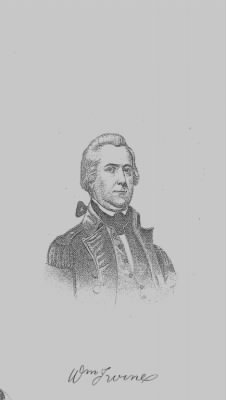
The commander of the Hessian forces was Wilhelm, Reichsfreiherr zu Innhausen und Knyphausen. He took over from the original commander, Von Heister, who commanded the Hessian troops effectively if not with distinction. After the disastrous Hessian defeat at Trenton, for which Heister, as corps commander, bore the ultimate responsibility, the old and ailing general was called back to Hesse in 1777. It’s worth noting that Heister clashed with Howe over strategy. 

Unlike other British generals, he could be pretty blunt with the commander-in-chief. This might have also contributed to his return. Knyphausen remained the senior German officer for the rest of the war. He led the attack on Fort Washington, and one of the redoubts was later renamed in his honor. He also commanded the New York garrison but returned to Germany in 1782 for health reasons. General Friedrich Wilhelm von Lossberg succeeded him as commander of the Hessian troops in New York.


Von Heister

Legend and Legacy 


Some might argue that the German contingent played a vital but not decisive role in the war. Still, it is hard to see how Britain could have raised as many quality regiments at home to fill the gaps if the Teutonic regiments hadn’t been there. The widespread use of hired foreign troops fueled the Americans' worst fears and prejudices, helping newspapers, pamphlets, and rumors spread myths about these unfamiliar invaders, all to rally the people in what was ultimately a war for hearts and minds. 

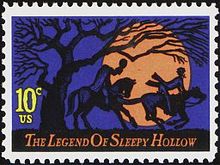
While the Hessians did act harshly toward civilians in some cases, many stories were exaggerated or amplified to stir up public sentiment. They were brutal to rebels during combat and treated prisoners more cruelly than the British did, but not more harshly than American Loyalists and Patriots treated each other. These myths and legends grew and still persist. It’s no coincidence that Washington Irving's famous "Headless Horseman of Sleepy Hollow" was a Hessian artilleryman whose head was taken by a cannonball. However, it’s also true that the Hessians were brave and dependable soldiers who added a unique element to the American fight for independence.


Even the USPS contributes to the legend

Sunday, July 13, 2014

The Last Fort


The Place

When General George Washington and the Continental Army arrived in New York in early summer 1776, the strategic situation was grim. British control of the waterways and superiority in artillery meant that New York, especially the island now called Manhattan, could be threatened from any direction. Although the British approach from the sea made a southern attack most likely, the commander in chief had to prepare for assaults from all sides. To his troops' dismay, Washington ordered fortifications to be built all around the island.

The men worked tirelessly with shovels and picks. Despite their efforts, most of these were primitive and poorly constructed earthworks. However, on June 20, 1776, some Pennsylvania battalions of the Continental Army began building a five-bastion fort at the corner of what is now Fort Washington Avenue and 183rd Street. 

The quickly assembled earthen-walled structure lacked a water supply and a strong barricade to fend off attackers. Still, it was located on the highest hill on Manhattan Island. This made it an ideal spot for the fort, with views over the Hudson River to the east, the Manhattan valley stretching south to what is now 120th Street, and protection on the north side from high ground that commanded the Kings Bridge approach. They named it Fort Washington to honor their commander-in-chief.


The Namesake


Colonel Robert Magaw
hoped to defend the fort

Washington correctly recognized the high ground at the north end of the island as strategically important. Along with its "sister" fort, Fort Lee (named after Washington's deputy commander, Charles Lee), Fort Washington controlled access to the Hudson Valley, the Bronx, Westchester, and areas bordering New England. It also posed a threat to any forces occupying the central and lower parts of New York Island. 

However, without support and with limited troops, Washington's namesake was a liability to his plans and would jeopardize many of his best men. After the British forces led by Lieutenant General William Howe defeated the Continental Army at the Battle of White Plains, they moved to seize Fort Washington, the last American stronghold in Manhattan. 

Recognizing this threat, Washington issued a "discretionary" order to General Nathaniel Greene to abandon the fort and evacuate its 3,000-man garrison to New Jersey. Yet, the fort's commander, Pennsylvania Colonel Robert Magaw, refused to abandon it. He believed it could still be defended against the British and begged Greene to let him hold the position. 

Greene agreed to leave Magaw in charge until he could consult with Washington, and then crossed the Hudson to review the situation. Sadly, the usually sluggish Howe attacked the fort before Washington could fully assess the situation.


The Battle


Throughout that summer and fall of 1776, Lord Howe's British land and naval forces carried out an effective, albeit slow, land-sea campaign that pushed the Continentals off Long Island and most of New York Island. By November, the last position the Americans held on Manhattan was around Fort Washington at the northern tip, known as Harlem Heights. Now, with Washington retreating from White Plains and heading into New Jersey, he decided to strike. 

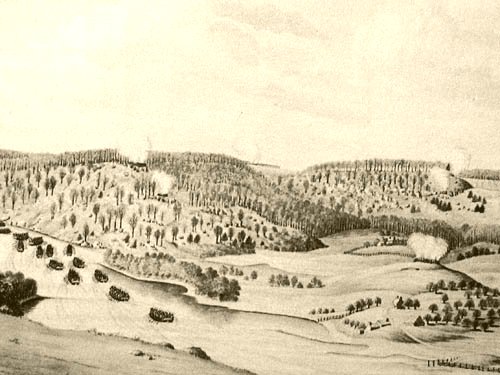
Howe planned three attacks: Brigadier Lord Percy was to attack from the south up the island, Brigadier Matthews with the light infantry and Guards was to cross the Harlem River and attack Baxter on the east side, supported by Lord Cornwallis with the grenadiers and the 33rd Foot. The main attack was to target Colonel Rawlings’ position, with Hessian troops commanded by General Von Knyphausen. An additional assault was to be launched on the same side by the 42nd Highland Regiment (the famous Black Watch) under Colonel Sterling.


British ships bombarding


Early on November 15th, General Howe demanded the fort's surrender. McGaw refused. The British batteries across the Harlem River and the frigate Pearl launched a bombardment against American positions. Percy's forces moved forward to attack. By noon, Matthews landed on Manhattan and began his assault. The American commander defending the works was killed, and his militia retreated to the fort. 

However, the main threat originated from the north. General Knyphausen crossed from the Bronx onto Manhattan at Kingsbridge. His two Hessian columns attacked American positions along the high, wooded ground. After fierce fighting, Rawlings’ riflemen withdrew into the fort. Meanwhile, Hugh Percy, leading about 2,000 regulars through McGowan's Pass, attacked Colonel Lambert Cadwallader and his 800 Pennsylvanians on the south side of the fort. 

Hessians Overrunning Fort Washington
and Wounding of Mary Corbin


Simultaneously, the 42nd landed on the east side in a diversion and pushed inland behind Cadwallader’s forces. This caused the Americans manning the outer defenses to fall back to the fort as well. With all troops confined inside Fort Washington and under heavy fire, Magaw surrendered to Hessian General Knyphausen. Casualties were high on both sides: the British suffered 450 casualties, including 320 skilled Hessians, while the Americans endured 2,900 casualties, most of whom were prisoners.


The 42nd landing

Aftermath


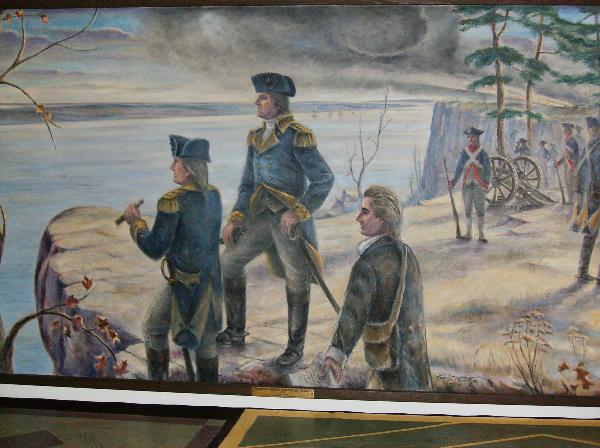
From across the river, its sister Fort Lee, George Washington watched helplessly as his last hold on the strategic island of New York evaporated. Almost 3,000 men from some of his best regiments marched off into captivity. As critical, valuable, and irreplaceable supplies and munitions, including 150 cannons, fell to the British, who occupied the fort and renamed it Fort Knyphausen after the Hessian general instrumental in capturing it. 


Washington watched in frustration from Fort Lee


The high ground covering the northern approach to Kingsbridge was turned into a separate fort, named after New York's last Royal Governor, Tryon. A third fort was named Fort George. The fact that the British constructed three forts where a single large American fort once stood is significant. In Magaw's defense, he was not given enough men to properly man and defend the extensive positions. 

This is a common theme in fort defenses (to be repeated at Ticonderoga the following year)—they could become a death trap if the garrison wasn't large enough. The British army and its sympathizers then occupied the city until the American victory in 1783. After the war, remnants of the fort disappeared, and the surrounding area became known as Washington Heights. Granite paving marks the former contours of Fort Washington in the southern part of nearby Bennett Park.