Followers

Sunday, March 16, 2025

The Sailing Irishman

This special Saint Patrick's Day edition honors Commodore John Barry: the Irish boy who became the father of the U.S. Navy.


John Barry


1745—Ireland. In a small tenant farm along a windswept coast in County Wexford, a boy named John Barry is born into a family of poor Catholic farmers. Life under the English penal laws crushed Irish spirits into the ground. Like many Irish families, the threat of eviction was always present, and one day, the landlord forced them off their tiny piece of land. 

Homeless, the Barrys moved to the rugged seaside village of Rosslare. Luck of the Irish—hardly, but it did give young Barry a way out. He learned the ropes on his uncle’s fishing skiff, and sailing it through choppy waves was the boy’s first taste of the sea. Who could have guessed that someday he’d make the Royal Navy tremble at his name and build what would eventually become the world’s most powerful navy?

Cabin Boy to Captain

Barry’s no stranger to hardships. As a young boy, he barely had shoes, but he has grit. By his teens, he was on ships, starting as a cabin boy—fetching water, scrubbing decks, and avoiding the mate’s boot. The sea is a tough school, but Barry learns fast. With broad shoulders and a calm head that made him a natural leader, he quickly rose through the ranks. 

In the 1760s, he was in Philadelphia, a busy port on the Delaware River, becoming wealthy through trade. By age twenty-one, Barry was a merchant shipmaster, commanding vessels for major names like Reese Meredith. Standing over six feet tall, he was strong but still calm and steady even in fierce storms and rough seas. Soon, he was in high demand as a captain. “Big John” Barry was the skipper owners trusted to lead their ships.


Citizens of Philadelphia


He spends years hauling cargo across the Atlantic, dodging icebergs and setting speed records — such as the fastest day of sailing in the century aboard the prestigious Black Prince. By the 1770s, John Barry had reached the peak of his fortunes. However, storm clouds were gathering on the horizon — tension between the colonies and British authorities. Soon, Barry would exchange merchant manifests for cannonballs.


Merchant Captain at Sea

From Merchant Navy to the Continental Navy

When the First Continental Congress met in 1774, Barry was already friends with future Revolutionary War financier Robert Morris. When the Second Continental Congress decided to create a navy in 1775 using merchant vessels, Barry’s Black Prince was turned into the USS Alfred, which flew the Grand Union flag—America’s first naval ensign. Barry pushed for a naval command and was appointed captain of the USS Lexington, a 14-gun brig, that December.


Command of USS Lexington

He was the first army or navy officer to receive a Continental commission, signed by none other than John Hancock, President of the Continental Congress, on March 14, 1776. History is about to be made!

First Fight

Barry’s first action takes place on April 7, 1776, off the Virginia Capes. Barry demonstrates his resolve. The Lexington engages with the British tender Edward, a spirited ship serving HMS Liverpool. Broadsides are exchanged—cannonballs flying, wood splintering—for an hour and twenty minutes. As calm as ever, Barry shows his courage, giving orders, and when the smoke clears, Edward strikes her colors—the first British ship captured by a Continental vessel. Barry sails his prize into Philadelphia—the American navy’s first!


Fighting Captain

Warrior on Land and Sea

By late 1776, the Cause was at its lowest point. Washington’s shrinking army was retreating through New Jersey after New York. What could Barry do? His next ship, the frigate Effingham, was still in the shipyard. Eager to join the fight, he gathered sailors, marines, and heavy artillery, formed an ad hoc naval brigade, and marched to support Washington. 

At Trenton, his crew transported artillery through snow and ice, pounding the Hessian lines. His brigade also fought at Princeton. Washington personally thanked Barry before asking him to escort wounded prisoners to British General Cornwallis under a flag of truce. A true fighting Irishman on land or sea!


Commanding Guns at Trenton

Back on the water in 1777, Barry commanded the brig USS Delaware and began raiding British shipping in the river with the same name. For the seasoned naval leader, it was like shooting ducks in a barrel; he took over twenty prizes, including the armed schooner Kitty

In 1778, Barry took command of the frigate Raleigh, capturing three more prizes before she ran aground during a skirmish with British warships. Barry was forced to scuttle his ship but swiftly took command of another vessel, the USS Alliance, the fleet’s fastest ship. 

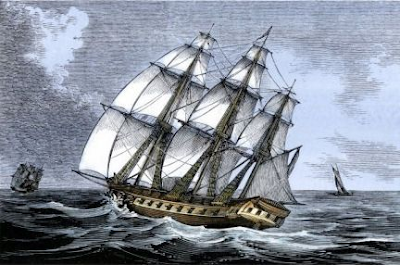
In 1780, he was given a secret mission: to take Colonel John Laurens to France. That mission—securing loans and supplies—helped secure Washington’s victory at Yorktown in October 1781. To top it off, Barry captured a few British prizes on the return trip—just because he could.

Secret Mission to France

The Final Fights

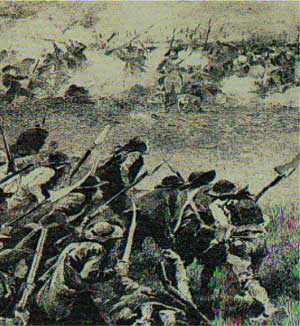
Barry’s most brutal fight took place on May 29, 1781. Standing tall on the quarterdeck of the Alliance, he faced the fight of his life. Two British sloops, HMS Atalanta and HMS Trepassey, attacked him. All hell broke loose as they closed in—broadsides tearing sails, grapeshot ripping through flesh. Barry was badly wounded when a piece of grapeshot went through his shoulder. He stayed at his station, rallying his crew and shouting commands, but the heavy blood loss eventually forced him below deck. In the end, both British warships surrendered—an act of double surrender. Even British captains now agree that he’s an American sea captain to respect.


Taking on a Brace of Warships

Fittingly, on March 10, 1783, Barry fought the last naval battle of the war off Cape Canaveral. His Alliance squared off against HMS Sybille and a squadron. Barry is in a tight spot as he is convoying the Duc de Lauzane, loaded with cash and supplies from the West Indies. Barry has the advantage over Sybille in firepower, but the rest of the squadron is closing in on him. He abandons the newly captured Sybille, choosing to save the convoy and get the Duc de Lauzane safely to port. As the war nears its end, Barry has made a name for himself as a fighting captain.


Final Fight

Father of the Navy

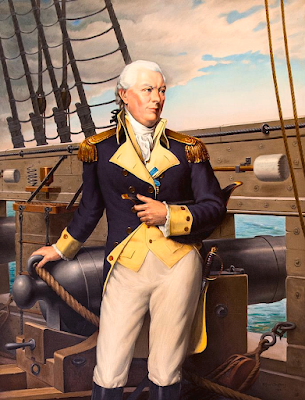
Our Celtic commodore quickly resumed merchant sailing, making a historic voyage to China in 1787—opening trade with the “reclusive empire.” However, in 1794, with the U.S. Navy forming under the Naval Act, Barry was called to serve his country once more—as its first commodore! President Washington himself awarded Barry Naval Commission Number One. Barry began overseeing the construction of the 44-gun frigate USS United States, his flagship.


USS United States

During the Quasi-War with France (1798–1801), Barry went back to work, seizing French merchant ships in the West Indies while training the next group of naval leaders—future icons like Stephen Decatur and Richard Dale.

The Final Watch

Despite worsening asthma, Barry continued to sail. But on March 6, 1803, the United States slides into port with Barry on the quarterdeck for the last time—his sea duty finished. He may have given up his ship, but not the Navy, remaining as its head until he died on September 13, 1803, at his Strawberry Hill home near Philadelphia. The first commodore was buried with full honors at St. Mary’s Churchyard. While happily married, Barry died childless. Yet his legacy lives on in the Navy he shaped and the men he mentored.


John Barry Gravesite

Legacy of a Legend

Some random shots about John Barry: author of an influential book for improving fleet communication, an early supporter of a standalone Navy Department (which was established in 1798). Barry was a man of faith—he started each day with a Bible reading. He was a brilliant leader of men—he cared for his crew, ensuring they were fed and in good shape. A wise disciplinarian—he quelled three mutinies with a firm yet fair approach, earning lasting loyalty from his men.


Barry's Advocacy Paid Off in 1798

Many tributes were paid: four destroyers were named USS Barry, statues of Barry stand in Wexford and D.C., and the Commodore Barry Bridge was named in his honor. Rhode Island celebrates September 13 as “Commodore John Barry Day.”

John Barry statue in Wexford, Ireland


Who's the Best?

Though not as famous as John Paul Jones, Barry distinguished himself in both war and peace. Starting as an Irish cabin boy and eventually becoming an American commodore, he fought on land and sea, built a navy from scratch, and set a standard for bravery. Historians often call John Barry the “Father of the American Navy,” a title many also credit to John Paul Jones. 

Jones's contributions after the Revolutionary War were inconsistent, especially since he took a commission in Czarina Catherine the Great's navy (see my blog, Yankee Doodle in the Crimea). However, unlike Jones, Barry's legacy includes long-term influence and establishing institutions. Jones was flamboyant, but Barry left a lasting mark.


John Paul Jones as Russian Admiral


Next time you hear “I have not yet begun to fight,” tip your hat to Jones—and raise a glass to the quiet giant who led the Revolution to victory and beyond. Fair winds to you, Commodore Barry. 

John Barry in His Office

Friday, February 21, 2025

Book Review: Gone for A Soldier

Avellina Balestri's "All Ye That Pass By: Book 1: Gone for a Soldier" is an important addition to historical fiction. It emphasizes not just facts, deeds, and battles but also the subtle interaction between faith, identity, and the chaos of war in the late 18th century. 


Historical Background

Against the backdrop of the French and Indian War and the American Revolution, "Gone for a Soldier" highlights the lesser-known stories of British Loyalists and Catholic recusants in England. The novel's main character, Edmund Southworth, is a Catholic during a time when his faith could lead to social ostracism or worse, offering a unique look at the struggle between personal beliefs and societal expectations. Balestri uses this setting to explore the complexities of identity during a period of upheaval, where loyalties were often divided among country, faith, and family. All of this takes place across the vast landscapes of Canada and New York during the failed British Saratoga campaign.


The Players

The fictional English Catholic Edmund Southworth is at the center of the story, embodying the conflicts of his time. His path from a boy fascinated by military life to a man wrestling with the contradictions between his Catholic faith and his duties as a soldier is depicted with depth and sensitivity. Balestri's character development reveals Edmund's internal struggles, moments of doubt, and his eventual growth into a morally strong figure. Generals John Burgoyne, Simon Fraser, and other key officers play significant roles across this broad narrative, and the author captures their personalities accurately. Gentleman Johnny Burgoyne has a special role as Edmund's mentor.


General John Burgoyne


Other characters, such as Edmund's Protestant friends, military figures from the British army, and even historical personalities like King George III, are made vivid, creating a grand and intimate narrative. Her characters serve not just as foils to Edmund but also as reflections of society's diverse views on religion, politics, and war.


A Tapestry of Conflict

The novel explores several themes, with faith and loyalty at the core. Balestri investigates how these ideas connect with personal identity and societal roles. Edmund's Catholic faith is a steady influence, shaping his decisions, interactions, and view of the war. This look at faith during conflict adds a philosophical layer to the story, questioning how one balances personal beliefs with the demands of war.


Death of Simon Fraser


Loyalty is another theme woven into the plot. Edmund's loyalty to his faith, king, and comrades in arms often conflicts, creating opportunities for character growth and ethical discussion. The novel also subtly questions the idea of loyalty to a nation or cause when that loyalty might oppose one's morals or spiritual beliefs.


A Bit of the Bard

Balestri's prose is both lyrical and precise, capturing the essence of the 18th-century setting while maintaining a pace that engages the reader. The narrative style is reflective, often pausing to consider the implications of actions and human effort, which fits the novel's introspective themes. Readers who enjoy rich historical detail along with engaging character interactions and plot development will appreciate this. As John Burgoyne was a playwright himself, there are many references to Shakespeare's work.


The Bard

Cultural and Educational Impact

"All Ye That Pass By: Book 1: Gone for a Soldier" does more than entertain; it also educates. Besides being an important Revolutionary War story, by emphasizing a Catholic perspective during a critical moment in British and American history, Balestri addresses a gap in historical fiction where the experiences of religious minorities during colonial conflicts are often ignored. This novel is a useful resource for teachers aiming to give students a more complete view of the historical period.


Burgoyne Surrenders at Saratoga

Why Read?

"All Ye That Pass By: Book 1: Gone for a Soldier" is a commendable piece of historical fiction that blends a passion for history with a deep understanding of the human condition. It prompts readers to reflect on loyalty, faith, and identity in ways that remain relevant today. This work offers readers a vivid portrayal of historical events through an intensely personal narrative, powerfully exploring human resilience, loyalty, and the search for spiritual and personal truth. 


This book is for anyone interested in the intersection of faith and war (and who isn't?) or readers looking for a different perspective on the Revolutionary War era. It showcases Balestri's skill in weaving history into a compelling story, making readers not just spectators but participants in Edmund Southworth's moral and spiritual journey. We look forward to a future book to see where his journey takes him.

Thursday, January 30, 2025

Island in the Sun

 Special Mission

Large puffs of white clouds drift lazily with the trade winds beneath the bright blue November sky over Oranje Bay. Isaiah Robinson, captain of the 14-gun brig Andrea Doria, brought his spyglass to his eye. Ahead, twin peaks with lush green slopes rose sharply from the sandy shore, where the Dutch trading port city of Oranjestad stood. He shifted his gaze to the large stone fort sitting atop the bluffs overlooking the anchorage, which was his destination.

“How will they receive us, sir?” asked a young midshipman standing beside him. The United States declared independence from Britain earlier that summer but had not yet received diplomatic recognition.

“We shall know soon enough, Mister Sewall,” replied Robinson.


Entering the Harbor at Sint Eustatius

The First Salute

The Andrea Doria sailed quickly and then lazily toward the harbor, crowded with trading ships from across the New World and Europe. Sint Eustatius, part of the Dutch Antilles, was a duty-free port that, since its occupation by the Dutch West Indies Trading Company in the early 17th century, served as a hub for maritime trade—both legal and illegal. Tobacco, rice, cotton, and rum passed through her, forming part of a global supply chain that connected two hemispheres. However, the port was sadly a transit point for the worst kind of trade—human chattel.

Robinson snapped his glass shut and nodded to the Gunner's Mate. “Fire the salute!”

Thirteen of the fourteen barrels flashed and belched smoke—one for each state. Andrea Doria had officially announced her arrival. Robinson wondered, What will be their reply?

From his perch at the fort, the island's governor, Johannes de Graaf, watched the salvo fired by the brig below. He turned to the battery commander and doffed his plumed hat. A salvo of eleven guns erupted, belching a cloud of gun smoke above the harbor.

Captain Robinson smiled in satisfaction. “The signal of a returned salute is two guns less than the saluted.”

“What does it mean, sir?” asked Sewall.

Robinson did not respond to the young officer but turned to the entire crew. “The United Netherlands recognizes us as a sovereign nation!”


The crew erupted into a long cheer as the Andrea Doria headed to safe harbor.


The First Salute - Andrea Doria

Island in the Sun

I have slightly adjusted my plan to dedicate the upcoming editions of the Yankee Doodle Spies blog to characters from the series’ next novel, The Reluctant Spy. Instead, we will focus on a place that plays a significant role in this adventure story. This unique location is an island in the West Indies. An island that was crucial during the American Revolution and features prominently in the fifth book of the Yankee Doodle Spies series, The Cavalier Spy. As those who have read it know—this island is Sint (Saint) Eustatius, sometimes called Statia.


Governor Johannes de Graaf

Revolutionary Role

Sint Eustatius’s role in the American fight for independence didn’t end with that “first salute.” In fact, Governor de Graaf greeted the crew, and Robinson gave him a copy of the Declaration of Independence along with a letter written in Hebrew, meant for the Jewish merchants in the Netherlands. Many Jewish settlers on Sint Eustatius helped make the island a trading and banking hub that linked the Old World with the New.


The Declaration of Independence


Lively and Prosperous

When Robinson and his crew went ashore, they discovered a bustling port town with hundreds of storehouses, shops, inns, taverns, and bordellos. The storehouses were packed with goods from the region’s islands—coffee, cocoa, rice, tobacco, and wood from North America, along with finished products from Europe. The bay was filled with ships from all over the world, waiting to unload or load cargo. The small island, a “duty-free” port, was as busy as Amsterdam, handling 3,000 ships a year.


Port of Amsterdam

The Jewish Community

The large Jewish population was the driving force behind the island’s prosperity. In the early 18th century, Sephardic Jews migrated to Sint Eustatius from the Netherlands, bringing entrepreneurial skills and talent, and establishing financial ties with their communities in Europe and elsewhere. The population eventually made up about one-tenth of the island's residents. These traders became wealthy enough to build the largest synagogue in the New World, Honen Dalim. Stone bricks were imported from Europe to construct the massive structure.


Many Jewish-owned Trading Houses 


Duty-Free Port

Though short on natural resources, the small island in the sun boasted a global network of traders and maritime interests. The Jewish settlers on St. Eustatius made up a significant part of those merchants who were also “illegal” sellers of war materials and supplies to the Americans. Add to that the banking interests in Amsterdam, and you had the ingredients for a system that some called the “Armory of the American Revolution.”


Prosperous Trading Hub

Robinson would meet with some of the local Jewish businessmen and purchase munitions. This marked the start of a covert (or not so covert) trade that exchanged American cash crops, such as tobacco, for war supplies. It was a vital pipeline during the early years of the fight for independence.

Smugglers Hub

But the troublesome island that defied the rules of maritime trade was in the crosshairs of the empire that enforced maritime regulations—at least wherever the navy patrolled. However, political and diplomatic politeness kept the British government from doing much to halt the secret trade that gave the American rebels their lifeline. As long as the Netherlands and France were not confirmed allies of America, the better approach was to send occasional squadrons to patrol the waters. But eliminating the source of smugglers and (to the British) illegal traders would have to wait.


Smugglers Avoided Tariffs - 
But Also Supplied the American Revolution


A Vital Threat

A few years into the war, London realized that the threat from the small island needed to be addressed. By 1780, the Admiralty believed it was time for action. France and Spain were at war, and after the revelations captured with American emissary Henry Laurens, the focus shifted to the West Indies, where the British believed their greater economic interests were. With the Southern strategy in motion, everything was set for a confrontation.


The Admiralty

Send Rodney

British Admiral George Rodney, a capable and well-respected naval veteran, was given the assignment. In late 1780, he sailed with a fleet of fifteen ships of the line, many support ships and transports, and about 3,000 men to finally deal with the “nest of vipers.” Arriving at the harbor entrance on February 3, 1781, the fleet looked impressive. With around 1,000 naval guns, Governor de Graaf could only watch in dismay, as he had just a dozen cannons and fifty men. He accepted Rodney’s offer of surrender.


Admiral George Rodney

Worse Than Thought

The British admiral was amazed by the abundance of supplies and munitions on the island and the number of vessels loaded with goods involved in American trade. Beaches were lined with warehouses overflowing with goods, mainly sugar and tobacco. Others were filled with naval stores—the timber, resin, tar, and hemp rope needed for ships. The scale of the island's contribution to the American war effort was further demonstrated by the number of munitions belonging to the Royal Navy that were seized—sold by British merchants on nearby St. Kitts!


Full Storehouses and Magazines


Months of Rapine

Rodney began confiscating anything of value. With substantial gambling debts, the more he could seize for Britain, the bigger his share of the loot. The admiral burned, dumped, or looted what he could find. The island was plundered like a medieval city. His contempt for the Jews was clear—he believed many successful merchants were mainly responsible for supporting the Americans. In an act similar to later Boer War tactics, Rodney had many of the island’s leading Jewish figures rounded up and sent to St. Kitts. While now destitute families watched in horror, he seized all of their possessions.


The British Take Sint Eustatius


Not Following Orders

Meanwhile, Rodney lost focus on his duties. He broke his orders to destroy the supplies intended for the American forces and to shadow a French fleet heading for North America under Rear Admiral Francois Joseph Paul de Grasse. As he lingered on Sint Eustatius to continue looting, the French arrived in American waters and set sail for the Chesapeake. Rodney sent part of his fleet to join Admiral Hood while, now sick, he sailed back to England. De Grasse and Hood clashed at the Battle of the Chesapeake, where the French forced the British to retreat. They then trapped British General Charles Cornwallis’s army at Yorktown, sealing Britain’s fate in North America.


Admiral de Grasse

After Rodney

The British occupation of Sint Eustatius was brief. Months later, a French fleet recaptured it, and it was returned to Dutch control in 1784. But the island, once vibrant, was a shell of its former self. Months of destruction and plundering by Hood bankrupted the locals, and the population of about 8,000 began to decline. With the war over and the former British colonies now free to trade freely, its importance decreased.


Statius Contemporary Map

During the Napoleonic Wars, the French and British fought over it (the Netherlands was made a client state and then absorbed by France). The Congress of Vienna returned Sint Eustatius to the Netherlands in 1816. But the “Golden Island” would never be the same as it was during its heyday of the late 18th century.


The Congress of Vienna

Statius Speculation

The story of the island in the sun has two “what ifs.”

The first is obvious. What if Rodney had not succumbed to his greed and instead followed his orders, rather than spending months looting and expropriating, but had shifted focus to the French threat after capturing the island? Would America’s fate, and that of the world, have turned out differently?

The second is more vague. But what if the Jewish population had been left untouched and not gone into a diaspora? Would their trade and finance expertise have made Eustatius an even more important regional hub for commerce, leading the entire West Indies to prosperity?

Visitors to the island today can barely imagine its brief yet crucial role in shaping history. But the island in the sun did have its part—and it's one we should always remember.


Tuesday, December 31, 2024

Palmetto Patriot

This edition begins a series of profiles to introduce some of the historical characters readers will meet when the fifth historical novel in the Yankee Doodle Spies series is released in 2025. One of the first historical characters the reader will encounter is Henry Laurens, a little-known but essential South Carolina founder who became the Continental Congress's president.


Man of Means

Laurens was born the son of a wealthy Huguenot merchant, John Laurens, in 1724. After his early education in South Carolina, his father sent him to Britain, where he learned about managing money and accounts. His experience in England served him well when he returned to South Carolina a few years later, and combined with his strong work ethic, it set him on the path to becoming one of the colony's most successful merchants. In just a few years, Laurens expanded his interests by purchasing plantations and increasing his stake in the rice trade, but unfortunately, his biggest earnings came from the slave trade.

                                                     Laurens's Company Advertisement


Husband and Father

In 1750, Laurens married the daughter of a wealthy South Carolina rice planter. Eleanor Ball bore thirteen children before dying in 1770, just after giving birth to her last child. Most of his children died young, but at least four reached adulthood, and one, John Laurens, gained prominence during the American Revolution.

John Laurens


Militia Leader

Laurens joined the South Carolina militia and rose to lieutenant colonel during wars against the Cherokee and the French and Indian War. Like many of the wealthy planter class, he also served in the colonial assembly, where he was considered a conservative and leaned Tory.

Militia Fighting the Cherokees


Times of Trouble

As tensions between Britain and the colonies grew worse, Laurens was attracted to the Whigs but faced attacks from both sides. A mob of radicals stormed his house and tore it apart searching for stamped products. Meanwhile, British Customs officials confiscated three of Laurens's merchant ships under the Townshend Acts. This increased his sympathy for the Whigs, and he published a letter criticizing the British for imposing restrictions on American trade. However, he stayed apart from those pushing for direct action or independence.

Laurens's Ships Seized by the British


A trip to London in 1771 to check his sons' education changed everything. Incensed by the corruption in British society, Laurens grew closer to the Whigs. Three years later, when he returned to America, he became a supporter of independence.

Carolina Politics

By 1775, the rebellion was in full swing, and the cautious Laurens was fully committed to the cause. He immersed himself in active politics and was elected to South Carolina's Provincial Congress—an illegal body that soon replaced royal authority. Laurens led the South Carolina Committee of Safety, a crucial role as the colonies prepared for armed conflict with Britain. He clashed with some of the more radical politicians in the state when he championed property rights in the state's new constitution, even protecting Loyalists' property from confiscation. Laurens served as the vice president of South Carolina's new government from March 1776 to June 1777.


                                                   South Carolina Provincial Congress


National Figure

Although long a fixture in his home state, Henry Laurens stepped onto the national stage in June 1777 when he joined the Second Continental Congress as a delegate from South Carolina. The following November, he succeeded John Hancock as president of Congress—a role similar to that of a speaker of the house. He introduced many important bills and led the often contentious factions during his time. His most notable achievements include the Articles of Confederation and the American alliance with France. It is as president of Congress that we meet Laurens in my novel, The Reluctant Spy

Henry Laurens, President of the Continental Congress

President of Congress

The South Carolina native displayed the typical Southern aristocratic sense of honor. This, combined with a meticulous attention to detail and a steadfast stance against corruption, whether real or perceived, rubbed many of his peers the wrong way. President Laurens was highly respected but never loved. He would take on anyone, including Robert Morris. The influential Morris swayed many against Laurens when he pushed for an investigation into his actions as the financier of the American Revolution. Laurens's involvement in the corruption accusations against the American agent in Paris, Silas Deane, also upset many. By December 1778, Laurens had enough and resigned as president, being replaced by fellow Huguenot John Jay—the father of American counterintelligence.

Financier Robert Morris


Diplomat and Prisoner

A year later, Laurens shifted from being a controversial figure on the national stage to one on the international stage when he resigned from his Congressional seat to serve as the American commissioner to the Netherlands. However, the British intercepted his ship off the coast of Newfoundland. The clever Laurens quickly threw the trunk full of official dispatches into the ocean, but the Royal Navy recovered them. The Netherlands' role in helping America was revealed, giving London a reason for war.

Laurens was taken to London, charged with treason, and imprisoned in the Tower of London to suffer without adequate food or medical care until December 1781, when he was exchanged for British General Charles, Lord Cornwallis, who had been captured at Yorktown the previous October.

The Tower of London


Envoy

But there was no rest for the sick and weary ex-prisoner. Upon release, he sailed to Amsterdam to settle his affairs with the Dutch. Then Congress directed Laurens to Paris, where he joined Benjamin Franklin, John Adams, and now former Congressional president John Jay in negotiating a peace treaty. He missed the final negotiations and the official signing because he was sent back to London to handle business matters, and when peace was achieved, the two nations would resume trading. He stayed in London as an ex officio representative until formal diplomatic relations were established. One wonders how envoy Laurens felt dealing with his former jailers and tormentors—or how they felt dealing with the traitor and former prisoner!

           Signing the Treaty of Paris

Up from the Ashes

By 1784, John Laurens was back in South Carolina. But he returned to a state devastated by years of brutal warfare and British occupation. His mansion in Charleston had been destroyed, and his businesses were also in ruins—he had lost the equivalent of many millions of dollars in service to his country. He spent his remaining years rebuilding the family fortune, refusing public offices of all kinds. He even declined to represent South Carolina at the Constitutional Convention.

Charleston


Laurens had his reasons. He was aging, and his health was declining. But the likely cause was the blow he suffered when he learned his son, Colonel John Laurens (a staunch opponent of slavery), had died of wounds sustained in a minor skirmish in 1782. So, the elder Laurens stayed in his native state, rebuilding his holdings until his death on December 8, 1792.

Although tarnished by his deep involvement in the slave trade, the former militia leader, businessman, slave trader, planter, politician, and statesman made many contributions to the nation's founding—as did his sacrifices. He should be remembered for both, but celebrated for his dedicated service to his country.


Saturday, November 30, 2024

Bold Breton

The American Revolution had more than its share of bold warriors and badasses—tough men who, once committed to a Cause, remained undaunted and steadfast. This first patriot is unique among them as he fought for two causes, although he would only succeed with one. Armand Charles Tuffin, Marquis de La Rouërie, was a son of Brittany, that ocean-washed corner of France that shared its heritage with the Britons across the sea.

Young Blood

Born to a noble Breton family in 1750, the Marquis went to Versailles at an early age and became an Ensign in the elite Garde Francaise, the Horse Guards, and earned a reputation as impetuous and hot-tempered nobleman—this among a society of impetuous and hot-tempered noblemen. His exploits included wooing a notorious young actress (unsuccessfully) and dueling (successfully) with the comte de Bourbon-Besset, a cousin of King Louis XVI, in 1775. The latter was, of course, over a woman and got him cashiered in disgrace (the Code Duello was forbidden).

King Louis XVI
 

A New Cause

His opponent lived and the young Marquis fled to an abbey in Brittany where he sought solace among the Trappist monks. At one point he tried to poison himself. Talked out of it by friends, he did the next best thing. He abandoned France for the American cause, which he had admired from afar. His journey began in a tempest when his ship, Morris, was pursued by three British frigates. Armand and the other officers and men fought their way into Chesapeake Bay. Rather than provide a prize ship to the British, they ran Morris aground, torched the vessel, and fled inland. A fiery start for a firebrand. It was April 1777.

Chesapeake Flight

A New Commission

Founder Robert Morris had penned a letter of recommendation to George Washington. The desperate nobleman trekked on foot to Philadelphia to deliver it and other correspondence from France to the Continental Congress.  The Marquis de La Rouërie was commissioned under the name Armand—the name he was known by to the Americans. He soon came to General George Washington’s notice and was authorized to raise a corps of eighty riflemen who would function as rangers. Most of the contingent were Germans, and Armand led them in their first combat at Short Hills, New Jersey, in June 1777. Armand’s rangers took horrific casualties, some thirty men, but boldly retrieved a captured cannon from the enemy. He was promoted to colonel for his exploits and proved his mettle a few months later at the Battle of Brandywine, where he took some sixty Hessian infantry prisoners.


Armand's Germans captured Hessian Infantry

Raising a Legion

His success granted him authority to raise a legion—independent units with a mix of infantry and cavalry called the “Free and Independent Chasseurs.”. Chasseur was the French word for hunter—something similar to riflemen or rangers in French military parlance. Armand was soon deploying his Chasseurs in guerilla warfare around New York City.

Armand's Legion

Night Raid in New York

One of Colonel Armand’s most significant exploits during this time was a daring night raid. His target, a notorious Loyalist officer Major Bearmore. A member of Delancey’s brigade, Bearmore was known for his harsh treatment of Whigs in Westchester. Working his way through Westchester and around the King’s Bridge, with 100 infantry and thirty horsemen, his “hunters” reached William’s Bridge undetected by a nearby regiment of Hessians. He left his infantry to provide security for their withdrawal and led twenty dragoons to Bearmore’s headquarters three miles south. At around nine o’clock, his men swept in, seizing Bearman and five others. Armand is said to have thrown Bearman’s six-foot frame across his saddle and galloped off with him. The legion returned with no losses.


New Theater, New Command

Upon the death of Continental cavalry commander General Count Casimir Pulaski at Savannah in October 1779, Armand’s Chasseurs were transferred to the Southern Department and merged with the remnants of Pulaski’s Legion aptly renamed Armand’s Legion. The year 1780 saw Armand’s Legion in action, notably at Camden, where he helped cover what he could of General Horatio Gates’s Army when it routed.

Casimir Pulaski


French Interlude

Armand sailed back to France in early 1781, where he received King Louis’s forgiveness and the Order of St. Louis. He used his time in France to support the Cause by raising funds and gathering supplies. Although brooding over the lack of promotion in the Continental Army, he returned to America in time to partake in the final major campaign against the British.

Order of St. Louis

The Road to Yorktown

 While he was in France Armand’s Legion had been sent north to Virginia where it was employed trying to check General (and traitor) Benedict Arnold’s raids across the Old Dominion. Although whittled down in number through battle losses and illness, Colonel Armand took command of the Legion as it entered the siege works around General Charles Cornwallis’s Army at Yorktown. Not wanting to be denied glory, he and a handful of his Legion joined Lieutenant Colonel Alexander Hamilton’s storming party at Redoubt Number 10. Armand was the first officer to breach the parapet and helped force the defenders to surrender. Commended for his bravery, Congress finally promoted Armand to brigadier general in 1782.

Storming Redoubt 10

Cavalry Commander

The war did not end for Armand with Yorktown’s fall in October 1781. Instead, he rode south at the head of the newly named 1st Partisan Corps to assist General Nathanael Greene’s campaign to sweep the British from South Carolina and Georgia. Forcing outposts into surrender and seizing towns and territory was crucial as the British strategy in Paris to bargain for possession of what they held. To that end, they failed, although it took scores of small engagements and lots of hard riding and marching to foil them.

Colonel Armand

Laurels at War’s End

Armand and his Legion were sent north and reached the New York area in December 1782. In March of the following year, Congress promoted the bold Breton to brigadier general. Brigadier General Armand was also named chief of all the Continental Army’s cavalry—a title that once belonged to Casimir Pulaski. The two would share the honorific, “Father of the Cavalry.”

Continental Dragoon


Home to Fame and Rebellion

Brigadier General Armand returned home a hero in 1784—not of the Lafayette caliber but highly celebrated. Settling back home in Brittany, he married a noblewoman (who got ill and died soon after) and threw himself into local politics—championing the liberties of his fellow Bretons. He joined several other Breton noblemen in a petition of Breton grievances to the King in 1787. He turned down a military command to protest the loss of Breton liberties. This snub of the monarch got him tossed from the Army and into the Bastille, the notorious prison whose storming was one of the sparks of the violence that would come during the French Revolution.

Storming the Bastille

French Revolution

He was released from prison and later attended the Estates General but soon became disenchanted as he saw even a revolutionary France as a threat to Breton rights. When France broke into revolution and chaos. Armand tried to stay above the fray. Most of it concerned Paris, not his home in Brittany. However, as the Jacobins seized power and began their excesses and repression, the Royalist and conservative Catholic western France rebelled against the rebellion. This area, known as the Vendee, stood up the revolutionaries of Paris and their anti-Catholic policies. Armand formed the Breton Association, which raised troops. When the Austrians and Prussians declared war on France in 1792, they were ready to join them with 10,000 men.

Vendee Resistance was Determined

Defiant Fugitive

But the French victory at Valmy sent the Austrians and Prussians reeling, and the French central government turned on the Vendee. Armand went on the run when revolutionary dragoons raided his estate. He wandered Brittany accompanied by a few faithful companions for the next year. One of his companions caught a fever, and it eventually spread to Armand, who died of pneumonia on 30 January 1793, right after reading of the execution of King Louis XVI by the revolutionary government.

Armand as Marquis de Rouërie in the Vendee


Sadly, our Colonel Armand has gone almost forgotten—a brave B Player in two revolutions separated by an ocean. But he was an A Player to the men he led and the foes he vanquished. And one must suppose he was an A Player in the hearts of those proud Bretons he led and inspired in the struggle for their liberties and their faith.