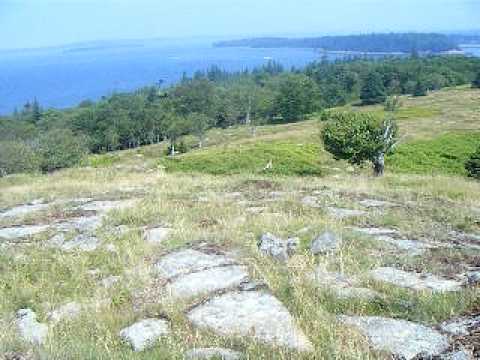
Followers

Showing posts with label US Navy. Show all posts

Sunday, March 16, 2025

The Sailing Irishman

This special Saint Patrick's Day edition honors Commodore John Barry: the Irish boy who became the father of the U.S. Navy.


John Barry


1745—Ireland. In a small tenant farm along a windswept coast in County Wexford, a boy named John Barry is born into a family of poor Catholic farmers. Life under the English penal laws crushed Irish spirits into the ground. Like many Irish families, the threat of eviction was always present, and one day, the landlord forced them off their tiny piece of land. 

Homeless, the Barrys moved to the rugged seaside village of Rosslare. Luck of the Irish—hardly, but it did give young Barry a way out. He learned the ropes on his uncle’s fishing skiff, and sailing it through choppy waves was the boy’s first taste of the sea. Who could have guessed that someday he’d make the Royal Navy tremble at his name and build what would eventually become the world’s most powerful navy?

Cabin Boy to Captain

Barry’s no stranger to hardships. As a young boy, he barely had shoes, but he has grit. By his teens, he was on ships, starting as a cabin boy—fetching water, scrubbing decks, and avoiding the mate’s boot. The sea is a tough school, but Barry learns fast. With broad shoulders and a calm head that made him a natural leader, he quickly rose through the ranks. 

In the 1760s, he was in Philadelphia, a busy port on the Delaware River, becoming wealthy through trade. By age twenty-one, Barry was a merchant shipmaster, commanding vessels for major names like Reese Meredith. Standing over six feet tall, he was strong but still calm and steady even in fierce storms and rough seas. Soon, he was in high demand as a captain. “Big John” Barry was the skipper owners trusted to lead their ships.


Citizens of Philadelphia


He spends years hauling cargo across the Atlantic, dodging icebergs and setting speed records — such as the fastest day of sailing in the century aboard the prestigious Black Prince. By the 1770s, John Barry had reached the peak of his fortunes. However, storm clouds were gathering on the horizon — tension between the colonies and British authorities. Soon, Barry would exchange merchant manifests for cannonballs.


Merchant Captain at Sea

From Merchant Navy to the Continental Navy

When the First Continental Congress met in 1774, Barry was already friends with future Revolutionary War financier Robert Morris. When the Second Continental Congress decided to create a navy in 1775 using merchant vessels, Barry’s Black Prince was turned into the USS Alfred, which flew the Grand Union flag—America’s first naval ensign. Barry pushed for a naval command and was appointed captain of the USS Lexington, a 14-gun brig, that December.


Command of USS Lexington

He was the first army or navy officer to receive a Continental commission, signed by none other than John Hancock, President of the Continental Congress, on March 14, 1776. History is about to be made!

First Fight

Barry’s first action takes place on April 7, 1776, off the Virginia Capes. Barry demonstrates his resolve. The Lexington engages with the British tender Edward, a spirited ship serving HMS Liverpool. Broadsides are exchanged—cannonballs flying, wood splintering—for an hour and twenty minutes. As calm as ever, Barry shows his courage, giving orders, and when the smoke clears, Edward strikes her colors—the first British ship captured by a Continental vessel. Barry sails his prize into Philadelphia—the American navy’s first!


Fighting Captain

Warrior on Land and Sea

By late 1776, the Cause was at its lowest point. Washington’s shrinking army was retreating through New Jersey after New York. What could Barry do? His next ship, the frigate Effingham, was still in the shipyard. Eager to join the fight, he gathered sailors, marines, and heavy artillery, formed an ad hoc naval brigade, and marched to support Washington. 

At Trenton, his crew transported artillery through snow and ice, pounding the Hessian lines. His brigade also fought at Princeton. Washington personally thanked Barry before asking him to escort wounded prisoners to British General Cornwallis under a flag of truce. A true fighting Irishman on land or sea!


Commanding Guns at Trenton

Back on the water in 1777, Barry commanded the brig USS Delaware and began raiding British shipping in the river with the same name. For the seasoned naval leader, it was like shooting ducks in a barrel; he took over twenty prizes, including the armed schooner Kitty

In 1778, Barry took command of the frigate Raleigh, capturing three more prizes before she ran aground during a skirmish with British warships. Barry was forced to scuttle his ship but swiftly took command of another vessel, the USS Alliance, the fleet’s fastest ship. 

In 1780, he was given a secret mission: to take Colonel John Laurens to France. That mission—securing loans and supplies—helped secure Washington’s victory at Yorktown in October 1781. To top it off, Barry captured a few British prizes on the return trip—just because he could.
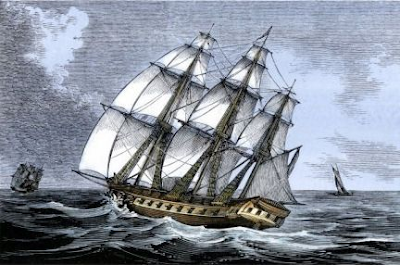

Secret Mission to France

The Final Fights

Barry’s most brutal fight took place on May 29, 1781. Standing tall on the quarterdeck of the Alliance, he faced the fight of his life. Two British sloops, HMS Atalanta and HMS Trepassey, attacked him. All hell broke loose as they closed in—broadsides tearing sails, grapeshot ripping through flesh. Barry was badly wounded when a piece of grapeshot went through his shoulder. He stayed at his station, rallying his crew and shouting commands, but the heavy blood loss eventually forced him below deck. In the end, both British warships surrendered—an act of double surrender. Even British captains now agree that he’s an American sea captain to respect.


Taking on a Brace of Warships

Fittingly, on March 10, 1783, Barry fought the last naval battle of the war off Cape Canaveral. His Alliance squared off against HMS Sybille and a squadron. Barry is in a tight spot as he is convoying the Duc de Lauzane, loaded with cash and supplies from the West Indies. Barry has the advantage over Sybille in firepower, but the rest of the squadron is closing in on him. He abandons the newly captured Sybille, choosing to save the convoy and get the Duc de Lauzane safely to port. As the war nears its end, Barry has made a name for himself as a fighting captain.


Final Fight

Father of the Navy

Our Celtic commodore quickly resumed merchant sailing, making a historic voyage to China in 1787—opening trade with the “reclusive empire.” However, in 1794, with the U.S. Navy forming under the Naval Act, Barry was called to serve his country once more—as its first commodore! President Washington himself awarded Barry Naval Commission Number One. Barry began overseeing the construction of the 44-gun frigate USS United States, his flagship.


USS United States

During the Quasi-War with France (1798–1801), Barry went back to work, seizing French merchant ships in the West Indies while training the next group of naval leaders—future icons like Stephen Decatur and Richard Dale.

The Final Watch

Despite worsening asthma, Barry continued to sail. But on March 6, 1803, the United States slides into port with Barry on the quarterdeck for the last time—his sea duty finished. He may have given up his ship, but not the Navy, remaining as its head until he died on September 13, 1803, at his Strawberry Hill home near Philadelphia. The first commodore was buried with full honors at St. Mary’s Churchyard. While happily married, Barry died childless. Yet his legacy lives on in the Navy he shaped and the men he mentored.


John Barry Gravesite

Legacy of a Legend

Some random shots about John Barry: author of an influential book for improving fleet communication, an early supporter of a standalone Navy Department (which was established in 1798). Barry was a man of faith—he started each day with a Bible reading. He was a brilliant leader of men—he cared for his crew, ensuring they were fed and in good shape. A wise disciplinarian—he quelled three mutinies with a firm yet fair approach, earning lasting loyalty from his men.


Barry's Advocacy Paid Off in 1798

Many tributes were paid: four destroyers were named USS Barry, statues of Barry stand in Wexford and D.C., and the Commodore Barry Bridge was named in his honor. Rhode Island celebrates September 13 as “Commodore John Barry Day.”

John Barry statue in Wexford, Ireland


Who's the Best?

Though not as famous as John Paul Jones, Barry distinguished himself in both war and peace. Starting as an Irish cabin boy and eventually becoming an American commodore, he fought on land and sea, built a navy from scratch, and set a standard for bravery. Historians often call John Barry the “Father of the American Navy,” a title many also credit to John Paul Jones. 

Jones's contributions after the Revolutionary War were inconsistent, especially since he took a commission in Czarina Catherine the Great's navy (see my blog, Yankee Doodle in the Crimea). However, unlike Jones, Barry's legacy includes long-term influence and establishing institutions. Jones was flamboyant, but Barry left a lasting mark.


John Paul Jones as Russian Admiral


Next time you hear “I have not yet begun to fight,” tip your hat to Jones—and raise a glass to the quiet giant who led the Revolution to victory and beyond. Fair winds to you, Commodore Barry. 
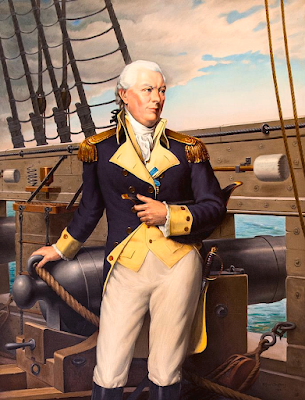

John Barry in His Office

Sunday, February 28, 2021

Shores of Tripoli

 Review: Shores of Tripoli 

This is a rare and unusual Yankee Doodle Spies sequel segment. Although it’s a bit of a stretch, I felt compelled to review this board game because it depicts events that have some surprising links to the time of the Yankee Doodle Spies. What motivates me to review this game? In a word, fun. Shores of Tripoli offers an engaging and intriguing look at this pivotal period in United States national security policy. Players learn as they play and interact while they learn. And they have a good time. But I think I already mentioned that.

                                                           Poster of the 1950s Action Flick


Fort Circle Games

Kevin Bertram, designer and owner of Fort Circle Games, shares that his inspiration for the game came from Brian Kilmeade’s book about the American effort to suppress the Barbary (North African) States and their corsairs (pirates) at the start of the 19th century. I admit—I haven't read the book, though I’ve read others on the topic and watched the John Payne film, Tripoli, as a young person. In his designer notes, Kevin mentions he created the game after realizing no one had addressed this subject. I started playing board wargames when I was in third grade. The first I remember was called Tactics II. I played wargames for many years and even tried miniatures. After reading Kevin’s words, I agreed—he’s right. So, the game is groundbreaking for shining a light on that little-known conflict.


                                                                            Box Cover

The Mechanics

I'm not talking about Paul Revere’s spy network, but about how the game is played. I'll let others give a play-by-play of the rules. You can also find many YouTube clips by Kevin and other players who enjoy the game explaining the rules. 

https://www.youtube.com/watch?v=etnQr4eTy6s&fbclid=IwAR0gOquGCChbCxnXMEHmOIaQVudN7seQoFRStocsAS9QRL1K4SEUAFW11og

The game starts as a board game featuring a simple, attractive map of North Africa. Important ports like Gibraltar (British-controlled and neutral), Malta, Tripoli, Alexandria, and Derne are marked, as these are where most of the action takes place. Players move ship markers, including American, Swedish, and Tripolitan frigates; American cutters; and Tripolitan and allied corsairs. You also manage soldier markers such as US marines, Hamet’s (deposed older brother and rival to Tripolitan ruler Yusuf Karamanli) mercenaries, and Barbary pirates. 


                                                                Pieces, Dice & Board

Combat relies on die rolling, and this game involves a lot of it. Luck often outweighs skill in many situations. I think Napoleon once said he would prefer having a lucky general over a good one. However, the game is mainly driven by card play. Players draw cards from a deck each turn and can discard any card to make a move or play specific cards to bring in reinforcements or perform various actions. The real key is the Event Cards, which influence movement, combat, political actions, and more. Players constantly draw, discard, or play cards as the game unfolds across four seasons each year from 1801 to 1806. The cards bring surprises, both positive and negative. How a player uses the cards dealt to them can make up for poor dice rolls and mistakes. So, watch them closely. And may the odds always be in your favor.


                                            American Frigate takes on a Barbary Corsair


The Result

The game provides players with about an hour of fun and frustration. It's a two-player game featuring a cool solitaire option. The American side has many advantages, such as large ships (frigates), US Marines, and Swedish allies. Yeah — Sweden! But the American side also faces significant risks. Closing the deal, which involves assaulting and capturing Tripoli, can result in a Ragnarök-like end for the game. The American player starts slowly, building firepower with frigates and gunboats, while pesky pirates go on raids.


                                                            The cards make the game


The Barbary player has less firepower but more flexibility. He can run out the clock. If the American player is too cautious, the Barbary player may have time to launch enough raids to win by capturing treasure (gold-colored coins). Or he can win if the American fails to use the right mix of naval and land forces to take Tripoli. And though the American frigates are strong, they are also vulnerable: losing four of them wins the game for the Tripolitan side. This reflects how American and European public opinion reacts to unacceptable losses. A draw favors the Barbary States, but the Americans can use cards and clever maneuvers to force a treaty and secure victory.


                                                        USS Philadelphia under attack


Either way, both sides have fun and learn a lot about this important but little-known event in American history.


                                                            Jefferson's Letter to the Bey


The game features an intelligent historical supplement and designer notes that enhance the rules effectively. The design, artwork, and layout are of top quality. A highlight is the “mock-up” of the 21 May 1801 letter to the Pasha and Bey of Tripoli, Yusuf Karamanli, which explains the reason for the friendly visit of the American squadron to the Mediterranean. It creates an engaging scene with atmosphere as you read President Jefferson’s reassuring words. 

Yankee Doodle Spies Sequel?

The war against the Barbary States was the first effort by America to send military force overseas. One of the results of the American War for Independence and American sovereignty was losing the protection of the powerful British Navy. This was clear during the undeclared naval war with France, an event that led to the rebirth of an American naval force focused on a small fleet of "super-frigates," which served as fast and nimble ships-of-the-line.

Key figures – Rev War Connections

I'll now circle back to the American Revolution with some interesting links between the Tripoli affair and the era of the Yankee Doodle Spies.


                                    1st Lt Presley O'Bannon raises the American flag over Derna


Thomas Jefferson

The most prominent figure is President Thomas Jefferson, the central character in the event. The founding father and the first Secretary of State sought a peaceful way to handle the Barbary States’ demands for tribute—without actually paying it. This approach was influenced by the pride of a newly independent and still uncertain republic and limited funds. His letter dated 21 May 1801 was his last effort to negotiate. However, the Bey of Tripoli had already chosen war, declaring it on 14 May.


                                                            President Thomas Jefferson

William Eaton

William Eaton is one of those tough historical figures who played a major role in a key event. Son of a middle-class New England farmer, young Eaton served in the Continental Army from 1780 to 1783, ending as a sergeant at age 19. He received some schooling after the war and later became a captain in the new American Legion under the famous Revolutionary War hero, Major General “Mad” Anthony Wayne, during the war against western Indian nations. There, he faced some controversy and a court-martial for war profiteering and for releasing a prisoner from jail. He received a two-month “suspended commission.” 

In the quirky world of Federalist-era bureaucracy, he stayed in the army. He was appointed U.S. Consul to Tunis in 1797, making Eaton the main representative of the United States in the region. In 1804, he convinced the government to undertake a special operation to bring Yusuf’s brother, Hamet, into the conflict. The plan was approved, and Eaton led a small expeditionary force to Alexandria, where they joined up with Hamet and his ragtag mercenary army. With Marines and a few sailors as the core, they marched west to Derna and, after a fierce fight, captured the city. However, Hamet’s unreliability and peace overtures ended further efforts. Eaton returned to America, celebrated but bitter.


                                                                        William Eaton


Pressley O’Bannon

Arguably the fiercest warrior of the war (and the U.S. Navy had many of these) was a United States Marine officer, Lieutenant Presley O’Bannon. A native of Virginia and son of a Revolutionary War officer, O’Bannon joined the Marines in 1801 as a 2nd Lieutenant and was promoted to 1st Lieutenant the following year. He held various commands both aboard ship and on land, and during the Derna operation, commanded a squad of 8 marines and an ensign. 

O’Bannon’s bravery and daring were evident on April 27, 1804, at Derna. He led marines, some Greek mercenaries, and a few artillery gunners in a fierce charge through a hail of enemy musket fire. Ignoring the flying lead around him, he seized an enemy battery and raised the American flag on the city’s walls. He then turned the captured cannons on the enemy. After two hours of close combat, the fortress fell. This was the first time the stars and stripes flew over a fortress in the Old World during a time of war. 

O’Bannon was awarded a jeweled Mameluke scimitar for his bravery, and upon returning to Virginia, his home state, he was given a commemorative one as well. To this day, Marine officers wear a similar sword. After the war, he resigned his commission and moved west with his family, settling in Kentucky’s bluegrass region. An interesting Revolutionary connection: Legendary O’Bannon married the granddaughter of the ultimate Revolutionary War badass – the famed rifleman and General Daniel Morgan of Winchester, Virginia.


                                                        1st Lieutenant Presley O'Bannon

Tobias Lear

Another intriguing link to the Revolutionary War was Tobias Lear. The New Hampshire native did not serve in the war but attended Harvard from 1779 to 1783. Lear was an ambitious yet capable individual who moved from tutoring Martha Washington’s grandchildren to becoming George Washington’s secretary and trusted aide. He was visiting Mount Vernon when Washington died. 

Lear later earned the favor of President Thomas Jefferson, who, in 1801, appointed him as Consul-General to the North African coast. On June 4, 1805, Lear negotiated a "Treaty of Peace and Amity" with Yusuf. This was a difficult pill for many Americans to swallow. Lear arranged a ransom of $60,000 (about $1,024,400 today) for the release of sailors from the USS Philadelphia and several American merchant ships. Ironically, the Philadelphia was supposed to be the ship transporting him to the region, but a delay caused by his marriage plans (to a Washington/Custis girl) led him to sail on the Enterprise


                                                                            Tobias Lear


Thursday, March 24, 2016

Block Island

Readers living in the New York metropolitan area have probably heard the broad weather report, "From Cape May to Block Island." The latter is much more than a meteorological geographic point. Block Island is a popular vacation spot for those wanting to experience a trip to Ireland or Scotland without the jet lag, or for those seeking a glimpse of America's earlier times. Yet, one of the most scenic and quietly charming destinations in America also played a small but significant role in the various actions of the American War for Independence.


Block Island sits in a strategic position


Background


The Narragansett Indians were the first inhabitants of Block Island. Their name for the island was “Manisses,” which translates to “Island of the Little God.” First noted by the same Verrazano whose namesake bridge spans New York Harbor, the small island sits in a strategic location at the east end of Long Island Sound, a few miles off the coast of New England. 


Adriaen Block


Verrazano wrote that the island was about the same size as the Mediterranean island of Rhodes, and this may have been the origin of the name of its parent colony and state: Rhode Island. In 1614, Adriaen Block, a Dutch explorer, sailed to the island and named it after himself. He called it Block Island, and it was in 1661 that the island was settled. Due to its geography, Block Island was a natural spot for smugglers, pirates, and during the War for Independence, for privateers. From its location, ships could quickly head toward New England or New York, or escape out to sea. From 1775 to 1783, during the Revolutionary War, the Block Islanders kept watch on Beacon Hill, which rises 211 feet high, by lighting fires to warn of approaching enemies.


Block Island - an ideal haven for smugglers


The New American Navy's Debut?

The Second Continental Congress created the Continental Navy in late 1775. By February 1776, the first ships of the fleet were ready for their first voyage. Commodore Esek Hopkins commanded a fleet of eight ships on an expedition to the Bahamas, where the British were known to have military supplies. After landing and capturing some supplies and two prize ships, Hopkins sailed north on March 17th. He sent one ship to Philadelphia, while the rest of the fleet headed to the Block Island channel. At that time, there was still debate over the role of the Continental Navy in relation to British shipping. Some wanted the Navy to focus on the Royal Navy, while others thought privateers should seize British merchant ships as prizes. Regardless, capturing prize ships was a main goal for all navies, since the prize money went to the officers and crew. When war at sea didn’t kill you, it could also bring riches to some.


By April 4th, Hopkins's fleet had reached the waters off Long Island and quickly captured ships, including HMS Hawk and the Bolton. Hoping to seize more easy prizes, Hopkins continued to cruise off Block Island that night, forming the fleet into a scouting formation with two columns. The right, or eastern, column was led by the USS Cabot, followed by Hopkins' flagship, the USS Alfred, which was the largest ship in the fleet with 20 guns. The left column was led by the USS Andrew Doria, with the USS Columbus following. Behind these ships came the USS Providence, with USS Fly and USS Wasp trailing further behind as escorts for the prizes. Besides the inexperience of his crew, the need to man the prize ships further reduced the fighting effectiveness of the fleet.


A Chance Encounter on a Clear Night


Nearby Newport, Rhode Island, was a British naval base, and the Royal Navy continued to do what it does best: control the seas. A large British naval force was assembling off Charleston, South Carolina. In early April, the Royal Navy 20-gun frigate HMS Glasgow, under the command of Captain Tryingham Howe, was sent from Newport to deliver dispatches to the fleet at South Carolina. Between 1 and 2 am on April 6th, with the American fleet headed generally south, Andrew Doria and Glasgow spotted each other about 20 nautical miles southeast of Block Island. Glasgow was heading west toward the open sea, en route to Charleston. Howe decided to "come about" (turn around) and reconnoiter the ships. For the Americans, Commodore Hopkins gave no signals, so the fleet formed no battle line. A confused maritime skirmish would follow.


Chance encounter on a clear night


Howe first encountered the Cabot. After some secret attempts at recognition, an overzealous seaman on this ship then threw a grenade onto the Glasgow's deck. The battle had started. Cabot, a small brig, opened with one ineffective broadside of its six-pounders. Glasgow responded with two broadsides with its heavier guns, making Cabot ineffective. As she drifted away, the Alfred sailed up to engage Glasgow, and again broadsides followed. Once more, superior British gunnery disabled its opponent. Glasgow raked the Alfred and sent her drifting directly into the path of the next American ship, the Andrew Doria, which also had to veer away to avoid the drifting Cabot. The movements of the last two American ships were uncoordinated, and neither could do much damage to Glasgow.


After the Battle


But with Glasgow now facing three ships, Howe broke off the battle to avoid being boarded and returned to Newport. Despite overwhelming ship superiority, Esek Hopkins had little to show for the night's work except damaged ships and Glasgow's tender. He brought these to New London, Connecticut, on April 8. The American officers faced much criticism, censure, and even military discipline for their less-than-glorious efforts. The battle also revealed deficiencies in the new Continental Navy's gunnery - the few British casualties were caused by musket fire.


Sunday, March 29, 2015

Machias Bay Melee

The Bay


Machias Bay


One might think I'd prefer to write about Galway Bay or Bantry Bay (or even Sheepshead Bay), but too much water separates Ireland from the world of the Yankee Doodle Spies. Still, you might feel as if you're in Galway, with the stunning beauty of Machias Bay and its surrounding areas in beautiful coastal Maine. Near the eastern end of the Maine coast, the town of Machias started as a trading post for the French and English in the 17th century. By 1763, it had become an American settlement and seaport.


The spirit of independence and freedom ran strong in Machias. The first Liberty Pole in Maine was raised there. Machias also claims the title of "Birthplace of the American Navy." While that might be disputed by folks in Whitehall, New York, I digress. One of the first naval battles of the American War for Independence happened in a part of Machias Bay, and locals still refer to that battle as the "Lexington of the Sea."

The  Battle


On June 2, 1775, the British schooner Margaretta, with four guns, escorted two sloops, Polly and Unity, into the port to gather lumber for British troops in Boston. Margaretta was commanded by Midshipman James Moore. The sloops belonged to Loyalist merchant Ichabod Jones, who had a contract to supply the British. A few weeks earlier, the battles at Lexington and Concord had ignited the rebellion into a full-scale war. 

Although far from those battles, the call to action resonated along the coast, and tiny Machias was no exception. Eager for action, some local boys decided to confront the so-called lobster navy. Additionally, Jones, the shrewd merchant, was unpopular with the locals even before declaring himself a Loyalist. They devised a plan to seize the ships while Midshipman Moore and his crew were at church. However, their attempt failed, and the three ships managed to escape into the bay.


Machias Bay


However, two leaders from Machias, Jeremiah O'Brien and Joseph Wheaton, assembled a makeshift force of local seamen. They quickly armed a local ship and seized one of Jones's vessels as well. O'Brien pursued Moore across the bay. On June 11th, he captured the Unity. The following day, he secured the larger Margaretta. This small-scale engagement, known as the Battle of Machias, resulted in a total of seven casualties. Moore himself was mortally wounded. 

For his part in the attacks, O'Brien took command of the Unity and transferred the four guns from Margaretta onto it. He also renamed Unity to Machias Liberty. A few weeks later, the British schooner Diligent, along with a tender (presumably to haul away lumber), entered Machias Bay. O'Brien launched an attack on the Diligent and captured her along with the tender. Now, O'Brien commanded a fleet of two small ships, which became the nucleus of the Massachusetts (not the Continental) Navy. The seamen from Machias went on to capture more British vessels during the war. They also repelled a large British force that tried to take control of the town in 1777. Privateers and others operating out of Machias remained a persistent thorn in the side of the British Navy throughout the war.


O'Brien closes on Margaretta


The Fort


To defend the port, the people of Machias built a small fort overlooking the bay. Built in 1775, it was meant to protect the Machias River and nearby communities. The British destroyed it later that year. But the Patriots rebuilt it in 1777, and it helped protect the harbor for the rest of the war, as well as during the War of 1812 and the Civil War. At first, the small fort was called Fort Machias, but it was later renamed Fort O'Brien.


 Fort O'Brien is a park today

The Architect


And what about the architect behind this little-known First Victory? Captain Jeremiah O'Brien came from the seaport of Kittery (full disclosure, the only place in Maine I've had the chance to visit). He moved with his family to Machias in 1765. O'Brien had five brothers: Gideon, John, William, Dennis, and Joseph. They all fought alongside him during the Battle of Machias and beyond. 

The resourceful O'Brien led naval attacks on British shipping for the rest of the war. During the prolonged struggle, he was captured by the British multiple times but always managed to escape and get back to sea. He survived the war and later served as the Customs Collector at the port of Machias. It seems unlikely that much contraband ever slipped past him. For his achievements, the US Navy has named five ships in his honor over the years.


DD USS O'Brien


Saturday, March 15, 2014

A Yankee Doodle in Crimea

To Russia with Love


Recent events in Crimea prompted me to blog about that land's connection to the Yankee Doodle Spies. That connection involves John Paul Jones, the renowned naval hero who arguably played a key role in helping Imperial Russia pursue its ambitions against the Turkish rulers of Crimea. Jones was born in Scotland as John Paul. He went to sea at an early age and eventually became a ship's master. However, his fierce temper led to criminal charges, and he eventually adopted the name Jones by adding it to his birth name. The controversial merchant mariner linked to America through his brother, who settled in Fredericksburg, Virginia. When the war with Britain broke out, he joined the new American navy and became one of its most celebrated heroes.

Admiral John Paul Jones


America's Fighting Sailor


Jones was a unique character—ruthless and fearless, willing to take on any challenge. He was known for many successful one-on-one ship fights, notably his epic battle with the Serapis, and daring raids on England, Scotland, and Ireland. He attempted to destroy a fleet of merchant vessels at Whitehaven by fire, but the plan was not carried out, and only one ship was burned. Still, his exploits sent a message heard around the world: the US Navy could and would fight anyone, anywhere! Jones was friends with Benjamin Franklin and became a rock star in some circles. However, he also made many enemies due to his temper. In the summer of 1782, he was considered for command of a first-rate named America, but Congress later gave the ship to France. Instead, he was assigned duties in Europe aimed at obtaining prize money. When that assignment ended, he was stuck in Paris without a portfolio.


Whitehaven Raid


The Czarina's Rebel


Catherine the Great
In 1787, a foreign sovereign summoned the renowned sailor who had fought against his former king. Imperial Russia was engaged in another campaign to gain access to the sea, fighting the Ottoman Empire. Jones was recommended to Czarina Catherine the Great through a series of friends. When his name was considered for a naval command, she remarked that he would "get to Constantinople." In the 18th century, it was common for officers to accept foreign commissions when pensioned or retired from their native forces. The Royal Navy had downsized after the Treaty of Paris, and many of its officers joined the service of the Czarina. Many British officers were upset when it became known that Jones would serve in the Russian Navy as Kontraadmiral (Rear Admiral) Pavel Ivanovich Jones. Nonetheless, he was sent to the Black Sea, where Catherine's Prime Minister (and lover), Prince Grigory Alexandrovich Potëmkin, commanded the armies and navies in the lower Ukraine and Crimea. Jones's record in the campaign was mixed, and he clashed with peers and superiors.

Siege of Ochakov


Jones was given command of a small flotilla with a first-rate ship as his flagship, the 24-gun vessel Vladimir. He participated in the naval campaign at Liman, an arm of the Black Sea where the Southern Bug and Dnieper rivers flow, against the Turks. Jones pushed Ottoman forces out of the area in the first naval battle of Liman. 

A second battle quickly ensued when the Turkish navy returned from the Black Sea, aiming to break through to Ochakov, a key fortress on the Dnieper that was besieged by Russian naval and land forces, the latter led by the renowned General Suvorov. 


General Suvorov


Jones went on a night reconnaissance, rowed by a strong-built Cossack sailor named Ivak. To Ivak's surprise, Jones infiltrated the Turkish fleet. In what must have been a tense experience, they made their way past floating pickets and several anchored ships. Using some Turkish Cossacks, they learned the enemy passwords and went further into the fleet. Eventually, they targeted a large vessel in the middle of the fleet, the Pasha's flagship, and marked it with chalk, saying, "To Be Burned, Paul Jones." 

The following day's battle had mixed outcomes. Tensions between Jones and the German adventurer commanding the galleys, Prince de Nassau-Siegen, began from the start. Nassau-Siegen despised Jones and did everything possible to hinder him. Despite the discord and disorder in the command structure, the Russians achieved an impressive victory; however, if Jones had more freedom of action, it could have been even greater.


From Russia Without Love


Potemkin's enmity brought an ignominious end
to John Paul Jones'  controversial Russian
adventure
Not long afterward, the jealous schemes of Potëmkin and his ally, Prince Charles of Nassau-Siegen, led to Jones being recalled to St. Petersburg under the false pretense of being assigned to a command in the North Sea. There, he was forced to remain idle as rival officers conspired against him and even maliciously attacked his personal reputation with accusations of sexual misconduct. 

In April 1789, Jones was arrested and accused of raping a 12-year-old girl named Katerina Goltzwart. But the Count de Segur, the French representative at the Russian court (and also Jones's last friend in the capital), conducted his own personal investigation into the matter and was able to convince Potëmkin that the girl had not been raped and that Jones had been accused by Prince de Nassau-Siegen for his own purposes. 


However, Jones did not emerge unscathed in reputation. He had admitted to prosecutors that he had "often frolicked" with the girl "for a small cash payment," only denying that he knew her age and emphatically stating he had not deprived her of her virginity. Still, most in Petersburg dropped him like a hot potato. 

The Czarina (herself as dissolute as they come) was outraged by the affair. On June 8, 1789, Jones was awarded the Order of St. Anne. This was a significantly lower honor than those given to Nassau-Siegen and other senior officers who participated in the Liman campaign. Jones left Russia shortly after, feeling embittered. 


And what about the Crimea? After a long winter siege, Ochakov fell to Potemkin's forces, ending the Turkish hold on the peninsula. The Treaty of Jassy in 1792 officially recognized Russia's seizure of the Crimean Khanate, with the Sultan formally ceding Odessa and Ochakov as well.