Followers

Showing posts with label Continental Line. Show all posts

Friday, March 31, 2023

Delaware Patriot


When I started writing the Yankee Doodle Spies Blog many years ago, one of the first patriots I wanted to feature was someone from Delaware. An immigrant preacher who left Ireland for a better life and fought in two wars, one for Britain and one against it, this underrated patriot is John Haslet. 

A Londonderry Man

Born around 1727 in Dungiven, near Londonderry, Ireland, this son of a tenant farmer grew up to be a devout man and, when necessary, a passionate leader. As a young man, he traveled to Glasgow, Scotland, and studied Divinity. He finished his studies in 1749, sailed home, and soon married. His wife was Shirley Stirling, the daughter of a preacher. John was ordained as a Presbyterian minister in 1752 and, later that year, delivered his first sermon to his new congregation at Ballykelly. Around that time, the Haslet family had their first child, Mary (or Polly).


Preaching


Tragedy and Immigration

The year 1757 was a time of tragedy and change for Haslet. Shirley lost their second child and died during childbirth. Soon after, Haslet decided to emigrate. Following a common practice of the time, he left young Polly in his brother's care and sailed to America for a new life in a place called Delaware. The young widower quickly remarried there, taking Jemima Molleston as his second wife. 

Against the French and Indians

Haslet joined the Pennsylvania militia. His degree from the University of Glasgow and his experience speaking to and inspiring his congregations marked him as a leader, and he quickly rose to the rank of captain. The French and Indian War was ongoing when Haslet arrived in America. The campaign to expel the French from the frontier took Haslet and his militia company to western Pennsylvania, where they fought in the 1758 Battle of Fort Duquesne.


Fort Duquesne


Country Doctor

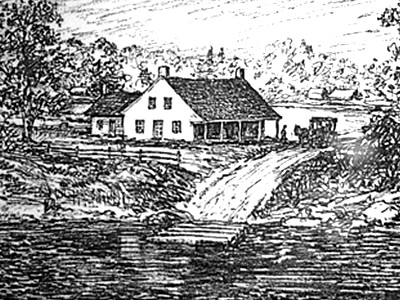
The war ended with the Treaty of Paris in 1763. Haslet returned with his company to Delaware. He and Jemima settled in Milford, where he established a medical practice and bought a property called "Longfield." John and Jemima had four children. Additionally, his daughter Polly immigrated to Delaware in 1765. An ideal life as a country doctor and farmer awaited him. 

From Friction to Fighting

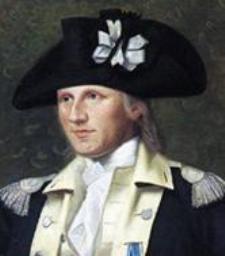
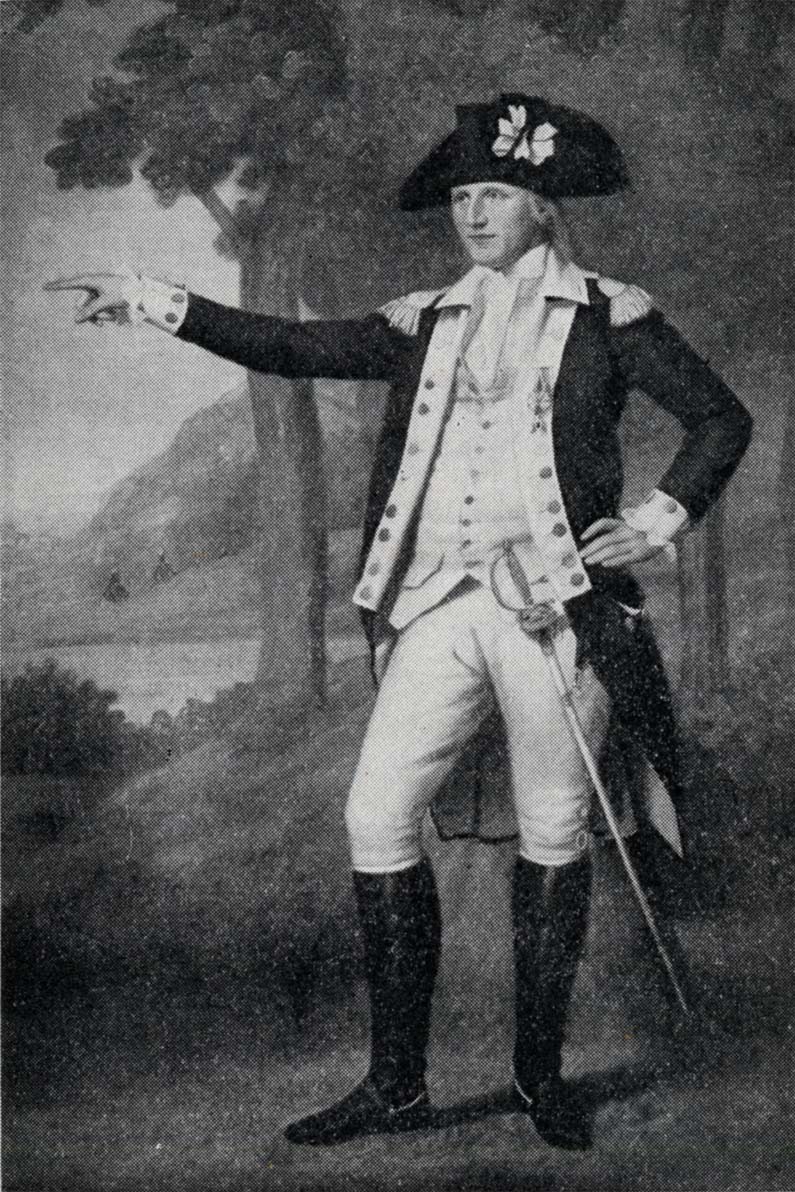
But the political friction after the war grew into armed resistance, and Haslet became involved, eventually advocating for independence from Britain. The Continental Congress appointed him a Colonel and commander of the Delaware Regiment (sometimes called the Delaware Blues), one of the largest (800 men) and most well-uniformed and equipped regiments in the Continental Army. Their blue jackets with white waistcoats and breeches set the standard for all the regiments of the Continental Line. 


Haslet's Regiment leaves for war

Valor on Long Island

John Haslet's regiment marched to New York and into the defense works on Long Island in the late summer of 1776. General George Washington had occupied the city, but the British armada under Lord Howe sailed south and descended on Staten Island before invading Long Island at Brooklyn's Gravesend.


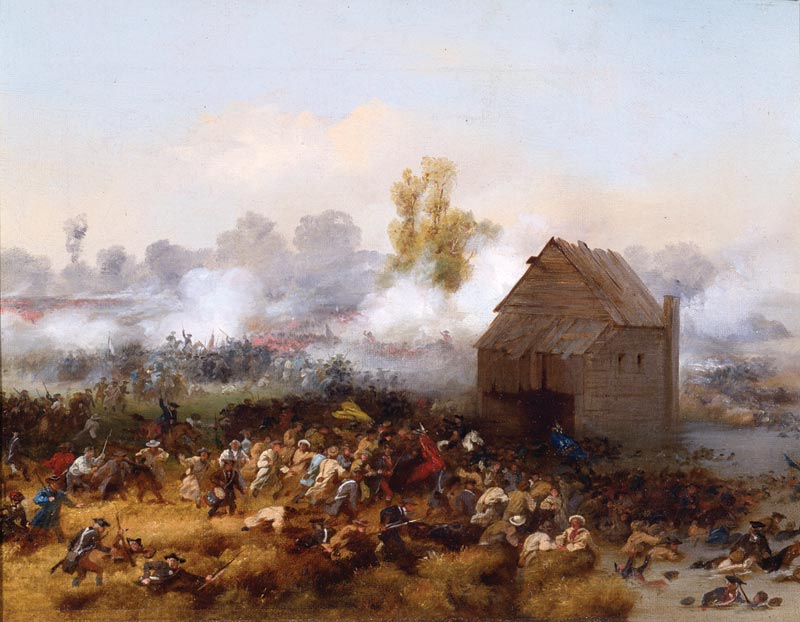
When the British surrounded the Americans, Haslet's regiment and the First Maryland held firm against the attack. At the peak of the fight, Lord Stirling, an American general and Scottish peer named William Alexander, took command of both regiments and led them in a series of brave charges against British General Cornwallis's regular troops. 


Haslet's Delaware Regiment faces British regulars on Long Island


Absorbing volley after volley from the red-coated ranks, the two regiments were torn to shreds. However, their discipline and sacrifice allowed the rest of the American army to retreat to the safety of the defenses near Brooklyn Heights. This event is a pivotal moment in my novel, The Patriot Spy. Ironically, Haslet and the Maryland commander, Colonel John Smallwood, were on court-martial duty in New York City and only returned after the battle had ended.


Colonel John Smallwood


Retreat, Fight, and Retreat

Haslet and his regiment fought bravely during the months that followed as the Continentals were forced out of New York City. During the retreat, Haslet and his men defeated a Loyalist corps at Mamaroneck.

At White Plains on October 28, Haslet and Smallwood stood bravely with their regiments on Chatterton Hill. When the militia they were sent to reinforce broke and fled, the two Continental regiments held their ground until the enemy's numbers and firepower forced a retreat. However, the stand on Chatterton Hill denied General Howe a complete victory, and the Americans would live to fight another day.


Chatterton Hill


War on the Run

General Washington's army was on the run for the next two months. Fort Washington fell, and his men abandoned Fort Lee as they hurried across New Jersey toward the Delaware and Pennsylvania, where Washington hoped to regroup and make a stand. Haslet and his men fought many small battles—skirmishing during a "fighting retreat" that reduced the Delaware Regiment to no more than 100 "effectives"—men capable of fighting by the time they crossed the Delaware River to rejoin the main army.


War on the Run

Trenton

Knowing he needed to strike within days, Washington launched his famous Christmas surprise attack, crossing the ice-clogged Delaware River on the night of December 25, 1776. The army trudged the nine miles under a dark and cold sky to their target: the Hessian garrison at Trenton, which had over a thousand troops. Although barely two companies strong, Haslet and his men led the charge. After a brief but fierce exchange of musket and artillery fire, the garrison surrendered, giving Washington one of the war's greatest victories. Before Haslet had time to refit, enlistments were expiring, as they were across the entire army. 


Taking Trenton


Assunpink Creek

Days later, the army returned to Trenton, defending a low ridgeline behind a creek south of the town and waiting for the British counterattack with more than 5,000 fresh redcoats under an angry General Cornwallis. A late afternoon firefight on January 2, 1777, caused Cornwallis to stand down and strike with all his force the next day. However, Washington outmaneuvered them and executed an 18-mile night march around the British to attack their supply base at Princeton.


Holding Assunpink Creek


Destiny at Princeton

The dawn of January 3rd broke bright but cold, with snow covering fields and roads. Colonel Haslet's regiment was now just a handful of officers. Months of fighting and expired enlistments had worn down his regiment. However, Haslet's experience and capable leadership remained crucial, so Washington appointed him as second in command to General Hugh Mercer, his best commander.


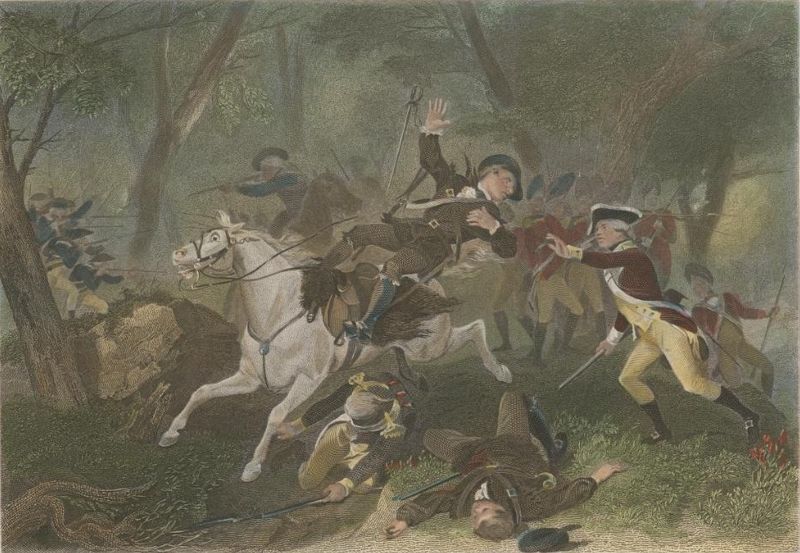
General Hugh Mercer bayonetted at Princeton


Mercer's division was at the forefront, marching through William Clarke's orchard when two crack regiments of British regulars unleashed a horrific barrage of volleys, shooting Mercer's horse out from under him. Mercer quickly got to his feet and drew his saber as the wave of red moved in on him. When he refused to be taken prisoner, they clubbed him and then bayonetted him while he lay helpless in the snow. He died from his wounds.

The Field of Honor

Seeing Mercer go down, Haslet took command of the remnants. But just moments later, a curtain of lead filled the air, and a musket ball struck him in the head. The remaining troops began to waver, but General Washington rode into their midst and rallied them. Then, combined with reinforcements, they drove the British from the field and took Princeton. The gallant John Haslet died on the field of honor like his commander, Hugh Mercer.


Washington rallying the troops

Washington's Loss, America's Loss

The history books record Princeton as a victory. However, the loss of Mercer and Haslet robbed Washington of two of his most capable lieutenants, whose talents the commander-in-chief would desperately miss over the next five years of war. Mercer is rightfully honored, but Haslet, being second in command and from a small state, often goes unmentioned. I count John Haslet among the many unsung heroes whose early death deprived the Continental Army and the future United States of leadership, integrity, and patriotism.

Delaware's Son

The son of Delaware was buried outside his home state and laid to rest in the graveyard of the First Presbyterian Church. It wasn't until an Act of the Delaware Assembly was passed in 1841 that his remains were moved to the Presbyterian Cemetery in Dover, Delaware. However, it wasn't until 2001 that his state finally honored him with a monument at Princeton. 


Haslet Monument at Princeton


Saturday, February 7, 2015

The Bravest Son of Liberty?

A Boy from Jamaica


Colonial Jamaica, Long Island was verdant farmland


Jamaica, Long Island, that is. Brigadier General Marinus Willett may well be one of the greatest and most accomplished New Yorkers ever. He was a descendant of Thomas Willett, who arrived in New York on the ship The Lion in 1632. The elder Willett served as the first English Mayor of New York City after New Amsterdam fell to the British in 1664. Marinus' father was Edward Willett, a farmer who lived in Jamaica, Long Island (now Queens). It's hard to believe that the mean streets people see on the way to JFK Airport once were some of the lushest farmland in America. But Edward was a man of letters and business—he made his living as a school teacher and a tavern keeper.


Soldier of the King


Marinus Willett: Citizen Soldier


As with many American leaders of the Revolutionary War, young Marinus first gained experience fighting for the King as a Loyal and dedicated subject. He served in the militia during the French and Indian War, where he was commissioned as a Subaltern in a New York regiment led by Oliver DeLancey Sr. DeLancey was among the wealthiest New Yorkers, and his family would remain staunchly Loyal a generation later. The regiment participated in General James Abercrombie's 1758 expedition to Fort Ticonderoga. Later, Marinus Willett served with the regiment as part of John Bradstreet's forces at the Battle of Fort Frontenac. He fell ill during the campaign and remained at Fort Stanwix until he recovered. While there, he assisted in upgrading the fort, which, as his career later developed, seems almost providential.

Son of Liberty


New York, not Boston style. Willett settled in New York City after the war, and although he worked as a cabinetmaker, he took an interest in politics as tensions with Britain began to simmer. He became the community organizer of his time, which is to say, a rabble-rouser and street brawler. After the news of Lexington and Concord, he helped plan a raid on the old arsenal in New York and took weapons for the cause. On June 6, 1775, the British decided to evacuate New York City. Willett led an effort that prevented the soldiers from taking spare arms with them. On July 20, 1775, he and other members of the Sons of Liberty procured a sloop and captured a British storehouse at Turtle Bay. This cove on the East River was named by Dutch settlers because of its resemblance to a knife. The word "Deutal" (Turtle) is Dutch for "knife." Ironically, Turtle Bay is near where the British landed when they recaptured Manhattan a year later.

Patriot Soldier

Clearly, Marinus Willett proved himself during wartime, as many of our military legends have. He began as a captain in the 1st New York Regiment, and almost right away, the regiment participated in General Richard Montgomery's invasion of Canada in 1775, one of the most brutal episodes of the entire war. He fought at the Battle of Quebec in December of that year and temporarily commanded Fort St. John during the American occupation. However, he returned to New York City with the regiment when enlistments expired, arriving in March. During the British offensive to retake the city in 1776, he had lost a captain's commission in the 4th New York Regiment (possibly in a card game) but continued to serve as a militiaman. 


Colonel Marinus Willett during
the War for Independence


But experience and connections do matter, especially during wartime. In November 1776, he was appointed Lieutenant Colonel of the 3rd New York Regiment, commanded by Peter Gansevoort. He spent the winter recruiting before leading the regiment north. In March 1777, he took command of Fort Constitution in the New York Highlands, where he successfully attacked a blockhouse and burned a British force of one hundred soldiers. Later that year, he helped MacDougall defend Peekskill against a British raid, before being assigned to Fort Stanwix on the Mohawk River.


Drums Along the Mohawk


Stanwix was the anchor of a line of American defenses stretching from Albany to Oneida Lake. This was the western frontier with the Iroquois and a strategic position guarding the portage between Oneida Lake and the Mohawk River. General Washington recognized its importance and had the old French and Indian War post rebuilt and garrisoned. Willett worked tirelessly to prepare Fort Stanwix (also known as Fort Schuyler) for the inevitable attack. It arrived in the form of a British force led by Colonel Barry St. Leger, who laid siege to Stanwix on August 3, 1777. St. Leger made the customary demand for surrender.  


Herkimer was wounded at Oriskany


But Willet refused. The defenders hoisted a makeshift Stars and Stripes in defiance of the more than one thousand British, Loyalists, and Iroquois. Word arrived on the fifth that General Nicholas Herkimer and the Tryon County Militia were marching to relieve the fort. On August 6th, the defenders made a sortie to distract the besiegers, with the signal being the sound of three guns. But when Willett led his troops out of the fort, they found the enemy camp deserted. The force of Loyalists and Indians had gone east to Oriskany, where they ambushed Herkimer. The British Regulars, Loyalists, and Indian Allies returned from that vicious ambush under the cypress trees to find Willet had ransacked and looted their camp of supplies and munitions with his sortie. Willett was later presented with a sword from the Continental Congress for this exploit.

Fort Stanwix


Still, the besiegers kept demanding Willet surrender. Willet personally met with the emissaries. But when he learned of Herkimer's defeat at Oriskany, he decided to slip out on his own and seek help from Fort Dayton further down the Mohawk Valley. There, he discovered that Major General Schuyler had already sent a second relief force under Benedict Arnold's command. Willett then traveled to Albany, where he met with Arnold, and afterward returned to Fort Dayton with Arnold's army. On the return trip, Willett stopped to visit Herkimer. Almost two weeks after the Battle of Oriskany, Herkimer had his leg amputated on August 19th but appeared in good spirits. However, the next day, Herkimer died from infection and blood loss.

Countering Espionage?


In a surprising connection to Yankee Doodle Spies, Willett appears to have played a small role in counterespionage efforts. On August 20th, he served as a judge at Loyalist Captain Walter Butler’s trial. Butler was the son of John Butler, who commanded Butler’s Rangers, a prominent Loyalist unit both feared and despised by Patriots on the New York frontier. Continental Army troops had captured the younger Butler while he was trying to recruit rangers at Shoemaker Tavern in German Flatts, New York. Butler was tried as a spy. Willett's court found him guilty and sentenced him to death. The condemned Butler was sent to Albany to await execution, but after a few months, he escaped and returned to Canada.

Back to the Continental Army, then back to New York's Frontier, then...


Willett seemed to be everywhere at times. In June 1778, he was granted leave from the Northern Department to join Washington's Main Continental Army, which was preparing to attack General Clinton's British forces moving from Philadelphia to New York. There, he served as an aide to General Charles Scott and participated in the Battle of Monmouth. Scott's Brigade was part of the vanguard in that epic clash.

By the summer of 1779, Willett had rejoined the 3rd New York Regiment during the Sullivan Campaign against the Iroquois. This campaign was a brutal, destructive effort that foreshadowed later Indian warfare. Willett later spent some time in the New York Highlands before returning to the main army at Morristown. In January, he took part in a raid on Staten Island.

In early 1780, he was appointed commander of the 5th New York Regiment, a unit severely weakened by battles in the New York Highlands. An enthusiastic advocate, he became involved in voicing grievances on behalf of unpaid troops. He also found time for leisure.

In 1780, while based at Fort Plain, New York, he met and had an affair with an attractive widow named Mrs. Seeber. The affair resulted in the birth of a son, Marinus Willett Seeber. Willett openly acknowledged the boy's paternity, supporting him and ensuring he received an education.

In January 1781, Willett returned home as the New York Line was reduced to just two regiments. By April, he was back as a colonel of the New York militia, engaging in numerous actions. His regiment defended the Mohawk Valley and the areas around Albany. That summer, he led the militia in the Battle of Sharon Springs, attacking Indians and Loyalists. 

In October, he commanded the militia at the Battle of Johnstown. Afterward, he pursued the retreating enemy through an increasingly cold month. A forced march in snowshoes during a heavy snowstorm brought Willett's militia close to the Loyalists, who escaped under cover of the swirling snow. Ironically, the 

Post War: Politico Peacemaker Peace Officer


I might need to write another blog about Marinus Willett's post-war adventures. His later career is hard to believe. At the end of the war, Willett helped establish the Society of the Cincinnati, a controversial order of former American and French officers from the Revolution. He opened a store on Water Street in New York City. 

In 1793, his first wife, Mary, died. He soon remarried. His new wife, Susannah Vardle, was “active” in New York society, but her vivacity proved more than he could handle, and they divorced in 1797. In post-war politics, Willett became an Anti-Federalist under George Clinton and served in the New York State Assembly. He served as Sheriff of New York County (also known as Manhattan) for several years and helped put down Shay's Rebellion in 1787. 

By 1788, he was again aligned with Clinton in fighting against the Constitution—yes, that Constitution. When it finally passed, he continued working with others to repeal or amend it. Despite his anti-Federalist stance, Willett was sent by President Washington to persuade the Creeks to come to New York (then the nation's capital). This led to the Treaty of New York, the first of many treaties that would not bode well for the Indians. He later served again as sheriff of New York County. 

When war broke out against the Indians in the Northwest Territory (1792), Willett was offered a general's commission. He declined, telling President Washington that he did not support war with the Indians. Willett also turned down a later offer to serve as a peace envoy to them. It’s only possible to speculate that his experiences during Sullivan’s campaign influenced his views on America’s Indian policies.


Creek Indian Leaders in New York City


Going Strong in the New Century


So strong was his character that in 1799, Willett married young Margaret Bancker. He was 59, and she was only 24, but they had four children—three sons and a daughter. Willett, the former Liberty Boy, believed in grassroots democracy. During one particularly hot gubernatorial race, he actually fought a duel with a member of the opposing party—fortunately, neither was hurt. 

At the turn of the new century, he played a role in building some of the fortifications protecting New York City. In 1808, he replaced populist DeWitt Clinton as Mayor of New York City, becoming its 48th mayor, and in 1811, he ran unsuccessfully for Lieutenant Governor of New York. He supported the War of 1812, but now, in his 70s, he only gave patriotic speeches to support it.  


De Witt Clinton


In 1824, he served as a presidential elector during the bitter election that elected John Quincy Adams as president. The highly accomplished Marinus Willett died at his home on August 22, 1830, a few weeks after suffering a stroke. Ironically, this was exactly 53 years after the lifting of the siege of Fort Stanwix. 

The ninety-year-old First Patriot was laid to rest in the churchyard of Trinity Church, at the corner of Broadway and Wall Street in New York City. His funeral was attended by 10,000 mourners — about 5% of the city’s population at that time. Not too bad for a cabinet maker from Jamaica.


Marinus Willett in later life

Saturday, April 12, 2014

A Blog about a Blog?

Finding the First Maryland 400


The heading recalls the famous Seinfeld episode where they were trying to sell a TV series to NBC. The concept was a show about nothing! Of course, it was anything but that.  I was going to take a pass on doing a blog this week as it is, after all, Easter week. But I received a post from a blog I follow and I decided to review the Blog as it directly connects to The Patriot Spy, book one in the Yankee Doodle Spies series. So this week we have a blog about a blog!

The Blog


Several months ago, a Facebook friend sent me a link to a Blog established by the State of Maryland Archives.  The Archives commissioned a research project on Maryland's First Continental Line regiment called "Finding the Maryland 400."  As the Blog's home page explains:

The attack of the Maryland 400 
"During the Revolutionary War, men from all over Maryland joined the Continental Army to fight the British. In August of 1776, a group of these men under Col. Smallwood were sent to New York to help defend the city from an attack; the ensuing conflict is remembered as the Battle of Brooklyn (or Battle of Long Island). The battle was a resounding defeat for the Americans under the command of Gen. George Washington, and they were forced to retreat and give up the island. The story of the Maryland 400 goes that during  these
events, 400 of Maryland’s soldiers were sent to cover the retreat from the field and bravely threw themselves at a much stronger and better positioned British force repeatedly. Though they succeeded in buying enough time for the retreat, they suffered heavy losses, perhaps over half of their number. Who exactly these men were has remained unknown, with little to commemorate their actions in the battle."

So in the summer of 2013, the Maryland State Archives and the Maryland Military Department, Office of the Adjutant General, the Maryland Military Historical Society, and other partner groups hired some interns to research the identities of the First Patriots who served in the Maryland 400 at the Battle of Long Island. Their goal was to create an accurate list of the Maryland soldiers who participated in the battle and write biographies about some of the men. The chronicles the research progress as well as new discoveries.


The Design


The blog is well designed and appealing.  The key sections are:

William Smallwood
Updates - These are articles about individuals or events the research has uncovered or that otherwise relate to the Maryland 400. The latest discusses Larkin Dorsey, a sixteen-year-old from Anne Arundel County who enlisted in the Ninth Company of the First Maryland Regiment. Readers of The Patriot Spy might recall my fictional Lieutenant Jeremiah Creed originally commanded the Light Company but later led men from several companies, perhaps even the Ninth. Larkin's  father asked Lieutenant Colonel Francis Ware to keep an eye on Larkin Dorsey."  Apparently, such fostering was common in a time when people were linked by bonds of family and place. As the post explains... "Ware was second in command of the Regiment. Ware, who did not have children of his own, agreed to take on the responsibility for young Larkin. It should be noted that both Smallwood and Ware missed the seminal action on Long Island due to other duties and arrived at the end of the engagement. Major Mordecai Gist led the attacks.

Biographies - This is a list of members of the 400 with links to their biographies. Among them are Smallwood, Mordecai Gist (who has a role in The Patriot Spy), and Ware (mentioned above).  The biographies are listed by the company, a nice touch.

Mordecai Gist
Roster - Although not fully complete, this section provides a very comprehensive roster of those identified as members of the unit. The gaps in understanding who served and fought are explained, as is the paper and field strength of the unit when it fought. There is a search capability included.

Interactive Map - This is my favorite part of the blog. Everyone has to be somewhere and the researchers do a really nice job geospatially portraying the movement of the members of the 400 based on pension records, unit rolls, correspondence, etc. As more data is uncovered and added, this will prove a fun and easy research tool. One can note quickly, for example, that several members migrated to the reaches of Tennessee, Kentucky, Ohio, and Pennsylvania after the war, indicative of the new nation's trend west that ended (ironically) when the Brooklyn Dodgers moved to Los Angeles. The original Brooklyn Dodgers clubhouse was a building at the center of the battle in which the gallant 400 fought.


The Maryland Monument in Prospect Park


The Rating


Those who want to see for themselves (and let us know via this blog) can go to directly to the Blog, which is on Word Press (can I mention another blog platform?):  http://msamaryland400.wordpress.com/about/
You do not have to be from Maryland or even a Revolutionary War, or even a history buff to appreciate and enjoy "Finding the Maryland 400" Blog. Although still a work in progress, based on what the researchers have put together so far, and the quality of the display, I give "Finding the Maryland 400" a full Five Fifes


Saturday, October 12, 2013

Loyal to a Fault?

A House Divided


The American Revolution was as much a civil war as a rebellion. Yes, the colonies rebelled against the king and parliament's laws, but not everyone joined the rebellion. Most who did initially fought to defend their rights as Britons. Many others (some say most) stayed indifferent. Although it lacked grand capitals or palaces like in Europe, America in 1775 was thriving. 

The Atlantic coast was a network of small cities and towns, with many well-maintained farms between them. In the south, many (but not all) of these were cash-crop plantations. Trade was expanding, and merchants were making money. People were prosperous and healthier than in Europe, thanks to the economy, a better diet, and less crowded living conditions. In 1775, the American colonies likely had the best standard of living in the world. Many viewed this prosperity as a direct result of America's position in the British empire and saw no reason to risk it all. Then came the taxes to fund the war against the French.


Who are these people?


John Graves Simcoe

The Loyalists (and initially many patriots) saw themselves primarily as British subjects loyal to their King. Politically, they were Tories. For many, this almost ended any debate about America's status and shifted the focus to how best to preserve certain British liberties. Many Loyalist leaders, like Joseph Galloway of Pennsylvania, passionately pushed for a political solution to the conflicts. They wanted Americans to keep their rights and gain self-rule within the British Empire. 

One can only imagine the emotions swirling as their fellow countrymen, Whigs (the patriots), gradually but surely decided on a full split. Imagine that sickening feeling of watching your country, your world, slip away from you. Still, few Loyalists thought the outcome would be anything but the King victorious. That made the ending an even more bitter pill to swallow. 

Some pundits have observed that at the start of the war, loyalty was divided roughly 30-30-30: one-third rebel, one-third loyal, and one-third neutral. I believe these figures fluctuated with the changing fortunes of the war and the proximity of the British Army. However, many so-called neutrals, in my view, were not truly neutral. This provides a good starting point, but the situation was more complex. Certain regions, like the Mid-Atlantic, tended to have more Loyalists than areas like New England. The South was more evenly divided, as the brutal fighting there shows. As the war went on and France joined on America's side, Loyalists made up between 15 and 20% of the 2.1 million white inhabitants in the colonies.


Why Remain Loyal?

For the Loyalist, it was all about loyalty. I know, it sounds clichéd, but those who remained loyal throughout the eight-year war were men and women with a worldview that supported an ordered state, the foundation of which was a monarch reinforced by royalty, the nobility, and the upper classes. Loyalists were content with the world they lived in and did not welcome the upheaval caused by rebellion. They looked down on the extremism shown by the patriots.


Local Loyalist Militia


The Loyalists took pride in Britain's superior form of government, characterized by representation in two houses of Parliament and a constitutional monarch as the head of state. They also valued the sense of order that came with the class system. The British had defeated the hated French in the Seven Years' War and in the French and Indian War in America. The "empire" had not yet reached its peak (which would happen around 80 years later), but the King indeed ruled over a growing global empire built on mercantile trade. Trade from which they and all "good Britons" profited. Who could argue? And who would give that up? Who indeed...


What did they Contribute?


The Loyalists were both a blessing and a burden to the British generals leading the war in America. In some ways, they served only as a placebo. British authorities were constantly reassured by key Loyalist figures that most Americans supported the King and were, at worst, neutral, making them easier to win over. As a result, little genuine effort was made to win the hearts and minds of the Americans. In some respects, the idea that loyalty could be coerced was mistaken; this approach assumed the rebellion could be defeated solely through British strength. Loyalists eagerly played their parts, forming regular units similar to the patriot Continental Line and maintaining various local Loyalist militias.


Cowboys Capture a Patriot


In the guerrilla conflicts known as the "Cowboy versus Skinner" fights, the Cowboys were involved. Loyalist spies and sympathizers were omnipresent, ready to inform a British commander about the positions of the hated rebels. Combined with the world's most powerful army and navy, this should have made suppressing the rebellion quick and straightforward. In terms of numbers, Loyalists under arms were substantial. Throughout the war, an average of 10,000 Loyalists served in well-organized and well-equipped "regular" units called Provincials, who were equipped and organized similarly to British regulars but typically wore green jackets. This does not include numerous Loyalist militia groups, which fluctuated in response to the ebb and flow of the conflict.

Loyalist Provincial Infantryman


George Washington would have traded all of Mount Vernon for that number in the Continental Line. According to most accounts, Loyalists of all kinds fought valiantly. Despite lacking as many top-tier leaders as the rebels, they still had some very talented ones, such as Colonel John Graves Simcoe (Queen's Rangers), General Cortland Skinner (New Jersey Volunteers), General Oliver Delancey (Volunteer Corps), and Colonel John Hamilton (North Carolina Volunteers). In certain theaters, especially in the South, Loyalist irregulars were considered even more effective fighters than Loyalist regulars.


Loyalists fought ferociously but vainly in most battles
especially at King's Mountain


What was their Vision?


Loyalist plans for America's future focused on some form of local representation within the British Empire. In the early days of the political struggles, before open rebellion, that was the overwhelmingly popular view in all the colonies. But after Lexington and Concord, the slippery slope became even more treacherous as the British made mistake after mistake. When the scales tipped toward rebellion, the Loyalists had to improvise both politically and militarily.


Tarleton's American Legion: Loyalists in Action


However, they never had a solid plan or a clear strategy. Why would they need one? They were, after all, Britons. They possessed overwhelming power — the King, his wealth, and his military might. I believe that was ultimately their downfall.

Over-reliance on British authorities, both military and civil, made the Loyalists complacent and even dependent. Since losing to the rebels seemed unthinkable, developing a thorough Loyalist alternative never truly materialized. It certainly wasn't clearly communicated to the public. Conversely, as the war progressed, the British grew increasingly less confident in Loyalist political and military support. By the end of the war, the British saw the Loyalists as a nuisance, and the Loyalists grew resentful of their benefactors.


What was their Fate?


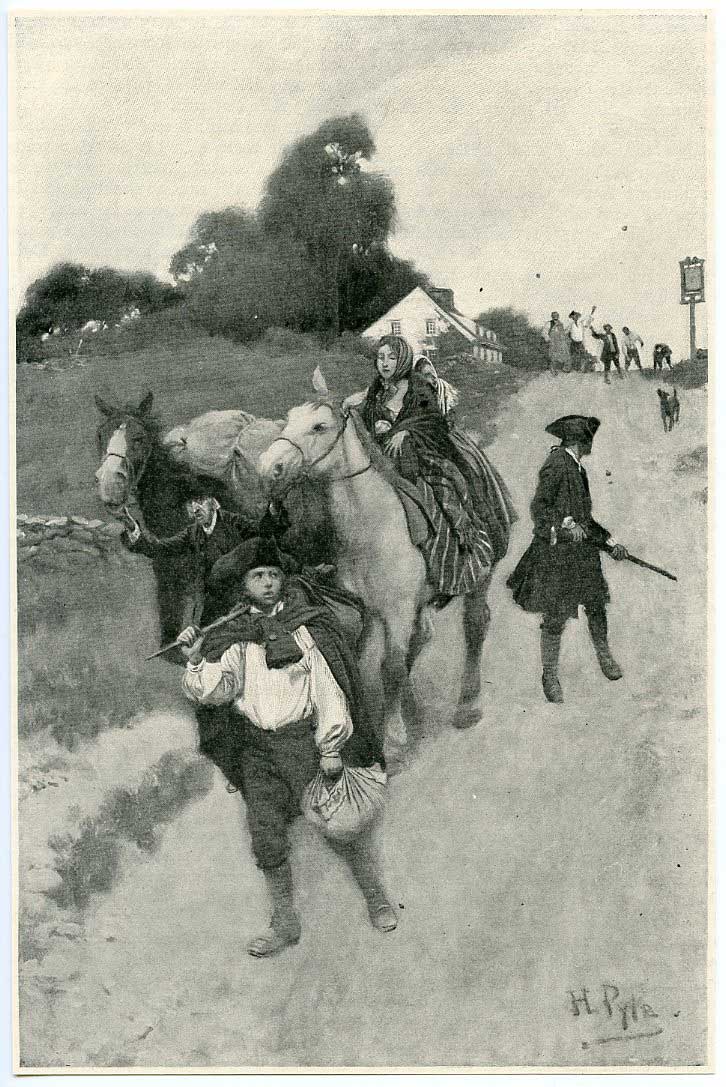
I plan future deep dives into the Loyalist cause but obviously - they lost. They lost big time:  land, slaves, homes, families, and pride. With bitter and despondent hearts, some 80,000 or so left the 13 colonies for "British" lands such as Canada, East Florida, the West Indies, and Great Britain itself. Their struggle continued as the now largely impoverished diaspora was treated poorly by its one-time benefactor.


Loyalist refugees flee to
Canada (most went by ship)