Followers

Showing posts with label New York. Show all posts

Saturday, November 12, 2016

Stone Arabia

The Place


The lead-in title might make you think of a Crusader-era battle cry or pot advocates targeting the Middle East. But it’s actually about a place—a location in central New York with fertile fields and lush forests, bordered by freshwater and settled by Germans. The name itself, spelled and pronounced in various ways, has long sparked curiosity, speculation, and myth—and may always do so. The terms Stone Arabia, Steen Rabi, or Steen Raby, in their Dutch spellings, are found in Dutch writings long before they appeared in America. 

Regardless of its origins, Stone Arabia, in the eastern Mohawk Valley, became a land of promise for different groups of settlers, especially Germans from the Palatinate and Swiss who arrived in the 17th and 18th centuries. Interestingly, the name was sometimes used to describe areas on the west side of the Hudson near Kingston, the site of today's North Troy, and finally the central Mohawk Valley. According to land records, just before the Revolution, Stone Arabia referred to a region later called the Palatine District, stretching from the Nose to the Falls and northward to Canada. However, on March 8, 1773, it lost this broader meaning, and from then on, the name was limited to the land patent in the Mohawk region.


The Valley

Sir William Johnson, His Majesty's agent to the Indians
of New York


The Mohawk Valley was controlled by Sir William Johnson, a well-known British representative to the Indians in central New York. From the early 1700s until the start of the American Revolution, the area experienced white settlement and frequent conflicts with the native Iroquois. British policy aimed to limit settlement by whites and to pacify the Indians. Johnson generally succeeded in carrying out this policy. However, tensions between the natives and settlers always simmered just below the surface and sometimes erupted into violence. Sir William's influence over both whites and Indians helped keep the peace, though he had to work hard to maintain order, restrain unruly settlers, and calm the natives when their pride or sense of justice was offended. 

To the Indians, as well as to Johnson and his British superiors, the white settlers appeared land hungry. Johnson sought to curb land settlement and maintain a balance with the natives. These tensions set the stage for violent conflicts when the American War for Independence broke out, making Stone Arabia the western edge of the fighting. By the time the Revolution started, Stone Arabia was well populated and its economy thriving. Churches, schools, stores, mills, blacksmith shops, lime kilns, taverns, and boatyards dotted the landscape along the Mohawk. Each farm boasted an orchard, often serving as the family’s burial ground. Crops such as wheat, flax, potatoes, corn, fruit, hemp, hay, peas, and oats were cultivated, with wheat being the primary crop. The wheat flour from the Valley was worth more in New York City than any other product. The first homes were built of logs; later ones were made of frame or stone. The area was a diverse melting pot of German, Dutch, English, and Indian influences—often called the Mohawk Dutch.


The Revolution Comes to the Valley


Many settlers of Stone Arabia became members of the Valley militia of New York. Before the war, they met regularly for training and were subject to call to arms during emergencies. The Stone Arabia company was part of the 2nd battalion of the Palatine militia. When the struggle for independence broke out, Stone Arabia's settlers were generally patriots. In fact, almost two years before the declaration of independence, the Stone Arabia farmers drafted their own declaration of American Principles on August 27, 1774, at the White Tavern, owned by Adam Loucks. These resolutions read in part as follows:

III [in part]. That We think it is our undeniable Privilege to be taxed only with our own Consent given by ourselves (or by our Representative). That Taxes otherwise laid and exacted are unjust and unconstitutional....
IV. That the Act for blocking up the Port of Boston is oppressive and arbitrary, injurious in its principles and particularly oppressive to the Inhabitants of Boston, who we consider as Brethren suffering in the Common Cause.
V (in part). ...that we will join and unite with our Brethren of the Rest of this Colony in anything tending to support and defend our Rights and Liberties.

A Major Zielly and Andrew Dillenback (who was later killed at Oriskany) were appointed to a committee to gather material for war. In keeping with the spirit of pre-war revolutionary fervor, the people of Stone Arabia stayed alert and informed. And for good reason: they would soon find themselves at a key location in the struggle's Northern Department. The fertile Mohawk Valley and the fields, especially in Stone Arabia, served as supply sources for the Continental Army throughout the long war. In 1780, Washington relied on the wheat and oats of Stone Arabia to feed his army and was determined to prevent them from falling into the hands of the British Loyalists in the area. This set the stage for a small but fierce conflict whose only goal was destruction.


The Fighting Frontier


Mohawk Valley settlers were defeated
 at the Battle of Oriskany in 1777


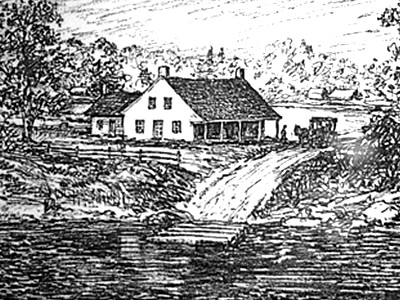
The region played a key role in the British campaign of 1777, with many Palatinate Dutch serving at Fort Stanwyck and fighting at Oriskany. Two forts, Keyser and Paris, were built on Stone Arabia soil. Fort Keyser, a stone house from the 1740s built by Johannes Keyser, was palisaded and garrisoned by militia troops under Lt. John Zeiley. Fort Paris, originally built in 1737 by Isaac Paris, was a fortified farmhouse and trading post. Inside the palisade, there was also a barracks for 100 men and a blockhouse. Despite—or because of—the forts, the Loyalists and Indian allies struck Stone Arabia twice. The first attack was the Ephratah-Dillenburgh raid in 1778. 

On April 20, 1778, while a small company of twenty militia was drilling, a band of Indians and Loyalists appeared and began destroying homes and barns. Most of the militia went to defend their homes, but a few pursued the attackers. In a skirmish, several militiamen, including a boy of four, were killed. The Loyalists withdrew, but stragglers from the band took a boy captive at Kringsbush and killed a young woman in sight of Fort Klock. These raids, along with others north of the Mohawk River, so frightened the inhabitants that most of those missed by the Indians and Tories moved into the Mohawk Valley to seek protection in the forts. As for the northern slope of the valley, the British effort to scare people away from their farms was a great success.


Fort Klock, Home of Colonel Jakob Klock
of the Palatine Regiment of the Tryon County Militia


Battle of Stone Arabia


Map of the Johnson Raid on Stone Arabia, 1780


Sir John Johnson
On October 19, 1780, Sir John Johnson, William's son and a controversial Loyalist leader, led an army of 900 Loyalists and British Regulars in an invasion of the Mohawk Valley. After following a winding route across southern New York State, they moved north through the Schoharie Valley, entering the Mohawk Valley at Fort Hunter, where the army turned west toward the Canajohary and Palatine Districts. The invaders camped on the evening of October 18 near the Noses, a geological feature that marks the great divide in the Appalachian Mountain chain. 

The next day, they crossed the Mohawk River at Keator’s Rift. They burned Jellis Fonda’s mill before proceeding to attack the settlement of Stone Arabia, located a mile and a half north of the Mohawk River in the Palatine District. Colonel John Brown of the Massachusetts Militia marched his 380 militiamen out of Fort Paris to meet the enemy on a field about a mile from the fort. Outnumbered nearly 3 to 1, he was shot from his horse, and his men fled the field. Brown, who had served at Fort Ticonderoga in 1775 and participated in the Quebec invasion, died on the battlefield. With its defenders defeated, Stone Arabia was completely destroyed by the enemy, including the twin Dutch Reformed and German Lutheran churches. Both churches were rebuilt after the war ended and still stand today.


Left in ashes by the raid, the Dutch Reformed Church
was rebuilt in 1788


The Legacy


The raid of 1780, with its widespread destruction, delivered a significant blow to the cause. It is worth noting that there was greater unity among the Palatine farmers in opposition to the British policy than in some other districts in the Valley. However, hardly a family was not split between loyalty to the crown and loyalty to the cause. 

Despite this, we find New York Governor George Clinton (later the 4th Vice President of the U.S.) giving a fitting testament to the spirit of the Stone Arabia settlers in 1781: "Most of Tryon and Schoharie have been destroyed. They are not however abandoned; the inhabitants having recovered themselves, continue to improve their farms and assist in the general defense."


NY Gov Clinton


Stone Arabia exemplified many of the hundreds of localized conflicts that made up a significant but often overlooked part of the American War for Independence. The political struggles and fierce fighting among British, Loyalists, Indians, and Patriots in and around Stone Arabia played a crucial role in early New York history and in shaping an independent America.


Saturday, December 19, 2015

The Taking of Pelham 1 7 7 6

Readers of The Cavalier Spy might recall some of the maneuvers by the British commander-in-chief, Lord William Howe, as he tried to trap George Washington's forces near Kingsbridge (the Bronx). This led to a series of battles and skirmishes in the New York campaign, which could have crushed the spirit of '76. The small engagement at Pells Point, or Pelham, was one of these minor but strategically important fights.


An Excellent Plan:


In the summer of 1776, the British and their Hessian (German) allies defeated Washington’s forces in Brooklyn and Manhattan. However, Washington’s ability to organize timely retreats and General Howe’s reluctance to aggressively pursue the rebels prevented total destruction. In September, the Continental Army was holding defensive positions at Harlem Heights on the northern tip of Manhattan, with the British army in front and the Royal Navy (under Howe's brother Richard) controlling the North (Hudson) and East Rivers. But the Continental Army's Harlem defenses were strong, so in mid-October, Howe attempted a flanking move by water, taking advantage of the Royal Navy's dominance. His goal was to cut across Westchester County and trap the Americans.


A Clever Strategy:


Leaving behind a holding force in Manhattan, Howe moved about 4,000 troops, mostly Hessians, up the East River toward Long Island Sound for a landing at Throg’s Neck, which is now part of the Bronx. Howe’s objective was to cut off the American supply line to Connecticut, and the British commander also hoped to lure Washington into a major battle or to crush the Americans from the right flank while the holding force launched a frontal attack. Intelligence reports warned General Washington that the enemy was surrounding him with a naval landing at his rear. In desperation, the besieged American commander-in-chief positioned the few forces available along strategic points. The numerous stone fences and marshy ground made the British approach challenging and his position defensible. However, he realized that a determined British effort was likely to succeed. Additionally, they might have been planning other landings as well.

Prelude at the Neck:


General Clinton
On October 12, the British landing force under General Henry Clinton landed under the cover of fog at Throg’s Neck, a marshy peninsula that was not part of the mainland. There were only two ways to reach the mainland: a causeway and bridge at the lower end, and a ford at the other. The Americans guarded both. American Colonel Edward Hand and a detachment of 25 men from the 1st Pennsylvania Regiment were determined to slow the British until help could arrive. The brave Pennsylvanians tore the planks from the bridge and took position behind a stack of cordwood lining the causeway. Checking flints and powder, each man took a good firing stance and waited. At last, the British arrived. The Pennsylvanians' accurate musket fire startled the advancing British troops. Puffs of smoke, the crack of muskets, and the zing of lead balls had their effect. The British frontline retreated and tried to cross at the ford to bypass the rebels, but they faced another group of defenders. Soon, both American defense points were reinforced, bringing the total American forces to more than 1,800. Howe wisely decided it would be better to retreat and land elsewhere. While the Americans had the advantage of position and interior lines, they also had the advantage of mass and maneuver. The British camped on Throg’s Neck and stayed there for six days while supplies and reinforcements, including 7,000 Hessian soldiers under Gen. Wilhelm von Knyphausen, arrived from New York. When he was confident his force was ready, Howe ordered the move. To surprise the enemy tactically, they moved at night. Just after midnight on October 18, Howe launched his army again and landed at Pell's Point, near Pelham, a few miles north. Maneuvering by sea provided a huge advantage when you control the waters, as the British did.


Taking of Pelham:


The British landed at dawn, with General Clinton commanding the operation. His forward unit of 4,000 British light infantry and Hessian Jägers led the way. Near Eastchester, waiting for them, was a 750-strong brigade led by Massachusetts Colonel John Glover. (Note: Glover is a minor but important character in the first two books of the Yankee Doodle Spies series.) Glover himself spotted the British landing from atop a hill overlooking the coast. He requested orders from his immediate commander, General Charles Lee. Lee, Washington's second in command (and also a key figure in the second book of the Yankee Doodle Spies, The Cavalier Spy), however, gave no orders. Recognizing that the narrow causeways and inlets favored a defensive stand, Glover, the resolute Yankee he was, decided to act on his own. He ordered his brigade into action, consisting of the 14th, 13th, 3rd, and the 26th Massachusetts Continental Regiments. 


Continental Line Infantry


Glover held 150 Continentals in reserve. His force soon engaged enemy skirmishers. Glover deployed his Marblehead Regiment (former seamen) at the front. At Breed's Hill, Glover had seen the carnage caused when the British advanced in ranks against well-positioned infantry. He sent a company forward as an advance guard to keep the British in check. This allowed him time to prepare a defense before the expected assault. Glover arranged a series of ambushes by placing his forces in staggered positions. They cleverly used the stone walls lining each side of the lane that led from the beach inland. His orders were to hold as long as possible and then fall back to a rear position, with the next unit doing the same. Glover planned a classic fighting withdrawal to delay the enemy's progress. He positioned himself with his advance guard. The Marbleheaders opened fire on the advancing British. The sound of muskets and puffs of smoke to the front caused the British to pause. Once again, heavy lead balls zinged past the advance guard, which quickly deployed and returned fire. Volleys were exchanged, and for a time, the Americans held the enemy's advance.  

When the British called for reinforcements, Glover's men withdrew in good order. Seeing the Americans retreating, the British fixed bayonets and advanced. But 200 troops of the 13th Massachusetts Continentals waited anxiously behind the next stone wall. On command, the Americans rose and fired a devastating volley into the British at 30 yards - point-blank range. Surprised, the British column suffered heavy losses and retreated to the main body of the invading army.


Glover's Marblehead Regiment in action at Pelham


Not to be denied, the British reorganized and attacked again with all 4,000 men and seven cannons. They bombarded the Continentals behind the stone wall. Under cover of artillery fire, the infantry launched its attack. Most British shells fell short or flew high, and the few that hit the stone walls caused little damage. The bombardment had little effect. Prepared, the Americans unleashed another deadly volley on the advancing infantry at 50 yards. This time, the British responded with volley after volley. The firefight lasted a full 20 minutes. Finally, British artillery moved closer in support, and this time, their fire was effective. Under pressure from combined arms, the lead American regiment fell back. The next regiment provided strong covering fire to keep the British at bay until their allies could retreat. The British then turned to attack the position of the 3rd Continentals, stationed behind a stone wall on the other side of the road. Both sides kept firing steadily. The British advanced several times, but each time, American fire broke their lines.

 However, the British's superior numbers eventually began to overpower the Americans. Realizing this, Glover pulled the regiment back to another stone wall atop a hill. The next regiment in line, the 26th Continentals, soon engaged the advancing enemy. Once more, using the cover of a stone wall, the 26th fired one last volley before Glover ordered a retreat. Moving in good order, Glover's brigade crossed a bridge over the Hutchinson River. Glover left a rearguard of 150 men from the 14th Massachusetts Continentals to cover them. True to form, Howe chose not to exploit the situation. He camped his forces on a hill on the opposite side of the stream but made no attempt to cross. This allowed Glover to pull his brigade back to Yonkers.


Glover's smartly executed defensive withdrawal
was as classic as the British amphibious tactics


What was the (Pell's) Point?


With the British advance delayed, Washington left a small garrison at the fort on the heights that bears his name and safely evacuated the main American army north through Kingsbridge to Westchester. Howe's army slowly moved through New Rochelle and Scarsdale. This marked the beginning of the Battle of White Plains. The series of skirmishes resulted in relatively few casualties for both sides. However, the clever American actions at Throg's Neck and Pelham bought Washington time to prevent his army from almost certain entrapment. A war of posts would soon evolve into a war of movement.

Author's comment:  

People who live in or are familiar with the New York area might be amused to see famous place names where they have lived, worked, or commuted mentioned as part of a great military campaign and one for the life of the nation at that. Our First Patriots had no idea that the swampy lowlands and rugged uplands of the Bronx and Westchester, where they fought, would become part of arguably the greatest metropolis in the world. What neighborhoods and byways are today are also hallowed ground. We should never forget that.


Saturday, September 19, 2015

The Cavalier Spy

"1776: His army clinging to New York by a thread, a desperate General George Washington sends Lieutenant Jeremiah Creed behind British lines again. But even the audacity of Creed and his band of spies cannot stop the British juggernaut from driving the Americans from New York and chasing them across New Jersey in a blitzkrieg fashion. Realizing the imminent loss of one of the new nation's most important states to the enemy, Washington sends Creed into the war-torn Hackensack Valley. His mission: recruit and train a gang of rogues to work behind British lines."


As you can tell from the lead-in above, my second novel, The Cavalier Spy, is now out. I posted an entire page about The Cavalier Spy on this blog, but a post about it would be appropriate just a few weeks after its release. Those following me on Twitter (@SWOConnell) or on Facebook (S.W. O'Connell) have been bombarded with promos, nuggets, and tidbits. You may thank me later for all that. This work was much more challenging to produce than my first novel, The Patriot Spy. Going into it, I thought it would be easier. But I was wrong.

Writing The Patriot Spy was my first venture, so I had no idea what I was getting into. I had no timeline and only a vague idea of where it would go when I started. The Cavalier Spy, as a sequel, was more challenging. For one thing, I had to remember everything I wrote in the first book to avoid repeating anything unintentionally. Second, I had to repeat enough scenes from the first book. Why is that, you ask? Because I wanted The Cavalier Spy to be a "stand-alone" work. That way, readers who had not read The Patriot Spy would be up to speed. And, of course, I had to do that without giving away any nuggets from the first book. Ice cream headache time!

The other challenge was how to follow the largest battle of the war and all the excitement and intrigue that went with it. How do you make it more enjoyable? As it turns out, that became easier as I went along and got into the plot's rhythm. Things started to happen. I read several new works set in the period following the loss of New York, and before long, I had several interesting things to build the action around. And a new piece of the Revolutionary War struggles to be revealed. To juice things up, I have a multi-chapter flashback that provides more insight into the main protagonist, Lieutenant Jeremiah Creed. As I paced through it, new ideas and characters developed. A fictional town. A British plot. Political intrigue on both sides.

About halfway through the story, I knew how I would end it, with an iconic scene from American history. But you'll have to read the book to learn more about it.

Shameless plug:  The Cavalier Spy is available on Amazon at:

https://www.amazon.com/Cavalier-Spy-S-W-OConnell/dp/1737663651

Sunday, September 6, 2015

The Life Guard


With Labor Day weekend upon us, I am officially concluding the Yankee Doodle Spies summer vacation. But in the spirit of those sun-drenched beach protectors, I’ve decided to blog about the lifeguards. This post isn’t about Baywatch, so you can put away your sunscreen and towels. And don't bother searching for a happy snap of Pamela Anderson and her crew. Even before America had recreational beaches, it had lifeguards, or in this case, The Life Guard. This is about George Washington's Life Guard, to be precise. Readers of The Patriot Spy and its just-released sequel, The Cavalier Spy, have probably noticed that wherever George Washington was, a Life Guard was likely nearby.


Despite fighting a war for independence and liberty, the founders' generation still believed in titles. And just like today, those titles often came with perks. Lieutenant General George Washington was more than just the commander in chief of the Continental Army. He was also the unifying force of the eight-year struggle we call the American Revolution. This wasn’t so much planned as a natural result of his leadership qualities, integrity, and stature. He brought together different classes and sections. He was a symbol. And as a symbol of his acknowledged position as the highest executive in the land, he received the title: "His Excellency." It’s a tribute to Washington’s unique presence and importance that this honorific didn’t disappear when he resigned from military service, at least officially.


The British were well aware of Washington's significance to the cause they aimed to crush. And the Americans knew that the British were aware. Throughout the war, the fear that the enemy might assassinate or capture the "essential man" lingered. But it wasn't long into Washington's command at Cambridge, Massachusetts, that the need for military bodyguards was recognized. On March 11th, 1776, Washington issued the following orders,


The General wishes to select a specific number of men to serve as his guard for himself and his baggage. The Colonel or Commanding Officer of each of the established regiments, except for the artillery and riflemen, will provide four men, from which the required number will be chosen. His Excellency relies on the Colonels to recommend good men based on their sobriety, honesty, and good conduct. He prefers them to be between five feet eight inches and five feet ten inches tall, well-built, and, above all, he emphasizes the importance of cleanliness in a soldier. Consequently, he requests careful selection of men who are clean and tidy. These men are to assemble at headquarters precisely at 12 o'clock noon tomorrow, when the final selection will be made. The General does not require them to be in uniform or armed, nor does he want anyone sent to him who is not fully willing or eager to be part of this Guard. They should be trained men."


Ever conscious of the need to avoid sectional preference, Washington chose a A New England man to lead the special unit: Captain Caleb Gibbs of the 14th Massachusetts Continental Regiment commanded the Guard, but George Lewis, a nephew of Washington, was named the Lieutenant. The explicit mission of the new group was "to protect General Washington, the army's cash, and official papers." Gibbs began reorganizing the unit. He created the motto, "Conquer or Die." The unit had several names. The official name was "His Excellency's Guard" or the "General's Guard." Many enlistees called it "The Life Guards," "The Washington Life Guards," or "Washington's Body Guard." Washington himself usually referred to them as "My Guards." In dispatches and correspondence, Gibbs called himself "Commandant C-in-C, Guards." The force was specially uniformed and outfitted, making it the best-dressed and equipped among all the Continentals. The uniform consisted of a blue coat with white facings, white waistcoat and breeches, black half-gaiters, and a cocked hat with a blue and white feather. The Guard's size varied during the war but generally settled around 180 men, about the strength of three regular infantry companies. It temporarily grew to 250 men during the winter of 1779–80, when the Continental Army was encamped at Morristown, New Jersey, near the British Army.


Life Guard and Traitor
It did not take long for the elite new unit to prove its worth—and its danger. By May 1776, the British evacuated Boston, and, anticipating an attack on New York, Washington began moving the Continental Army south. On May 24th, 1776, an element of the C-in-C Guards set up camp near Richmond Hill on Manhattan Island. Spies recognized the elite unit and understood what it meant. Anticipating Washington's arrival, a group of New York Tories had secretly plotted earlier that month. Their goal was to assassinate George Washington. Luckily for the Americans, the plot was uncovered. The New York Provincial Congress ordered several Tories, including the city's Mayor, David Matthews, arrested. Meanwhile, Washington sent Gibbs and a hand-picked team to arrest another forty conspirators. Disturbingly, some of these were Continental Army soldiers, including members of Washington's Life Guards: Sergeant Thomas Hickey, Drummer William Green, Fifer James Johnson, and Privates John Barnes and Michael Lynch. Hickey, who had previously been jailed for passing a counterfeit note, was entangled in this conspiracy. As often happens, foolishness and ego led to his downfall—he revealed the plot to another inmate, who used the information to improve his own situation. (I believe this is where plot lines for shows like Law and Order or NYPD come from.) Hickey faced a court-martial alone among the conspirators and was found guilty of mutiny and sedition. He was executed in New York before a crowd of 20,000 spectators on June 28, 1776.


Escorting His Excellency


After that fiasco, the Guard went on to serve with distinction for the rest of the war. The Guard's strength at that time was about 50 men. They accompanied Washington to White Plains and took part in the battle there on October 28th, occupying their position on Chatterton Hill. The next day, the entire Army retreated to New Jersey. When their enlistment terms expired, Washington discharged twenty of the Guard on the condition that they would reenlist in the cavalry unit being raised by Lieutenant Lewis, who had been detached from the Guard for that purpose. A small group fought alongside Washington at Trenton during the darkest hours of the revolution. Others were assigned to different regiments to bolster their numbers and morale.


The Life Guard (in helmets) also honored
distinguished visitors to HQ: here Lafayette


During the spring of 1777, as the army emerged from its first winter encampment at Morristown, NJ, Washington ordered Gibbs to procure new uniforms for the unit. Blue jackets and buff facings with leather helmets adorned with medium blue cloth binding and a white plume tipped in blue on the left side of the helmet. However, Gibbs, possibly due to limited supplies, outfitted them with red vests instead of buff. The Life Guards proved their worth the following winter. At Valley Forge, Von Steuben used members of the Guard as his demonstration company for the new American Drill. Von Steuben personally trained them and then sent them to other Continental Army regiments until the entire force was drilled in the new tactics. This transformed the often hapless Continental units into a force capable of facing the British regulars. It also established the Commander-in-Chief's Life Guards as the Continental Army's truly elite unit, not just a group of dandies in the general’s circle.


It is often overlooked that a key mission of the Life Guard was to protect the commander-in-chief's immediate supplies and equipment. Tents, office equipment, and especially correspondence needed safeguarding during the numerous marches made by Washington.
The Life Guards marched with Washington throughout the war. They were at his side during the campaigns in New York, New Jersey, and into Virginia. In 1779, Caleb Gibbs, now a major, was replaced by another New Englander, Connecticut-born William Colfax. Washington promoted the young officer to Captain. Colfax was present at the Surrender of Lord Cornwallis at Yorktown and was allowed by Washington to occupy a prominent position on horseback near him. As the long struggle drew to a close, Washington's Life Guard, now reduced to about fifty men, was furloughed from duty in June 1783 at army headquarters in Newburgh, New York. With the British about to evacuate New York City, the Life Guard was ordered disbanded on November 15th, 1783.


The Life Guard Flag


Saturday, February 7, 2015

The Bravest Son of Liberty?

A Boy from Jamaica


Colonial Jamaica, Long Island was verdant farmland


Jamaica, Long Island, that is. Brigadier General Marinus Willett may well be one of the greatest and most accomplished New Yorkers ever. He was a descendant of Thomas Willett, who arrived in New York on the ship The Lion in 1632. The elder Willett served as the first English Mayor of New York City after New Amsterdam fell to the British in 1664. Marinus' father was Edward Willett, a farmer who lived in Jamaica, Long Island (now Queens). It's hard to believe that the mean streets people see on the way to JFK Airport once were some of the lushest farmland in America. But Edward was a man of letters and business—he made his living as a school teacher and a tavern keeper.


Soldier of the King


Marinus Willett: Citizen Soldier


As with many American leaders of the Revolutionary War, young Marinus first gained experience fighting for the King as a Loyal and dedicated subject. He served in the militia during the French and Indian War, where he was commissioned as a Subaltern in a New York regiment led by Oliver DeLancey Sr. DeLancey was among the wealthiest New Yorkers, and his family would remain staunchly Loyal a generation later. The regiment participated in General James Abercrombie's 1758 expedition to Fort Ticonderoga. Later, Marinus Willett served with the regiment as part of John Bradstreet's forces at the Battle of Fort Frontenac. He fell ill during the campaign and remained at Fort Stanwix until he recovered. While there, he assisted in upgrading the fort, which, as his career later developed, seems almost providential.

Son of Liberty


New York, not Boston style. Willett settled in New York City after the war, and although he worked as a cabinetmaker, he took an interest in politics as tensions with Britain began to simmer. He became the community organizer of his time, which is to say, a rabble-rouser and street brawler. After the news of Lexington and Concord, he helped plan a raid on the old arsenal in New York and took weapons for the cause. On June 6, 1775, the British decided to evacuate New York City. Willett led an effort that prevented the soldiers from taking spare arms with them. On July 20, 1775, he and other members of the Sons of Liberty procured a sloop and captured a British storehouse at Turtle Bay. This cove on the East River was named by Dutch settlers because of its resemblance to a knife. The word "Deutal" (Turtle) is Dutch for "knife." Ironically, Turtle Bay is near where the British landed when they recaptured Manhattan a year later.

Patriot Soldier

Clearly, Marinus Willett proved himself during wartime, as many of our military legends have. He began as a captain in the 1st New York Regiment, and almost right away, the regiment participated in General Richard Montgomery's invasion of Canada in 1775, one of the most brutal episodes of the entire war. He fought at the Battle of Quebec in December of that year and temporarily commanded Fort St. John during the American occupation. However, he returned to New York City with the regiment when enlistments expired, arriving in March. During the British offensive to retake the city in 1776, he had lost a captain's commission in the 4th New York Regiment (possibly in a card game) but continued to serve as a militiaman. 


Colonel Marinus Willett during
the War for Independence


But experience and connections do matter, especially during wartime. In November 1776, he was appointed Lieutenant Colonel of the 3rd New York Regiment, commanded by Peter Gansevoort. He spent the winter recruiting before leading the regiment north. In March 1777, he took command of Fort Constitution in the New York Highlands, where he successfully attacked a blockhouse and burned a British force of one hundred soldiers. Later that year, he helped MacDougall defend Peekskill against a British raid, before being assigned to Fort Stanwix on the Mohawk River.


Drums Along the Mohawk


Stanwix was the anchor of a line of American defenses stretching from Albany to Oneida Lake. This was the western frontier with the Iroquois and a strategic position guarding the portage between Oneida Lake and the Mohawk River. General Washington recognized its importance and had the old French and Indian War post rebuilt and garrisoned. Willett worked tirelessly to prepare Fort Stanwix (also known as Fort Schuyler) for the inevitable attack. It arrived in the form of a British force led by Colonel Barry St. Leger, who laid siege to Stanwix on August 3, 1777. St. Leger made the customary demand for surrender.  


Herkimer was wounded at Oriskany


But Willet refused. The defenders hoisted a makeshift Stars and Stripes in defiance of the more than one thousand British, Loyalists, and Iroquois. Word arrived on the fifth that General Nicholas Herkimer and the Tryon County Militia were marching to relieve the fort. On August 6th, the defenders made a sortie to distract the besiegers, with the signal being the sound of three guns. But when Willett led his troops out of the fort, they found the enemy camp deserted. The force of Loyalists and Indians had gone east to Oriskany, where they ambushed Herkimer. The British Regulars, Loyalists, and Indian Allies returned from that vicious ambush under the cypress trees to find Willet had ransacked and looted their camp of supplies and munitions with his sortie. Willett was later presented with a sword from the Continental Congress for this exploit.

Fort Stanwix


Still, the besiegers kept demanding Willet surrender. Willet personally met with the emissaries. But when he learned of Herkimer's defeat at Oriskany, he decided to slip out on his own and seek help from Fort Dayton further down the Mohawk Valley. There, he discovered that Major General Schuyler had already sent a second relief force under Benedict Arnold's command. Willett then traveled to Albany, where he met with Arnold, and afterward returned to Fort Dayton with Arnold's army. On the return trip, Willett stopped to visit Herkimer. Almost two weeks after the Battle of Oriskany, Herkimer had his leg amputated on August 19th but appeared in good spirits. However, the next day, Herkimer died from infection and blood loss.

Countering Espionage?


In a surprising connection to Yankee Doodle Spies, Willett appears to have played a small role in counterespionage efforts. On August 20th, he served as a judge at Loyalist Captain Walter Butler’s trial. Butler was the son of John Butler, who commanded Butler’s Rangers, a prominent Loyalist unit both feared and despised by Patriots on the New York frontier. Continental Army troops had captured the younger Butler while he was trying to recruit rangers at Shoemaker Tavern in German Flatts, New York. Butler was tried as a spy. Willett's court found him guilty and sentenced him to death. The condemned Butler was sent to Albany to await execution, but after a few months, he escaped and returned to Canada.

Back to the Continental Army, then back to New York's Frontier, then...


Willett seemed to be everywhere at times. In June 1778, he was granted leave from the Northern Department to join Washington's Main Continental Army, which was preparing to attack General Clinton's British forces moving from Philadelphia to New York. There, he served as an aide to General Charles Scott and participated in the Battle of Monmouth. Scott's Brigade was part of the vanguard in that epic clash.

By the summer of 1779, Willett had rejoined the 3rd New York Regiment during the Sullivan Campaign against the Iroquois. This campaign was a brutal, destructive effort that foreshadowed later Indian warfare. Willett later spent some time in the New York Highlands before returning to the main army at Morristown. In January, he took part in a raid on Staten Island.

In early 1780, he was appointed commander of the 5th New York Regiment, a unit severely weakened by battles in the New York Highlands. An enthusiastic advocate, he became involved in voicing grievances on behalf of unpaid troops. He also found time for leisure.

In 1780, while based at Fort Plain, New York, he met and had an affair with an attractive widow named Mrs. Seeber. The affair resulted in the birth of a son, Marinus Willett Seeber. Willett openly acknowledged the boy's paternity, supporting him and ensuring he received an education.

In January 1781, Willett returned home as the New York Line was reduced to just two regiments. By April, he was back as a colonel of the New York militia, engaging in numerous actions. His regiment defended the Mohawk Valley and the areas around Albany. That summer, he led the militia in the Battle of Sharon Springs, attacking Indians and Loyalists. 

In October, he commanded the militia at the Battle of Johnstown. Afterward, he pursued the retreating enemy through an increasingly cold month. A forced march in snowshoes during a heavy snowstorm brought Willett's militia close to the Loyalists, who escaped under cover of the swirling snow. Ironically, the 

Post War: Politico Peacemaker Peace Officer


I might need to write another blog about Marinus Willett's post-war adventures. His later career is hard to believe. At the end of the war, Willett helped establish the Society of the Cincinnati, a controversial order of former American and French officers from the Revolution. He opened a store on Water Street in New York City. 

In 1793, his first wife, Mary, died. He soon remarried. His new wife, Susannah Vardle, was “active” in New York society, but her vivacity proved more than he could handle, and they divorced in 1797. In post-war politics, Willett became an Anti-Federalist under George Clinton and served in the New York State Assembly. He served as Sheriff of New York County (also known as Manhattan) for several years and helped put down Shay's Rebellion in 1787. 

By 1788, he was again aligned with Clinton in fighting against the Constitution—yes, that Constitution. When it finally passed, he continued working with others to repeal or amend it. Despite his anti-Federalist stance, Willett was sent by President Washington to persuade the Creeks to come to New York (then the nation's capital). This led to the Treaty of New York, the first of many treaties that would not bode well for the Indians. He later served again as sheriff of New York County. 

When war broke out against the Indians in the Northwest Territory (1792), Willett was offered a general's commission. He declined, telling President Washington that he did not support war with the Indians. Willett also turned down a later offer to serve as a peace envoy to them. It’s only possible to speculate that his experiences during Sullivan’s campaign influenced his views on America’s Indian policies.


Creek Indian Leaders in New York City


Going Strong in the New Century


So strong was his character that in 1799, Willett married young Margaret Bancker. He was 59, and she was only 24, but they had four children—three sons and a daughter. Willett, the former Liberty Boy, believed in grassroots democracy. During one particularly hot gubernatorial race, he actually fought a duel with a member of the opposing party—fortunately, neither was hurt. 

At the turn of the new century, he played a role in building some of the fortifications protecting New York City. In 1808, he replaced populist DeWitt Clinton as Mayor of New York City, becoming its 48th mayor, and in 1811, he ran unsuccessfully for Lieutenant Governor of New York. He supported the War of 1812, but now, in his 70s, he only gave patriotic speeches to support it.  


De Witt Clinton


In 1824, he served as a presidential elector during the bitter election that elected John Quincy Adams as president. The highly accomplished Marinus Willett died at his home on August 22, 1830, a few weeks after suffering a stroke. Ironically, this was exactly 53 years after the lifting of the siege of Fort Stanwix. 

The ninety-year-old First Patriot was laid to rest in the churchyard of Trinity Church, at the corner of Broadway and Wall Street in New York City. His funeral was attended by 10,000 mourners — about 5% of the city’s population at that time. Not too bad for a cabinet maker from Jamaica.


Marinus Willett in later life

Friday, May 23, 2014

Heath in the Highlands

First Patriot


I often use the term "First Patriot" to describe those who served in the American War for Independence or who played a role in the political thought and action leading up to it. Many of my Yankee Doodle Spies Blogs discuss these men and women. As I researched the first few books in the series, a name kept appearing: Heath. More precisely, the name "Heath" was often printed across maps showing activity around New York, primarily in the lower Hudson Valley, western Connecticut, and the area now known as the Bronx (Kings Bridge). William Heath was one of those serious men, a New Englander like many others, who stayed committed to the cause from start to finish and served it in whatever way was needed. Certainly, many American officers were self-serving and easily offended by slights or secondary tasks. Not Heath, who I believe served professionally and effectively throughout the war.


Citizen Soldier


William Heath
William Heath was born in 1737. He made his home at his farm in Roxbury, Massachusetts. Like many of his generation, he became active in the militia as a young man, and by 1770, he was a colonel and leader of the Suffolk County militia. At the beginning of the war, Massachusetts named him a brigadier general, and he commanded Massachusetts forces during the final stage of the Battle of Lexington and Concord in April 1775. As the siege of Boston started, Heath focused on training the militia involved in the siege. In June of that year, Massachusetts appointed him a major general in the state troops, and the Continental Congress made him a brigadier general in the new national army, the Continental Army.


Solid Service


Charles Lee

In 1776, Heath took part in defending New York City, where he fought at Long Island and was among those who urged General Washington not to abandon the city. Heath's role involved overseeing the defense of the northern approaches to Manhattan. He did a reliable job monitoring potential British landings, dispatching intelligence missions, and gathering supplies. Heath served under Washington at Harlem Heights and White Plains, where he commanded the left flank of the Continental Army. In November, he was put in charge of forces in the Hudson River Highlands. When Washington conducted a frantic rearguard action across New Jersey to avoid destruction in the final months of 1776, he left Major General Charles Lee and Heath to guard critical communication lines between the mid-Atlantic and New England. When Lee finally responded to Washington's call to join him in the Jerseys, William Heath remained steadfast in defending the Hudson Valley. It was a command that demanded duty, not glory. After the British took control of New York City in 1776, the defenses just north of there became highly important. The ongoing presence of British land and naval forces in New York underscored the significance of the Hudson River, and both sides recognized the need to control this vital waterway. The Americans built fortifications, including West Point with its chain across the river. Washington assigned Continental troops under General Heath to the Highlands on November 12, 1776, and a Continental Army garrison remained there until the end of the war. Heath's assignment effectively created a military department. The British aimed to gain control during the Saratoga campaign in 1777 and frequently raided the southern parts of the department to disrupt military logistics and movement. One of the most notable incidents in this department's history was Benedict Arnold's defection in September 1780.


Hessain Grenadiers Advance


The Dog House?


Robert Rogers
Heath faces scrutiny during this period. In January 1777, Washington directed Heath to attack Fort Independence in the Bronx, New York, to support the American operations at Trenton and Princeton. Over ten days amid a harsh winter, Heath commanded 6,000 men in three attack columns heading south to seize the fort that guarded access from Spuyten Duyvil to the Kings Bridge crossing into Manhattan. Initially, the attack went well as British outposts were quickly taken. However, when they reached the fort, they encountered 2,000 disciplined Hessians. Unfazed, the Hessians responded to Heath's plea to surrender with heavy artillery fire. Heath attempted to flank the enemy, but a sudden thaw made crossing the creek impossible. After several days of skirmishes, a surprise movement by British troops on the American flank and rear forced Heath to consider retreat. The weather worsened, and Heath and his commanders decided to withdraw, which Washington criticized. Nonetheless, Washington understood the importance of avoiding a defeat—his own retreat across New Jersey proved that retreat can be a strategic choice. Had Heath's forces been defeated or captured, it could have cut off New England from the Middle Colonies and destabilized the overall strategic situation.

But Heath was never again assigned command of troops in action. Still, he remained in important posts, which was common at that time. Heath was a dependable commander of this American army of observation (my words) patrolling the no man's land north of Manhattan. His presence maintained the vital link between the colonies, protected the Hudson River, and helped keep the British in check. Heath's forces assisted in gathering and relaying intelligence to Washington. Reading his dispatches, one realizes he had a good eye for terrain, people, and the enemy situation. Heath worked diligently on logistics and overall helped sustain the Patriot presence in a crucial region. His handling of the Daniel Strang Court Martial for espionage shows the wide range of his duties as a commander and administrator. He approved the death sentence, which was duly carried out. Strang was found guilty of spying and recruiting for the notorious Loyalist Colonel Robert Rogers. Later, Heath was put in charge of the Convention Army of John Burgoyne's surrendered troops after the Battle of Saratoga in October 1777. However, in 1780, he returned to command the Highland Department following Benedict Arnold's treason. And in July 1783, he was given command of the Lower Hudson District while George Washington was with the Main Army in Yorktown—again standing watch over the powerful British forces in New York.

Post-War Patriot


After the war, Heath was a member of the Massachusetts Convention that ratified the United States Constitution in 1788. He served in the state Senate from 1791 to 1792 and as a probate court judge. In 1806, he was elected Lieutenant Governor of Massachusetts but declined the office. Heath was listed as an original member of the Massachusetts Society of the Cincinnati. Our first patriot died at home in Roxbury on January 24, 1814, and was buried nearby in Forest Hills Cemetery. The town of Heath, Massachusetts, is named in his honor.


Heath's Monument at
Forest Hills Cemetery

Saturday, May 10, 2014

The Mansion

What Mansion Would That Be?


To be more specific, the Morris mansion, also known later as the Morris-Jumel mansion. Readers of The Patriot Spy might remember that the mansion hosted a secret planning session between Jeremiah Creed and General George Washington. In fact, Washington made the Morris mansion his headquarters in the fall of 1776. During the time of the Battle of Harlem Heights, it served as the Continental Army headquarters, as mentioned in The Patriot Spy.


The Mansion


Who Built it?


The house was built eleven years before the revolution, in 1765, by British Colonel Roger Morris and his American wife, Mary Philipse. Known as Mount Morris, this northern Manhattan estate stretched from the Harlem to the Hudson Rivers and covered more than 130 acres. Morris was the nephew of a prominent architect and designed the mansion in the Palladian style. It features a monumental portico supported by grand Tuscan columns and a large, two-story octagonal addition at the rear. Because they remained loyal to the crown, the Morrises were eventually forced to return to England. The Continentals often used the homes of Loyalists, whether abandoned or not, as headquarters, and the British did the same to the Patriots. In this case, the home was large enough to accommodate staff activities and served as a residence for the commander in chief.


Why Headquarters?


Washington recognized the advantages
of establishing a headquarters on Morris Hill
The location was ideal because it was on high ground where Washington vainly hoped to destroy a British attack similar to Bunker Hill (Breed's Hill). The Battle of Harlem Heights was at best a draw. However, the position offered access to the lower island if a chance for a counterattack arose. It also protected the only American retreat route—King's Bridge. With views of the Harlem River, the Bronx, and Long Island Sound to the east, New York City and the harbor to the south, and the Hudson River and Jersey Palisades to the west, Mount Morris proved to be an excellent strategic military headquarters. Soon after the Battle of Harlem Heights, Washington and his troops left the mansion, and for some time, it was occupied by British and Hessian forces.


Post Bellum Shenanigans


Eliza Jumel
In the summer of 1790, Washington returned to the Mansion and dined with members of his cabinet. Among those at the table were Thomas Jefferson, Alexander Hamilton, John Adams, John Quincy Adams, and Henry Knox. However, the mansion rekindled the public's interest (and ours) because of another (notorious) First Patriot. In 1810, the mansion was bought by wealthy French wine merchant Stephen Jumel. As a result, the name was changed to Morris-Jumel Mansion. Jumel and his American wife, Eliza, purchased the mansion and spared no expense refurbishing it.

In 1828, they returned from Paris with crates of furniture and paintings, much of which they claimed had belonged to Napoleon. In 1832, Stephen died, ostensibly of "natural causes." He fell on a pitchfork and bled out. However, there was speculation that Eliza had a role in the death, as she had carried on a torrid affair with the now disgraced former Vice President of the U.S. and killer of Alexander Hamilton, Aaron Burr. 

A year after Stephen Jumel died in 1832, Eliza married Burr. However, the union ended after three years in divorce, as Burr only wanted her money, most of which he managed to spend. Burr died in near poverty. Eliza became a recluse, and the once-renowned beauty turned into a frightening sight with unkempt hair, false teeth, and dirty clothing. Although rumors said she went mad, she clearly had dementia and drove away even her closest relatives and friends. She lived alone in the house until her death in 1865.


Aaron Burr


Post Shenanigans Hauntings?


A stately old home, soldiers, sex, murder, and madness come together in a toxic mixture filled with stories of ghost sightings and hauntings. The mansion is now considered not only the oldest house in New York City but also the city's oldest haunted house. A tour of New York's haunted sites wouldn't be complete without a visit to Harlem. Many people, including curators and tourists alike, have reported sightings over the years. These sightings include Eliza, Stephen, and Aaron, as well as Revolutionary War soldiers and servants. One of the latter was a jilted maidservant. I first learned of the Morris-Jumel mansion as a boy. A friend of my father, who later became a history professor, visited the mansion and shared stories of ghost sightings—both civilian and military. He insisted that some of these sightings were made by inner-city youth touring with their schools, who described "soldiers walking through the walls." He also claimed that they accurately described some of the uniforms despite having no knowledge of 18th-century military or civilian dress. Today, the mansion is owned by the New York City Parks Department and is open to visitors, both the living and the dead.


Sunday, August 25, 2013

The Red Lion Inn

Most Americans are familiar with the American Revolution in New York. Still, even fewer are aware of the war on Long Island, which in 1776 encompassed the area on Long Island today known as Brooklyn. Sadly, those who actually live in the "How Sweet it Is" borough (also known as Kings County) may know the least.  History is ultimately about people and places, yet most Americans know little of their local history. I confess to sometimes falling into that category.  I blame the localities, not the schools, for failing to properly celebrate themselves.  Okay - rant over. Time to discuss a place, specifically a building, that was center stage for a few hours during the largest battle in the American War for Independence.


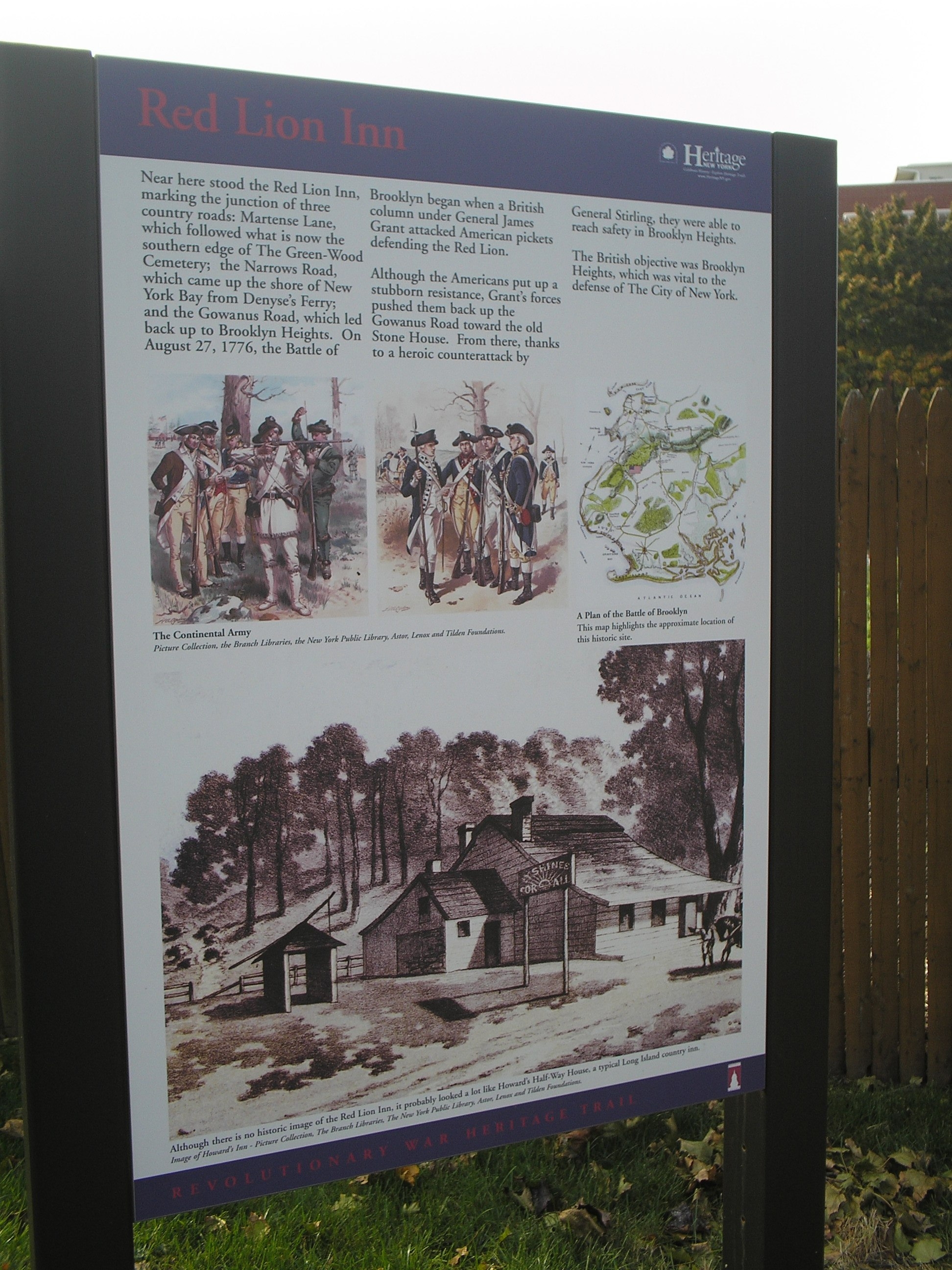
There is no existing image of the Red Lion Inn.
The building itself is Howard's Tavern located at the Jamaica Pass
Both were half-way houses.


The Tavern


The Red Lion Inn was named after the tavern where English King Henry V rested after defeating the French at the Battle of Agincourt. It is fitting that the first action in the first major British victory of the American Revolution took place near the inn. The Red Lion Inn was located at the junction of three country roads: Martense Lane, which followed what is now the southern edge of Green-Wood Cemetery; the Narrows Road, which came up the shore of New York Bay from Denny’s Ferry; and the Gowanus Road, which led back up to Brooklyn Heights. This area is roughly 39th Street and 3rd Ave. in Brooklyn, although other accounts place it on 4th and 40th. I refer to Mark M. Boatner's "Landmarks of the American Revolution" as my guide. Boatner states that many battle markers in Brooklyn are imprecise, and I agree. You can read an earlier blog of mine about my personal visit to that part of Brooklyn a few years ago.


The passes and the British flank march around the Americans.
The Red Lion lay along the Flatbush (western-most)
pass on the left


The Action 


Gen James Grant
On August 27, 1776, the Battle of Brooklyn started when a British column led by General James Grant attacked American pickets defending near the Red Lion Inn. Some accounts say the British were foraging for melons when they startled a rebel picket. It was in this, the westernmost pass, that American Major General William Alexander, a Jersey native also known as "Lord Stirling," stood with the largest force defending the Heights of Guan. The British commander was General James Grant, a Scotsman known for his stout heart and physique. Grant hated rebels and urged his men forward with a ferocity rarely seen from the British. His column of about five thousand professionals rolled into the pass, thirsting for action. But Lord Stirling managed to organize some of the Americans into a line of battle on a piece of high ground just off the Gowanus Road. He was joined by a two-gun artillery battery that covered the road. Grant's troops formed into battle lines—creating maximum volley fire at the front—and advanced up the road. This was perhaps the first open-field battle of the war. Stirling held a strong position, and the initial British assault was repelled by American musket fire and cannon shots. Grant then brought up some of his guns and bombarded the American position. His goal was to pin the Americans while a larger part of his forces completed their envelopment. Later, Grant sent a force to the left of the road, but Stirling countered with a detachment that stopped the British.


Lord Stirling


The  Finale


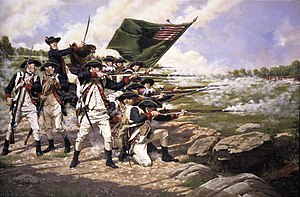
From 7 to 11 a.m., the Americans resisted stubbornly, but eventually, Grant’s forces pushed them back up the Gowanus Road toward the old Stone House. From there, thanks to a heroic counterattack by Lord Stirling, the remaining Americans managed to reach safety in Brooklyn Heights, the British objective, which was crucial for defending The City of New York. Stirling led 400 men from the Maryland and Delaware Continental Line in several frontal assaults on the British troops who had outflanked the defenders and now blocked their way. All but nine were killed, wounded, or captured in the fight. From those Heights, George Washington watched one-third of his force get wiped out. This is the pivotal event in my novel, The Patriot Spy.


Delaware Regiment on Long Island


A Factor?


The Red Lion Inn was not a factor in the battle, unlike the Old Stone House. However, it served as an important landmark. During a time when maps were scarce and often inaccurate, this was significant. Orders frequently referenced landmarks such as bridges, mills, taverns, or farms. Consequently, accounts from both sides mentioned "the Red Lion" or "the Red Lyon" to describe their locations during certain phases of the battle. One might imagine a sign hanging out front showing a red lion, since many taverns used visuals at a time when most men could not read.


Marker at Greenwood Cemetery commemorating
action near the Red Lion Inn (note: Howard's Tavern is the visual)