Followers

Showing posts with label West Point. Show all posts

Monday, April 20, 2026

The Gentleman Spy

The most famous espionage challenge faced by the fledgling United States was not posed by a scheming, knowledgeable practitioner of the dark arts or an experienced orchestrator of back-alley conspiracies, but by a polished, erudite Renaissance man fluent in languages and the arts, and skilled in thorough organization and planning. Known for his affability and manners, John Andre would pave his way into the history of espionage through an unlikely path that ultimately led to the gallows.

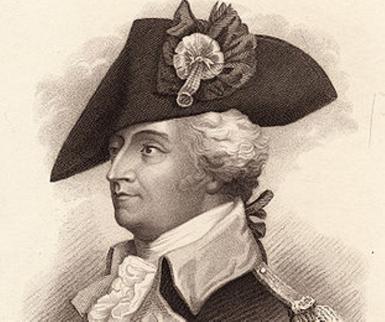
Major John André 

In late 1778, Major John André assumed the role of adjutant-general and head of British intelligence for Sir Henry Clinton, demonstrating remarkable poise. At twenty-eight, the elegant, multilingual officer—skilled in drawing, poetry, and cipher work—proved an ideal staff officer for the cautious commander-in-chief. André handled dispatches, recruited agents, interrogated prisoners, and oversaw maps of rebel positions from Clinton’s New York headquarters. His earlier service under General Grey had already demonstrated his eye for detail. Now he was Clinton’s indispensable eyes and ears across the sprawling theater of war. 

Until then, André’s most celebrated triumph came months earlier in Philadelphia—a spectacular social event. As master of ceremonies at the extravagant Meschianza in May 1778, honoring departing General Howe, he orchestrated medieval-style jousts, fireworks, and balls. 


Among the Loyalist ladies he escorted was young Peggy Shippen, daughter of a judge. André sketched her portrait with delicate pencil strokes, exchanged witty letters, and danced through candlelit evenings. The flirtation carried genuine warmth—historians describe it as light but affectionate courtly attention rather than a grand romance. When the British evacuated Philadelphia in June 1778, the connection ended. Peggy stayed behind and, in April 1779, married the widowed American hero Benedict Arnold, then the city’s military governor. A dark chain of events would soon link her former love and her husband.


Peggy Shippen

Back in New York, André immersed himself in intelligence duties. Frustrated by the stalemate in the North, British Secretary of State for the Colonies Lord George Germain directed British commander in chief General Sir Henry Clinton to turn southward.

In December 1779, Clinton sailed from New York with a large fleet and army, with André serving as adjutant-general. The expedition reached the Carolina coast in January 1780. After careful preparations amid barrier islands and swamps, the British began the formal siege of Charleston in March. André participated in staff operations supporting the methodical advance down the neck of land leading to the harbor. 

The American commander, General Benjamin Lincoln, surrendered the city on May 12, 1780—the war’s greatest British victory, in which roughly 5,000 Continental and militia troops were captured. Clinton and his immediate staff, including André, returned to New York by early June, leaving Lord Cornwallis to press the southern campaign. 

Fall of Charleston


Resuming his intelligence duties in New York, André oversaw the growing secret correspondence with Benedict Arnold. Disaffected by congressional slights and personal grievances, Arnold—through channels linked to his wife, Peggy—offered to betray the vital Hudson fortress of West Point. André personally managed the negotiations throughout the summer of 1780. In a final literary flourish before the climax, he composed the satirical poem “The Cow-Chase,” mocking American General Anthony Wayne’s raid on a Loyalist outpost. Tragically, its third canto appeared in the New York Loyalist newspaper, Rivington’s Royal Gazette, on the day André set out on his fateful mission.


West Point 1780


On 21 September 1780, André boarded the British sloop HMS Vulture and met Arnold near Haverstraw in the cover of darkness. He received detailed maps and plans of West Point’s defenses, which he concealed in his boot. Things seemed to be going well for André’s first clandestine mission. But around dawn, American artillery batteries forced Vulture downstream to avoid plunging fire. Unable to return by water, André changed into civilian clothes and attempted to take the overland route through contested territory, carrying a safe-conduct pass signed by Arnold under the alias John Anderson.


HMS Vulture

Near Tarrytown on 23 September, three Westchester militiamen—John Paulding, David Williams, and Isaac Van Wart—stopped him. Suspicious of his manner and story, they searched him thoroughly and found incriminating papers.  The conspiracy collapsed instantly. Arnold, alerted in time, escaped downriver to the Vulture and defected, later receiving a British brigadier’s commission and payment. However, West Point remained firmly in American hands. 


Capture of a Spy


The hapless André was escorted to American headquarters in Tappan, New York. A swift court-martial convened. Although he argued that he had initially met Arnold under a flag of truce and in uniform, the board correctly ruled him a spy—traveling behind American lines in disguise to gather military intelligence. Ever the gentleman, André bore the proceedings with dignity. 


Court martial at Tappan


On 1 October, he wrote General Clinton a composed letter, thanking him for past confidence and expressing regret only for the circumstances. He requested execution by firing squad, befitting a soldier. In an unusual lack of compassion combined with anger over Arnold’s betrayal, Washington declined, citing the nature of the offense. 


General Henry Clinton


On the morning of 2 October 1780, the gentleman spy Major John André mounted the gallows with unflinching composure. He adjusted the noose himself and remarked that, though reconciled to death, he detested the method. A single drum roll sounded. The trapdoor dropped.


Execution


Back in New York City, Clinton was devastated, lamenting the loss of “a very valuable assistant… an honour to his country.”

 Even among his captors, André earned admiration for his courage and demeanor; American officers described him as a gallant enemy. Major Benjamin Tallmadge, General Washington’s chief of intelligence, met with André during his trial and execution. 

He penned these remarks in his memoir: 

“I became so deeply attached to Major André that I can remember no instance where my affections were so fully absorbed in any man.” And describing the moment of execution: “I walked with him to the place of execution, and parted with him under the gallows, entirely overwhelmed with Grief, that so gallant an officer, & so accomplished a Gentleman should come to such an ignominious End.” 

Benjamin Tallmadge


In his brief yet intense service, André had blended intelligence, craftsmanship, and social grace with literary wit. From the Meschianza festivities and the Charleston siege lines to the shadowy negotiations that culminated at the gallows, he embodied the era’s blend of honor, ambition, and tragedy. 

The artful Andre's sefl portrait


The Gentleman Spy’s execution reverberated across the Atlantic, turning the young major into a romantic symbol of duty betrayed. The rebellion endured, but the memory of John André lingered as a poignant footnote to a war fought as much with secrets as with muskets.


Saturday, February 29, 2020

Captain Molly

Female First Patriot


The American War for Independence would not have succeeded without the dedicated efforts of many women, from all walks of life. Besides the obvious morale support women provided the cause, they maintained the farms or ran the shops when the men-folk were with the army or the militia. They raised money and engaged in the day to day commerce that kept the economy going and helped feed the revolution. They organized efforts to sew and knit, providing badly needed garments, blankets, and the like for an army poorly served by traditional logistics. Many also followed the gun, joining husbands or sweethearts with the forces as camp-followers. This female first patriot’s service began that way. But it did not end that way. Her name was Mary Chocrane Corbin, and she was indeed, a female bad-ass.


Captain Molly - an original bad-ass


Frontier Orphan


Margaret Chochrane (later changed to Chocran) was born near today’s Chambersburg, Pennsylvania in Franklin County, Pennsylvania, on 12 November 1751, of Scotch-Irish settlers. Pennsylvania was a battlefront during the French and Indian War, however, and in 1756 and Indian attack changed her life for the worse. In a savage raid so common then, her father was killed and her mother carried off never to be seen again. Margaret escaped but now an orphan, she was raised by an uncle. This was not uncommon in those days. One can only think her hardscrabble youth steeled her for the challenges that lay in store for her.


Margaret's mother was carried off in an Indian raid

Newlywed... New Recruit


In 1772, at the relatively old age of twenty-one, she married John Corbin, a Virginian who came to Pennsylvania during the war and lingered on. In the run-up to the War for Independence, John Corbin enlisted in Captain Thomas Proctor’s company of the 1st Continental Artillery. Corbin was a matross, a gunner’s assistant in an artillery crew. As a matross, it was John Corbin’s duty to assist the gunner in loading, firing, and sponging the guns.


John Corbin served as a matross, assistant gunner


Follow the Army


Like many women of her day, Margaret joined the army with her husband and served his unit as a camp follower. Camp followers were an essential component of 18th-century armies, providing essential services such as cooking, washing clothes and blankets, fetching firewood and water. In combat, they often attended the wounded or carried water for the troops. Without the service of these dedicated women, soldiers of the Revolutionary War would have suffered even more than they did. Especially the Americans, whose logistics often lacked.


Camp Followers were critical to the armies

Active Service


Margaret was with the Continental Army in this capacity in New York in 1776. By November of that year, General Washington’s army had been driven from Brooklyn, had abandoned most of Manhattan, and had withdrawn to the Jerseys in the face of overwhelming British land and naval power. In Manhattan, the Continental Army was clinging to a small piece of rock at the northern tip of the island. Fort Washington stood high above the North (Hudson) River and the Harlem River, making it a critical piece of land.  On November 16, General William Howe ordered a three-pronged bombardment and assault on Washington’s namesake bastion.


Fort Washington


Captain Molly


The fort’s defenders put up a desperate fight at first, stymieing the efforts of British and Hessian regulars. But soon the endless pounding of guns and determined assaults took its toll on the outnumbered defenders.  John was assisting a gunner until the gunner was killed. At this point he took charge of the gun and Margaret stepped in to assist him. Before long, the intense British fire took him down - John Corbin was killed in combat. Undeterred, his wife now stepped in for him. 
Margaret was often reported to have a feisty nature. On this day it would serve the forlorn cause at the fort.  With no time to grieve her fallen husband, Margaret sprang into action and began serving one of the guns in his place, personally loading and firing round after round at the attackers. But the British soon trained their guns on the belching American cannon. Before long, Margaret herself was struck by a blast of grapeshot from the HMS Pearl firing from the river below the fort. A swarm of lead balls tore into her shoulder, mangled her chest, and lacerated her jaw. Several soldiers carried her to the rear where she received what little treatment they could give. 


Captain Molly working a cannon at Fort Washington


Wounded in the Line of Duty


The fort soon surrendered, and thousands of soldiers were marched off to eventual death on prison hulks. But Margaret’s wounds were so severe she was paroled by the fort’s new commandant, Hessian General von Knyphausen. Margaret and the other wounded were ferried across the river to Fort Lee. Bleeding from multiple wounds, and an arm hanging by a thread, Margaret suffered a wagon jolting and bumping along poor roads all the way to Philadelphia. She survived the journey and the wounds, although they would plague her for the rest of her life. In addition, she permanently lost the use of her left arm.


Corbin suffered horrific wounds in
the service of her country


Corps of Invalids


In time, Corbin’s condition was made known to the Pennsylvania Executive Council, which granted her a small sum of money and referred her to the Continental Congress. The Board of War, impressed by her reputation as “Captain Molly,” then voted her a soldier’s half-pay for life on July 29, 1779. Afterward, Corbin was allowed to join the Corps of Invalids at West Point, New York. Congress created the corps to garrison posts, using soldiers no longer fit for full active service.


Corbin was assigned to the Corps of Invalids
for the remainder of the war


Honorable Discharge & Second Marriage


She was also allotted one free suit of clothing per year or the equivalent in money. In 1782, Congress allowed her to receive a daily ration of rum due to veteran soldiers.  As the war drew to a close, she was formally discharged from the military in April 1783. While serving at West Point Margret married again. Her new husband was also invalid, and the couple lived several years in grinding poverty. When he died, "Captain Molly" lived hand and mouth, often relying on the charity of locals.


The Corps of Invalids garrisoned West Point


Legacy


Our female first patriot died just shy of her 50th birthday at Highland Falls, New York on January 16, 1800, and was buried in an unmarked grave.


The DAR helped move Margaret Corbin's remains to its
final resting place


There she lay until in the early 20th century, Corbin’s remains were subsequently rediscovered and, through the intervention of the daughters of the American Revolution (DAR), she was interred at the US Military Academy in 1926 with full military honors. Her grave was marked by a bronze memorial. Corbin was the first woman of the Revolutionary War to receive a disability pension for military service. Ir is fitting that she was laid to rest with some of the great military heroes of America's wars.


Margaret Corbin finally laid to rest at West Point's cemetery?


However, the tale of America's first female veteran took on a strange twist in 2016. Her grave was accidentally dug up and it was decided to conduct a post exhumation forensic analysis. Unfortunately, the results determined the remains were of a very large male. When notified, the DAR remained undaunted and have resolutely pledged to continue the search for Margaret Corbin's actual remains. But you do not have to travel to West Point to visit a Captain Molly memorial. A plaque was erected on the site of Fort Washington in upper Manhattan, in today's Fort Tryon Park. Visitors to the Big Apple can visit it and visit the site of her gallant action in the service of her nation.


In an interesting side-note: Mary Corbin’s association with the artillery often causes her to be confused with another gunner, Mary Ludwig Hays, or Molly Pitcher, a common name for camp followers at the time. The other Molly may be the subject of a future Yankee Doodle Spies profile.

Sunday, July 17, 2016

The "Little Gibraltar"


Command of the Hudson


After a summer of inaction following the Battle of Monmouth in June 1778, the British commander in chief in North America, Sir Henry Clinton, received orders the following winter “to bring Mr. Washington to a general and decisive action.” To that end, in May 1779, Clinton assembled about 6,000 men at Kingsbridge (the Bronx) in preparation for a quick strike on West Point, considered the "key to the continent." The series of fortifications at West Point controlled the Hudson River and prevented the British from cutting off New England from the rest of the colonies. Twelve miles south was Stony Point, a fortified peninsula jutting half a mile into the river and rising 150 feet above it. Directly across the river from Stony Point lay Verplanck's Point, with a garrison stationed at Fort Lafayette.


British General Sir Henry Clinton


British Strike North


On 30 May Clinton's forces sailed north on 70 ships commanded by Commodore George Collier. The 40-man American garrison at Stony Point, seeing the much larger force approaching, burned the blockhouse and abandoned the defenses without firing a shot. On the east bank of the Hudson, the other American garrison was less fortunate. Seventy North Carolina Continental troops were trapped and forced to surrender. Sir Henry ordered both forts' defenses to be heavily reinforced. At Stony Point, this was done by felling trees and constructing an earthen fort along with two barriers called abatis. Additionally, two British ships provided extra protection. The defenses at Verplanck’s Point, across the river, were fortified with troops ready to reinforce Stony Point if needed. British control of the water greatly favored them. Clinton garrisoned both forts with a total of 1,000 men, while the rest were sent on raids into Connecticut.


The British believed their defenses were secure, referring to the new fort as “Little Gibraltar.” To defend "Little Gibraltar," they had a garrison of about six hundred men, including the 17th Regiment of Foot, the Grenadier Company of the 71st Regiment, a company of the Royal Americans, and a small detachment of the Royal Artillery, all under the command of Lieutenant Colonel Henry Johnson of the 17th Regiment. 

Stony Point was a natural fortress, and with these reliable troops continually strengthening their position, Clinton had no concerns for the post’s safety. He later wrote, "entertain the smallest apprehension that any attack the enemy could make against that place…could possibly be attended with mischief before I should be able to afford them assistance." 

The British aimed not only to control the Hudson to divide the rebellious colonies but also to draw out George Washington's Continental Army, which was positioned between Philadelphia and New York around Middlebrook, New Jersey. A move on West Point was intended to accomplish this. Clinton's strategy favored the initiative, interior lines, and the advantage of quick reinforcement and water movement.


General Anthony Wayne


Washington Reacts


Now, with the British move, Washington hurried north to meet the new threat. When Washington arrived in the area, he was concerned that losing Stony Point posed a serious threat to the Hudson River and the routes to West Point. When intelligence reports indicated that the defenses were not yet finished, he quickly decided to attack. He had just the man for the job: Brigadier General Anthony Wayne. 

Wayne was a tough, bold leader of men—crafty and fearless. He once said he was "ready to take hell." Wayne conducted a "leader's" reconnaissance of the position and then a second with Washington accompanying him. Both agreed that a siege or a direct storming of the fort would be impractical; instead, he should seize the fort quickly with a surprise attack, a coup de main. 

Wayne commanded the Light Division, an elite group selected from regiments of Continental infantry. He organized his assault force into three columns totaling 1,350 men. They set out on July 15, 1779. For eight hours, they navigated narrow mountain trails, detaining civilians along the way to avoid detection. When the soldiers reached Sprintsteel’s farm, two miles from Stony Point, they were told about their mission for the first time. 

Three columns would lead the Continental forces: one of 300 men would march through the Hudson River from the north; a second, led by Wayne, would cross Haverstraw Bay from the south. Each of these two columns would consist of three parts: the first would be a group of twenty men known as "the forlorn hope," tasked with entering enemy lines first, overcoming sentries, and cutting through the abatis; the second, an advance party, would seize the fort's works; and the third, the main body, would move around the unfinished back of the fort and approach from the river.


Famed Night Attack


Light Division meets British regulars
with cold steel
The forlorn hope moved out around midnight on July 15-16. It was a moonless night, and they reached the British defenses without being detected. Wayne, learning from his humiliating defeat at Paoli, had the men in his columns remove their flints and advance with fixed bayonets. One of the columns, a diversion under Major Hardee Murfee, attacked the British center and drew away several companies of Lieutenant Colonel Henry Johnson's 17th Regiment. 

Murfee's men did have flints and powder, as their mission was to attract the defenders' attention. With the diversion underway, Wayne's column and the second column under Colonel Richard Butler scaled the heights and overran the defenses. Despite their surprise, the roughly 600 British defenders fought back as professionals and resisted fiercely. The fighting was hand-to-hand and brutal. After 30 minutes, the fort fell. 

The British lost 63 killed, 70 wounded, and the remaining 543 captured, along with twelve guns. The American attackers lost 15 dead and 83 wounded. Wayne sustained a head wound early in the attack but continued to lead his forces. 

Earlier, the fiery Wayne had offered a bounty to the first man to enter the enemy works. The winner of the award was an officer named François Louis Teissedre de Fleury, who had come to America from France and had served bravely in previous battles, rising to the rank of captain of engineers. The "Little Gibraltar" on the Hudson had fallen to Yankee stealth, daring, and courage - with some Gallic help.


Wounded early, Wayne continues leading the attack


The Value?


The symbolic significance of Stony Point led the Continental Congress to award three medals out of the ten struck during the War for Independence - gold for Wayne and silver for de Fleury and Major John Stewart, who commanded the advance party of the left column. The British responded to the bold attack by reinforcing the fort at Verplanck's Point and sinking an American ship that was transporting some of the twelve captured guns from Stony Point to West Point. 

Once Verplanck's Point was secured, the strategic importance of Stony Point was diminished in Washington's view. He also recognized that Wayne's assault showed the position was not as easily defensible as previously thought. As a result, he ordered the fortifications to be reduced and Wayne's men to withdraw on the 18th. The British reoccupied the point on the 19th. Although the operation lacked significant strategic value, it greatly boosted morale by demonstrating the improving fighting skills of the American Army. 

In addition to the Congressional medals, the battle was noted beyond American shores. Edmund Burke's Annual Register (a British publication that summarizes politics, history, and literature annually) for 1779 stated that the action "would have done honor to most veteran soldiers." The French Ambassador in Philadelphia remarked, "I am convinced this action will elevate the ideas of Europe about the military qualities of Americans..."


General Anthony Wayne during the Assault


Stony Point apres War


In 1826, Stony Point became the site of a lighthouse built to guide ships through the narrow passage of Haverstraw Bay at the southern end of the Hudson Highlands. During its 99 years of operation, only one vessel ran aground, with no reported fatalities – a testament to the vigilance of the lightkeepers. A new light tower was constructed in 1926 at the water’s edge (not accessible to the public) and continues to serve as an aid to navigation under the care of the United States Coast Guard. 

The 1826 Lighthouse is now a historic site, symbolizing the significance of the Hudson River maritime community to New York's development. Today, the grounds of Stony Point feature a mix of woods and well-maintained lawns, offering commanding panoramic views of the Hudson River, looking north to the Hudson Highlands and south to Haverstraw Bay. 

There is a site museum displaying some of the captured guns and other artifacts from the site’s past military engagements and soldiers' camp life. The artifacts, including an authentically reconstructed mortar bed for a captured 8” mortar and a stand of period bayonets, are arranged around a diorama depicting Stony Point as it appeared on the night of the attack.


Stony Point Light House


Saturday, April 16, 2016

The Nicola Affair

One of the little-known but crucial events of the American War for Independence happened as the conflict seemed to be coming to an end. This post discusses the man who would fight a king but also make a king - Louis Nicola.


Early Life - Soldier and Civil Servant of the King


Lewis Nicola was born in Dublin, Ireland, in 1717, as the son of a British army officer and the grandson of Huguenot refugees. Although little is known about his upbringing, Nicola’s family apparently gave him a solid secondary education. Like many Irish, he joined the British army and spent nearly thirty years fighting for his king. His family purchased him a commission as an ensign in the British army in January 1740. He married his first wife, Christiana Doyle, on September 19 of that year. During the early 1740s, Nicola was stationed in various Irish cities, including Galway, MannorHamilton, Londonderry, Dublin, and Cork. After a brief tour of duty in Flanders during the intense fighting in the spring and summer of 1745, Nicola returned to Ireland, joining the garrison at Charles Fort near Kinsale, and eventually earning a promotion to the rank of fort major in early September 1755. For the twenty-one years following his return to Ireland in 1745, Kinsale was his home. He became involved in civic service and developed an interest in scientific inquiry. Nicola married his second wife, Jane Bishop, on April 18, 1760, eight months after the death of Christiana Nicola.


Nicola served in Flanders in 1745 


An Immigrant to the New World


When he did not receive a expected inheritance, Nicola moved to America in 1766, settling in Philadelphia and opening a dry goods store on Second Street. Not content to be just a shopkeeper, Nicola became a prominent figure in the growing world of publishing. In 1767, he established a library, and by December 1769, he moved it to Spruce Street in the more fashionable Society Hill. He renamed his establishment the “General Circulating Library.” A believer in the broad enlightenment of the people, Nicola continued to publish several magazines focused on scientific information and inquiry. Nicola also helped establish the American Philosophical Society in 1769 and became the publisher of its annual report, Transactions.


Nicola temporarily relocated his family to Easton, where he also held public roles, and in 1774, he was appointed Justice of the Peace in Northampton County (essentially the county judge). As tensions with Great Britain increased and conflict appeared unavoidable, he returned to Philadelphia and resumed his focus on military affairs. Leveraging his experience in the British Army, he published A Treatise of Military Exerciser, Calculated for the Use of the Americans, in 1776, which was a very timely publication. This work, created at the request of the colonels of the five battalions of Pennsylvania militia from Philadelphia, aimed to include “every Thing that is supposed can be of Use to” the colonists and exclude “such Manoevres, as are only for Shew and Parade.”


Nicola's Invalid Corps garrisoned Trenton
Nicola was fluent in French and translated several French military texts. In 1776, Nicola was appointed Barracks Master of Philadelphia and commander of the city guards. During the British occupation of Philadelphia, Nicola published a map for use if the Americans moved against his adopted town. His experience leading old men and boys as commander in Philadelphia led him to ask Congress to consider an idea he had for better garrisoning—using wounded veterans. 

On June 20, 1777, the Continental Congress, recognizing the validity of Nicola’s arguments, established an Invalid Corps consisting of eight companies and nearly one thousand men, “to be employed in garrisons, and for guards in cities and other places, where magazines or arsenals, or hospitals are placed; as also to serve as a military school for young gentlemen, prior to their being appointed to marching and other military arts." Essentially, this marked the beginning of a rudimentary military academy. 

Nicola was appointed Colonel in the Continental Army and commander of the Invalid Corps. Nicola and the Invalid Corps performed many valuable services during the American Revolution. For most of the war, the corps was stationed in Philadelphia. When General William Howe’s British army advanced toward the American capital in the fall of 1777, Nicola moved his family and the Invalid Corps elsewhere. They relocated to Bristol, then Fort Mifflin, and finally to Trenton. Nicola planned several operations against British outposts, but once both sides settled into winter quarters, the corps was redeployed to Easton and Bethlehem, Pennsylvania, to guard hospitals and military stores in those towns. 

Like the rest of the Continental Army, the Invalid Corps faced great hardships during the winter of 1777–78. After a brief stay at Valley Forge in spring 1778, the Invalid Corps returned to Philadelphia on June 19, just after the British withdrew from the city. Over the next three years, the corps was mainly stationed in Philadelphia, with a period in Boston. Besides garrison duties, Nicola directed the corps to interrogate prisoners and deserters and sent intelligence reports to Washington. The intellectually active Nicola also proposed several schemes to Congress, including forming a partisan force, implementing new army regulations, and using the Invalids in recruiting.


The Invalid Corps garrisoned Fort Mifflin


The Nicola Letter


On June 13, 1781, in response to Washington’s request of May 27, Congress authorized the concentration of the corps at West Point, New York. The Invalids spent much of their time at West Point's outposts, such as Fishkill. Nicola faced many challenges regarding pay and feeding his men. He successfully defended himself against a court-martial based on charges from a discontented captain. The poor quality of the invalids and a shortage of officers and men only worsened his situation. He had to deal with numerous cases of misconduct.

Nicola himself faced financial difficulties throughout the war and, like many other officers, was unhappy with Congress's treatment of officers and men concerning supply, rations, and pay. Widespread disgruntlement simmered even as the new nation approached independence. With all of his experiences—both good and bad—since joining the Continental Army, Nicola, ever a man of letters and ideas, wrote a letter to Washington on May 22, 1782, from Fishkill, New York, outlining his grievances over the army’s poor treatment by Congress.

Nicola wrote:

                    "...From several conversations, I have had with officers, & some I have
                    overheard among soldiers, I believe it is generally intended not to separate
                    after the peace ’till all grievances are redressed, engagements &
                    promises fulfilled . . . God forbid we should ever think of involving
                    that country we have, under your conduct & auspices, rescued from
                    oppression, into a new scene of blood & confusion; but it cannot be
                    expected we should forego claims on which our future subsistence &
                    that of our families depend." 

Washington was well aware of all this, but Nicola's second theme stunned and angered him. Nicola stated bluntly that, unlike many of his American contemporaries, he was not a “violent admirer of a republican form of government.” He then discussed the histories of earlier republics like Venice, Genoa, and Holland, explaining why “their lustre” had “been of short duration.” This, in Nicola’s view, also applied to the United States. None of these had been able to govern themselves effectively. Regarding the Continental Congress, Nicola asked, “has it not evidently appeared that during the course of this war we have never been able to draw forth all the internal resources we are possessed of, and oppose or attack the enemy with our real vigour?”


Mount Guillian - near Fishkill


Nicola went on to argue for a limited constitutional monarchy similar to Britain's. That caused a strong reaction from Washington. The tone of Washington's reply to Nicola that same day shows he not only disapproved of Nicola’s “scheme” but was also deeply offended by it. 

After expressing his “great surprise & astonishment,” Washington wrote that “no occurrence in the course of the war, has given me more painful sensations than your information of there being such ideas existing in the Army as you have expressed.” Furthermore, Washington was “at a loss to conceive what part of my conduct could have given encouragement to an address which to me seems big with
the greatest mischiefs that can befall my Country. If I am not deceived in the knowledge of myself,” Washington continued, “you could not have found a person to whom your schemes are more disagreeable.”


The Continental Army encampments around West Point - 1782


While he admitted to the problems facing the army and promised to do everything in his power “in a constitutional way” to address them, Washington urged Nicola that if he had “any regard for your Country, concern for yourself or posterity—or respect for me, to banish these thoughts from your Mind & never communicate, as from yourself, or anyone else, a sentiment of the like nature.”

Finally, as an obvious but rarely used safety precaution, Washington had two of his aides-de-camp, David Humphreys and Jonathan Trumbull, attest that the copy of the letter he kept for his files was an exact duplicate of the one he had sent to Nicola. Nicola was hurt by the rebuff and immediately apologized at great length, writing that he was “extremely unhappy that the liberty I have taken should be so highly disagreeable to your Excellency . . . nothing has ever affected me so much as your reproof.”

Several letters followed as Nicola tried to justify his actions. No written response from Washington ever arrived, or if it did, no record exists.


Apres l' Affaire


And curiously, Nicola's relationship with the commander in chief remained as it was before the letters. He continued to command the Invalid Corps and played the normal role of a Continental officer. Washington never shunned or further censured him. In fact, Washington supported Nicola's objections when Congress moved to disband the Invalid Corps in the spring of 1783. Nicola returned to Philadelphia and provided administrative service through the end of the war, retiring as a Brevetted Brigadier General. After the war, he held a position as manager of the city's workhouse and became active in the Society of the Cincinnati.

Nicola remained involved in military affairs as the inspector of the city's militia through the 1790s, when he retired and moved to Alexandria, Virginia, where he died in 1807. Although Nicola's proposal to Washington was controversial, it should not overshadow a life of distinguished service in both peace and war. Many desired a monarch, and many believed that monarch should be George Washington.

Nicola's letters and the responses (and lack thereof) ironically strengthened the case for Washington as one of the few men in history to reject a chance at monarchy—a move that led none other than George the Third to call him the man of the century. We prefer to call him the essential man. In a way, Washington and the new nation may owe a debt to Nicola for his "modest proposal." Instead of a king, the Nicola Affair helped to reinforce George Washington's commitment to a government of men, not monarchs.


Washington's response to Nicola sealed his reputation as
the indispensable man of the republic


Saturday, November 17, 2012

Edgar? Is that you?

Apologies to Joan Rivers.  But I am pleased to report that The Patriot Spy has been submitted for a 2013 Edgar Award!

"What the heck is an Edgar?" 


 A reasonable question.  The Edgar Awards are presented each year by The Mystery Writers of America for achievement in mystery writing. The Edgars are the most prestigious awards in this very popular genre.  The Patriot Spy was submitted in the Best First Novel category.  Personally, I know it is my best first novel because it is my only first novel!  Now we just have to convince the judges.


Founded in 1945, Mystery Writers of America is a storied organization that strives to improve the genre of mystery writing by connecting authors and fans.  To do this, it works with libraries and vendors, and at the chapter level, it sponsors symposiums and events.  Authors, publishers, and fans come together to celebrate the power of the mystery and its special hold on the reading public.  There are eleven Mystery Writers of America chapters throughout the country.  It has its headquarters in New York.


                                                        Edgar Allen Poe was the dean of 
                                                    American mystery and thriller writers


Why "Edgar?" 


The name Edgar is in honor of the literary legend, Edgar Allen Poe.  Poe is among the most famous 19th Century American writers and is considered the father of mystery writing with his seminal work, "Murders in the Rue Morgue."  Poe was born in Boston in 1809.  His grandfather, David Poe, served with distinction in the Revolutionary War and is said to have been a friend of the Marquis De Lafayette and was known to George Washington himself.  There - I managed to make a Poe connection to the Yankee Doodle Spies!

West Point mid 19th Century

Edgar's Life


 Poe's parents were actors.  They died when he was a boy and Richmond tobacco merchant John Allan and his wife adopted him. They sent him to the University of Virginia but gambling debts and drinking led him to leave.  He enlisted in the US Army and served with some distinction in the Field Artillery where he rose to the rank of Sergeant Major.  The military life soon wore him down and strange as it may seem Poe sought a commission at the US Military Academy at West Point as a means of escape.  Poe did well there until he decided the Academy did not suit him.  He could not resign however without John Allan's approval (declined). So he broke numerous regulations, mostly absenting himself from classes (what we call "cutting") until he was, at last, he stood before a court-martial and dismissed in March 1831.

After leaving West Point, he dedicated himself to writing full time. As with many writers, he moved about the country, living variously in New York City, Baltimore, Philadelphia, and Richmond. While in Baltimore he stayed with family and fell in love with and married his 14-year-old cousin Virginia Clemm, who was the love of his life (or maybe he just didn't like saying good-bye).


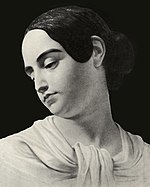
Virginia Clemm Poe


By 1836 he had returned to Richmond where he worked as a literary critic of some notoriety.  In his professional life, he had worked on the editorial staff of the Southern Literary Messenger of Richmond,  the New York Quarterly Review, and  Graham's Magazine at Philadelphia. It enabled him in 1843 to have a magazine of his own, the Stylus. His dissolute ways estranged him to many and ruined his magazine's prospects.   After his young wife Virginia died in 1847, Poe maintained a pretty continuous downward spiral of drinking bouts, confrontations, and impecunity that overshadowed his inspired body of work.

His Work


In late 1830 Poe published Tales of the Grotesque and Arabesque, a collection of stories. It contained several of his most spine-tingling tales, including "The Fall of the House of Usher," "Ligeia" and "William Wilson." Poe launched the new genre of detective fiction with 1841's "The Murders in the Rue Morgue." A writer on the rise, he won a literary prize in 1843 for "The Gold Bug," a suspenseful tale of secret codes and hunting treasure.  Although best known for short stories steeped in mystery, Poe's most famous and profitable work was a poem, "The Raven." I believe a film by that name was Jack Nicolson's first feature role.  Poe also published a work of poems called, well, "Poems." He released it right after leaving the Academy and dedicated to his fellow cadets, who famously each gave him a dollar and twenty-five to fund the work.  For whatever reason, my favorite Poe short story is "The Cask of Amontillado."

More Edgar Connections


I lived many years in the Bronx and visited the Poe Cottage at Kingsbridge Road and The Grand Concourse. Here Poe lived for a time with his bride Virginia, who speculation credits as the inspiration for the poem Anabel Lee, a ballad of love and death. 

"It was many and many a year ago,
   In a kingdom by the sea,
That a maiden there lived whom you may know
   By the name of Annabel Lee;
And this maiden she lived with no other thought
   Than to love and be loved by me."

                                                                            
                                                                    Poe Cottage, Bronx, NY


While in the Army, I often went on temporary duty to Richmond, Virginia and several times stayed at Linden Row Inn, a street of row houses now turned into an upscale but small and elegant hotel. Returning from a five-year trip to England, the Allans (including Edgar) lived with Mr. Allan’s business partner, Charles Ellis in his house on Linden Row.  Edgar Allan Poe played with the Ellis children in the gardens that had the famous Linden trees. Local legend has it that the enchanted garden is the one that Poe mentions in his famous poem “To Helen.” Poe may have also  courted another life-long love, Elmira Royster, in the garden where the Linden Row Inn now stands.

                                                                            
                                                                The Linden Rowe Inn

His Death


Poe was found lying in a gutter in Baltimore ranting incoherently.  Taken to Washington College Hospital he died on October 7th, 1849. Many legends have circulated as to the causes and situation involving his death but the truth is we will never know the full circumstances of Edgar's demise.  He lives on in his work and the many places that claim his presence during a life and death  punctuated by the simple word from his most famous work, the poem, The Raven:

 "Nevermore!"
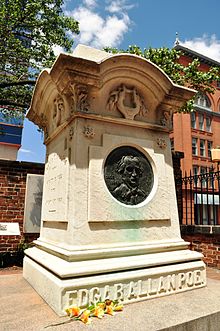
Poe grave and monument in Baltimore