Followers

Saturday, August 31, 2019

Marblehead Men

Sailors become Soldiers who become Sailors

One of the most overlooked units in the Continental Army also played a vital role in saving the American cause, paving the way for several iconic commemorative paintings. The people who live along the rocky New England coast are as tough and rugged as the landscape itself. 

At least, they were during the era of the Yankee Doodle Spies. Hard, gritty men and women were the first to take meaningful action against what they saw as the injustices of British rule. I suppose carving out a civilization from a weather-beaten wilderness requires folks of tough mettle and stubborn ways.


New England's coast bred tough people


Among the toughest and most resourceful of that group were the men who sailed the cold and stormy waters along the North Atlantic coast, fishing, trading, and smuggling in both fair and foul weather. It is only natural that a militia regiment drawn from such stock would prove to be one of the go-to units of the struggle.

Marblehead Militia


All counties and some towns in New England had militia units that established a long-standing tradition dating back to at least the late 17th century. These units had experience from several wars fought against native tribes, Canadian neighbors, and their French rulers.

At the start of the fight against Britain, the Marblehead militia was among these. Because it was formed along the rugged New England coast, it was naturally composed of men who spent their civilian lives at sea.

Marblehead Militia


As tensions peaked in April 1775, the regiment was lucky to get a commander who proved to be as tough and resourceful as the men he led – Colonel John Glover. Under Glover, the regiment marched to Cambridge, where they joined the New Englanders besieging the British at Boston.


During the siege, Congress formed the new Continental Army under General George Washington's command. The Marblehead Militia, known as “Glover’s Regiment,” joined the Continental Army in June. It was originally called the 23rd Massachusetts Regiment. Only the best militia units were combined into the Continental regiments, creating America's first “professional” army.

The Continental Line


With their new status, they also received a new name, and the Marblehead militia was quickly renamed the 14th Massachusetts Continental Line. As a continental regiment, they would now be required to march and fight wherever the army moved, and wherever George Washington led them. He soon took them south to face new dangers and seek new opportunities for glory.

Nevertheless, the regiment of about 750 sailors never completely abandoned their heritage. Unlike other continental regiments, which started wearing similar uniforms of dark blue tunics, white or buff breeches, and leggings topped with a cocked hat, the Marblehead sailors dressed more like traditional sailors. The Marbleheaders wore distinctive blue jackets, white pants, and white caps. However, it was the skill, not their appearance, that was the greatest trait of these hardy sailors.

Washington’s Navy


As the siege of Boston went on, Washington decided he needed a naval force to stop supplies from reaching the British garrison. He assigned the 14th Massachusetts Line to outfit and crew four schooners for this purpose. Glover even offered his own schooner, the Hannah. His port at Beverly became the base of “Washington’s Navy.” Operating with a limited budget, the small fleet of five schooners managed to disrupt British supply lines and bring in captured supplies to support the Americans. Sailors from Marblehead also built most of the defenses that kept the British from taking the base.


Washington's Navy consisted of
fast schooners manned by experienced sailors


The Miracle on Long Island


Long before it became a traffic nightmare, Long Island was the scenic and rural breadbasket of New York. In the summer of 1776, it became the focal point of the British plan to crush the American rebellion.

Driven from Boston earlier that year, Lord William Howe’s reinforced army of over twenty thousand sailed into New York Harbor and landed at Staten Island. Soon, he moved his troops across the water and quickly encircled George Washington’s forces along the heights of Brooklyn. Although there was fierce fighting, the British numbers and well-positioned guns made Washington’s hold on the island a dangerous liability. He faced a difficult choice: defend with little hope or attempt to escape.


British Landing at Long Island would soon threaten the
American Army and the cause


In some ways, the latter was the toughest decision. The British naval strength was even more powerful than their land forces. Crossing despite these two hurdles would almost certainly cause disaster. But when a sudden fog rolled into New York harbor on the night of August 29th, Washington seized a brief chance to act.


So under cover of darkness and a thick fog, he made a risky decision and ordered his army to move against the enemy. His advantage was the 14th Massachusetts’ sailor-soldiers. For hour after hour, Glover’s men rowed boat after boat, carrying soldiers, horses, and equipment they could manage without alerting the British, who waited just a few hundred yards away.


Glover worked his men through the night to save an army


Despite the darkness and fog, the Marblehead men moved smoothly and silently. A splash or the bumping of a boat against another could easily have alerted the Royal Navy, whose warships lay anchored nearby. By the next morning, they had evacuated around 9,000 men from the jaws of the British lion to the safety of Manhattan.


The miracle retreat from LI saved the army and the cause


A War of Maneuver


The regiment’s usefulness was evident during the “war of maneuver,” which caused Washington to hurriedly relocate positions to avoid being destroyed by the British. Glover’s men slowed down the British advance at Kips Bay, giving the rest of the army time to retreat to the safety of Harlem. As the campaign moved north to Westchester, the regiment again played a vital role—this time as soldier-sailors.


Glover's sailor-soldiers stymied the British at Pelham


On October 13th, about 4,000 British and Hessian troops advanced inland from Pelham Bay. However, along the stone walls crossing the farmland, 750 men from the 14th Massachusetts and John Glover’s forces stood ready. They kept the British at bay, trading space for time and allowing the Continental Army a chance to prepare for the next attack. Glover’s men, skilled in scouting and raiding, showed they were just as comfortable on land as they were on their schooners’ decks. They captured supplies and enemy prisoners, then helped operate the artillery during Washington and Howe’s clash at White Plains.

The Crossing that Shocked the World


By December of that year, a battered and severely diminished Continental Army reached its breaking point as it looked across the Delaware River. Just hours behind, the advanced guard of a British column led by Major General Charles Cornwallis was closing in quickly. The men from Marblehead collected anything that floated along the river for miles and quickly ferried the ragtag army to safety.


Gen Charles Cornwallis nearly bagged
Washington, but for the Marblehead Regt.


But their greatest challenge still lay ahead. With enlistments dwindling as a new year approached, Washington had a short window to do something with his army besides fleeing from the redcoats. General Howe gave him the chance. Believing the Americans beaten, he scattered his army into winter quarter garrisons, leaving only a few isolated brigades in West Jersey.


The Glover Regiment brought Washington to destiny


Washington turned to Glover’s men once again. In another secret nighttime operation, Washington enlisted the experienced sailors to operate a different kind of boat. Long and sleek, the Durham boats were powered by pushing long poles into the riverbed. 

On a night when snow mixed with rain, file after file of Continentals, poorly dressed and poorly fed but determined, silently boarded the boats under the watchful eyes of the sailors. Throughout the night, strong arms pushed staffs into the swirling water. Strong legs and backs moved the boats, filled with men and equipment, across the swift current toward the dark and dangerous Jersey side. Despite the ice flows, Glover’s sailors managed to ferry over 2,000 troops and 18 guns.


Sailors to soldiers as Glover's Marblehead Regiment
 joins the night march on Trenton


But their work was not finished. The sailors then became soldiers and marched the grueling nine miles to Trenton, fighting valiantly in the short battle that shocked the world and saved the cause. Their final act was to lead the army back across the river, as their enlistments had expired and the regiment was disbanded.


Down to the Sea in Ships


Glover stayed with the Continental Army, but his men went home. New England was never a major battlefield for the rest of the war, but it still played a crucial role—providing support and attacking the British at sea. Glover’s experienced soldiers now became sailors again, engaging in a different kind of war, less showy but just as damaging to the British.

Privateers devastated British merchant shipping and tied down
the Royal Navy


Some people resorted to smuggling, a crucial way to support the war effort. Others went even further and turned to privateering, attacking British merchant ships in a conflict that deprived the British of wealth and supplies while boosting America’s limited resources. The Marblehead men played a key role in capturing more than 3,000 vessels during the war.


Friday, July 19, 2019

General Disaster

This edition of the Yankee Doodle Spies shifts focus from the Loyalists to an Englishman. However, this Englishman, a professional officer by training, came to America after his British military career stalled. Settling in Winchester, Virginia, in 1773, Lieutenant Colonel Charles Lee adopted Whig and patriot politics, and thanks to his experience in the regular army, was appointed second in command to General George Washington. It is more than an understatement to say Lee was controversial, odd, ambitious, and morally uncertain. But I digress. Instead of detailing his entire career – which is too rich to fit into one post — I thought we’d examine his “evening parade.”

Early Career at a Glance


Lee was a well-educated son of a (not so modern) major general. After attending school in Switzerland, he entered the Royal Army as an ensign in 1747. Like others of his generation of soldiers and sailors, he saw a lot of action, as Britain had no shortage of wars in the mid-eighteenth century.


Major General Charles Lee


His exploits in the Seven Years War, actually the French and Indian War, took him from Braddock’s defeat on the Monongahela to the final victory on the Plains of Abraham. He ended the war as a major and returned to Europe, where he served briefly as a lieutenant colonel in the Portuguese Army and later in the Polish service. In the latter, he managed to lose two fingers in a duel in which his opponent died. Lee was no snowflake.


Lee was a Seven-Year War
and French and Indian War Veteran


With his career in the Royal Army at its lowest point, he moved to North America to pursue farming and politics. When the American Revolution erupted, he was among those considered to lead the new American army. He lost to George Washington but was awarded the second-in-command position as a consolation. Major General Lee displayed talent but was also cantankerous and involved in many intrigues along with military engagements. He was known as a seducer of women but was quirky, disheveled, and always accompanied by his pack of dogs. Captured under mysterious circumstances as America’s fortunes declined in late 1776, many suspected Lee of aiding his British captors, who used him for their advantage.


Lee was captured at Basking Ridge, NJ
while away from his army


Renewal and Redemption


Lee was paroled as part of a prisoner exchange in April 1778, being swapped for British General Richard Prescott. Despite suspicions of duplicity and back-stabbing by Lee, George Washington welcomed him home to the Continental Army like a prodigal son. Circumstances placed the quirky but still considered a professional officer in a position to make up for any past quirks, obfuscations, and manipulations. The Continental Army emerged from Valley Forge as a revitalized force, professionally trained and equipped. British actions would give Charles Lee a chance to use that new force and prove once and for all that he was the best officer in the army, a view long held by Lee and his supporters.


The Continental Army emerged from Valley Forge
as well-trained professionals


General Clinton’s Gift


By spring 1778, the British had decided to abandon the American capital and concentrate their forces in the major stronghold of New York. This would allow London to redirect land and naval forces to the new active theater in the West Indies. Clinton sent part of his forces north by sea, but a significant force would have to march north across the hot fields of the Jerseys before they could be transported to New York. Washington’s spies warned him of this, and he positioned the Continental Army to take advantage of Clinton’s predicament. A slow-moving land force, reduced in numbers, became an easy target for the commander in chief. Clinton had given the long-suffering Continentals a gift.


Sir Henry Clinton


Councils of War


During a series of war councils, Washington sought to decide the best course of action. Should they risk an all-out attack? Shadow the British and harass their movements? Or try to block them and force a British assault?

The final meeting took place on June 24. Many wanted to take decisive action against the British, but the generals were divided on how to proceed. Marquis de Lafayette considered it a matter of honor to strike at the enemy. Nathanael Greene advocated for a partial effort as a way to boost morale. The aggressive “Mad” Anthony Wayne preferred an all-out fight. However, Lee clarified that his only goal was to observe the British army as it retreated.


Mad Anthony Wayne


The quirky, self-important Lee offered surprisingly cautious advice and had a good understanding of the risks involved. Lee thought an all-out attack on the British was absurd and believed that a defeat for the Americans would be disastrous. To be fair, he probably didn’t realize that this army was unlike any previous command—the American army of the past. Washington decided to keep harassing the British. His combative, young aide Alexander Hamilton dryly remarked that the results of this meeting "would have done honor to the most honorable body of midwives and to them only."

To Lead or Not to Lead


Events gave Washington pause. The New Jersey militia under General Philemon Dickinson (see the Yankee Doodle Spies post on the Militia General) slowed and harassed the British column, which was already being troubled by New Jersey militia blocking roads and launching nuisance attacks.


Major General Philemon Dickinson


Seeking to capitalize on this, Washington dispatched an advance guard of six hundred riflemen under famed Colonel Dan Morgan, then added a second detachment of 1,440 selected Continentals. He followed with a third wave of a thousand chosen men led by Wayne. Washington asked his recently returned second in command, Charles Lee, to lead this strike force, but Lee declined. Did he feel that taking on the British in this manner was too risky or that the command was beneath him?


Dan Morgan


Lafayette, I am Here


So Washington turned to one of his favorites – the Marquis de Lafayette, the young French aristocrat who accepted the command. But Lee then had second thoughts and demanded command of the force. Washington felt he had no choice but to agree. However, he increased the force by another six hundred men as a reason for replacing Lafayette. Now, a force of about 5,000 was closing in on the British rear.


Marquis de Lafayette


A final war council on June 27 offered little clarity on how severely to attack the British, who were nearing Monmouth Court House on their way to a Sandy Hook rendezvous with the fleet. Lee and the strike force slowly positioned themselves near the British rear guard. Several messages from Washington did not provide clear guidance on what actions to take. Therefore, Lee decided to proceed with a watchful waiting approach.


His placement of forces was uneven, making mutual support difficult. On June 28th, he advanced carefully with Anthony Wayne's brigade leading. The day was hot and humid, soaking coats in both red and blue. When the initial contact on June 28th caught the British rear guard off guard, Anthony Wayne pressed for a more aggressive stance, as was his style. (See the Yankee Doodle Spies post on The Mad Man) But without clear orders, Lee hesitated. The chance to outflank the British rearguard was lost.

Baptism by Fire


But upon learning of the contact, General Clinton, meanwhile, decided to give the rebels one last lesson. He reinforced his rearguard and sent them south after their pursuers. Lee’s situational awareness was confused. He received conflicting reports on British strength and activities. But he decided to fix the British rearguard in front of him — if he could find it. He sent forward Wayne’s force, but Wayne circled around the British left to attempt an ambush. Wayne was surprised by a detachment of dragoons, and firing erupted. Lee had to change plans. He pushed Lafayette forward and maneuvered to take advantage of Wayne’s situation.


Old Monmouth Courthouse 

Run Away, Run Away Run 


Then Clinton unexpectedly attacked the rebels and sent the grenadiers against Lee’s right. Chaos broke out. A series of firefights erupted. Volleys of lead shot across the steamy farm fields. Guns began spewing heavy iron balls across meadows and fields. Lee’s situational awareness quickly worsened. He didn't know what was facing him, and he didn't have his forces well controlled. Without clear orders from Lee, his brigades moved on their own in response to the situation as they understood it. Normally, this isn’t entirely bad. Initiative in battle is a good thing. But this situation was heading toward disaster because the formations weren’t working together—they were acting independently.


Lee's units operated independently against
the British

Fearing the worst—a potential engagement he wanted to avoid—Lee retreated three times. His aim was to extract his forces from a dire situation and steer clear of the grasp of the British regulars with the army's most elite infantry and cavalry. Puzzled by the withdrawals, soldiers and commanders started to lose morale. Was something going wrong that they did not understand? The fog of battle made the retreat look and feel like a rout. These were perhaps understandable actions given the circumstances he faced. But he made one crucial mistake. He did not keep the commander in chief informed.

You May Leave the Army


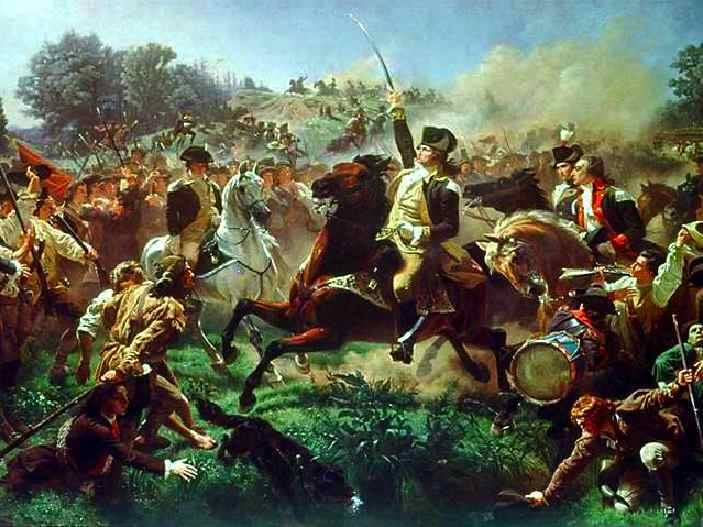
In the rear, Washington was advancing with his staff through a stand of woods. Suddenly he saw a civilian and a fifer coming down the road. He disbelieved them when told the army was in retreat. Then stragglers bereft of gear and weapons staggered past. Soon, an entire unit was seen running away from the front. Washington, now enraged, rallied the men and pushed forward. Soon, he spotted an officer on horseback ostensibly fleeing the battle. It turned out to be Charles Lee.


Washington confronts Lee


“What is all this?” Washington demanded. Lee hesitated at first. Then Lee blurted out a series of incoherent defensive statements about intelligence and the power of the British. That did not go over well. Washington insisted they were facing only a strong covering party of the enemy. Lee replied that the British had greater numbers than previously thought and did not believe it was proper to risk the army. Washington erupted into a tirade unlike anything anyone had seen before, questioning Lee’s bravery. Washington ended the exchange when he saw some units retreating and hurried over to rally them. Lee seemed to have remained in stunned silence for a few minutes.


Washington managed to rally the army


Washington meanwhile rallied the retreating troops, regrouped his forces, and fought Clinton’s regulars to a standstill. The fighting went back and forth as neither side would concede. Despite the burning summer heat, both sides unleashed musket volleys and thunderous artillery. The savage day's fighting ebbed with the dark of night, and both armies collapsed where they fought and slept on their arms. But when the Americans stood at dawn, they found the entire British had beat feet to Sandy Hook and the safety of the fleet. Although a sort of moral victory, Washington was vexed at losing a chance to crush the enemy.


The Americans stood their own against British assaults


The End of the Affair


By the 29th, Washington revisited the issue of Lee and his behavior. In a series of letters, Lee became petulant and unremorseful. When Washington questioned his reason for the withdrawal, the two men exchanged words. Demanding a hearing, Lee was charged with insubordination. A court-martial was convened over several weeks. Lee was found guilty of dereliction and cowardice. His punishment: removal from command in the army for one year. Unsatisfied with the outcome, Lee became involved in several affairs of honor and frequently criticized the Continental Congress for enforcing the sentence. These actions resulted in his permanent dismissal from the Continental Army in January 1780.


Lee once advised that he liked his
dogs better than people


Retrospective


Charles Lee’s quirky personality, arrogance, and narcissism made him very controversial. Yet, for most of the war, he was admired by many in the army and Congress for his experience and professionalism. He has a mixed record, though, and there were times when his loyalty was suspect. But his actions at Monmouth were the result of his awe of the British professionals, fear of getting decisively engaged, and confusion in the fog of battle. I also suspect he was undermined by a lack of respect for Washington, poor chemistry with his subordinate commanders, and lack of confidence in the American soldiers under him. Of these, the third was his greatest failure.


Sunday, June 2, 2019

The 2nd Baronet of New York

Sir John Johnson


It's somewhat uncommon to feature consecutive profiles of Loyalists, but I've been meaning to highlight a member of a family that shaped British–native relations in the mid-to-late 18th century: Sir John Johnson. John Johnson's father was the renowned Agent of the Crown to the Indians of New York. In that role, Sir William Johnson, 1st Baronet of New York, served as the primary intermediary for British interests and managed to establish fairly good relations between the settlers and the Iroquois nations in central New York. This was no easy task, as migrants from New England and other eastern regions sought land, and the Iroquois, known as the most formidable warriors of their time, were not to be taken lightly. William Johnson’s death and the onset of the American Revolution sparked a final conflict between these forces.


Sir William Johnson, 1st Baronet of New York


Thrown into this frontier chaos was Johnson’s heir and hesitant negotiator, John Johnson, 2nd Baronet of New York. The younger Johnson was born on November 5, 1741, at Mount Johnson near New Amsterdam, New York. His mother was a local woman of Dutch descent, Catherine Wysenberk.


Sir John Johnson, 2nd Baronet


French & Indian Fighter


John Johnson spent most of his childhood at Fort Johnson on the Mohawk River. After briefly attending Benjamin Franklin’s College and Academy in Philadelphia in 1757, Johnson returned home to answer the call of war drums. At age 13, Johnson joined his father as a volunteer in the French and Indian War. He participated in expeditions to Niagara and Detroit with him. He also attended most of Sir William’s conferences with the Indians, including the one at Fort Stanwix (Rome), N.Y., in 1768 that established the boundary between encroaching white settlers and the Iroquois.


Sir William Johnson hosted Indian conferences at
Johnson Hall


Indian Fighter


The younger Johnson also performed well during Pontiac’s Rebellion in 1763 when he led a successful expedition into the Ohio territory. Two years later, his father sent him to England to broaden his horizons and establish himself as a man of means and social standing. The journey achieved its goals, and Johnson was knighted by King George III in preparation for inheriting his father’s impressive estates in America.


The younger Johnson distinguished
himself during Pontiac's Rebellion


Gentleman Farmer


Johnson returned from Britain as a strong supporter of the crown and looked down on anyone who dared to oppose royal policies. He settled at Fort Johnson and took Clarissa Putman as his common-law wife. But someone of Johnson’s status needed a proper match, and in 1773 he finally agreed to his father’s wish to marry into the New York aristocracy. Johnson left Clarissa Putman, but he still supported her and their two children. He was now able to marry Mary Watts and brought her to Fort Johnson.


John Johnson settled in at Fort Johnson
after inheriting the Baronetcy


The 2nd Baronet


In 1774, Sir William died. John became the 2nd Baronet of New York and inherited over 200,000 acres along with many tenants. However, he did not follow his father’s wish to become the next superintendent of northern Indians. Instead, John lived as a country gentleman in his grand home—Johnson Hall. Due to his social standing and wartime experience, Johnson was made a major general of the militia just before the Revolutionary War began.


At the outbreak of war, the NY
militiamen would have to choose sides

Loyalist Leader


In the lead-up to war, Johnson expressed Loyalist sympathies and started recruiting from his tenants, many of whom were Scottish and English war veterans. This created a sort of personal militia. Johnson even approached the Royal Governor, William Tryon, with a proposal to organize the entire Mohawk Valley in support of the crown. His actions alarmed the local patriots, and when the time came, he became a target.


Governor William Tryon was a key
figure in the run-up to the American Revolution


In January 1776, the Continental Congress authorized General Philip Schuyler, a well-known New York landowner, to organize an army and confront Johnson to remove the threat he and his followers posed to the Albany area. Schuyler fulfilled his task. Johnson’s supporters and followers were disarmed, and Johnson vowed to remain neutral. Still, the local patriots stayed cautious of his intentions.


Fellow New York aristocrat led
efforts against Johnson


A King's Commission


Tensions rose and suspicions grew over the following months. Fearing arrest, Johnson fled with his family and supporters to Quebec in May 1776. Johnson then offered his services to the Governor-General of Canada, Guy Carleton. Carleton appointed him as a lieutenant-colonel of a new unit, the King’s Royal Regiment. Johnson was instructed to use his connections with the Indians to keep them neutral.


Soldier of the King's Royal Regiment

A Failed Campaign


In the summer of 1777, Johnson joined Lieutenant-Colonel Barry St. Leger on his expedition up the Mohawk River. This was part of a three-pronged attack on Albany to control the New York waterways and divide the colonies. Johnson’s men and Indian allies helped St. Leger lay siege to Fort Stanwix (now Rome, NY). St. Leger learned of a relief column marching west to lift the siege. This militia force was led by Colonel Nicholas Herkimer. Johnson’s Indian allies found the perfect ambush spot near Oriskany, and on August 6, a combined Indian-Loyalist force defeated Herkimer, who was mortally wounded.


The Battle of Oriskany


But when news of another relief column, this time led by Benedict Arnold, reached them, Saint Lager’s forces retreated back to Canada, and Johnson went with him. In a fitting irony, the man who avoided taking over his father's role as Indian Superintendent ended up spending much of his time managing Indian affairs for the British, as many hundreds had fled their lands to escape the destruction caused by American settlers.


The failed siege of Fort Stanwix was
a foretaste of the failed British strategy to split the colonies


Guerilla Warrior


But Johnson also found time to conduct an on-and-off guerrilla campaign in central New York. Over the next three years, he gained notoriety in the Mohawk Valley for his raids involving Loyalist and Native forces. Johnson frequently teamed up with Loyalist Colonel John Butler and Loyalist Iroquois Chief Joseph Brant. This formidable group of crown supporters caused chaos.


Chief Joseph Brant was a key ally
of Johnson, and a tireless fighter for the
Iroquois and the Crown


Perhaps his greatest success was in 1780 when Johnson’s strike force raided and burned settlements at Schoharie, Caughnawaga, and Fort Hunter. He even managed to retake his homestead, Johnson Hall. Johnson’s guerrilla tactics caused significant economic hardship and lowered the morale of the American settlers in the area. However, overall, they failed to have a major impact on the war.


Johnson's Raid was his major operation, but in the
 end, the mix of Loyalists and Iroquois could not
hold central New York


Superintendent General


In 1782, Governor-General Frederick Haldimand appointed Johnson as brigadier general on the American establishment, and by a commission dated March 14, 1782, he named him Superintendent General and Inspector General of the Six Nations Indians and those in the Province of Quebec. In accepting this role, he succeeded his cousin Guy Johnson, who was removed due to financial irregularities. This was a challenging position. The war was ending poorly, not just for the Loyalists who were forced to Canada. Johnson had to explain to the disgruntled Iroquois that much of their land was being surrendered to the Americans.


Johnson would not receive the one
appointment he wanted in later life


 A Canadian Founder


After the war, Johnson returned to England like many Loyalists to file claims for compensation from the crown. When he came back to Canada, he became a leader in resettling Loyalists and Indigenous people at Cataraqui (now Kingston, ON). He did remarkable work for the refugees, to the point where he believed he would be appointed as the first governor-general of the new province of Upper Canada. However, when the position was awarded to the other Loyalist, John Graves Simcoe, Johnson was crushed.


Loyalist leader John Graves Simcoe would
receive the appointment Johnson hoped for


After spending several more years in England, Johnson moved to Quebec, where he was appointed to the Legislative Council of Lower Canada. He became a prominent figure among the United Empire Loyalists and a supporter of Indian rights.


A Last Tribute


Sir John Johnson died in Montreal on January 4, 1830. Johnson is regarded as one of Canada's founding fathers. He received a military funeral attended by a large crowd of friends, relatives, acquaintances, and admirers. Additionally, over 300 Native Americans attended, and Chief Joseph Brant delivered the eulogy. During the ceremony, Brant called him the Indians’ “friend and fellow warrior.” Sir John's body was then taken to Mount Johnson for burial.


Sir John was interred in a family vault
at Mount Johnson


Sunday, April 28, 2019

A Loyal Hillbilly

It has been a while since the Yankee Doodle Spies mentioned the Loyalists – those very proper Americans who remained loyal to the King and Britain during times of political upheaval and bloody war. Usually, these folks were conservative and well-mannered. But they did have their share of tough characters. One of these was a notorious and stubborn orphan from the backwoods of the Carolinas.

Life in the Back Hills


David Fanning was born in Birch Swamp, Amelia County, Virginia, in 1755. In July 1764, Fanning was orphaned. As a result, the young David was bound to Needham Bryan (Bryant), a county justice in Johnson County, North Carolina. The justice provided for his education but was, by Fanning’s account, harsh. Or maybe young David was a bit of a handful. So, in 1773, when Fanning was 18 and of legal age, he left his guardian and moved to Raeburn’s Creek in the western part of South Carolina. There, the young man farmed and traded with the nearby Cherokee Indians. Although life on the frontier was not easy, it was reasonably good for the enterprising young David Fanning.


Fanning in the backcountry


Things started to shift when the American Revolution erupted in 1775. At that time, Fanning was a company sergeant in the Upper Saluda militia of South Carolina. Most upcountry Carolinians sympathized with the crown and viewed the lowland planters and merchants with suspicion. Tensions arose. A delegation from the lowlands forged a fragile truce, which was broken when a local Loyalist was arrested in November. Soon, rumors spread that the rebels were recruiting the Indians to their cause. That was it. After being accosted and robbed by patriot militias, Fanning chose to align with the local Loyalist faction.

Fighting for the King


David Fanning served under Major Joseph Robinson during military operations in western South Carolina. He was part of the force that captured a large Patriot garrison at the key Fort Ninety Six in November 1775. However, Fanning was nearly captured himself in December of that year during the battle at Big Cane Break. Evading the local patriots, Fanning fled to the Cherokee Indians.


The Fort at Ninety Six


Now regarded as a notorious Loyalist, Fanning was captured by the rebels in January 1776. This marked the first of what could be a record 14 times during the war! In some of these instances, he was paroled, but the cunning and relentless Fanning made numerous daring escapes. Between these periods of imprisonment, Fanning demonstrated himself as a ruthless, resourceful, and aggressive Loyalist officer. He tirelessly led partisan units in nearly continuous skirmishes with rebel forces in the region. He was a key figure in the little-known but decisive backwoods civil war that eventually swayed the Carolinians against their British rulers and Loyalist supporters of the crown.


David Fanning made numerous escapes


The Loyalists take a Knee


But by August 1779, most of the Loyalists were losing hope. They had suffered heavy losses, and it seemed like the South would fall to the crown. Many of them, including Fanning, accepted a conditional pardon from Governor John Rutledge. This kept Fanning out of the fighting for several months. Fanning’s many adventures had taken a toll on him. By his own words, he was exhausted, worn out, and looked frail. His numerous wounds and injuries had worn him down. Fanning even agreed to guide Patriot militia units in the backcountry as part of his pardon.


The British capture of Charleston marked a new dynamic in the
southern theater of operations


But things changed when the British shifted their strategy to the south. A British force besieged Charleston, and its fall and occupation led to a British move to secure all the key positions in the state. The decisive defeat of the Continental forces under General Horatio Gates by British General Lord Cornwallis made it clear that the British were here to stay.

The South in Flames


These events reignited the passion of the Loyalists, and they rallied to the cause once more—fanning the flames with them. Bloody civil war erupted again across the southern backwoods, and this time Fanning was at the forefront of the Loyalist effort. With South Carolina under British control and Cornwallis’s army in charge, Fanning and other Loyalist leaders now had a steady flow of weapons and supplies. With the outlook grim for the rebels, Loyalist bands found it easy to recruit and equip fighters.


The Southern Theater would prove Decisive
and violent


This high watermark of Loyalist ascendancy did not last long. One of the American cause’s best generals was sent south to energize the southern theater. Nathanael Green proved a persistent and classic resistance leader. Giving ground when he had to, making stands—successful or not—while keeping his army in the field and active. Cornwallis had to destroy his army. He damaged it, but could not destroy it.


Nathanael Greene's arrival turned the
tide in the Southern Theater

The West is Lost

 Cornwallis would fail to destroy
Greene and make a grave mistake
In his eagerness to pursue the resisting rebel army, Cornwallis used Loyalist units to guard his western flank from Patriot militias threatening it. He dispatched a large Loyalist detachment led by his most experienced counter-guerrilla leader, Major Patrick Ferguson, to disperse the backwoods Patriots. Ferguson was unaware that a large group of "Over Mountain men' was reinforcing the locals. Ferguson was caught on King's Mountain. Surrounded, he fought the hated rebels. The Battle of Kings Mountain was mainly a Loyalist versus Patriot conflict. Defeating the Loyalists shifted the southern theater in the West to the rebels' advantage.


With prospects looking bleak for Loyalists in the West, Fanning took his band and moved east and north to Deep River, North Carolina, where he conducted operations against local patriots. His success led to his appointment as Colonel of the Loyalist militia of Chatham and Randolph counties. For several months, Fanning ruthlessly launched raids throughout western North Carolina. He had now become one of the most feared Loyalist partisan commanders in the region. 


American victory at King's Mountain crushed
the loyal oppositionin the western Carolinas


Guerrilla Days in Carolina

Fanning was a typical guerrilla leader. He would move quickly and strike hard, sometimes with only 12 men. Many of these raids ended with the capture and ransom or parole of key patriot sympathizers and political figures. He took part in about 36 skirmishes in 1781 alone. One of these was a raid on a court session in Chatham County. Fanning’s supporters captured 53 prisoners, including court officials, militia officers, and members of the North Carolina General Assembly.


Fanning's Loyalist militia raised Cain among the patriots


Fanning led the Loyalist militia at the battle at the House in the Horseshoe in the summer of 1781, where he forced the surrender of a Patriot militia force. By the end of that summer, Fanning's notoriety had drawn about 950 Loyalist men to his command. He was ready for the big time.

Conventional War Success… and Failure


With a sizable force at his disposal, Fanning was determined to use it. And he did. On September 12, 1781, he led nearly 1,000 Loyalists in a surprise attack against the rebel forces at Hillsboro, North Carolina. At that time, Hillsboro was the main Patriot base in the region and served as a temporary capital. He overwhelmed the Patriot defenses and captured 200 prisoners, including Governor Thomas Burke. Hillsboro marked his most notable success in the war.


After the victory at Hillsboro, Fanning is ambushed
at Lindley's Mill


But Fanning’s brief success as a traditional force commander did not last long. He led his victorious column, along with prisoners, back to Wilmington. When he reached the area around Lindley’s Mill, a rebel force of 400 under Brigadier General John Butler launched a fierce attack on Fanning’s men. The fighting was intense, and the surprised Loyalist force would have fallen apart if not for Fanning’s personal leadership. He held off Butler’s attacks and managed to bring his column safely to Wilmington, but he was badly wounded in the process. Thanks to Fanning's resolve, the unfortunate Governor Burke was imprisoned by the British Army on James Island near Charleston, South Carolina.


NC Gov Thomas Burke 


Decline in Fortunes


In November 1781, the British withdrew from Wilmington upon news of Yorktown. The war seemed over, but the Loyalists who remained with the colors would not surrender so easily. The bitter civil war left many desperate for revenge and unwilling to compromise or submit to the rebels they despised. Fanning was one of them. He continued leading partisan bands against the patriots. He launched a series of bitter attacks on patriot settlements that persisted into 1782—most of us consider that year one of quiet as the final treaty was negotiated.


Loyalist Provisionals


But Fanning was tired and worn out. The clever backwoodsman saw the signs of change. It was time to go back to a normal life. As a first step toward that, he married Sarah Carr, a 16-year-old young woman from the settlement of Deep River, North Carolina.


Charleston Harbor would provide many Loyalists'
final glimpse of the country the fought so hard to keep loyal


Fanning finally accepted a conditional truce from the local American government and agreed to suspend further military action. Now resigned to his fate and that of his cause, Fanning and his young bride went to Charleston, where he was deported along with other Loyalists to British Florida. Fanning’s success against the patriots and his notoriety as a guerrilla caused the North Carolina legislature to ban him from ever entering the state. This seems a bitter reminder of his accomplishments.

Oh Canada!


Like many other members of the Loyalist diaspora, Fanning did not stay long in his first refuge. After a few months, he traveled to New Brunswick, Canada—one of thousands who moved there for a better life under the crown. His natural leadership earned him a seat in the legislative assembly until he became involved in a shocking scandal in 1800. Fanning was charged and convicted of raping 15-year-old Sarah London and was sentenced to hang. The evidence against him was limited—mainly her testimony—but Fanning had few friends among his Loyalist peers. The fierce man from the hills had brought his fiery ways to Canada. He appealed the sentence, and instead of being hanged, he was banished from New Brunswick.


Canada provided refuge for many Loyalists
after the American Revolution


Fanning proved resourceful when given a second chance. He moved to the small port town of Digby, Nova Scotia. Fanning spent the rest of his life in Digby. He built a comfortable house and engaged in farming, fishing, and shipbuilding. Although he still wanted to return to New Brunswick to settle his financial affairs, his petitions to Thomas Carleton, Provincial Secretary Jonathan Odell, and other officials went unanswered.


Digby, Nova Scotia, was one of many
Loyalist landing places  in Canada


In any case, considering his eight years of fighting and mayhem, the loyal and steadfast David Fanning managed to live to a reasonably old age. He died on March 14, 1825.

A Loyal Life Well Lived?


The tough and wiry, Fanning was a stubborn and determined man in both war and peace. As a Loyalist militia leader, he proved zealous and often highly effective. However, he was neither gentle nor the type of intellectual loyalist, refined and smug, who sat out the war in the secure comforts of New York, Charleston, or England. Instead, Fanning fought tenaciously, fiercely, and sometimes cruelly against former friends and neighbors. Rather than earning admiration, his successes made him unpopular with the privileged Loyalist gentry of New Brunswick.

But the last laugh and irony from this angry and combative former hillbilly was his epitaph in the Trinity churchyard at Digby: “Humane, affable, gentle, and kind – A plain honest open moral mind.”

Colonel David Fanning resting place
in Digby, Nova Scotia


In my take, it should have read: “I’m Loyal – Love it or Shove it.”