Followers

Saturday, October 31, 2015

George Washington, Vampire Slayer!

Excuse the Halloween hyperbole, but now that I have your attention, I can discuss hauntings during the time of the Yankee Doodle Spies. Truth be told, if I had started the action and adventure series with a book titled, say, "The Marching Dead," I would be on easy street today. People enjoy being scared, and they prefer the macabre and horrifying over mundane things like action and intrigue. Just imagine, a tale of a rebel unit massacred while bivouacking at a cemetery. Only this unit of wraiths rises, zombie-like, whenever the Cause needs them. Still imagine a team of clever British officers desperately trying to find a way to stop this phantom army's onslaught, not realizing that silver, not lead balls, would do the trick... What's in your ammo box?


Greenwood Cemetery in Brooklyn, New York


The American Revolution has its fair share of hauntings and spooky stories. Most of these are known only locally, as most hauntings are celebrated in their own communities. Many are tied to specific places... like a Poltergeist-like phenomenon. But one legend has become a national story: Sleepy Hollow by Washington Irving. The original story of Ichabod Crane, the superstitious schoolteacher afraid of the legendary headless horseman of the Old Dutch Church, has haunted both young and old for generations. I remember driving through the story's setting, Tarrytown, New York, with my father when I was a boy. I was about ten. As we drove south on NY 9, he pointed to the church and cemetery and said, "the Headless Horseman of Sleepy Hollow is here, the Hessian's ghost haunts the cemetery," and I felt a chill run down my spine. It was broad daylight in summer. Can you imagine how I'd feel on a dark October night? I don’t think I knew what a Hessian was back then, but he had me at Headless Horseman. Over time, the story grew as new media brought it to wider audiences and stretched the original plot to its limits. It’s been adapted into radio shows, TV dramas, cartoons, and recently a major film (featuring Johnny Depp) as well as a TV series that takes the story even further.


The Headless Horseman is the iconic RevWar Spook


Ringwood Manor
The Mid-Atlantic is full of Revolutionary War hauntings. In a past Yankee Doodle Spies Blog, I discussed the Morris-Jumel House in New York's Harlem and the stories and tales of its haunting. The Van Cortlandt Mansion, Greenwood Cemetery (ground zero for the Battle of Long Island - a place that saw the most bloodshed of the war), are other notable New York sites. Just across the great North River, in Passaic, New Jersey, stands Ringwood Manor. 


This was once the home of General Robert Erskine, who was the geographer for George Washington's army. Later, he ran an ironworks on the property. He's buried near the manor house, and it's said that at dusk, he sits on his grave, gazing at the pond beyond. Some have reported his ghost walking the grounds, carrying a lantern. There are also French soldiers buried nearby, who fought for the American cause. They, too, emerge at night and walk along the pond, speaking in French. The house itself is not the original, but it has its own hauntings dating back to the 19th century.


Erskine's ghost haunts Ringwood Cemetery


New England Nightmare


New England, home of the Salem witch trials a century earlier, is no stranger to tales of the macabre. Boston Harbor’s scenic Long Island is known for one of the most tragic Boston ghost stories. At the end of the American Revolution's actions around Boston, the British still had several ships in the harbor, mainly to evacuate Loyal Americans who wanted to leave before the rebels took control of the city. Onboard one of these ships were William and Mary Burton. The young couple, passionate Loyalists, were among those fleeing. While sailing away from the harbor, a shot from the besiegers' battery on Long Island struck Mary in the back of the head.


Mary Burton's ghost roams
 Long Island Dunes


According to the legend, she lingered for several days in excruciating pain before dying. In her death throes, Mary supposedly asked her husband not to bury her at sea. After she died, William
returned to Long Island to fulfill his love's dying wish.

He wrapped her bloodied body in a red blanket that Mary owned and buried her beneath the island's sand dunes. Her headstone was a piece of driftwood carved with her name. Before leaving her
grave, William swore he would return someday with a proper headstone. He never did. But according to
the legend, Mary still waits for him.

Over the years, visitors to the island have reported seeing a woman with pallid skin, covered in mud,
wearing a scarlet cloak, walking among the dunes. Many have seen blood on her cloak and noticed a
gaping hole in the back of her head, where cannon fire had struck her skull.

Southern Spooks


The South is no stranger to incredible stories, and RevWar hauntings are no exception. The focal point is the site of a major war event, Yorktown, Virginia. In October 1781, a desperate British General, Charles Cornwallis, led his troops hoping the Royal Navy would rescue him from land now swarming with rebel soldiers and their French allies. Prolonged sieges under harsh conditions set the stage for eerie stories that still persist today. 

The anguish and suffering during the siege make Yorktown hauntingly memorable. From “Cornwallis’s Cave on the banks of the York River to Crawford Road – the town is filled with urban legends and ghost stories. Cornwallis’ Cave has no direct connection to Cornwallis, but legend says British troops hid in the cave to escape the constant bombardment by Continental and French artillery.


Cornwallis's Cave


Some legends suggest that the civilian residents of Yorktown took refuge there. Evidence does show that after the war, the cave was probably used by smugglers. It is located along the waterfront. Perhaps they spread haunting tales to keep prying eyes away from their lair? There are still reports that voices can be heard at night emanating from the dark recesses of the cave. Those who follow such stories believe them to be the voices of Revolutionary War soldiers, the moaning of the injured and dying hiding inside.

Myths are to cultures what dreams are to people. Similarly, horror stories are to cultures what nightmares are to individuals. The eight-year war for independence was a nightmare for everyone involved: the Americans who suffered during the rebellion; the Loyalists who lost their homes and property; and the British who lost their empire. It’s perhaps fitting that such a war serves as both a source of myth and horror. Have a spooky Halloween. Stay frightened, my friends.


Saturday, October 3, 2015

Fort William and Mary

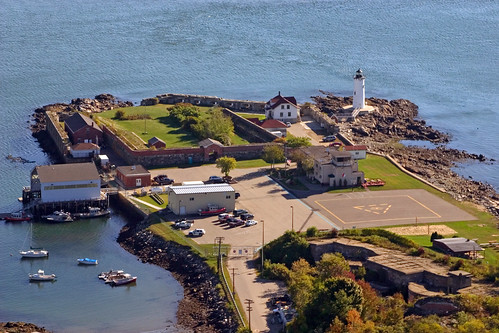
The scenic town of New Castle, New Hampshire, is home to the ruins of Fort William and Mary. Similar to the college in Virginia, the fort was named in honor of the somewhat iconic British rulers associated with the Glorious Revolution. It's ironic that each played a role in establishing the British monarchy in America under the guise of a revolution. However, some argue that the first armed resistance to royal authority started here long before Lexington and Concord.


The Agitation


Royal Governor Wentworth
In May 1774, the closing of Boston's port greatly angered most New Englanders. British authorities insisted that the "salt-water tea" be paid for and forced Bostonians to accept this. In New Hampshire, the Committee of Correspondence vowed to make Boston's fight their own. Royal Governor John Wentworth recognized a radical shift in public opinion and saw a possible threat to Royal authority. He attempted to establish a garrison at his only military post, Fort William and Mary in New Castle. However, the Assembly, now hostile to the British, approved only 200 pounds for the effort. Wentworth appointed an officer and three men to run the fort, showing the King's authority. But the army was too small to prevent a revolution.


The Politics

The Assembly was not deterred by Wentworth's measures. Later that month, they voted to create a second Committee of Correspondence. Wentworth and the Rockingham County sheriff tried to intimidate and shut down the Assembly, dismissing them from the chamber for holding an unlawful meeting. Unfazed, they went to a local tavern, and in that friendly setting, they made plans for a Provincial Congress to be held in Exeter in July. Over the next few months, the situation around Boston escalated from simmering to boiling, and the impact spread across New England like wildfire.


The Action

On December 13th, 1774, Paul Revere rode south to Portsmouth to report the British ban on importing military supplies and that rumors about expected British troops were the worst kind: true rumors. John Sullivan, a Patriot leader and firebrand, just returned from the First Continental Congress, decided to take action. Along with local Patriot merchant John Langdon, he vowed to seize the symbol of Royal authority sitting right under their noses at New Castle. On the 14th, Langdon made his way through Portsmouth with a drummer leading the charge. Once he had gathered a crowd, he addressed them. 

About 400 people joined him, forming a mob that set out to take the powder from the fort. A single volley fired from the fort was answered by some shots from the crowd, but no one was injured. They surged into the fort quickly. Breaking into the magazine, they took about 100 barrels of gunpowder. Overwhelmed, the fort's commandant, Captain John Cochran, quickly surrendered his four-man garrison. This marks Fort William and Mary as one of the first locations of overt action in the American struggle for independence. Some compared it to Lexington and Concord, but because there was no bloodshed, it is less well-known. Still, it was the first organized resistance to the King.


Fort William and Mary 1704


The Take

The following day, John Sullivan led more rebel forces now pouring in from across the colony. They first surrounded the governor's residence, but violence was avoided there, as Wentworth complied with their demands. That evening, December 15th, they returned to the fort and seized all the arms and supplies, including some cannons. This action resulted in the Americans capturing some loot, a tangible gain. This included about sixty muskets, sixteen cannons, and one hundred barrels of valuable powder. The gunpowder was quickly transported inland and distributed among various armed groups in New Hampshire. Some of it may have reached the Patriots around Boston. In a land starved for ammunition, this was a small treasure desperately needed.


Gunpowder from the fort moved inland over ice


The Place

History revolves around a sense of time, people, and place. On a scenic promontory overlooking the ocean, a colonial community driven by perceived injustice left their mark. New Castle is a charming town with about 900 residents. It is also the smallest and easternmost town in the state. Its narrow streets are lined with colonial-style houses. The fort was built in the early 18th century on the site of an earlier fort designed to deter pirates. Its main landmark is the Fort Point Lighthouse, built in 1877 on the site of an earlier lighthouse from 1771. Before the latter was built, the only navigational aid for the rocky harbor was a lantern hung high on Fort William and Mary.


Site of Fort William and Mary today


Saturday, September 19, 2015

The Cavalier Spy

"1776: His army clinging to New York by a thread, a desperate General George Washington sends Lieutenant Jeremiah Creed behind British lines again. But even the audacity of Creed and his band of spies cannot stop the British juggernaut from driving the Americans from New York and chasing them across New Jersey in a blitzkrieg fashion. Realizing the imminent loss of one of the new nation's most important states to the enemy, Washington sends Creed into the war-torn Hackensack Valley. His mission: recruit and train a gang of rogues to work behind British lines."


As you can tell from the lead-in above, my second novel, The Cavalier Spy, is now out. I posted an entire page about The Cavalier Spy on this blog, but a post about it would be appropriate just a few weeks after its release. Those following me on Twitter (@SWOConnell) or on Facebook (S.W. O'Connell) have been bombarded with promos, nuggets, and tidbits. You may thank me later for all that. This work was much more challenging to produce than my first novel, The Patriot Spy. Going into it, I thought it would be easier. But I was wrong.

Writing The Patriot Spy was my first venture, so I had no idea what I was getting into. I had no timeline and only a vague idea of where it would go when I started. The Cavalier Spy, as a sequel, was more challenging. For one thing, I had to remember everything I wrote in the first book to avoid repeating anything unintentionally. Second, I had to repeat enough scenes from the first book. Why is that, you ask? Because I wanted The Cavalier Spy to be a "stand-alone" work. That way, readers who had not read The Patriot Spy would be up to speed. And, of course, I had to do that without giving away any nuggets from the first book. Ice cream headache time!

The other challenge was how to follow the largest battle of the war and all the excitement and intrigue that went with it. How do you make it more enjoyable? As it turns out, that became easier as I went along and got into the plot's rhythm. Things started to happen. I read several new works set in the period following the loss of New York, and before long, I had several interesting things to build the action around. And a new piece of the Revolutionary War struggles to be revealed. To juice things up, I have a multi-chapter flashback that provides more insight into the main protagonist, Lieutenant Jeremiah Creed. As I paced through it, new ideas and characters developed. A fictional town. A British plot. Political intrigue on both sides.

About halfway through the story, I knew how I would end it, with an iconic scene from American history. But you'll have to read the book to learn more about it.

Shameless plug:  The Cavalier Spy is available on Amazon at:

https://www.amazon.com/Cavalier-Spy-S-W-OConnell/dp/1737663651

Sunday, September 6, 2015

The Life Guard


With Labor Day weekend upon us, I am officially concluding the Yankee Doodle Spies summer vacation. But in the spirit of those sun-drenched beach protectors, I’ve decided to blog about the lifeguards. This post isn’t about Baywatch, so you can put away your sunscreen and towels. And don't bother searching for a happy snap of Pamela Anderson and her crew. Even before America had recreational beaches, it had lifeguards, or in this case, The Life Guard. This is about George Washington's Life Guard, to be precise. Readers of The Patriot Spy and its just-released sequel, The Cavalier Spy, have probably noticed that wherever George Washington was, a Life Guard was likely nearby.


Despite fighting a war for independence and liberty, the founders' generation still believed in titles. And just like today, those titles often came with perks. Lieutenant General George Washington was more than just the commander in chief of the Continental Army. He was also the unifying force of the eight-year struggle we call the American Revolution. This wasn’t so much planned as a natural result of his leadership qualities, integrity, and stature. He brought together different classes and sections. He was a symbol. And as a symbol of his acknowledged position as the highest executive in the land, he received the title: "His Excellency." It’s a tribute to Washington’s unique presence and importance that this honorific didn’t disappear when he resigned from military service, at least officially.


The British were well aware of Washington's significance to the cause they aimed to crush. And the Americans knew that the British were aware. Throughout the war, the fear that the enemy might assassinate or capture the "essential man" lingered. But it wasn't long into Washington's command at Cambridge, Massachusetts, that the need for military bodyguards was recognized. On March 11th, 1776, Washington issued the following orders,


The General wishes to select a specific number of men to serve as his guard for himself and his baggage. The Colonel or Commanding Officer of each of the established regiments, except for the artillery and riflemen, will provide four men, from which the required number will be chosen. His Excellency relies on the Colonels to recommend good men based on their sobriety, honesty, and good conduct. He prefers them to be between five feet eight inches and five feet ten inches tall, well-built, and, above all, he emphasizes the importance of cleanliness in a soldier. Consequently, he requests careful selection of men who are clean and tidy. These men are to assemble at headquarters precisely at 12 o'clock noon tomorrow, when the final selection will be made. The General does not require them to be in uniform or armed, nor does he want anyone sent to him who is not fully willing or eager to be part of this Guard. They should be trained men."


Ever conscious of the need to avoid sectional preference, Washington chose a A New England man to lead the special unit: Captain Caleb Gibbs of the 14th Massachusetts Continental Regiment commanded the Guard, but George Lewis, a nephew of Washington, was named the Lieutenant. The explicit mission of the new group was "to protect General Washington, the army's cash, and official papers." Gibbs began reorganizing the unit. He created the motto, "Conquer or Die." The unit had several names. The official name was "His Excellency's Guard" or the "General's Guard." Many enlistees called it "The Life Guards," "The Washington Life Guards," or "Washington's Body Guard." Washington himself usually referred to them as "My Guards." In dispatches and correspondence, Gibbs called himself "Commandant C-in-C, Guards." The force was specially uniformed and outfitted, making it the best-dressed and equipped among all the Continentals. The uniform consisted of a blue coat with white facings, white waistcoat and breeches, black half-gaiters, and a cocked hat with a blue and white feather. The Guard's size varied during the war but generally settled around 180 men, about the strength of three regular infantry companies. It temporarily grew to 250 men during the winter of 1779–80, when the Continental Army was encamped at Morristown, New Jersey, near the British Army.


Life Guard and Traitor
It did not take long for the elite new unit to prove its worth—and its danger. By May 1776, the British evacuated Boston, and, anticipating an attack on New York, Washington began moving the Continental Army south. On May 24th, 1776, an element of the C-in-C Guards set up camp near Richmond Hill on Manhattan Island. Spies recognized the elite unit and understood what it meant. Anticipating Washington's arrival, a group of New York Tories had secretly plotted earlier that month. Their goal was to assassinate George Washington. Luckily for the Americans, the plot was uncovered. The New York Provincial Congress ordered several Tories, including the city's Mayor, David Matthews, arrested. Meanwhile, Washington sent Gibbs and a hand-picked team to arrest another forty conspirators. Disturbingly, some of these were Continental Army soldiers, including members of Washington's Life Guards: Sergeant Thomas Hickey, Drummer William Green, Fifer James Johnson, and Privates John Barnes and Michael Lynch. Hickey, who had previously been jailed for passing a counterfeit note, was entangled in this conspiracy. As often happens, foolishness and ego led to his downfall—he revealed the plot to another inmate, who used the information to improve his own situation. (I believe this is where plot lines for shows like Law and Order or NYPD come from.) Hickey faced a court-martial alone among the conspirators and was found guilty of mutiny and sedition. He was executed in New York before a crowd of 20,000 spectators on June 28, 1776.


Escorting His Excellency


After that fiasco, the Guard went on to serve with distinction for the rest of the war. The Guard's strength at that time was about 50 men. They accompanied Washington to White Plains and took part in the battle there on October 28th, occupying their position on Chatterton Hill. The next day, the entire Army retreated to New Jersey. When their enlistment terms expired, Washington discharged twenty of the Guard on the condition that they would reenlist in the cavalry unit being raised by Lieutenant Lewis, who had been detached from the Guard for that purpose. A small group fought alongside Washington at Trenton during the darkest hours of the revolution. Others were assigned to different regiments to bolster their numbers and morale.


The Life Guard (in helmets) also honored
distinguished visitors to HQ: here Lafayette


During the spring of 1777, as the army emerged from its first winter encampment at Morristown, NJ, Washington ordered Gibbs to procure new uniforms for the unit. Blue jackets and buff facings with leather helmets adorned with medium blue cloth binding and a white plume tipped in blue on the left side of the helmet. However, Gibbs, possibly due to limited supplies, outfitted them with red vests instead of buff. The Life Guards proved their worth the following winter. At Valley Forge, Von Steuben used members of the Guard as his demonstration company for the new American Drill. Von Steuben personally trained them and then sent them to other Continental Army regiments until the entire force was drilled in the new tactics. This transformed the often hapless Continental units into a force capable of facing the British regulars. It also established the Commander-in-Chief's Life Guards as the Continental Army's truly elite unit, not just a group of dandies in the general’s circle.


It is often overlooked that a key mission of the Life Guard was to protect the commander-in-chief's immediate supplies and equipment. Tents, office equipment, and especially correspondence needed safeguarding during the numerous marches made by Washington.
The Life Guards marched with Washington throughout the war. They were at his side during the campaigns in New York, New Jersey, and into Virginia. In 1779, Caleb Gibbs, now a major, was replaced by another New Englander, Connecticut-born William Colfax. Washington promoted the young officer to Captain. Colfax was present at the Surrender of Lord Cornwallis at Yorktown and was allowed by Washington to occupy a prominent position on horseback near him. As the long struggle drew to a close, Washington's Life Guard, now reduced to about fifty men, was furloughed from duty in June 1783 at army headquarters in Newburgh, New York. With the British about to evacuate New York City, the Life Guard was ordered disbanded on November 15th, 1783.


The Life Guard Flag


Sunday, July 12, 2015

One Huck of a Loyalist

Christian Huck is a name only a writer could come up with. So, who is this guy with a name straight out of Hollywood's badboy casting? He was, in fact, a prominent Loyalist during the time of the Yankee Doodle Spies. But he was much more than that. And I am posting this on the anniversary of the day that made him famous—the day he died.

Huck the Immigrant


Christian Huck was born somewhere in Germany around 1747. His origins are pretty vague since "Germany" in the 18th century was not a nation but a region in Central Europe. By the early 1770s, he had emigrated to America and settled in Philadelphia, where he studied law. His law practice mainly dealt with real estate, a profitable yet risky business at the time. He focused on buying and selling property for cash or short-term credit, often on very favorable terms and with security. Because banks were scarce and money was tight, a lot of interesting things could happen in that field. Even George Washington himself invested in land—though that’s a story for another time. Huck became wealthy, joined the Anglican church, and clearly integrated well into society. He worked his way into Philadelphia’s upper class, many of whom were loyal to the crown and remained so throughout the war. Some of these same Philadelphians later got involved with Benedict Arnold. 


Philadelphia was anything but the City of Brotherly Love
during the time of the Yankee Doodle Spies


Huck Goes to War


And so, our German immigrant Christian Huck (sometimes spelled Houck or even Hook) was a Loyalist and remained loyal. When the war broke out, he, along with other prominent Philadelphians, suffered for their loyalty. Harassment by the Whigs, vandalism, public humiliation, and ostracism were common. Huck’s mentor, Isaac Hunt, was paraded through town and forced to admit his Tory “misbehavior." Christian Huck stayed in Philadelphia despite these hardships. He continued working in real estate, buying and selling property. He also helped members of the Tory cause, associating with and aiding those targeted for their loyalty. When the British Army occupied Philadelphia in September 1777, Christian Huck offered his assistance and joined the army. Some might say he joined the wrong side. Because in 1778, the war intensified in its demand for retribution. That year, the Pennsylvania Supreme Court published a list of people accused of knowingly and willingly aiding the enemies of the State and the United States by joining the British Army in Philadelphia. The list included "Christian Hook, attorney at law.” Everyone on the list lost their property for committing high treason. They faced severe penalties, including all “pains and penalties.” This was not a good list to be on!


Captain Christian Huck


Huck followed the British Army when it abandoned Philadelphia and headed to New York. By June 1778, he had raised a company of thirty men for provincial duty and was granted a captain’s commission in a Provincial corps. This corps, under the command of Major Andreas Emmerick, included many men of German descent. Emmerick's corps had participated in several battles in 1777 and 1778, earning a reputation for distinguished service in the Hudson Highland Campaign, skirmishes around Kingsbridge (The Bronx), and the Battle of Monmouth. In 1778, the corps was expanded with new recruits and grew to include two troops of light dragoons, one infantry company, one rifle company, and three chasseur companies, one of which was Huck’s. Chasseurs (French for hunters) were trained to skirmish and fight in small bands. 


Banastre Tarleton

Huck Moves South

Soon, the corps was divided, and one light dragoon troop was assigned to Huck to attach to the British Legion under the notorious Lieutenant Colonel Banastre Tarleton. Note: Tarleton plays a cameo role in my upcoming novel, The Cavalier Spy. However, by the end of 1779, Huck’s troops were simply known as part of the British Legion. Huck took part in the infamous Battle of the Waxhaws in May 1780. He was involved in the destruction of Hill's Ironworks, an important Patriot supplier and the headquarters for Hill's Militia. The war in the South intensified in 1780. Huck became known for fighting in the Carolina backcountry. He earned the nickname “the swearing captain” because of his reputation for profanity (ach du Scheisse). He was also brutal with the Presbyterians in the region, perhaps because many of his Whig tormentors in Philadelphia were Presbyterian. Some said they reminded Huck of the rebels who had harassed him, accused him of treason, and seized his property. He certainly had reasons to seek retribution for his lost possessions. And of course, he was an Anglican. There might have been a religious reason behind his hatred. Tasked by Cornwallis with recruiting supporters for the Loyalist cause, Huck ravaged the backcountry, threatening and plundering civilians, destroying properties, and earning a reputation for cruelty for himself and his men. 


Back Country Mayhem


In June 1780, Huck was sent from Rocky Mount toward Fishing Creek to disperse rebels believed to be gathering there. Along the way, he recruited 300 Loyalists and burned all the homes and plantations of known Patriots in the Catawba Valley of upper South Carolina. When he reached Fishing Creek, Huck led his men to the Presbyterian Church to seize the pastor, a known Patriot named John Simpson. When they found Simpson had fled, they torched his parsonage. Huck continued his rampage to the New Acquisition District along the North Carolina border, now York County. There, he destroyed two key rebel assets: Whites Mills on Fishing Creek and William Hill's Ironworks. The latter was a vital source of rebel cannon and ordnance. As Huck caused chaos in the backcountry, about 500 loosely organized Patriot militias responded. They launched a sweep through the woods and fields to hunt down the marauders.


Christian Huck continued his rampage and, in early July, arrived at the Bratton Plantation. Desperate to find the proprietor, Colonel William Bratton, a prominent Whig leader, Huck ordered Martha Bratton to reveal her husband’s location. At that time, Bratton was leading his militia in pursuit of Huck and other Tory bands. When Martha refused, she was threatened with a reaping hook (a fitting play on his name). Only the intervention of another Loyalist officer saved her. Note: Incivility, not to mention violence, against women of a certain status was considered particularly vile during the time of the Yankee Doodle Spies. If nothing else, this made him what the Germans call a Schlechter Knabe (Bad Boy).


Martha Bratton stands up to Huck's interrogation


The Mayhem Continues, or A Woman Scorned


Undaunted, Huck moved on to the Williamson Plantation. After capturing five Whig supporters hiding in the corn crib, Huck and his officers took up quarters in the main house. His force of around 120 men set up camp nearby. Because they quickly seized the plantation, they believed there was no threat. As a result, he posted only a few guards and did not place pickets or patrols outside the perimeter. Unaware to Huck, Martha Bratton had sent a family slave named Watt to find her husband, who was with his unit on Fishing Creek. Watt told him where Huck was headed. In a double blow for Huck, a crippled spy named Joseph Kerr also found Colonel Bratton. Based on Kerr and Watt’s intelligence, Bratton planned an attack on Huck’s men.


Bratton's Plantation Today


Icing the Huck


At dawn on July 12, 1780, the rebels moved against Huck’s unsuspecting encampment. There, 250 Patriots under Bratton surrounded the plantation in the cover of darkness. The few guards never saw them coming. When the Loyalist forces were awakened by the attack, Bratton's men shot them down. War in the Carolinas was brutal! Surprised by the morning assault, many of Huck’s men fled into the woods. Huck himself was shot off his horse while trying to rally his men. The Patriots tracked down and killed those of Huck’s forces that had escaped into the woods. Some reports estimate that 85 percent of the Loyalists were killed, wounded, or captured. That’s quite impressive, considering the battle lasted only a few minutes. The Patriots lost only one man killed and another wounded in the skirmish. As for Huck, he died from his wounds and was buried right there. In a final insult to the immigrant Loyalist, his body was later used as a medical skeleton. 

Huck defeated in a battle that lasted minutes

Defeat Significant?


In a word, yes. The Loyalists' morale in the Carolinas declined due to numerous recent losses. Many Carolinians began to see British rule as inevitable. After Huck's defeat, the fact that a Patriot militia group decisively defeated part of the British Legion rekindled the people's support for the cause. The Legion was a formidable and feared force in the Carolinas: well-led, well-equipped, and highly motivated to show no mercy. They were known as the "Huns" of their day and dominated most engagements. Therefore, the defeat of part of the Legion strengthened their resolve against British attacks and skirmishes. This shift ultimately influenced the course of the war. Over time, the British grew frustrated with their efforts to pacify the Carolinas. That frustration led Cornwallis and his troops on a long march to a place called Yorktown. But that's another story (or three). The legacy Christian Huck left behind was one of Loyalist brutality and Patriot revenge. It also highlights the intense hatred on both sides of the American struggle after five years of fighting.


Sunday, May 31, 2015

The Liberty Pole

Liberty Pole as Symbol


For many colonists, the patriot cause in fighting for independence from Great Britain represented liberty. Patriots believed that representation in government, economic freedom, and personal liberties defined true freedom. However, this view was not shared by everyone. The fight for American liberty involved an ideological struggle between neighbors and brothers, and in some regions, just as many people loyal to the King as there were patriots. Many doubted which side was right or wrong. These individuals were undecided at first. 

Unfortunately, just as today, some people were indifferent, and many shifted their loyalties from patriot to Loyalist depending on who controlled the area. Not everyone believed the best way to achieve individual freedom was to establish a new government. Many colonists thought that, as Englishmen, the King would protect their rights, and anything else was considered treason. To some, the Liberty Pole symbolized freedom; to others, it represented treason. Stark differences.

Liberty Tree: Boston
But the Liberty Pole actually started as a Liberty Tree. The original Liberty Tree was a large elm tree in the South End of Boston. Angry Boston citizens first used it around 1765 as a rallying point during the Stamp Act crisis, when the British Parliament was threatening a tax on paper goods like legal documents and newspapers. 

The Sons of Liberty, an organization founded in Boston by Samuel Adams to protest British taxes, saw their membership grow quickly across the colonies. As the movement spread from Boston, the Sons of Liberty continued the practice of gathering under a large tree, which was present in many village greens, and these came to be called Liberty Trees. 

Their goal was to shape public opinion and coordinate patriotic actions against Britain. In towns without a sufficiently large tree, patriots sometimes erected tall poles to symbolize a Liberty Tree. These became known as Liberty Poles. Most Liberty Poles were set up in town squares, the centers of civic life, often as tall as 100 feet. These squares served not only as gathering places but also as symbols of resistance to British rule.


Erecting a Liberty Pole G, Goshen, New York


In New York City, where some of the earliest battles of the Revolutionary War eventually took place, there was an ongoing fight over the Liberty Pole. In May 1766, when news spread that the Stamp Act had been repealed, the Sons of Liberty celebrated by erecting a Liberty Pole. It became a rallying point for large meetings and a symbol of the American struggle. In June, two regiments of British soldiers arrived in New York City and were housed in the upper barracks. These troops cut down the liberty pole on August 10th. A second and third pole were erected and also taken down. A fourth pole was raised and encased in iron to prevent it from being cut down again.


First Liberty Pole in New York City

Liberty Pole as Place


And that place would be New Jersey, in a time long ago: before the Sopranos, Bridgegate, or even the Turnpike. In present-day Englewood, New Jersey, there stands a pole erected in 1964. It is believed to be at or near the site of an earlier pole erected almost 200 years earlier to celebrate the repeal of the Stamp Act. This event was more than symbolic, as it served as a catalyst for further action in the defense of liberty in the Hackensack Valley, a hub of political agitation and warfare. The "English Neighborhood" (which included today's City of Englewood) in New Jersey was part of the larger Patriot and Loyalist conflict in the state. Even the name, "English Neighborhood," reveals the division among the people in the valley. The Dutch settlers named it to highlight its position as the settlement closest to the foreign English in Manhattan, then called the Island of New York.

Even before the fighting started, neighbors disagreed on issues of religion and government. The spot in the "English Neighborhood," known to all the colonists (including George Washington) as Liberty Pole, would become a key symbol of liberty. But on November 20th, 1776, the Liberty Pole witnessed a time of great despair. The valley was a strategic crossroads connecting New York City, Long Island, the west, the Hudson Highlands, and the south. 

Along with the waters of the Hackensack, the Kings Highway ran north-south before turning west. At this junction stood a tavern that became the focus of much social, economic, and political activity. In 1776, the inn’s owner, a passionate patriot, followed the example of the Liberty Boys in New York by erecting a Liberty Pole topped with a gold Liberty Cap to celebrate the repeal of the Stamp Act. Known as the Liberty Pole Tavern, the inn was a center of activity, and the surrounding area was also called Liberty Pole.


Watching the Hudson from Fort Lee


Although no major battles occurred here, events crucial to the American cause took place in Englewood. On the night of November 20, 1776, British General Lord Cornwallis crossed the Hudson River with nine thousand men to what is now Alpine, aiming to capture the rebel forces at Fort Lee, commanded by Nathaniel Greene. General Washington, aware of the plan, led his army from Fort Lee down the King's Highway to the Liberty Pole Tavern, then veered onto what is now Teaneck Road toward New Bridge, where he managed to cross the Hackensack River. 

By summer 1776, the fight for independence with real armies pushed closer to the English Neighborhood. The British drove George Washington's army from Long Island and lower New York across the North (Hudson) River. For a time, Washington made his headquarters in Hackensack, trying to organize a defense against a British attack up the Hudson River. He ordered the arming of forts on both sides of the river, Fort Washington and Fort Lee. On November 16, 1776, the British captured Fort Washington in upper Manhattan, leaving Fort Lee unsupported and allowing the Royal Navy free movement up and down the river. The fall of Fort Lee as a defensive outpost was imminent. 

Washington realized he would be vulnerable to a British attack and faced the decision to move his declining force of 2,000 men across the Hackensack—by ferry or via the one bridge located in River Edge at New Bridge. During this crisis, Washington was criticized, and his army’s morale was low. Recognizing Washington's predicament, British Commander Lord Howe permitted Lord Charles Cornwallis to launch an amphibious attack on New Jersey, just miles north of Fort Lee. 

They moved on the night of November 19, 1776. The next day, Washington learned of the British invasion and quickly rode to Liberty Pole. There, he planned to meet General Greene, the commander of Fort Lee, and his men, who were evacuating the fort. The British were about 2 miles away in Tenafly. Most of the soldiers marched together (down what is now Grand Avenue in Leonia) until reaching Liberty Pole and Washington. Amid the chaos of the retreat, some soldiers were ordered to secure the


Cornwallis moves across the North River (Hudson)  to the Jerseys


As the exhausted American army withdrew from the Jerseys, the area around Liberty Pole entered a different kind of warfare—one that symbolized the fight for independence even more than the pitched battles described in most accounts. It became a war of political intrigue, espionage, sabotage, and small skirmishes. Raids were carried out. Loyalties were questioned, as many of the Dutch were at best ambivalent about the struggle. Spies operated and were caught. Chaos and disorder spread throughout the area around Liberty Pole. 

The conflict simmered continuously, flaring up into brief, fierce bursts of action whenever the armies returned. Liberty Pole became the site of a notable skirmish later in the war. In 1779, a tired but resilient band of troops under the famed General "Light-Horse Harry" Lee courageously defended against Tory attacks as a Patriot force returned from a successful raid on the Paulhus Hook, what is now Jersey City. The raid on the Hook was only partly successful, but Lee's boldness and his successful retreat across the Hackensack River earned praise from General Washington and gratitude from Congress.


Light Horse Harry Lee's rear guard fought
bravely at Liberty Pole


In 1780, Washington’s Army was in the Hudson Highlands, and the forward lines around Tappan drew the attention of spies from both sides, Tory bands, militias, Continentals foraging, and various bandits. A British pardon lured American deserters from the Highlands, giving British intelligence a wealth of information. In one recorded act of reprisal, a raiding party of American militia marched down the valley to Liberty Pole and captured several deserters. These examples illustrate the type of fighting that took place around the pole and throughout the valley during the long fight for America's independence.


Sunday, May 10, 2015

Mother of Her Country?

Mary Ball

Happy Mother's Day


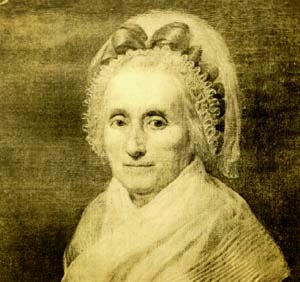
I was not going to write a blog for Mother's Day, but I thought at the last minute a small piece on George Washington's mother would be in order. The lady, born Mary Ball in 1708 or 1709 in Lancaster County, Virginia, is a fitting subject. She was the only child of Joseph Ball and his second wife, Mary Johnson.  Joseph Ball was a leader in the militia and a ranking justice on the Lancaster County court, making him a member of the gentry class.  He was also elected to the House of Burgesses in 1695 and served until 1702.  Mary Johnson was a young widow who caught the eye of Joseph Ball.  At the time of their meeting, she was most likely a housekeeper for the Ball family.


Mary's Early Life


Mary had good prospects of being born into Virginia-landed folk. For the first few years of Mary’s life, she was raised at her father’s plantation, “Epping Forest.”  But life would turn on her at an early age. Her father died when she was three years old and left Mary three slaves, fifteen cattle, a good feather bed, and 400 acres of land up the Rappahannock River. Mary's mother remarried Captain Richard Hues, and they moved to Cherry Point on the Potomac River.  When Hues died, he left all of his assets to his wife and her children. But Mary Hues herself died when Mary Ball was twelve. Mary was then placed under the guardianship of Colonel George Eskridge, a lawyer, under the terms of her mother's will. Although under
Colonel George ESkridge
Eskridge's guidance, Mary continued to live at Cherry Point with her sister Elizabeth Bonum, not with her guardian.  Mary had three horses and numerous acres of land by age eighteen. As part of the landed gentry, she learned social graces and to ride, handle a boat, and shoot. Clearly, her streak of independence was forged during this period. When John, her half-brother, died in 1721, Mary also received 600 acres in his will.  At age 14, Mary had acquired over 1000 acres to her name. She was a prime marriage prospect for any up-and-coming man.


Marriage: Better Late than Never?


Mary married Augustine Washington, of Pope's Creek, Westmoreland County, on March 6, 1731. Augustine was a widower with three children. He was also a leader in the area of iron mining enterprises. In fact, he mined the land adjacent to Mary's. Eskridge's sister in law, Jane Butler, was Augustine's first wife. When she died suddenly, Eskridge recommended that Mary be Augustine’s second wife, due to her immense wealth and assets. Augustine and Mary were married in 1731 at Yeocomico Church in Westmoreland County.  Augustine and his company gained Mary’s land and mined the 600 acres in Stafford County.


Augustine Washington
Mary Ball Washington


Mary and Augustine moved to his family home called Pope’s Creek Plantation, also located in Westmorland County.  Mary was twenty-two when she married Augustine.   Twenty-two was considered somewhat old for a woman (unless a widow) to marry during this time period.  Because there is a nine-year period of Mary’s life for which historians have little or no information, it is unclear why Mary wed at an older age.   In 1732, Mary gave birth to her first child, George, named after George Eskridge, at Pope’s Creek Plantation. Although the circumstances of her life were somewhat typical in that age of early deaths and many remarriages, Mary Ball Washington's would stand out from all others in Virginia: she gave birth to " the man of his age."


A Complex Woman and Mother


Virginia has several places
Dedicated to Mary Washington

I shall save a recounting of Washington's upbringing by his mother, and his very unusual relationship with her. For now, it can be said that Mary was a strong-willed person. Stubborn to the point of ornery. She loved her son to a fault. But she did not coddle him. As she aged, her personality grew more flinty, and although Washington loved her dearly, he stayed clear of her, especially during his time of ascent and the struggles of the times. I may save the second part of this tale for... Sigmund Freud's birthday...


Mother of Her Country?


Still, in the spirit of Mother's Day, we will close with a quote from Mary Ball Washington about the Revolution's success, and her son George, in 1784. Since Washington was the man of his age, his mother was, despite her traits, the mother of her age. And since a mother's greatest joy is to dote on their children, her understated compliment is telling: "I am not surprised at what George has done, for he was always a good boy."

The Mother of Her Country?