Followers

Sunday, February 23, 2014

The Indispensable Birthday

Why His Excellency?


First in War and in Peace
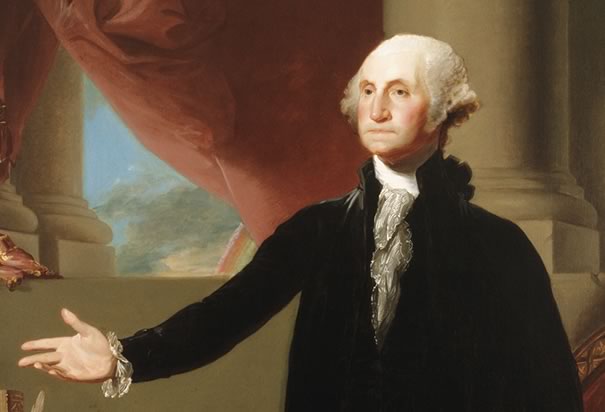
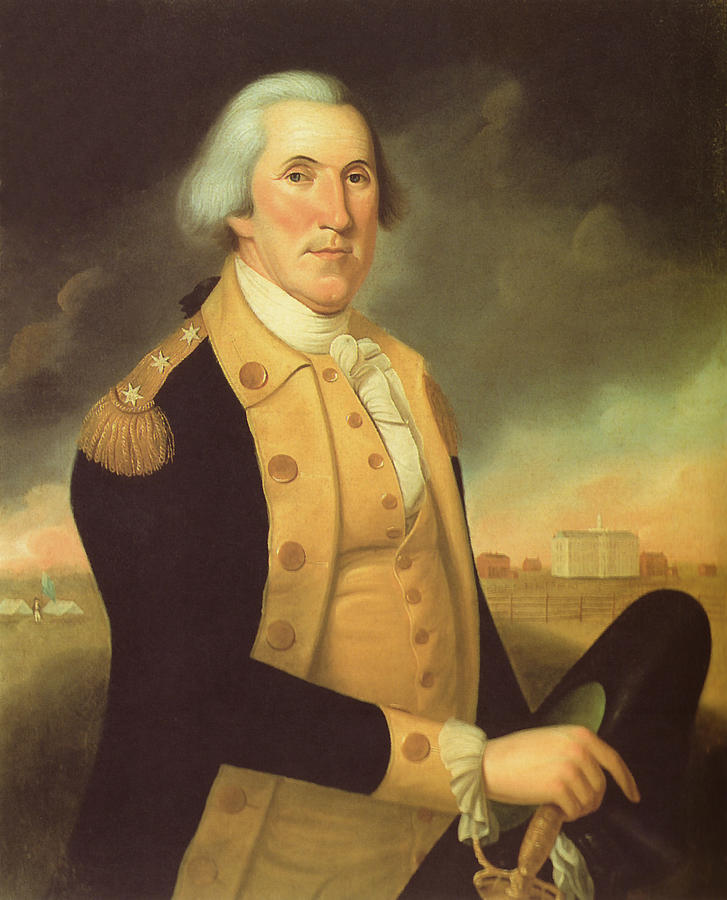
This will complete the "trifecta" centered around His Excellency George Washington, so it is fitting that I write this piece on his actual birthday - February 22nd. Several years ago, when I began thinking about writing espionage novels, I settled on the American War for Independence as the stage. The how and why I discussed in an earlier blog that I encourage folks to go back to and read. Although military history was my lifelong avocation, I had not read very much about the American Revolution. So, prior to laying out the plot for the first book in the Yankee Doodle Spies series, I began reading as much as I could on Washington and the glorious cause.  I must admit, I soon became impressed with the man, and before too long, I realized what a great and indispensable leader he was. Washington lived in an age of brilliant thinkers, writers, and leaders. One of his strengths was knowing he was not in their league but that he had the abilities they needed for the struggle to succeed. He knew his place, and he took it. And if you look at the timeline of events in his life, it seems as though he had prepared himself from his earliest days.


 Service and Speculation


Washington was driven by the two things that drove most of his Virginia planter class:  the acquisition of land and service to his nation.  In the case of the former, this involved expanding his family's relatively modest holdings through a brilliant (but also romantic) marriage to Martha Parke Custis.  This made him one of the wealthiest landholders in the Old Dominion. Still, he was constantly looking to expand his holdings. He engaged himself in schemes that involved lands from The Great Dismal Swamp in Tidewater, Virginia, to tracts on the Monongahela River and beyond to the Ohio. Both efforts involved him in controversy. But even as he fought for his nation and later as he led it, his thoughts and efforts always returned to land and farming. Washington's early days as a surveyor sort of connect those two dots. Surveying gave him an eye for land and the opportunity to assess land and eventually acquire it. It also led him to the service of Virginia's Governor Dinwiddie, which resulted in missions to the west to assess the land and, more importantly, the activities of the French. This led to further service as a militia officer and an event that caused a world war (Seven Years/French and Indian).  That world war led to the economic, military, and political factors that brought about the American War for Independence.


More than a Military Leader

As the notion of a break with Britain became more widespread, the now-prosperous planter Washington committed to the cause. I won't go into the reasons except to state that his personal experiences led him to believe Americans would never be seen as equals to their British cousins. He realized that British policies were holding America back in economic ways, most especially with regard to trade and westward expansion. So it circles back to land once more. Washington became a military commander in chief (and later President) almost by acclamation. His stature (physical and otherwise) and earlier military achievements marked him as a top contender for high command.  His selection over some other highly qualified candidates was also political - bringing Virginia and the South solidly into the now-open rebellion. But a brilliant choice it proved to be. During the long struggle, Washington developed a persona of nobility and honor that won him international fame.  His stoic resistance to Britain's lightning strikes in New York and Jersey kept the cause from an early collapse. Not a brilliant tactical nor even strategic planner, Washington managed to evolve as a commander, adapting and improvising as he frustrated British efforts to destroy him, his army, and the rebellion. He was savvy enough to place his trust in a few confidants who ably helped him along, Greene, Knox, and Lafayette.  Washington's earlier political, business and farming experiences did prove a boon, as his greatest challenges were logistics and politics. Washington was constantly communicating with a mercurial and weak Congress as well as state leaders who had their own agendas.  He settled the numerous disputes among the officers as well.  He suppressed more than one mutiny as well as a "cabal" of senior officers set against him. He survived attempts on his life. He built the Continental Army, and it became more vital to the unity of the nation than the Continental Congress. As did he. He became the nucleus and the gravity that kept the nation together. During the eight-year struggle, he was the nation.


The less iconic crossing of Delaware


Legacy


Washington was the first chief executive who wasn't  a
monarch, king, duke, or emperor
Yet, at the earliest opportunity, he gave it up. In December 1783, when the last British ship departed New York, he said farewell to his officers (at the renowned Fraunces tavern) and headed south to render his final report to Congress and turn over his sword. He immediately rode on to Mount Vernon and resumed the life of a planter. However, the failings of the Articles of Confederation and his experiences dealing with a weak central government during the war led him to join the effort of writing a new constitution. He was not a brilliant writer, thinker, or philosopher, but he did have certain ideas that he lent to the discourse.  But mostly he provided a rallying point and served as the president of the constitutional convention in Philadelphia. His character and his presence kept the proceedings from devolving. They kept the members' eyes on the ultimate goal: a government that would "promote the general welfare and provide for the common defense..."  The italics are mine. Later, as President, the experiment that was America could have failed. That it didn't was a testimony to him. Washington steered the infant republic through treacherous domestic and diplomatic waters.  A nation with a Chief Executive over a Republic, not a monarchy, had never been done before. Everything he did as President was a first, and so many things we find routine in government today - he had to figure out as he went along. How much executive action was just enough?  How do you deal with Congress, the cabinet (which he created), the press, or the people?  How to provide that leadership without the crown and scepter wielded by every other national leader before him? Yet he sustained it for eight precious years allowing for the young Republic to grow roots. And then, once more, he simply walked away. He gleaned no wealth for his service.  Indeed, Mount Vernon was a shambles, and his other holdings dissipated. No million-dollar book deal.  No paid speaking engagement or other fat cat deals. When war with France threatened under John Adams he agreed with accepting command of the army. But otherwise, farm life and greeting and entertaining numerous well-wishers carried him till his death.   Throughout his military and government service, Washington had many detractors. Cynics always waited for the other shoe to drop: exploitation of power, creating a kingship, declining to give up power and position.  And many admirers wanted him to do so. Implored him to do so. The fact that he did not sets him apart from any other person in similar circumstances in history. And it is what made him, His Excellency, the indispensable man of his nation,  his age, or any age.


The indispensable man found his farm indispensable


Sunday, February 9, 2014

Birthplace of an Icon

The Man from  Pope?


Okay - I made a really bad pun linking His Excellency to His Elvisness.  George Washington was actually born on a small tobacco plantation near Pope's Creek, Virginia. Not exactly Hope, AK. Since this is his birth month I thought I'd do a few short blogs to fill some of the blanks on his early days.


The reconstructed house today
Washington's great-grandfather settled the plantation in 1657 at the original site on Bridges Creek but the family later acquired more land on nearby Pope's Creek.  That is where the first section of the house in which George Washington was born was built. The house was erected before 1718 but his father later enlarged it. This was a familiar pattern for home dwellers in 18th century America. The home was again enlarged and by the mid -1770s had grown into a ten-room house, known as "Wakefield". The original house was destroyed by fire and flood on Christmas Day, 1779, and never rebuilt. But some thirty-two graves of Washington family members contained in a cemetery plot. These include Washington's half-brother,his father, grandfather, and great-grandfather.


Life on the Farm


Tobacco plantations required hard
labor by slaves to prosper
Was NOT kinda laid back. To keep a plantation from the debtors' hard work by all was the norm. All meaning the slaves, of course.  Washington's father cultivated tobacco on his several plantations, which was labor-intensive, involving the work of enslaved Africans and African Americans. By the time George Washington was born, the population of the Virginia colony was 50 percent black, most of whom were enslaved. An estimated "20 or so" slaves worked on the small tobacco farm at Popes Creek, during the time that Washington lived there.


How did they get there?


Well, by boat silly. In 1657, an English merchant ship sailed up the Potomac River, anchored in Mattox Creek, and took on a cargo of tobacco. With her new load, the ship ran aground on a shoal and sank. During the delay, a young officer, John Washington, His Excellency's great-grandfather became friends with a local planter, Colonel Nathaniel Pope. He became smitten with Pope's daughter Anne.  So instead of leaving when the ship was ready to set sail John Washington stayed behind and married Anne. This marks the beginning of the Washington family in America.  Colonel Pope gave the newlywed Washingtons a sweet wedding gift - 700 acres on Mattox Creek four miles to the east.  John Washington eventually expanded his land holdings to 10,000 acres.  In 1664, he moved his family to a property on Bridges Creek.  John's son Lawrence was born in 1659. He inherited most of his father’s estate.  Lawrence had a son named Augustine in 1694. Augustine inherited some property from his father but acquired more on his own. His holdings eventually included a sprawling plantation on Pope’s Creek.  Somewhere along the way, he acquired an iron furnace near Fredericksburg.


Moving on Up


The Potomac, that is. The Popes Creek property had a small house that Augustine expanded into a middle-sized manor house.  It was here that George Washington, the first son of his second marriage, was born on February 22, 1732.
Young George lived there until 1735 when his father moved the family further north to a plantation called Little Hunting Creek. Later, Little Hunting Creek would be given a new name: Mount Vernon.

Sunday, January 26, 2014

The Birthday Present

Celebrating Washington's Birthday


Birthday Boy and Commander-in-Chief


King George III

Believe it or not, there was a time when George Washington's birthday was not a celebrated federal holiday. Wait a minute, that time would be... now! In this blogger's humble opinion, His Excellency is more than worthy of a day for him alone and not shared with 40-something other chief executives. He was the first.  And the first is always (OK, usually) special. But Washington was more than special. He was the essential man of his age. With the exception perhaps of King George III and his inner circle, that was the considered opinion of most of the world (America and Europe). Later, even George III had some lauding comments on Washington eschewing absolute power and kingship. In 1879, the US Congress honored our first president by closing government offices in Washington, DC, on  February 22nd. Curiously, this had nothing to do with the budget. It was the first holiday honoring a particular American citizen, and it was celebrated on his actual birthday, not the Monday of. Back then, the holidays were about commemorating something meaningful, not just another 3 day weekend. In 1885, Congress expanded the holiday to include all federal offices and activities.


A Special Birthday Present


In 1931, the Chief of Staff of the Army, Douglas MacArthur, submitted a recommendation to Congress intended to present the first commander-in-chief with a very special 200th birthday present: the awarding of a "new" medal to recognize soldiers injured in combat. On February 22, 1932, Washington's 200th birthday, the U.S. War Department announced the creation of the "Order of the Purple Heart." 

General Order No.3 announced the establishment of the award, which would have a likeness of Washington:

"...By order of the President of the United States, the Purple Heart, established by General George Washington at Newburgh, August 7, 1782, during the War of the Revolution, is hereby revived out of respect to his memory and military achievements."

By order of the Secretary of War:

Douglas MacArthur

General, Chief of Staff


But why was this so special after all? 


 The First Award


Biographers and students of George Washington know that he is the author of many firsts, both in the military and later in the presidential and political arena. The sobriquet, First in War, First in Peace, First in the hearts... was literally true. This was the logical result of Washington's place and time in our nation's founding and the leadership he showed through eight years of war, the establishment of the US Constitution, and eight years of the world's first presidency. The list of things established by him in the military, civil and governmental spheres is impressive. One of these firsts is the nation's first military award. The award, originally called the Badge of
Washington's Headquarters, Newburgh, NY
Military Merit was established by Washington when he served as the commander-in-chief of the Continental Army as the long war for independence was coming to a close. That order, issued from his headquarters at Newburgh, New York, stated it would be a decoration consisting of a purple, heart-shaped piece of silk, edged with a narrow binding of silver, with the word Merit stitched across the face in silver. The badge was to be presented to soldiers for "any singularly meritorious action" and permitted its wearer to pass guards and sentinels without challenge! I like that last perk. Does cutting the line at TSA count?


On August 7, 1782, this general order established the Badge of Military Merit:

"... The General ever desirous to cherish virtuous ambition in his soldiers, as well as to foster and encourage every species of military merit directs whenever any singularly meritorious action is performed, the author of it shall be permitted to wear on his facings, over his left breast, the figure of a heart in purple cloth or silk edged with narrow lace or binding."

Original Badge of Merit Replica


The honoree's name and regiment were also to be inscribed in a "Book of Merit." As it turns out, only three Revolutionary War soldiers are known to have received the Badge of Military Merit: Sergeant Elijah Churchill, 2nd Continental Dragoons; Sergeant William Brown, 5th and Sergeant Daniel Bissel, 2nd Connecticut Continental Line Infantry. Possible Yankee Doodle Spies connection: 2nd Continental Dragoons included Lieutenant Colonel Benjamin Tallmadge's unit - Washington's spies. Unknown if Sergeant Churchill was a member of that element, but it is likely.


The Legacy


It did not take long for the Purple Heart to evolve in scope and purpose. On May 28, 1932, 138 World War I veterans were conferred their Purple Hearts at Temple Hill in New Windsor, NY. Temple Hill was the site of the New Windsor Cantonment, which was the final encampment of the Continental Army in the winter of 1782-1783. At first, the Purple Heart was exclusively awarded to Army and Army Air Corps personnel. Still, in 1942, President Franklin Roosevelt allowed the Navy to award the Purple Heart to Sailors, Marines, and Coast Guard personnel. Later that year, the Purple Heart was made available for posthumous award to any member of the military killed on or after December 7, 1941. The original Purple Heart was awarded for meritorious service. But with the creation of the Legion of Merit in 1942, the award of the Purple Heart for meritorious service was discontinued and is now awarded to any member of the Armed Forces who has been wounded or killed in designated combat activities.

Today's Purple Heart


Saturday, January 11, 2014

Climate of Independence

Baby, It's Cold  (or Hot) Outside


This isn't about global warming (also known as climate change). This blog focuses on the weather, an often overlooked factor by some who study military history. However, serious warfare students understand that weather can often—and did often—play a crucial, if not decisive, role in military operations. 

There are many examples: Crusaders overwhelmed by intense heat in Palestine, German divisions frozen outside Moscow and Stalingrad, or Napoleon's invasion halted by an early winter. The list goes on. Perhaps the most decisive and specific instance of weather affecting warfare was the typhoon that sank the Mongol fleet preparing to invade medieval Japan—the Kamikaze, which gave its name to Japan's WWII suicide attacks.


The invading Mongol fleet destroyed by the
"Divine Wind" that saved Japan


Weather's Impact


Like any other war, especially one lasting eight years like the American War for Independence, the weather was bound to influence events. Since our First Patriots and the British didn't have a modern weather system, they had to rely on an almanac, early barometers, or local knowledge of past weather patterns. But mostly, they simply had to react to the weather as it happened. That could complicate things when unusual or unexpected weather shifts occurred. 

Year after year, across all four seasons, rebels and redcoats dealt with extremes of rain, snow, heat, and fog—as well as tides, ice formations, and winds. The weather was unpredictable, sometimes helping one side and hindering the other, and sometimes hindering both. Savvy commanders often sought to utilize the weather to their advantage or mitigate damage caused by its extremes. The weather sometimes shaped the Revolutionary War just as much as political, economic, or logistical factors.

The Heat of Battle


During the Battle of Long Island in 1776, the hot and oppressively humid weather likely played a role, which may have been one reason the long march around the Americans occurred at night. When the humidity turned into violent thunderstorms, both armies were slowed by mud and poor visibility, making the use of firelocks nearly impossible. The stormy weather and shifting tides prevented the Royal Navy from cutting off Washington's forces on Long Island. Washington used the weather to his advantage and slipped away during the stormy night. 

The early morning fog also blocked the British from seeing his retreat until it was too late. Weather, combined with decisive and heroic action, truly saved the Continental Army. The Battle of Monmouth was fought in unusually hot and humid conditions, too. This slowed the British column and gave Washington the chance to catch them as they marched across New Jersey. 

Washington's surprise attack at Germantown might have stopped Howe's plan to capture Philadelphia, but this time, the heavy morning fog confused the American attackers, and the British were warned and rallied. Later in the war, in the southern theater, hot and humid weather influenced Cornwallis's decision to abandon his shrinking army of baggage and heavy equipment, even heavy clothing, as he desperately tried to catch the clever Nathaniel Greene in the Carolinas. We know how that ended.


The Continental Army retrograde shielded by a summer storm


General Frost

Much more widely remembered are the cold campaigns: Nathaniel Greene's men dragging desperately needed cannon through the snowy mountains of New England to help win the siege of Boston. The winter at Valley Forge is iconic. 

But Washington's Christmas crossing, despite biting cold and gathering ice floes, is just as significant. The weather prevented two of his divisions from crossing, but his main column used it as cover to surprise the Hessian garrison at Trenton. The cold winter weather also caused the British to go into "winter quarters" earlier than the successes of the 1776 campaign and the nearing victory.


The weather helped with the element (sic) of surprise at Trenton


Less well known is the winter war fought in the Jerseys after Washington moved to Morristown for his winter quarters. Instead of a well-earned rest, it was the British who endured hardships as they struggled to gather supplies. The militias, and later the continentals, ambushed forage parties, attacked relief columns, and bushwhacked couriers. The British commander Lord Howe suffered casualties he could not easily replace - and gained no military advantage.


Cold Winter at Valley Force was
only one of many, and not the worst


Perhaps the campaign most affected by the cold is the least known: the 1775 invasion (liberation?) of Canada in twin attacks across America's harsh and rugged northern frontier. Colonel Benedict Arnold led several hundred men through the wilds of Maine, while General Richard Montgomery led a column through upper New York towards Montreal. The weather turned cold earlier than usual that year. Launching a northward invasion in the fall left the Americans suffering through rapidly cooling weather that plagued them all the way to Quebec. 


General Montgomery


The weather hampered both expeditions as each column battled through a mix of ice, snow, and rain. Over six inches of snow flooded Arnold's column in a single night in late October. The weather alone had severely weakened the invasion forces by the time they met near Quebec in early December. With more freezing weather approaching, Montgomery decided to attack Quebec rather than lay siege to the city. 

Hoping to use the weather to their advantage, the Americans launched an attack during a severe snowstorm. However, the blinding snow caused chaos during the assault, which ended in failure and resulted in the deaths of Montgomery and the wounding of Arnold. Arguably, two of America's best commanders were lost to General Frost.


Saturday, December 21, 2013

Winter Gamble

Darkness Descends


December 1776 was truly a month that tested men's resolve. The British had been pressing the Continental Army since their invasion of Long Island in the summer. The "victory" at Harlem was the closest the struggling Americans came to stopping Lord Howe's advance. The only thing standing between Washington and an early British victory that could end the rebellion was, well, Lord Howe. His smart strategic moves, well-executed naval landings, precise tactics, and professional sieges characterized Howe's offensive. However, his slow movements allowed Washington to repeatedly slip free.


Cornwallis crossed with five thousand crack troops to begin
the rout through the Jerseys


Winter Quarters

Lord Cornwallis
 By late December, Washington's army was safe across the Delaware River and prepared to defend the nation's capital, Philadelphia. He had fewer than 2500 effective troops, and that number would soon decrease as many enlistments ended in January, with the much-needed replacements not arriving until early the next year, if at all. 

The Continental Army lacked supplies of all kinds, especially
clothing- not just winter gear, but any clothing at all! However, Washington had help from Howe, who halted General Cornwallis's 5,000 crack troops at the Delaware. Washington's men had confiscated every civilian boat for miles along the river, forcing Cornwallis to wait for the British pontoon trains before crossing. 

Meanwhile, Howe, believing Washington was defeated, ordered his army into "winter quarters," and he himself hurried back to New York to be with his mistress. Cornwallis's wife was reportedly ill, and he headed to New York to catch a ship to England before winter made crossing impossible. To guard his New Jersey holdings, Howe left brigade-sized garrisons at Princeton, Brunswick, Bordentown, and Trenton.


An Army at rest and an Army formed

General John Sullivan
As soon as he escaped Cornwallis' onslaught, Washington began to think about his next move. Congress abandoned the capital and fled to Baltimore. Congress also offered him near-dictatorial powers, which he refused. Then, the help he had counted on, and had previously dismissed, suddenly arrived. General John Sullivan, returned from British captivity, led the division of General Charles Lee across the Delaware and joined Washington near Yardley, New Jersey. 

Washington then decided to proceed with his plan; he would gamble on a surprise attack against the British garrisons closest to the Delaware: Bordentown and Trenton. Washington's bold gamble required meticulous planning, daring, and a bit of luck. His first stroke of luck was Sullivan's arrival. 

The second was his ability to persuade the troops to extend their enlistments long enough for his plan to succeed. Washington personally met with the men, and his sincerity and apparent dedication to them and the cause swayed just enough. 

The third factor was the weather, and the last was maintaining the element of surprise during a period when not only Loyalists but even discouraged patriots might betray him to the British. Spies were everywhere.


The Crossing

Washington concealed his movements from Loyalist spies and led his army to McGonkey's Ferry on the evening of December 25th. The weather was cold with snow flurries, but the river had not yet frozen over. The crossing began after dark, but one delay followed another, throwing off Washington's schedule. He planned to march about nine miles downstream and surprise the Hessian garrison commanded by Colonel Johan Rall at dawn. The critical element was the guns. Henry Knox assured him he could get all 18 cannons across. However, the snow increased in intensity, and ice floes started to form. With each wave of boats crossing in the darkness, the risk grew. Yet, Colonel John Glover's Marblehead sailors, along with the renowned Gloucester Regiment, outperformed even the heroics of Long Island. A delay in crossing would not mean crossing denial—at least at McGonkey's. Further downriver, two other divisions of Pennsylvanians, under Generals Ewing and Cadwallader, were supposed to cross and take Bordentown, as well as assist at Trenton. But the ice floes thickened to the point where neither division could cross that night. This part of Washington's plan had failed.


The Miracle


Washington's forces did not fully cross until late at night. Then, they began the night march in two columns—one along the river road and the other, which Washington joined, moving further inland. The men, cold, wet, and exhausted, struggled across rugged, rocky, and wooded terrain. With limbs frozen and nearly blind from the elements, the soldiers used patches of white paper to guide them in the dark.


All the time, Washington hoped the other columns could cross without being detected and that the Hessians would not be alerted and waiting. His worst fears were confirmed in the first case, but his greatest hopes came true in the second. Arriving well into the early morning light, the Americans were surprised to find the small town still asleep and the weather clearing. The sound of a cannon signaled the two-pronged attack. 

Surprised, the Hessian professionals formed up as best they could to meet the invaders, but within an hour, the battle was over. Rall, the enemy commander, was mortally wounded, and his men soon surrendered. Not a single American died, and only a few were wounded. Washington's gamble succeeded... but his winter campaign was only just beginning.


Continentals rush a Hessian gun to open the battle


Sunday, December 8, 2013

Gambling through Defeat and Victory

The Gambler


Apologies to Kenny Rogers, and no, His Excellency did not have a gambling problem. Although, as a landed Virginia planter, he was no stranger to money won and lost at the horse race or whist table. Ever the champion of order and integrity, Washington knew that excessive gambling was problematic. He is quoted on the subject: "Gambling is the child of avarice, the brother of iniquity, and the father of mischief." But during the time of the Yankee Doodle Spies, it was sometimes a necessity, at least on the field of battle.

The Gambler


The North and Early Success


Even as he adopted a risk-averse Fabian strategy for the war, Washington understood that a successful commander must be willing to take calculated risks. Since his army was almost always outnumbered and outgunned, the need to take risks arose frequently. In Boston in 1775, Washington took three significant chances: outfitting ships to challenge the British Navy, dispatching troops to Canada, and sending a small force to capture Fort Ticonderoga and its formidable artillery. 


Guns of Ticonderoga


The Canada campaign failed, and the navy's efforts highlighted the need for a Continental Navy, but Ticonderoga was taken by a surprise attack. This victory gave the Americans control of the largest fortress in the colonies and, more importantly, the heavy guns the Continental Army needed to make the siege of Boston a success.


The Middle Brings Failure


After Boston fell, the British threatened the middle states (or colonies, as you prefer) with an attack on New York. Not yet the largest city in North America, New York was strategically important because of its location and its excellent harbor. Additionally, New York had a larger Loyalist base than New England. Washington hurried his forces south in anticipation of a sea invasion. When the British took Staten Island, Washington risked dividing his forces and deployed about a third of his army on Long Island to stop an expected phased approach to capturing Manhattan. 

The result was a severe defeat, as the vastly outnumbered forces on Long Island only escaped total destruction by taking the risk of a night move through a storm while the enemy was nearby. Two principles of war were abandoned out of desperation. Washington also gambled in the secret war — sending the unready Captain Nathan Hale behind British lines and launching the "wonder weapon" (not) - the submarine Turtle. 

The last gamble in New York was leaving a sizeable force of valuable troops at the fort named Washington on upper Manhattan. This was done to keep a foothold on the island, with the hope of retaking it later. However, the result was the loss of the fort and its troops, who could have been more useful in the upcoming campaign for the Jerseys. 


Americans faced overwhelming British forces at Long Island

The South Brings Triumph


That area would be south (some might say central) Jersey. Most Americans are familiar with Washington crossing the Delaware, and a few know it resulted in a victory at Trenton. But few understand that this unlikely win was one of Washington's biggest gambles. His forces were exhausted and demoralized after a chaotic retreat across the Jerseys. Washington's army abandoned Fort Lee to General Cornwallis and hurriedly moved from Hackensack through Newark, New Brunswick, and Princeton. 

In December, Washington managed to get his small force across the Delaware to safety in Pennsylvania. After a tough year of fighting, with barely fifteen hundred underfed and poorly equipped soldiers and a demoralized nation ready to give up the glorious cause, Washington's situation was dire. Enlistments were ending, supplies were scarce, and a panicked Congress had fled the capital, Philadelphia. To make things worse, the British captured Washington's second-in-command, General Charles Lee, in a daring cavalry raid. Those were the times that tried men's souls, and the whole world thought the end was near.


General Howe

 Nobody would have blamed Washington for taking his small forces into winter quarters and trying to come back in the spring. That's what the British commander was expecting and doing himself. To the alarm of many of his senior officers, General William Howe put his army into winter quarters just when he had Washington beaten. 

Brigade-sized units garrisoned Princeton, Trenton, and Bordentown, while the rest of Howe's army remained in or near the comforts of New York. Luckily, Lee's division made it to Pennsylvania without their commander, giving Washington the boost he needed to try a risky gamble to save the revolution from ending that winter. How he pulled off this gamble will be our next discussion.

Sunday, November 10, 2013

First Patriots, First Veterans

In the Beginning


Society of the Cincinnati Crest
Before the Veterans of Foreign Wars, before the American Legion, and even before the Grand Army of the Republic, there was... the Society of the Cincinnati. The Society of the Cincinnati is America's oldest patriotic organization, founded in 1783 by officers of the Continental Army and their French allies who fought together in the American Revolution. Its mission is to promote knowledge and appreciation of American independence and to foster fellowship among its members. During the 18th century, Republican Rome was often seen as the model for an ideal society. So, not surprisingly, the Society was named after Lucius Quinctius Cincinnatus, who left his farm to serve as Roman Consul and held the title Magister Populi (with temporary powers similar to those of a modern-day dictator). He took lawful dictatorial control of Rome to lead the war effort. Once the battle was won, he returned power to the Senate and went back to tending his fields.

A Band of Brothers


Henry Knox
The Society's Founder
The idea of forming a society of officers originated with Major General Henry Knox, the chief of Artillery for the Continental Army. He viewed it as a way to strengthen the bonds among the army's officers, the "band of brothers," many of whom endured eight years of hardship during a struggle often considered hopeless. As the commissioners in Paris worked to set the terms of the peace treaty, Washington's main army stayed north of New York as a safeguard against a last-minute surprise attack by the British. The Continental Army was still poorly equipped, fed, and paid, and unrest among soldiers and officers grew. Therefore, the idea of the Society was to help unite the officers with each other and with the new nation.


A Society Formed


The first meeting of the Society took place in May 1783 during a dinner at the Verplanck House in Fishkill, New York. It was chaired by Lieutenant Colonel Alexander Hamilton, arguably one of the most organized men of his era! The members agreed to stay in contact after the war. Membership was generally restricted to officers who had served at least three years in the Continental Army or Navy; it included officers of the French Army and Navy, with membership passing to their eldest male heirs. Notably, members of the much larger state militia forces were not eligible to join, which later caused tension and opposition towards the Society. Officers in the Continental Line who died during the war were also eligible to be recorded as members.

First Patriot Controversy 


During its founding and the period immediately afterward, the Society faced distrust from many Americans, especially those who became the core of what would later be Thomas Jefferson's Republican Party. It was seen as the beginning of an aristocratic class aiming to make George Washington a king or dictator. The fact that members had to be direct male descendants of Continental Army officers did not impress most Americans. George Washington himself was aware of this and hesitated to take an active role in the organization that chose him as its president. Therefore, Henry Knox often stepped in when needed. Nonetheless, Washington served as the first President General of the Society of the Cincinnati from December 1783 until his death in 1799. His support for the Society's interests, along with his reputation, helped establish it during its early years. His backing and advice against aristocratic appearances were vital when there was strong opposition to the Society. Washington's leadership kept the Society stable and provided guidance during the first sixteen years of its existence.


The Society Today


Today, the society is a nonprofit organization dedicated to educating people about our nation's founding and promoting an appreciation of the principles of the American Revolution. Headquartered at the impressive Anderson House in Washington, DC, the society operates a small museum and library. It hosts a variety of public educational events, including lectures and book signings, concerts, themed wine tastings, and children's programs. These events explore aspects of the American Revolution, the society's history, and Anderson House, serving as an important part of its educational mission.

Anderson House