Followers

Saturday, April 26, 2014

The Sword

Cold Steel


This blog is about cold steel: more specifically, the sword. Despite the increasing use of firearms, blades remained a vital part of military life during the era of the Yankee Doodle Spies. Although Britain and France produced their own blades by the mid-18th century, the finest still came from countries with a long tradition of forging finely tempered steel—such as Spain, Germany, and Italy. During a time when firearms were primitive, slow, and inaccurate, combat with cold steel at close range could be decisive. And the sword was undoubtedly the most versatile close-quarters weapon: effective in melee, ambush, or siege. The sword held both practical and symbolic significance. Primarily, it was a straightforward weapon, easy to maintain. It could be wielded by foot soldiers or cavalry, and it could kill, cut, and maim.

Symbolic


Throughout most of history, the sword has been a symbol of leadership and distinction. This reached its peak during the Middle Ages when the sword became a symbol of knighthood. Knights were anointed and welcomed into the brotherhood of arms with a sword. Later, at least in Europe, carrying a sword was seen as a sign of a gentleman, worn on various occasions by civilians and military personnel alike. Although by the mid-18th century civilians rarely carried a sword, it remained a special symbol in military circles. Its symbolism influenced its use in warfare as the 18th century progressed. A sword might be drawn as a salute, a signal to prepare for action, or returned to its scabbard as a sign to end fighting.

Weapon of Choice


Before the development of the socket bayonet, every military man carried a sword of some kind. The infantry, artillery, and, of course, cavalry all carried swords of various types for close combat. However, as ring-mounted or socket bayonets became more common, the need for a sword alongside them decreased, at least for the infantry. By the time of the American Revolution, only sergeants and officers in the infantry carried swords, which remained symbols of authority and weapons. There were exceptions, such as the Highlanders and German mercenary regiments. Artillery crews and cavalrymen still carried swords; in the case of artillery, swords were used for close-in fighting if the guns were overrun, while cavalrymen kept swords as their primary weapon of action.


Cold steel could still be decisive


Let's talk about the main types of swords used during the time of the Yankee Doodle Spies. This is just a brief overview, not a detailed or official account.

Infantry Sword


The infantry sword, sometimes called a hanger, was a short sword used for close combat. Usually about 25 inches long. By the time of the Yankee Doodle Spies, such swords were mostly carried by American and British infantry sergeants. The hanger had a long, slightly curved blade and a short metal pommel covered by a small round handguard attached to the butt of the sword by a small metal knuckle guard. The hangers carried by infantrymen were inexpensive, simple weapons that worked well in bloody hand-to-hand fighting by ordinary soldiers. Marines also carried the hanger.


Short Saber


Used by many officers in combat, the blade was about 30 inches long. It was used for cutting or thrusting. These weapons could be simple or ornate. In some cases, they were family treasures, handed down from a father to a son on his commissioning.


German Jaegers

Hunting Sword


Originally a sidearm for hunters, the hunting sword was a short, cut-and-thrust weapon used by the German Jaegers, American riflemen, and officers on both sides. Sometimes called the cuttoe, it lacked knuckle and handguards and served as a brutal, bloody weapon for American militias as well. The blade was about 28 inches long and could be curved or straight. Jeremiah Creed carries a version of this in the Yankee Doodle Spies.


Small Sword


By the time of the American Revolution, these were mostly carried by civilians or officers, not with troops. Light and thin, rapier-like in appearance, it was suitable for quick thrusts.


Cavalry Sword


Mounted troops carried longer, heavier blades, usually about 35 inches long. They could be edged, but most were curved in America. They typically had a heavy hilt for maximum protection during mounted combat. A trained dragoon could slash an opponent or drive the point home with an extended arm, much like a lance. The saber in the hands of a cavalryman had a strong psychological effect. Just the sight of a cavalry formation wielding sabers could often cause all but the best-trained and bravest infantry to run for safety.


British Dragoons

Naval Cutlass


Most people recognize the cutlass from pirate movies. However, the cutlass was actually the seaman's version of a short saber. It was single-edged, heavy, and featured an expanded hilt to provide maximum protection. Though not suitable for dueling, when wielded by a strong sailor, these rough yet effective weapons could smash, crush, slice, and cut.


The Ultimate Symbol?


As mentioned earlier, the sword was a practical weapon with symbolic significance. Perhaps the clearest example of this symbolism is the classic "surrender." Whether on ships at sea, in great fortresses, or on the battlefield, a commander often surrendered his personal sword as the ultimate sign of submission. That act was almost always accepted graciously and conveyed respect to the surrendering forces. Therefore, the sword represents a range of meanings—from signal to start a fight to signal to lay down arms and yield. In this way, the sword was a unique weapon of its time.



Saturday, April 12, 2014

A Blog about a Blog?

Finding the First Maryland 400


The heading recalls the famous Seinfeld episode where they were trying to sell a TV series to NBC. The concept was a show about nothing! Of course, it was anything but that.  I was going to take a pass on doing a blog this week as it is, after all, Easter week. But I received a post from a blog I follow and I decided to review the Blog as it directly connects to The Patriot Spy, book one in the Yankee Doodle Spies series. So this week we have a blog about a blog!

The Blog


Several months ago, a Facebook friend sent me a link to a Blog established by the State of Maryland Archives.  The Archives commissioned a research project on Maryland's First Continental Line regiment called "Finding the Maryland 400."  As the Blog's home page explains:

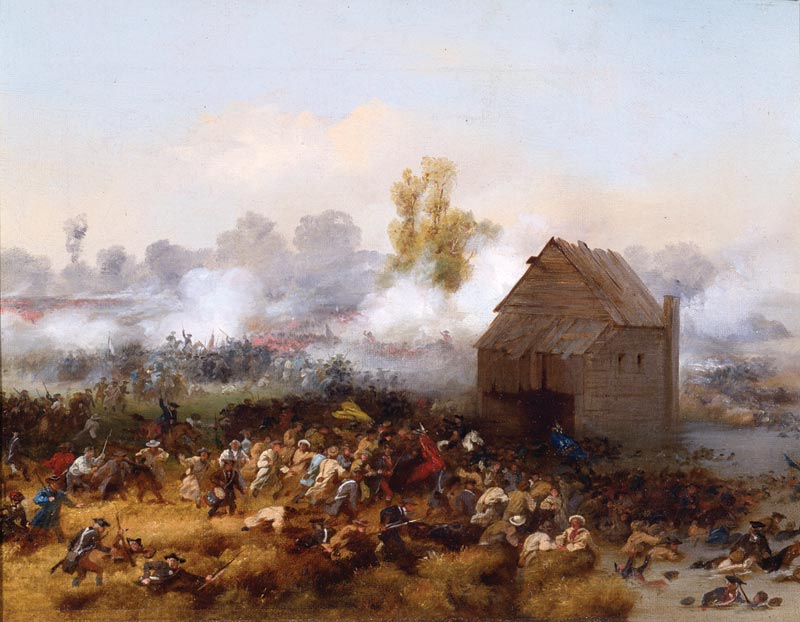
The attack of the Maryland 400 
"During the Revolutionary War, men from all over Maryland joined the Continental Army to fight the British. In August of 1776, a group of these men under Col. Smallwood were sent to New York to help defend the city from an attack; the ensuing conflict is remembered as the Battle of Brooklyn (or Battle of Long Island). The battle was a resounding defeat for the Americans under the command of Gen. George Washington, and they were forced to retreat and give up the island. The story of the Maryland 400 goes that during  these
events, 400 of Maryland’s soldiers were sent to cover the retreat from the field and bravely threw themselves at a much stronger and better positioned British force repeatedly. Though they succeeded in buying enough time for the retreat, they suffered heavy losses, perhaps over half of their number. Who exactly these men were has remained unknown, with little to commemorate their actions in the battle."

So in the summer of 2013, the Maryland State Archives and the Maryland Military Department, Office of the Adjutant General, the Maryland Military Historical Society, and other partner groups hired some interns to research the identities of the First Patriots who served in the Maryland 400 at the Battle of Long Island. Their goal was to create an accurate list of the Maryland soldiers who participated in the battle and write biographies about some of the men. The chronicles the research progress as well as new discoveries.


The Design


The blog is well designed and appealing.  The key sections are:

William Smallwood
Updates - These are articles about individuals or events the research has uncovered or that otherwise relate to the Maryland 400. The latest discusses Larkin Dorsey, a sixteen-year-old from Anne Arundel County who enlisted in the Ninth Company of the First Maryland Regiment. Readers of The Patriot Spy might recall my fictional Lieutenant Jeremiah Creed originally commanded the Light Company but later led men from several companies, perhaps even the Ninth. Larkin's  father asked Lieutenant Colonel Francis Ware to keep an eye on Larkin Dorsey."  Apparently, such fostering was common in a time when people were linked by bonds of family and place. As the post explains... "Ware was second in command of the Regiment. Ware, who did not have children of his own, agreed to take on the responsibility for young Larkin. It should be noted that both Smallwood and Ware missed the seminal action on Long Island due to other duties and arrived at the end of the engagement. Major Mordecai Gist led the attacks.

Biographies - This is a list of members of the 400 with links to their biographies. Among them are Smallwood, Mordecai Gist (who has a role in The Patriot Spy), and Ware (mentioned above).  The biographies are listed by the company, a nice touch.

Mordecai Gist
Roster - Although not fully complete, this section provides a very comprehensive roster of those identified as members of the unit. The gaps in understanding who served and fought are explained, as is the paper and field strength of the unit when it fought. There is a search capability included.

Interactive Map - This is my favorite part of the blog. Everyone has to be somewhere and the researchers do a really nice job geospatially portraying the movement of the members of the 400 based on pension records, unit rolls, correspondence, etc. As more data is uncovered and added, this will prove a fun and easy research tool. One can note quickly, for example, that several members migrated to the reaches of Tennessee, Kentucky, Ohio, and Pennsylvania after the war, indicative of the new nation's trend west that ended (ironically) when the Brooklyn Dodgers moved to Los Angeles. The original Brooklyn Dodgers clubhouse was a building at the center of the battle in which the gallant 400 fought.


The Maryland Monument in Prospect Park


The Rating


Those who want to see for themselves (and let us know via this blog) can go to directly to the Blog, which is on Word Press (can I mention another blog platform?):  http://msamaryland400.wordpress.com/about/
You do not have to be from Maryland or even a Revolutionary War, or even a history buff to appreciate and enjoy "Finding the Maryland 400" Blog. Although still a work in progress, based on what the researchers have put together so far, and the quality of the display, I give "Finding the Maryland 400" a full Five Fifes


Sunday, March 30, 2014

Second to None


This blog discusses one of the last senior officers to fall in the campaign that ended the war: Alexander Scammell. There are many First Patriots in what I call the "second tier" of fame (but not importance). The "first tier" includes those most Americans learn about in school and in popular history: Washington, Greene, Knox, Von Steuben, Lafayette, Marion, Hamilton, and others. Like in all wars, the American War for Independence had many lesser-known figures, many of whom played very important yet less celebrated roles crucial to the war's ultimate success.

Alexander Scammell


Accomplished in Peace


John Sullivan

Alexander Scammell was born in 1744 in Milford, Massachusetts. His father died when he was six, and he and his brother went to live with a minister until he attended Harvard. After graduating from Harvard in 1769, he taught school near Plymouth, Massachusetts. In 1772, he moved to Portsmouth, New Hampshire, where he engaged in surveying and exploring the lands of the Royal Navy Timber. He also taught school at Berwick and occasionally assisted in making surveys for his Topographical Map of New Hampshire. It’s likely that these activities gave Scammell an eye for the land, which would prove useful in the military. Despite these diverse interests, Scammell eventually decided to study law (go figure), and in 1774, he went to Durham to study under John Sullivan, a prominent attorney.


A Call to Arms


By that time, New England was caught up in war fever, and Sullivan, along with Scammell, became part of it. Scammell participated in a raid organized by Sullivan against the British outpost Fort William and Mary in December 1774. This likely prepared him for an active role in the upcoming conflict. He was appointed a major in the 2nd New Hampshire Regiment, part of Sullivan's Brigade, and served during the siege of Boston and later in the ill-fated invasion of Canada, where Sullivan played a controversial role. Sullivan's brigade returned to Fort Ticonderoga by mid-July 1776, and Scammell became the dedicated aide de camp to the fiery general. 

At the Siege of Boston


However, in September, he was sent to New York City and fought in the Battle of Long Island. As Washington's army regrouped after losing New York, Scammell was appointed Assistant Adjutant General for Charles Lee's division, which was often divisive. A month later, in November 1776, he was promoted to colonel and soon took command of the 3rd New Hampshire Regiment. Since the regiment was still forming, Scammell joined the 1st and 2nd regiments under Colonel John Stark, another Tier 2 First Patriot, as they moved south to join Washington's army on the west bank of the Delaware. He crossed the Delaware with Washington and fought in both the Battle of Trenton and the Battle of Princeton. At Princeton, he helped rally the troops and turn what was nearly a defeat into a victory.


Long Island 1776 Battle Pass


From  Line Officer to Staff Officer to Counter-Spy


In June 1777, he commanded the 3rd New Hampshire Regiment at Fort Ticonderoga under Major General Arthur St. Clair. But St. Clair abandoned the fortress to the advancing British forces under General Burgoyne. Nevertheless, the regiment's escape allowed it to fight at Saratoga, where Scammell distinguished himself at Freeman's Farm and Bemis Heights. Just two days after Burgoyne's surrender, the regiment marched south to winter quarters at Valley Forge. 

At Burgoyne Surrenders at Saratoga


There, Washington appointed Scammell as the Adjutant General of the Continental Army. Scammell clearly demonstrated unique military and organizational skills to earn such a key position when the army was at its lowest point. In an interesting twist of Yankee Doodle Spies, Scammell was appointed as the executioner for the British spy, Major John André, in October 1780. Scammell became so upset over this task that he requested and received another field command. Aside from the espionage connection, one of the themes in Yankee Doodle Spies is protagonist Jeremiah Creed's desire to leave espionage and return to a line command. The connection, however, is purely coincidental.


Fall of Duty


In early 1781, Scammell was appointed commander of the 1st New Hampshire Regiment. However, in the spring of that year, he was assigned to lead a light infantry detachment that became known as Scammell's Light Infantry. This elite unit fought at King's Bridge (The Bronx) and served as the vanguard for the Continental Army's historic march to Yorktown. Upon its arrival, it became part of The Light Infantry Division. 

As the decisive campaign of the war neared its end, Colonel Alexander Scammell seemed destined for fame. But on the morning of September 30th, Scammell was serving as Field Officer-of-the-Day. This role made him responsible for sentries, scouts, passage of lines, or anything requiring immediate action. The trapped General Cornwallis had decided to strengthen his defense lines by abandoning his outer works around Yorktown. 

Yorktown


At dawn that day, Scammell's pickets discovered an abandoned redoubt near the road to Williamsburg. Recognizing a potential opportunity to advance the siege, the former surveyor led a reconnaissance of the recently abandoned British fortifications. It cost him his life. As he advanced on the outpost, he became separated from his scouting party. Then he spotted a cavalry patrol. In the mists, he thought it was American, but it turned out to be Tarleton's dragoons. 

Tarleton's Dragoons


Banastre Tarleton was a notorious British officer whose men were known to give little quarter. The horsemen surrounded Scammell, and during or after his surrender, the brave New Englander was shot in the back. His men could only watch as their wounded officer was taken into captivity at Yorktown. The British surgeons treated Scammell as best they could. Due to the seriousness of his wound, Cornwallis soon paroled him. He was sent to Williamsburg (now in American hands) to recover but died on October 6th, just weeks before Yorktown fell to the Allies.


Legacy Denied


A little personal background to share about the noble patriot. Scammell was tall for his era, over six feet with pale eyes. He had a straightforward manner that endeared him to his troops, his peers, and most of all—George Washington. Scammell had a great sense of humor and famously entertained the commander in chief with his tales. 

Up until the end, Alexander Scammell served his country selflessly. He had given up property and a promising law career to join the glorious cause. A few years earlier, then in his mid-thirties, Scammell lamented in a letter about ever finding a wife because of the length and nature of his service. While others like Alexander Hamilton went in and out of service as it suited them, he remained in service throughout the eight-year conflict. 

Might Scammell Have Led the Assault?


Scammell had an almost Forrest Gump-like knack for being at pivotal moments of the war and serving with key figures. Had he lived, the gallant Colonel Alexander Scammell might have been the officer leading the Light Infantry against Redoubt Number 10 at Yorktown instead of Alexander Hamilton. And who knows what greatness his character and leadership might have brought to the new nation after the war? Many with fewer wartime accomplishments went on to important political and diplomatic posts. But something tells me Alexander Scammell would have been happy back in New England with his law books and a loving wife.


Saturday, March 15, 2014

A Yankee Doodle in Crimea

To Russia with Love


Recent events in Crimea prompted me to blog about that land's connection to the Yankee Doodle Spies. That connection involves John Paul Jones, the renowned naval hero who arguably played a key role in helping Imperial Russia pursue its ambitions against the Turkish rulers of Crimea. Jones was born in Scotland as John Paul. He went to sea at an early age and eventually became a ship's master. However, his fierce temper led to criminal charges, and he eventually adopted the name Jones by adding it to his birth name. The controversial merchant mariner linked to America through his brother, who settled in Fredericksburg, Virginia. When the war with Britain broke out, he joined the new American navy and became one of its most celebrated heroes.

Admiral John Paul Jones


America's Fighting Sailor


Jones was a unique character—ruthless and fearless, willing to take on any challenge. He was known for many successful one-on-one ship fights, notably his epic battle with the Serapis, and daring raids on England, Scotland, and Ireland. He attempted to destroy a fleet of merchant vessels at Whitehaven by fire, but the plan was not carried out, and only one ship was burned. Still, his exploits sent a message heard around the world: the US Navy could and would fight anyone, anywhere! Jones was friends with Benjamin Franklin and became a rock star in some circles. However, he also made many enemies due to his temper. In the summer of 1782, he was considered for command of a first-rate named America, but Congress later gave the ship to France. Instead, he was assigned duties in Europe aimed at obtaining prize money. When that assignment ended, he was stuck in Paris without a portfolio.


Whitehaven Raid


The Czarina's Rebel


Catherine the Great
In 1787, a foreign sovereign summoned the renowned sailor who had fought against his former king. Imperial Russia was engaged in another campaign to gain access to the sea, fighting the Ottoman Empire. Jones was recommended to Czarina Catherine the Great through a series of friends. When his name was considered for a naval command, she remarked that he would "get to Constantinople." In the 18th century, it was common for officers to accept foreign commissions when pensioned or retired from their native forces. The Royal Navy had downsized after the Treaty of Paris, and many of its officers joined the service of the Czarina. Many British officers were upset when it became known that Jones would serve in the Russian Navy as Kontraadmiral (Rear Admiral) Pavel Ivanovich Jones. Nonetheless, he was sent to the Black Sea, where Catherine's Prime Minister (and lover), Prince Grigory Alexandrovich Potëmkin, commanded the armies and navies in the lower Ukraine and Crimea. Jones's record in the campaign was mixed, and he clashed with peers and superiors.

Siege of Ochakov


Jones was given command of a small flotilla with a first-rate ship as his flagship, the 24-gun vessel Vladimir. He participated in the naval campaign at Liman, an arm of the Black Sea where the Southern Bug and Dnieper rivers flow, against the Turks. Jones pushed Ottoman forces out of the area in the first naval battle of Liman. 

A second battle quickly ensued when the Turkish navy returned from the Black Sea, aiming to break through to Ochakov, a key fortress on the Dnieper that was besieged by Russian naval and land forces, the latter led by the renowned General Suvorov. 


General Suvorov


Jones went on a night reconnaissance, rowed by a strong-built Cossack sailor named Ivak. To Ivak's surprise, Jones infiltrated the Turkish fleet. In what must have been a tense experience, they made their way past floating pickets and several anchored ships. Using some Turkish Cossacks, they learned the enemy passwords and went further into the fleet. Eventually, they targeted a large vessel in the middle of the fleet, the Pasha's flagship, and marked it with chalk, saying, "To Be Burned, Paul Jones." 

The following day's battle had mixed outcomes. Tensions between Jones and the German adventurer commanding the galleys, Prince de Nassau-Siegen, began from the start. Nassau-Siegen despised Jones and did everything possible to hinder him. Despite the discord and disorder in the command structure, the Russians achieved an impressive victory; however, if Jones had more freedom of action, it could have been even greater.


From Russia Without Love


Potemkin's enmity brought an ignominious end
to John Paul Jones'  controversial Russian
adventure
Not long afterward, the jealous schemes of PotĂ«mkin and his ally, Prince Charles of Nassau-Siegen, led to Jones being recalled to St. Petersburg under the false pretense of being assigned to a command in the North Sea. There, he was forced to remain idle as rival officers conspired against him and even maliciously attacked his personal reputation with accusations of sexual misconduct. 

In April 1789, Jones was arrested and accused of raping a 12-year-old girl named Katerina Goltzwart. But the Count de Segur, the French representative at the Russian court (and also Jones's last friend in the capital), conducted his own personal investigation into the matter and was able to convince PotĂ«mkin that the girl had not been raped and that Jones had been accused by Prince de Nassau-Siegen for his own purposes. 


However, Jones did not emerge unscathed in reputation. He had admitted to prosecutors that he had "often frolicked" with the girl "for a small cash payment," only denying that he knew her age and emphatically stating he had not deprived her of her virginity. Still, most in Petersburg dropped him like a hot potato. 

The Czarina (herself as dissolute as they come) was outraged by the affair. On June 8, 1789, Jones was awarded the Order of St. Anne. This was a significantly lower honor than those given to Nassau-Siegen and other senior officers who participated in the Liman campaign. Jones left Russia shortly after, feeling embittered. 


And what about the Crimea? After a long winter siege, Ochakov fell to Potemkin's forces, ending the Turkish hold on the peninsula. The Treaty of Jassy in 1792 officially recognized Russia's seizure of the Crimean Khanate, with the Sultan formally ceding Odessa and Ochakov as well.


Sunday, February 23, 2014

The Indispensable Birthday

Why His Excellency?


First in War and in Peace
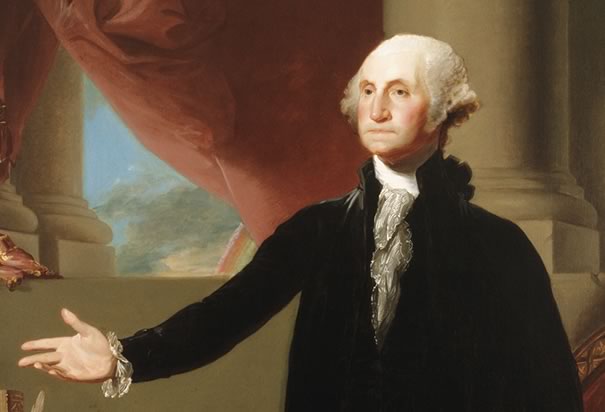
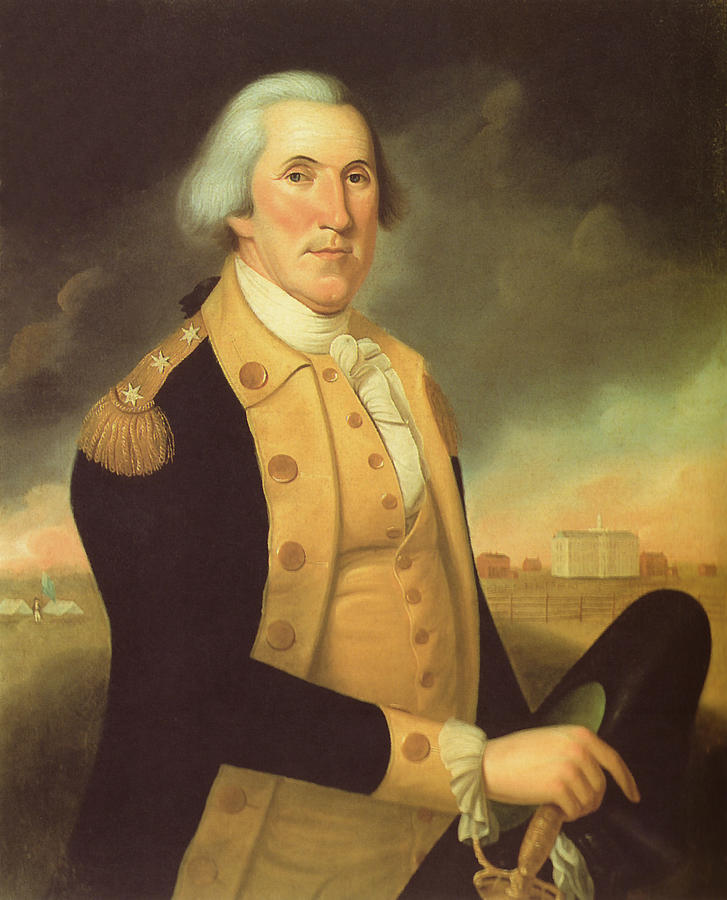
This will complete the "trifecta" centered around His Excellency George Washington, so it is fitting that I write this piece on his actual birthday - February 22nd. Several years ago, when I began thinking about writing espionage novels, I settled on the American War for Independence as the stage. The how and why I discussed in an earlier blog that I encourage folks to go back to and read. Although military history was my lifelong avocation, I had not read very much about the American Revolution. So, prior to laying out the plot for the first book in the Yankee Doodle Spies series, I began reading as much as I could on Washington and the glorious cause.  I must admit, I soon became impressed with the man, and before too long, I realized what a great and indispensable leader he was. Washington lived in an age of brilliant thinkers, writers, and leaders. One of his strengths was knowing he was not in their league but that he had the abilities they needed for the struggle to succeed. He knew his place, and he took it. And if you look at the timeline of events in his life, it seems as though he had prepared himself from his earliest days.


 Service and Speculation


Washington was driven by the two things that drove most of his Virginia planter class:  the acquisition of land and service to his nation.  In the case of the former, this involved expanding his family's relatively modest holdings through a brilliant (but also romantic) marriage to Martha Parke Custis.  This made him one of the wealthiest landholders in the Old Dominion. Still, he was constantly looking to expand his holdings. He engaged himself in schemes that involved lands from The Great Dismal Swamp in Tidewater, Virginia, to tracts on the Monongahela River and beyond to the Ohio. Both efforts involved him in controversy. But even as he fought for his nation and later as he led it, his thoughts and efforts always returned to land and farming. Washington's early days as a surveyor sort of connect those two dots. Surveying gave him an eye for land and the opportunity to assess land and eventually acquire it. It also led him to the service of Virginia's Governor Dinwiddie, which resulted in missions to the west to assess the land and, more importantly, the activities of the French. This led to further service as a militia officer and an event that caused a world war (Seven Years/French and Indian).  That world war led to the economic, military, and political factors that brought about the American War for Independence.


More than a Military Leader

As the notion of a break with Britain became more widespread, the now-prosperous planter Washington committed to the cause. I won't go into the reasons except to state that his personal experiences led him to believe Americans would never be seen as equals to their British cousins. He realized that British policies were holding America back in economic ways, most especially with regard to trade and westward expansion. So it circles back to land once more. Washington became a military commander in chief (and later President) almost by acclamation. His stature (physical and otherwise) and earlier military achievements marked him as a top contender for high command.  His selection over some other highly qualified candidates was also political - bringing Virginia and the South solidly into the now-open rebellion. But a brilliant choice it proved to be. During the long struggle, Washington developed a persona of nobility and honor that won him international fame.  His stoic resistance to Britain's lightning strikes in New York and Jersey kept the cause from an early collapse. Not a brilliant tactical nor even strategic planner, Washington managed to evolve as a commander, adapting and improvising as he frustrated British efforts to destroy him, his army, and the rebellion. He was savvy enough to place his trust in a few confidants who ably helped him along, Greene, Knox, and Lafayette.  Washington's earlier political, business and farming experiences did prove a boon, as his greatest challenges were logistics and politics. Washington was constantly communicating with a mercurial and weak Congress as well as state leaders who had their own agendas.  He settled the numerous disputes among the officers as well.  He suppressed more than one mutiny as well as a "cabal" of senior officers set against him. He survived attempts on his life. He built the Continental Army, and it became more vital to the unity of the nation than the Continental Congress. As did he. He became the nucleus and the gravity that kept the nation together. During the eight-year struggle, he was the nation.


The less iconic crossing of Delaware


Legacy


Washington was the first chief executive who wasn't  a
monarch, king, duke, or emperor
Yet, at the earliest opportunity, he gave it up. In December 1783, when the last British ship departed New York, he said farewell to his officers (at the renowned Fraunces tavern) and headed south to render his final report to Congress and turn over his sword. He immediately rode on to Mount Vernon and resumed the life of a planter. However, the failings of the Articles of Confederation and his experiences dealing with a weak central government during the war led him to join the effort of writing a new constitution. He was not a brilliant writer, thinker, or philosopher, but he did have certain ideas that he lent to the discourse.  But mostly he provided a rallying point and served as the president of the constitutional convention in Philadelphia. His character and his presence kept the proceedings from devolving. They kept the members' eyes on the ultimate goal: a government that would "promote the general welfare and provide for the common defense..."  The italics are mine. Later, as President, the experiment that was America could have failed. That it didn't was a testimony to him. Washington steered the infant republic through treacherous domestic and diplomatic waters.  A nation with a Chief Executive over a Republic, not a monarchy, had never been done before. Everything he did as President was a first, and so many things we find routine in government today - he had to figure out as he went along. How much executive action was just enough?  How do you deal with Congress, the cabinet (which he created), the press, or the people?  How to provide that leadership without the crown and scepter wielded by every other national leader before him? Yet he sustained it for eight precious years allowing for the young Republic to grow roots. And then, once more, he simply walked away. He gleaned no wealth for his service.  Indeed, Mount Vernon was a shambles, and his other holdings dissipated. No million-dollar book deal.  No paid speaking engagement or other fat cat deals. When war with France threatened under John Adams he agreed with accepting command of the army. But otherwise, farm life and greeting and entertaining numerous well-wishers carried him till his death.   Throughout his military and government service, Washington had many detractors. Cynics always waited for the other shoe to drop: exploitation of power, creating a kingship, declining to give up power and position.  And many admirers wanted him to do so. Implored him to do so. The fact that he did not sets him apart from any other person in similar circumstances in history. And it is what made him, His Excellency, the indispensable man of his nation,  his age, or any age.


The indispensable man found his farm indispensable


Sunday, February 9, 2014

Birthplace of an Icon

The Man from  Pope?


Okay - I made a really bad pun linking His Excellency to His Elvisness.  George Washington was actually born on a small tobacco plantation near Pope's Creek, Virginia. Not exactly Hope, AK. Since this is his birth month I thought I'd do a few short blogs to fill some of the blanks on his early days.


The reconstructed house today
Washington's great-grandfather settled the plantation in 1657 at the original site on Bridges Creek but the family later acquired more land on nearby Pope's Creek.  That is where the first section of the house in which George Washington was born was built. The house was erected before 1718 but his father later enlarged it. This was a familiar pattern for home dwellers in 18th century America. The home was again enlarged and by the mid -1770s had grown into a ten-room house, known as "Wakefield". The original house was destroyed by fire and flood on Christmas Day, 1779, and never rebuilt. But some thirty-two graves of Washington family members contained in a cemetery plot. These include Washington's half-brother,his father, grandfather, and great-grandfather.


Life on the Farm


Tobacco plantations required hard
labor by slaves to prosper
Was NOT kinda laid back. To keep a plantation from the debtors' hard work by all was the norm. All meaning the slaves, of course.  Washington's father cultivated tobacco on his several plantations, which was labor-intensive, involving the work of enslaved Africans and African Americans. By the time George Washington was born, the population of the Virginia colony was 50 percent black, most of whom were enslaved. An estimated "20 or so" slaves worked on the small tobacco farm at Popes Creek, during the time that Washington lived there.


How did they get there?


Well, by boat silly. In 1657, an English merchant ship sailed up the Potomac River, anchored in Mattox Creek, and took on a cargo of tobacco. With her new load, the ship ran aground on a shoal and sank. During the delay, a young officer, John Washington, His Excellency's great-grandfather became friends with a local planter, Colonel Nathaniel Pope. He became smitten with Pope's daughter Anne.  So instead of leaving when the ship was ready to set sail John Washington stayed behind and married Anne. This marks the beginning of the Washington family in America.  Colonel Pope gave the newlywed Washingtons a sweet wedding gift - 700 acres on Mattox Creek four miles to the east.  John Washington eventually expanded his land holdings to 10,000 acres.  In 1664, he moved his family to a property on Bridges Creek.  John's son Lawrence was born in 1659. He inherited most of his father’s estate.  Lawrence had a son named Augustine in 1694. Augustine inherited some property from his father but acquired more on his own. His holdings eventually included a sprawling plantation on Pope’s Creek.  Somewhere along the way, he acquired an iron furnace near Fredericksburg.


Moving on Up


The Potomac, that is. The Popes Creek property had a small house that Augustine expanded into a middle-sized manor house.  It was here that George Washington, the first son of his second marriage, was born on February 22, 1732.
Young George lived there until 1735 when his father moved the family further north to a plantation called Little Hunting Creek. Later, Little Hunting Creek would be given a new name: Mount Vernon.

Sunday, January 26, 2014

The Birthday Present

Celebrating Washington's Birthday


Birthday Boy and Commander-in-Chief


King George III

Believe it or not, there was a time when George Washington's birthday was not a celebrated federal holiday. Wait a minute, that time would be... now! In this blogger's humble opinion, His Excellency is more than worthy of a day for him alone and not shared with 40-something other chief executives. He was the first.  And the first is always (OK, usually) special. But Washington was more than special. He was the essential man of his age. With the exception perhaps of King George III and his inner circle, that was the considered opinion of most of the world (America and Europe). Later, even George III had some lauding comments on Washington eschewing absolute power and kingship. In 1879, the US Congress honored our first president by closing government offices in Washington, DC, on  February 22nd. Curiously, this had nothing to do with the budget. It was the first holiday honoring a particular American citizen, and it was celebrated on his actual birthday, not the Monday of. Back then, the holidays were about commemorating something meaningful, not just another 3 day weekend. In 1885, Congress expanded the holiday to include all federal offices and activities.


A Special Birthday Present


In 1931, the Chief of Staff of the Army, Douglas MacArthur, submitted a recommendation to Congress intended to present the first commander-in-chief with a very special 200th birthday present: the awarding of a "new" medal to recognize soldiers injured in combat. On February 22, 1932, Washington's 200th birthday, the U.S. War Department announced the creation of the "Order of the Purple Heart." 

General Order No.3 announced the establishment of the award, which would have a likeness of Washington:

"...By order of the President of the United States, the Purple Heart, established by General George Washington at Newburgh, August 7, 1782, during the War of the Revolution, is hereby revived out of respect to his memory and military achievements."

By order of the Secretary of War:

Douglas MacArthur

General, Chief of Staff


But why was this so special after all? 


 The First Award


Biographers and students of George Washington know that he is the author of many firsts, both in the military and later in the presidential and political arena. The sobriquet, First in War, First in Peace, First in the hearts... was literally true. This was the logical result of Washington's place and time in our nation's founding and the leadership he showed through eight years of war, the establishment of the US Constitution, and eight years of the world's first presidency. The list of things established by him in the military, civil and governmental spheres is impressive. One of these firsts is the nation's first military award. The award, originally called the Badge of
Washington's Headquarters, Newburgh, NY
Military Merit was established by Washington when he served as the commander-in-chief of the Continental Army as the long war for independence was coming to a close. That order, issued from his headquarters at Newburgh, New York, stated it would be a decoration consisting of a purple, heart-shaped piece of silk, edged with a narrow binding of silver, with the word Merit stitched across the face in silver. The badge was to be presented to soldiers for "any singularly meritorious action" and permitted its wearer to pass guards and sentinels without challenge! I like that last perk. Does cutting the line at TSA count?


On August 7, 1782, this general order established the Badge of Military Merit:

"... The General ever desirous to cherish virtuous ambition in his soldiers, as well as to foster and encourage every species of military merit directs whenever any singularly meritorious action is performed, the author of it shall be permitted to wear on his facings, over his left breast, the figure of a heart in purple cloth or silk edged with narrow lace or binding."

Original Badge of Merit Replica


The honoree's name and regiment were also to be inscribed in a "Book of Merit." As it turns out, only three Revolutionary War soldiers are known to have received the Badge of Military Merit: Sergeant Elijah Churchill, 2nd Continental Dragoons; Sergeant William Brown, 5th and Sergeant Daniel Bissel, 2nd Connecticut Continental Line Infantry. Possible Yankee Doodle Spies connection: 2nd Continental Dragoons included Lieutenant Colonel Benjamin Tallmadge's unit - Washington's spies. Unknown if Sergeant Churchill was a member of that element, but it is likely.


The Legacy


It did not take long for the Purple Heart to evolve in scope and purpose. On May 28, 1932, 138 World War I veterans were conferred their Purple Hearts at Temple Hill in New Windsor, NY. Temple Hill was the site of the New Windsor Cantonment, which was the final encampment of the Continental Army in the winter of 1782-1783. At first, the Purple Heart was exclusively awarded to Army and Army Air Corps personnel. Still, in 1942, President Franklin Roosevelt allowed the Navy to award the Purple Heart to Sailors, Marines, and Coast Guard personnel. Later that year, the Purple Heart was made available for posthumous award to any member of the military killed on or after December 7, 1941. The original Purple Heart was awarded for meritorious service. But with the creation of the Legion of Merit in 1942, the award of the Purple Heart for meritorious service was discontinued and is now awarded to any member of the Armed Forces who has been wounded or killed in designated combat activities.

Today's Purple Heart