Followers

Saturday, June 28, 2014

BOOK REVIEW: Spies, Patriots and Traitors by Kenneth Daigler


To paraphrase the most interesting man in the world... I don't usually do book reviews on the Yankee Doodle Spies blog. Still, when I do, it's about a great book that highlights the importance of the American Revolution from a military intelligence perspective. This new book definitely made the list.


Kenneth Daigler spent his career as a CIA officer, where he learned the craft of espionage firsthand. In his latest book, Spies, Patriots, and Traitors, he reveals some of the nation's darkest espionage secrets. But they are secrets that have puzzled historians for over 200 years: secrets of the American Revolution. There have been a few books on this subject in recent decades, but none have the breadth and scope of this one. And none are as well documented and well written. Daigler covers a wide range of espionage activities and presents the big picture while diving deep into areas that are sure to fascinate the reader. He starts at the beginning—showing that even the political unrest that led to armed rebellion had an intelligence component. In a sense, he depicts a nation born of secrecy and covert activities.


A Case Officer's Perspective on the Two Big Cases


One of the many things that sets this work apart from others of its kind is the author's personal experience in the espionage trade. He draws on that to analyze numerous cases and explains the timeless aspects of espionage: planning, security, and communications. He shows that the absence of these three elements led to two failures—one for us and one for the British. 

Interestingly, these are the most famous espionage cases of the war: Nathan Hale and Benedict Arnold. In the case of Hale, the entire operational cycle was as ineffective as it could be. The author notes that Hale was inherently unqualified for the mission, which was poorly defined. Unsurprisingly, it failed on all fronts and ended in disaster. 

Daigler also points out that, despite some operational shortcomings, Arnold's case could have succeeded. However, Arnold's personal traits—ego, greed, arrogance—caused him to pressure his former handler, the inexperienced Major John Andre, into making a series of mistakes that eventually cost the British the operation and Andre his life.

Benedict Arnold


Lesser-Known Spies


 Daigler explores lesser-known cases with just as much enthusiasm: the establishment (or lack thereof) of counterintelligence under John Jay; Nathaniel Greene's skilled use of intelligence to secure victory in the southern campaign; the "secret war" in Europe; and Washington's efforts to employ intelligence, counterintelligence, and deception to surprise the British at Yorktown. The author also offers a perspective on the Culper Ring that differs from other accounts, highlighting that it was just one of many agencies Washington relied on—albeit a crucial one. 

Daigler details the activities of Benjamin Tallmadge—not only with his Culper Ring but also in other roles he served for Washington. The book recounts the daring exploits of the little-known John Honeyman, who spied on the Hessians during the darkest days just before the surprise attack on Trenton. Another noteworthy part of the book is his discussion of the plot against Washington and the British effort to destabilize the American economy through counterfeiting Continental dollars.


Benjamin Tallmadge


Other Pluses


James Armistead
The book is full of engaging illustrations of both well-known and lesser-known figures in the intelligence world. The author has also created a timeline of espionage during the American Revolution and, most helpfully for the layperson, a Glossary of Tradecraft Terms. He offers a powerful look at the struggles of African Americans, many of whom were slaves used by both sides. 

Ultimately, neither side treated them very well for their service, although there are some notable exceptions. The story of the African slaves is best exemplified by James Armistead, owned by a Virginia planter, who infiltrated British lines during the Yorktown campaign. 

His bravery and resourcefulness provided critical intelligence while under the noses of the British. He also discusses the role of counterintelligence, the British approach to espionage, and, of course, George Washington’s role as the Case Officer in Chief (my words).


Did intelligence win the war for American independence?


The author concludes with a discussion of that topic. One must conclude that intelligence played a crucial role in America's survival during the early years of the war and its ultimate victory. This does not mean that British intelligence was lacking. They had excellent worldwide coverage of American interests, and their Loyalist allies provided ready-made pools of agents, some already organized into cells. However, their leadership failed to capitalize on the opportunity. In contrast, George Washington clearly developed, over the course of an eight-year war, the ability to use intelligence and counterintelligence more effectively than the British high command. And that made all the difference.
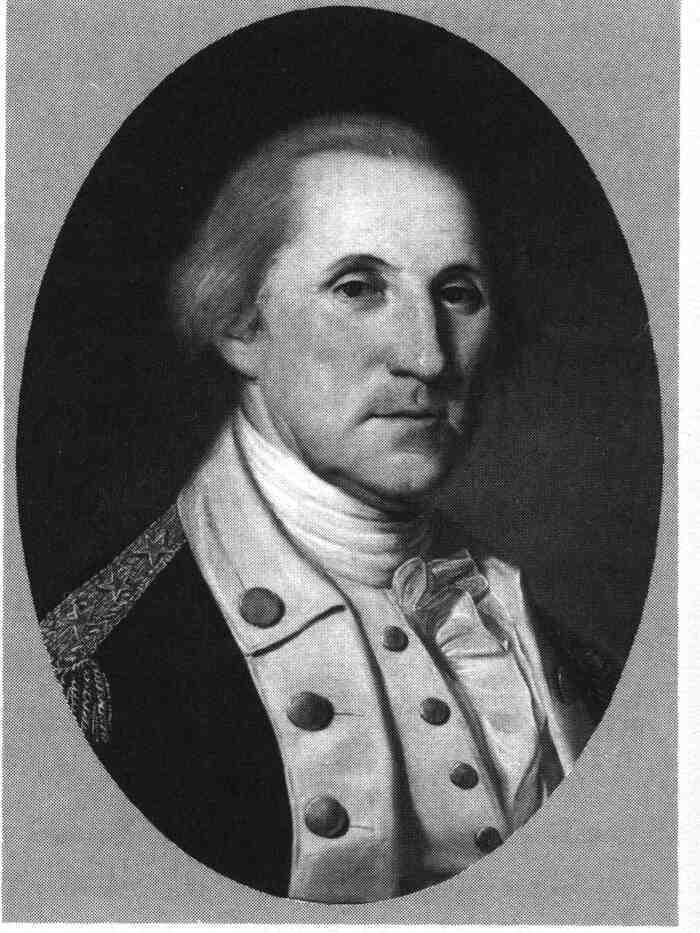

George Washington, the Spymaster


I wish I had this book when I first started writing the Yankee Doodle Spies novels several years ago. Now that it’s available, it serves as an excellent non-fiction companion for those reading the series. You'll find many of the events and characters depicted through the fictional persons and actions in the Yankee Doodle Spies series, along with numerous historical figures and events as well.


I give this very excellent work, Four Tricorne Hats!


Saturday, June 14, 2014

Happy Birthday!

This week marks the 239th birthday of the U.S. Army. Around the world, Army units and many other DoD components will celebrate this day, which also coincides with Flag Day. The U.S. Army was founded on June 14, 1775, when Congress adopted "the American continental army.” The Congressional resolution also absorbed the existing 10,000 New England troops and forces besieging Boston, and it requested an additional 5,000 be raised from New York and Connecticut men to defend New York City. Two million dollars was approved to fund the new army. The Continental Army quickly expanded, and by July, the authorized strength of the new army was nearly double that envisioned on June 14. 


Continental Soldiers


What was the first unit?


The American Rifleman


The first contingent of the new Army was composed of ten companies of riflemen – infantry. Congress’s resolution outlined their terms of enlistment and appointed a committee to establish rules and regulations. It seems that even at its inception, the Army had its red tape! The riflemen authorized on 14 June were the first units raised directly as Continentals, rather than state troops. Congress accomplished this by assigning six of the companies to Pennsylvania, two to Maryland, and two to Virginia. This may represent the beginning of the grand American tradition of using military authorizations to achieve a political end. But in this instance, it wasn't about pork (although that would soon come). It aimed to create a national (my word) army under the banner of “Continental.”


How were they recruited?


Recruitment authority was granted to local county committees in those frontier areas known for skilled marksmen. The response in Pennsylvania's western and northern frontier counties was so substantial that on June 22, the colony's quota was increased from six to eight companies, organized as a regiment. A month later, a ninth company from Pennsylvania was formed in Lancaster County. In Virginia, Captain Daniel Morgan raised a company in Frederick County, while Hugh Stephenson formed another in Berkeley County. In Maryland, the companies of Michael Cresap and Thomas Price both came from Frederick County. Readers of The Patriot Spy know that Lieutenant Jeremiah Creed’s light infantry company was also organized in Frederick County as part of the First Maryland Line. All thirteen rifle companies were sent immediately to Boston to join the siege. These riflemen were recruited solely for their marksmanship and toughness, not their adherence to military protocol. One of General George Washington’s first leadership challenges was managing their frontier attitudes and the resulting disciplinary issues.


Dan Morgan


How were they organized? 


Each rifle company was composed of a captain, three lieutenants, four sergeants, four corporals, a drummer (or horn player), and sixty-eight privates. The enlistment period was set at one year, the same as for militias. The companies were organized into a regiment, but until Congress could appoint field-grade officers (such as adjutant, quartermaster, and commissary), the company grades were filled in. Later, these rifle companies were brigaded under Daniel Morgan (now a colonel) into a Rifle Corps. As Continental Line regiments began forming that summer, they typically consisted of about eight companies, each with around forty privates, plus officers, sergeants, corporals, and drummers. However, organizations varied widely, especially at the beginning.


Who would lead the new Army?


Who else but Colonel George Washington! On June 15, Congress unanimously chose the Virginia planter and renowned hero of the French and Indian War. Washington had been active in the military planning committees of Congress, and by late May, he had begun wearing his old uniform. His colleagues believed that his modesty and competence qualified him to lead the challenging New England troops. Washington was given the rank of Lieutenant General and Commander in Chief. The day after Washington's appointment, Congress authorized other senior officers for the new army. Positions for five major staff officers were established: an Adjutant General, a Commissary of Musters, a Paymaster General, a Commissary General, and a Quartermaster General.

On June 20, the new commander-in-chief received orders to proceed to Massachusetts, take charge of the army there, and capture or destroy the British army occupying Boston. Congress directed him to prepare a report on the strength of the army. In the broader context of army command, his instructions were somewhat vague. His only other real mandate was that he must consult a council of war prior to any major strategic or tactical decisions. Washington had the authority to determine how many men to retain and had the power to temporarily fill any vacancies below the rank of colonel. Permanent promotions and appointments were reserved for the colonial governments. However, Congress appointed general officers. In the future, this led to a range of repercussions, not the least of which was Benedict Arnold's treason.


       General Washington assumes
           command of the new army


Who were his Lieutenants?


It is not surprising that the selection of Washington’s subordinate generals and senior staff officers led to political maneuvering as delegates sought appointments for their favorite sons. On June 17, Congress elected Artemas Ward and Charles Lee as the first and second major generals, respectively, and Horatio Gates as the Adjutant General. A few days later, two more major generals were appointed: Philip Schuyler, a New York delegate with close ties to Washington, and Israel Putnam, another hero of the French and Indian War. The brigadier generals followed. Congress appointed them in proportion to the number of men contributed by each colony, adhering to the recommendations of the colony's delegates for the actual selection. However, Congress created problems by ignoring seniority and status.


 Artemas Ward

Why are the Army Birthday and Flag Day celebrated on June 14th?


By pure coincidence, the Stars and Stripes originated from a resolution adopted by the Marine Committee of the Second Continental Congress in Philadelphia on June 14, 1777. The resolution read: "Resolved, that the flag of the United States be thirteen stripes, alternate red and white; that the union be thirteen stars, white in a blue field representing a new constellation.” The first celebration of the U.S. flag's birthday was held in 1877 on the 100th anniversary of the Flag Resolution of 1777.


Betsy Ross Pattern Flag


Francis Hopkinson Pattrn Flag


Friday, May 23, 2014

Heath in the Highlands

First Patriot


I often use the term "First Patriot" to describe those who served in the American War for Independence or who played a role in the political thought and action leading up to it. Many of my Yankee Doodle Spies Blogs discuss these men and women. As I researched the first few books in the series, a name kept appearing: Heath. More precisely, the name "Heath" was often printed across maps showing activity around New York, primarily in the lower Hudson Valley, western Connecticut, and the area now known as the Bronx (Kings Bridge). William Heath was one of those serious men, a New Englander like many others, who stayed committed to the cause from start to finish and served it in whatever way was needed. Certainly, many American officers were self-serving and easily offended by slights or secondary tasks. Not Heath, who I believe served professionally and effectively throughout the war.


Citizen Soldier


William Heath
William Heath was born in 1737. He made his home at his farm in Roxbury, Massachusetts. Like many of his generation, he became active in the militia as a young man, and by 1770, he was a colonel and leader of the Suffolk County militia. At the beginning of the war, Massachusetts named him a brigadier general, and he commanded Massachusetts forces during the final stage of the Battle of Lexington and Concord in April 1775. As the siege of Boston started, Heath focused on training the militia involved in the siege. In June of that year, Massachusetts appointed him a major general in the state troops, and the Continental Congress made him a brigadier general in the new national army, the Continental Army.


Solid Service


Charles Lee

In 1776, Heath took part in defending New York City, where he fought at Long Island and was among those who urged General Washington not to abandon the city. Heath's role involved overseeing the defense of the northern approaches to Manhattan. He did a reliable job monitoring potential British landings, dispatching intelligence missions, and gathering supplies. Heath served under Washington at Harlem Heights and White Plains, where he commanded the left flank of the Continental Army. In November, he was put in charge of forces in the Hudson River Highlands. When Washington conducted a frantic rearguard action across New Jersey to avoid destruction in the final months of 1776, he left Major General Charles Lee and Heath to guard critical communication lines between the mid-Atlantic and New England. When Lee finally responded to Washington's call to join him in the Jerseys, William Heath remained steadfast in defending the Hudson Valley. It was a command that demanded duty, not glory. After the British took control of New York City in 1776, the defenses just north of there became highly important. The ongoing presence of British land and naval forces in New York underscored the significance of the Hudson River, and both sides recognized the need to control this vital waterway. The Americans built fortifications, including West Point with its chain across the river. Washington assigned Continental troops under General Heath to the Highlands on November 12, 1776, and a Continental Army garrison remained there until the end of the war. Heath's assignment effectively created a military department. The British aimed to gain control during the Saratoga campaign in 1777 and frequently raided the southern parts of the department to disrupt military logistics and movement. One of the most notable incidents in this department's history was Benedict Arnold's defection in September 1780.


Hessain Grenadiers Advance


The Dog House?


Robert Rogers
Heath faces scrutiny during this period. In January 1777, Washington directed Heath to attack Fort Independence in the Bronx, New York, to support the American operations at Trenton and Princeton. Over ten days amid a harsh winter, Heath commanded 6,000 men in three attack columns heading south to seize the fort that guarded access from Spuyten Duyvil to the Kings Bridge crossing into Manhattan. Initially, the attack went well as British outposts were quickly taken. However, when they reached the fort, they encountered 2,000 disciplined Hessians. Unfazed, the Hessians responded to Heath's plea to surrender with heavy artillery fire. Heath attempted to flank the enemy, but a sudden thaw made crossing the creek impossible. After several days of skirmishes, a surprise movement by British troops on the American flank and rear forced Heath to consider retreat. The weather worsened, and Heath and his commanders decided to withdraw, which Washington criticized. Nonetheless, Washington understood the importance of avoiding a defeat—his own retreat across New Jersey proved that retreat can be a strategic choice. Had Heath's forces been defeated or captured, it could have cut off New England from the Middle Colonies and destabilized the overall strategic situation.

But Heath was never again assigned command of troops in action. Still, he remained in important posts, which was common at that time. Heath was a dependable commander of this American army of observation (my words) patrolling the no man's land north of Manhattan. His presence maintained the vital link between the colonies, protected the Hudson River, and helped keep the British in check. Heath's forces assisted in gathering and relaying intelligence to Washington. Reading his dispatches, one realizes he had a good eye for terrain, people, and the enemy situation. Heath worked diligently on logistics and overall helped sustain the Patriot presence in a crucial region. His handling of the Daniel Strang Court Martial for espionage shows the wide range of his duties as a commander and administrator. He approved the death sentence, which was duly carried out. Strang was found guilty of spying and recruiting for the notorious Loyalist Colonel Robert Rogers. Later, Heath was put in charge of the Convention Army of John Burgoyne's surrendered troops after the Battle of Saratoga in October 1777. However, in 1780, he returned to command the Highland Department following Benedict Arnold's treason. And in July 1783, he was given command of the Lower Hudson District while George Washington was with the Main Army in Yorktown—again standing watch over the powerful British forces in New York.

Post-War Patriot


After the war, Heath was a member of the Massachusetts Convention that ratified the United States Constitution in 1788. He served in the state Senate from 1791 to 1792 and as a probate court judge. In 1806, he was elected Lieutenant Governor of Massachusetts but declined the office. Heath was listed as an original member of the Massachusetts Society of the Cincinnati. Our first patriot died at home in Roxbury on January 24, 1814, and was buried nearby in Forest Hills Cemetery. The town of Heath, Massachusetts, is named in his honor.


Heath's Monument at
Forest Hills Cemetery

Saturday, May 10, 2014

The Mansion

What Mansion Would That Be?


To be more specific, the Morris mansion, also known later as the Morris-Jumel mansion. Readers of The Patriot Spy might remember that the mansion hosted a secret planning session between Jeremiah Creed and General George Washington. In fact, Washington made the Morris mansion his headquarters in the fall of 1776. During the time of the Battle of Harlem Heights, it served as the Continental Army headquarters, as mentioned in The Patriot Spy.


The Mansion


Who Built it?


The house was built eleven years before the revolution, in 1765, by British Colonel Roger Morris and his American wife, Mary Philipse. Known as Mount Morris, this northern Manhattan estate stretched from the Harlem to the Hudson Rivers and covered more than 130 acres. Morris was the nephew of a prominent architect and designed the mansion in the Palladian style. It features a monumental portico supported by grand Tuscan columns and a large, two-story octagonal addition at the rear. Because they remained loyal to the crown, the Morrises were eventually forced to return to England. The Continentals often used the homes of Loyalists, whether abandoned or not, as headquarters, and the British did the same to the Patriots. In this case, the home was large enough to accommodate staff activities and served as a residence for the commander in chief.


Why Headquarters?


Washington recognized the advantages
of establishing a headquarters on Morris Hill
The location was ideal because it was on high ground where Washington vainly hoped to destroy a British attack similar to Bunker Hill (Breed's Hill). The Battle of Harlem Heights was at best a draw. However, the position offered access to the lower island if a chance for a counterattack arose. It also protected the only American retreat route—King's Bridge. With views of the Harlem River, the Bronx, and Long Island Sound to the east, New York City and the harbor to the south, and the Hudson River and Jersey Palisades to the west, Mount Morris proved to be an excellent strategic military headquarters. Soon after the Battle of Harlem Heights, Washington and his troops left the mansion, and for some time, it was occupied by British and Hessian forces.


Post Bellum Shenanigans


Eliza Jumel
In the summer of 1790, Washington returned to the Mansion and dined with members of his cabinet. Among those at the table were Thomas Jefferson, Alexander Hamilton, John Adams, John Quincy Adams, and Henry Knox. However, the mansion rekindled the public's interest (and ours) because of another (notorious) First Patriot. In 1810, the mansion was bought by wealthy French wine merchant Stephen Jumel. As a result, the name was changed to Morris-Jumel Mansion. Jumel and his American wife, Eliza, purchased the mansion and spared no expense refurbishing it.

In 1828, they returned from Paris with crates of furniture and paintings, much of which they claimed had belonged to Napoleon. In 1832, Stephen died, ostensibly of "natural causes." He fell on a pitchfork and bled out. However, there was speculation that Eliza had a role in the death, as she had carried on a torrid affair with the now disgraced former Vice President of the U.S. and killer of Alexander Hamilton, Aaron Burr. 

A year after Stephen Jumel died in 1832, Eliza married Burr. However, the union ended after three years in divorce, as Burr only wanted her money, most of which he managed to spend. Burr died in near poverty. Eliza became a recluse, and the once-renowned beauty turned into a frightening sight with unkempt hair, false teeth, and dirty clothing. Although rumors said she went mad, she clearly had dementia and drove away even her closest relatives and friends. She lived alone in the house until her death in 1865.


Aaron Burr


Post Shenanigans Hauntings?


A stately old home, soldiers, sex, murder, and madness come together in a toxic mixture filled with stories of ghost sightings and hauntings. The mansion is now considered not only the oldest house in New York City but also the city's oldest haunted house. A tour of New York's haunted sites wouldn't be complete without a visit to Harlem. Many people, including curators and tourists alike, have reported sightings over the years. These sightings include Eliza, Stephen, and Aaron, as well as Revolutionary War soldiers and servants. One of the latter was a jilted maidservant. I first learned of the Morris-Jumel mansion as a boy. A friend of my father, who later became a history professor, visited the mansion and shared stories of ghost sightings—both civilian and military. He insisted that some of these sightings were made by inner-city youth touring with their schools, who described "soldiers walking through the walls." He also claimed that they accurately described some of the uniforms despite having no knowledge of 18th-century military or civilian dress. Today, the mansion is owned by the New York City Parks Department and is open to visitors, both the living and the dead.


Saturday, April 26, 2014

The Sword

Cold Steel


This blog is about cold steel: more specifically, the sword. Despite the increasing use of firearms, blades remained a vital part of military life during the era of the Yankee Doodle Spies. Although Britain and France produced their own blades by the mid-18th century, the finest still came from countries with a long tradition of forging finely tempered steel—such as Spain, Germany, and Italy. During a time when firearms were primitive, slow, and inaccurate, combat with cold steel at close range could be decisive. And the sword was undoubtedly the most versatile close-quarters weapon: effective in melee, ambush, or siege. The sword held both practical and symbolic significance. Primarily, it was a straightforward weapon, easy to maintain. It could be wielded by foot soldiers or cavalry, and it could kill, cut, and maim.

Symbolic


Throughout most of history, the sword has been a symbol of leadership and distinction. This reached its peak during the Middle Ages when the sword became a symbol of knighthood. Knights were anointed and welcomed into the brotherhood of arms with a sword. Later, at least in Europe, carrying a sword was seen as a sign of a gentleman, worn on various occasions by civilians and military personnel alike. Although by the mid-18th century civilians rarely carried a sword, it remained a special symbol in military circles. Its symbolism influenced its use in warfare as the 18th century progressed. A sword might be drawn as a salute, a signal to prepare for action, or returned to its scabbard as a sign to end fighting.

Weapon of Choice


Before the development of the socket bayonet, every military man carried a sword of some kind. The infantry, artillery, and, of course, cavalry all carried swords of various types for close combat. However, as ring-mounted or socket bayonets became more common, the need for a sword alongside them decreased, at least for the infantry. By the time of the American Revolution, only sergeants and officers in the infantry carried swords, which remained symbols of authority and weapons. There were exceptions, such as the Highlanders and German mercenary regiments. Artillery crews and cavalrymen still carried swords; in the case of artillery, swords were used for close-in fighting if the guns were overrun, while cavalrymen kept swords as their primary weapon of action.


Cold steel could still be decisive


Let's talk about the main types of swords used during the time of the Yankee Doodle Spies. This is just a brief overview, not a detailed or official account.

Infantry Sword


The infantry sword, sometimes called a hanger, was a short sword used for close combat. Usually about 25 inches long. By the time of the Yankee Doodle Spies, such swords were mostly carried by American and British infantry sergeants. The hanger had a long, slightly curved blade and a short metal pommel covered by a small round handguard attached to the butt of the sword by a small metal knuckle guard. The hangers carried by infantrymen were inexpensive, simple weapons that worked well in bloody hand-to-hand fighting by ordinary soldiers. Marines also carried the hanger.


Short Saber


Used by many officers in combat, the blade was about 30 inches long. It was used for cutting or thrusting. These weapons could be simple or ornate. In some cases, they were family treasures, handed down from a father to a son on his commissioning.


German Jaegers

Hunting Sword


Originally a sidearm for hunters, the hunting sword was a short, cut-and-thrust weapon used by the German Jaegers, American riflemen, and officers on both sides. Sometimes called the cuttoe, it lacked knuckle and handguards and served as a brutal, bloody weapon for American militias as well. The blade was about 28 inches long and could be curved or straight. Jeremiah Creed carries a version of this in the Yankee Doodle Spies.


Small Sword


By the time of the American Revolution, these were mostly carried by civilians or officers, not with troops. Light and thin, rapier-like in appearance, it was suitable for quick thrusts.


Cavalry Sword


Mounted troops carried longer, heavier blades, usually about 35 inches long. They could be edged, but most were curved in America. They typically had a heavy hilt for maximum protection during mounted combat. A trained dragoon could slash an opponent or drive the point home with an extended arm, much like a lance. The saber in the hands of a cavalryman had a strong psychological effect. Just the sight of a cavalry formation wielding sabers could often cause all but the best-trained and bravest infantry to run for safety.


British Dragoons

Naval Cutlass


Most people recognize the cutlass from pirate movies. However, the cutlass was actually the seaman's version of a short saber. It was single-edged, heavy, and featured an expanded hilt to provide maximum protection. Though not suitable for dueling, when wielded by a strong sailor, these rough yet effective weapons could smash, crush, slice, and cut.


The Ultimate Symbol?


As mentioned earlier, the sword was a practical weapon with symbolic significance. Perhaps the clearest example of this symbolism is the classic "surrender." Whether on ships at sea, in great fortresses, or on the battlefield, a commander often surrendered his personal sword as the ultimate sign of submission. That act was almost always accepted graciously and conveyed respect to the surrendering forces. Therefore, the sword represents a range of meanings—from signal to start a fight to signal to lay down arms and yield. In this way, the sword was a unique weapon of its time.


Saturday, April 12, 2014

A Blog about a Blog?

Finding the First Maryland 400


The heading recalls the famous Seinfeld episode where they were trying to sell a TV series to NBC. The concept was a show about nothing! Of course, it was anything but that.  I was going to take a pass on doing a blog this week as it is, after all, Easter week. But I received a post from a blog I follow and I decided to review the Blog as it directly connects to The Patriot Spy, book one in the Yankee Doodle Spies series. So this week we have a blog about a blog!

The Blog


Several months ago, a Facebook friend sent me a link to a Blog established by the State of Maryland Archives.  The Archives commissioned a research project on Maryland's First Continental Line regiment called "Finding the Maryland 400."  As the Blog's home page explains:

The attack of the Maryland 400 
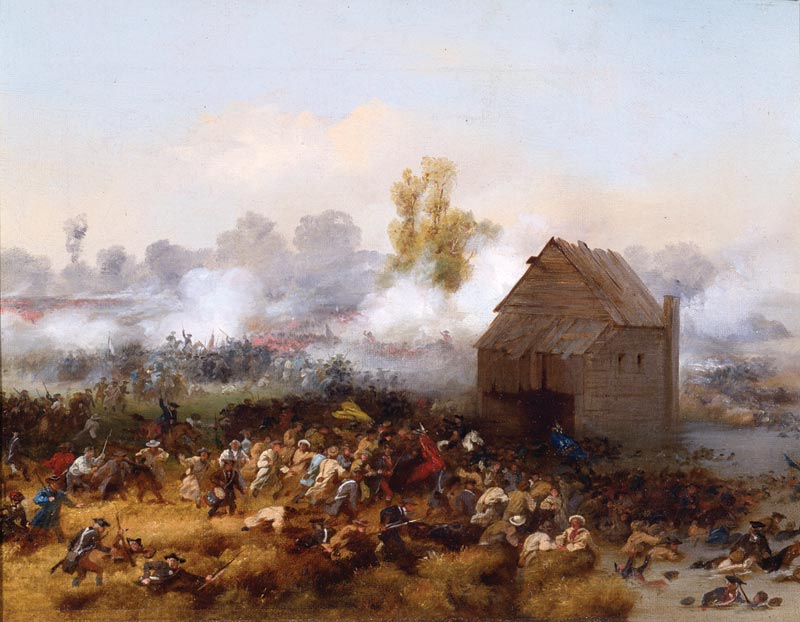
"During the Revolutionary War, men from all over Maryland joined the Continental Army to fight the British. In August of 1776, a group of these men under Col. Smallwood were sent to New York to help defend the city from an attack; the ensuing conflict is remembered as the Battle of Brooklyn (or Battle of Long Island). The battle was a resounding defeat for the Americans under the command of Gen. George Washington, and they were forced to retreat and give up the island. The story of the Maryland 400 goes that during  these
events, 400 of Maryland’s soldiers were sent to cover the retreat from the field and bravely threw themselves at a much stronger and better positioned British force repeatedly. Though they succeeded in buying enough time for the retreat, they suffered heavy losses, perhaps over half of their number. Who exactly these men were has remained unknown, with little to commemorate their actions in the battle."

So in the summer of 2013, the Maryland State Archives and the Maryland Military Department, Office of the Adjutant General, the Maryland Military Historical Society, and other partner groups hired some interns to research the identities of the First Patriots who served in the Maryland 400 at the Battle of Long Island. Their goal was to create an accurate list of the Maryland soldiers who participated in the battle and write biographies about some of the men. The chronicles the research progress as well as new discoveries.


The Design


The blog is well designed and appealing.  The key sections are:

William Smallwood
Updates - These are articles about individuals or events the research has uncovered or that otherwise relate to the Maryland 400. The latest discusses Larkin Dorsey, a sixteen-year-old from Anne Arundel County who enlisted in the Ninth Company of the First Maryland Regiment. Readers of The Patriot Spy might recall my fictional Lieutenant Jeremiah Creed originally commanded the Light Company but later led men from several companies, perhaps even the Ninth. Larkin's  father asked Lieutenant Colonel Francis Ware to keep an eye on Larkin Dorsey."  Apparently, such fostering was common in a time when people were linked by bonds of family and place. As the post explains... "Ware was second in command of the Regiment. Ware, who did not have children of his own, agreed to take on the responsibility for young Larkin. It should be noted that both Smallwood and Ware missed the seminal action on Long Island due to other duties and arrived at the end of the engagement. Major Mordecai Gist led the attacks.

Biographies - This is a list of members of the 400 with links to their biographies. Among them are Smallwood, Mordecai Gist (who has a role in The Patriot Spy), and Ware (mentioned above).  The biographies are listed by the company, a nice touch.

Mordecai Gist
Roster - Although not fully complete, this section provides a very comprehensive roster of those identified as members of the unit. The gaps in understanding who served and fought are explained, as is the paper and field strength of the unit when it fought. There is a search capability included.

Interactive Map - This is my favorite part of the blog. Everyone has to be somewhere and the researchers do a really nice job geospatially portraying the movement of the members of the 400 based on pension records, unit rolls, correspondence, etc. As more data is uncovered and added, this will prove a fun and easy research tool. One can note quickly, for example, that several members migrated to the reaches of Tennessee, Kentucky, Ohio, and Pennsylvania after the war, indicative of the new nation's trend west that ended (ironically) when the Brooklyn Dodgers moved to Los Angeles. The original Brooklyn Dodgers clubhouse was a building at the center of the battle in which the gallant 400 fought.


The Maryland Monument in Prospect Park


The Rating


Those who want to see for themselves (and let us know via this blog) can go to directly to the Blog, which is on Word Press (can I mention another blog platform?):  http://msamaryland400.wordpress.com/about/
You do not have to be from Maryland or even a Revolutionary War, or even a history buff to appreciate and enjoy "Finding the Maryland 400" Blog. Although still a work in progress, based on what the researchers have put together so far, and the quality of the display, I give "Finding the Maryland 400" a full Five Fifes


Sunday, March 30, 2014

Second to None


This blog discusses one of the last senior officers to fall in the campaign that ended the war: Alexander Scammell. There are many First Patriots in what I call the "second tier" of fame (but not importance). The "first tier" includes those most Americans learn about in school and in popular history: Washington, Greene, Knox, Von Steuben, Lafayette, Marion, Hamilton, and others. Like in all wars, the American War for Independence had many lesser-known figures, many of whom played very important yet less celebrated roles crucial to the war's ultimate success.

Alexander Scammell


Accomplished in Peace


John Sullivan

Alexander Scammell was born in 1744 in Milford, Massachusetts. His father died when he was six, and he and his brother went to live with a minister until he attended Harvard. After graduating from Harvard in 1769, he taught school near Plymouth, Massachusetts. In 1772, he moved to Portsmouth, New Hampshire, where he engaged in surveying and exploring the lands of the Royal Navy Timber. He also taught school at Berwick and occasionally assisted in making surveys for his Topographical Map of New Hampshire. It’s likely that these activities gave Scammell an eye for the land, which would prove useful in the military. Despite these diverse interests, Scammell eventually decided to study law (go figure), and in 1774, he went to Durham to study under John Sullivan, a prominent attorney.


A Call to Arms


By that time, New England was caught up in war fever, and Sullivan, along with Scammell, became part of it. Scammell participated in a raid organized by Sullivan against the British outpost Fort William and Mary in December 1774. This likely prepared him for an active role in the upcoming conflict. He was appointed a major in the 2nd New Hampshire Regiment, part of Sullivan's Brigade, and served during the siege of Boston and later in the ill-fated invasion of Canada, where Sullivan played a controversial role. Sullivan's brigade returned to Fort Ticonderoga by mid-July 1776, and Scammell became the dedicated aide de camp to the fiery general. 

At the Siege of Boston


However, in September, he was sent to New York City and fought in the Battle of Long Island. As Washington's army regrouped after losing New York, Scammell was appointed Assistant Adjutant General for Charles Lee's division, which was often divisive. A month later, in November 1776, he was promoted to colonel and soon took command of the 3rd New Hampshire Regiment. Since the regiment was still forming, Scammell joined the 1st and 2nd regiments under Colonel John Stark, another Tier 2 First Patriot, as they moved south to join Washington's army on the west bank of the Delaware. He crossed the Delaware with Washington and fought in both the Battle of Trenton and the Battle of Princeton. At Princeton, he helped rally the troops and turn what was nearly a defeat into a victory.


Long Island 1776 Battle Pass


From  Line Officer to Staff Officer to Counter-Spy


In June 1777, he commanded the 3rd New Hampshire Regiment at Fort Ticonderoga under Major General Arthur St. Clair. But St. Clair abandoned the fortress to the advancing British forces under General Burgoyne. Nevertheless, the regiment's escape allowed it to fight at Saratoga, where Scammell distinguished himself at Freeman's Farm and Bemis Heights. Just two days after Burgoyne's surrender, the regiment marched south to winter quarters at Valley Forge. 

At Burgoyne Surrenders at Saratoga


There, Washington appointed Scammell as the Adjutant General of the Continental Army. Scammell clearly demonstrated unique military and organizational skills to earn such a key position when the army was at its lowest point. In an interesting twist of Yankee Doodle Spies, Scammell was appointed as the executioner for the British spy, Major John André, in October 1780. Scammell became so upset over this task that he requested and received another field command. Aside from the espionage connection, one of the themes in Yankee Doodle Spies is protagonist Jeremiah Creed's desire to leave espionage and return to a line command. The connection, however, is purely coincidental.


Fall of Duty


In early 1781, Scammell was appointed commander of the 1st New Hampshire Regiment. However, in the spring of that year, he was assigned to lead a light infantry detachment that became known as Scammell's Light Infantry. This elite unit fought at King's Bridge (The Bronx) and served as the vanguard for the Continental Army's historic march to Yorktown. Upon its arrival, it became part of The Light Infantry Division. 

As the decisive campaign of the war neared its end, Colonel Alexander Scammell seemed destined for fame. But on the morning of September 30th, Scammell was serving as Field Officer-of-the-Day. This role made him responsible for sentries, scouts, passage of lines, or anything requiring immediate action. The trapped General Cornwallis had decided to strengthen his defense lines by abandoning his outer works around Yorktown. 

Yorktown


At dawn that day, Scammell's pickets discovered an abandoned redoubt near the road to Williamsburg. Recognizing a potential opportunity to advance the siege, the former surveyor led a reconnaissance of the recently abandoned British fortifications. It cost him his life. As he advanced on the outpost, he became separated from his scouting party. Then he spotted a cavalry patrol. In the mists, he thought it was American, but it turned out to be Tarleton's dragoons. 

Tarleton's Dragoons


Banastre Tarleton was a notorious British officer whose men were known to give little quarter. The horsemen surrounded Scammell, and during or after his surrender, the brave New Englander was shot in the back. His men could only watch as their wounded officer was taken into captivity at Yorktown. The British surgeons treated Scammell as best they could. Due to the seriousness of his wound, Cornwallis soon paroled him. He was sent to Williamsburg (now in American hands) to recover but died on October 6th, just weeks before Yorktown fell to the Allies.


Legacy Denied


A little personal background to share about the noble patriot. Scammell was tall for his era, over six feet with pale eyes. He had a straightforward manner that endeared him to his troops, his peers, and most of all—George Washington. Scammell had a great sense of humor and famously entertained the commander in chief with his tales. 

Up until the end, Alexander Scammell served his country selflessly. He had given up property and a promising law career to join the glorious cause. A few years earlier, then in his mid-thirties, Scammell lamented in a letter about ever finding a wife because of the length and nature of his service. While others like Alexander Hamilton went in and out of service as it suited them, he remained in service throughout the eight-year conflict. 

Might Scammell Have Led the Assault?


Scammell had an almost Forrest Gump-like knack for being at pivotal moments of the war and serving with key figures. Had he lived, the gallant Colonel Alexander Scammell might have been the officer leading the Light Infantry against Redoubt Number 10 at Yorktown instead of Alexander Hamilton. And who knows what greatness his character and leadership might have brought to the new nation after the war? Many with fewer wartime accomplishments went on to important political and diplomatic posts. But something tells me Alexander Scammell would have been happy back in New England with his law books and a loving wife.