Followers

Saturday, February 28, 2015

The Knights Templar


Oh, What a Knight!


I am pleased to share that The Patriot Spy, the first book in the Yankee Doodle Spies series, has been submitted for an award in the Best History category by the Knights Templar! Although it is a historical novel, The Patriot Spy accurately depicts the events during the British invasion of Staten Island, Long Island, and New York Island in the summer of 1776. It accomplishes this by incorporating fictional plots and characters into the story of the campaign and the people involved. I am truly honored by this recognition.


Patriot Spy First Edition Cover


Who are these Knights?


For many years, when I heard Templar, I thought of Roger Moore’s old TV series, The Saint. Moore played a mysterious figure involved in crime, espionage, and other mayhem—like Jeremiah Creed. Like many religious orders from the Middle Ages, the Knights Templar are shrouded in mystery, myth, and misunderstanding. That makes them all the more fascinating. Or one could imagine the villainous Knight Templar Sir Brian de Bois-Guilbert in Sir Walter Scott’s grand historical novel, Ivanhoe. More recently, I got hooked on the Arn movie/mini-series, loosely based on a devout Swedish noble unfairly banished to serve as a Templar knight in the Latin Kingdom of Palestine.


Long ago, in a far-off Galaxy


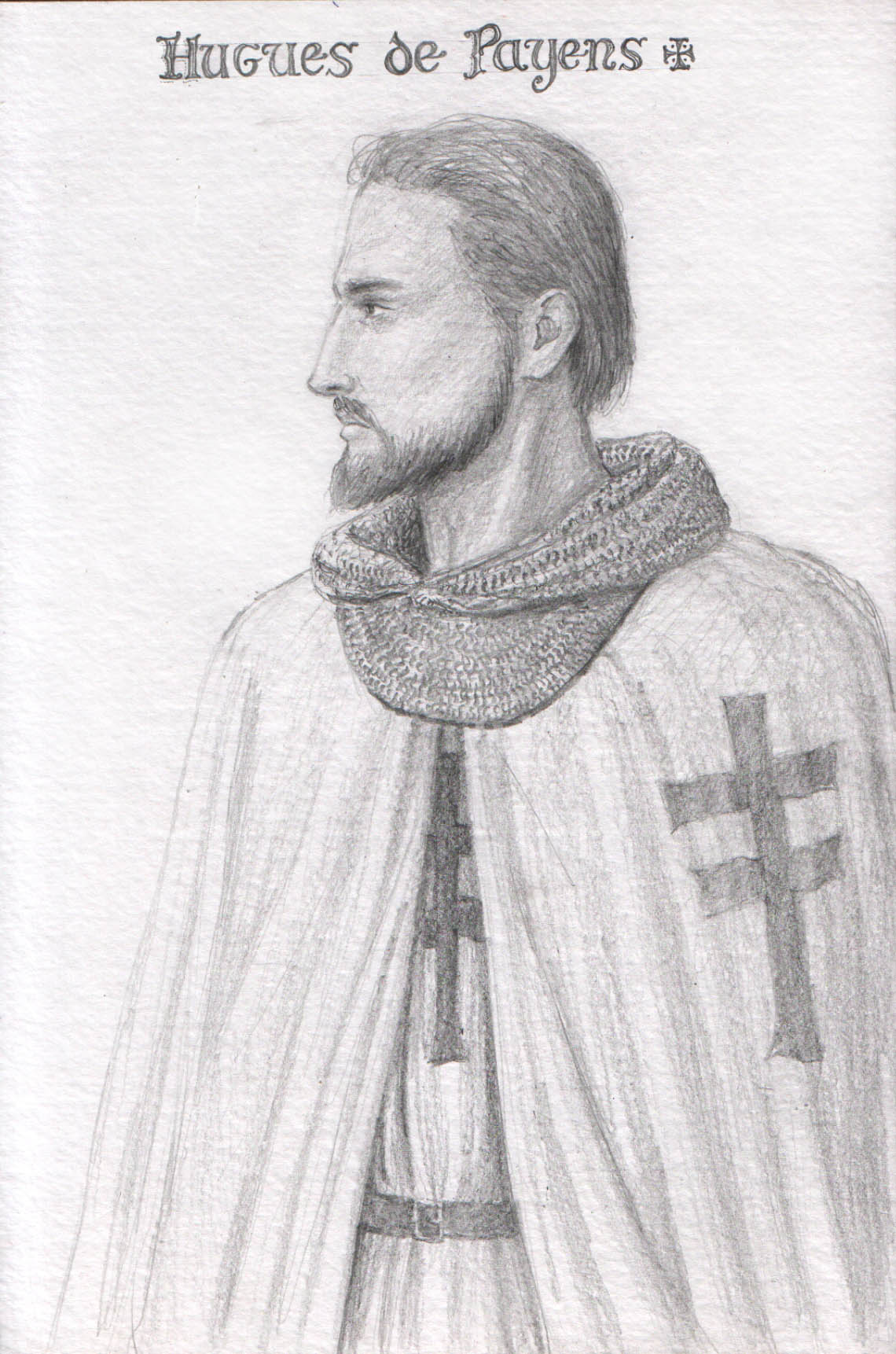
Hugues de Pavens
The Middle East might as well have been a distant galaxy for most Europeans in the twelfth century. Time and space had different meanings back then, when few peasants left the farm where they were born, and very few of the upper classes left the shire. Then, there was a call to action, and an entire continent seemed to turn east. 

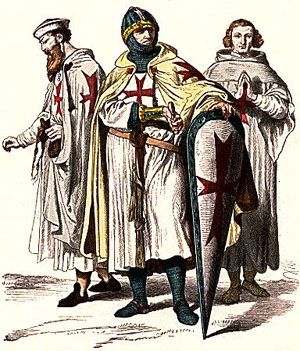
The Templars were founded in the Holy Land in 1119. It began with a small, idealistic group of knights led by Hugues de Payens, who offered their services to protect pilgrims traveling to the Holy Places. They organized themselves into a religious community, sworn to protect Christian pilgrims visiting Jerusalem and the holy sites. They were called the Poor Knights of Christ of the Temple of Solomon, or simply the Knights of the Temple. 

The original purpose of the crusades was just that—protecting pilgrims and holy sites from the depredations of the Seljuk Turks, whose conquest of Palestine from the Arabs resulted in taxes and hostilities against Christians.


It then took a very different turn. After capturing Jerusalem in 1099, the Crusaders aimed to establish a permanent presence to protect their conquests. The original Templars played a small role initially, but they served as an inspiring symbol for Europe’s Christians. They used the al-Aqsa Mosque as their base of operations, which was believed to be the site of Solomon’s Temple. Important to their movement, they gained papal recognition as a military order in 1129 from Pope Honorius II. Hugues de Payens was appointed as the first Master of the Temple. 

It was the great monk Bernard de Clairvaux who understood the historical importance when he wrote in "De laude novae militae" (“In Praise of a New Knighthood”) that a new kind of order had been formed, made up of laymen who combined knightly and monastic life. These soldier monks vowed to fight to protect Christian interests. They took the usual monastic vows of poverty, chastity, and obedience, but also made a fourth key promise—to defend the holy places from the infidel. Over time, the order expanded its reach and soon gained lands in Europe to recruit men and gather funds.


Follow the Money


And in the end, it mostly came down to money. Wars cost money, and the Templars went about raising it in ways that were unique for Christians of that era. Some of their European houses operated as financial hubs, loaning money and collecting fees. This served as an early form of international banking in medieval Europe, long before modern banks and finance systems. The Templars' military strength and extensive network offered a safe place for kings and nobles to store their wealth, with London and Paris becoming the primary centers. Over time, this created a dependence on the Order that, in the years that followed, would cause some in power to grow resentful.


Military, religious, and financial power became
hallmarks of the Order


Faith and Power


The Order reported only to the Pope. This, along with their increasing wealth, enabled the Templars to build an effective fighting force, a naval fleet, and a system of fortresses in Palestine and Syria. The Templars helped finance the Reconquista against the Saracens in Spain, supported by the secular Spanish and Portuguese. 

By the 13th century, the Order numbered 7000 members, including knights, sergeants-at-arms, non-military sergeants, brothers, and priests. Their network comprised around 870 castles, preceptories, and convents spread throughout most of Christian Europe, Palestine, and Syria. Due to their bravery, discipline, and resolve, they bore much of the burden in defending the Latin Kingdoms. In fact, they were called “lions in battle.”  

During the Crusades, thousands of Templars sacrificed their lives in battles like Cresson, Hattin, La Forbie, and Mansurah. However, Jerusalem was eventually lost to Saladin in 1187. When the Latin kingdoms fell again to the Arabs, the Order’s military importance declined as their retreat followed the retreat of Christendom, first to Cyprus and then even further west.


There is no denying the courage and devotion of the Templars in battle


A Rapid Descent


By the fourteenth century, the Crusading era and its spirit were nearly gone. With its decline, secular rulers in Europe started to assert their power against the growing influence of the Pope—at least in terms of authority for now. A transnational entity like the Order, one of the world’s earliest non-governmental organizations (NGOs), threatened this secular rise. 

More importantly, the Order held the wealth that secular kings needed to fund their armies and control their vassals. Philip IV of France was the first king to challenge the Order’s power. On Oct. 12, 1307, the order’s Grand Master, Jacques de Molay, was in Paris to attend the funeral of Catherine, wife of Charles of Valois, brother of King Philip IV, "the Fair," of France.

De Molay was surprised when Philip's agents arrested him on Friday, October 13, 1307. Meanwhile, Philip also launched nationwide raids on Templar properties and arrested hundreds of the Order’s members. The travesty of justice that would follow gives rise to the modern myth of bad luck on Friday the 13th. 

Philip charged that the Templars were no longer dedicated to defending the Holy Land but were apostates. He accused them of denying Christ, desecrating crucifixes, and engaging in indecent acts such as male kissing and compulsory sodomy. Furthermore, his agents accused them of worshiping idols. At first, people outside France disbelieved the charges against the Order. 

The Pope himself was outraged. After all, the Order operated under his authority, and he was unaware of the charges. Yet, at first glance, the allegations seemed justified. Under heinous torture and threats, many Templars confessed to some of the alleged misdeeds.


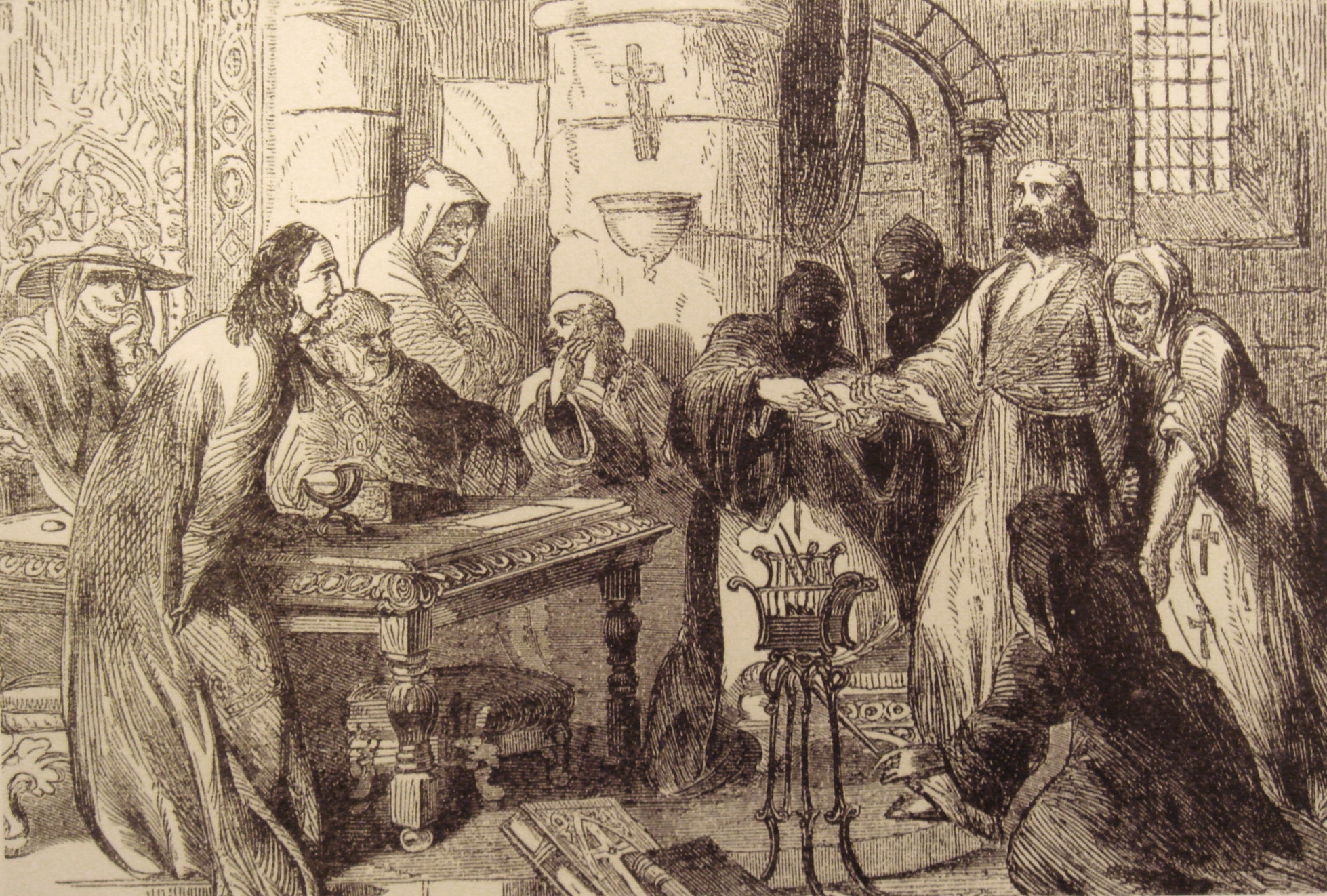
Trial? Or something else? de Molay under investigation... and worse


De Molay himself was compelled to make public admissions under the watchful eye of selected theologians. The Pope attempted to take control of the trial but was unsuccessful. A desperate defense of the Order by two of its priest-lawyers also failed. The Pope did not believe the accusations, especially regarding a “secret protocol” that called for many of the heinous acts listed in the charges. However, the forced confessions left him with little options to act. 

Notably, in those pre-waterboarding days, interrogations involved all kinds of brutal torture and mutilation. Predictably, most caved into their tormentors' demands. Under pressure, at the Council of Vienna in 1312, the pontiff suppressed the order but did not hold it criminally liable. 

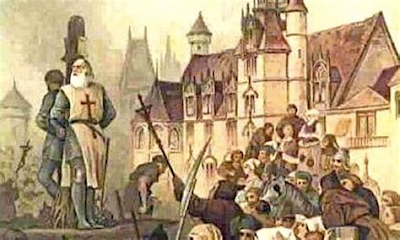
Nearly two centuries of service to the Christian faith were thrown to the wind in a swirl of hysteria and conspiracy. After recanting their confessions (asserting no crimes occurred), De Molay and Geoffrey of Charney, the preceptor of Normandy, were burned to death for heresy two years later in Paris. They were followed by about 50 other members who recanted but were condemned as “relapsed heretics” and executed. Few historians today dispute that the charges by Phillip were concocted and the confessions obtained by torture.


Execution of De Molay

Loss and legend: those Boogie Knights


The property and wealth of the order were seized by secular authorities or handed over to other orders, except for those members of the Order who resided in Portugal. The King of Portugal uniquely offered the knights his protection. Those knights not executed by Philip were merged into other orders. Philip’s outrageous acts might have ended the Order and relegated it to history, but… the Templars’ dramatic demise fueled the rumor mill. 

One legend claims that in 1314, Templar knowledge was secretly passed on to future generations. This led to the belief that the Order continued "underground" in the years that followed, with various theories and speculations. Some believed they had chapters in Scotland, America (before Columbus), aided in forming what is now known as Switzerland, and were responsible for the birth of Freemasonry, among other ideas. The Templars and the mystery surrounding them became perfect material for novelists, filmmakers, and even some historians. 

For example, Sir Walter Scott, an early English-language historical novelist, set the template for fiction and drama with his 1819 novel Ivanhoe. In his version of the myth, the villainous Templar Sir Brian de Bois-Guilbert and his order drifted away from their original purpose. Many other novels linked evil deeds and secret plots to the Templars. This was followed by numerous books, periodicals, films, and TV shows exploring the myth. Even computer games tapped into the legacy and mystery. 

Throughout it all, many conspiracy stories emerged, and even the Nazis became involved in some. Sadly, over time, many have accepted such embellishments as fact. Who doesn't love conspiracy theories wrapped in the mists of history? However, there’s no solid evidence that the Order survived in the form it once held at its peak.


The Modern Knights Templar


Today, the spirit of the Poor Knights of Christ of the Temple of Solomon is carried on by dedicated men of faith and action in the form of the Sovereign Military Order of the Temple of Jerusalem. This ecumenical Christian and chivalric charitable order does not claim a direct lineage to the original Knights of the Temple. However, they have adopted two of the original Templar missions: protecting Christians at risk, especially in the Holy Land and the Middle East, and ensuring the road to Jerusalem remains open to all. They show devotion to God by promoting love and respect. Their efforts include fostering understanding among all religions, helping pilgrims, and maintaining the Christian presence in the Holy Land.


They also work to protect the poor and sick, promote justice, and defend free speech. (The original order’s demise was based on a travesty of justice and suppression of free speech). They uphold the ideals of chivalry and preserve the monuments, archives, and history of the Knights Templar. In the United States, the order is organized into Priories, Preceptories, and Commanderies across many states and the District of Columbia. I am honored that the Priory of St. Patrick (Hudson Valley) in New York submitted The Patriot Spy for the 2015 History Book Award.


The US order is affiliated with the international order, the Ordo Supremus Militaris Templi Hierosolymitani (The Sovereign Military Order of the Temple of Jerusalem). It is the only international Templar order recognized by the United Nations as a non-governmental organization with special consultative status. From the way things look today, the order still has a lot of work ahead.


Saturday, February 7, 2015

The Bravest Son of Liberty?

A Boy from Jamaica


Colonial Jamaica, Long Island was verdant farmland


Jamaica, Long Island, that is. Brigadier General Marinus Willett may well be one of the greatest and most accomplished New Yorkers ever. He was a descendant of Thomas Willett, who arrived in New York on the ship The Lion in 1632. The elder Willett served as the first English Mayor of New York City after New Amsterdam fell to the British in 1664. Marinus' father was Edward Willett, a farmer who lived in Jamaica, Long Island (now Queens). It's hard to believe that the mean streets people see on the way to JFK Airport once were some of the lushest farmland in America. But Edward was a man of letters and business—he made his living as a school teacher and a tavern keeper.


Soldier of the King


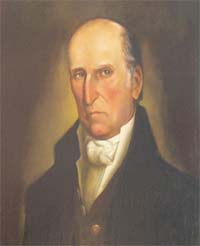
Marinus Willett: Citizen Soldier


As with many American leaders of the Revolutionary War, young Marinus first gained experience fighting for the King as a Loyal and dedicated subject. He served in the militia during the French and Indian War, where he was commissioned as a Subaltern in a New York regiment led by Oliver DeLancey Sr. DeLancey was among the wealthiest New Yorkers, and his family would remain staunchly Loyal a generation later. The regiment participated in General James Abercrombie's 1758 expedition to Fort Ticonderoga. Later, Marinus Willett served with the regiment as part of John Bradstreet's forces at the Battle of Fort Frontenac. He fell ill during the campaign and remained at Fort Stanwix until he recovered. While there, he assisted in upgrading the fort, which, as his career later developed, seems almost providential.

Son of Liberty


New York, not Boston style. Willett settled in New York City after the war, and although he worked as a cabinetmaker, he took an interest in politics as tensions with Britain began to simmer. He became the community organizer of his time, which is to say, a rabble-rouser and street brawler. After the news of Lexington and Concord, he helped plan a raid on the old arsenal in New York and took weapons for the cause. On June 6, 1775, the British decided to evacuate New York City. Willett led an effort that prevented the soldiers from taking spare arms with them. On July 20, 1775, he and other members of the Sons of Liberty procured a sloop and captured a British storehouse at Turtle Bay. This cove on the East River was named by Dutch settlers because of its resemblance to a knife. The word "Deutal" (Turtle) is Dutch for "knife." Ironically, Turtle Bay is near where the British landed when they recaptured Manhattan a year later.

Patriot Soldier

Clearly, Marinus Willett proved himself during wartime, as many of our military legends have. He began as a captain in the 1st New York Regiment, and almost right away, the regiment participated in General Richard Montgomery's invasion of Canada in 1775, one of the most brutal episodes of the entire war. He fought at the Battle of Quebec in December of that year and temporarily commanded Fort St. John during the American occupation. However, he returned to New York City with the regiment when enlistments expired, arriving in March. During the British offensive to retake the city in 1776, he had lost a captain's commission in the 4th New York Regiment (possibly in a card game) but continued to serve as a militiaman. 


Colonel Marinus Willett during
the War for Independence


But experience and connections do matter, especially during wartime. In November 1776, he was appointed Lieutenant Colonel of the 3rd New York Regiment, commanded by Peter Gansevoort. He spent the winter recruiting before leading the regiment north. In March 1777, he took command of Fort Constitution in the New York Highlands, where he successfully attacked a blockhouse and burned a British force of one hundred soldiers. Later that year, he helped MacDougall defend Peekskill against a British raid, before being assigned to Fort Stanwix on the Mohawk River.


Drums Along the Mohawk


Stanwix was the anchor of a line of American defenses stretching from Albany to Oneida Lake. This was the western frontier with the Iroquois and a strategic position guarding the portage between Oneida Lake and the Mohawk River. General Washington recognized its importance and had the old French and Indian War post rebuilt and garrisoned. Willett worked tirelessly to prepare Fort Stanwix (also known as Fort Schuyler) for the inevitable attack. It arrived in the form of a British force led by Colonel Barry St. Leger, who laid siege to Stanwix on August 3, 1777. St. Leger made the customary demand for surrender.  


Herkimer was wounded at Oriskany


But Willet refused. The defenders hoisted a makeshift Stars and Stripes in defiance of the more than one thousand British, Loyalists, and Iroquois. Word arrived on the fifth that General Nicholas Herkimer and the Tryon County Militia were marching to relieve the fort. On August 6th, the defenders made a sortie to distract the besiegers, with the signal being the sound of three guns. But when Willett led his troops out of the fort, they found the enemy camp deserted. The force of Loyalists and Indians had gone east to Oriskany, where they ambushed Herkimer. The British Regulars, Loyalists, and Indian Allies returned from that vicious ambush under the cypress trees to find Willet had ransacked and looted their camp of supplies and munitions with his sortie. Willett was later presented with a sword from the Continental Congress for this exploit.

Fort Stanwix


Still, the besiegers kept demanding Willet surrender. Willet personally met with the emissaries. But when he learned of Herkimer's defeat at Oriskany, he decided to slip out on his own and seek help from Fort Dayton further down the Mohawk Valley. There, he discovered that Major General Schuyler had already sent a second relief force under Benedict Arnold's command. Willett then traveled to Albany, where he met with Arnold, and afterward returned to Fort Dayton with Arnold's army. On the return trip, Willett stopped to visit Herkimer. Almost two weeks after the Battle of Oriskany, Herkimer had his leg amputated on August 19th but appeared in good spirits. However, the next day, Herkimer died from infection and blood loss.

Countering Espionage?


In a surprising connection to Yankee Doodle Spies, Willett appears to have played a small role in counterespionage efforts. On August 20th, he served as a judge at Loyalist Captain Walter Butler’s trial. Butler was the son of John Butler, who commanded Butler’s Rangers, a prominent Loyalist unit both feared and despised by Patriots on the New York frontier. Continental Army troops had captured the younger Butler while he was trying to recruit rangers at Shoemaker Tavern in German Flatts, New York. Butler was tried as a spy. Willett's court found him guilty and sentenced him to death. The condemned Butler was sent to Albany to await execution, but after a few months, he escaped and returned to Canada.

Back to the Continental Army, then back to New York's Frontier, then...


Willett seemed to be everywhere at times. In June 1778, he was granted leave from the Northern Department to join Washington's Main Continental Army, which was preparing to attack General Clinton's British forces moving from Philadelphia to New York. There, he served as an aide to General Charles Scott and participated in the Battle of Monmouth. Scott's Brigade was part of the vanguard in that epic clash.

By the summer of 1779, Willett had rejoined the 3rd New York Regiment during the Sullivan Campaign against the Iroquois. This campaign was a brutal, destructive effort that foreshadowed later Indian warfare. Willett later spent some time in the New York Highlands before returning to the main army at Morristown. In January, he took part in a raid on Staten Island.

In early 1780, he was appointed commander of the 5th New York Regiment, a unit severely weakened by battles in the New York Highlands. An enthusiastic advocate, he became involved in voicing grievances on behalf of unpaid troops. He also found time for leisure.

In 1780, while based at Fort Plain, New York, he met and had an affair with an attractive widow named Mrs. Seeber. The affair resulted in the birth of a son, Marinus Willett Seeber. Willett openly acknowledged the boy's paternity, supporting him and ensuring he received an education.

In January 1781, Willett returned home as the New York Line was reduced to just two regiments. By April, he was back as a colonel of the New York militia, engaging in numerous actions. His regiment defended the Mohawk Valley and the areas around Albany. That summer, he led the militia in the Battle of Sharon Springs, attacking Indians and Loyalists. 

In October, he commanded the militia at the Battle of Johnstown. Afterward, he pursued the retreating enemy through an increasingly cold month. A forced march in snowshoes during a heavy snowstorm brought Willett's militia close to the Loyalists, who escaped under cover of the swirling snow. Ironically, the 

Post War: Politico Peacemaker Peace Officer


I might need to write another blog about Marinus Willett's post-war adventures. His later career is hard to believe. At the end of the war, Willett helped establish the Society of the Cincinnati, a controversial order of former American and French officers from the Revolution. He opened a store on Water Street in New York City. 

In 1793, his first wife, Mary, died. He soon remarried. His new wife, Susannah Vardle, was “active” in New York society, but her vivacity proved more than he could handle, and they divorced in 1797. In post-war politics, Willett became an Anti-Federalist under George Clinton and served in the New York State Assembly. He served as Sheriff of New York County (also known as Manhattan) for several years and helped put down Shay's Rebellion in 1787. 

By 1788, he was again aligned with Clinton in fighting against the Constitution—yes, that Constitution. When it finally passed, he continued working with others to repeal or amend it. Despite his anti-Federalist stance, Willett was sent by President Washington to persuade the Creeks to come to New York (then the nation's capital). This led to the Treaty of New York, the first of many treaties that would not bode well for the Indians. He later served again as sheriff of New York County. 

When war broke out against the Indians in the Northwest Territory (1792), Willett was offered a general's commission. He declined, telling President Washington that he did not support war with the Indians. Willett also turned down a later offer to serve as a peace envoy to them. It’s only possible to speculate that his experiences during Sullivan’s campaign influenced his views on America’s Indian policies.


Creek Indian Leaders in New York City


Going Strong in the New Century


So strong was his character that in 1799, Willett married young Margaret Bancker. He was 59, and she was only 24, but they had four children—three sons and a daughter. Willett, the former Liberty Boy, believed in grassroots democracy. During one particularly hot gubernatorial race, he actually fought a duel with a member of the opposing party—fortunately, neither was hurt. 

At the turn of the new century, he played a role in building some of the fortifications protecting New York City. In 1808, he replaced populist DeWitt Clinton as Mayor of New York City, becoming its 48th mayor, and in 1811, he ran unsuccessfully for Lieutenant Governor of New York. He supported the War of 1812, but now, in his 70s, he only gave patriotic speeches to support it.  


De Witt Clinton


In 1824, he served as a presidential elector during the bitter election that elected John Quincy Adams as president. The highly accomplished Marinus Willett died at his home on August 22, 1830, a few weeks after suffering a stroke. Ironically, this was exactly 53 years after the lifting of the siege of Fort Stanwix. 

The ninety-year-old First Patriot was laid to rest in the churchyard of Trinity Church, at the corner of Broadway and Wall Street in New York City. His funeral was attended by 10,000 mourners — about 5% of the city’s population at that time. Not too bad for a cabinet maker from Jamaica.


Marinus Willett in later life

Sunday, January 11, 2015

Somerset Court House

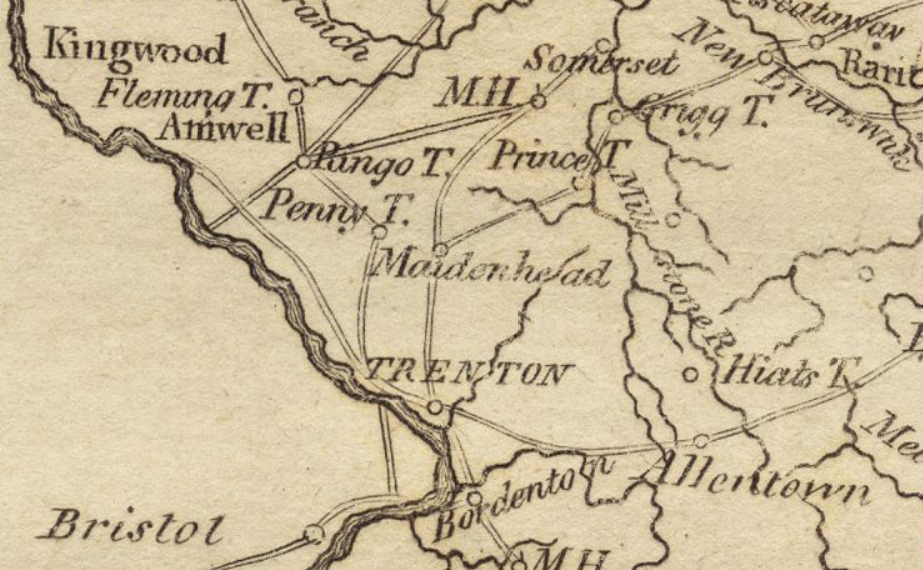
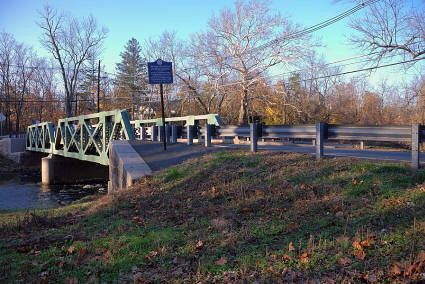
The area around Somerset Court House in central New Jersey saw an extraordinary amount of Revolutionary War military activity. Reason: it was on the main approach between north Jersey and Princeton, and between Princeton and New Brunswick, a British stronghold in Jersey. Not unexpectedly, the militia around Somerset Court House, now Millstone, New Jersey, saw action on several occasions. Somerset lay in that "middle area" between the British and American outposts, which had some quite vicious but little-celebrated fighting. Besides being in a strategic crossroads, the area around Somerset Court House was full of thriving farms with an abundance of crops and animals. During the winter in particular the ground was often frequented by British foraging parties from nearby New Brunswick.


Background


After General Washington took Trenton for the second time and fought past the British under General Cornwallis at  Princeton on January 3, 1777, he faced being caught between Cornwallis and the main the British Army around New Brunswick. But Washington's troops were exhausted after weeks of marching and fighting in extreme weather with inadequate food and clothing. So His Excellency decided to send his beleaguered regiments up the Millstone River valley toward Morristown, which could provide suitable and secure winter quarters. Morristown was protected by the Watchung Mountains, which could be strongly fortified at the passes to stop a British attack.


New Jersey was a battleground


 After the rebels fought at Princeton, Washington moved north to Somerset Court House. The advanced guard, part of the Delaware Line, came upon the village of Stone Brook (seat of Somerset Court House)  15 miles up the valley from Princeton, arriving around at twilight. However, the British had already evacuated supplies desperately needed by the Patriots. And the Americans were simply to exhausted to pursue. But within a few weeks, the winter war for forage between both sides would be in full swing and the area around Somerset was one of the prime battlegrounds of that campaign.


The Forage War Begins


At the urging of General William Maxwell, New Jersey Militia General Philemon Dickinson, and others, Washington ordered his Continental regiments and the local  New Jersey militia to engage  British outposts, patrols, couriers, and most especially forage parties Washington wanted to contain, harass and tire the British and Loyalists so they couldn't (or wouldn't) leave the main bases at New Brunswick and Amboy without sending considerable forces of say 1500 to 2000 men. The militia responded to this call with enthusiasm. Thus began a series of actions in the middle of what was normally the quiet time in 18th-century warfare. But warfare in North America, especially the war for independence took a different turn.


Militia General Philemon Dickinson


Battle of Millstone or Van Nest's Mill


On January 20th, 1777, British Lieutenant Colonel Abercromby, with 500 men and several cannon, went on a foraging party towards Hillsborough. American militia patrols spotted them and sent word back to  General Dickinson that "the enemy were out plundering." Dickinson had around 400 men in hand plus a company of 40 or so Pennsylvania Continental Riflemen under the command of Captain Durkee from the Wyoming Valley. The British were posted at a bridge over the Millstone River, near Abraham Van Nest's mill, about two miles from Somerset Court House. The Millstone ran into the nearby Raritan River. Abercromby had placed three field pieces on a hill, about 50 yards from the bridge to prevent any rebel forces from crossing there. The rivers were covered with a crust of ice and the water beneath, about waist high by most accounts, and of course ice cold.


Millstone River Today

The Action


Seeing the bridge crossing protected,  Dickinson ordered his men downriver (towards the Raritan), where they broke through the ice and waded into the cold waters that reached well above their knees. Dickinson divided his forces, sending one force to meet the front of the British wagon train, while a second moved to flank them. One wing of the American attack successfully surprised the British wagon train in the lane near Van Nest's Mill, cutting it off before it reached the main road and the bridge toward New Brunswick. Well-placed fire struck horses from the first wagon, halting the train,  Panicked, the wagon drivers scattered. This caused the British to beat a hasty retreat to the bridge, leaving their booty behind. But when the pursuing militiamen reached the bridge, the Hessian rearguard fired grapeshot from its artillery to cover the retreat. After an exchange of fire across the river, the British withdrew. As was the case with most such actions, the actual combat was brief. The British taking the brunt of causalities and lost around a dozen prisoners and twice that in killed and wounded. The British admitted that the rebel surprise attack "occasion'd such disorder Amongst the Waggon Drivers that 42 Waggons were left behind." They also lost 104 horses, 115 head of cattle, and about 60 or 70 sheep. Valuable livestock denied the enemy in winter quarters and most needed by the always deprived rebels.


Militias defeat Regulars: How Could this Happen?


This was no major battle or great victory. Yet it proved significant. Stalwart and determined, these once disparaged New Jersey militiamen had gained confidence and were less in awe of redcoats and Hessians due to American successes Princeton and Trenton. Even before Trenton, exaggerated reports of enemy depredations across the Jerseys began to stir the fires of revenge and retribution in many (but not all).  This was not the only instance when anger fired up the militia into ferocity against enemy regulars and Loyalists. In fact, it would become a growing theme throughout the remainder of the war. So in many ways, the action at this place called Somerset Court House was a harbinger of greater things to come.


Saturday, December 13, 2014

Solid Soldier

Oft mentioned, Little Known


I have profiled a few of the "second-tier" First Patriots, those who played important but less widely celebrated roles in the American fight for independence. This blog examines one such individual from the British side. While researching the background of the Yankee Doodle Spies, I noticed that the name Alexander Leslie appeared more often than others. His name came up in battles and campaigns from New York to the Carolinas. I started to wonder about this man, who seemed to lead troops and be involved in the most interesting places but never quite became a household name like Simon Fraser or Banastre Tarleton.


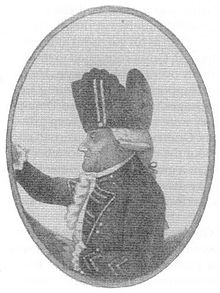
Alexander Leslie


Before the outbreak of War


Alexander Leslie, son of the Earl of Leven and Melville, joined the army in 1753 as an ensign in the Third Foot Guards. By 1768, he had become a lieutenant-colonel of the 64th regiment, stationed in Boston. His rapid rise in rank reflects Britain's extensive military commitments during that period of warfare. Leslie served with the British garrison at Boston before the outbreak of hostilities in 1775. Before the American War of Independence began, he led troops on a mission to Salem, Massachusetts, to search for contraband weapons, including cannon, held by the Patriots. A confrontation—not physical—with rebels at a raised bridge disrupted the mission and delayed his advance. His force was eventually allowed to proceed into Salem, but they found nothing of importance and retreated. An early version of Lexington and Concord was narrowly avoided. One wonders if a more hot-blooded commander might have produced a different outcome. It is said that a spy provided Leslie's commander, Gage, with faulty intelligence.


The Retreat at Salem Bridge


Mostly success in the North


Leslie's Light Infantry led the night movement
that cut off a large part of the rebel army on Long Island
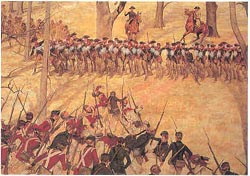
By the New York campaign of 1776, he became a brigadier-general. He led troops on Long Island, at Kip's Bay, and at Harlem Heights. Leslie commanded a brigade of Light Infantry, elite soldiers skilled at fighting in America's fields and forests. Men who could shoot, move, and fight better than most. His brigade formed the advanced guard of General William Howe's strategic night envelopment of Washington's forces. The Light Infantry seized the strategic Jamaica pass at night and led a nighttime advance that cut off a large part of the American troops. Leslie's command suffered 63 casualties for their efforts. This was a relatively small number for such a critical and successful action, but it mirrored the casualties of other brigades that fought during that hot day near Brooklyn. However, when the British took New York, Leslie's Light Infantry was mauled by Colonel Thomas Knowlton's Rangers at the Battle of Harlem Heights. Unfortunately for the American cause, Knowlton was mortally wounded. Much of this is captured in book one of "Yankee Doodle Spies," The Patriot Spy.


Battle of Harlem Heights


When the British landed north of New York in October 1776, Leslie's command was once again in the fight, but he suffered heavy losses at the Battle of White Plains. The solid and steady Leslie missed a chance to earn glory at Princeton in January 1777. General Washington had escaped the British under Lord Cornwallis through a night march around the British left toward Princeton, which was several miles behind Cornwallis. Leslie commanded the brigade garrisoning Maidenhead (today's Lawrenceville, NJ). Lord Cornwallis ordered Leslie and Mawhood's brigades into action. But before Leslie could get involved, the vanguard of the Continental Army broke through Colonel Mawhood's brigade and took Princeton. The Continental Army escaped Cornwallis and found safety behind the Watchung Mountains at Morristown. Leslie also took part in the siege of Charleston as commander of the combined brigade: four battalions of Light Infantry and elite Grenadiers, the best of the British troops. When Charleston fell, Leslie initially took command of the city. He stayed there only a few weeks. Once he had organized the garrison, General Henry Clinton ordered him back to the main British garrison in New York, where he took command of the Light Infantry and Grenadiers stationed there.


Washington leads the attack at Princeton


Struggling in the South


In the autumn of 1780, Clinton sent Leslie to the Chesapeake Bay leading an expedition aimed at distracting American forces and then capturing the supplies the Americans had gathered for their defense. Leslie reached Virginia in October but soon received orders from Cornwallis (who was now under his command) to proceed to Charleston. Leslie likely realized that Virginia would be critical to the war's successful ending, so before heading south, he sought confirmation from Clinton. His correspondence indicates he was reluctant to go south. Before leaving Virginia, he wrote Clinton expressing hope that "you will be able to take up this ground; for it certainly is the key to the wealth of Virginia and Maryland." Nonetheless, he headed south. Leslie arrived in Charleston in mid-December and received orders to march inland and meet up with Cornwallis's army. Cornwallis decided to wait for Leslie to reinforce him before moving to join forces with Banastre Tarleton. That decision proved a critical mistake. Due to bad weather, Leslie's force only reached the main army camp on January 18, one day after the Battle of Cowpens. Tarleton then had to face Daniel Morgan's division without support from Cornwallis, whose presence might have turned it into a British victory instead of a decisive defeat.


The Cowpens


 Leslie's command accompanied Cornwallis's forces in pursuit of General Nathanael Greene's army. At Guilford Courthouse, he commanded the British right in a style Cornwallis praised in his follow-up dispatch: "I have been particularly indebted to Major-General Leslie for his gallantry and exertion in the action, as well as his assistance in every other part of the service." Leslie took part in the challenging march north from the Carolinas into Virginia, one of the remarkable feats of the war. However, Leslie was not with Cornwallis at the siege and surrender of Yorktown. By the summer of 1781, his health had declined to a point where Cornwallis transferred him to Charleston, from where Clinton recalled him to New York.

But the stay in New York was short. On August 31st, Clinton ordered him to sail once again to Charleston and take command. After Cornwallis surrendered at Yorktown, Clinton placed Leslie in charge of all British forces in the South. The weather and stress of command took a toll on Leslie. He had a bad fall from his horse that weakened him and complicated his other health issues. Recognizing his poor health, he asked to return to New York, but Clinton could not spare him. He remained in command throughout the rest of the year despite numerous requests to be relieved due to worsening physical stamina and stress management. Leslie had worked in America for years, his wife was dead, and he had a daughter he wanted to see and ensure a good marriage for. He suggested several suitable replacements, but Clinton, although claiming sympathy, delayed and stalled his requests.


After the British took Charleston, it became the
"Green Zone"of the southern theater

Frustrating Finish


So Leslie soldiered on, supervising the decline of British interests in the south. After the treaty, he organized the consolidation and removal of British garrisons while dealing with relentless rebels, disheartened troops, and complaining Loyalists. These groups watched in disbelief as their birthright and lives evaporated, as the British withdrawal from Charleston approached. In the end, Leslie's command in Charleston outlasted Clinton's stay in New York, which the new British commander-in-chief, General Guy Carleton, would have the honor of evacuating. Gradually pulling back the British inland garrisons from outposts, maintaining order, and repelling rebel attacks was a difficult task that offered little glory. The time in Charleston would have drained even a strong man. The southern rebels were among the most active throughout the war, engaging in bitter small-scale fighting, property theft (by both sides), and general chaos. As thousands of Loyalists moved into Charleston (another kind of "Green Zone,” like New York), the challenge of caring for civilians became overwhelming. Leslie's attempts to arrange a cease-fire of sorts went unanswered by the Americans, who now sensed blood and always suspected British traps. Leslie remained in command of the city until it was finally evacuated in December 1782.


Back (at last) to Britain


Leslie, who would remain a widower his entire life, returned to Scotland in 1783. On a happy note, he was able to witness his daughter Mary-Anne's wedding in 1787. According to accounts, Leslie was well-liked by his peers and considered genteel and mild-mannered by most. His life after America is surprisingly obscure, given that he was appointed deputy commander of the forces in Britain. In 1794, he was near Glasgow, Scotland, where he led troops to suppress a rebellion by the Breadalbane Regiment of Fencibles. Some reports claim he was hit by a stone while marching some of the prisoners away and died shortly afterward. However, at least one eyewitness account disputes that and points to a Major Leslie as the victim. Regardless, the quiet and easygoing Scot died in December of that year. His death was, like his army career, unannounced and little noted. Yet the stalwart Scot should not be dismissed lightly. He served honorably through great hardship and, unlike many of his contemporaries, with little regard for his own glory.


Sunday, November 16, 2014

Yankee Doodle Music

I am going out on a very long and shaky limb with this post. I have decided to add a bit of culture to my musings on the time of the American War for Independence, also known as the era of the Yankee Doodle Spies. Music is a reflection of the society and culture from which it springs: aspirations, frustrations, and dreams all collide in a mix that is meant to inspire, influence, and sometimes just entertain. Whether music is composed for the concert hall, salon, church, or tavern, it has an effect on society and sometimes helps transform it. Since the American Revolution was one of the most transformative events in history, its music bears some attention. As I write, I happen to be listening to some of Haydn's string quartets, so I will focus on "serious" music during the time of the Yankee Doodle Spies in this post.


Mozart


Within the genre we call "classical" music, the eighteenth century was a time of transition from the Baroque period, which is actually referred to as the Classical period. In some ways, the transition mirrors the overall cultural shift during what is called the Age of Reason. During the eighteenth century, a new awakening to the study and appreciation of classical Greece and Rome led to a renewed interest in classical architecture, literature, arts, and history. The study of those once-forgotten languages experienced a resurgence. Oratory became an essential part of education, as did mathematics and science. 


Music was an important part of 18th-century life


The evolution of music from the more formal and structured Baroque to the less formal and cleaner style of the Classical period is a manifestation of this transitional period. Such music was still closely associated with court culture and absolutism, characterized by its formality and emphasis on order and hierarchy. After all, these were the patrons, sponsors, and benefactors.  They paid the bills. However, the new style was also "cleaner" - favoring clearer divisions between parts, starker contrasts, and simplicity over complexity. As the 18th century progressed, the nobility became the primary patrons of instrumental music, while public taste increasingly preferred comic opera. This led to changes in the way music was performed and written. The central figure of the last quarter of the century was, of course, Mozart. Wolfgang Amadeus Mozart's compositions characterized the music of the classical era.


Most gatherings included but a few instruments


Across the ocean, things followed, albeit more slowly. The period of Puritan domination (That is, New England) was waning by the 1730s, and musical concerts began to spring up. The first public concert in America, of which we have a record, was held in Boston. This took place in 1731, at a time when the New England ban against secular music was gradually waning. The event, called "a Concert of Music on sundry Instruments," was held in "the great room" of a local dancing master, who was also a teacher, tradesman, and tobacco trader. 

Chamber Music 


A few years later, Fanueil Hall began to be used for musical concerts.  By 1754, there was a concert hall at the corner of Hanover and Court Streets in Boston. The next American city to have a public concert was Charleston, South Carolina. The upper classes already had their private recitals, dances, and such. Then came to New York. In 1736, a "Consort of Musick, Vocal, and Instrumental" was advertised, showcasing various instruments. Philadelphia had its first public concert in 1757. 

Faneuil Hall


But as the largest city in the American colonies, Philadelphia likely had private concerts previous to this, as it had a vibrant culture of entertainment (despite the strong Quaker influences). By the time of George Washington's era, the variety of musical instruments used in America was growing. As early as 1761,  Washington ordered a spinet from England. The harpsichord, and later the piano-forte, were found in many homes and were used at concerts. Violins and cellos were well-known, and the versatile German flute grew in popularity.

Harpsicords were popular


The concert programs of the day offer a glimpse into the instruments most commonly used, as many of them announced the instrumentation of the orchestras that performed, as well as the instruments used by soloists. At least one concert in 1769 included solos on the violin, flute, clarinet, harpsichord, and mandolino.  Other instruments used during the time of the Yankee Doodle Spies included the violin, the viola, flutes, and French horns. Trombones were in use, too. 

The violin was among the most 
popular instruments


According to one account, one night in 1755, some trombonists at Bethlehem, Pennsylvania, warded off an Indian attack by playing chorales. Trumpets were introduced in America in the early eighteenth century. Woodwinds, such as the oboe and the bassoon, were also beginning to appear. All of these were in very small numbers and scattered near the more developed parts of the colonies. The point is that by the mid-eighteenth century, the colonies were experiencing economic growth.  Cultural expansion followed, and the tools (instruments) made their way across the ocean to fill the need.


The Snare Drum is one of the oldest military instruments


During the mid-eighteenth century, American church music also began to emerge as a distinct entity. So-called Psalm Music was primarily vocal, as was most music in colonial America. The great religious awakening of the mid-century spurred it on. Regardless, this was the harbinger of the unique relationship between church and secular that exists even today. It should be remembered that the same phenomena existed in Europe as well. Most musicians wrote for both audiences. 


The military also had an impact on musical appreciation during the American Revolution. Military bands had both “field music,” primarily fife and drum, to move troops around the battlefield as well as “bands of music.’ The latter were small ensembles hired by officers to play at balls, fetes, and sometimes for the public. These were the antecedents to the later 19th-century bands that became popular in America and Europe and still perform public functions today. The music played on the fife and drum can be identified from published tutors and from tune books written out by the players themselves.  Giles Gibbs's.  The Book for the Fife (1777) represented all the music needed for an army, including military signals and marches, as well as dances, songs, and hymns. It also includes the music to the song we know today as "Yankee Doodle."


Military bands came into their own during the
struggle for independence


In the fall of 1768, British troops landed in Boston to protect crown officials who were being harassed by local citizens and could not carry out their duties. The British regiments had bands of music attached to them. By 1769 these bands were participating in public concerts. The programs included symphonies, concertos, overtures, and songs—not military music, but typical eighteenth-century concert fare. Americans organized their military units along British lines, and military musicians were part of the plan. 

British Bands helped inspire Loyalty to the Crown


The Continental Army, consisting of one artillery and twenty-seven infantry regiments, was formed from the various state militias. Each regiment had eight companies of ninety officers and men, including two fifers and two drummers. Drum majors and fife majors were also appointed in many regiments to instruct and lead the field music. The organization thus provided positions quite a number of fifers and drummers alone—448 of each. Whether or not all fife and drum positions were filled, military music had a forcible impact on the atmosphere of American towns and cities after the outbreak of the war. 


The Continental Army Bands also inspired Patriotism


Legend has it that at the surrender of General Cornwallis’s troops ending the siege of Yorktown, a British military band played a popular tune of the period as the British and Hessians grounded their arms: “The World Turned Upside Down.” There is no contemporary account of this (the story grew out of an early 19th-century memoir) but clearly, the very idea that a musical theme should accompany such a momentous occasion completes the cycle that made music a central part of American culture in the years following America's independence.


The World Turned Upside Down? Musically, politically...


A future look at music during the Revolutionary War will focus on the “pop music” of the day. Songs sung by the masses were used by both sides to rally support for their causes. Out of that genre came the first composer born in America, whom we shall meet another time.

Sunday, November 2, 2014

They Called Him Wizard Owl


As I studied the American War for Independence while writing the Yankee Doodle Spies novels, the name of Andrew Pickens seemed to appear at crucial moments in the Southern Campaign. Who was this man? When thinking of the American Revolution in South Carolina, the names Francis Marion, William Moultrie, and Thomas Sumter immediately come to mind. I decided it was time to give Pickens his proper recognition.


Frontiersman vs Cherokee Btave


Frontiersman: This little-known First Patriot was one of the leading South Carolinians and Americans. He was a prominent frontiersman, successful farmer, and accomplished soldier who later served as a South Carolina representative in Congress. Andrew Pickens was born in Pennsylvania in 1739. The son of Scots-Irish immigrants, at thirteen, Pickens moved with his family to find land further south. They traveled the route many Scots-Irish took at the time: down the Shenandoah Valley, where they settled for a while in Augusta County, Virginia. Eventually, they moved on to South Carolina, settling first near Waxhaws on the North-South Carolina border and finally in Abbeville County, near the Georgia line. The family settled in an area called the Long Canes. Here, Andrew Pickens married. He farmed and raised cattle like many other settlers. The young Pickens became familiar with his Indian neighbors and traded with them.


General Andrew Pickens


Patriot: As the American Revolution neared, political sentiments were strong in the South—both for and against. From the beginning, its inhabitants divided into Patriots and Loyalists (or Whigs and Tories). Pickens was an enthusiastic Patriot and quickly became a military leader, initially leading expeditions as a militia captain against the Cherokee, who had allied with the Loyalists in hopes of keeping their lands. In 1779, the British sent soldiers to South Carolina and North Georgia to boost Loyalist support. Now Colonel, Pickens led his three-hundred-man militia in efforts to support the Patriot cause. He defeated a much larger Loyalist force of over 700 men under Colonel Boyd at Kettle Creek in North Georgia, just south of the Long Canes.


Battle of Kettle Creek


Warrior: The victory at Kettle Creek slowed the recruitment of Loyalists on the frontier. But by 1780, the British had taken Charleston, captured the southern Continental Army, and marched inland from the Carolina coast. The situation was dire. When Charleston fell in May 1780, Pickens and other militia leaders surrendered to the British and, under oath, agreed to sit out the war under British protection. However, the Loyalists destroyed his farm and frightened his family, giving Pickens the reason to break his parole and take the field again. He gathered his militia and started waging guerrilla war in retaliation. The war in the South was fierce. Pickens borrowed heavily from Cherokee tactics and employed those skills in partisan warfare. He was brave and clever in leading partisans.


Battle of the Cowpens


In January 1781, British Colonel Banastre Tarlton attempted to destroy an American force led by famed rifleman Daniel Morgan. Pickens was a militia leader in the engagement and played a key role in defeating British Colonel Tarleton. American commander Daniel Morgan decided to use the reputation of the militia as a rabble that wouldn't stand against a disciplined British attack to lure the British in. As they waited for the enemy, Morgan asked them for "just two volleys and then retreat." Easier said than done in most cases. But with Pickens commanding the militia, they did exactly as Morgan asked. 


Dan Morgan issues orders at Cowpens


When the British saw the militia retreat, they thought they had won and advanced straight into Morgan's trap. Pickens's men rallied behind the Continentals and participated in the victory, which was crucial for the Patriots in the South. Until then, they had been repeatedly forced to retreat before British forces. For his "spirited conduct" at Cowpens, the Continental Congress awarded Pickens a sword, and the State of South Carolina promoted him to Brigadier-General in the state militia. 


Pickens appeared at all the key engagements in the South. Besides Cowpens, Charleston, and Savannah, he was at Augusta, Georgia, when it fell. Pickens was at Ninety-Six for more than one of its many engagements. In numerous skirmishes, he used his knowledge of the Cherokee way of war to flush out the many Tories in their midst.

Fort at Ninety-Six


Citizen: After the Revolution, Pickens acquired land in frontier South Carolina on the banks of the Keowee River, across from the old Cherokee town of Seneca. There, he built a house named "Hopewell" and became a backcountry gentleman. He served as a political middleman between the Cherokees and the new American nation. Although Pickens had begun his military career fighting the Cherokee in the Anglo-Cherokee War, he was well-respected by tribal leaders. They called him "Skyagunsta"—or Wizard Owl. In his later years, he sympathized with Indian causes. Among the whites, he was sometimes known as "The Fighting Elder" because of his Presbyterian beliefs. 


Pickens later served in Congress


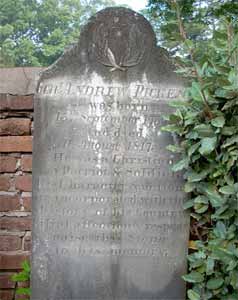
Like many frontier settlers, Pickens was a family man. He married Rebecca Floride Calhoun in 1765. They had 12 children. Pickens served as a U.S. Congressman. His son, Andrew Pickens Jr., was governor of South Carolina from 1817 to 1819, and Ezekiel Pickens became lieutenant governor of South Carolina from 1802 to 1804. A grandson, Francis Wilkinson Pickens, also served as governor of South Carolina from 1860 to 1862. Andrew Pickens died near Tamassee, South Carolina, in Oconee County, on August 11, 1817. He is buried at Old Stone Church Cemetery in Clemson, South Carolina. 


General Andrew Pickens' Grave at Clemson


On a final note, it is said that Pickens's war experiences helped provide the basis for the Mel Gibson film "The Patriot." And there are some overlaps indicating they drew somewhat from it. Clearly, if the writers had stayed truer to Pickens's remarkable life, the film would have been all the better for it. Certainly, our nation is all the better for it.


Pickens later served in Congress