Followers

Sunday, September 18, 2016

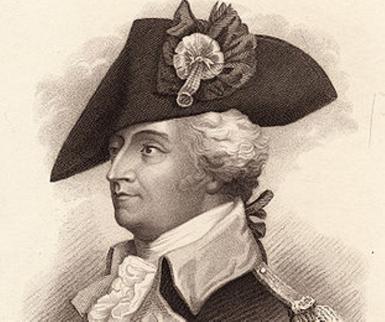
Quarrelsome Patriot

This First Patriot is among the many who served their country in diverse and remarkable ways - yet today, they remain virtually unknown to most Americans. These same Americans can recite trivial details about sports or, worse, reality TV. So, wipe the mindless pop culture from your thoughts and take a few minutes to focus on one of the unsung founders of the American republic.


Early Life & Militia Service


One of nine children, Timothy Pickering was born in Salem, Massachusetts, on July 17, 1745. His father was a successful farmer. Pickering attended Harvard College, where he studied law and became a licensed attorney. However, he chose not to practice law and instead became a local civil servant. In 1774, he was appointed register of deeds in Essex. Soon after, he was elected to represent Salem in the Massachusetts General Court and served as a justice on the Essex County Court of Common Pleas. On April 8, 1776, he married Rebecca White of Salem. He became a notable local Whig during the years leading up to the American Revolution. Like many other New England men, he joined the local militia. By 1775, Pickering had risen to the rank of colonel in the Essex County Militia, and in February of that year, he and his men successfully held off a column of British regulars under Colonel Alexander Leslie (see the Yankee Doodle Spies post on Leslie). "Leslie's Retreat" became one of the key events leading to war with Britain. In April that year, open conflict broke out between the colonists and their king. Pickering served with the army assembled around Boston. Recognizing the need for improved standards among the various colonial forces, he published "An Easy Plan for Discipline for a Militia." This manual functioned as the American army's drill guide until the arrival of General Friedrich von Steuben's renowned Blue Book.


Despite his "retreat" Alexander Leslie became
one of the better British generals of the
War for Independence


A Continental Adjutant General


Pickering eventually accepted a commission in the Continental Army—George Washington's response to the British regulars. He played a notable role in the hectic campaigns in New York and New Jersey during 1776. In December 1776, he led a well-trained regiment of the Essex County militia to New York, where General George Washington took notice and offered Pickering the position of adjutant general of the Continental Army in 1777. In this role, he oversaw the construction of the Great Chain, which was forged at Stirling Iron Works. The chain prevented the Royal Navy from advancing up the Hudson River past West Point and protected the crucial fort from attack throughout the conflict. He was widely praised for his efforts in supplying the troops during the remainder of the war. Pickering took over from General Horatio Gates, a former British officer. He served effectively as Adjutant during the Battle of Germantown in October of that year.


The Stirling Iron Works chain blocked the Hudson


A Continental Quartermaster General


Not long after, Congress appointed him to the newly created Board of War. He performed dual roles, continuing to serve as Washington's Adjutant General while helping organize overall war management. Over time, Pickering distanced himself from Washington and focused more on the functions of the Board of War. Around this period, he also became involved with the infamous Conway Cabal, but the cabal dissolved, and Pickering continued his service. In fact, his abilities soon earned him the most difficult post in the entire war effort—except for Washington's. In the summer of 1780, he took over as Quartermaster General, replacing General Nathanael Greene, while still serving on the Board of War. Supplying the needs of the ragged, yet growing, Continental Army was undoubtedly the greatest challenge facing Washington, and the burden of this impossible task largely fell on the shoulders of the Quartermaster General. Nobody wanted this job. The stubbornness of the states frustrated Congress's efforts to raise funds for food, clothing, and equipment necessary to keep the army going. Dishonest contractors and vendors were common—selling substandard supplies for quick profits. But Pickering took it on. Due to shortages of gold and silver, he pioneered the use of "specie certificates" to buy food and supplies. One of his notable achievements was organizing the food and supplies for the Continental Army's epic 1781 march from New York to Yorktown, Virginia. In that sense, he was a pioneer in logistics. The campaign was crucial in forcing the British government to enter negotiations. Pickering remained Quartermaster General for the rest of the war.


Pickering's logistics enabled the long march to Yorktown


A Servant of the Republic


After a period of controversial land speculation in Pennsylvania, Pickering had a turbulent post-war career in public service, holding successive appointments under George Washington. These included the Postmaster General, the Secretary of War, and the Secretary of State. Like Washington, Pickering helped establish the new republic and set precedents for how the cabinet functioned. In 1791, Washington asked him to negotiate a key treaty with the New York Iroquois under the great chief Corn-Planter. Pickering successfully negotiated what became the Treaty of Canandaigua in 1794.
Pickering allied with 
Hamilton's Federalists.
When John Adams succeeded Washington as president, he asked Pickering to stay on. Pickering did, but he was strongly anti-France and pro-Britain. This put him at odds with Adams, who was trying to avoid war with the French Republic. Politically, Pickering shifted into the camp of fiery New York politician and former cabinet member Alexander Hamilton. He conspired with others against Adams and was eventually dismissed in May 1800. In 1802, the contentious Pickering and a group of Federalists, upset about the lack of support for Federalists, attempted to gain support for the secession of New England from the Jeffersonian United States. It did not go well.


Pickering in the Cabinet


A Partisan in Congress


Despite, or perhaps because of his efforts, he was appointed to the United States Senate as a senator from Massachusetts in 1803, representing the Federalist Party. Pickering proved to be a staunch Federalist, fiercely opposing Thomas Jefferson and later James Madison in their populist initiatives. He opposed the American seizure and annexation of Spanish West Florida in 1810—anything to counter the expansionist policies of the Democrats was fair game to him. He fought strongly against the Embargo Act, calling for its nullification and even colluding with the British. His extreme agitation led him to read confidential documents on the Senate floor—an act that resulted in his censure. After his term as senator ended, Pickering was elected to Congress in 1812. Like most New England Federalists, Pickering opposed the War of 1812 with England and became a leader in the New England separatist movement.


The Embargo Act engendered much polemic and satire


Post-Public Life


Denied re-election in 1816, the passionate, controversial, and often quarrelsome Pickering retired to private life on a farm near Salem, where he pioneered improvements in agriculture. He died in Salem in January 1829, leaving a legacy of pugnacious and relentless public service as an effective military and civilian administrator who helped create and build a new nation. However, he was also one of the original proponents of factionalism, as well as partisan and regional struggles within the political arena.


Salem MA waterfront


Wednesday, August 24, 2016

The Battle Pass

I guess this could also be considered a "place" as well. But the place was the location of today's Prospect Park in Brooklyn, New York. To make things more complicated, it was known as the Flatbush Pass at the time. It was the linchpin in the American outer defense ring on Long Island, a battle that took place during this week in August 1776. The good news is you can still visit the Battle Pass, which is now a 526-acre oasis amidst Brooklyn's sprawl. This week marks the anniversary of the events leading up to the critical Battle of Long Island - America's first battle as a nation. I thought a blog post focusing on one aspect of this Revolutionary War battle would be fitting.


The Flatbush (Battle) Pass 1776


The Original Ground Zero 


The Flatbush Pass was a crucial piece of terrain in the outer defenses on Long Island. Most of his troops were frantically building a series of earthworks and small redoubts from Wallabout Bay to Gowanus Creek in an effort to protect the village of Brooklyn and the ferry point below the famous heights of that name. Recognizing British superiority in numbers and equipment, General George Washington relied on a Breed's Hill-style defense that would inflict losses on the British, similar to what the rebel army did outside Boston the previous year. 

However, the advantages of holding the British at the "great Moraine" were too tempting to ignore. The moraine, then known as the Heights of Guan, was the southern edge of the glacier from the last great ice age. When the glacier receded, it left a rugged strip of land across the normally flat terrain of Long Island, running from southwest to northeast. Although only about 100 feet above sea level, the Heights of Guan formed a formidable barrier, only passable through three passes. The central one was the Flatbush Pass.


The Great Moraine dominated the terrain of Long Island


While the British executed a night envelopment via the Jamaica Pass to the east, the British commander in chief, General William Howe, launched two holding attacks to pin the Americans
defending the other two passes. One of some 7,000 men under British General Grant struck near today's  Greenwood Cemetery in an attempt to force the Martense Road.


General von Heister 's force struck the
Flatbush Pass


But the center attack at Flatbush Pass almost made the British encirclement unnecessary. It was mainly composed of Hessians under the command of German General von Heister. The Hessians struck the pass. When they realized the situation was hopeless, most of the approximately 1,500 American defenders abandoned their posts and headed to the safety of the main defenses near Brooklyn. 

The brave American commander at the pass, General John Sullivan, tried to hold his position, but as panic spread, he and his men had to fight their way out. The large and determined enemy trapped him and what remained of his forces at Baker's Tavern (near today's Fulton and Flatbush Avenue). The veteran of Boston and Quebec, brave but headstrong, was cut off from his men and became one of two generals captured on Long Island that fateful day.


American General John Sullivan captured
near the Flatbush Pass


The Place Today


Defenders on Long Island fought desperately against all odds


The site of the Battle Pass is just north of the Prospect Park Zoo.


Battle Pass Marker


The Maryland Monument still stands at the south-central part of the park, nestled between Prospect Park Lake and Lookout Hill. The monument honors the brave fight by the First Maryland Continental Line, who courageously battled the British against all odds. I will save the story of the Maryland 400 for another post (actually, I have already posted about it).


The Maryland Monument


Site of the Dongan Oak - a huge tree felled to block the Flatbush Pass


There is a Quaker Cemetery near Lookout Hill that dates back to the 17th century. The Lefferts Homestead was located at Empire Boulevard and Flatbush Avenue. The original Dutch colonial farmhouse was accidentally burned by American defenders. The owner, Peter Lefferts, rebuilt the house during the latter part of the war using some of the original wood. In 1918, the family donated the residence to the city, and it was moved to Prospect Park from its original site at 563 Flatbush Avenue.


Restored Lefferts House


On a beautiful summer day, Prospect Park is filled with thousands of visitors walking, riding, visiting the zoo, or lounging by the lake. As Brooklyn experiences a kind of renaissance, the park and its lush greenery offer an ideal place to enjoy a touch of nature. But almost none of today's visitors know about the drama and tragedy that unfolded in the heart of their oasis.


Few visitors to Prospect Park today realize
they are on Hallowed Ground


Sunday, July 17, 2016

The "Little Gibraltar"


Command of the Hudson


After a summer of inaction following the Battle of Monmouth in June 1778, the British commander in chief in North America, Sir Henry Clinton, received orders the following winter “to bring Mr. Washington to a general and decisive action.” To that end, in May 1779, Clinton assembled about 6,000 men at Kingsbridge (the Bronx) in preparation for a quick strike on West Point, considered the "key to the continent." The series of fortifications at West Point controlled the Hudson River and prevented the British from cutting off New England from the rest of the colonies. Twelve miles south was Stony Point, a fortified peninsula jutting half a mile into the river and rising 150 feet above it. Directly across the river from Stony Point lay Verplanck's Point, with a garrison stationed at Fort Lafayette.


British General Sir Henry Clinton


British Strike North


On 30 May Clinton's forces sailed north on 70 ships commanded by Commodore George Collier. The 40-man American garrison at Stony Point, seeing the much larger force approaching, burned the blockhouse and abandoned the defenses without firing a shot. On the east bank of the Hudson, the other American garrison was less fortunate. Seventy North Carolina Continental troops were trapped and forced to surrender. Sir Henry ordered both forts' defenses to be heavily reinforced. At Stony Point, this was done by felling trees and constructing an earthen fort along with two barriers called abatis. Additionally, two British ships provided extra protection. The defenses at Verplanck’s Point, across the river, were fortified with troops ready to reinforce Stony Point if needed. British control of the water greatly favored them. Clinton garrisoned both forts with a total of 1,000 men, while the rest were sent on raids into Connecticut.


The British believed their defenses were secure, referring to the new fort as “Little Gibraltar.” To defend "Little Gibraltar," they had a garrison of about six hundred men, including the 17th Regiment of Foot, the Grenadier Company of the 71st Regiment, a company of the Royal Americans, and a small detachment of the Royal Artillery, all under the command of Lieutenant Colonel Henry Johnson of the 17th Regiment. 

Stony Point was a natural fortress, and with these reliable troops continually strengthening their position, Clinton had no concerns for the post’s safety. He later wrote, "entertain the smallest apprehension that any attack the enemy could make against that place…could possibly be attended with mischief before I should be able to afford them assistance." 

The British aimed not only to control the Hudson to divide the rebellious colonies but also to draw out George Washington's Continental Army, which was positioned between Philadelphia and New York around Middlebrook, New Jersey. A move on West Point was intended to accomplish this. Clinton's strategy favored the initiative, interior lines, and the advantage of quick reinforcement and water movement.


General Anthony Wayne


Washington Reacts


Now, with the British move, Washington hurried north to meet the new threat. When Washington arrived in the area, he was concerned that losing Stony Point posed a serious threat to the Hudson River and the routes to West Point. When intelligence reports indicated that the defenses were not yet finished, he quickly decided to attack. He had just the man for the job: Brigadier General Anthony Wayne. 

Wayne was a tough, bold leader of men—crafty and fearless. He once said he was "ready to take hell." Wayne conducted a "leader's" reconnaissance of the position and then a second with Washington accompanying him. Both agreed that a siege or a direct storming of the fort would be impractical; instead, he should seize the fort quickly with a surprise attack, a coup de main. 

Wayne commanded the Light Division, an elite group selected from regiments of Continental infantry. He organized his assault force into three columns totaling 1,350 men. They set out on July 15, 1779. For eight hours, they navigated narrow mountain trails, detaining civilians along the way to avoid detection. When the soldiers reached Sprintsteel’s farm, two miles from Stony Point, they were told about their mission for the first time. 

Three columns would lead the Continental forces: one of 300 men would march through the Hudson River from the north; a second, led by Wayne, would cross Haverstraw Bay from the south. Each of these two columns would consist of three parts: the first would be a group of twenty men known as "the forlorn hope," tasked with entering enemy lines first, overcoming sentries, and cutting through the abatis; the second, an advance party, would seize the fort's works; and the third, the main body, would move around the unfinished back of the fort and approach from the river.


Famed Night Attack


Light Division meets British regulars
with cold steel
The forlorn hope moved out around midnight on July 15-16. It was a moonless night, and they reached the British defenses without being detected. Wayne, learning from his humiliating defeat at Paoli, had the men in his columns remove their flints and advance with fixed bayonets. One of the columns, a diversion under Major Hardee Murfee, attacked the British center and drew away several companies of Lieutenant Colonel Henry Johnson's 17th Regiment. 

Murfee's men did have flints and powder, as their mission was to attract the defenders' attention. With the diversion underway, Wayne's column and the second column under Colonel Richard Butler scaled the heights and overran the defenses. Despite their surprise, the roughly 600 British defenders fought back as professionals and resisted fiercely. The fighting was hand-to-hand and brutal. After 30 minutes, the fort fell. 

The British lost 63 killed, 70 wounded, and the remaining 543 captured, along with twelve guns. The American attackers lost 15 dead and 83 wounded. Wayne sustained a head wound early in the attack but continued to lead his forces. 

Earlier, the fiery Wayne had offered a bounty to the first man to enter the enemy works. The winner of the award was an officer named François Louis Teissedre de Fleury, who had come to America from France and had served bravely in previous battles, rising to the rank of captain of engineers. The "Little Gibraltar" on the Hudson had fallen to Yankee stealth, daring, and courage - with some Gallic help.


Wounded early, Wayne continues leading the attack


The Value?


The symbolic significance of Stony Point led the Continental Congress to award three medals out of the ten struck during the War for Independence - gold for Wayne and silver for de Fleury and Major John Stewart, who commanded the advance party of the left column. The British responded to the bold attack by reinforcing the fort at Verplanck's Point and sinking an American ship that was transporting some of the twelve captured guns from Stony Point to West Point. 

Once Verplanck's Point was secured, the strategic importance of Stony Point was diminished in Washington's view. He also recognized that Wayne's assault showed the position was not as easily defensible as previously thought. As a result, he ordered the fortifications to be reduced and Wayne's men to withdraw on the 18th. The British reoccupied the point on the 19th. Although the operation lacked significant strategic value, it greatly boosted morale by demonstrating the improving fighting skills of the American Army. 

In addition to the Congressional medals, the battle was noted beyond American shores. Edmund Burke's Annual Register (a British publication that summarizes politics, history, and literature annually) for 1779 stated that the action "would have done honor to most veteran soldiers." The French Ambassador in Philadelphia remarked, "I am convinced this action will elevate the ideas of Europe about the military qualities of Americans..."


General Anthony Wayne during the Assault


Stony Point apres War


In 1826, Stony Point became the site of a lighthouse built to guide ships through the narrow passage of Haverstraw Bay at the southern end of the Hudson Highlands. During its 99 years of operation, only one vessel ran aground, with no reported fatalities – a testament to the vigilance of the lightkeepers. A new light tower was constructed in 1926 at the water’s edge (not accessible to the public) and continues to serve as an aid to navigation under the care of the United States Coast Guard. 

The 1826 Lighthouse is now a historic site, symbolizing the significance of the Hudson River maritime community to New York's development. Today, the grounds of Stony Point feature a mix of woods and well-maintained lawns, offering commanding panoramic views of the Hudson River, looking north to the Hudson Highlands and south to Haverstraw Bay. 

There is a site museum displaying some of the captured guns and other artifacts from the site’s past military engagements and soldiers' camp life. The artifacts, including an authentically reconstructed mortar bed for a captured 8” mortar and a stand of period bayonets, are arranged around a diorama depicting Stony Point as it appeared on the night of the attack.


Stony Point Light House


Sunday, June 26, 2016

Rev War Hydrography

What the heck is Hydrography?


This past week, we celebrated "world hydrography day," so I thought I would reflect on this little-known science's importance to the American War for Independence. Let's begin with the definition of hydrography: the science that deals with measuring and describing the physical features of oceans, lakes, rivers, seas, and their surrounding coastal areas, especially concerning their use for navigation. Although the formal science of hydrography was not officially established until the late 18th century (by the French), evaluations of waterways had been vital to navigation safety for many centuries before, especially starting with the Age of Exploration. During the American Revolution, watermen with detailed knowledge of coastlines, rivers, and estuaries played a crucial role for both sides, but especially the British, who relied heavily on the Royal Navy for their strategic advantage.


1571 pre-Mercator nautical chart from Portuguese cartographer
Fernao Vaz Dourado


Knowledge of the waterways and shorelines around Boston, New York, Philadelphia, Wilmington, and Charleston was crucial for warships, merchant vessels, smugglers, and privateers. This was especially true for the rebels, whose use of small craft and longboats was often their only defense against the diverse British ships. Local ferrymen, fishermen, and pilots were vital, and both sides competed fiercely for their services and loyalty. Failing to understand the features above and below the water, as well as the local tides, often resulted in disasters, big and small. In ancient (and maybe not so ancient) times, mariners called on Neptune, the god of the sea, for help when their knowledge of tides and shoals let them down. Here are some stories of Neptune's influence on the fight for independence...


The First Affair


The grounding of a ship before the American Revolution is a clear example of hydrography's influence. The so-called Gaspee Affair occurred on June 9, 1772. The HMS Gaspee, a British customs ship, ran aground in Rhode Island, where a group of Sons of Liberty attacked and set fire to the vessel. The British government threatened to send the American perpetrators to England for trial, but no arrests followed. Still, their threat to try Americans in England caused upset protests in the colonies, which learned about the incident from the Committees of Correspondence. The creation of these Committees of Correspondence eventually led to the founding of the First Continental Congress and, ultimately, the Declaration of Independence.


Grounding and burning of the Gaspee - prelude to war


Gloucester


Neptune works both ways—he rarely takes sides. The Battle of Gloucester is a good example. It was a small fight early in the American Revolutionary War (August 8 or 9, 1775) at Gloucester, Massachusetts. Royal Navy Captain John Linzee, commanding the sloop-of-war HMS Falcon, saw two schooners coming back from the West Indies. After taking one schooner, Linzee chased the second (American) into Gloucester Harbor, where it ran aground. Linzee sent sailors to seize the prize. But, the townspeople called out their militia, who captured the British sailors sent to take the grounded ship. The militia also took back the ship. Local knowledge of the waters around Boston gave the New Englanders a big advantage against the strong land and naval forces during that crucial year.


Massachusetts coastline


Aside from this incident, Gloucester is known for being the home of the legendary Marblehead sailors, whose expertise and skill in navigating coastlines and riverways played a vital role in rescuing the Continental Army from defeat and facilitating Washington's Christmas night crossing of the Delaware River, which delivered a significant victory at Trenton.


Marblehead Sailors helped save the Revolution


HMS Somerset vs Neptune

The HMS Somerset began its service during the American Revolution by shelling Charlestown in 1775. The Somerset achieved great success operating in estuaries, bays, and rivers. It acted as the flagship headquarters at Bunker Hill (Breed's Hill).


Knowledge of waterways was critical for large ships of war


The Somerset was involved in another brief but significant incident during the war, the Battle of Chelsea Creek. On the night of May 27, 1775, the armed schooner HMS Diana ran aground in Chelsea Creek while trying to stop Americans from driving British livestock off Noddle's Island in Boston Harbor. The American rebels set fire to the ship. HMS Somerset's tender, Britannia, was able to rescue the crew of the Diana. Later, it participated in the fierce river fighting at Fort Mifflin near Philadelphia.


HMS Somerset


The battle for Fort Mifflin involved ships and boats navigating the treacherous waters of the lower Chesapeake River. It was a desperate, prolonged siege, featuring land and naval forces that used the elements and geography to their advantage. The Somerset participated in the later phase, bombarding the fort from far offshore. Meanwhile, other small vessels navigated dangerous waters in the turbulent ebb and flow of fierce combat that lasted for weeks. To prevent the British from using two nearby islands, the Americans breached the riverside dikes.


This action forced the British to build their batteries on top of the dikes and work in knee-deep water. An example of the challenges faced is when the British lost an 8-inch howitzer and a soldier drowned when the craft carrying the gun sank in the Schuylkill. While bombarding Fort Mifflin, the Augusta and Merlin ran aground. A high tide that evening was met with contrary winds that hindered the depth needed for the ships to be freed.


On October 23, 1777, the American forts focused their fire on the two stranded ships. HMS Isis maneuvered alongside the grounded sixty-four in an effort to rescue it. British accounts claimed that American gunnery caused only minor damage, though flaming wads from the ships' guns set the Augusta on fire. At midday, the Augusta exploded with a tremendous blast that shattered windows in Philadelphia. An eyewitness reported that 60 sailors, a lieutenant, and the ship's chaplain died while struggling in the water. The loud explosion was heard nearly 30 miles away in Trappe, Pennsylvania. After the Augusta's destruction, the crew of the Merlin set their ship on fire and abandoned it.


British bombard Fort Mifflin


But Neptune's favor for Somerset ended when she ran aground off Provincetown in 1778. Over 100 of her men were taken prisoner by angry locals who made them walk back to Boston, a distance of more than 125 miles! The wreck of the Somerset surfaced in those waters after a storm in 1886, and again in January 2008.


Knowledge of the tides and shoals was critical around New York


New York, New York

When the British drove the Continental Army out of New York City in 1776, their knowledge of the waterways and islands proved essential. Although they had no shortage of sympathizers familiar with the waters, the Americans did as well. The farther the British moved away from the "safe zone" of New York Island (Manhattan) and Long Island, the more risky the situation became. In 1776, to prevent an attempt at naval encirclement, the rough shoreline and waters of the Bronx forced General Howe to attempt landing further north near Pelham. This delay allowed the Americans to shift forces to defend the Continental Army and keep their lines of communication intact.


The British landed at Pelham when the  shoals near
Throg's Neck proved unmanageable


The coves along the north shore of Long Island allowed rebels to slip boats in and out without usually risking detection. This helped one of George Washington's most famous spy rings gather intelligence across the Long Island Sound to American-held Connecticut (where knowledge of the cost was just as important).

During the War of Independence, the great Sandy Hook was more than just the peninsula extending from the Jersey shore today. The "hook" stretched across the harbor's mouth as a huge sandbar, blocking ships of the line and frigates from passing in or out of Lower New York Bay except at high tide. This limited British options when they needed to send ships to sea quickly. Later in the war, a French fleet abandoned plans to attack New York for the same reason.


Vessels in New York Harbor had to wait for the tide to rise


The Carolinas  


In the Cape Fear area near Wilmington, North Carolina, superior knowledge of the coastal and inland waterways enabled the rebels to prevent reinforcements by sea, keeping the crucial state in American hands from February 1777 until a second wave of British troops arrived in 1780. This marked the start of a prolonged guerrilla-style war along the dangerous Cape Fear River. British warships patrolled while blockade runners attempted to smuggle valuable supplies. Both sides depended on local knowledge of the waterways to succeed.


In the savage guerrilla war along North Carolina's coast,
both sides needed knowledge of the waterways


William Moultrie 
In neighboring South Carolina, local knowledge of the waterways and swamps in the Lowcountry played a crucial role in the struggle. The partisans along the coastal rivers proved to be a constant thorn in the side of the British, who needed two attempts to capture the port of Charleston. In the first attempt in 1776, famed South Carolinian William Moultrie's clever defense, along with the geography of the islands and waters, withstood a large British force of warships and soldiers. A key to his success was the use of palmetto logs for the fort.


The palmetto is very porous (spongy), and every time the British fired a cannon, the cannonball would get stuck in the fort and wouldn’t explode. If it did explode, the fort's sand walls would fall apart and put out the fire. Confused because the fort wasn’t burning, the British moved closer. Bad idea. Three of His Majesty’s ships ran aground on a sandbar, now the site of Fort Sumter. There, they became easy targets for patriots. Francis Marion, who would later become famous as the “Swamp Fox,"


British naval map of Sullivan Island defenses


Monday, May 30, 2016

Mister Smith fights for Washington

Coincidence?


Lord Stirling

While writing The Patriot Spy, I researched and continued to explore various people, places, and events involved in the campaigns around New York in 1776. One key event in the campaign—and in the book—was the daring attack of the "Maryland 400." The number of Marylanders was about 250, with remnants of Haslet's Delaware Regiment joining in to make up the difference. 

This was a desperate hope attack led by New Jersey General "Lord" Stirling against a large force of redcoats commanded by General Lord Cornwallis. While Stirling claimed the title of lord (or, in his case, laird, as he claimed Scottish peerage), Cornwallis held real authority. 

Cornwallis had the advantage of good ground and about 2,000 of the best troops in the army, along with two guns, to face the small American force, which was now hopelessly cut off. Stirling led attacks that showcased some of the bravest moments of the entire eight-year war. Intense musket fire was exchanged, and the Americans from Maryland and Delaware made several attempts to reach the British line, but in the end, the force was decimated. All were killed, wounded, or captured, except for the Maryland commander, Major Mordecai Gist, and a handful of others, including the resolute Captain Samuel Smith.


Major Mordecai Gist


In The Patriot Spy, a young officer named Lieutenant Jeremiah Creed, a mysterious Irish immigrant, performs a daring withdrawal and escapes across Gowanus Creek. That act of heroism is observed from the American defenses by General George Washington, who then decides to recruit the talented Creed for an intelligence war against the British. The rest you will have to discover in the novel.


In my research, I, of course, read about the event and the escape of several, including Gist. However, with literary license, I included the fictional Creed, commander of the Maryland Light Infantry company. What I did not know at the time was that a very real commander of the light infantry had indeed escaped with a few of his men.


Haslet's Delaware Line on Long Island


Fact Meets Fiction


The high point of the Battle of Long Island
So, who was this real-life person I unintentionally channeled in my novel? His name was Captain Samuel Smith. Oddly, although he was born in Pennsylvania, he also had Irish roots, as his family came from County Tyrone. 

Smith's family moved to Baltimore when he was young, and he eventually worked in his father's successful merchant business. Young Smith sailed to Europe, where he traveled widely. The fictional Creed also visited various parts of Europe and other locations before settling in Maryland. 

Smith returned to America after the battles at Lexington and Concord in 1775. By early 1776, he was appointed commander of the 6th company in First Maryland, Colonel Smallwood's Regiment. 

As noted in The Patriot Spy, Smallwood was absent from the action on Long Island while serving (with Colonel John Haslet) on court-martial duty in Manhattan. Ironically, it was an espionage trial!


Mordecai Gist, urging the Maryland 400 to glory on Long Island


As an 18th-century company commander, Smith would lead his troops in the attack and be at the rear during the withdrawal. He likely faced enemy fire many times because, make no mistake about it, this was a battle of hellish proportions: massed volleys, withering skirmish fire, smoke everywhere, the crack of muskets, and the boom of cannon, overpowering the screams and cries of the dead and dying. 

The evacuation by Smith and his men was no small feat. To do this, they had to withstand enemy musket and cannon fire, avoid the close pursuit of bayonet-wielding regulars, navigate rough terrain, and finally cross swampland and the Gowanus Creek itself. 

During the battle, Washington watched the action from a redoubt on nearby Cobble Hill (the intersection of today's Court Street and Atlantic Avenue). Upset by the destruction of the best troops, he is reported to have said, "Good God, what brave fellows I must this day lose!"


Captain Samuel Smith leads his men on Long Island


I should note that the action there was the largest and bloodiest of the war—and the first pitched battle fought by the United States as a nation, happening just weeks after the Declaration of Independence. Smith's military career kept gaining momentum after the action on Long Island. He fought prominently at White Plains and Brandywine. In 1777, he was promoted to Lieutenant Colonel and tasked with defending Fort Mifflin, located on an island in the Delaware River.

Mifflin was one of two key forts protecting Philadelphia from Admiral Lord Richard Howe's British fleet. The fort was mainly made of mud walls and had a garrison of just 400 men. Still, Smith repelled a determined attack by a squadron of British ships in October. A ship of the line and a sloop-of-war both ran aground under intense fire from Mifflin's defenders. 

However, the British returned in force in November, this time with frigates, floating batteries, and land-based artillery. They battered Mifflin from all sides with a brutal bombardment, often at close range. The defenders fought bravely but paid a heavy price. They kept firing until all their guns were silenced by the more powerful British shot.

Toward the end, Smith was seriously wounded and had to be evacuated. Soon after, the remaining defenders also left the fort. But not before they had done an admirable job against great odds. Smith received a commendation from Congress for his actions and was awarded a commemorative sword. He recovered and went on to fight at the Battle of Monmouth in 1778. After the battle, he resigned his commission and returned to Baltimore, where he became a privateer, sending ships out to harass and seize the British merchant fleet.


Sketch of British naval assault on Fort Mifflin in 1777


A Man of Peace... and then again of War...


 Following the war, Smith resumed his mercantile pursuits and became one of Maryland's wealthiest men. In 1791, he was appointed commander of the state militia to help suppress the Whiskey Rebellion in western Pennsylvania. His popularity earned him a seat in the House of Representatives in 1792, where he served four terms. 

Smith supported Thomas Jefferson in the 1800 election and served as Acting Secretary of the Navy until 1803. Afterwards, he became a U.S. Senator. When tensions with Britain escalated, Smith opposed going to war. Yet, he donned his uniform again in 1814 when a combined fleet attacked Baltimore.

As a major general and militia leader once more, Smith organized the city’s defenses against a combined land and sea attack. The results are legendary: the naval victory at Fort McHenry (which inspired "The Star-Spangled Banner") and the lesser-known defense at North Point of the British landing force under another Irishman, British General Robert Ross. 

The British land forces at North Point were routed—a rare feat of arms that was overshadowed by the more famous defeat at New Orleans. In many ways, Samuel Smith saved the nation. If the British had captured America's most strategic port and split the states geographically, the outcome could have been disastrous.


Major General Smith  at Baltimore in 1814


Final Years


Smith served multiple terms in the Senate before becoming the mayor of Baltimore in 1836. During his career, he helped establish the Bank of Maryland and was among the founders of the Washington Monument and the Battle Monument in Baltimore.


Samuel Smith as Senator


The brave captain of the Maryland 400 passed away in his city on April 22nd, 1839. His funeral was a tribute to one of Maryland and Baltimore's greatest, as well as one of America's earliest patriots.

One of his biographers reminds us that these last rites were:

"...a tribute to the political achievements of the man who represented his State in the national legislature through the administration of seven presidents. As the procession reached Baltimore Street and turned east along the waterfront, the ships in the Patapsco lowered their colors to half-mast for the merchant whose ships had known the ports of the world from Europe to China. And as the throng of citizens watched the hearse with its military escort ascend Hampstead Hill, the guns of Fort McHenry boomed a final salute..."

Samuel Smith's life was noteworthy and well-lived by any measure. The former Captain of the Maryland 400 became one of the most popular and accomplished men of his time, although sadly, he enjoys little fame today. First Patriot Samuel Smith is buried at the Old Western Burying Ground, at the intersection of Fayette and Greene Streets, Baltimore, Maryland.


Samuel Smith Burial Site


Saturday, April 16, 2016

The Nicola Affair

One of the little-known but crucial events of the American War for Independence happened as the conflict seemed to be coming to an end. This post discusses the man who would fight a king but also make a king - Louis Nicola.


Early Life - Soldier and Civil Servant of the King


Lewis Nicola was born in Dublin, Ireland, in 1717, as the son of a British army officer and the grandson of Huguenot refugees. Although little is known about his upbringing, Nicola’s family apparently gave him a solid secondary education. Like many Irish, he joined the British army and spent nearly thirty years fighting for his king. His family purchased him a commission as an ensign in the British army in January 1740. He married his first wife, Christiana Doyle, on September 19 of that year. During the early 1740s, Nicola was stationed in various Irish cities, including Galway, MannorHamilton, Londonderry, Dublin, and Cork. After a brief tour of duty in Flanders during the intense fighting in the spring and summer of 1745, Nicola returned to Ireland, joining the garrison at Charles Fort near Kinsale, and eventually earning a promotion to the rank of fort major in early September 1755. For the twenty-one years following his return to Ireland in 1745, Kinsale was his home. He became involved in civic service and developed an interest in scientific inquiry. Nicola married his second wife, Jane Bishop, on April 18, 1760, eight months after the death of Christiana Nicola.


Nicola served in Flanders in 1745 


An Immigrant to the New World


When he did not receive a expected inheritance, Nicola moved to America in 1766, settling in Philadelphia and opening a dry goods store on Second Street. Not content to be just a shopkeeper, Nicola became a prominent figure in the growing world of publishing. In 1767, he established a library, and by December 1769, he moved it to Spruce Street in the more fashionable Society Hill. He renamed his establishment the “General Circulating Library.” A believer in the broad enlightenment of the people, Nicola continued to publish several magazines focused on scientific information and inquiry. Nicola also helped establish the American Philosophical Society in 1769 and became the publisher of its annual report, Transactions.


Nicola temporarily relocated his family to Easton, where he also held public roles, and in 1774, he was appointed Justice of the Peace in Northampton County (essentially the county judge). As tensions with Great Britain increased and conflict appeared unavoidable, he returned to Philadelphia and resumed his focus on military affairs. Leveraging his experience in the British Army, he published A Treatise of Military Exerciser, Calculated for the Use of the Americans, in 1776, which was a very timely publication. This work, created at the request of the colonels of the five battalions of Pennsylvania militia from Philadelphia, aimed to include “every Thing that is supposed can be of Use to” the colonists and exclude “such Manoevres, as are only for Shew and Parade.”


Nicola's Invalid Corps garrisoned Trenton
Nicola was fluent in French and translated several French military texts. In 1776, Nicola was appointed Barracks Master of Philadelphia and commander of the city guards. During the British occupation of Philadelphia, Nicola published a map for use if the Americans moved against his adopted town. His experience leading old men and boys as commander in Philadelphia led him to ask Congress to consider an idea he had for better garrisoning—using wounded veterans. 

On June 20, 1777, the Continental Congress, recognizing the validity of Nicola’s arguments, established an Invalid Corps consisting of eight companies and nearly one thousand men, “to be employed in garrisons, and for guards in cities and other places, where magazines or arsenals, or hospitals are placed; as also to serve as a military school for young gentlemen, prior to their being appointed to marching and other military arts." Essentially, this marked the beginning of a rudimentary military academy. 

Nicola was appointed Colonel in the Continental Army and commander of the Invalid Corps. Nicola and the Invalid Corps performed many valuable services during the American Revolution. For most of the war, the corps was stationed in Philadelphia. When General William Howe’s British army advanced toward the American capital in the fall of 1777, Nicola moved his family and the Invalid Corps elsewhere. They relocated to Bristol, then Fort Mifflin, and finally to Trenton. Nicola planned several operations against British outposts, but once both sides settled into winter quarters, the corps was redeployed to Easton and Bethlehem, Pennsylvania, to guard hospitals and military stores in those towns. 

Like the rest of the Continental Army, the Invalid Corps faced great hardships during the winter of 1777–78. After a brief stay at Valley Forge in spring 1778, the Invalid Corps returned to Philadelphia on June 19, just after the British withdrew from the city. Over the next three years, the corps was mainly stationed in Philadelphia, with a period in Boston. Besides garrison duties, Nicola directed the corps to interrogate prisoners and deserters and sent intelligence reports to Washington. The intellectually active Nicola also proposed several schemes to Congress, including forming a partisan force, implementing new army regulations, and using the Invalids in recruiting.


The Invalid Corps garrisoned Fort Mifflin


The Nicola Letter


On June 13, 1781, in response to Washington’s request of May 27, Congress authorized the concentration of the corps at West Point, New York. The Invalids spent much of their time at West Point's outposts, such as Fishkill. Nicola faced many challenges regarding pay and feeding his men. He successfully defended himself against a court-martial based on charges from a discontented captain. The poor quality of the invalids and a shortage of officers and men only worsened his situation. He had to deal with numerous cases of misconduct.

Nicola himself faced financial difficulties throughout the war and, like many other officers, was unhappy with Congress's treatment of officers and men concerning supply, rations, and pay. Widespread disgruntlement simmered even as the new nation approached independence. With all of his experiences—both good and bad—since joining the Continental Army, Nicola, ever a man of letters and ideas, wrote a letter to Washington on May 22, 1782, from Fishkill, New York, outlining his grievances over the army’s poor treatment by Congress.

Nicola wrote:

                    "...From several conversations, I have had with officers, & some I have
                    overheard among soldiers, I believe it is generally intended not to separate
                    after the peace ’till all grievances are redressed, engagements &
                    promises fulfilled . . . God forbid we should ever think of involving
                    that country we have, under your conduct & auspices, rescued from
                    oppression, into a new scene of blood & confusion; but it cannot be
                    expected we should forego claims on which our future subsistence &
                    that of our families depend." 

Washington was well aware of all this, but Nicola's second theme stunned and angered him. Nicola stated bluntly that, unlike many of his American contemporaries, he was not a “violent admirer of a republican form of government.” He then discussed the histories of earlier republics like Venice, Genoa, and Holland, explaining why “their lustre” had “been of short duration.” This, in Nicola’s view, also applied to the United States. None of these had been able to govern themselves effectively. Regarding the Continental Congress, Nicola asked, “has it not evidently appeared that during the course of this war we have never been able to draw forth all the internal resources we are possessed of, and oppose or attack the enemy with our real vigour?”


Mount Guillian - near Fishkill


Nicola went on to argue for a limited constitutional monarchy similar to Britain's. That caused a strong reaction from Washington. The tone of Washington's reply to Nicola that same day shows he not only disapproved of Nicola’s “scheme” but was also deeply offended by it. 

After expressing his “great surprise & astonishment,” Washington wrote that “no occurrence in the course of the war, has given me more painful sensations than your information of there being such ideas existing in the Army as you have expressed.” Furthermore, Washington was “at a loss to conceive what part of my conduct could have given encouragement to an address which to me seems big with
the greatest mischiefs that can befall my Country. If I am not deceived in the knowledge of myself,” Washington continued, “you could not have found a person to whom your schemes are more disagreeable.”


The Continental Army encampments around West Point - 1782


While he admitted to the problems facing the army and promised to do everything in his power “in a constitutional way” to address them, Washington urged Nicola that if he had “any regard for your Country, concern for yourself or posterity—or respect for me, to banish these thoughts from your Mind & never communicate, as from yourself, or anyone else, a sentiment of the like nature.”

Finally, as an obvious but rarely used safety precaution, Washington had two of his aides-de-camp, David Humphreys and Jonathan Trumbull, attest that the copy of the letter he kept for his files was an exact duplicate of the one he had sent to Nicola. Nicola was hurt by the rebuff and immediately apologized at great length, writing that he was “extremely unhappy that the liberty I have taken should be so highly disagreeable to your Excellency . . . nothing has ever affected me so much as your reproof.”

Several letters followed as Nicola tried to justify his actions. No written response from Washington ever arrived, or if it did, no record exists.


Apres l' Affaire


And curiously, Nicola's relationship with the commander in chief remained as it was before the letters. He continued to command the Invalid Corps and played the normal role of a Continental officer. Washington never shunned or further censured him. In fact, Washington supported Nicola's objections when Congress moved to disband the Invalid Corps in the spring of 1783. Nicola returned to Philadelphia and provided administrative service through the end of the war, retiring as a Brevetted Brigadier General. After the war, he held a position as manager of the city's workhouse and became active in the Society of the Cincinnati.

Nicola remained involved in military affairs as the inspector of the city's militia through the 1790s, when he retired and moved to Alexandria, Virginia, where he died in 1807. Although Nicola's proposal to Washington was controversial, it should not overshadow a life of distinguished service in both peace and war. Many desired a monarch, and many believed that monarch should be George Washington.

Nicola's letters and the responses (and lack thereof) ironically strengthened the case for Washington as one of the few men in history to reject a chance at monarchy—a move that led none other than George the Third to call him the man of the century. We prefer to call him the essential man. In a way, Washington and the new nation may owe a debt to Nicola for his "modest proposal." Instead of a king, the Nicola Affair helped to reinforce George Washington's commitment to a government of men, not monarchs.


Washington's response to Nicola sealed his reputation as
the indispensable man of the republic