Followers

Sunday, October 12, 2014

The Hessians

Who were these guys?


In the days when American schools taught history with some substance, almost all students learned the word "Hessian" when the American Revolutionary War was discussed. These were the tall, fierce foreigners hired to help crush the rebellion. Tall men who fought us with a cold-bloodedness that even unsettled some British officers and soldiers. 

Most of what we learned about the Hessians in school centered around perhaps their lowest point - the battle of Trenton, where a force of over a thousand elite infantry was captured by General George Washington's ragtag, half-starved army. But the Hessians were just some of the Germans King George hired to put down the rebellion. Although they made up the largest group, more than half, since there were German settlers in parts of Pennsylvania, Maryland, and Virginia, it was easy to label all the German mercenaries as the same. That name, which struck fear into the hearts of Americans, became a symbol of their fierce reputation.

Who they were


German soldiers made up about a quarter of the British fighting force in America. That term 'Hessian' refers to all the soldiers fighting in units leased to the King of England by various prince-lings of what was called Germany. Friedrich Wilhelm II, Landgrave of Hesse-Kassel, was the most famous among these German princelings, and he had the best mercenary force on the continent. 

During the time of the Yankee Doodle Spies, Germany consisted of over 300 independent yet interconnected states, including dukedoms, princedoms, archbishoprics, electorates, margravates, landgraves, and others. These would be significantly consolidated about thirty-five years later by Napoleon. Most of these soldiers came from Hesse-Kassel and Hesse-Hanau, with others recruited from regiments raised in Brunswick, Ansbach-Bayreuth, Waldeck, and Anhalt-Zerbst.


Hessian Grenadiers


The typical German soldier was conscripted from the lower classes of these regions: men who had no other way to avoid conscription, such as paying a tax, leveraging social status, or bribing a corrupt official. Occasionally, these "dregs" included craftsmen, tradesmen, educated men, and other men of substance, as well as the occasionally fallen cleric. However, most German soldiers who fought in America were farm boys from farms that had fallen on hard times. 

Therefore, in most cases, these men were forced into service by circumstances. The fortunate soldier who did not fall in battle or die from disease might reach the rank of corporal or sergeant. But calling the German soldiers mercenaries is a bit misleading. They were soldiers serving in the army of their prince. It was their princes who were mercenaries in leasing out entire regiments and companies to the King of England. This was not uncommon in the 18th century.


Hessian Jaegers zu Fuss und zu Pferde

Where  they served


The first wave of German troops arrived in 1776 to support the British in their planned attack on New York. Their initial engagement was at the Battle of Long Island. Still, the Hessians also fought in many other battles during the Revolutionary War, including Harlem Heights, Fort Washington, White Plains, Savannah, Trenton, Bennington, Bemis Heights, Freeman's Farm, and Guilford Courthouse. 

They served as garrison forces and participated in hundreds of smaller skirmishes throughout the colonies. German troops comprised a significant part of Cornwallis's surrendering army at Yorktown. They were known for their ruthlessness, and American propagandists often exploited that reputation to stir up fear, anger, and resentment against them and their British commanders.


Hessians were present at Yorktown's surrender


How many came

Jaegers
The British hired 30,000 German soldiers, and the payment went into the royal coffers of the German princes, not the troops. The units came from the German states of Hesse Cassel, Hesse Hanau, Brunswick, Anspach, Bayreuth, Anhalt Zerbst, and Waldeck.

               Place               Number sent    Number not returned home

           Hesse Cassel                16,992             6,500
           Hesse Hannau                 2,422               981
           Brunswick                    5,723             3,015
           Anspach - Bayreuth           2,553             1,178
           Anhalt Zerbst                1,152               168
           Waldeck                      1,225               720

The total sent was 30,067 from 1776 to 1782; 12,562 did not return... 7,754 died (mostly from disease) and 4,808 remained in America... Perhaps they were the first great wave of non-English speaking immigrants to America. 


How they dressed and armed


The Hessian soldiers included infantry and hussars (dismounted), three artillery companies, and four battalions of grenadiers. The infantry were sharpshooters, musketeers, and fusiliers armed with smoothbore muskets. The line companies carried muskets, bayonets, and short swords called hangers. They contrasted with the redcoats by wearing dark blue jackets and tricorne hats. In a style unique to the Germans, their traditional queue was twisted so tightly that it protruded straight out from beneath their headgear, resembling a skillet handle. 

The Jaeger units carried special short rifled muskets and were skilled at skirmishing in the rough American terrain. Most were hunters from Germany and excellent marksmen. They wore dark green jackets and hunting-style hats. The grenadiers, easily recognized by their tall miter hats, were the tallest of the soldiers. German troops, especially from Hesse-Cassell, were notably powerfully built. 

The Hessian artillery used three-pounder cannons—called that because they fired three-pound balls. These lighter cannons supported the infantry and were easier to manage in America’s dense forests. A key event during the Americans’ attack on the Hessian Garrison at Trenton in December 1776 was a fight over one of these cannons. Over one thousand Hessian soldiers were captured during this struggle, which arguably prevented the American cause from ending that winter. This story is mentioned in book two of the Yankee Doodle Spies, The Cavalier Spy.


Hessians overrun Fort Washington

How they fought


Well, they fought valiantly. The German regiments were disciplined, capable of enduring great hardship, highly trained, skilled, and most importantly brave. Despite the tough conditions of their enlistment and the strict discipline they faced, they had great elan and esprit de corps. They took pride in their profession and disliked losing. In fact, they always believed they would win. The Germans were well equipped with the best weapons of the time and fought in disciplined companies of forty to eighty men. 

These companies usually formed part of a regiment, often named after its commander or place of origin. With highly professional officers and non-commissioned officers, the Germans made a dependable force with combat effectiveness that exceeded their numbers. German regiments rarely failed to make a significant impact on a battle. They led the attack at the passes on Long Island and stormed Fort Washington's outer works. Their reputation was such that their presence near Washington's army helped pin the American front at Brandywine while the rebel flank was turned upstream. I could go on.


Hessians adapted well to combat in America
Jaegers skirmishing


Who led them

 The German officer corps, both commissioned and non-commissioned, was outstanding. They led from the front, and many fell in combat—most famously Colonel Johann Von Rall, who was mortally wounded while trying to rally his regiments for a counterattack after the Continental Army surprised them at Trenton. Another noted Hessian officer was Colonel Carl von Donop, who fought in many battles during the war until he was killed leading an assault at the Battle of Red Bank in 1777. 

Von Knyphausen


The commander of the Hessian forces was Wilhelm, Reichsfreiherr zu Innhausen und Knyphausen. He took over from the original commander, Von Heister, who commanded the Hessian troops effectively if not with distinction. After the disastrous Hessian defeat at Trenton, for which Heister, as corps commander, bore the ultimate responsibility, the old and ailing general was called back to Hesse in 1777. It’s worth noting that Heister clashed with Howe over strategy. 

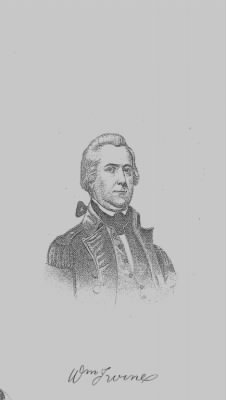
Unlike other British generals, he could be pretty blunt with the commander-in-chief. This might have also contributed to his return. Knyphausen remained the senior German officer for the rest of the war. He led the attack on Fort Washington, and one of the redoubts was later renamed in his honor. He also commanded the New York garrison but returned to Germany in 1782 for health reasons. General Friedrich Wilhelm von Lossberg succeeded him as commander of the Hessian troops in New York.


Von Heister

Legend and Legacy 


Some might argue that the German contingent played a vital but not decisive role in the war. Still, it is hard to see how Britain could have raised as many quality regiments at home to fill the gaps if the Teutonic regiments hadn’t been there. The widespread use of hired foreign troops fueled the Americans' worst fears and prejudices, helping newspapers, pamphlets, and rumors spread myths about these unfamiliar invaders, all to rally the people in what was ultimately a war for hearts and minds. 

While the Hessians did act harshly toward civilians in some cases, many stories were exaggerated or amplified to stir up public sentiment. They were brutal to rebels during combat and treated prisoners more cruelly than the British did, but not more harshly than American Loyalists and Patriots treated each other. These myths and legends grew and still persist. It’s no coincidence that Washington Irving's famous "Headless Horseman of Sleepy Hollow" was a Hessian artilleryman whose head was taken by a cannonball. However, it’s also true that the Hessians were brave and dependable soldiers who added a unique element to the American fight for independence.
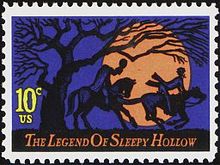

Even the USPS contributes to the legend

Saturday, September 20, 2014

Middelbrook

Background


Nestled at the start of the Watchung Mountains in New Jersey is the colonial town of Middlebrook. During the time of the Yankee Doodle Spies, Middlebrook was a small village northwest of Bound Brook. Although the village of Middlebrook no longer exists, it has been absorbed into the town of Bound Brook. During the American Revolution, this small farming community sat along the route of two armies engaged in more than just a fight for a continent – it was a struggle for ideas. For the Continentals, it was a fight for a new nation and a new concept of government. For the British Army, it was a fight to preserve the old order and the rights of a King.


Good ground


Gen Washington at Princeton
General George Washington had marched past Middlebrook after the Battle of Princeton on his way to Morristown in January 1777. Its advantage as a strategic position did not go unnoticed by the former surveyor. Late in the spring of 1777, Washington moved his small army of about 7,000 from their winter encampment at Morristown to Middlebrook Heights. 

Why? The ground was good, enabling the Americans to observe the British troops at New Brunswick and Perth Amboy. He moved Anthony Wayne's Brigade onto the forward slopes to defend the approaches to the pass. The Americans fortified the already defensible terrain. From these positions, Washington could keep watch on the British garrisons in New York and New Brunswick. But even better, it gave him a position to flank the British if they attempted to cross New Jersey to Philadelphia.


Battleground


However, the British also recognized the strategic advantages of the positions around Middlebrook for the rebels. So on the night of June 13th, 1777, General Lord Cornwallis moved out of New Brunswick, hoping to lure Washington out of his Middlebrook defenses into the open flat land for battle. With Hessians leading his columns, Cornwallis launched a four-pronged attack on the village. Washington responded, but not in the way the British had hoped. 

The commander-in-chief sent the militia, reinforced with some Continentals, to harass the enemy columns. However, most of the Continental Army stayed in their secure positions. By the end of June, a frustrated Cornwallis and his British forces retreated to Staten Island. The British maintained ground near New Brunswick, the Amboys, and at Paulhus Hook (Jersey City), but much of the rest of Jersey was a no man's land where Loyalist and Patriot factions, militias, and criminal elements from both sides fought. Middlebrook was at a critical point in this no man's land.


Lord Cornwallis

Observation point


The attack on Middlebrook, along with other forays and feints, caused General Howe to change his strategy. The British commander-in-chief launched a naval operation toward the Chesapeake to capture the rebel capital at Philadelphia from the south. Most of the British regiments left their fortress in New York for a combined sea-land campaign aimed at driving the rebels from their capital, but they left British General Burgoyne's army to struggle in the wilderness of upstate New York. 

Thus, the small engagement at Middlebrook played a crucial role in a chain of events that helped alter the course of the war. Recognizing the need for a new plan for the 1778 summer campaign, the British abandoned Philadelphia and again focused on New York. Washington struck from the rear, and the largest pitched battle of the American Revolution took place at Monmouth. When the British column retreated to its secure zone around New York and nearby areas, Washington once more used the Middlebrook region as a base to observe and threaten the British.


Winter Encampment


In November 1778, George Washington once again moved the army back to the Middlebrook area. It provided a natural defensive position and allowed him to monitor the British foothold in New Jersey. Washington established his headquarters at the Wallace House in what is now Somerville. 

The main army, made up of brigades from Virginia, Maryland, and Pennsylvania, along with the Delaware regiment, the artillery corps, and support units, camped along the base of the Watchung Mountains. There, they benefited from some shelter from the weather, abundant trees for construction and firewood, and support from a mostly patriotic local population and an active militia. Fortunately, the winter was relatively mild. The Continental Army stayed at the second Middlebrook encampment until late June 1779. That winter at Middlebrook would later be known for a symbolic event.


First Flag


There is an interesting footnote to the story of Middlebrook. On June 14, 1777, Congress adopted the Flag Resolution, establishing the famous Betsy Ross flag as the national flag of the United States. An official flag was brought from Philadelphia to be flown at the Middlebrook encampment before the soldiers took the field for the summer campaign season. 

In an act of great symbolism for the young and struggling nation, the first thirteen-star American flag was flown at an American army base. One wonders what the beleaguered but determined soldiers would think if they could see into a future where their descendants would champion the very ideas they fought for in campaigns across the globe. Or a future in which the flag they flew over Middlebrook would be flown as a symbol of liberty at hundreds of army bases across the yet unexplored continent and later on scores of foreign shores.


Flag at Middlebrook Encampment


Sunday, August 31, 2014

In the Navy!

 The Naval Advantage in 1776


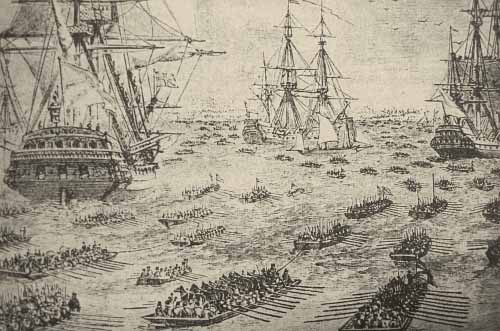
This past week marked the anniversary of the British landing on Long Island and the battle that shares its name. As most readers of this blog know, the invasion and the events that followed set the background for my novel, The Patriot Spy. I thought I’d use this blog to discuss the role of naval power in the campaign. The American Army under General George Washington essentially had no information about British plans after General William Howe withdrew his besieged forces from Boston. However, it wasn’t hard to see that the main British advantage in the war was the Royal Navy.

1776: British fleet at Staten Island 


Early Success, Defeat, and Triumphs


Destruction of the Spanish Armada


In some ways, the story of Britain is tied to its navy. During the time of the Yankee Doodle Spies, Britain had the greatest navy in the world and, more importantly, had over a century of knowledge and experience in using that advantage effectively. Many are familiar with the victories of the 16th-century English navy under Elizabeth I against the Spanish. However, during the 17th century, England and its navy went through a period of upheaval. 

The English Civil War, three wars with the Dutch (who had surpassed Spain as the world's leading mercantile and naval power), and the "Glorious Revolution" all affected the navy's development, both positively and negatively. During that period, the English and Scottish fleets merged but, on paper, remained separate. The Dutch Wars initially favored the Dutch, who achieved remarkable naval victories. 

Still, Britain gained the key Dutch colony of New Amsterdam (1664), and it learned how to develop its navy through the experience of defeat. By 1692, the British boasted the finest fleet in the world. The political alliance with the Dutch, which recognized their ruler William of Orange as William III of England, strengthened both navies. 

In a curious partnership, the Dutch fleet operated under British admirals in the subsequent wars with France and Spain that dominated the late 17th and most of the 18th century. The British were able to expand their global operations, and through a series of wars, they captured colonial possessions both large and small to support their naval and commercial needs.


Dutch burn the British fleet at Chatham


 Britannia rules the waves!


Royal Navy in Action


The Royal Navy of 1776 had a confidence rooted in achievement. Part of that success included what would later be called "combined arms" operations—using Royal Marines for small sea-land actions and collaborating with the Royal Army for major campaigns, mainly moving forces and guarding supply routes. This approach was developed during the Seven Years' War (French and Indian War) in North America. 

As the rebellion began, the Royal Navy became Britain's greatest advantage over the poorly connected coastal colonies, which were linked by a few poor roads. America depended on the sea, and controlling it was central to any plan to suppress the colonies. Trade could be blocked, starving the colonies that relied heavily on Britain for many finished goods. 

Ironically, this policy was among the grievances that sparked the rebellion. Britain's dominance at sea swayed some Loyalists' sympathies or at least their hostility toward the rebellion. To many, it seemed reckless to challenge the world’s strongest naval power—what was then the greatest global naval force ever. These concerns proved valid for most of the war. America had no real navy and was hurriedly building a small one, mostly to boost national pride rather than for strategic advantage. 

In reality, America’s naval strength came from privateers—many from merchant ships converted due to British control of the seas—another irony. Effective naval use allowed Howe to escape a tactical trap in Boston. It enabled him to execute a successful sea envelopment and move into New York Harbor, shifting the war’s focus and pace in Britain's favor.


Invasion, they're coming!


British landing at Gravesend on Long Island
(near the site of Brooklyn's Verazano Bridge)


The Royal Navy isolated New York from the sea and made its port useless. The port gave the city its strategic importance, as New York in the 18th century was not the largest city in America. The Royal Navy provided reconnaissance, naval gunfire, and transport for a series of landings at Staten Island, Gravesend, Kips Bay, and Westchester (Throgs Neck, Pelham, etc.). 

British naval movements confused the Americans and threatened nearby areas. General Howe had no plans to attack. More importantly, it limited General Washington's ability to move troops and forced him to defend a larger area than he could cover with his soldiers and guns. Surprise, maneuver, and firepower are key multipliers in any conflict, but they are even more effective when you also have overwhelming forces! 

As discussed in The Patriot Spy, only extremely unfavorable winds and tides kept the other Howe (Admiral Sir Richard, William's brother, and naval force commander) from surrounding Washington's forces on Long Island, who were tucked into a desperate defensive position on Brooklyn Heights. 

If conditions had been right, Howe's fleet could have bombarded Washington from behind and, combined with the army besieging Washington's front, forced surrender in the summer of 1776. Would losing George Washington and a large part of the Continental Army have ended the war then and there in Britain's favor? Well, that's the subject of another blog.


Sunday, August 3, 2014

The Lady was a... Spy?

The  General... 


Many British officers who served in the American Revolution had previously been active in North America during the French and Indian War. Some, like Horatio Gates and Charles Lee, moved to the New World, settled in America, and fought for the Patriots during the Revolutionary War. Others took American wives, continuing the tradition of war brides that still exists today. 

Thomas Gage


One such officer was General Thomas Gage. Gage was born in Firle, England, as the second son of a Viscount. He attended the prestigious Westminster School and, upon graduation, joined the British Army as an ensign. He rose through the ranks and was promoted to lieutenant colonel in March 1751. His regiment was sent to America in 1755. In fact, his career included many important military events as the British Empire expanded during the mid-18th century. But that is another story.


The Lady...


Margaret Kemble Gage in 1771
In America, Gage proved to be a successful and innovative officer, rising to high command and eventually governing Canada after the French surrendered. However, in December 1757, the war and life in America took on special significance for the accomplished officer, now a brigadier general. He spent the winter in New Jersey, where he was tasked with recruiting colonists for the British army. He was stationed near Brunswick, a small town not far from New York City. 

There, he met Margaret Kemble, a well-known beauty with notable standing in the area. Margaret was the great-granddaughter of Stephanus Van Cortlandt, the former Mayor of New York City, who came from one of the wealthiest families in the city. 

Her father was Peter Kemble, a prosperous businessman and politician from New Jersey. On December 8, 1758, Gage married the beautiful and well-connected Jersey girl. For many years, the Gages played a prominent role in New York society. By all accounts, they were happily married, and most attested that they were an ideal couple. Their marriage was further exemplified by the births of five daughters and six sons.

The Governor...


Thomas Gage eventually became in charge of all British troops in North America. After the war with France ended, he observed a shift in political tensions in the colonies toward resistance. Unfortunately, he would soon be part of the effort that led to open rebellion. The colony of Massachusetts was the most defiant. 

In May 1774, King George III appointed Gage to Boston, appointing him military governor of Massachusetts in an effort to restore order in the stubborn colony and enforce the hated Parliamentary acts. His wife, Margaret, arrived in Boston in late 1774. Although Gage initially earned the respect of the colonists, they also viewed him with some suspicion. Margaret was upset about the conflict in the colonies and struggled with her divided loyalties. She hoped her husband would not take actions that could lead to the loss of her fellow countrymen’s lives.

Action...


Margaret's brother, Stephen Kemble, was her husband's Intelligence Officer. His main asset was the prominent Dr. Benjamin Church, a member of the Massachusetts Congress and its Committee of Safety. It seems the doctor had an expensive mistress and turned to spying for the British to support her. While the Patriot Congress met in Concord (October 1774 and March through April 1775), sworn to secrecy, Dr. Church regularly provided Gage with summaries of the proceedings. 


Benjamin Church


Church was later exposed (no pun intended), but that’s another story. General Gage learned that the Massachusetts militia was storing arms and ammunition in Concord, about 20 miles northwest of Boston. He also heard that Samuel Adams and John Hancock were in Lexington. Gage made plans to capture them along with the munitions. 

However, the rebels led by Dr. Joseph Warren had their own spy network. Warren learned of the upcoming British troop movements on April 18 and confirmed it through a confidential informant connected to the British high command. This prompted the famous "midnight ride" of Paul Revere and others to warn the rebels. The "shot heard round the world" resulted. But just who was the informant? Unfortunately, Warren was killed at Bunker Hill, so the identity of the informant remains a topic of speculation.


Intrigue...


And as we all know, speculation is fun. The warning was issued before the redcoats marched toward Lexington and Concord, so the informant was not a low-ranking soldier or officer. Gage himself was questioned because he admitted telling only one person of his plans before informing his top commanders. 

However, there is widespread speculation that Gage was betrayed by his American-born wife, Margaret. Could the long-term spouse of the top British officer really have been an American agent? Would she betray her husband and her king? And if so, how? Did her brother play a role? Stephen was reduced to the rank of captain after the Battle of Lexington and Concord. Why? 


Doctor Joseph Warren


But let's focus on his sister. According to reports, Margaret allegedly warned Warren of her husband's plans on April 18th. A clergyman from Roxbury named Rev. William Gordon later noted that Warren's spy was "a daughter of liberty unequally yoked in the point of politics." 

Many have suggested she was sympathetic to the colonial cause. There is evidence that she held her own political sentiments and that the now-burning dispute between Britain and America filled her with sadness. Margaret once admitted to an acquaintance that she hoped her husband would not be the instrument of killing her countrymen. But many Loyal Britons shared similar views. 

Overall, there is no proof of her espionage. Many discussions have taken place about communication. How could Warren communicate with the wife of the British governor? How could he trust an intermediary with such a sensitive mission? How could he risk a personal meeting? These challenges confront every intelligence operation, especially those with high potential for gain, such as assets like the wife of the British governor. 

But perhaps the strongest "indicator" of Margaret Kemble Gage's possible espionage is that her husband soon after sent her to England. This blog considers her a very likely source, if not a full-fledged spy. The reduction in her brother's rank around the same time suggests a connection. Maybe Gage's other confidant in his plans was his intelligence chief. Perhaps she got her information from Stephen. In 1775, the stakes were high enough to risk passing information to the American side.

End of the Affair...

Gage remained in America for another year but returned to England feeling somewhat disappointed with his record in Boston. Over the following years, their marriage deteriorated, marked by estrangement. Jersey girl Margaret Gage spent the latter half of her life in England, never going back to her birthplace. She died at age 90 in 1824, outliving her husband by nearly 37 years.


Sunday, July 13, 2014

The Last Fort


The Place

When General George Washington and the Continental Army arrived in New York in early summer 1776, the strategic situation was grim. British control of the waterways and superiority in artillery meant that New York, especially the island now called Manhattan, could be threatened from any direction. Although the British approach from the sea made a southern attack most likely, the commander in chief had to prepare for assaults from all sides. To his troops' dismay, Washington ordered fortifications to be built all around the island.

The men worked tirelessly with shovels and picks. Despite their efforts, most of these were primitive and poorly constructed earthworks. However, on June 20, 1776, some Pennsylvania battalions of the Continental Army began building a five-bastion fort at the corner of what is now Fort Washington Avenue and 183rd Street. 

The quickly assembled earthen-walled structure lacked a water supply and a strong barricade to fend off attackers. Still, it was located on the highest hill on Manhattan Island. This made it an ideal spot for the fort, with views over the Hudson River to the east, the Manhattan valley stretching south to what is now 120th Street, and protection on the north side from high ground that commanded the Kings Bridge approach. They named it Fort Washington to honor their commander-in-chief.


The Namesake


Colonel Robert Magaw
hoped to defend the fort

Washington correctly recognized the high ground at the north end of the island as strategically important. Along with its "sister" fort, Fort Lee (named after Washington's deputy commander, Charles Lee), Fort Washington controlled access to the Hudson Valley, the Bronx, Westchester, and areas bordering New England. It also posed a threat to any forces occupying the central and lower parts of New York Island. 

However, without support and with limited troops, Washington's namesake was a liability to his plans and would jeopardize many of his best men. After the British forces led by Lieutenant General William Howe defeated the Continental Army at the Battle of White Plains, they moved to seize Fort Washington, the last American stronghold in Manhattan. 

Recognizing this threat, Washington issued a "discretionary" order to General Nathaniel Greene to abandon the fort and evacuate its 3,000-man garrison to New Jersey. Yet, the fort's commander, Pennsylvania Colonel Robert Magaw, refused to abandon it. He believed it could still be defended against the British and begged Greene to let him hold the position. 

Greene agreed to leave Magaw in charge until he could consult with Washington, and then crossed the Hudson to review the situation. Sadly, the usually sluggish Howe attacked the fort before Washington could fully assess the situation.


The Battle


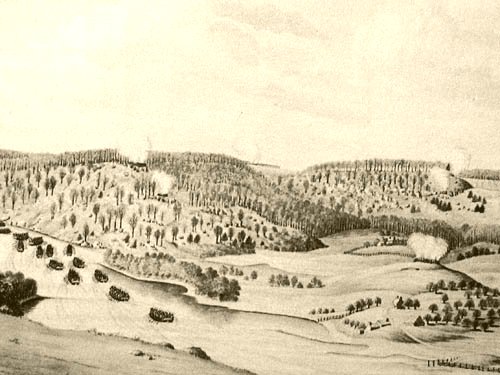
Throughout that summer and fall of 1776, Lord Howe's British land and naval forces carried out an effective, albeit slow, land-sea campaign that pushed the Continentals off Long Island and most of New York Island. By November, the last position the Americans held on Manhattan was around Fort Washington at the northern tip, known as Harlem Heights. Now, with Washington retreating from White Plains and heading into New Jersey, he decided to strike. 

Howe planned three attacks: Brigadier Lord Percy was to attack from the south up the island, Brigadier Matthews with the light infantry and Guards was to cross the Harlem River and attack Baxter on the east side, supported by Lord Cornwallis with the grenadiers and the 33rd Foot. The main attack was to target Colonel Rawlings’ position, with Hessian troops commanded by General Von Knyphausen. An additional assault was to be launched on the same side by the 42nd Highland Regiment (the famous Black Watch) under Colonel Sterling.


British ships bombarding


Early on November 15th, General Howe demanded the fort's surrender. McGaw refused. The British batteries across the Harlem River and the frigate Pearl launched a bombardment against American positions. Percy's forces moved forward to attack. By noon, Matthews landed on Manhattan and began his assault. The American commander defending the works was killed, and his militia retreated to the fort. 

However, the main threat originated from the north. General Knyphausen crossed from the Bronx onto Manhattan at Kingsbridge. His two Hessian columns attacked American positions along the high, wooded ground. After fierce fighting, Rawlings’ riflemen withdrew into the fort. Meanwhile, Hugh Percy, leading about 2,000 regulars through McGowan's Pass, attacked Colonel Lambert Cadwallader and his 800 Pennsylvanians on the south side of the fort. 

Hessians Overrunning Fort Washington
and Wounding of Mary Corbin


Simultaneously, the 42nd landed on the east side in a diversion and pushed inland behind Cadwallader’s forces. This caused the Americans manning the outer defenses to fall back to the fort as well. With all troops confined inside Fort Washington and under heavy fire, Magaw surrendered to Hessian General Knyphausen. Casualties were high on both sides: the British suffered 450 casualties, including 320 skilled Hessians, while the Americans endured 2,900 casualties, most of whom were prisoners.


The 42nd landing

Aftermath


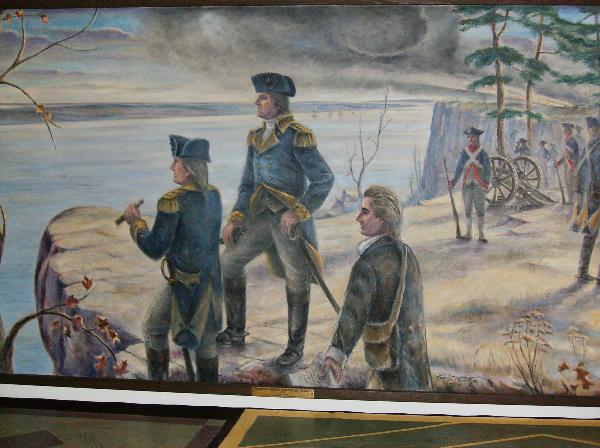
From across the river, its sister Fort Lee, George Washington watched helplessly as his last hold on the strategic island of New York evaporated. Almost 3,000 men from some of his best regiments marched off into captivity. As critical, valuable, and irreplaceable supplies and munitions, including 150 cannons, fell to the British, who occupied the fort and renamed it Fort Knyphausen after the Hessian general instrumental in capturing it. 


Washington watched in frustration from Fort Lee


The high ground covering the northern approach to Kingsbridge was turned into a separate fort, named after New York's last Royal Governor, Tryon. A third fort was named Fort George. The fact that the British constructed three forts where a single large American fort once stood is significant. In Magaw's defense, he was not given enough men to properly man and defend the extensive positions. 

This is a common theme in fort defenses (to be repeated at Ticonderoga the following year)—they could become a death trap if the garrison wasn't large enough. The British army and its sympathizers then occupied the city until the American victory in 1783. After the war, remnants of the fort disappeared, and the surrounding area became known as Washington Heights. Granite paving marks the former contours of Fort Washington in the southern part of nearby Bennett Park.


Saturday, June 28, 2014

BOOK REVIEW: Spies, Patriots and Traitors by Kenneth Daigler


To paraphrase the most interesting man in the world... I don't usually do book reviews on the Yankee Doodle Spies blog. Still, when I do, it's about a great book that highlights the importance of the American Revolution from a military intelligence perspective. This new book definitely made the list.


Kenneth Daigler spent his career as a CIA officer, where he learned the craft of espionage firsthand. In his latest book, Spies, Patriots, and Traitors, he reveals some of the nation's darkest espionage secrets. But they are secrets that have puzzled historians for over 200 years: secrets of the American Revolution. There have been a few books on this subject in recent decades, but none have the breadth and scope of this one. And none are as well documented and well written. Daigler covers a wide range of espionage activities and presents the big picture while diving deep into areas that are sure to fascinate the reader. He starts at the beginning—showing that even the political unrest that led to armed rebellion had an intelligence component. In a sense, he depicts a nation born of secrecy and covert activities.


A Case Officer's Perspective on the Two Big Cases


One of the many things that sets this work apart from others of its kind is the author's personal experience in the espionage trade. He draws on that to analyze numerous cases and explains the timeless aspects of espionage: planning, security, and communications. He shows that the absence of these three elements led to two failures—one for us and one for the British. 

Interestingly, these are the most famous espionage cases of the war: Nathan Hale and Benedict Arnold. In the case of Hale, the entire operational cycle was as ineffective as it could be. The author notes that Hale was inherently unqualified for the mission, which was poorly defined. Unsurprisingly, it failed on all fronts and ended in disaster. 

Daigler also points out that, despite some operational shortcomings, Arnold's case could have succeeded. However, Arnold's personal traits—ego, greed, arrogance—caused him to pressure his former handler, the inexperienced Major John Andre, into making a series of mistakes that eventually cost the British the operation and Andre his life.

Benedict Arnold


Lesser-Known Spies


 Daigler explores lesser-known cases with just as much enthusiasm: the establishment (or lack thereof) of counterintelligence under John Jay; Nathaniel Greene's skilled use of intelligence to secure victory in the southern campaign; the "secret war" in Europe; and Washington's efforts to employ intelligence, counterintelligence, and deception to surprise the British at Yorktown. The author also offers a perspective on the Culper Ring that differs from other accounts, highlighting that it was just one of many agencies Washington relied on—albeit a crucial one. 

Daigler details the activities of Benjamin Tallmadge—not only with his Culper Ring but also in other roles he served for Washington. The book recounts the daring exploits of the little-known John Honeyman, who spied on the Hessians during the darkest days just before the surprise attack on Trenton. Another noteworthy part of the book is his discussion of the plot against Washington and the British effort to destabilize the American economy through counterfeiting Continental dollars.


Benjamin Tallmadge


Other Pluses


James Armistead
The book is full of engaging illustrations of both well-known and lesser-known figures in the intelligence world. The author has also created a timeline of espionage during the American Revolution and, most helpfully for the layperson, a Glossary of Tradecraft Terms. He offers a powerful look at the struggles of African Americans, many of whom were slaves used by both sides. 

Ultimately, neither side treated them very well for their service, although there are some notable exceptions. The story of the African slaves is best exemplified by James Armistead, owned by a Virginia planter, who infiltrated British lines during the Yorktown campaign. 

His bravery and resourcefulness provided critical intelligence while under the noses of the British. He also discusses the role of counterintelligence, the British approach to espionage, and, of course, George Washington’s role as the Case Officer in Chief (my words).


Did intelligence win the war for American independence?


The author concludes with a discussion of that topic. One must conclude that intelligence played a crucial role in America's survival during the early years of the war and its ultimate victory. This does not mean that British intelligence was lacking. They had excellent worldwide coverage of American interests, and their Loyalist allies provided ready-made pools of agents, some already organized into cells. However, their leadership failed to capitalize on the opportunity. In contrast, George Washington clearly developed, over the course of an eight-year war, the ability to use intelligence and counterintelligence more effectively than the British high command. And that made all the difference.


George Washington, the Spymaster


I wish I had this book when I first started writing the Yankee Doodle Spies novels several years ago. Now that it’s available, it serves as an excellent non-fiction companion for those reading the series. You'll find many of the events and characters depicted through the fictional persons and actions in the Yankee Doodle Spies series, along with numerous historical figures and events as well.


I give this very excellent work, Four Tricorne Hats!


Saturday, June 14, 2014

Happy Birthday!

This week marks the 239th birthday of the U.S. Army. Around the world, Army units and many other DoD components will celebrate this day, which also coincides with Flag Day. The U.S. Army was founded on June 14, 1775, when Congress adopted "the American continental army.” The Congressional resolution also absorbed the existing 10,000 New England troops and forces besieging Boston, and it requested an additional 5,000 be raised from New York and Connecticut men to defend New York City. Two million dollars was approved to fund the new army. The Continental Army quickly expanded, and by July, the authorized strength of the new army was nearly double that envisioned on June 14. 


Continental Soldiers


What was the first unit?


The American Rifleman


The first contingent of the new Army was composed of ten companies of riflemen – infantry. Congress’s resolution outlined their terms of enlistment and appointed a committee to establish rules and regulations. It seems that even at its inception, the Army had its red tape! The riflemen authorized on 14 June were the first units raised directly as Continentals, rather than state troops. Congress accomplished this by assigning six of the companies to Pennsylvania, two to Maryland, and two to Virginia. This may represent the beginning of the grand American tradition of using military authorizations to achieve a political end. But in this instance, it wasn't about pork (although that would soon come). It aimed to create a national (my word) army under the banner of “Continental.”


How were they recruited?


Recruitment authority was granted to local county committees in those frontier areas known for skilled marksmen. The response in Pennsylvania's western and northern frontier counties was so substantial that on June 22, the colony's quota was increased from six to eight companies, organized as a regiment. A month later, a ninth company from Pennsylvania was formed in Lancaster County. In Virginia, Captain Daniel Morgan raised a company in Frederick County, while Hugh Stephenson formed another in Berkeley County. In Maryland, the companies of Michael Cresap and Thomas Price both came from Frederick County. Readers of The Patriot Spy know that Lieutenant Jeremiah Creed’s light infantry company was also organized in Frederick County as part of the First Maryland Line. All thirteen rifle companies were sent immediately to Boston to join the siege. These riflemen were recruited solely for their marksmanship and toughness, not their adherence to military protocol. One of General George Washington’s first leadership challenges was managing their frontier attitudes and the resulting disciplinary issues.


Dan Morgan


How were they organized? 


Each rifle company was composed of a captain, three lieutenants, four sergeants, four corporals, a drummer (or horn player), and sixty-eight privates. The enlistment period was set at one year, the same as for militias. The companies were organized into a regiment, but until Congress could appoint field-grade officers (such as adjutant, quartermaster, and commissary), the company grades were filled in. Later, these rifle companies were brigaded under Daniel Morgan (now a colonel) into a Rifle Corps. As Continental Line regiments began forming that summer, they typically consisted of about eight companies, each with around forty privates, plus officers, sergeants, corporals, and drummers. However, organizations varied widely, especially at the beginning.


Who would lead the new Army?


Who else but Colonel George Washington! On June 15, Congress unanimously chose the Virginia planter and renowned hero of the French and Indian War. Washington had been active in the military planning committees of Congress, and by late May, he had begun wearing his old uniform. His colleagues believed that his modesty and competence qualified him to lead the challenging New England troops. Washington was given the rank of Lieutenant General and Commander in Chief. The day after Washington's appointment, Congress authorized other senior officers for the new army. Positions for five major staff officers were established: an Adjutant General, a Commissary of Musters, a Paymaster General, a Commissary General, and a Quartermaster General.

On June 20, the new commander-in-chief received orders to proceed to Massachusetts, take charge of the army there, and capture or destroy the British army occupying Boston. Congress directed him to prepare a report on the strength of the army. In the broader context of army command, his instructions were somewhat vague. His only other real mandate was that he must consult a council of war prior to any major strategic or tactical decisions. Washington had the authority to determine how many men to retain and had the power to temporarily fill any vacancies below the rank of colonel. Permanent promotions and appointments were reserved for the colonial governments. However, Congress appointed general officers. In the future, this led to a range of repercussions, not the least of which was Benedict Arnold's treason.


       General Washington assumes
           command of the new army


Who were his Lieutenants?


It is not surprising that the selection of Washington’s subordinate generals and senior staff officers led to political maneuvering as delegates sought appointments for their favorite sons. On June 17, Congress elected Artemas Ward and Charles Lee as the first and second major generals, respectively, and Horatio Gates as the Adjutant General. A few days later, two more major generals were appointed: Philip Schuyler, a New York delegate with close ties to Washington, and Israel Putnam, another hero of the French and Indian War. The brigadier generals followed. Congress appointed them in proportion to the number of men contributed by each colony, adhering to the recommendations of the colony's delegates for the actual selection. However, Congress created problems by ignoring seniority and status.


 Artemas Ward

Why are the Army Birthday and Flag Day celebrated on June 14th?


By pure coincidence, the Stars and Stripes originated from a resolution adopted by the Marine Committee of the Second Continental Congress in Philadelphia on June 14, 1777. The resolution read: "Resolved, that the flag of the United States be thirteen stripes, alternate red and white; that the union be thirteen stars, white in a blue field representing a new constellation.” The first celebration of the U.S. flag's birthday was held in 1877 on the 100th anniversary of the Flag Resolution of 1777.


Betsy Ross Pattern Flag


Francis Hopkinson Pattrn Flag